Prevod
(Written for “Schiller’s Album”) In the German land of Württemberg, where the acacias bloom so beautifully beside the highway and the apple and pear trees bend beneath their ripe bounty at harvest, lies a little town called Marbach. It is among the humblest of towns, but it lies beautifully beside the River Neckar, which hastens past towns, old knights’ castles, and green, vine-clad hills to mingle its waters with the proud stream of the Rhine.
It was late in the year; red leaves hung on the vines, showers of rain fell, and the cold wind grew stronger. It was not the pleasantest season for the poor; the days were turning dark, and darker still were the interiors of the little old houses. One of these stood with its gable toward the street and its windows low, a poor and humble dwelling; and poor and humble, too, was the family who lived there, but honest and industrious, with the fear of God in the treasury of their hearts. The Lord was soon to grant them another child. The hour had come, and the mother lay in pain and distress when the sound of a bell reached her from the church tower, so deep, so solemn. It was a sacred moment, and the sound filled the praying woman with devotion and faith; her thoughts rose fervently to God, and at that very moment she gave birth to her little son and felt herself infinitely happy. The bell in the tower seemed to ring out her joy over town and country. Two bright baby eyes looked at her, and the little one’s hair shone as though gilded. The child was welcomed into the world with the ringing of a bell on that dark November day. His mother and father kissed him, and in their Bible they wrote that “on the tenth of November 1759 God gave us a son,” and later it was added that at his baptism he received the names “Johan Christoph Friedrich.”
What became of the little fellow, the poor boy from humble Marbach? Well, no one knew then, not even the old church bell, however high it hung, though it had been the first to ring and sing for him who would one day sing the loveliest song of “The Bell.”
And the little one grew, and the world grew with him. His parents moved to another town, but dear friends remained in little Marbach, and so one day mother and son came back to visit. The boy was still only six, but he already knew something of the Bible and the sacred hymns. Many an evening, sitting in his little cane chair, he had heard his father read Gellert’s fables and the song of the Messiah; he and his sister, two years older than himself, had wept hot tears over the story of Him who suffered death upon the cross to save us all.
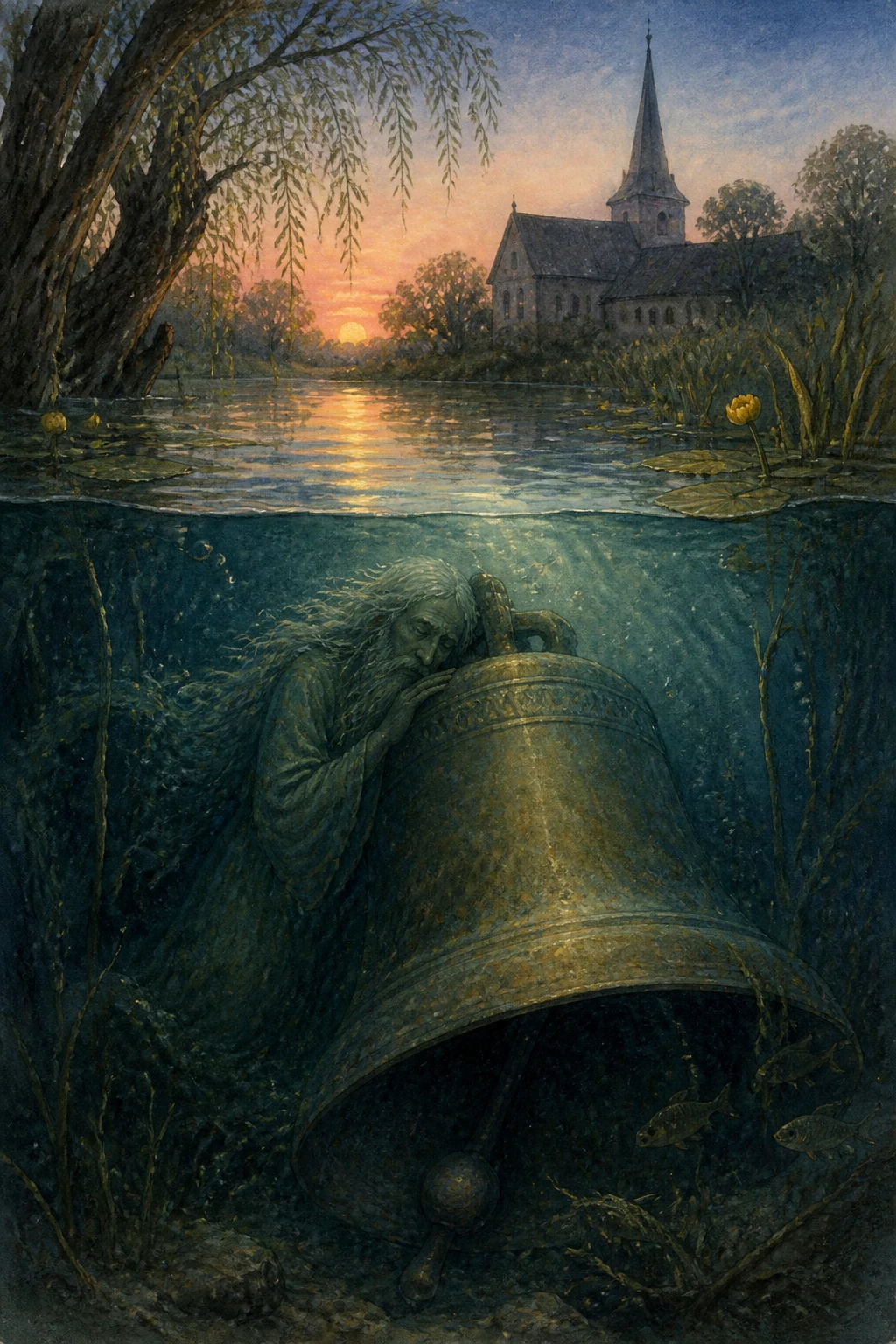
On that first visit to Marbach, the town had changed very little; after all, it had not been so very long since they had left. The houses stood as before, with their pointed gables, leaning walls, and low windows. New graves had appeared in the churchyard, and there, close against the wall, the old bell now stood down in the grass. It had fallen from its height and cracked, and could no longer ring; another had already taken its place.
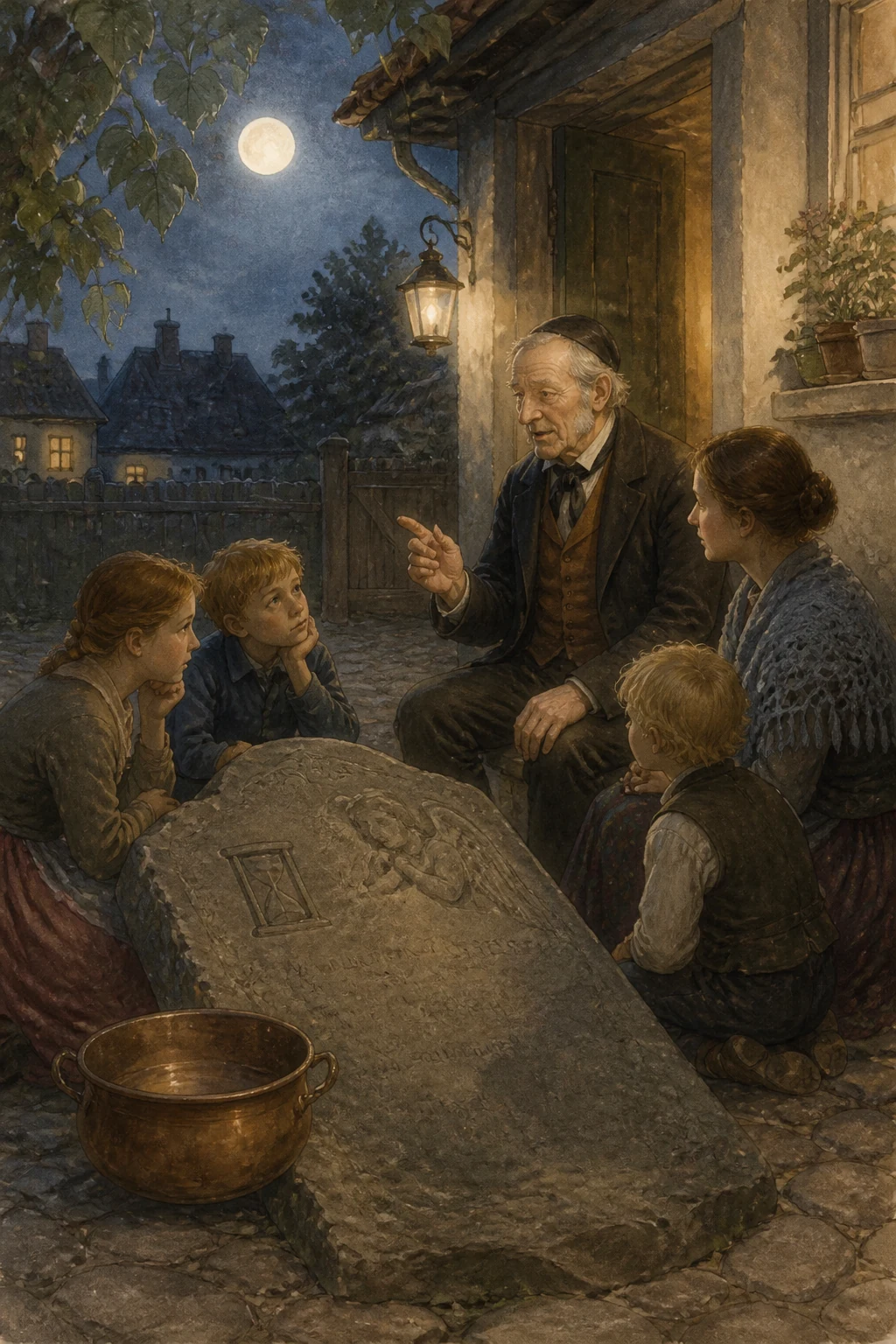
Mother and son had entered the churchyard and stood before the old bell, and the mother told her little boy how that bell had served its purpose for hundreds of years, ringing for christenings, wedding rejoicings, and funerals. It had spoken of festive joy and the terrors of fire; indeed, the bell had sung out the whole of human life. And the child never forgot what his mother told him; it rang within his breast until, as a man, he had to sing it forth. And his mother told him how this old church bell had rung comfort and joy to her in her hour of anguish, how it had pealed and sung when her little boy was given to her. And the child looked almost reverently at the great old bell; he bent down and kissed it, old and cracked and cast aside though it stood there among the grass and nettles.
It remained in the memory of the little boy, who grew up in poverty. Tall and thin, with reddish hair and a freckled face—yes, that was how he looked—but he possessed two clear eyes like deep water. How did he fare? He fared well, enviably well! By the highest favour he had been admitted to the military school, to the division for the children of the finer families, and that was an honour, a piece of good fortune. He wore gaiters, a stiff neckcloth, and a powdered wig. He received his learning, and it came to the commands of “March!”—“Halt!”—“Face front!” Surely something might come of that.
The old church bell, tucked away and forgotten, would probably end up in the melting furnace one day; what would come of it then? That was impossible to say, and it was equally impossible to say what would become of the bell within the young breast. There was metal in there; it resounded, it had to ring out into the wide world, and the more confining life became behind the school walls, the more deafening the cries of “March! Halt! Face front!” grew, the more strongly it rang within the young man’s breast. He sang it to his circle of comrades, and its sound travelled beyond the country’s borders. But that was not what he had been given schooling, clothes, and food for; he had been assigned a number for the cog he was to be in the great clockwork to which we must all belong, serving some tangible use. How little we understand ourselves; how, then, should others, even the best of them, always understand us! Yet it is pressure that forms the precious stone. The pressure was there; would the world, in time, come to know the jewel?
There were great festivities in the sovereign’s capital. A thousand lamps shone, and rockets blazed; that splendour is still remembered because of him who, unnoticed amid his tears and anguish, was then trying to reach foreign soil. He had to leave his native land, his mother, all his loved ones, or perish in the stream of mediocrity.
The old bell was well enough off, standing sheltered beside Marbach’s church wall, tucked away, forgotten! The wind swept over it and could have told of him at whose birth the bell had rung; it could have told how coldly it had blown over him when, exhausted with weariness, he had lately sunk down in a forest in the neighbouring country, all his wealth and hope for the future consisting of a few written pages of “Fiesco.” The wind could have told of his only patrons, artists every one, who slipped away from the reading to play at skittles. The wind could have brought word of the pale fugitive who lived for weeks and months in a shabby inn, where the landlord drank and blustered, where coarse merriment reigned while he sang of the ideal. Hard days, dark days! The heart itself must suffer and endure what it is to sing.
Dark days and cold nights passed over the old bell; it felt nothing of them, but the bell in a human breast feels its time of hardship. How did the young man fare? What became of the old bell? Well, the bell travelled far away, farther than it could ever have been heard from its lofty place in the tower. As for the young man, the bell within his breast sounded farther than his feet would ever wander or his eyes would ever see; it resounded, and still rings out across the ocean, around the earth. But first hear about the bell! It left Marbach, sold as old copper, and was destined for a melting furnace in Bavaria. How did it get there, and when? The bell must tell that itself, if it can; it is of no great importance. But certain it is that it came to Bavaria’s royal city. Many years had passed since it fell from the tower; now it was to be melted down and cast into a great memorial, the figure of a great man of the German people and their land. Now hear how it came about; how strangely and beautifully things happen in this world! Up in Denmark, on one of the green islands where the beech trees grow and the ancient burial mounds are many, there had been a very poor boy who wore wooden clogs and carried food in an old cloth to his father, who worked at carving in the naval dockyard. That poor child had become the pride of his country; he carved such glories in marble that the world marvelled at them, and it was he who was given the honourable task of shaping in clay a figure of greatness and beauty to be cast in bronze: the image of him whose name his father had written in his Bible, Johan Christoph Friedrich.
And the molten metal flowed glowing into the mould. The old church bell—ah, no one thought of its native home or its vanished peal—the bell flowed into the mould and formed the head and breast of the statue that now stands unveiled in Stuttgart before the old palace, in the square where the man it represents once walked, alive and real, struggling and striving, oppressed by the world around him: the boy from Marbach, the pupil of the Karlsschule, the fugitive, Germany’s great, immortal poet, who sang of Switzerland’s liberator and France’s divinely inspired maiden.
It was a beautiful sunny day; flags fluttered from towers and rooftops in the royal city of Stuttgart, and the church bells rang out in celebration and joy. Only one bell was silent; it shone in the clear sunlight, shone from the face and breast of the honoured figure. It was exactly a hundred years since the day when the bell in Marbach’s tower had rung joy and comfort to the suffering mother who gave birth to her child, poor in that poor house, the child who would one day be the rich man whose treasures the world blesses: the poet of the noble woman’s heart, the singer of all that is great and glorious, Johan Christoph Friedrich Schiller.