O besedilu
Sova in ptice
- Vir
- Ezopove basni
- Avtor
- Ezop / Karl Halm
- Jezik branja
- English
- Jezik izvirnika
- Ancient Greek
- Čas branja
- 2 min branja
- Obseg
- 1 stran
- Naslov izvirnika
- 106. Ιλαὺξ καὶ Ὄρνεα. (C. 330. F. 385. ex Dione Chrysost. LlXXII, §. 14 sq.)
O izvirniku
Ezopove basni
Kratke basni, kjer živali v nekaj potezah razkrijejo človeške slabosti. Bralni jezik je English, izvirnik pa prihaja iz vira Ezopove basni v jeziku Ancient Greek.
Besedilo
Sova in ptice
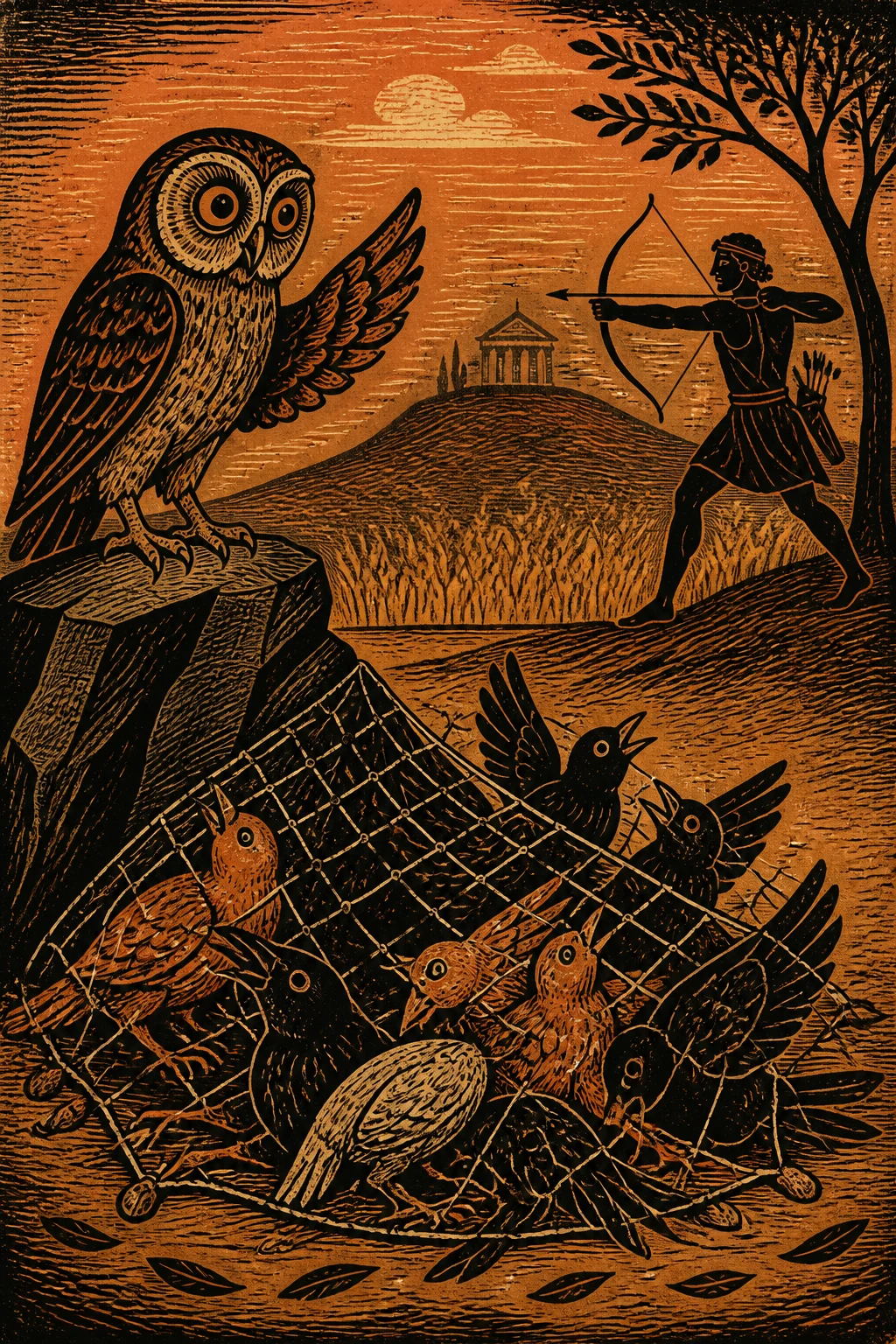
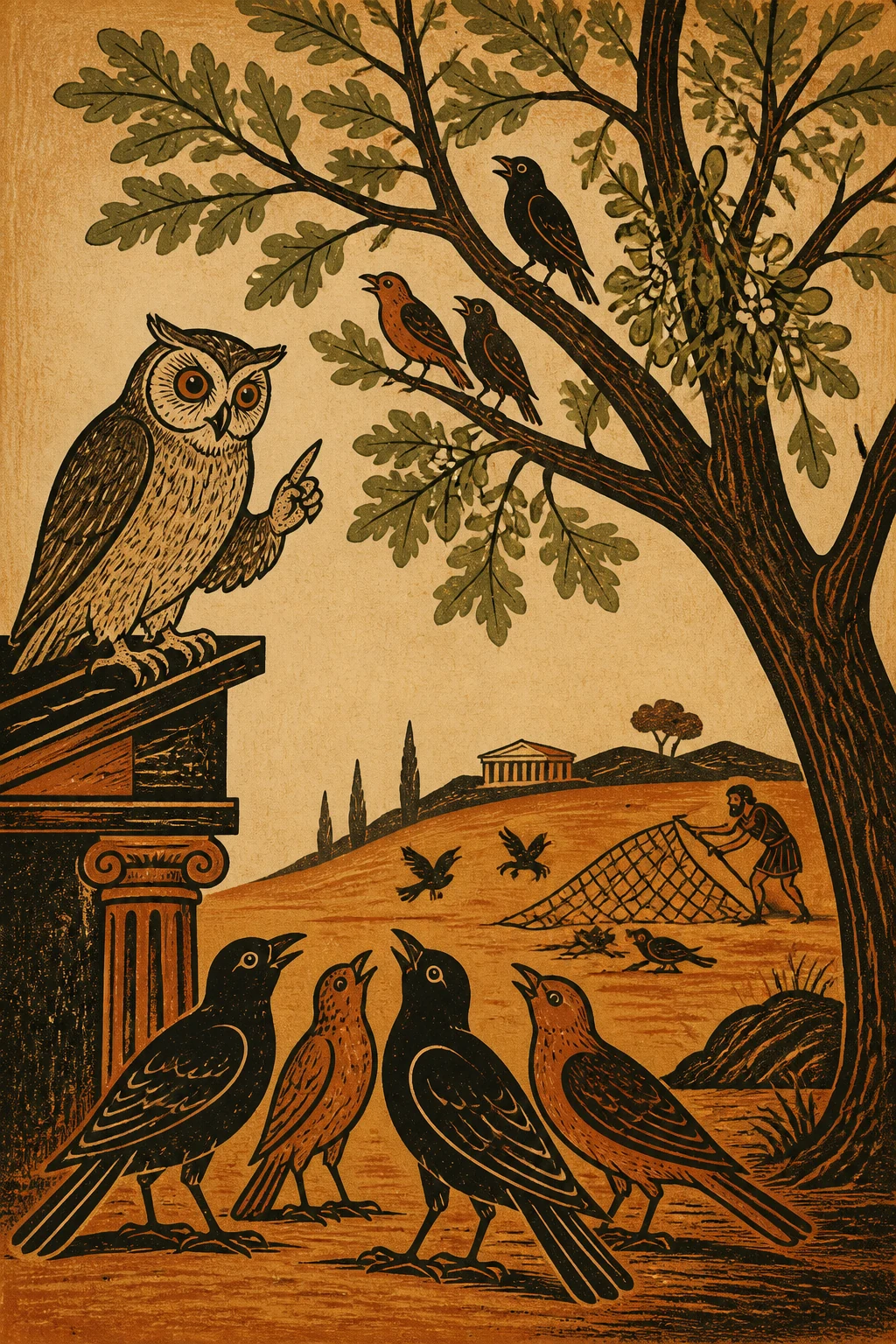
Aesop told a fable of this kind: the birds gathered around the owl and begged her to leave the shelter of buildings and move her nest, as they did, into the trees and their branches, where her song could be heard more clearly. They urged her, too, to be ready to perch in a certain oak, just then beginning to grow, once it had reached its prime, and enjoy its leafy crown. But the owl advised the birds not to do this, nor to rejoice in the growth of a tree that would bear mistletoe, from which birdlime is made—the ruin of birds. The birds, however, would not heed the owl’s advice. On the contrary, they delighted in the growing oak, and when it was tall enough, they perched in it and sang. But when the birdlime was made and they found themselves easily caught by men, they regretted their folly and marveled at the owl’s advice. Even now they still regard her as clever and wise, and for that reason they like to draw near her, believing they will gain some benefit from her company. Yet they approach in vain, and to their own harm. For the owl of old was truly wise and able to give good counsel; those of today have only her feathers, her eyes, and her beak, and in all other respects are more foolish than the other birds.
Izvirnik
106. Ιλαὺξ καὶ Ὄρνεα. (C. 330. F. 385. ex Dione Chrysost. LlXXII, §. 14 sq.)
Naslednje strani prikazujejo izvirno besedilo za primerjavo.
Αἴσωπος ξυνετίθει λόγον τοιοῦτον· ὡς τὰ ὄρνεα ξυνῆλθε πρὸς τὴν γλαῦκα καὶ ἐδεῖτο, τῆς μὲν ἀπὸ τῶν οἰκοδομημάτων σκέπης ἀπανίστασθαι, πρὸς δὲ τὰ δένδρα τὴν καλιὰν, ὥσπερ καὶ αὐτὰ, καὶ τούς τούτων μεταπήγνυσθαι κλῶνας, ἀφʼ ὧν καὶ ᾄδειν ἔστιν εὐσημότερον· καὶ δὴ καὶ πρὸς δρῦν ἄρτι ταυτηνὶ φυομένην, ἐπειδὰν πρὸς ὥραν ἀφίκηται, ἑτοίμως ἔχειν ἱζάνειν καὶ τῆς χλοερὰς κόμης ἀπόνασθαι. Ἀλλʼ οὖν τήν γε γλαῦκα μὴ τοῦτο τοῖς ὀρνέοις ποιεῖν παραινεῖν μηδὲ φυτοῦ βλάστῃ ἐφήδεσθαι ἰξὸν πεφυκότος φέρειν, πτηνοῖς ὄλεθρον. Τὰ δὲ μὴ τῆς ξυμβουλῆς ἀποδέχεσθαι τὴν γλαῦκα· τοὐναντίον δὲ ἔχαιρε τῇ δρυὶ φυομένῃ· ἐπειδὴ δὲ ἱκανὴ ἦν, καθίσαντα ἐπʼ αὐτὴν ᾖδεν. Γενομένου δὲ τοῦ ἰξοῦ ῥᾳδίως ἤδη ὑπὸ τῶν ἀνθρώπων ἁλισκόμενα μετενόουν καὶ τὴν γλαῦκα ἐθαύμαζον ἐπὶ τῇ ξυμβουλῇ. Καὶ νῦν ἔτι οὕτως ἔχουσιν, ὡς δεινῆς καὶ σοφῆς οὔσῃς αὐτῆς, καὶ διὰ τοῦτο ἐθέλουσι πλησιάζειν, ἡγούμενα ἀγαθόν τι ἀπολαύειν τῆς ξυνουσίας. Προσίασι δὲ μάτην ἐπὶ κακῷ. Ἡ μὲν γὰρ ἀρχαία γλαύξ τῷ ὄντι φρονίμη τε ἦν καὶ ξυμβουλεύειν ἐδύνατο· αἱ δὲ νῦν μόνον τὰ πτερὰ ἔχουσιν ἐκείνης καὶ τούς ὀφθαλμούς καὶ τὸ ῥάμφος, τὰ δὲ ἄλλα ἀφρονέστεραί εἰσι τῶν ἄλλων ὸρνέων.
Nadaljuj z branjem