Prevod
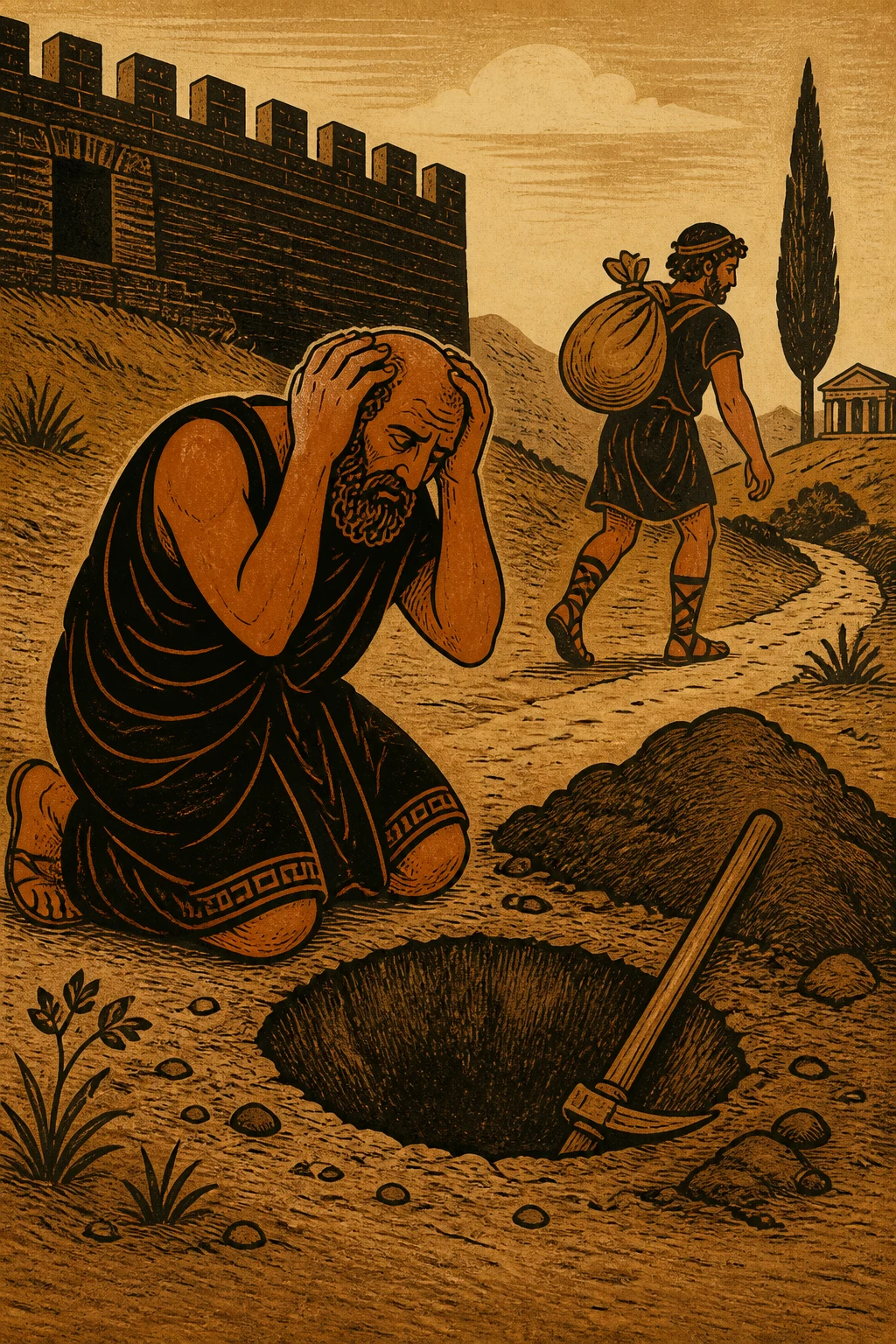
A miser sold all his possessions, turned the proceeds into a lump of gold, and buried it in a certain spot, burying his heart and mind there with it. Every day he went to gaze at it. One of the workmen watched him, realized what he had done, and dug up the gold and carried it off. When the miser next came and saw that the spot was empty, he began to wail and tear his hair. Someone who saw him lamenting so bitterly and learned the reason said, “My good man, do not be so downhearted. Even when you had the gold, you did not truly possess it. Put a stone there in its place, and imagine it is your gold. It will serve you just as well, for, as far as I can see, you made no use of your wealth even when the gold was there.” The fable shows that possession is worth nothing unless it is accompanied by use.