Waltey
Rogersova drča
039 Rogers's Slide
Myths and Legends of Our Own Land · Charles M. SkinnerO besedilu
Rogersova drča
- Vir
- Myths and Legends of Our Own Land
- Avtor
- Charles M. Skinner
- Jezik branja
- Slovenščina
- Jezik izvirnika
- English
- Čas branja
- 3 min branja
- Obseg
- 3 strani
- Naslov izvirnika
- 039 Rogers's Slide
O izvirniku
Myths and Legends of Our Own Land
Obsežna zgodovinska zbirka ameriških legend, ki jih je Skinner zbral in avtorsko rekonstruiral. Bralni jezik je Slovenščina, izvirnik pa prihaja iz vira Myths and Legends of Our Own Land v jeziku English.
Besedilo
Rogersova drča
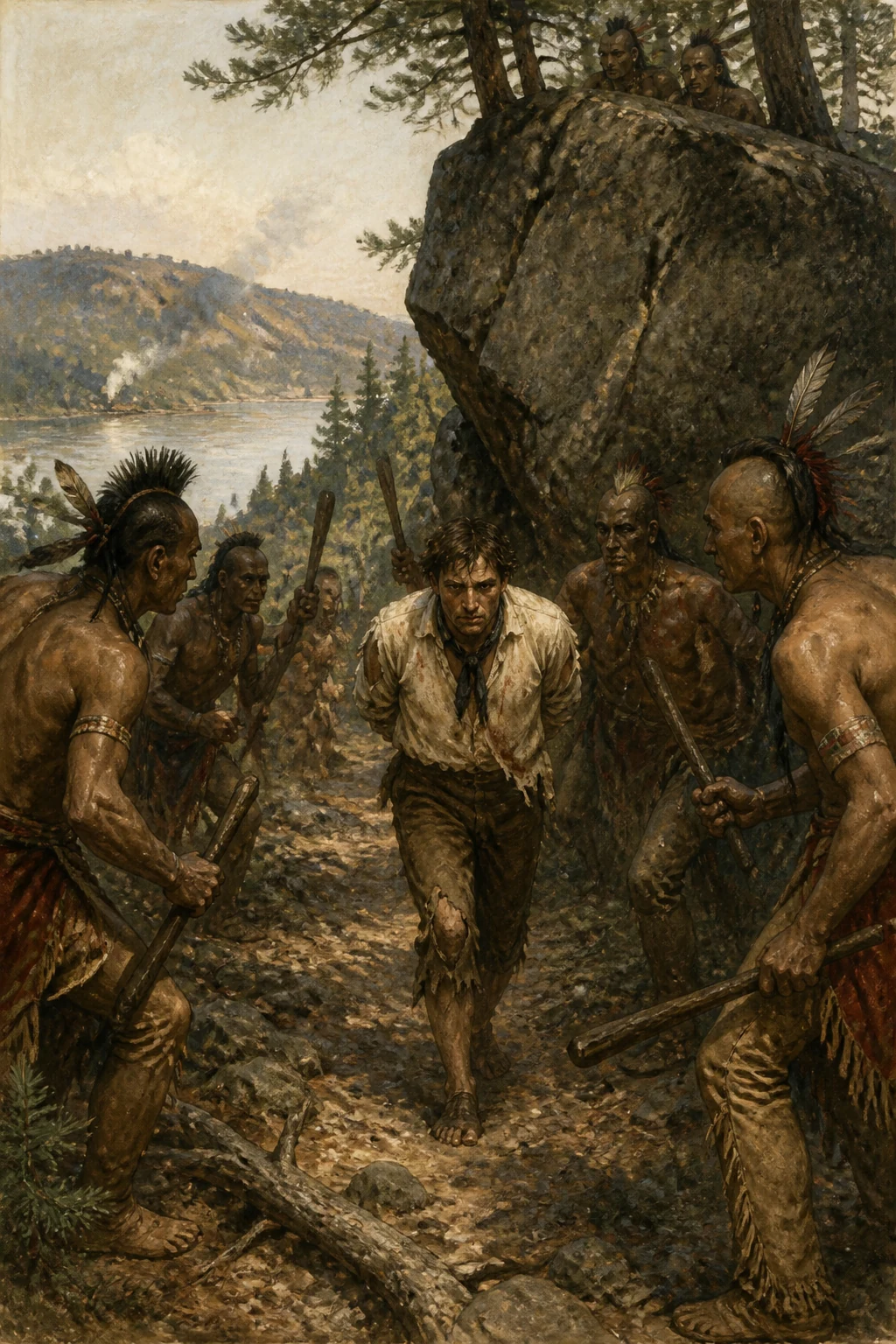
Obrežji jezer George in Champlain je pustošila vojna. Po teh čudovitih vodah so sem ter tja plule francoske in angleške barke, zeleni griči pa so odmevali od predirnih zvokov vojaških rogov, grmenja topov in krikov divjakov. Skozi gozdove sta se prepletli pripoved in zgodovina, spomin na nekdanja dejanja pa še vedno odmeva med vrhovi. Prav pri slapovih Glen's Falls, v votlini na skali sredi reke, je pogumni Uncas stražil skupaj s Hawkeyejem. Bloody Defile in Bloody Pond, ki ležita med tem krajem in jezerom George, sta dobila ime po »krvavi jutranji izvidnici«, ki jo je sir William Johnson nekega septembrskega dne leta 1755 poslal zadržat Dieskaua, dokler ne bi dokončali utrdbe Fort William Henry. V spopadu, ki je sledil, sta padla polkovnik Williams, ustanovitelj kolidža Williams, in stotnik Grant iz connecticutskih enot, praded predsednika z istim priimkom. Žrtve, tako mrtve kot ranjene, so pometali v Bloody Pond, zato je bila voda več dni gosta in rdeča; po izročilu je v poznejših letih ob sončnem zahodu znova dobila škrlatno barvo in jo ohranila do zore. Ujetniki, ki so jih izročili Indijancem, niso mogli veliko upati, saj njihovi beli zavezniki niso mogli obrzdati njihove surovosti. Blind Rock je dobila ime po tem, da so Indijanci tja privedli belca, mu iztrgali oči in jih vrgli v žerjavico ob vznožju skale. Ujetnike so redno mučili: v meso so jim zabadali goreče borove trske, jim pulili nohte in z noži rezali telesa, preden so jih privezali na kol. Nekemu angleškemu ujetniku so tu dovolili teči med dvema vrstama bojevnikov. Ko je švigal med vrstama, so ga že začeli udarjati, tedaj pa je zgrabil indijanskega dojenčka, ga vrgel na ogenj in v trenutku zmede, ki je nastala, pograbil sekiro, presekal vezi tovarišu, obsojenemu na smrt, in oba sta pobegnila.
Toda najbolj znana zgodba tega kraja je zgodba o Rogers's Rock oziroma Rogers's Slide, visoki prepadni steni na spodnjem koncu jezera George. Major Rogers se ni v usnjenih hlačah oddrsal po tej skali, vendar njegov pobeg ni bil nič manj izjemen, kot če bi se bil. Trinajstega marca 1758 ga je med izvidovanjem v bližini Ticonderoge z dvesto rangerji presenetila četa Francozov in Indijancev. Le sedemnajst njegovih mož je ušlo smrti ali ujetništvu, njega pa so zasledovali skoraj do roba tega prepada. Ko so rdečekožci za kratek čas izgubili njegovo sled in se zato zadržali, je utegnil vreči nahrbtnik po skalni strmini, obrniti krplje nazaj in se po lastnih sledeh vrniti do vrha grape, še preden so prišli iz gozda. Ko so videli, da odtisi njegovih krpelj vodijo k skali, nobeden pa ne vodi nazaj, so sklenili, da se je vrgel v prepad in si vzel življenje, da bi se izognil ujetništvu. Silno so bili razočarani, ko so majorja zagledali spodaj na zamrznjeni gladini jezera, kako se urno pomika proti utrdbi Fort William Henry. Na led je prišel skozi razpoko v skalovju, toda divjaki, prepričani, da je skočil čez prepad, so njegovo rešitev pripisali Velikemu duhu in niso streljali nanj. Nevede si je za izginotje izbral najboljši mogoči kraj, saj so Indijanci nanj gledali z vraževernim strahospoštovanjem: verjeli so, da po gozdu strašijo duhovi, ki hudobne duše mečejo čez pečino in jih utapljajo v jezeru, namesto da bi jim pustili oditi na srečna lovišča. Major se je varno vrnil v svoje bivališče in sedemnajst let pozneje, ko so se kolonije uprle, prijel za orožje proti deželi, v kateri se je rodil.
Izvirnik
039 Rogers's Slide
Naslednje strani prikazujejo izvirno besedilo za primerjavo.
The shores of Lakes George and Champlain were ravaged by war. Up and down those lovely waters swept the barges of French and English, and the green hills rang to the shrill of bugles, the boom of cannon, and the yell of savages. Fiction and history have been weft across the woods and the memory of deeds still echoes among the heights. It was at Glen's Falls, in the cave on the rock in the middle of the river, that the brave Uncas held the watch with Hawkeye. Bloody Defile and Bloody Pond, between there and Lake George, take their names from the “Bloody morning scout” sent out by Sir William Johnson on a September day in 1755 to check Dieskau until Fort William Henry could be completed. In the action that ensued, Colonel Williams, founder of Williams College, and Captain Grant, of the Connecticut line, great-grandfather of the President who bore that name, were killed. The victims, dead and wounded alike, having been flung into Bloody Pond, it was thick and red for days, and tradition said that in after years it resumed its hue of crimson at sunset and held it until dawn. The captured, who were delivered to the Indians, had little to hope, for their white allies could not stay their savagery. Blind Rock was so called because the Indians brought a white man there, and tearing his eyes out, flung them into embers at the foot of the stone. Captives were habitually tortured, blazing splinters of pine being thrust into their flesh, their nails torn out, and their bodies slashed with knives before they went to the stake. An English prisoner was allowed to run the gauntlet here. They had already begun to strike at him as he sped between the lines, when he seized a pappoose, flung it on a fire, and, in the instant of confusion that followed, snatched an axe, cut the bonds of a comrade who had been doomed to die, and both escaped.
But the best-known history of this region is that of Rogers's Rock, or Rogers's Slide, a lofty precipice at the lower end of Lake George. Major Rogers did not toboggan down this rock in leather trousers, but his escape was no less remarkable than if he had. On March 13, 1758, while reconnoitring near Ticonderoga with two hundred rangers, he was surprised by a force of French and Indians. But seventeen of his men escaped death or capture, and he was pursued nearly to the brink of this cliff. During a brief delay among the red men, arising from the loss of his trail, he had time to throw his pack down the slide, reverse his snow-shoes, and go back over his own track to the head of a ravine before they emerged from the woods, and, seeing that his shoe-marks led to the rock, while none pointed back, they concluded that he had flung himself off and committed suicide to avoid capture. Great was their disappointment when they saw the major on the frozen surface of the lake beneath going at a lively rate toward Fort William Henry. He had gained the ice by way of the cleft in the rocks, but the savages, believing that he had leaped over the precipice, attributed his preservation to the Great Spirit and forbore to fire on him. Unconsciously, he had chosen the best possible place to disappear from, for the Indians held it in superstitious regard, believing that spirits haunted the wood and hurled bad souls down the cliff, drowning them in the lake, instead of allowing them to go to the happy hunting grounds. The major reached his quarters in safety, and lived to take up arms against the land of his birth when the colonies revolted, seventeen years later.
Nadaljuj z branjem