Waltey
Rogati kuščar in velikani
244 Horned Toad and Giants
Myths and Legends of Our Own Land · Charles M. SkinnerO besedilu
Rogati kuščar in velikani
- Vir
- Myths and Legends of Our Own Land
- Avtor
- Charles M. Skinner
- Jezik branja
- Slovenščina
- Jezik izvirnika
- English
- Čas branja
- 3 min branja
- Obseg
- 3 strani
- Naslov izvirnika
- 244 Horned Toad and Giants
O izvirniku
Myths and Legends of Our Own Land
Obsežna zgodovinska zbirka ameriških legend, ki jih je Skinner zbral in avtorsko rekonstruiral. Bralni jezik je Slovenščina, izvirnik pa prihaja iz vira Myths and Legends of Our Own Land v jeziku English.
Besedilo
Rogati kuščar in velikani
Ljudstvo Moquis pripoveduje legendo, da so nekoč davno, ko je bila glavna mizasta planota, na kateri živijo, še višja kot danes in ko jim je pripadala vsa dežela od gora do velike reke, z zahoda prišli velikani in jih začeli nadlegovati; šli so celo tako daleč, da so jih jedli. Težko jim je bilo ubežati, saj so pošasti z vrhov mizastih planot videle po vsej deželi. Kralj plemena je obljubil najlepšo žensko v svoji deželi in tisoč konj vsakomur, ki bi njegovo ljudstvo odrešil teh velikanov. Tudi kralja so požrli kakor druge, ljudje pa niso hoteli izvoliti novega, saj so začeli izgubljati vero v kralje. Vendar je med njimi živel mlad bojevnik, ki je mislil samo na to, kako premagati velikane in rešiti svoje ljudstvo.
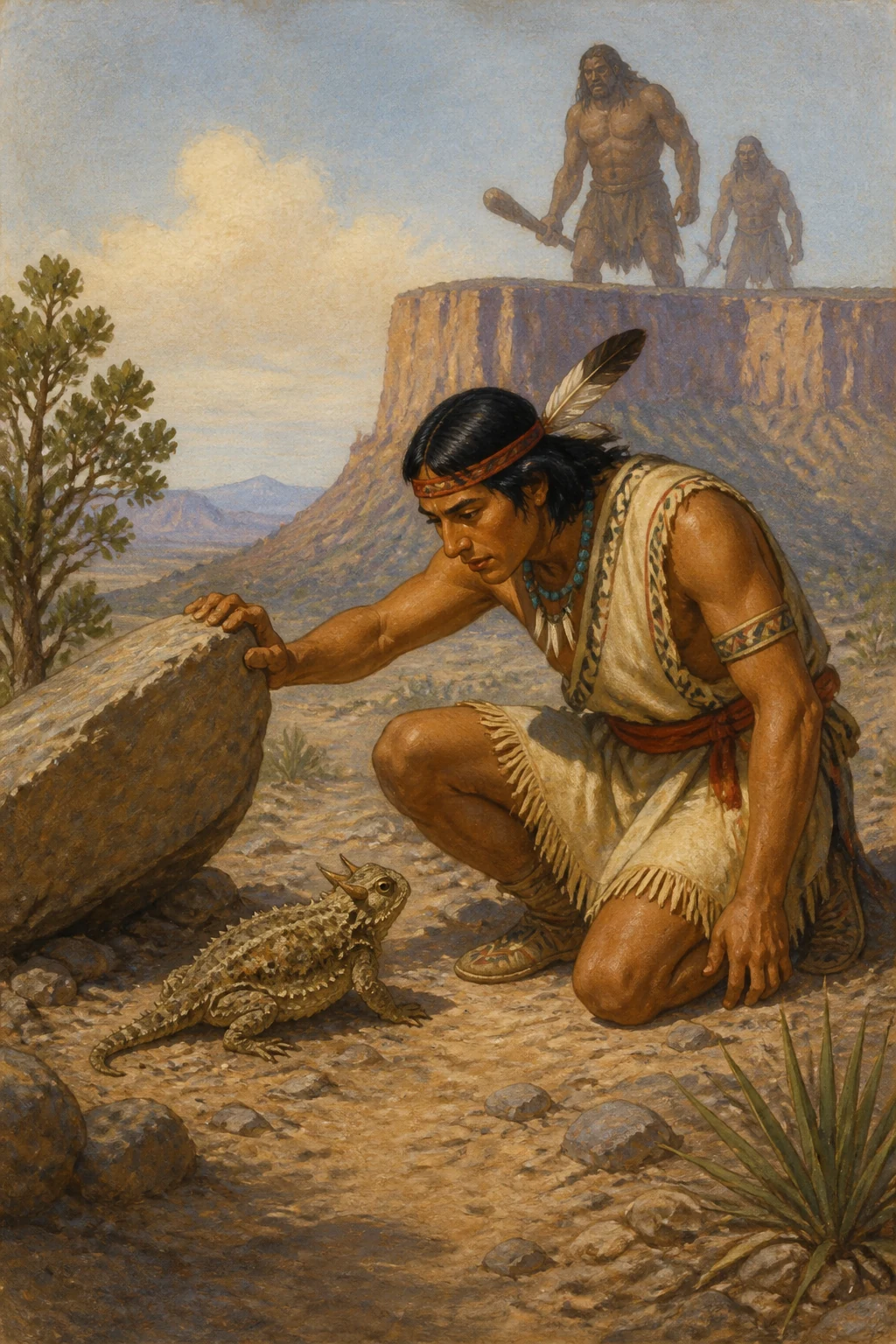
Ko se je nekoč spuščal z mizaste planote, je zagledal kuščarja tiste vrste, ki ji navadno pravijo rogata krastača, kako v bolečinah leži pod skalo. Odvalil je kamen in že hotel nadaljevati pot, ko ga je glas, za katerega se je zdelo, da prihaja iz zemlje, v resnici pa je prihajal iz krastače, vprašal, ali želi uničiti velikane. Ničesar si ni želel bolj. »Potem vzemi moj rogati greben za čelado.«
Lolomi — tako mu je bilo ime — je storil, kakor mu je bilo naročeno, in ugotovil, da se je greben v hipu povečal ter mu glavo prekril s tako debelo plastjo, da je ne bi mogel prebiti noben kij.
»Zdaj vzemi moj prsni oklep,« je nadaljevala krastača. Čeprav ne bi prekril niti nohta na Indijančevem palcu, se je, ko si ga je nadel, tako povečal, da mu je ovil telo in ga ni mogla prebiti nobena puščica.
»Zdaj vzemi luske z mojih oči,« je ukazala krastača, in ko je Lolomi to storil, se je počutil lahkega kakor pero. »Pojdi gor in čakaj. Ko zagledaš velikana, stopi proti njemu in mu glej v oči, pa se bo začel umikati vzvratno. Hodi okoli njega, dokler ne bo s hrbtom obrnjen proti prepadu, nato stopi naprej. Umikal se bo, dokler ne bo dosegel roba mizaste planote, nato pa bo padel čez rob in se ubil.«
Lolomi je ravnal po teh navodilih, saj se je kmalu v daljavi prikazal velikan in z velikimi koraki prihajal čez ravnico, pri čemer je z vsakim korakom premeril pol milje. Ko se je približal, je zalučal sulico, a se je ta odbila od Indijančevega oklepa kakor toča od skale. Za njo je priletela še puščica in se prav tako odbila. Ob tem je velikan izgubil pogum, saj si je domišljal, da je Lolomi duh. Ker se je bal, da bi dobil udarec, če bi se obrnil, je ves čas ostajal z obrazom obrnjen proti Lolomiju. Ta pa se je premikal tako spretno, da je velikana pripravil do tega, da je s hrbtom obstal ob robu pečine. Tedaj je planil proti njemu in velikan je s prestrašenim krikom padel v globino ter si polomil kosti na skalah spodaj. Tako je Lolomi pokončal mnogo velikanov, saj so se vsi pred njim umikali vzvratno, in ko so padli, so ljudje na njihova trupla nagrmadili kamenje. Še danes je tisti kraj znan kot »padec velikanov«. Nato je pleme Lolomija postavilo za kralja in mu dalo najlepše dekle za ženo. Ker je bil najboljši kralj, kar so jih kdaj imeli, so po njegovi smrti ohranili dragocen spomin nanj in njegovo ime uporabljali kot pozdrav, tako da je »Lolomi« beseda dobrodošlice in bo to ostala, dokler se velikani ne vrnejo.
Izvirnik
244 Horned Toad and Giants
Naslednje strani prikazujejo izvirno besedilo za primerjavo.
The Moquis have a legend that, long ago, when the principal mesa that they occupy was higher than it is now, and when they owned all the country from the mountains to the great river, giants came out of the west and troubled them, going so far as to dine on Moquis. It was hard to get away, for the monsters could see all over the country from the tops of the mesas. The king of the tribe offered the handsomest woman in his country and a thousand horses to any man who would deliver his people from these giants. This king was eaten like the rest, and the citizens declined to elect another, because they were beginning to lose faith in kings. Still, there was one young brave whose single thought was how to defeat the giants and save his people.
As he was walking down the mesa he saw a lizard, of the kind commonly known as a horned toad, lying under a rock in pain. He rolled the stone away and was passing on, when a voice, that seemed to come out of the earth, but that really came from the toad, asked him if he wished to destroy the giants. He desired nothing so much. “Then take my horned crest for a helmet.”
Lolomi--that was the name of him--did as he was bid, and found that in a moment the crest had swelled and covered his head so thickly that no club could break through it.
“Now take my breastplate,” continued the toad. And though it would not have covered the Indian's thumb-nail, when he put it on it so increased in bulk that it corseleted his body and no arrow could pierce it.
“Now take the scales from my eyes,” commanded the toad, and when he had done so Lolomi felt as light as a feather.
“Go up and wait. When you see a giant, go toward him, looking in his eyes, and he will walk backward. Walk around him until he has his back to a precipice, then advance. He will back away until he reaches the edge of the mesa, when he will fall off and be killed.”
Lolomi obeyed these instructions, for presently a giant loomed in the distance and came striding across the plains half a mile at a step. As he drew near he flung a spear, but it glanced from the Indian's armor like hail from a rock. Then an arrow followed, and was turned. At this the giant lost courage, for he fancied that Lolomi was a spirit. Fearing a blow if he turned, he kept his face toward Lolomi, who manoeuvred so skilfully that when he had the giant's back to the edge of a cliff he sprang at him, and the giant, with a yell of alarm, fell and broke his bones on the rocks below. So Lolomi killed many giants, because they all walked back before him, and after they had fallen the people heaped rocks on their bodies. To this day the place is known as “the giants' fall.” Then the tribe made Lolomi king and gave him the most beautiful damsel for a wife. As he was the best king they ever had, they treasured his memory after he was dead, and used his name as a term of greeting, so that “Lolomi” is a word of welcome, and will be until the giants come again.
Nadaljuj z branjem