Waltey
Puščavnik in sleparski učenec
Pančatantra · indijska zbirka pripovediO besedilu
Puščavnik in sleparski učenec
- Vir
- Pančatantra
- Avtor
- indijska zbirka pripovedi
- Jezik branja
- English
- Jezik izvirnika
- Sanskrit
- Čas branja
- 16 min branja
- Obseg
- 13 strani
- Naslov izvirnika
- Tantra 01 mitra-bheda chunk 4
O izvirniku
Pančatantra
Indijske zgodbe o zvijači, prijateljstvu in modrosti v svetu živali in vladarjev. Bralni jezik je English, izvirnik pa prihaja iz vira Pančatantra v jeziku Sanskrit.
Besedilo
Puščavnik in sleparski učenec
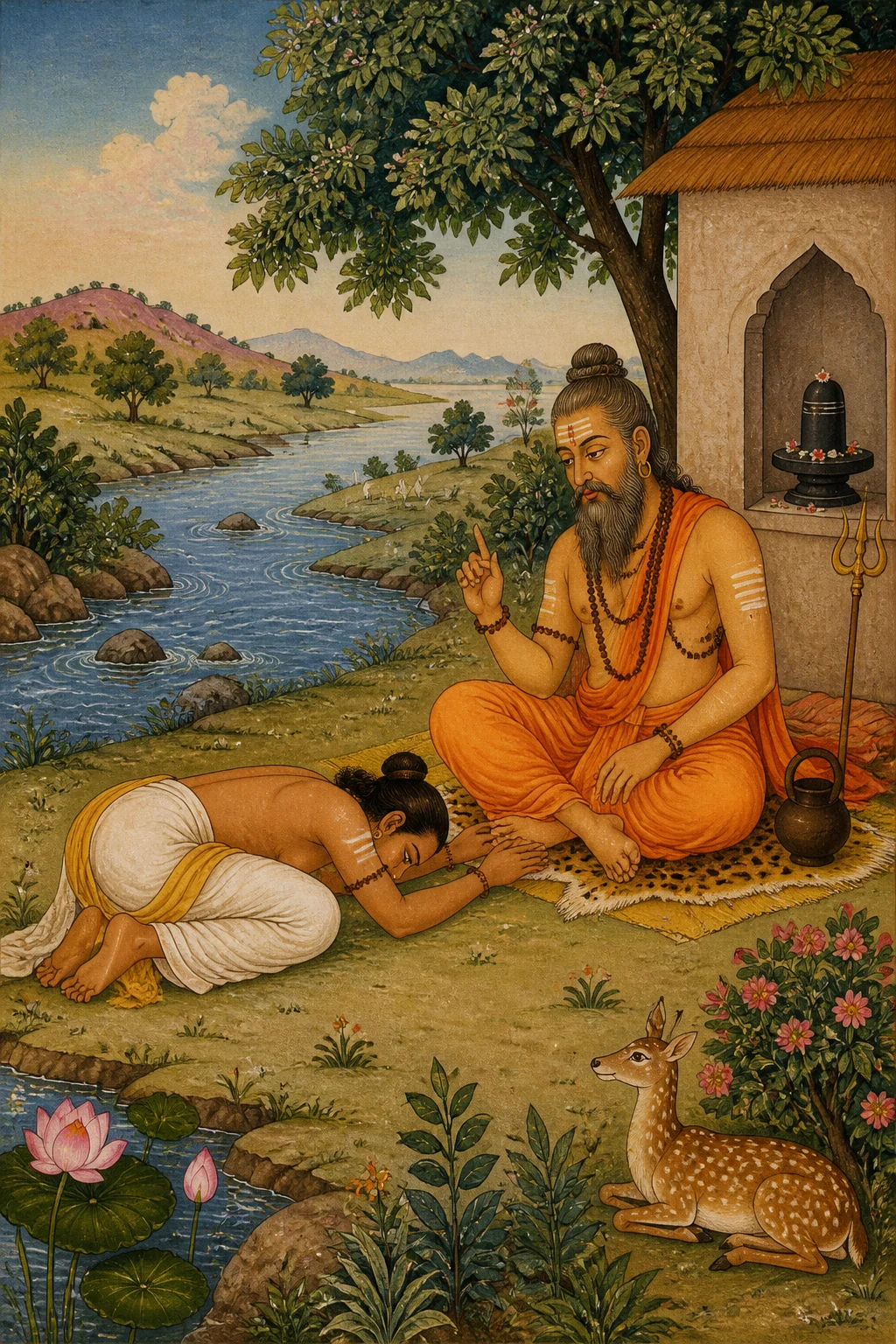
Having resolved on this course, he approached him, uttered “Om, homage to Shiva,” and prostrated himself, all eight limbs touching the ground. Then he said humbly, “Holy sir, this worldly existence is without substance. Youth rushes past like a mountain torrent; life is like a fire in dry grass. Pleasures are like the shadow of an autumn cloud, and our ties with friends, children, wives, and servants are like a dream. All this I have understood thoroughly. What, then, must I do to cross the ocean of worldly existence?” Hearing this, Devasharma replied warmly, “My child, blessed are you, to feel such detachment while still so young. For it is said:
He who is tranquil in his youth is truly tranquil, in my view;
For who does not grow calm when the powers of his body fail?
In the good, old age arises first in the mind and then in the body;
In the wicked, it comes to the body, but never to the mind.
“As for your question about the means of crossing the ocean of existence, listen:
Whether a Shudra or anyone else, even a Chandala with matted hair,
Once initiated into Shiva’s mantra and smeared with ashes, he becomes Shiva himself.
Whoever, with the six-syllabled mantra, places even a single flower
With his own hand upon the crown of the linga is never born again.
Hearing this, Ashadhabhuti clasped his feet and said humbly, “Holy sir, then bless me by granting me initiation.”
Devasharma said, “My child, I will grant you that blessing. But you must not enter the monastery at night, for freedom from attachment is commended for ascetics—for you as well as for me. It is said: A king is ruined by bad counsel, an ascetic by attachment, a son by indulgence,
A Brahmin by neglecting study, a family by an ill-behaved son, good conduct by the company of rogues;
Friendship by lack of affection, prosperity by injustice, love by living far apart,
A woman by pride, a farm by neglect, and wealth by giving it away or failing to guard it.
“So, after taking your vows, you must sleep in the grass hut at the monastery gate.”
He replied, “Holy sir, your command is my law. It is the life hereafter that concerns me.”
Then, having laid down this restriction concerning his sleeping arrangements, Devasharma accepted him as a disciple according to the rites prescribed in the sacred texts. Ashadhabhuti pleased him by massaging his hands and feet and performing other services. Yet even so, the sage never let the purse out from under his arm. As time passed in this way, Ashadhabhuti thought, “Ah, he will not trust me, whatever I do! Shall I kill him with a weapon, even in broad daylight? Or give him poison? Or slaughter him like an animal?”
While he was thinking this over, the son of one of Devasharma’s disciples came from a village to invite him. “Holy sir,” he said, “please come to my house for the ceremony of investing the deity with the sacred thread.”
Delighted by the invitation, Devasharma set out with Ashadhabhuti. As they traveled, they came to a river. Seeing it, Devasharma took the purse from under his arm and concealed it carefully inside his patched robe. After bathing and worshipping the deity, he said to Ashadhabhuti, “Listen, Ashadhabhuti. Until I return from relieving myself, guard this robe of the lord of yogis with the utmost care.” With these words he went away. As soon as he was out of sight, Ashadhabhuti took the purse and hurried off. Meanwhile, Devasharma, his heart won over by his pupil’s virtues, sat down in perfect confidence. As he sat there, he saw two rams fighting amid a flock of golden-fleeced sheep. In their fury, the pair would draw far apart, then charge together again and strike each other with their broad foreheads, shedding a great deal of blood. A jackal, greedy for the taste, ventured onto their battleground and licked it up. Seeing this, Devasharma thought, “What a fool this jackal is! If he gets caught between them as they clash, he will surely die.” A moment later, just as he had foreseen, the jackal’s craving for blood drew him between the rams; their heads crashed together, and he was killed. Lamenting his fate, Devasharma slowly made his way back toward his purse. When he could not see Ashadhabhuti, he grew anxious, completed his cleansing, and inspected the robe. The purse was gone. “Alas! Alas! I have been robbed!” he cried, and fell senseless to the ground. After a moment he recovered, rose again, and began to wail, “Ashadhabhuti! Where have you gone after deceiving me? Answer me!” After much lamentation, he set off slowly, searching for the thief’s tracks. Traveling on in this way, he reached a village toward evening. Just then a weaver and his wife were leaving the village for a nearby town to drink liquor. Seeing him, Devasharma said, “Good sir, we come to you as guests overtaken by sunset. We know no one in this village. Please fulfill the duty owed to a guest. For it is said:
When a guest arrives at a householder’s home in the evening, after sunset,
The householder attains divinity by honoring him.
And again:
Grass, a patch of ground, water, and, fourth, a kindly word—
These are never lacking in the homes of the good.
A welcome satisfies the sacred fires; a seat, Indra;
Water for a guest’s feet satisfies the ancestors, and an offering of honor, Shiva.”
Hearing this, the weaver said to his wife, “My dear, take our guest home. Honor him with water for his feet, food, a bed, and whatever else he needs, and stay there yourself. I will bring back plenty of liquor for you.” With these words he went on his way. His wife, an unfaithful woman, took the guest along and set off home with a smiling face, her thoughts fixed on Devadatta. Indeed, it is well said:
A stormy day, thick darkness, city streets hard to pass through,
And a husband’s journey abroad bring the greatest joy to a woman restless for lovers.
And again:
Soft coverings on couches, an affectionate husband, a delightful bed—
Women greedy for stolen love think all these as worthless as straw.
And again:
With her husband, shame scorches her pleasure; adornment is a burden to her bones, and sweet words are bitter;
His embraces are bonds, his satisfaction means nothing: nothing about him pleases her.
The fall of her family, public disgrace, imprisonment, even danger to her life—
An adulterous woman accepts them all, forever clinging to another man.
When the weaver’s wife reached home, she gave Devasharma a broken cot without bedding and said, “Holy sir, I must go and greet a friend who has come from the village. I shall return quickly; until then, please keep a careful watch over my house.” Having said this, she dressed and adorned herself and set out to meet Devadatta. But just then her husband came toward her, his limbs unsteady with drink, his hair loose, stumbling at every step and carrying a jar of liquor. At the sight of him, she turned back at once, hurried into the house, stripped off her finery, and resumed her former appearance. The weaver, however, had seen her running away in all her splendid adornments. He had already heard repeated rumors of her misconduct and, though troubled at heart, had always concealed his feelings. Now, seeing this behavior and believing he had proof, he entered the house in a rage and said, “You wicked slut! Where were you going?”
She replied, “I came home after leaving you and have not gone out anywhere. Why are you talking such nonsense under the influence of drink? Indeed, it is well said:
Confusion, falling to the ground, and senseless talk—
Liquor displays all the signs of a raging fever.
Trembling rays, the loss of its sky-blue garment, fading brilliance, and redness—
Even the sun suffers these effects when it embraces the western quarter, as a man does when he embraces wine.”
Hearing her defiant words and noticing her change of dress, he said, “Slut! I have long heard reports of your misconduct. Today I have seen the proof myself, and I shall punish you as you deserve.” With that he beat her with a club until her body was battered, tied her firmly to a post, and sank into a drunken stupor. Her friend, the barber’s wife, learning what had happened, came to her and said, “My friend, Devadatta is waiting for you at the appointed place. Come quickly.”
She replied, “Look at the state I am in! How can I go? Go and tell my lover that I cannot meet him tonight.”
The barber’s wife said, “My friend, do not say such a thing! That is not the way of an adulteress. For it is said:
Those firmly resolved to gather sweet fruit from perilous places—
Their lives, like those of camels, I consider worthy of praise.
And again:
The next world is uncertain; this varied world is full of scandal.
Blessed are those who reap youth’s fruit with a lover at their command.
And further:
If chance provides a lover in secret, she takes him, however ugly;
But her own handsome husband she will not approach, even in distress.”
She replied, “If that is so, tell me how I am to go there, tied fast as I am. And this wicked husband of mine is close at hand.”
The barber’s wife said, “My friend, he is senseless with drink and will not wake until the sun’s rays touch him. I will untie you. Bind me in your place, hurry to Devadatta, enjoy his company, and come back.”
“So be it,” she replied.
Then the barber’s wife freed her friend from her bonds, had herself tied in the same way in her place, and sent her off to meet Devadatta at the trysting place. Some time after this, the weaver woke. His anger had cooled a little and his drunkenness had begun to pass. He said, “You sharp-tongued woman! If from this day onward you neither leave the house nor speak harshly to me, I will untie you.” Afraid that her different voice would betray her, the barber’s wife said nothing. He repeated the same words again and again, but still she made no reply. At last he flew into a rage, seized a sharp knife, and cut off her nose. “Now stay there, you slut!” he said. “I shall give you more to enjoy before I am done.” With these words he fell asleep again. Devasharma, his throat parched with hunger and sleep driven away by the loss of his money, witnessed all these doings of the women. Meanwhile, the weaver’s wife enjoyed her fill of lovemaking with Devadatta and eventually returned home. She said to the barber’s wife, “My dear, is all well with you? That villain did not wake while I was gone, did he?”
The barber’s wife replied, “All is well with the rest of my body, except for my nose. Now untie me quickly, before he sees me, so I can go home.”
When they had exchanged places, the weaver woke again and said, “Slut! Will you still not speak? Shall I punish you more severely yet by cutting off your ears?”
Then she answered angrily and contemptuously, “Shame on you, utter fool! Who has the power to violate or disfigure a woman of such perfect chastity as I? Let all the guardians of the world hear me:
The sun, the moon, Vishnu, Shiva, Indra, and the rest
Cannot conquer those sources of terrible suffering—
The powerful senses, so difficult to subdue.
Those who master them alone are mighty in this world.
“If I am chaste, if I have never desired another man even in thought, let the gods restore my nose, whole and just as it was. But if even the thought of another man has strayed into my heart, let them burn me to ashes!” Having said this, she addressed him again: “Wretch! Look! Through the power of my chastity, my nose has become exactly as it was.” He took up a burning brand and looked. There he saw her nose unchanged, and a great pool of blood on the ground. Overwhelmed with amazement, he freed her from her bonds, laid her on the bed, and soothed her with a hundred endearments. Devasharma, who had witnessed the whole affair, said in astonishment:
All the magic of Shambara, all the magic of Namuchi,
And that of Bali and Kumbhinasa—women know it all.
They laugh with the laughing and weep with the weeping;
When the occasion serves, they win over even those they dislike with loving words.
The learning known to Ushanas and the learning known to Brihaspati
Do not surpass a woman’s wit. How, then, can men keep watch over them?
They call falsehood truth, and truth they likewise call falsehood.
How, brave man, can men in this world guard such women?
Elsewhere too it is said: A man should not become too attached to women,
Nor wish their power to grow;
For with men who are excessively devoted to them
They play as with crows whose wings are clipped.
With lovely faces they speak sweet words, yet strike with hearts as sharp as blades.
Honey rests upon women’s tongues, but in their hearts lies deadly poison.
That is why men drink from their lips and pound their breasts with their fists,
Deceived by a scrap of pleasure, like bees greedy for honey battering a lotus.
And further:
A whirlpool of doubts, a dwelling of insolence, a city of reckless deeds, a storehouse of faults, a realm of distrust fashioned from a hundred deceits;
A barrier at heaven’s gate, the entrance to hell’s city, a casket of every illusion—who created this contrivance called woman, poison made of nectar, a snare for all living beings?
Firmness in their breasts, fickleness in their eyes, falsehood on their lips, crookedness in their tresses and speech, slenderness at the waist, fullness at the hips,
Timidity forever in their hearts, and cunning toward their lovers—all these faults are praised as virtues in doe-eyed women, and yet men hold them dear.
They laugh and weep to serve their purposes;
They make others trust them, but trust no one themselves.
Therefore a man of good family and character should shun women as he would the vessels of a cremation ground.
Therefore a man of good family and character should always
Shun women as he would the groves of a cremation ground;
Lions, their fearsome faces framed by tossing manes,
And elephants resplendent with streams of rut-fluid.
At first they do whatever pleases a man,
So long as they do not know he is attached;
But once they know him bound in the snare of desire,
They haul him up like a fish that has swallowed the bait.
Fickle by nature as the waves of the sea,
Their passion fleeting as the red streaks of evening clouds,
Women, once their purpose is fulfilled, cast off a useless man
Like a wad of lac-dye squeezed dry.
Falsehood, rashness, deceit, folly, excessive greed,
Impurity, and cruelty are women’s inborn faults.
They bewilder, intoxicate, mock,
Rebuke, delight, and plunge into despair;
Once these lovely-eyed women enter the trusting hearts of men,
What is there they will not do?
Filled with poison within, yet enchanting without—
Who made women like the bright red seeds of the gunja vine?
As the wandering ascetic pondered these things, the night passed with great difficulty. Meanwhile, the go-between, her nose cut off, went home and thought, “What am I to do now? How can I conceal this dreadful disgrace?”
While she was thinking in this way, her husband, who had spent the night at the royal palace on business, returned home at dawn. Standing at the door, eager to attend to his many customers in town, he called to her, “My dear, bring my razor case quickly, so I can go out to do my shaving.” Remaining inside the house, the noseless woman took a single razor from the case and tossed it toward him, hoping to bring her plan to fruition. The barber, impatient to be off, saw the lone razor, grew angry, and flung it back at her. At once the wicked woman rushed out of the house with her arms raised, ready to scream. “Oh, look!” she cried. “This villain has cut off my nose, though I have always been a virtuous wife! Save me! Save me!” The king’s officers came up, beat the barber with clubs until he was battered, bound him tightly, and took him and his noseless wife to the court of justice. There they addressed the judges: “Honorable members of the court, hear us. This barber has mutilated this jewel of a woman without any offense on her part. Let him receive the punishment he deserves.” At this, the judges said, “Barber! Why did you mutilate your wife? Did she desire another man? Did she attempt your life? Or did she commit theft? Tell us what her offense was.”
But the barber, his body racked with pain from the beating, could not speak. Seeing him remain silent, they said, “Ah, the king’s officers have spoken the truth. This man is a villain. He has mutilated this poor, innocent woman. For it is said:
His voice falters, his face changes color, his glance is fearful, and his spirit fails:
Such is a man who has done wrong, terrified by his own deed.
And again:
He comes with stumbling steps, his face drained of color;
Sweat beads upon his brow, and his words are thick with stammering.
A man who has committed a crime speaks with downcast eyes when brought before the court.
By these signs, therefore, the discerning should take care to recognize him.
And further:
The innocent man appears with a clear face, speaks plainly, and looks about in anger;
He addresses the court indignantly and with confidence.
“This man plainly bears the marks of a criminal. For mutilating a woman he deserves death. Let him be impaled.”
Izvirnik
Tantra 01 mitra-bheda chunk 4
Naslednje strani prikazujejo izvirno besedilo za primerjavo.
Source ID: panchatantra_gretil_tantra_01_chunk_04
Source URL: https://gretil.sub.uni-goettingen.de/gretil/1_sanskr/5_poetry/4_narr/vispancu.htm
evaṃ niścitya tasyāntikam upagamya-oṃ namaḥ śivāya-iti proccārya sāṣṭāṅgaṃ praṇamya ca sa-praśrayam uvāca-bhagavan asāraḥ saṃsāro 'yam | giri-nadī-vegopamaṃ yauvanam | tṛṇāgni-samaṃ jīvitam | śarad-abhra-cchāyā-sadṛśā bhogāḥ svapna-sadṛśo mitra-putra-kalatra-bhṛtya-varga-sambandhaḥ | evaṃ mayā samyak parijñātam | tat kiṃ kurvato me saṃsāra-samudrottaraṇaṃ bhaviṣyati |
tac chrutvā deva-śarmā sādaram āha-vatsa ! dhanyo 'si yat prathame vayasy evaṃ viraktī-bhāvaḥ | uktaṃ ca-
pūrvaṃ vayasi yaḥ śāntaḥ sa śānta iti me matiḥ |
dhātuṣu kṣīyamāṇeṣu śamaḥ kasya na jāyate
ādau citte tataḥ kāye satāṃ saṃjāyate jarā |
asatāṃ ca punaḥ kāye naiva citte kadācana
yac ca māṃ saṃsāra-sāgarottaraṇopāyaṃ pṛcchasi | tac chrūyatām-
śūdro vā yadi vānyo 'pi caṇḍālo 'pi jaṭādharaḥ |
dīkṣitaḥ śiva-mantreṇa sa bhasmāṅgī śivo bhavet
ṣaḍ-akṣareṇa mantreṇa puṣpam ekam api svayam |
liṅgasya mūrdhni yo dadyān na sa bhūyo 'bhijāyate
tac chrutvāṣāḍha-bhūtis tat-pādau gṛhītvā sa-praśrayam idam āha-bhagavan, tarhi dīkṣayā me'nugrahaṃ kuru |
devaśarmā āha-vatsa anugrahaṃ te kariṣyāmi | parantu rātrau tvayā maṭha-madhye na praveṣṭavyam | yat-kāraṇaṃ niḥsaṅgatā yatīnāṃ praśasyate tava ca mamāpi ca | uktaṃ ca-
durmantrān nṛpatir vinaśyati yatiḥ saṅgāt suto lālasād
vipro 'nadhyayanāt kulaṃ kutanayāc chīlaṃ khalopāsanāt |
maitrī cāpraṇayāt samṛddhir anayāt snehaḥ pravāsāśrayāt
strī garvād anavekṣaṇād api kṛṣis tyāgāt pramādād dhanam
tat tvayā vrata-grahaṇānantaraṃ maṭha-dvāre tṛṇa-kuṭīrake śayitavyam iti |
sa āha-bhagavan ! bhavad-ādeśaḥ pramāṇam | paratra hi tena me prayojanam |
atha kṛta-śayana-samayaṃ devaśarma-nigrahaṃ kṛtvā śāstrokta-vidhinā śiṣyatām anayat | so 'pi hasta-pādāvamardanādi-paricaryayā taṃ paritoṣam anayat | punas tathāpi muniḥ kakṣāntarān mātrāṃ na muñcati | athaivaṃ gacchati kāle āṣāḍha-bhūtiś cintayāmāsa-aho, na kathañcid eṣa me viśvāsam āgacchati | tat kiṃ divāpi śastreṇa mārayāmi, kiṃ vā viṣaṃ prayacchāmi ? kiṃ vā paśu-dharmeṇa vyāpādayāmi ? iti |
evaṃ cintayatas tasya devaśarmaṇo 'pi śiṣya-putraḥ kaścid grāmād āmantraṇārthaṃ samāyātaḥ | prāha ca-bhagavan, pavitrāropaṇa-kṛte mama gṛham āgamyatām iti |
tac chrutvā devaśarmāṣāḍhabhūtinā saha prahṛṣṭa-manāḥ prasthitaḥ | athaivaṃ tasya gacchato 'gre kācin nadī samāyātā | tāṃ dṛṣṭvā mātrāṃ kakṣāntarād avatārya kanthā-madhye suguptāṃ nidhāya snātvā devārcanaṃ vidhāya tad-anantaram āṣāḍhabhūtim idam āha-bho āṣāḍhabhūte ! yāvad ahaṃ purīṣotsargaṃ kṛtvā samāgacchāmi, tāvad eṣā kanthā yogeśvarasya svāvadhānatayā rakṣaṇīyā | ity uktvā gataḥ |
āṣāḍhabhūtir api tasminn adarśanī-bhūte mātrām ādāya satvaraṃ prasthitaḥ | devaśarmāpi chātra-guṇānurañjita-manāḥ suviśvasto yāvad upaviṣṭas tiṣṭhati tāvat suvarṇa-roma-deha-yūtha-madhye huḍu-yuddham apaśyat | atha roṣa-vaśād dhuḍu-yugalasya dūram apasaraṇaṃ kṛtvā bhūyo 'pi samupetya lālaṭa-paṭṭābhyāṃ praharato bhūri rudhiraṃ patati | tac ca jambūko jihvā-laulyena raṅga-bhūmiṃ prāveśyāsvādayati | devaśarmāpi tad ālokya vyacintayat-aho manda-matir ayaṃ jambūkaḥ | yadi katham apy anayoḥ saṅghaṭṭe patiṣyati tan nūnaṃ mṛtyum avāpsyatīti vitarkayāmi |
kṣaṇāntare ca tathaiva raktāsvādana-laulyān madhye praviśaṃs tayoḥ śiraḥ-sampāte patiot mṛtaś ca śṛgālaḥ | devaśarmāpi taṃ śocamāno mātrām uddiśya śanaiḥ śanaiḥ prasthito yāvad āṣāḍhabhūtiṃ na paśyati tataś cautsukyena śaucaṃ vidhāya yāvat kanthām ālokayati tāvan mātrāṃ na paśyati | tataś ca-hā hā muṣito 'smi iti jalpan pṛthivī-tale mūrcchayā nipapāta | tataḥ kṣaṇāc cetanāṃ labdhvā bhūyo 'pi samutthāya phūtkartum ārabdhaḥ-bho āṣāḍhabhūte ! kva māṃ vañcayitvā gato 'si ? tad dehi me prativacanam |
evaṃ bahu vilapya tasya pada-paddhatim anveṣayan śanaiḥ śanaiḥ prasthitaḥ | athaiva gacchan sāyantana-samaye kañcid grāmam āsasāda | atha tasmād grāmāt kaścit kaulikaḥ sabhārhyo madya-pāna-kṛte samīpa-vartini nagare prasthitaḥ | devaśarmāpi tam ālokya provāca-bho bhadra vayaṃ sūryoḍhā atithayas tavāntikaṃ prāptāḥ | na kam apy atra grāme jānīmaḥ | tad gṛhyatām atithi-dharmaḥ | uktaṃ ca-
samprāpto yo 'tithiḥ sāyaṃ sūryoḍhe gṛha-medhinām |
pūjayā tasya devatvaṃ prayānti gṛha-medhinaḥ
tathā ca-
tṛṇāni bhūmir udakaṃ vāk-caturthī ca sūnṛtā |
satām etāni harmyeṣu nocchidyante kadācana
svāgatenāgnayas tṛptā āsanena śatakratuḥ |
pāda-śaucena pitaraḥ arghāc chambhus tathātitheḥ
kauliko 'pi tac chrutvā bhāryām āha-priye, gaccha tv atithim ādāya gṛhaṃ prati pāda-śauca-bhojana-śayanādibhiḥ satkṛtya tvaṃ tatraiva tiṣṭha | ahaṃ tava kṛte prabhūta-madyam āneṣyāmi | evam uktvā prasthitaḥ | sāpi bhāryā puṃścalī tam ādāya prahasita-vadanā devadattaṃ manasi dhyāyantī gṛhaṃ prati pratasthe | athavā sādhu cedam ucyate-
durdivase ghana-timire duḥsañcārāsu nagara-vīthīṣu |
patyur videśa-gamane parama-sukhaṃ jaghana-capalāyāḥ
tathā ca-
paryaṅkeṣv āstaraṇaṃ patim anukūlaṃ manoharaṃ śayanam |
tṛṇam iva laghu manyante kāminyaś caurya-rata-lubdhāḥ
tathā ca-
keliṃ pradahati lajjā śṛṅgāro 'sthīni cāṭavaḥ kaṭavaḥ |
vandha-trayāḥ paritoṣo na kiṃcid iṣṭaṃ bhavet patyau
kula-patanaṃ jana-garhāṃ bandhanam api jīvitavya-sandeham |
aṅgīkaroti kulaṭā satataṃ para-puruṣa-saṃsaktā
atha kaulika-bhāryā gṛhaṃ gatvā deva-śarmaṇe gatāstaraṇaṃ bhagnāṃ ca khaṭvāṃ samarpyedam āha-bho bhagavan ! yāvad ahaṃ sva-sakhīṃ grāmād abhyāgatāṃ sambhāvya drutam āgacchāmi tāvat tvayā mad-gṛhe'pramattena bhāvyam |
evam abhidhāya śṛṅgāra-vidhiṃ vidhāya yāvad-devadattam uddiśya vrajati tāvat tad-bhartā saṃmukho mada-vihvalāṅgo mukta-keśaḥ pade pade praskhalan gṛhīta-madya-bhāṇḍaḥ samabhyeti | taṃ ca dṛṣṭvā sā drutataraṃ vyāghuṭya sva-gṛhaṃ praviśya nukta-śṛṅgāra-veśā yathā-pūrvam abhavat | kauliko 'pi tāṃ palāyamānāṃ kṛtādbhuta-śṛṅgārāṃ vilokya prāg eva karṇa-paramparayā tasyāḥ śrutāvapavāda-kṣubhita-hṛdayaḥ svākāraṃ nigūhamānaḥ sadaivāste | tataś ca tathāvidhaṃ ceṣṭitam avalokya dṛṣṭa-pratyayaḥ krodha-vaśago gṛhaṃ praviśya tām uvāca-āḥ pāpe puṃścali ! kva prasthitāsi ?
sā provāca-ahaṃ tvat-sakāśād āgatā na kutracid api nirgatā | tat kathaṃ madya-pāna-vaśād aprastutaṃ vadasi ? athavā sādhv idam ucyate-
vaikalyaṃ dharaṇī-pātam ayathocita-jalpanam |
saṃnipātasya cihnāni madyaṃ sarvāṇi darśayet
kara-spando 'mbara-tyāgas tejo-hāniḥ sarāgatā |
vāruṇī-saṅgajāvasthā bhānunāpy anubhūyate
so 'pi tac chrutvā pratikūla-vacanaṃ veśa-viparyayaṃ cāvalokya tam āha-puṃścali ! cira-kālaṃ śruto mayā tavāpavādaḥ | tad adya svayaṃ sañjāta-pratyayas tava yathocitaṃ nigrahaṃ karomi | ity abhidhāya laguḍa-prahārais tāṃ jarjarita-dehāṃ vidhāya sthūṇayā saha dṛḍha-bandhanena baddhvā so 'pi mada-vihvalo vijñāya tāṃ gatvedam āha-sakhi ! sa devadattas tasmin sthāne tvāṃ pratīkṣate | tac chīghram āgamyatām iti |
sā cāha-paśya mamāvasthām | tat kathaṃ gacchāmi ? tad gatvā brūhi taṃ kāminaṃ yad asyāṃ rātrau na tvayā saha samāgamaḥ |
nāpitī prāha-sakhi, mā maivaṃ vada | nāyaṃ kulaṭā-dharmaḥ | uktaṃ ca-
viṣama-stha-svādu-phala-grahaṇa-vyavasāya-niścayo yeṣām |
uṣṭrāṇām iva teṣāṃ manye'haṃ śaṃsitaṃ janma
tathā ca-
sandigdhe para-loke janāpavāde ca jagati bahu-citre |
svādhīne para-ramaṇe dhanyās tāruṇya-phala-bhājaḥ
anyac ca-
yadi bhavati deva-yogāt pumān virūpo 'pi bandhako rahasi |
na tu kṛcchrād api bhadraṃ nija-kāntaṃ sā bhajaty eva
sābravīt-yady evaṃ tarhi kathaya kathaṃ dṛḍha-bandhana-baddhā satī tatra gacchāmi | sannihitaś cāyaṃ pāpātmā mat-patiḥ |
nāpity āha-sakhi, mada-vihvalo 'yaṃ sūrya-kara-spṛṣṭaḥ prabodhaṃ yāsyati | tad ahaṃ tvam unmocayāmi | mām ātma-sthāne baddhvā drutataraṃ deva-dattaṃ sambhāvyāgaccha |
sābravīt-evam astu iti |
tad anu sā nāpitī tāṃ sva-sakhīṃ bandhanād vimocya tasyāḥ sthāne yathā-pūrvam ātmānaṃ baddhvā tāṃ devadatta-sakāśe saṅketa-sthānaṃ preṣitavatī | tathānuṣṭhite kaulikaḥ kasmiṃścit kṣaṇe samutthāya kiṃcid gata-kopo vimadas tām āha-he paruṣa-vādini ! yad adya-prabhṛti gṛhān niṣkramaṇaṃ na karoṣi, na ca paruṣaṃ vadasi, tatas tvām unmocayāmi |
nāpity api svara-bheda-bhayād yāvan na kiṃcid ūce, tāvat so 'pi bhūyo bhūyas tāṃ tad evāha | atha sā yāvat pratyuttaraṃ kim api na dadau, tāvat sa prakupitas tīkṣṇa-śastram ādāya nāsikām acchinat | āha ca-re puṃścali ! tiṣṭhedānīm | tvāṃ bhūyas toṣayiṣyāmi | iti jalpan punar api nidrā-vaśam agāt |
devaśarmāpi vitta-nāśāt kṣutkṣāma-kaṇṭho naṣṭa-nidras tat sarvaṃ strī-caritram apaśyat | sāpi kaulika-bhāryā yathecchayā devadattena saha surata-sukham anubhūya kasmiṃścit kṣaṇe sva-gṛham āgataya tāṃ nāpitīm idam āha-ayi ! śivaṃ bhavatyāḥ | nāyaṃ pāpātmā mama gatāyā utthitaḥ |
nāpity āha-śivaṃ nāsikayā vinā śeṣasya śarīrasya | tad drutaṃ tāṃ mocaya bandhanād yāvan nāyaṃ māṃ paśyati, yena sva-gṛhaṃ gacchāmi |
tathānuṣṭhite bhūyo 'pi kaulika utthāya tām āha-puṃścali ! kim adyāpi na vadasi ? kiṃ bhūyo 'py ato duṣṭataraṃ nigrahaṃ karṇa-cchedena karomi ?
atha sā sa-kopaṃ sādhikṣepam idam āha-dhiṅ mahā-mūḍha ! ko māṃ mahā-satīṃ dharṣayituṃ vyaṅgayituṃ vā samarthaḥ ? tac chṛṇvantu sarve'pi loka-pālāḥ |
āditya-candra-hari-śaṃkara-vāsavādyāḥ
śaktā na jetum atiduḥkha-karāṇi yāni |
tānīndriyāṇi balavanti sudurjayāni
ye nirjayanti bhuvane balinas ta eke
tad yadi mama satītvam asti, manasāpi para-puruṣo nābhilaṣitaḥ, tato devā bhūyo 'pi me nāsikāṃ tādṛg-rūpākṣatāṃ kurvantu | athavā yadi mama citte para-puruṣasya bhrāntir api bhavati, māṃ bhasmasān nayantu | evam uktvā bhūyo 'pi tam āha-bho durātman ! paśya me satītva-prabhāveṇa tādṛśy eva nāsikā saṃvṛttā |
athāsāv ulmukam ādāya yāvat paśyati, tāvat tad-rūpāṃ nāsikāṃ ca bhūtale rakta-pravāhaṃ ca mahāntam apaśyat | atha sa vismita-manās tāṃ bandhanād vimucya śayyāyām āropya ca cāṭu-śataiḥ paryatoṣayat | devaśarmāpi taṃ sarva-vṛttāntam ālokya vismita-manā idam āha-
śambarasya ca yā māyā yā māyā namucer api |
baleḥ kumbhīnasaś caiva sarvās tā yoṣito viduḥ
hasantaṃ prahasanty etā rudantaṃ prarudanty api |
apriyaṃ priya-vākyaiś ca gṛhṇanti kāla-yogataḥ
uśanā veda yac chāstraṃ yac ca veda bṛhaspatiḥ |
strī-buddhyā na viśiṣyete tāḥ sma rakṣyāḥ kathaṃ naraiḥ
anṛtaṃ satyam ity āhuḥ satyaṃ cāpi tathānṛtam |
iti yās tāḥ kathaṃ vīra saṃrakṣyāḥ puruṣair iha
anyatrāpy uktam-
nātiprasaṅgaḥ pramadāsu kāryo
necched balaṃ strīṣu vivardhamānam |
atiprasaktaiḥ puruṣair yatas tāḥ
krīḍanti kākair iva lūna-pakṣaiḥ
sumukhena vadanti vagunā praharanty eva śitena cetasā |
madhu tiṣṭhati vāci yoṣitāṃ hṛdaye hālāhalaṃ mahad-viṣam
ata eva nipīyate'dharo hṛdayaṃ muṣṭibhir eva tāḍyate |
puruṣaiḥ sukha-leśa-vañcitair madhu-lubdhaiḥ kamalaṃ yathālibhiḥ
api ca-
āvartaḥ saṃśayānām avinaya-bhavanaṃ pattanaṃ sāhasānāṃ doṣāṇāṃ saṃnidhānaṃ kapaṭa-śata-mayaṃ kṣetram apratyayānām |
svarga-dvārasya vighnaṃ naraka-pura-mukhaṃ sarva-māyā-karaṇḍaṃ strī-yantraṃ kena sṛṣṭaṃ viṣam amṛta-mayaṃ prāṇi-lokasya pāśaḥ
kārkaśyaṃ stanayor dṛśos taralatālīkaṃ mukhe ślāghyate kauṭilyaṃ kaca-saṃcaye ca vacane māndyaṃ trike sthūlatā |
bhīrutvaṃ hṛdaye sadaiva kathitaṃ māyā-prayogaḥ priye yāsāṃ doṣa-gaṇo guṇo mṛga-dṛśāṃ tāḥ syur narāṇāṃ priyāḥ
etā hasanti ca rudanti ca kārya-hetor
viśvāsayanti ca paraṃ na ca viśvasanti |
tasmān nareṇa kula-śīla-samanvitena nāryaḥ śmaśāna-ghaṭikā iva varjanīyāḥ
tasmān nareṇa kulaśīlavatā sadaiva
nāryaḥ śmaśāna-vaṭikā iva varjanīyāḥ |
vyakīrṇa-kesara-karāla-mukhā mṛgendrā
nāgāś ca bhūri-mada-rāja-virājamānāḥ
kurvanti tāvat prathamaṃ priyāṇi
yāvan na jānanti naraṃ prasaktam |
jñātvā ca taṃ manmatha-pāśa-baddhaṃ
grastāmiṣaṃ mīnam ivoddharanti
samudra-vīcīva cala-svabhāvāḥ
sandhyābhra-rekheva muhūrta-rāgāḥ |
striyaḥ kṛtārthāḥ puruṣaṃ nirarthaṃ
niṣpīḍotālaktakavat tyajanti
anṛtaṃ sāhasaṃ māyā mūrkhatvam atilubdhatā |
aśaucaṃ nirdayatvaṃ ca strīṇāṃ doṣāḥ svabhāvajāḥ
sammohayantimadayanti viḍambayanti
nirbharstayanti ramayanti viṣādayanti |
etāḥ praviśya saralaṃ hṛdayaṃ narāṇāṃ
kiṃ vā na vāma-nayanā na samācaranti
antar-viṣa-mayā hy etā bahiś caiva manoramāḥ |
guñjā-phala-samākārā yoṣitaḥ kena nirmitāḥ
evaṃ cintayatas tasya parivrājakasya sā niśā mahatā kṛcchreṇāticakrāma | sā ca dūtikā chinna-nāsikā sva-gṛhaṃ gatvā cintayāmāsa-kim idānīṃ kartavyam ? katham etan mahac-chidraṃ sthagayitavyam ?
atha tasyā evaṃ vicintayantyā bhartā kārya-vaśād rāja-kule paryuṣitaḥ pratyūṣe ca sva-gṛham abhyupetya dvāra-deśa-stho vividha-paura-kṛtyotsukatayā tām āha-bhadre śīghram ānīyatāṃ kṣura-bhāṇḍaṃ yena kṣaura-karma-karaṇāya gacchāmi |
sāpi chinnanāsikā gṛha-madhya-sthitaiva kārya-karaṇāpekṣayā kṣura-bhāṇḍāt kṣuram ekaṃ samākṛṣya tasyābhimukhaṃ preṣayāmāsa | nāpito 'py utsukatayā tam ekaṃ kṣuram avalokya kopāviṣṭaḥ san tad-abhimukham eva taṃ kṣuraṃ prāhiṇot | etasminn antare sā duṣṭordhva-bāhū vidhāya phutakartu-manā gṛhān niścakrāma | aho paśyata pāpenānena mama sad-ācāra-vartinyāḥ nāsikā-cchedo vihitaḥ | tat-paritrāyatāṃ paritrāyatām |
atrāntare rāja-puruṣāḥ samabhyetya taṃ nāpitaṃ laguḍa-prahārair jarjarīkṛtya dṛḍha-bandhanair baddhvā tayā chinnanāsikayā saha dharmādhikaraṇa-sthānaṃ nītvā sabhyān ūcuḥ-śṛṇvantu bhavantaḥ sabhāsadaḥ | anena nāpitenāparādhaṃ vinā strī-ratnam etad vyaṅgitam | tad asya yad yujyate tat kriyatām |
ity abhihite sabhyā ūcuḥ-re nāpita ! kim-arthaṃ tvayā bhāryā vyaṅgitā | kim anayā para-puruṣo 'bhilaṣitaḥ | unta svit prāṇa-drohaḥ kṛtaḥ, kiṃ vā caurya-karmācaritam | tat kathyatām asyā aparādhaḥ ?
nāpito 'pi prahāra-pīḍita-tanur vaktuṃ na śaśāka | atha taṃ tūṣṇīṃbhūtaṃ dṛṣṭvā punar ūcuḥ-aho, satyam etad rāja-puruṣāṇāṃ vacaḥ | pāpātmāyam | aneneyaṃ nirdoṣā varākī dūṣitā | uktaṃ ca-
bhinna-svara-mukha-varṇaḥ śaṅkita-dṛṣṭiḥ samutpatita-tejāḥ |
bhavati hi pāpaṃ kṛtvā sva-karma-santrāsitaḥ puruṣaḥ
tathā ca-
āyāti skhalitaiḥ pādair mukha-vaivarṇya-saṃyutaḥ |
lalāṭa-sveda-bhāg bhūri-gadgadaṃ bhāṣate vacaḥ
adho-dṛṣṭir vadet kṛtvā pāpaṃ prāptaḥ sabhāṃ naraḥ |
tasmād yatnāt parijñeyāś cihnair etair vicakṣaṇaiḥ
anyac ca-
prasanna-vadano dṛṣṭaḥ spaṣṭa-vākyaḥ saroṣa-dṛk |
sabhāyāṃ vakti sāmarṣaṃ sāvaṣṭambho naraḥ śuciḥ
tad eṣa duṣṭa-caritra-lakṣaṇo dṛśyate | strī-dharsaṇād vadhya iti | tac chūlīyām āropyatām iti |
Nadaljuj z branjem