Prevod
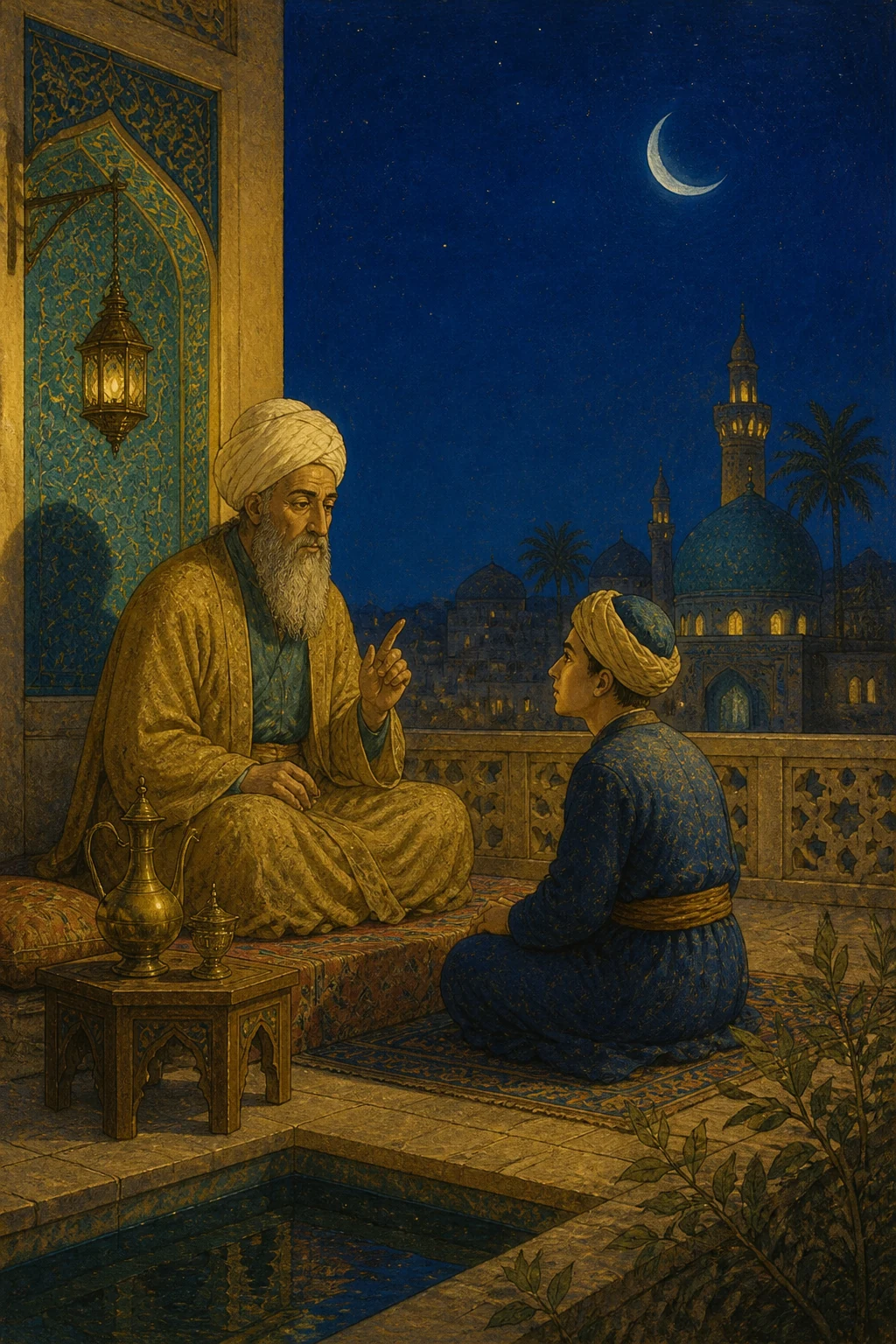
Then the third slave girl stepped back and the fourth came forward, saying, “Now I shall relate some of the tales of the righteous that come to mind. It is told that Bishr al-Hafi said, ‘I heard Khalid say, “Beware of hidden idolatry!” I asked him, “What is hidden idolatry?” He replied, “That one of you should pray, prolonging his bowing and prostration until his ritual purity is broken.”’ One of those who know God said, ‘Good deeds atone for evil deeds.’ Another said, ‘I asked Bishr al-Hafi to impart to me something of the mysteries of spiritual truth. He replied, “My son, this knowledge is not something we should teach to everyone: out of every hundred, only five, as with the alms due on silver.”’ Ibrahim ibn Adham said, ‘I found his words sweet and admirable. Once, while I was praying, I saw Bishr at prayer, so I stood behind him and continued bowing until the muezzin gave the call. Then a ragged man rose and said, “O people, beware of truth that harms; there is no fault in falsehood that benefits. Necessity leaves no choice. Speech avails nothing in absence, just as silence does no harm in the presence of Being.”’ Ibrahim also said, ‘I saw Bishr drop a small coin, so I went up to him and offered him a dirham. He said, “I will not take it.” I told him, “It comes from a wholly lawful source.” He replied, “I will not exchange the blessings of the world to come for the blessings of this world.”’ It is also related that the sister of Bishr al-Hafi went to Ahmad ibn Hanbal…” But morning overtook Shahrazad, and she fell silent, leaving her tale untold.
When it was the eighty-second night,
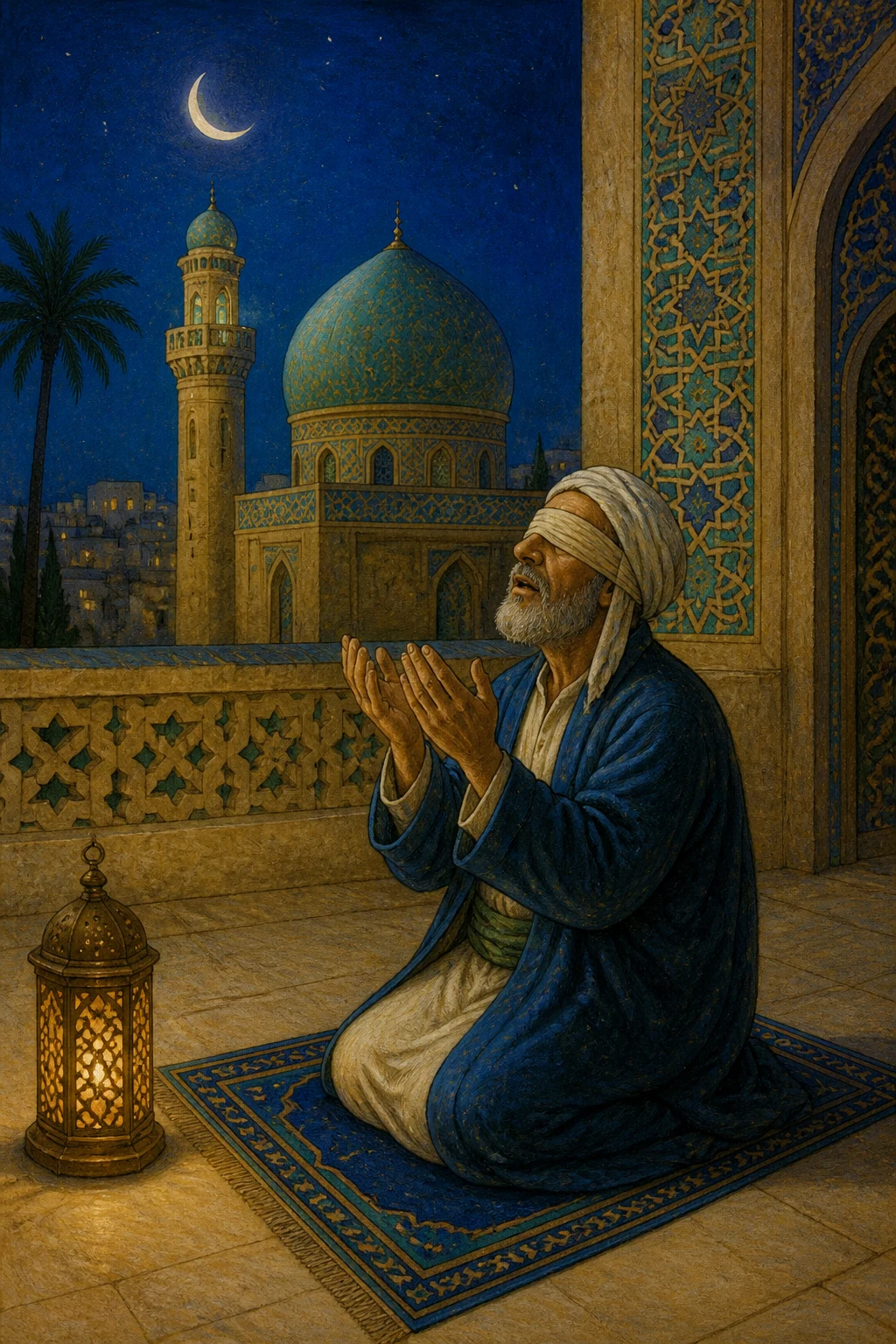
She said, “It has reached me, O fortunate King, that the vizier Dandan said to Daw’ al-Makan: ‘The slave girl said to your father, “The sister of Bishr al-Hafi went to Ahmad ibn Hanbal and said, ‘O imam of the faith, we are people who spin at night and work for our livelihood by day. Sometimes the torches of the governors of Baghdad pass by while we are on the roof, and we spin by their light. Is this forbidden to us?’ He asked her, ‘Who are you?’ She replied, ‘The sister of Bishr al-Hafi.’ He said, ‘O household of Bishr, I never cease to discern the scrupulous piety in your hearts!’ One of those who know God said, ‘When God desires good for a servant, He opens to him the gate of good works.’ Whenever Malik ibn Dinar passed through the market and saw something he coveted, he would say, ‘Be patient, my soul, for I will not grant you what you desire.’ He also said—may God be pleased with him—‘The soul’s salvation lies in opposing it, and its ruin in following it.’ Mansur ibn Ammar said, ‘Once I made the pilgrimage, taking the road to Mecca through Kufa. It was a dark night when I heard someone crying out in the depths of the night, saying, “My God, by Your might and majesty, I did not mean to defy You by my disobedience, nor was I ignorant; but it was a sin You had decreed for me in Your beginningless eternity. Forgive me what I have done, for in my ignorance I have disobeyed You.” When he had finished his supplication, he recited this verse: “O you who believe, guard yourselves and your families against a Fire whose fuel is people and stones.” I heard the sound of a fall, though I could not tell what it was, and went on my way. The next day, as we set off along our route, a funeral procession came out, followed by an old woman whose strength had failed her. I asked her about the dead man, and she said, “A man passed our house last night while my son was standing at prayer. He recited a verse from the Book of God Most High, and my son’s gallbladder burst, and he fell down dead. This is his funeral.”’”’”