Waltey
Preksasp
Cuentos antiguos
Cuentos de Navidad, de la patria y antiguos · Emilia Pardo BazánO besedilu
Preksasp
- Vir
- Cuentos de Navidad, de la patria y antiguos
- Avtor
- Emilia Pardo Bazán
- Jezik branja
- English
- Jezik izvirnika
- Español
- Čas branja
- 7 min branja
- Obseg
- 6 strani
- Naslov izvirnika
- 030 Prejaspes
O izvirniku
Cuentos de Navidad, de la patria y antiguos
Sedemintrideset avtorskih zgodb v treh zgodovinskih knjižnih skupinah. Bralni jezik je English, izvirnik pa prihaja iz vira Cuentos de Navidad, de la patria y antiguos v jeziku Español.
Besedilo
Preksasp
We Westerners think we invented loyalty to monarchs, and we ascribe the growth of this singular sentiment to Christian ideas, confusing the feelings we ought to have for God, the supreme Cause and highest Good, with those whose object is a man born of woman. I do not know whether a sentiment is made better or worse by being ancient, but I do know that loyalty to monarchs is as old as the oldest forms of worship, and in support of this opinion I shall recall what befell the utterly devoted Prejaspes.
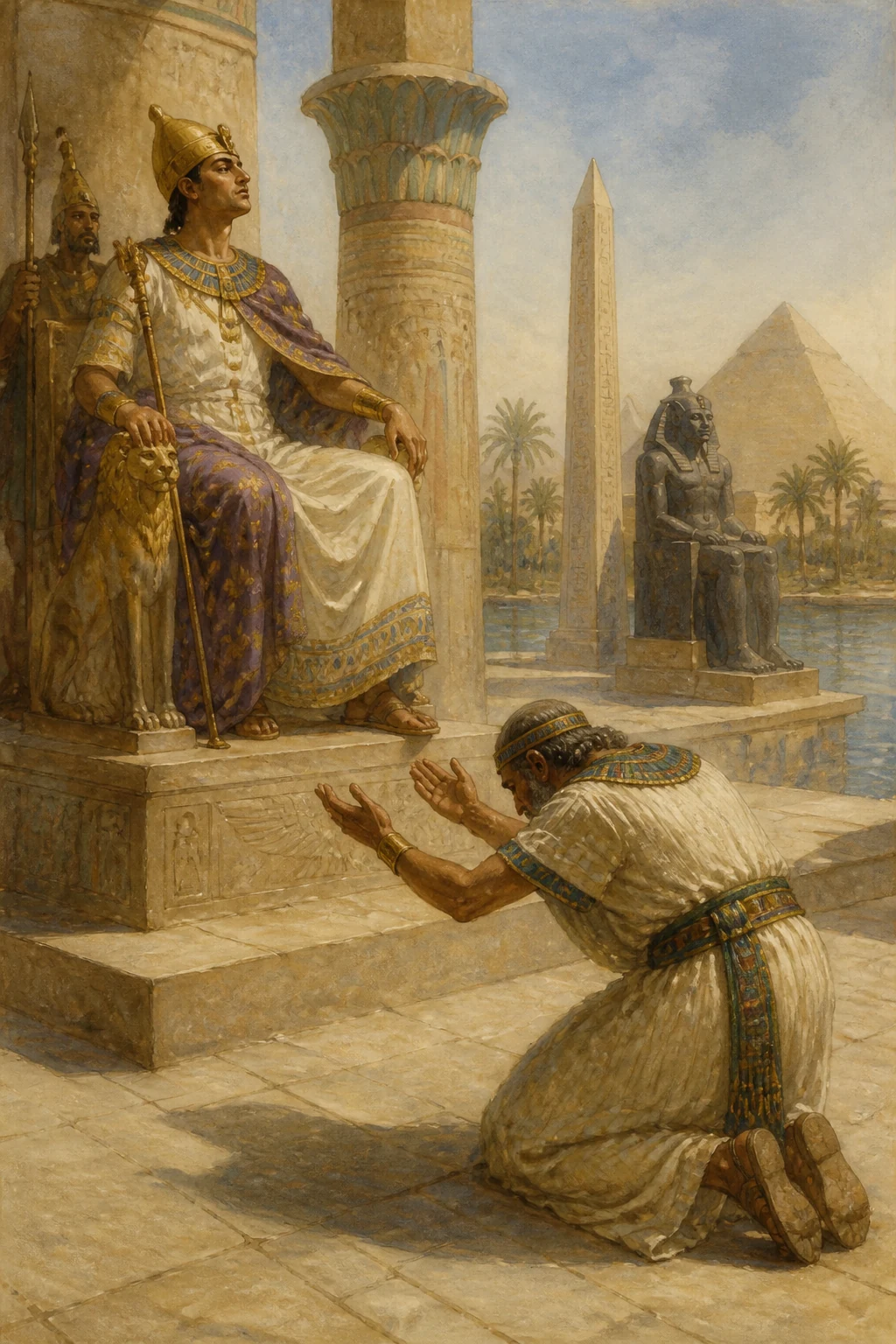
Cyrus had been a glorious and just sovereign, but his son and successor Cambyses, as he acquired a taste for the wine of absolute power, began to show the symptoms of the peculiar intoxication caused by that terrible liquor, distilled from human sweat, blood, and tears. He believed himself the centre of life and the eye of the world, and his invasion of Egypt did much to swell his pride and persuade him that his will acknowledged neither law nor restraint. Under the Pharaoh Amasis, that kingdom had attained a dazzling splendour of civilization; the Persian conquered and subdued it, entering in triumph the magnificent cities on the banks of the Nile, filled with palaces, terraced gardens, obelisks, pyramids, sphinxes, and colossi of porphyry and basalt. Master of Egypt, and seeing his name engraved in hieroglyphs on the pedestals of shrine-bearing statues and the columns of temples, Cambyses thought himself not a mortal but a divinity like Osiris, and the Egyptians prostrated themselves before that conqueror with the golden tiara, that pale face come out of the East. Only one class resisted paying worship to Cambyses: the priests. Religion alone held firm amid the general abasement, and for that very reason Cambyses was bent on humbling and defeating it, on satirizing it and, as we would say today, making a laughingstock of it. He missed no opportunity to mock the worship paid to gods with animal heads, so ridiculous in the eyes of a worshipper of Light, Fire, and the eternal Sun; and if he happened upon some ceremony of the Egyptian religion, he devised buffooneries to deride it. He happened to return unexpectedly to Memphis during the festival of the sacred bull Apis; bursting into the temple, he ordered the bovine god brought before him at once, and, drawing his scimitar, struck it a blow intended for its belly but landing in its thigh. “This god that bleeds and bellows is worthy of you,” he shouted at the Egyptians, who stood aghast at the desecration. Then the high priest, raising his hands to the vault of heaven, prophesied that the impious man who had wounded the god Apis would receive the same wound. Cambyses had the prophet flogged to death, but the prophecy remained engraved in the minds of the Egyptians as a hope, and in the king’s as a vague terror.
Among Cambyses’ servants was his steward Prejaspes, a brave man who would have flung himself into the fire for his monarch. Prejaspes saw in Cambyses the embodiment of the divine on earth, and believed an act supremely good or supremely evil according to whether it pleased or displeased Cambyses. Yet alongside such resolute self-abnegation there lived in Prejaspes’ soul a natural instinct for truthfulness and honesty, which taught him to discern the moral worth of actions and understand their consequences, at least where his own conduct was concerned. The one notion Prejaspes could not grasp was that, if there is a moral rule governing human actions, that rule binds princes as much as, or more than, their subjects; and when the commands of princes contradict that rule, obedience is owed to the rule alone. Prejaspes did not see it so, and indeed, through an excess of nobility of spirit, supposed that his blood, his entire life, and his immortal soul belonged to Cambyses.
Now Cambyses, knowing his steward’s unconditional loyalty, asked him one day what his subjects said of their king. And since Prejaspes had observed that drinking made the monarch furious and excitable, he answered with the best of intentions, firmly and respectfully: “My lord, they consider you a brave and great sovereign, but say that you are overfond of wine.” The answer did not please Cambyses, precisely because it gave off the acrid scent of truth; he knitted his thick, jet-black brows, and a flash passed through his eyes like the gleam of a dagger drawn from its sheath. Yet he made not the slightest objection—a very bad sign—and went on speaking pleasantly to his steward.
About a week later, on rising from table, at the hour when Cambyses was accustomed to stroll through the gardens, amusing himself by shooting sharp arrows at the little birds, he summoned Prejaspes and Prejaspes’ son, the palace’s chief cupbearer; and when they stood before him, he said cheerfully to Prejaspes: “Do you know, I have been thinking about my subjects’ remarks on my fondness for wine. They may well believe me some sort of madman, and suppose that excessive drinking has clouded my senses, dimmed my eyes, and weakened this arm that laid Egypt like a carpet beneath my feet. Would you believe it? I myself have grown uneasy, and I mean to make a test. Come now! Have your son stand over there, facing me... Set him squarely, pull his arms back to bare his chest... So... I shall draw my bow and shoot... If I plant the point in the very centre of his heart, you will admit that my subjects are mistaken and Cambyses retains all his faculties unimpaired.”
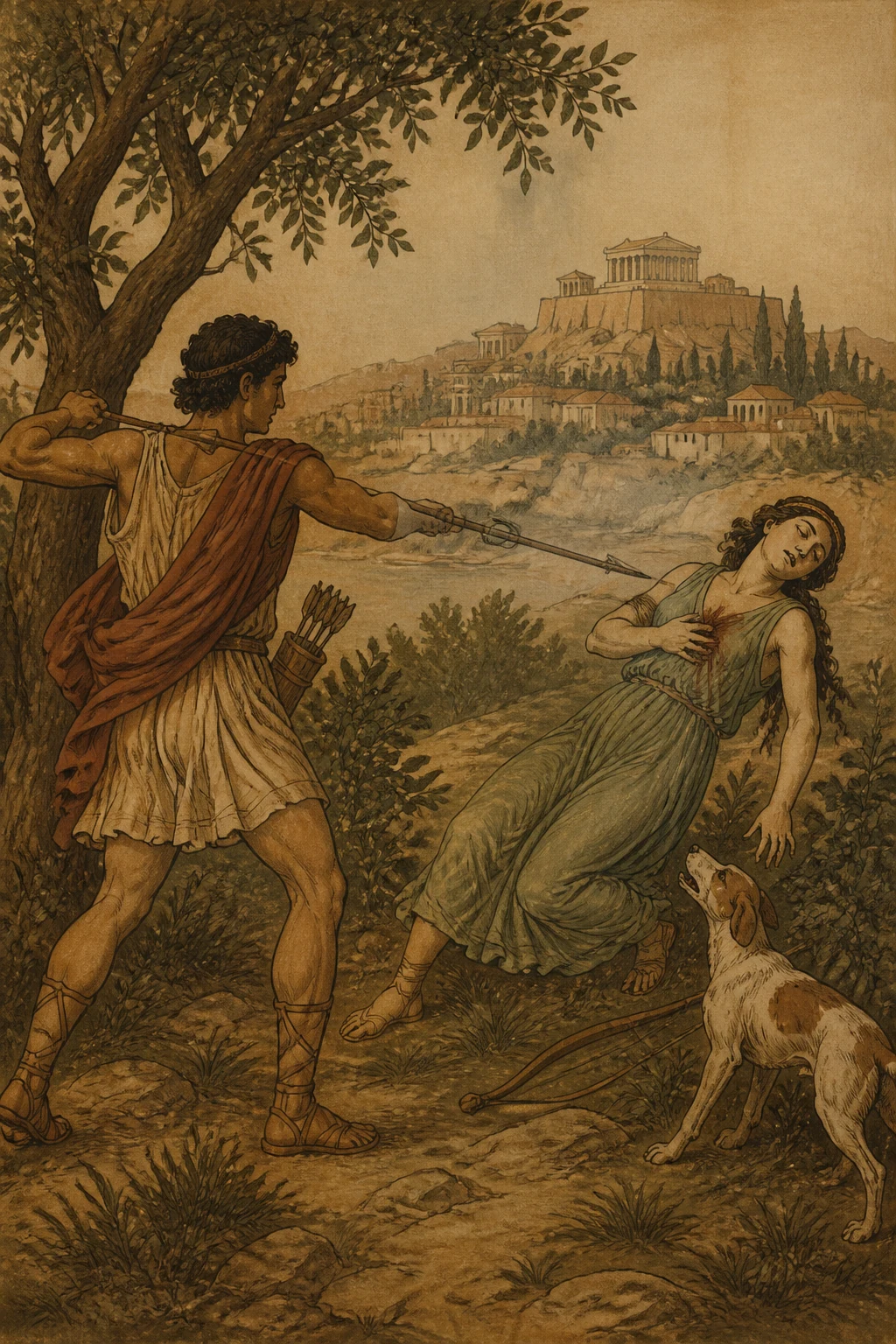
Prejaspes obeyed in silence. A deep trembling shook his limbs; great drops of icy sweat appeared at the roots of his hair; dizziness darkened his sight. Yet he was still sustained by the chimerical hope that this was a savage jest, and nothing more. Cambyses drew his bow, took careful, leisurely aim, and plucked the string; a whistle tore through the air, and Prejaspes’ son spun round and fell in a heap to the ground. “Ho!” cried Cambyses. “My carvers, here... Open that fellow’s chest and see whether the arrowhead has pierced the very middle of his heart.” It was still beating faintly when they presented it to Cambyses, with the arrow planted in its centre, not a hair’s breadth astray. The king burst into delighted laughter and turned to the stricken Prejaspes, asking him good-humouredly: “Well? Can I shoot? Can I hit the mark? Do you know a better archer than your king?” Prejaspes took half a minute or so to answer the royal jest. He stood motionless, and his enormously dilated eyes could not turn away from that bleeding heart, still warm—the heart of his dear son, whose faint, dying contractions seemed with every passing second to say to him in mystery: “Father, avenge me.” To tear out that very arrow and drive it into Cambyses’ breast! Oh, what bliss, what joy!... Suddenly Prejaspes came to himself: this was the king, his king, his master, the arbiter of his fate, the image of the eternal Sun on earth...! And, biting his lip in desperation, he uttered this courtly reply: “My lord, the god Apollo shoots no better than you...” Then, bowing to the ground, he withdrew to writhe alone, to bite his hands and wound his face and cover his hair with ashes.
And in Cambyses’ presence, Prejaspes hid his tears. Faithful as a dog, he remained ever at his side. Once the first dreadful grief had passed, one might have said that he loved him all the more now that blood and sacrifice lay between them. He was beside him on the day when Cambyses, mounting hastily to put down a rebellion, wounded himself with his own scimitar in the thigh, where he had wounded the god Apis; and at his bedside when the wound turned gangrenous and carried him to the grave. It was Prejaspes who anointed the corpse with fragrant nard and cinnamon, and set the golden tiara upon its cold, rigid temples.
Izvirnik
030 Prejaspes
Naslednje strani prikazujejo izvirno besedilo za primerjavo.
Pensamos los occidentales haber inventado la lealtad monárquica, y atribuímos el desarrollo de este singular sentimiento á las ideas cristianas, confundiendo los afectos que debe inspirarnos Dios, suma Causa y Bien sumo, con los que tienen por objeto á hombre nacido de mujer. Yo no sé si un sentimiento se califica ó descalifica por ser antiguo, pero sé que la lealtad monárquica es tan vieja como los más viejos cultos, y en apoyo de esta opinión recordaré la aventura que le sucedió al adictísimo Prejaspes.
Ciro había sido un soberano glorioso y justo, pero su hijo y sucesor Cambises, á medida que fue catando el vino del absoluto poder, mostró los síntomas de la embriaguez especial que ocasiona este terrible licor, destilado con sudor humano, sangre y lágrimas. Creyóse el centro de la vida y el ojo del mundo, y contribuyó á engreirle más y á persuadirle de que su voluntad no reconocía ley ni freno, su incursión por el Egipto, reino que había llegado á brillante esplendor de civilización bajo el Faraón Amasis y que el persa rindió y subyugó, entrando triunfante en las magníficas ciudades de la ribera del Nilo, henchidas de palacios, jardines en terrazas, obeliscos, pirámides, esfinges y colosos de pórfido y basalto. Dueño del Egipto Cambises, y viendo su nombre grabado en caracteres jeroglíficos en el pedestal de las estatuas naóforas y en las columnas de los templos, se tuvo, más que por mortal, por una divinidad como Osiris, y los egipcios se postraron ante aquel conquistador de tiara de oro, aquella faz pálida venida del Oriente. Sólo hubo una clase social que se resistió á tributar adoración á Cambises, y fué la de los sacerdotes. La religión era lo único que resistía en medio del abatimiento de todos, y por lo mismo Cambises tuvo empeño en humillarla y vencerla, en satirizarla y, como hoy diríamos, ponerla en solfa. No perdía ocasión de burlarse de aquel culto tributado á dioses con cabezas de animales, tan risibles para un adorador de la Luz, el Fuego y el eterno Sol; y si casualmente sorprendía alguna ceremonia de la religión egipcia, ideaba bufonadas para escarnecerla. Acertó á regresar impensadamente á Menfis en ocasión en que se celebraba la fiesta del sagrado buey Apis; y entrándose de rondón por el templo, mandó que le sacasen allí inmediatamente al bovino dios, y tirando de cimitarra, le hirió de una cuchillada, que quiso dar en el vientre y dió en el muslo. «Este dios que sangra y muge es digno de vosotros», gritó á los egipcios, horrorizados de la profanación. Entonces el gran sacerdote, alzando las manos á la bóveda celeste, profetizó que el impío que hería al dios Apis recibiría herida igual. Cambises mandó azotar mortalmente al profeta, pero la profecía quedó grabada en la mente de los egipcios como esperanza, como vago terror en la del rey.
Tenía Cambises entre sus servidores al mayordomo Prejaspes, hombre valeroso, capaz de echarse al fuego por su monarca. Veía Prejaspes en Cambises la forma de lo divino sobre la tierra, y entendía que un acto era óptimo ó pésimo según á Cambises placía ó desplacía. Sin embargo, al mismo tiempo que tan decidida abnegación, existía en el alma de Prejaspes un instinto natural de veracidad y de honradez, que le enseñaba á discernir el valor moral de las acciones, y á darse cuenta de su alcance, al menos en su propia conducta. La única noción que Prejaspes no alcanzaba, es que si hay regla moral para las acciones humanas, esta regla obliga lo mismo ó más á los príncipes que á los vasallos, y cuando las órdenes de los príncipes están con la regla en contradicción, la obediencia sólo á la regla es debida. No lo entendía así Prejaspes, y hasta suponía, por exceso de nobleza de ánimo, que su sangre y su vida entera y su alma inmortal pertenecían á Cambises.
Sucedió, pues, que Cambises, conocedor de la incondicional lealtad de su mayordomo, preguntóle un día qué decían de su rey los vasallos. Y como Prejaspes hubiese observado que al monarca le enfurecía y exaltaba el beber, contestóle lleno de buena intención y con entereza y respeto: «Señor, opinan que eres un soberano valeroso y grande, pero que te gusta el vino en demasía.» No complació la respuesta á Cambises, por lo mismo que exhalaba el acre aroma de la verdad; frunció el poblado entrecejo de azabache, y por sus ojos cruzó un relámpago como el que despide el puñal al salir de la vaina. Sin embargo, no hizo la menor objeción--señal malísima,--y siguió hablando con agrado á su mayordomo.
Cosa de una semana después, al levantarse de la mesa, hora en que solía Cambises pasear por los jardines entreteniéndose en tirar agudas flechas á los pajarillos, llamó á Prejaspes y al hijo de Prejaspes, copero mayor de palacio; y al verles en su presencia, dijo á Prejaspes en tono alegre: «¿Sabes que he estado pensando en eso de que mis vasallos comenten mi afición al vino? Porque capaces serán de creer que soy algún insensato y que el abuso de la bebida ha turbado mis sentidos, nublado mis pupilas y debilitado este brazo que puso al Egipto por alfombra de mis pies. ¿Lo creerás? Yo mismo siento aprensión y quiero hacer un ensayo. ¡Ea! Que tu hijo se coloque ahí enfrente... Cuádrale bien, échale atrás los brazos para que descubra el pecho... Así... Voy á flechar el arco y disparar... Si coloco la punta en mitad del corazón, convendrás en que se engañan mis súbditos y Cambises conserva íntegras sus facultades.»
Prejaspes, silencioso, obedeció. Temblor profundo sacudía sus miembros; gruesas gotas de sudor helado asomaban en la raíz de sus cabellos; un vértigo oscurecía sus ojos. Pero aún le sostenía la esperanza quimérica de que aquello fuese una chanza feroz, y no más. Cambises tendió el arco, apuntó cuidadosa y lentamente, pellizcó la cuerda; un silbido desgarró el aire, y el hijo de Prejaspes giró sobre sí mismo y cayó al suelo desplomado. «Hola», gritó Cambises; «aquí mis trinchantes... Abrid el pecho de ese, á ver si el hierro ha partido de medio á medio el corazón.» Palpitaba éste débilmente aún cuando se lo presentaron á Cambises, con la flecha plantada en el centro, sin desviación de una línea. Soltó el rey gozosa carcajada, y volvióse hacia el anonadado Prejaspes, preguntándole en tono de buen humor: «¿Qué tal? ¿Sé yo disparar? ¿Sé acertar? ¿Conoces otro arquero mejor que tu rey?» Tardó Prejaspes en contestar á la regia chanza cosa de medio minuto. Estaba inmóvil, y sus pupilas, inmensamente dilatadas, no sabían apartarse de aquel corazón sangriento, tibio todavía,--el corazón de su dulce hijo, cuyas débiles contracciones expirantes, á cada segundo parecían decirle con misterio: «Padre, véngame.» ¡Arrancar aquella flecha misma, clavarla en la tetilla de Cambises! ¡Oh ventura, oh goce!...--De pronto, Prejaspes volvió en sí: era el rey, era su rey, su dueño, su árbitro, la imagen del eterno Sol sobre la tierra...!; y devorándose el labio en desesperada mordedura, su lengua profirió esta respuesta cortesana: «Señor, el dios Apolo no flecha mejor que tú...» É inclinándose hasta el suelo, desapareció para revolcarse á solas, para poder morderse las manos y herirse el rostro y cubrirse el cabello de ceniza.
Y en presencia de Cambises, Prejaspes ocultó sus lágrimas. Fiel como el perro, acompañóle siempre. Pasado el primer horrible dolor, diríase que le amó más desde que hubo entre los dos sangre y sacrificio. A su lado estaba el día en que, montando Cambises precipitadamente para sofocar una rebelión, se hirió con su propia cimitarra en el muslo, donde había herido al dios Apis; y á su cabecera, cuando se gangrenó la herida y le llevó á la sepultura, Prejaspes fue quien ungió con aromas de nardo y cinamomo el cadáver, y le colocó en las yertas sienes la tiara de oro.
Nadaljuj z branjem