Waltey
Poslednji odpor plemena Biloxi
181 The Last Stand of the Biloxi
Myths and Legends of Our Own Land · Charles M. SkinnerO besedilu
Poslednji odpor plemena Biloxi
- Vir
- Myths and Legends of Our Own Land
- Avtor
- Charles M. Skinner
- Jezik branja
- Slovenščina
- Jezik izvirnika
- English
- Čas branja
- 3 min branja
- Obseg
- 3 strani
- Naslov izvirnika
- 181 The Last Stand of the Biloxi
O izvirniku
Myths and Legends of Our Own Land
Obsežna zgodovinska zbirka ameriških legend, ki jih je Skinner zbral in avtorsko rekonstruiral. Bralni jezik je Slovenščina, izvirnik pa prihaja iz vira Myths and Legends of Our Own Land v jeziku English.
Besedilo
Poslednji odpor plemena Biloxi
Južni del te dežele je nekoč naseljevalo ljudstvo Biloksi, ki je po omiki stopalo v korak z Azteki in še posebej gojilo glasbeno umetnost. V blagem in mirnem življenju so tako hitro pozabili ravnati z orožjem, da niso mogli zadržati napada, ko so Čoktavi vdrli na njihova polja. Pred divjaki so zapuščali mesto za mestom, dokler niso bili Biloksi, ki jih je ostalo le še nekaj tisoč, pregnani k ustju reke Pascagoula v Misisipiju. Tam so se utrdili in se nekaj mesecev upirali osvajalcem. Toda napočil je čas, ko so jim pošle zaloge in je lakota izmozgala sleherno telo. Beg ni bil mogoč. Predaja je navadno pomenila pokol in nasilje. Sklenili so umreti skupaj.
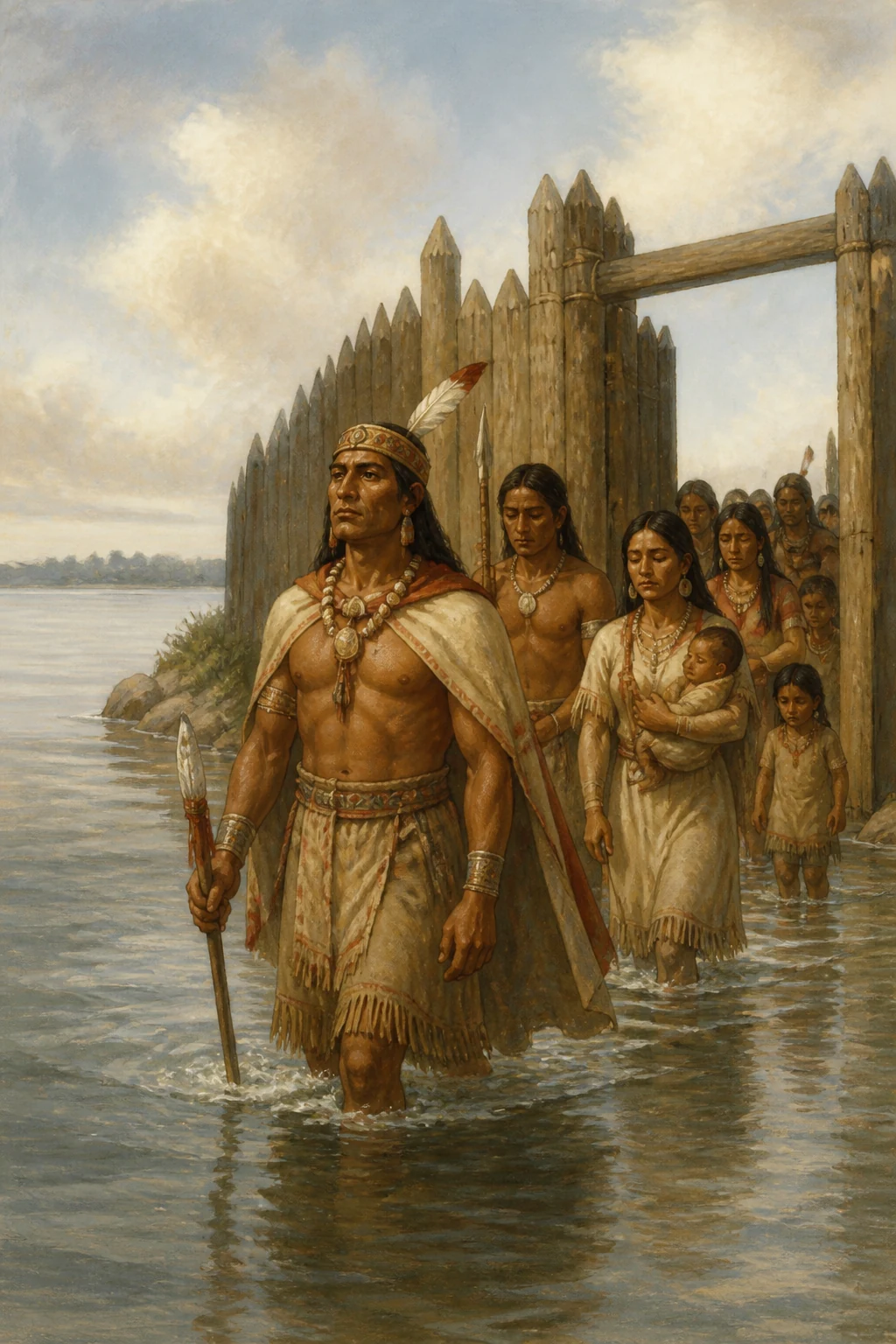
Nekega lepega pomladnega jutra so se odprla vrata njihove utrdbe, obrnjena proti reki, in preživeli nesrečnega plemena so odkorakali skoznje. Na čelu je stopal njihov poglavar z odločnostjo na izstradanem obrazu, za njim vojščaki in svetovalci, mladeniči, ženske in otroci ter dojenčki, speči na praznih prsih svojih mater. Ko so s počasnim, a vztrajnim korakom stopali izza obzidja, so zapeli, in njihovi napadalci, ki so se bili umaknili v šotore k obedu, so osuplo prisluhnili zborovski pesmi kljubovanja in radosti, ki jo je vzdignilo stradajoče ljudstvo. Ne da bi se ustavili ali zavili s poti, so zabredli v zaliv in korakali naprej. Zdaj so se vode sklenile nad poglavarjem, nato nad vojščaki — nazadnje je bilo v petju slišati le še nekaj ženskih glasov, čez nekaj trenutkov pa je vse utihnilo. Niti eden se ni ustrašil žrtve. In še leta zatem je odmev te smrtne pesmi plaval nad valovi.
Druga različica legende pripoveduje, da so se Biloksi imeli za otroke morja in da so ob čudoviti glasbi častili podobo prelepe morske deklice. Ko so med to veselo in blago ljudstvo prišli Španci, so ga z zatiranjem in umori prisilili, da je sprejelo vero belega človeka, toda pred oltarjem so jo seveda izpovedovali le z ustnicami. Neke noči sta Bilokse prebudila šum peruti in naraščanje reke. Stopili so na plano in zagledali vode Pascagoule, nakopičene v trepetajoč grič, na njegovem z mesečino obsijanem vrhu pa je stala sijoča morska deklica in jim pela: »Pridite k meni, otroci morja. Ne zvon ne knjiga ne križ vas ne bodo odvrnili od vaše kraljice.« Očarani od njene pesmi in moči njenih pogledov so stopali naprej, dokler niso obkrožili vodnega griča. Tedaj se je reka s sikanjem in bučanjem zgrnila nazaj v svojo strugo in potopila vse pleme. Glasba, ki še zdaj preveva zaliv in se ob mesečini dviga iz vode, je zvok njihovega veseljačenja v votlinah na dnu — temnopoltih Tannhäuserjev v južnem Venerinem gori. Star duhovnik, ki je bil ob tem čudežnem dogodku med njimi, se je bal, da njegov nauk ni obrodil sadu zato, ker sam ni bil v stanju popolne milosti. Na smrtni postelji je izjavil, da bi duhovnika, ki bi na božično polnoč odveslal na kraj, od koder se razlega glasba, in v vodo spustil razpelo, nemudoma pogoltnili valovi, toda vse duše na dnu bi bile odrešene. Te duše niso bile nikoli odkupljene.
Izvirnik
181 The Last Stand of the Biloxi
Naslednje strani prikazujejo izvirno besedilo za primerjavo.
The southern part of this country was once occupied by a people called the Biloxi, who had kept pace with the Aztecs in civilization and who cultivated especially the art of music. In lives of gentleness and peace they so soon forgot the use of arms that when the Choctaws descended on their fields they were powerless to prevent the onset. Town after town they evacuated before the savages, and at last the Biloxi, reduced to a few thousands, were driven to the mouth of the Pascagoula River, Mississippi, where they intrenched themselves, and for a few months withstood the invaders. But the time came when their supplies were exhausted, and every form was pinched with hunger. Flight was impossible. Surrender commonly meant slaughter and outrage. They resolved to die together.
On a fair spring morning the river-ward gates of their fort were opened and the survivors of that hapless tribe marched forth, their chief in advance, with resolution on his wasted face, then the soldiers and counsellors, the young men, the women and children, and the babes asleep on the empty breasts of their mothers. As they emerged from the walls with slow but steady step they broke into song, and their assailants, who had retired to their tents for their meal, listened with surprise to the chorus of defiance and rejoicing set up by the starving people. Without pause or swerving they entered the bay and kept their march. Now the waters closed over the chief, then the soldiers--at last only a few voices of women were heard in the chant, and in a few moments all was still. Not one shrank from the sacrifice. And for years after the echo of that death-song floated over he waves.
Another version of the legend sets forth that the Biloxi believed themselves the children of the sea, and that they worshipped the image of a lovely mermaid with wondrous music. After the Spaniards had come among this gay and gentle people, they compelled them, by tyranny and murder, to accept the religion of the white man, but of course it was only lip-service that they rendered at the altar. The Biloxi were awakened one night by the sound of wings and the rising of the river. Going forth they saw the waters of Pascagoula heaped in a quivering mound, and bright on its moonlit crest stood a mermaid that sang to them, “Come to me, children of the sea. Neither bell, book, nor cross shall win you from your queen.” Entranced by her song and the potency of her glances, they moved forward until they encircled the hill of waters. Then, with hiss and roar, the river fell back to its level, submerging the whole tribe. The music that haunts the bay, rising through the water when the moon is out, is the sound of their revels in the caves below--dusky Tannhausers of a southern Venusberg. An old priest, who was among them at the time of this prodigy, feared that the want of result to his teachings was due to his not being in a perfect state of grace. On his death-bed he declared that if a priest would row to the spot where the music sounded, at midnight on Christmas, and drop a crucifix into the water, he would instantly be swallowed by the waves, but that every soul at the bottom would be redeemed. The souls have never been ransomed.
Nadaljuj z branjem