Prevod
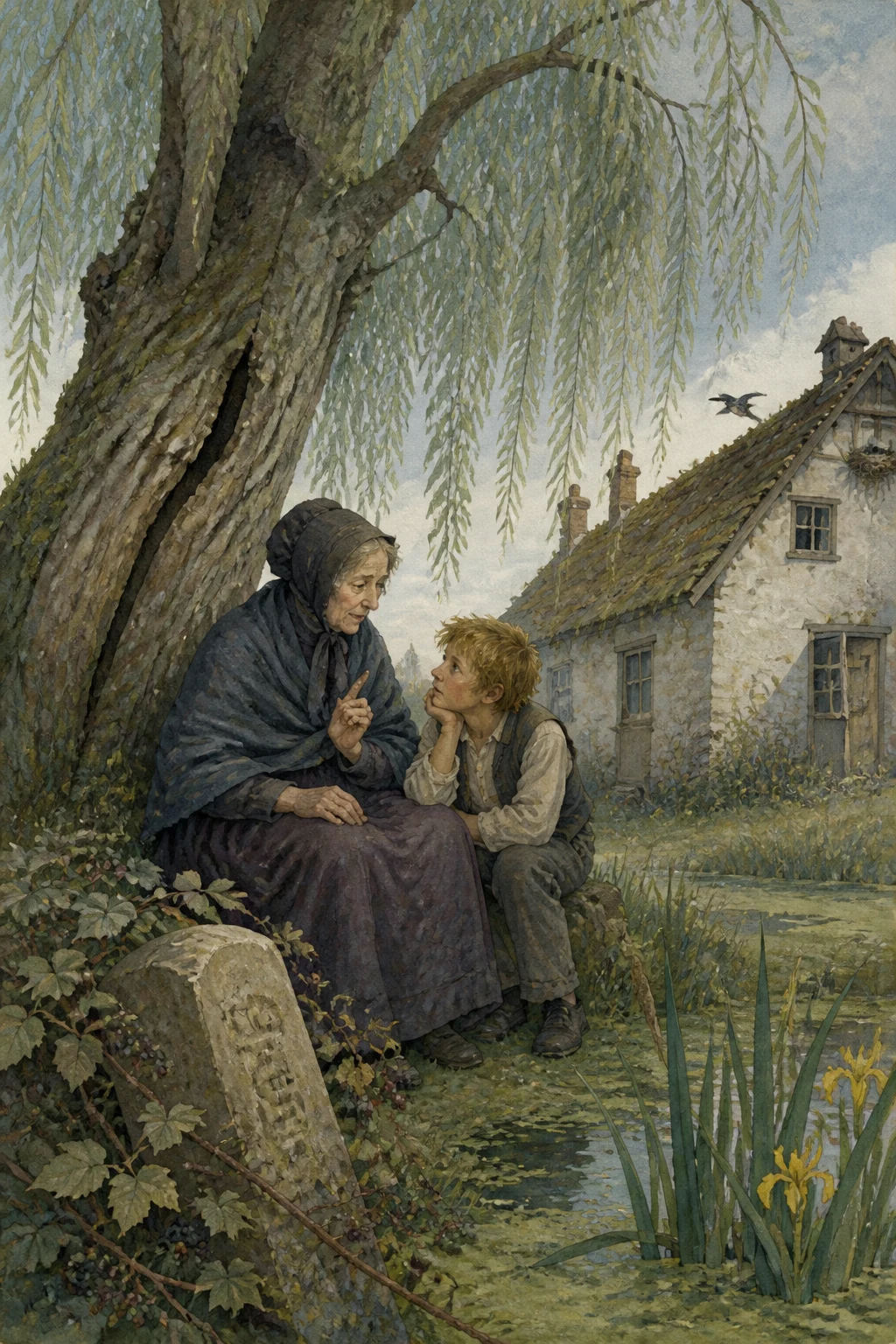
The countryside down by Køge is very bare. The town does lie by the sea, to be sure, and that is always lovely, but it might still be lovelier than it is: flat fields all around, and the woods a long way off. Yet when a place is truly your home, you will always find something beautiful in it, something you may long for afterwards even in the loveliest place in the world! And we must admit that on the outskirts of Køge, where a couple of small, poor gardens stretch down to the little river that runs into the sea, it could be quite delightful in summertime. So thought the two little neighbours, Knud and Johanne, who played there and crawled beneath the gooseberry bushes to visit one another. In one garden stood an elder tree, in the other an old willow, and it was under this tree that the children especially loved to play. They were allowed to, although it stood right beside the river, where they might easily have fallen into the water; but our Lord keeps an eye on little ones, or things would go badly indeed. They were very careful, too; in fact, the boy was such a coward about water that in summer it was impossible to get him into the sea, where the other children loved to splash about. They teased him for it, and he had to put up with that. But then little Johanne next door dreamed that she was sailing in a boat on Køge Bay, and Knud walked straight out to her; the water first came up to his neck, then closed right over his head. From the moment Knud heard that dream, he would no longer stand for being called a coward about water, but simply referred people to Johanne’s dream. It was his pride and joy; but he did not go into the water.
Their poor parents often visited one another, and Knud and Johanne played in the gardens and along the country road, where a whole row of willows stood beside the ditches. They were not beautiful trees, their crowns had been so badly lopped; but then they were not there for ornament, but to be useful. The old willow in the garden was lovelier, and beneath it the children spent many a happy hour, as the saying goes.
In Køge there is a large market square, and at fair time whole streets of stalls stood there, selling silk ribbons, boots, and all manner of things. There was a great crush of people, and usually rain, and then you could smell the peasants’ woollen coats, but also the most delicious scent of honey cakes. There was a whole stall full of them, and best of all, the man who sold them always lodged with little Knud’s parents during the fair. Naturally, a little honey cake would come Knud’s way, and Johanne had her share of it. But something almost better still was that the honey-cake seller knew how to tell stories, and about nearly anything, even his own honey cakes. Indeed, one evening he told a story about them that made so deep an impression on the two children that they never forgot it afterwards; so perhaps we had better hear it too, especially as it is short.
“There were two honey cakes lying on the counter,” he said. “One was shaped like a man with a hat, the other like a maiden without a hat, but with a dab of gold leaf on her head. Their faces were on the side turned upwards, and that was the side to look at, not the underside; you should never look at a person from the wrong side. The man had a bitter almond on his left side, which was his heart; the maiden, on the other hand, was honey cake through and through. They lay on the counter as samples, and they lay there a long time, and then they fell in love with each other. But neither told the other, and that is something you must do if anything is to come of it.
“‘He is a man; he must speak first,’ she thought, though she would have been quite content just to know that her love was returned. His thoughts were rather more ravenous, as men’s thoughts always are. He dreamed that he was a living street boy with four skilling to his name, and that he bought the maiden and ate her up.
“And they lay for days and weeks on the counter and grew dry, and her thoughts grew finer and more womanly. ‘It is enough for me to have lain on the counter beside him!’ she thought, and then she broke at the waist.
“‘If she had known of my love, she would surely have held out a little longer!’ he thought. And that is the story, and here they both are!” said the cake seller. “They are remarkable for the course of their lives and their silent love, which never leads to anything. There, you may have them!” And he gave Johanne the man, who was whole, while Knud received the broken maiden. But they were so moved by the story that they could not bear to eat the lovers.
The next day they took them into Køge churchyard, where the church wall is overgrown with the loveliest green ivy, hanging over it like a rich carpet, winter and summer alike. They stood the honey cakes among the leaves in the sunshine and told a crowd of other children the story of the silent love that was no good at all—the love, that is, for the story was delightful, they all agreed. And when they looked at the honey-cake couple, why, a big boy had—and he did it out of sheer malice—eaten the broken maiden. The children cried over it; and afterwards, no doubt so that the poor man should not be left alone in the world, they ate him too. But they never forgot the story.
The children were always together by the elder bush and beneath the willow, and the little girl sang the loveliest songs in a voice as clear as a silver bell. Knud had not a note of music in him, but he knew the words, and that is something. People in Køge, even the ironmonger’s wife, would stop to listen to Johanne. “What a sweet voice that little child has!” she said.
Those were blessed days, but such days do not last for ever. The neighbours parted. The little girl’s mother had died, and her father was going to marry again in Copenhagen, where he could earn a living; he was to be a messenger somewhere, a very profitable post, it was said. And the neighbours parted in tears, the children weeping most of all; but the grown-ups promised to write to one another at least once a year. Knud was apprenticed to a shoemaker; they could not let that lanky boy go on idling about. And then he was confirmed!
Oh, how he would have loved to go to Copenhagen on that solemn day and see little Johanne! But he did not go, and he had never been there, although it was only five Danish miles from Køge. Still, Knud had seen its towers across the bay in clear weather, and on his confirmation day he could plainly see the golden cross shining on the Church of Our Lady.
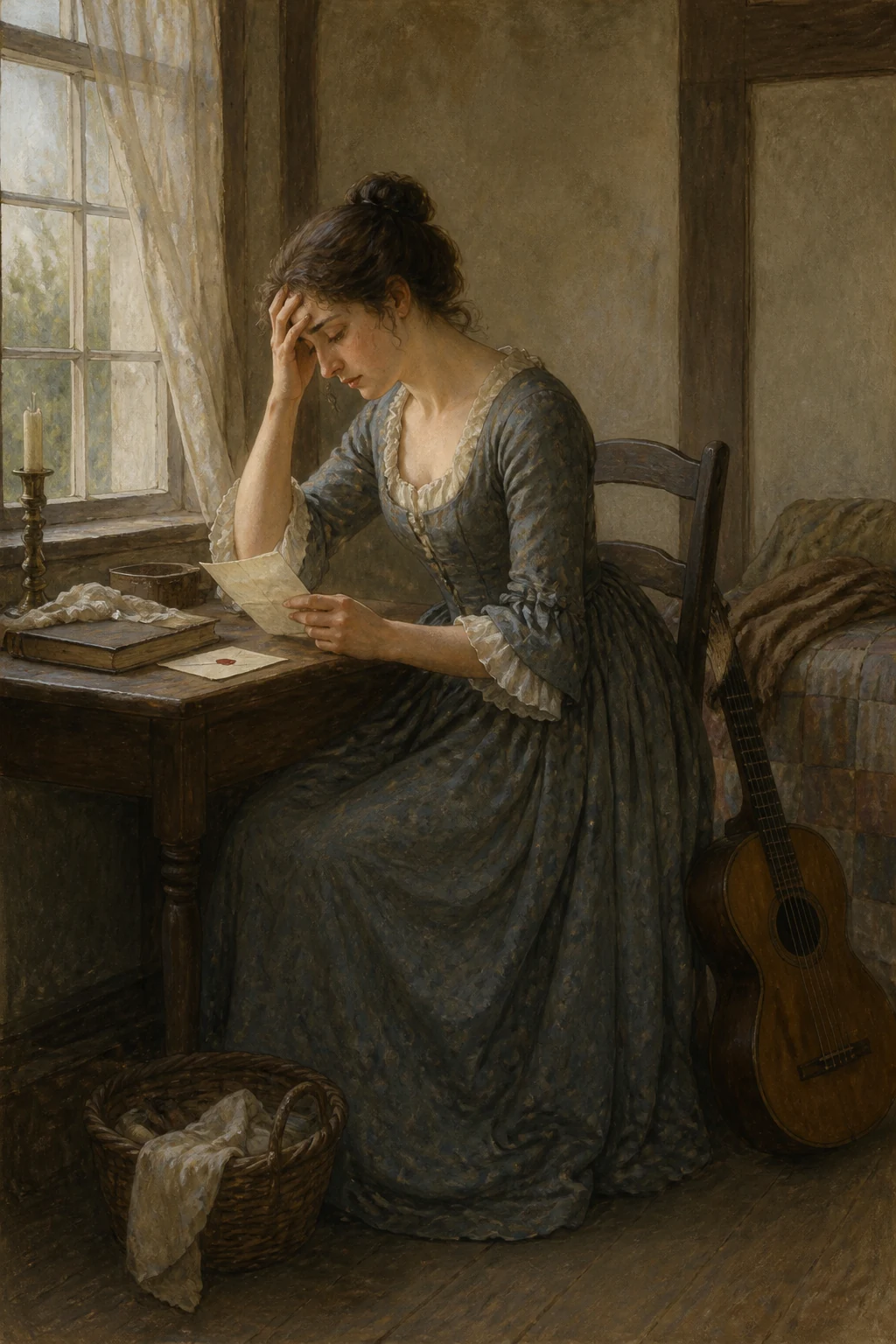
Ah, how he thought of Johanne! Did she remember him? Yes! At Christmas a letter came from her father to Knud’s parents. Things were going very well in Copenhagen, and Johanne’s beautiful voice was to bring her great good fortune. She had been engaged at the theatre, the one where they sang, and was already being paid a little for it. Out of this she sent her dear old neighbours in Køge a whole rix-dollar to make merry with on Christmas Eve. They were to drink her health; she had added that herself, in her own handwriting, in a postscript, and there it also said, “Kind regards to Knud!”
They all cried, although it was such happy news; but theirs were tears of joy. Johanne had been in his thoughts every day, and now he saw that she thought of him too. And the nearer he came to becoming a journeyman, the clearer it grew to him that he loved Johanne dearly and that she must become his little wife. Then a smile would play about his lips, and he pulled the thread through all the more briskly, his leg braced against the strap. He drove the awl right into one of his fingers, but that did not matter. He certainly would not remain silent like the two honey cakes; that story had taught him a great deal.
And then he became a journeyman, and his knapsack was strapped up. At last he was going to Copenhagen for the first time in his life, and he already had a master there. How surprised and happy Johanne would be! She was seventeen now, and he was nineteen.
He meant to buy her a gold ring before leaving Køge, but then he reflected that they probably had far prettier ones in Copenhagen. So he said goodbye to his parents and set off briskly on foot through the autumn wind and rain. The leaves were falling from the trees; soaked to the skin, he arrived in the great city of Copenhagen and at his new master’s house.
The very next Sunday he would pay a visit to Johanne’s father. He put on his new journeyman’s clothes and his new hat from Køge, which suited Knud so well; until then he had only ever worn a cap. He found the house he was looking for and climbed the many flights of stairs. It was enough to make one dizzy, the way people were stacked on top of one another in this bewildering city.
The sitting room looked quite prosperous, and Johanne’s father welcomed him kindly. To the lady of the house he was a stranger, of course, but she shook his hand and gave him coffee.
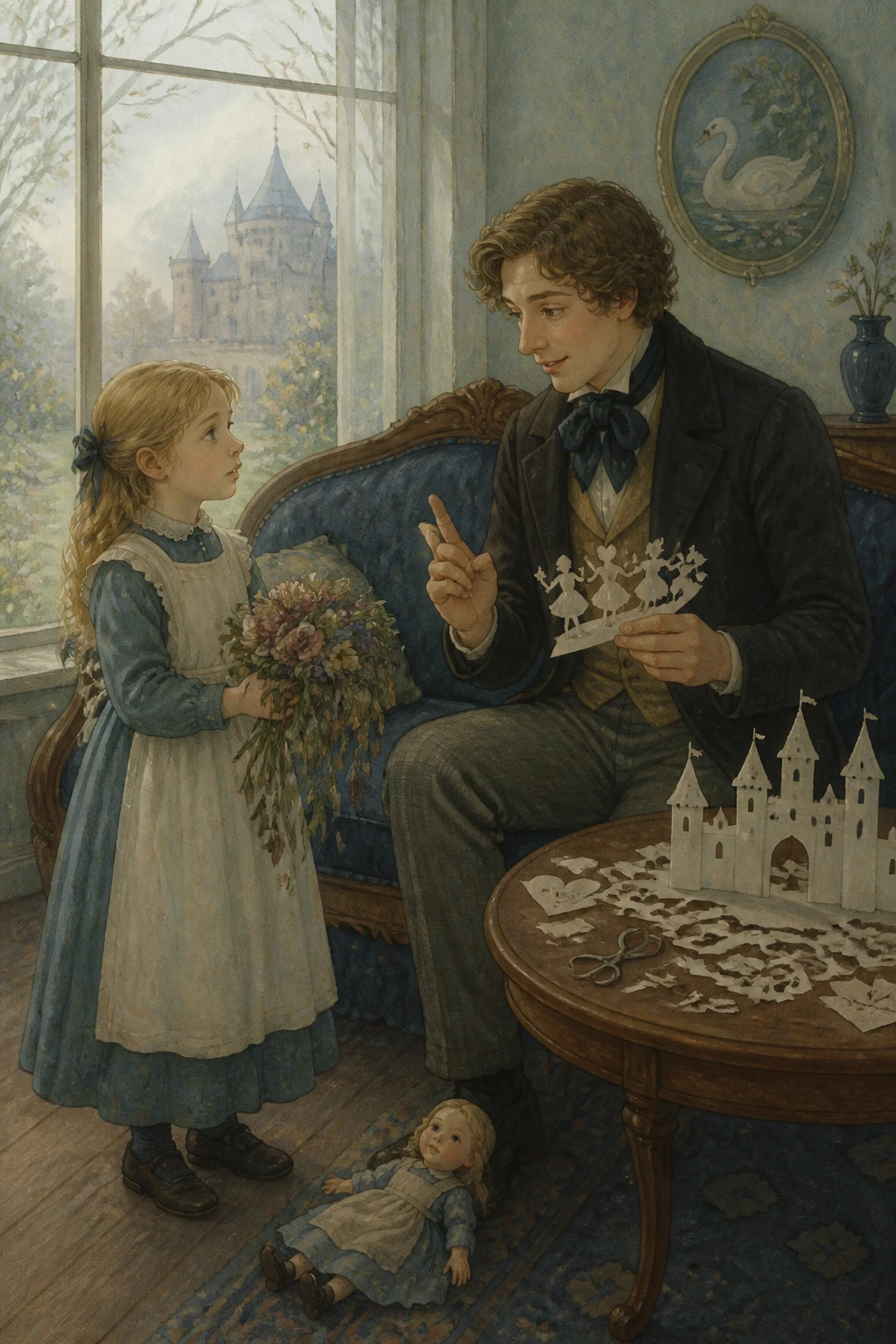
“Johanne will be delighted to see you!” said her father. “You have grown into a very fine young man! Now you shall see her! Ah, she is a girl who brings me joy, and will bring me more, with God’s help! She has her own room, and she pays us for it!” And her father himself knocked quite politely at her door, as though he were a stranger, and then they went in. Oh, how pretty it was! Surely there was no room like it in all Køge; the queen herself could not have had anything lovelier! There was a carpet, there were curtains reaching right down to the floor, a real velvet chair, flowers and pictures everywhere, and a mirror you might almost have walked straight into, it was as big as a door. Knud saw it all at once, and yet he saw only Johanne. She was a grown young woman, quite different from what Knud had imagined, but far more beautiful! There was not a girl in Køge like her, and how elegant she was! But what a strangely unfamiliar look she gave Knud—only for a moment, though; then she flew towards him as if she meant to kiss him. She did not, but she very nearly did. Yes, she was truly glad to see her childhood friend! Were there not tears in her eyes? And she had so much to ask and talk about, from Knud’s parents to the elder tree and the willow, which she called Elder Mother and Willow Father, as though they too were people. But they had as much right to count as people as the honey cakes did. She spoke of those as well, of their silent love, and how they had lain on the counter and broken to pieces; and then she laughed so heartily. But the blood burned in Knud’s cheeks, and his heart beat faster than ever! No, she had not grown proud at all! He could tell that it was she who prompted her parents to invite him to stay the whole evening. She poured the tea and offered him a cup herself, and afterwards she took a book and read aloud to them. To Knud it seemed that the very passage she read was about his love, so perfectly did it match all his thoughts. Then she sang a simple song, but on her lips it became a whole story, as though her own heart were overflowing with it. Yes, she certainly loved Knud. Tears ran down his cheeks; he could not help it, and he could not say a single word. He thought himself very foolish, yet she pressed his hand and said, “You have a good heart, Knud! Always stay as you are!”
It was an incomparable evening, not the sort one could sleep after, and Knud did not sleep. As they parted, Johanne’s father had said, “Well, now, do not forget us altogether! See that you do not let the whole winter go by before you come to visit again!” So surely he could come on Sunday! And he would. But every evening when work was over—and they worked by lamplight—Knud went out into the town. He walked along the street where Johanne lived and looked up at her window. There was nearly always a light, and one evening he saw the shadow of her face quite plainly on the curtain. That was a wonderful evening! His master’s wife did not approve of his always being out on the prowl at night, as she called it, and she shook her head; but his master laughed. “He is a young fellow!” he said.
“We shall see each other on Sunday, and I shall tell her how she is always in my thoughts, and that she must become my little wife! True, I am only a poor journeyman shoemaker, but I can become a master, at least a master outside the guild. I shall work and strive! Yes, I shall tell her; nothing comes of silent love. I learned that from the honey cakes!”
And Sunday came, and Knud came, but what bad luck! They were all going out; they had to tell him so. Johanne pressed his hand and asked, “Have you been to the theatre? You must go sometime! I am singing on Wednesday, and if you have time, I shall send you a ticket. My father knows where your master lives!”
How kind that was of her! And at noon on Wednesday a sealed paper duly arrived, without a word inside, but with the ticket enclosed. That evening Knud went to the theatre for the first time in his life, and what did he see? Why, he saw Johanne, so beautiful, so lovely! She did marry a stranger, it was true, but that was only the play. It was something they were pretending, Knud knew that; otherwise she could never have had the heart to send him a ticket to watch it. And everyone clapped and shouted, and Knud cried hurrah!
Even the king smiled down at Johanne, as though he too were delighted with her. Dear God, how tiny Knud felt! But he loved her so deeply, and she loved him too, of course; and the man must speak first, as the honey-cake maiden had thought. There was a great deal in that story.
As soon as Sunday came, Knud went to her house. His thoughts were solemn, as though he were going to Holy Communion. Johanne was alone and received him; nothing could have been more fortunate.
“I am glad you have come!” she said. “I nearly sent Father to fetch you, but then I had a feeling you would come this evening; for I must tell you that I am leaving for France on Friday. I must go, if I am to become really accomplished!” And Knud felt as though the room were spinning, as though his heart would break. No tears came to his eyes, but his distress was plain enough. Johanne saw it, and she was close to tears herself. “You honest, faithful soul!” she said. And then Knud’s tongue was loosed, and he told her how dearly he loved her, and that she must become his little wife. As he said it, he saw Johanne turn deathly pale. She let go of his hand and said gravely and sadly, “Do not make yourself and me unhappy, Knud! I shall always be a good sister to you, one you can trust—but nothing more!” And she passed her soft hand over his burning forehead. “God gives us strength for so much, if only we ourselves have the will!”
Just then her stepmother came in. “Knud is quite beside himself because I am going away!” Johanne said. “Come, be a man!” And she patted his shoulder as though they had only been talking about the journey and nothing else. “You child!” she said. “Now you must be good and sensible, as you were beneath the willow when we were both children!”
And to Knud it was as though a piece of the world had fallen away. His thoughts were like a loose thread, helpless in the wind. He stayed; he did not know whether they had asked him to, but they were kind and good to him, and Johanne gave him tea, and she sang. It was not the old sound, and yet it was so incomparably lovely that it was enough to break his heart. Then they parted. Knud did not offer her his hand, but she took it and said, “Surely you will shake your sister’s hand in farewell, my old playmate!” And she smiled through her tears, which ran down her cheeks, and repeated, “Brother.” Yes, that was a great help indeed! That was their farewell.
She sailed to France; Knud walked the muddy streets of Copenhagen. The other journeymen in the workshop asked what he was always brooding about. He should come out and enjoy himself with them; he was a young fellow, after all.
And they went together to a dance hall. There were many pretty girls, but certainly none like Johanne, and in the very place where he had hoped to forget her, there she stood, vivid and alive in his thoughts. “God gives us strength for so much, if only we ourselves have the will!” she had said. A feeling of devotion came over him, and he folded his hands, while the fiddles played and the girls danced all around him. He was quite startled; he felt he was in a place where he could not bring Johanne, and yet she was with him in his heart. So he went outside and ran through the streets, past the house where she had lived. It was dark; everywhere was dark, empty, and lonely. The world went its way, and Knud went his.
Winter came, and the waters froze, as though everything were making ready for a funeral. But when spring arrived and the first steamer sailed, he was seized by such a longing to be away, far out in the wide world, though not too near France.
So he strapped up his knapsack and wandered deep into Germany, from town to town, without rest or peace. Only when he reached the splendid old city of Nuremberg did he feel as though the wanderlust had left his shoes; he was able to stay.
It is a strange old city, as though cut out of an illustrated chronicle. The streets go just as they please, and the houses do not care to stand in rows. Bay windows with little turrets, scrollwork, and statues jut out above the pavement, and high up on the oddly arranged roofs, gutters shaped like dragons and long-bodied dogs stretch far out over the street.
Here in the market square stood Knud, his knapsack on his back, beside one of the old fountains where splendid bronze figures, biblical and historical, stand among the leaping jets of water. A pretty maid was just fetching water, and she gave Knud a refreshing drink; and as she had a whole handful of roses, she gave him one of those too. He thought it a good omen. From the nearby church the organ’s full tones came rolling out to him. They sounded so like home, like the organ in Køge church, and he went into the great cathedral. The sun shone through the painted windows between the tall, slender pillars; devotion filled his thoughts, and peace came into his mind.
He sought and found a good master in Nuremberg, and with him he stayed and learned the language. The old moats around the city have been turned into little kitchen gardens, but the high walls still stand, with their massive towers. The ropemaker twists his ropes along the timber gallery on the inner side of the wall, and all around, elder trees grow out of cracks and holes, hanging their branches over the little low houses below. In one of these lived the master for whom Knud worked, and over the little attic window where he slept the elder bent its branches.
He lived there through a summer and a winter, but when spring came he could bear it no longer. The elder was in bloom, and its flowers smelled so much of home that it was as though he were in the garden at Køge. So Knud left his master and went to another farther inside the city, where there were no elder trees.
The workshop where he now found employment was close to one of the old stone bridges, just above a low watermill that was always roaring. Outside there was nothing but a rushing river hemmed in by houses, all hung with old, rickety balconies that looked as though they were about to be shaken off into the water. No elder grew here; there was not even a flowerpot with a little greenery in it. But directly opposite stood a great old willow, which seemed to cling to the house there to keep from being swept away by the current. It stretched its branches over the river exactly like the willow in the garden beside Køge River.
Yes, he had indeed moved from Elder Mother to Willow Father. This tree, especially on moonlit evenings, had something about it that made him feel “so Danish at heart in the moonlight!”
But it was not the moonlight that did it at all; no, it was the old willow. He could not bear it, and why not? Ask the willow, ask the flowering elder! And so he said goodbye to that master and to Nuremberg, and travelled farther away.
He spoke to no one of Johanne; he kept his sorrow hidden within him, and found a special meaning in the story of the honey cakes. Now he understood why the man had a bitter almond on his left side; he himself knew its bitter taste. And Johanne, who was always so gentle and smiling, was honey cake through and through. It was as though the strap of his knapsack were constricting him, making it hard to breathe. He loosened it, but that did not help. Only half the world lay around him; the other half he carried within himself. That was how it was!
Only when he saw the high mountains did the world grow larger for him. His thoughts turned outwards, and tears came into his eyes. The Alps seemed to him the folded wings of the earth. What if it should lift them, spreading those great feathers with their many-coloured pictures of black forests, rushing waters, clouds, and masses of snow! “On Judgement Day the earth will lift its great wings, fly towards God, and burst like a bubble in His radiant light! Oh, if only it were Judgement Day!” he sighed. Quietly he wandered through the country, which seemed to him an orchard carpeted with grass. From the wooden balconies of the houses, girls making lace nodded to him; the mountain peaks glowed in the red evening sun. And when he saw the green lakes among the dark trees, he thought of the shore of Køge Bay; and there was sadness in his heart, but no pain.
Where the Rhine, like one long wave, rolls forward, plunges, shatters, and turns into masses of bright, snow-white cloud, as though clouds were being born there, while the rainbow flutters above like a loose ribbon—there he thought of the watermill at Køge, where the water roared and broke into spray.
He would gladly have stayed in the quiet town beside the Rhine, but there were so many elders and so many willows. And so he travelled on, over the high, mighty mountains, through passages blasted in the rock, and along roads that clung like swallows’ nests to the cliff face. The water thundered in the depths; the clouds lay beneath him. Past gleaming thistles, alpine roses, and snow he walked in the warm summer sunshine, and then he said farewell to the northern lands and came down among chestnut trees, vineyards, and fields of maize. The mountains were a wall between him and all his memories, and that was how it should be. Before him lay a great, splendid city, which they called Milan, and here he found a German master who gave him work. The couple whose workshop he had entered were old and kindly, and they grew fond of the quiet journeyman who spoke little and worked all the harder, and was devout and Christian. It was as though God had lifted the heavy burden from his heart.
His greatest pleasure was to climb from time to time onto the mighty marble cathedral. It seemed to him made of snow from home, fashioned into figures, pointed spires, and open galleries adorned with flowers. From every corner, every pinnacle and arch, the white statues smiled at him. Above him was the blue sky; below him the city and the wide green plain of Lombardy; and to the north the high mountains with their eternal snow. Then he thought of Køge church, with the ivy tendrils about its red walls, but he felt no longing. Here behind the mountains he wished to be buried.
He had lived here a year, and it was three years since he had left home, when his master took him out into the city—not to the arena to see the trick riders, but to the great opera house, and that too was a hall worth seeing. Silk curtains hung in seven tiers, and from the floor to the dizzy height of the ceiling sat the most elegant ladies, bouquets in their hands as though they were going to a ball. The gentlemen were in full dress, many glittering with silver and gold. It was as bright as the clearest sunshine, and then the music swelled, so powerful and beautiful. It was more magnificent than the theatre in Copenhagen, but Johanne had been there, and here—why, it was like enchantment! The curtain drew aside, and here too stood Johanne, in gold and silk, with a golden crown on her head. She sang as only an angel of God can sing. She stepped as far forward as she could, she smiled as only Johanne could smile, and she looked straight at Knud.
Poor Knud seized his master’s hand and cried aloud, “Johanne!” But he could not be heard, the musicians were playing so loudly. His master nodded. “Yes, indeed, her name is Johanne!” Then he took a printed programme and showed him her name, her full name, written there.
No, it was no dream! And everyone cheered her and threw flowers and wreaths to her, and every time she left the stage they called her back again. She went and came, and came yet again.
Outside in the street, people crowded around her carriage and drew it along themselves, and Knud was at the very front, happier than anyone. When they reached her brilliantly lit house, Knud stood right beside the carriage door as it opened and she stepped out. The light shone straight into her blessed face, and she smiled and thanked them so gently, deeply moved. Knud looked straight into her face, and she looked straight into Knud’s, but she did not recognise him. A gentleman with a star upon his breast offered her his arm—they were engaged, people said.
And so Knud went home and strapped up his knapsack; he would, he must go home to the elder and the willow—ah, beneath the willow tree! In a single hour one can live a whole lifetime!
They begged him to stay; no words could hold him back. They told him that winter was drawing near, that snow was already falling in the mountains; but he could walk in the tracks of the slow-moving wagon—a path would have to be cleared for that—with his knapsack on his back, leaning on his staff. And he went towards the mountains, up them and down them; his strength was failing, and still there was no town or house in sight; he was heading north. The stars kindled above him, his feet faltered, his head swam; deep down in the valley, stars kindled too, as though the heavens stretched beneath him as well. He felt ill. The stars below grew more and more numerous, and ever brighter; they moved to and fro. It was a little town whose lights were twinkling, and when he understood this, he summoned the last of his strength and reached a humble inn there.
He stayed there a whole day and night, for his body needed rest and care. There was a thaw in the valley, with sleet falling. One morning an organ-grinder came by, playing a tune from home, from Denmark, and then Knud could bear it no longer—he walked for days, for many days, in such haste that it seemed he must reach home before everyone there had died. But he spoke to no one of his longing; no one could have guessed that his heart was aching with the deepest sorrow one can know. Such sorrow is not for the world to see; it is not entertaining; it is not even for one's friends, and he had no friends! A stranger, he walked through a foreign land, homeward, towards the north. In the only letter from home, which his parents had written long, long ago, they had said: “You are not truly Danish, like the rest of us here at home! We are Danish through and through! You care only for foreign lands!” His parents could write that—yes, of course they knew him!
It was evening; he was walking along the open highway, and it was beginning to freeze. The country itself grew flatter and flatter, with fields and meadows; beside the road stood a great willow tree. Everything looked so homelike, so Danish! He sat down beneath the willow; he felt so tired, his head drooped, his eyes closed in rest, yet he felt and sensed the willow lowering its branches towards him. The tree seemed a mighty old man: it was Father Willow himself, lifting him into his arms and carrying him, his weary son, home to the land of Denmark by the open, pale shore, to the town of Køge, to the garden of his childhood. Yes, it was the very willow tree from Køge that had gone out into the world to seek and find him, and now he had been found and brought home to the little garden beside the stream, and there stood Johanne in all her splendour, wearing her golden crown, just as he had last seen her, and crying, “Welcome!”
And right before them stood two curious figures, but they looked much more human than they had in his childhood; they too had changed. They were the two honey cakes, the man and the woman; they had turned their right sides out and looked very fine.
“Thank you!” they both said to Knud. “You have loosened our tongues! You have taught us that we must speak our minds boldly, or nothing will ever come of it! And now something has come of it—we are engaged!”
And then they walked hand in hand through the streets of Køge, and even from behind they looked perfectly respectable; no one could find fault with them! They went straight towards Køge Church, and Knud and Johanne followed; they too walked hand in hand. The church stood as it always had, with its red walls and lovely green ivy, and its great doors swung open on either side, and the organ thundered, and the man and the woman both went up the aisle. “The lady and gentleman first!” they said. “The honey cakes' bridal couple!” And then they stepped aside, one to either side, for Knud and Johanne, and the two knelt at the altar, and she bent her head over his face, and icy tears rolled from her eyes. It was the ice about her heart melting in the warmth of his great love, and the tears fell upon his burning cheeks, and—he woke at their touch, and was sitting beneath the old willow tree in a foreign land, in the wintry evening cold; icy hail was falling from the clouds, lashing his face.
“That was the loveliest hour of my life!” he said, “and it was a dream. God, let me dream it once again!” And he closed his eyes; he slept, he dreamed.
In the morning the snow fell, drifting over his feet; he slept. The villagers were going to church; there sat a journeyman, dead, frozen to death—beneath the willow tree.