Prevod
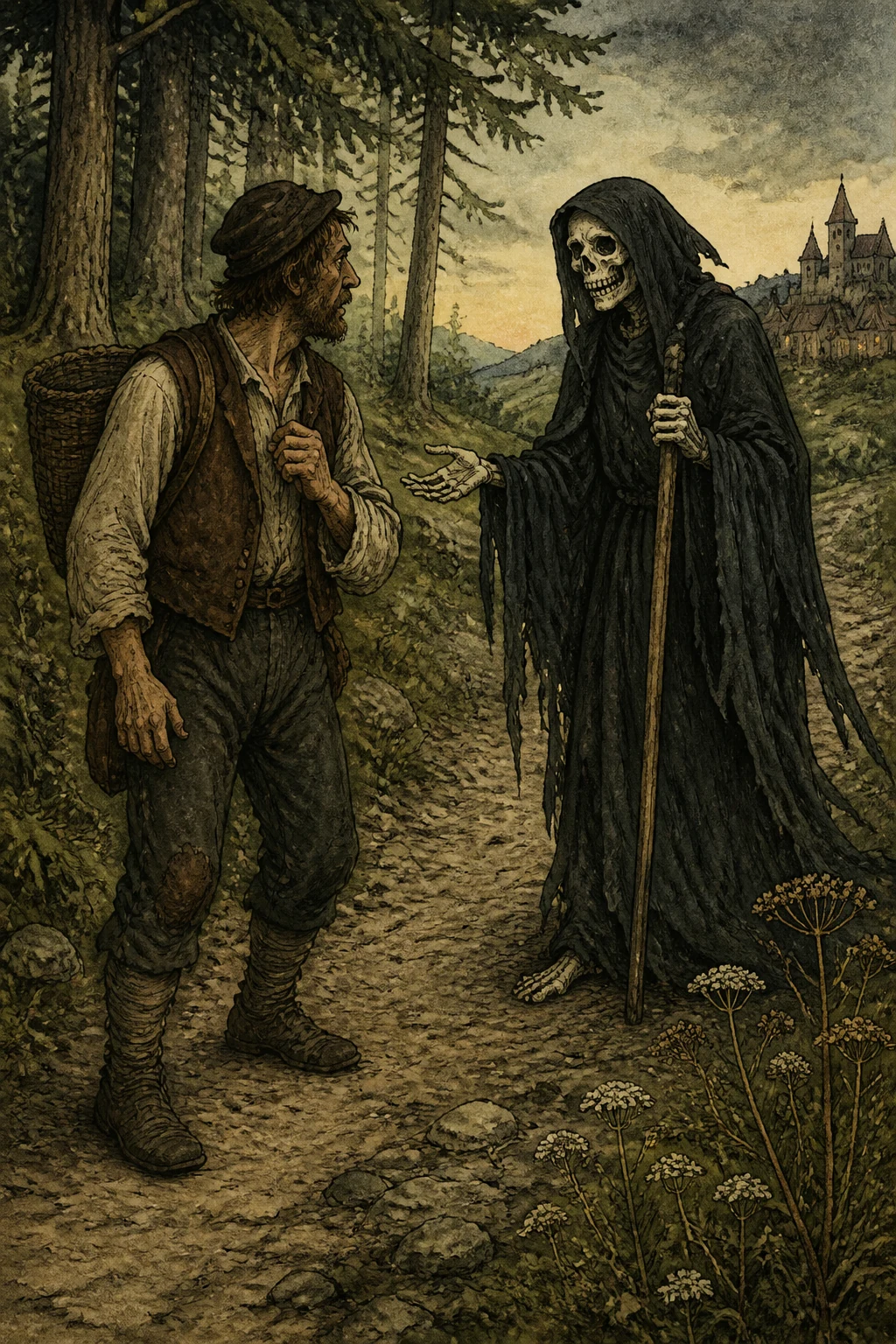
Once upon a time there were two brothers, one named Tro and the other Utro. Tro was always honest and kind to everyone, but Utro was wicked and full of lies, so no one could ever trust a word he said. Their mother was a widow with little to live on, and when her sons were grown, she had to send them away to earn their own bread in the world. She gave each of them a little knapsack of food, and off they went.
When they had walked until evening, they sat down on a fallen tree in the forest and took out their knapsacks, for they were hungry after walking all day and thought a bite to eat would taste good now. “If you agree, we’ll eat from your knapsack first, as long as there’s anything left in it, and then we can start on mine,” said Utro. Tro was quite content with that, and they began to eat; but Utro made sure to swallow all the best bits himself, while Tro got nothing but crusts, burnt pieces of flatbread, and pork rinds. In the morning they ate Tro’s food again, and at midday too; but then his knapsack was empty. When they had walked until late that evening and were ready for another meal, Tro wanted to eat from his brother’s knapsack. But Utro said no: the food was his, he said, and there was no more than he needed for himself. “But you ate from my knapsack as long as there was anything in it,” said Tro. “Well, if you’re fool enough to let other people eat up your food, you must take the consequences,” said Utro. “Now you can sit there and drool!” “Ah yes, Utro is your name, and faithless is your nature, and so it has been all your life,” said Tro. When Utro heard this, he flew into a rage, sprang at his brother, and put out both his eyes. “Now you can see whether people are faithful or faithless, you blind fool!” he said, and with that he ran off and left him.
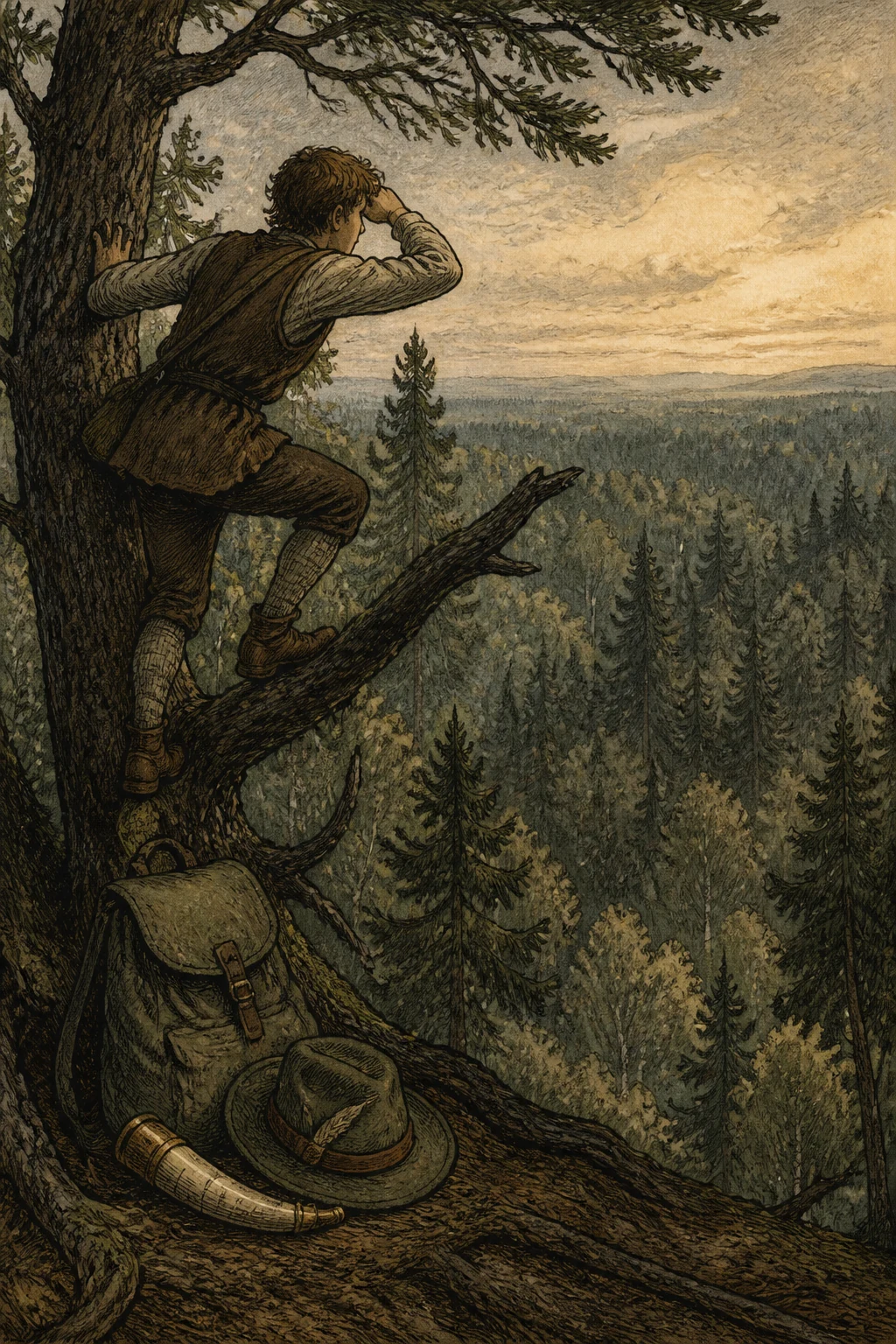
Poor Tro groped his way through the thick forest. He was blind and alone, and had no idea what to do. But at last he found a great, stout lime tree, and thought he had better climb up into it and spend the night there, safe from the wild beasts. When the birds begin to sing, it will be day, he thought, and then I must try to feel my way farther on. So he climbed up into the lime tree. After he had been sitting there a while, he heard someone come along and begin cooking and bustling about beneath the tree. Soon others arrived, and as they greeted one another, he heard that they were the Bear, the Wolf, the Fox, and the Hare, who had come to celebrate Midsummer Eve. They set about eating and drinking and making merry, and when they had finished, they sat down to talk. Then the Fox said, “Shall we each tell a little story while we’re sitting here?” The others liked that idea very much; it would be good fun, they said. So the Bear began, for he was the grandest among them. “The King of England has such poor eyes,” said the Bear, “that he can scarcely see a yard in front of him. But if he climbed into this lime tree in the morning, while the dew was still on the leaves, and rubbed some of it on his eyes, he would see as well as ever he did.” “Yes,” said the Wolf, “and the King of England has a daughter who can neither hear nor speak. But if he knew what I know, he would soon find a cure for her. Last year, when she went to Communion, she spat out the bread, and a great toad came and swallowed it. But if they only dug beneath the church floor, they would find the toad sitting directly under the altar rail, with the bread still lodged in its throat. If they cut the toad open, took out the bread, and gave it to the princess, she would hear and speak like other people again.” “Yes, yes,” said the Fox, “if the King of England knew what I know, he would have no shortage of water at his palace. Beneath the great stone in the middle of his courtyard is the clearest spring water anyone could wish for—if only he knew to dig there!” “Yes,” said the Hare, “the King of England has the finest orchard in all the land, but it does not bear so much as one unripe apple, because a great gold chain lies three times around it underground. If he had it dug up, his orchard would become the finest in his whole kingdom.” “But now it is late at night, and we had better be going home,” said the Fox, and off they all went.
When they had gone, Tro fell asleep where he sat in the lime tree. But when the birds began to sing in the morning, he woke again and took dew from the leaves and rubbed it on his eyes. Then he could see just as well as before Utro had put them out. Now he went straight to the King of England’s palace and asked for work, which he was given at once. One day the king came out into the courtyard, and after walking about for a while, he wanted a drink from his pump, for the day was hot and he had grown very thirsty. But when they drew the water for him, it was cloudy and thick and foul. This vexed the king greatly. “I do not believe there is a man in my whole kingdom who has such bad water in his courtyard, and yet I have to bring it all this way over hill and dale!” he said. “Well, if you would give me some men to lift the great stone lying here in the middle of your courtyard, you should have plenty of good water,” said Tro. The king was quite willing, and scarcely had they lifted the stone and dug a little while before a jet of water shot straight into the air, as clear and strong as if it were pouring from the bunghole of a barrel;
and clearer water was not to be found in all England. Some time later, the king was out in the courtyard again one day when a great hawk came swooping after his chickens, and everyone began clapping and shouting, “There it goes! There it goes!” The king seized his gun to shoot it, but he could hardly see it. Then he grew very downhearted. “God grant that someone could tell me a cure for my eyes! I fear I shall soon be quite blind,” said the king. “I can tell you that,” said Tro, and he explained what he had done. That very evening the king set off for the lime tree, as you may well imagine, and as soon as he rubbed his eyes with the dew on the leaves in the morning, he was cured. From that day on, there was no one the king prized so highly as Tro. He had to accompany him everywhere, whether at home or abroad.
One day they were walking together in the orchard. “I cannot understand it,” said the king. “There is not a man in England who spends so much on his orchard as I do, and yet I cannot get a single tree to bear so much as an unripe apple.” “Well, well,” said Tro, “if I may have what lies three times around your orchard, and some men to dig it up, then your trees shall bear fruit.” The king gladly agreed. Tro was given the men and set them to digging, and at last he brought the whole gold chain out of the ground. Now Tro was a very wealthy man, far, far richer than the king himself. But the king was well pleased all the same, for now the orchard bore so heavily that the branches hung right down to the ground, and no one had ever tasted such sweet apples and pears.
Another day, Tro and the king were walking and talking together when the princess passed by, and the king grew very sad at the sight of her. “Is it not a pity that so lovely a princess as my daughter should be unable to hear or speak?” he said to Tro. “Yes, but there is a cure for that,” said Tro. When the king heard this, he was so delighted that he promised Tro the princess’s hand in marriage and half the kingdom if he could make her well again. So Tro took a couple of men with him to the church and dug out the toad that sat beneath the altar rail. He cut it open, took out the bread, and gave it to the princess—and that very instant she could speak like other people again.
Now Tro was to marry the princess, and preparations were made for a wedding that would be heard of and talked about throughout the kingdom. While they were dancing at the wedding, a poor lad came begging for a bite to eat. He looked so ragged and wretched that everyone crossed themselves at the sight of him, but Tro recognized him at once: it was his brother Utro. “Do you know me again?” asked Tro. “Oh, where would I ever have seen so grand a gentleman?” said Utro. “You have seen me all the same,” said Tro. “I am the one whose eyes you put out a year ago today. Utro is your name, and faithless is your nature: I said it then, and I say it still. But you are my brother for all that, so you shall have a little food, and then you can go to the lime tree where I sat last year. If you hear anything that will make your fortune, so much the better for you.” Utro did not need telling twice. If sitting in that lime tree has done Tro so much good that he has become king of half of England since last year, then—he thought, and set off at once. When he reached the lime tree, he climbed up into it. He had not been sitting there long before all the animals came and ate and drank and celebrated Midsummer Eve beneath the tree again. When they had eaten their fill, the Fox suggested they should tell stories, and you may be sure Utro pricked up his ears till they all but fell off.
But the Bear was angry, and growled, “Someone has been telling tales about what we said last year, so this time we shall keep what we know to ourselves.” Then the animals said goodnight and went their separate ways, and Utro was none the wiser. And that was because Utro was his name, and faithless was his nature.