O besedilu
Piram in Tizba
- Vir
- Ovidove preobrazbe
- Avtor
- Ovid
- Jezik branja
- English
- Jezik izvirnika
- Latin
- Čas branja
- 6 min branja
- Obseg
- 5 strani
- Naslov izvirnika
- Pyramus and Thisbe
O izvirniku
Ovidove preobrazbe
Pesniški tok antičnih preobrazb, kjer bogovi, ljudje in narava stalno menjavajo obliko. Bralni jezik je English, izvirnik pa prihaja iz vira Ovidove preobrazbe v jeziku Latin.
Besedilo
Piram in Tizba
“Pyramus and Thisbe—he the fairest of young men, she lovelier than all the girls the East had known— lived in adjoining houses, where Semiramis is said to have girded her lofty city with walls of baked brick. Being neighbours brought them together and first drew them close; in time their love grew. They would have been joined in marriage, but their fathers forbade it. What they could not forbid was the equal fire that burned in both their captive hearts.
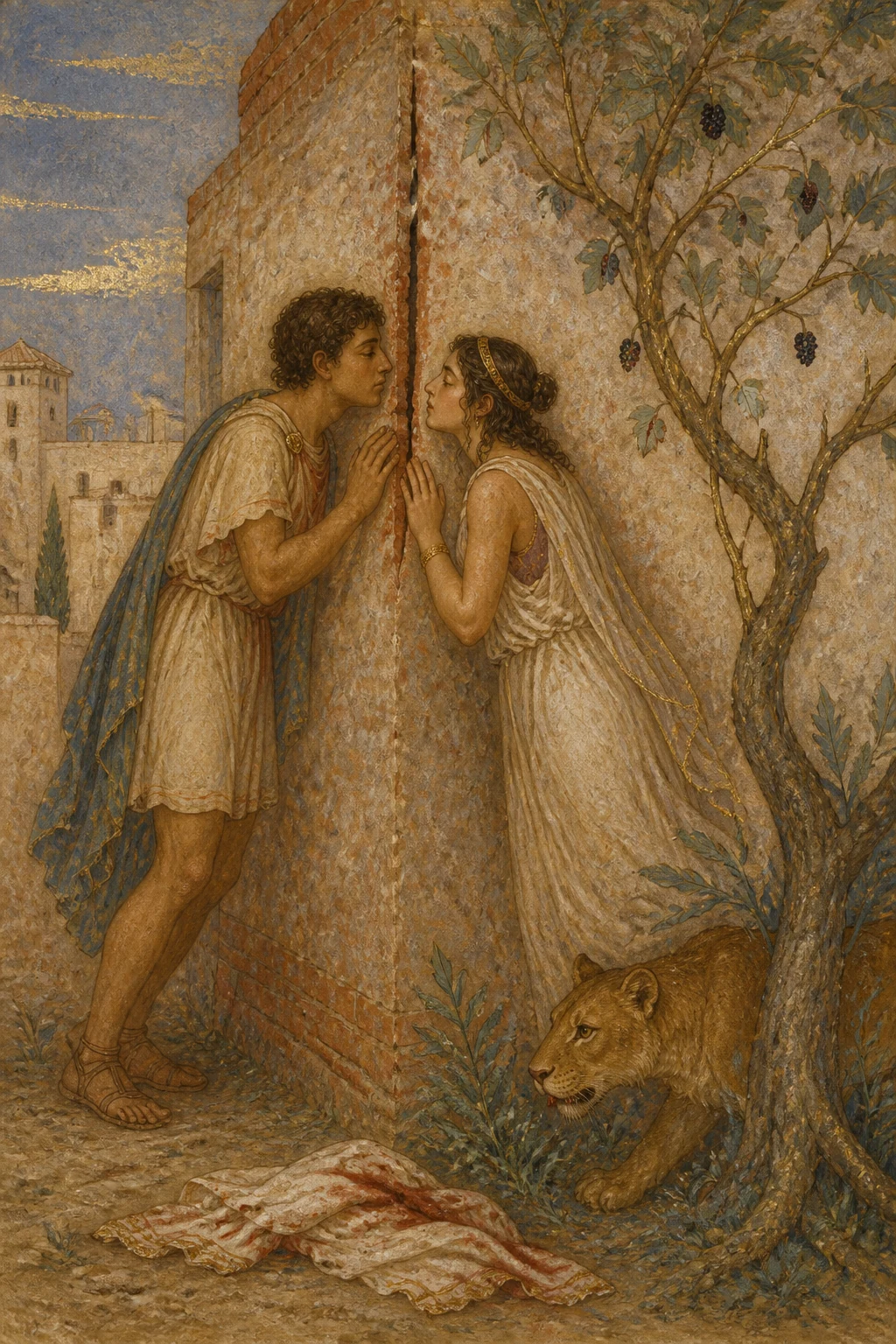
No one shared their secret: they spoke with nods and signs, and the more they hid their fire, the more fiercely it burned. A slender crack had split the wall that both their houses shared, a flaw that had formed when it was built. No one had noticed it through all those long years, but you lovers were the first to find it—what does love not see?— and made it a pathway for your voices; through it your tender words would pass in safety, in the faintest whisper.
Often, when Thisbe stood on this side, Pyramus on that, and each in turn had caught the breath from the other's lips, they would say, “Jealous wall, why stand between two lovers? How little it would take to let us join in a full embrace, or, if that is too much, to open just enough for kisses! Yet we are not ungrateful: we admit we owe you this, that our words have a passage to the ears we love.”
After such fruitless words, spoken from their separate sides, at nightfall they said “Farewell,” and each pressed kisses to their own side of the wall, kisses that never reached the other. The next dawn had put out the fires of night, and the sun's rays had dried the frost upon the grass, when they met at their accustomed place. First, in low whispers, they poured out their complaints; then agreed that in the silent night they would try to elude their watchers and slip out through the doors, and, once outside their homes, leave the city behind as well.
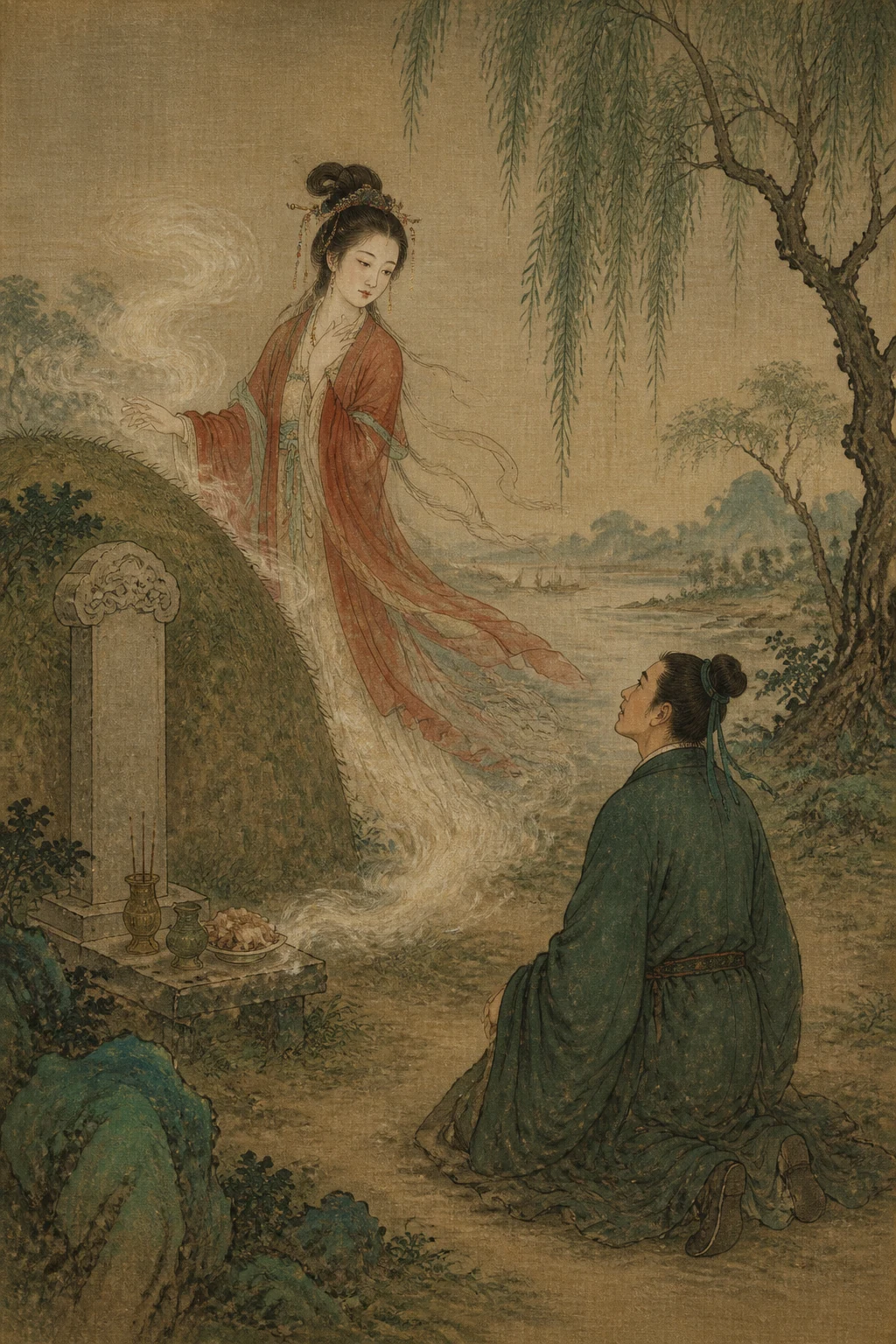
To avoid losing their way as they wandered through the open fields, they would meet at Ninus's tomb and hide beneath the shade of a tree. A tree stood there, laden with snow-white fruit, a tall mulberry beside a cool spring. The plan pleased them. Daylight, which seemed so slow to leave, plunged into the waters, and from those same waters night arose. Cunningly, in the darkness, Thisbe turned the door upon its hinges, slipped out unseen by her household, and, with her face veiled, reached the tomb and sat beneath the tree they had chosen.
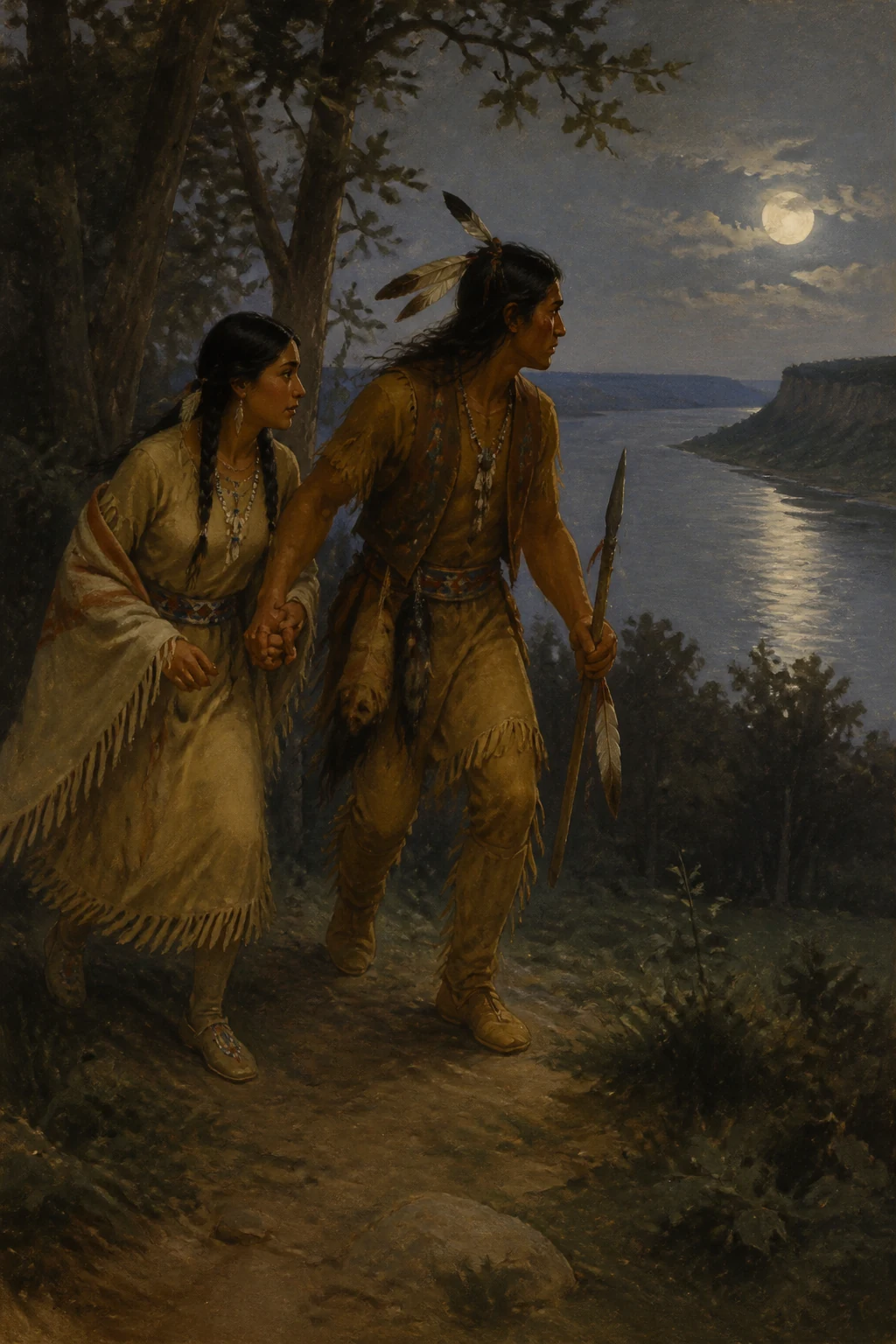
Love made her bold. But now a lioness appeared, her foaming jaws smeared with the blood of cattle freshly slaughtered, coming to quench her thirst in the nearby spring. Babylonian Thisbe saw her from afar in the moonlight and fled on frightened feet into a shadowy cave; as she fled, her veil slipped from her shoulders and was left behind. When the fierce lioness had quenched her thirst with deep draughts, on her way back to the woods she chanced upon the delicate veil without its owner, and tore it with her bloodstained jaws.
Pyramus, who had set out later, saw the unmistakable tracks of a wild beast in the deep dust, and his whole face grew pale. But when he also found the bloodstained cloth, he cried, “One night will destroy two lovers. Of the two, she was far more worthy of a long life; mine is the guilty soul. I have killed you, poor beloved, by asking you to come by night to a place so full of danger, and failing to come here first. Tear my body apart, devour my guilty flesh with your savage teeth, all you lions that dwell beneath this rock!
But only a coward wishes for death.” He lifted Thisbe's veil and carried it into the shade of their appointed tree. When he had wept over the familiar cloth and covered it with kisses, “Now drink,” he said, “a draught of my blood too!” He plunged the sword he wore into his side, and at once, dying, drew it from the seething wound. As he lay on his back upon the ground, his blood spurted high, just as when a pipe splits where the lead is flawed and through a narrow, hissing hole shoots out long jets of water, cleaving the air with their blows.
The tree's fruit, spattered with his blood, turned dark, and its roots, soaked in blood, dyed the hanging mulberries a purple hue. Now Thisbe, though her fear had not yet left her, returned, lest she fail her lover; her eyes and heart sought out the youth, and she longed to tell him what great dangers she had escaped. Though she knew the place and recognised the shape of the tree, the colour of its fruit bewildered her: could this be the one?
While she hesitated, she saw trembling limbs strike the bloodstained ground. She stepped back, her face paler than boxwood, and shuddered like the sea when a faint breeze brushes its surface and makes it tremble. But after a moment she recognised her beloved, and beat her innocent arms with resounding blows. Tearing her hair, she embraced the body she loved, bathed his wounds in tears, and mingled her weeping with his blood. Pressing kisses on his cold face, she cried, “Pyramus, what misfortune has taken you from me?
Pyramus, answer! Your own dearest Thisbe is calling you. Hear me, and lift your drooping face!” At Thisbe's name, Pyramus raised his eyes, already heavy with death, and, seeing her, closed them again. When she recognised her veil and saw the ivory sheath empty of its sword, she said, “Your own hand and your love have destroyed you, unhappy boy. I too have a hand brave enough for this one deed; I too have love, and it will give me strength to strike.
I will follow you in death, and be called the most wretched cause and companion of your end. You whom death alone could tear from me, alas, not even death shall tear away. Yet hear this plea, made in the name of both of us, O deeply wretched parents, mine and his: do not deny those whom steadfast love and their final hour have joined the right to rest together in one tomb.
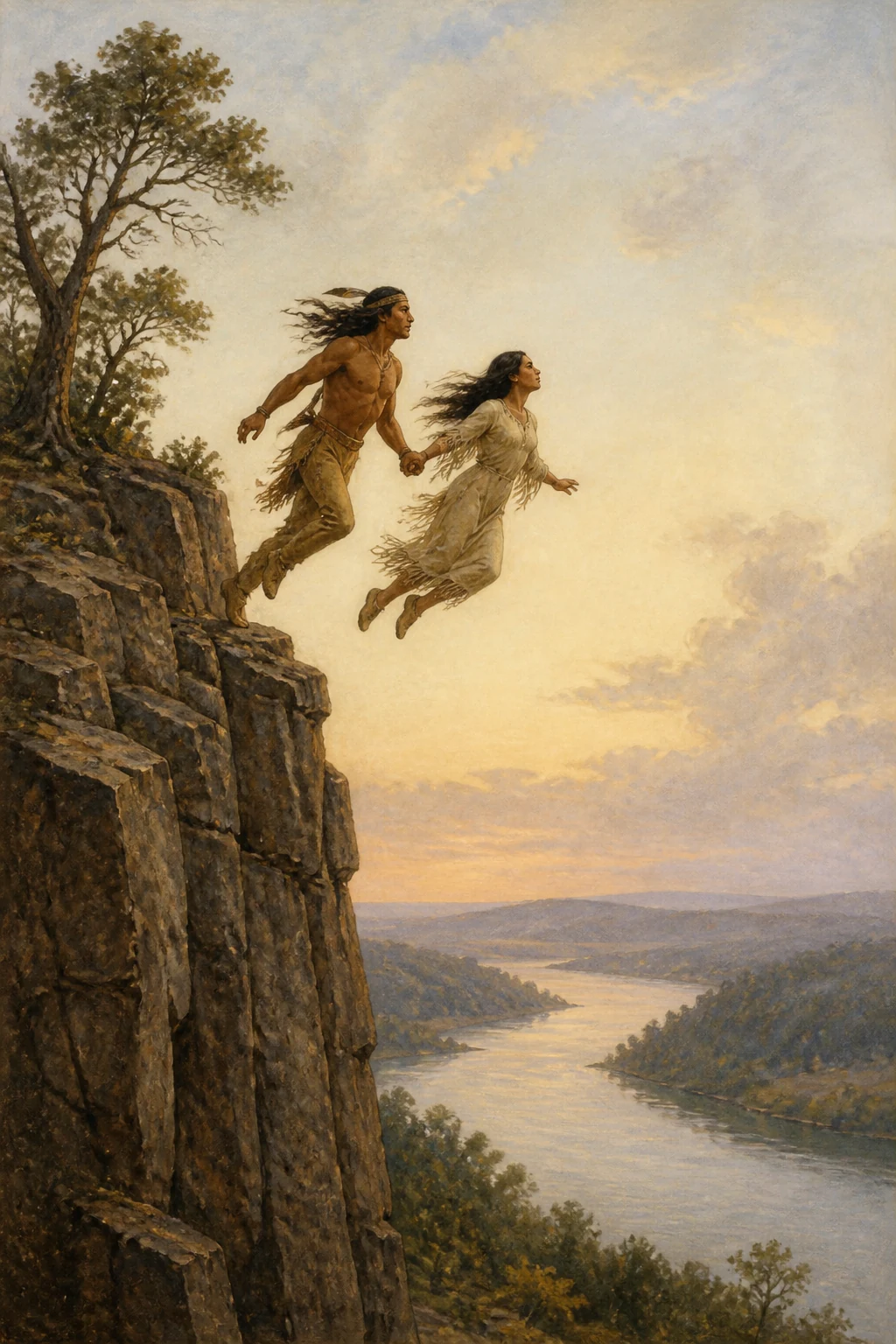
And you, tree, whose branches now shelter the pitiful body of one, and soon will shelter those of two, keep the marks of our deaths, and always bear dark fruit fit for mourning, a memorial to the blood we both have shed.” She spoke, then set the sword's point beneath her breast and fell upon the blade, still warm from his blood. Yet their prayers moved the gods, and moved their parents: for the fruit turns black when fully ripe, and what remained of their funeral pyres rests in a single urn.”
Izvirnik
Pyramus and Thisbe
Naslednje strani prikazujejo izvirno besedilo za primerjavo.
Source ID: ovid_metamorphoses_story_025 Citation: Ovid, Metamorphoses 4.55-4.166 Original language: Latin Source: PerseusDL canonical-latinLit Source URL: https://github.com/PerseusDL/canonical-latinLit/blob/master/data/phi0959/phi006/phi0959.phi006.perseus-lat2.xml Segmentation certainty: medium 55: “Pyramus et Thisbe, iuvenum pulcherrimus alter, 56: altera, quas oriens habuit, praelata puellis, 57: contiguas tenuere domos, ubi dicitur altam 58: coctilibus muris cinxisse Semiramis urbem.
59: Notitiam primosque gradus vicinia fecit: 60: tempore crevit amor. Taedae quoque iure coissent: 61: sed vetuere patres. Quod non potuere vetare, 62: ex aequo captis ardebant mentibus ambo. 63: Conscius omnis abest: nutu signisque loquuntur, 64: quoque magis tegitur, tectus magis aestuat ignis. 65: Fissus erat tenui rima, quam duxerat olim, 66: cum fieret paries domui communis utrique.
67: Id vitium nulli per saecula longa notatum 68: (quid non sentit amor?) primi vidistis amantes, 69: et vocis fecistis iter; tutaeque per illud 70: murmure blanditiae minimo transire solebant. 71: Saepe, ubi constiterant hinc Thisbe, Pyramus illinc, 72: inque vices fuerat captatus anhelitus oris, 73: “invide” dicebant “paries, quid amantibus obstas? 74: quantum erat, ut sineres toto nos corpore iungi, 75: aut hoc si nimium est, vel ad oscula danda pateres?
76: Nec sumus ingrati: tibi nos debere fatemur, 77: quod datus est verbis ad amicas transitus aures.” 78: Talia diversa nequiquam sede locuti 79: sub noctem dixere ”vale” partique dedere 80: oscula quisque suae non pervenientia contra. 81: Postera nocturnos aurora removerat ignes, 82: solque pruinosas radiis siccaverat herbas: 83: ad solitum coiere locum. Tum murmure parvo 84: multa prius questi, statuunt, ut nocte silenti 85: fallere custodes foribusque excedere temptent, 86: cumque domo exierint, urbis quoque tecta relinquant; 87: neve sit errandum lato spatiantibus arvo,
88: conveniant ad busta Nini lateantque sub umbra 89: arboris. Arbor ibi, niveis uberrima pomis 90: ardua morus, erat, gelido contermina fonti. 91: Pacta placent. Et lux, tarde discedere visa, 92: praecipitatur aquis, et aquis nox exit ab isdem. 93: Callida per tenebras versato cardine Thisbe 94: egreditur fallitque suos, adopertaque vultum 95: pervenit ad tumulum, dictaque sub arbore sedit.
96: Audacem faciebat amor. Venit ecce recenti 97: caede leaena boum spumantes oblita rictus, 98: depositura sitim vicini fontis in unda. 99: Quam procul ad lunae radios Babylonia Thisbe 100: vidit et obscurum timido pede fugit in antrum, 101: dumque fugit, tergo velamina lapsa reliquit. 102: Ut lea saeva sitim multa conpescuit unda, 103: dum redit in silvas, inventos forte sine ipsa 104: ore cruentato tenues laniavit amictus.
105: Serius egressus vestigia vidit in alto 106: pulvere certa ferae totoque expalluit ore 107: Pyramus: ut vero vestem quoque sanguine tinctam 108: repperit, “una duos” inquit “nox perdet amantes. 109: E quibus illa fuit longa dignissima vita, 110: nostra nocens anima est: ego te, miseranda, peremi, 111: in loca plena metus qui iussi nocte venires, 112: nec prior huc veni. Nostrum divellite corpus, 113: et scelerata fero consumite viscera morsu, 114: o quicumque sub hac habitatis rupe, leones.
115: Sed timidi est optare necem.” Velamina Thisbes 116: tollit et ad pactae secum fert arboris umbram; 117: utque dedit notae lacrimas, dedit oscula vesti, 118: “accipe nunc” inquit “nostri quoque sanguinis haustus!” 119: quoque erat accinctus, demisit in ilia ferrum, 120: nec mora, ferventi moriens e vulnere traxit. 121: Ut iacuit resupinus humo: cruor emicat alte, 122: non aliter quam cum vitiato fistula plumbo 123: scinditur et tenui stridente foramine longas 124: eiaculatur aquas atque ictibus aera rumpit.
125: Arborei fetus adspergine caedis in atram 126: vertuntur faciem, madefactaque sanguine radix 127: purpureo tingit pendentia mora colore. 128: Ecce metu nondum posito, ne fallat amantem, 129: illa redit iuvenemque oculis animoque requirit, 130: quantaque vitarit narrare pericula gestit. 131: Utque locum et visa cognoscit in arbore formam, 132: sic facit incertam pomi color: haeret, an haec sit.
133: Dum dubitat, tremebunda videt pulsare cruentum 134: membra solum, retroque pedem tulit, oraque buxo 135: pallidiora gerens exhorruit aequoris instar, 136: quod tremit, exigua cum summum stringitur aura. 137: Sed postquam remorata suos cognovit amores, 138: percutit indignos claro plangore lacertos, 139: et laniata comas amplexaque corpus amatum 140: vulnera supplevit lacrimis fletumque cruori 141: miscuit et gelidis in vultibus oscula figens 142: “Pyrame” clamavit “quis te mihi casus ademit?
143: Pyrame, responde: tua te carissima Thisbe 144: nominat: exaudi vultusque attolle iacentes!” 145: Ad nomen Thisbes oculos iam morte gravatos 146: Pyramus erexit, visaque recondidit illa. 147: Quae postquam vestemque suam cognovit et ense 148: vidit ebur vacuum, “tua te manus” inquit “amorque 149: perdidit, infelix. Est et mihi fortis in unum 150: hoc manus, est et amor: dabit hic in vulnera vires.
151: Persequar exstinctum letique miserrima dicar 152: causa comesque tui; quique a me morte revelli 153: heu sola poteras, poteris nec morte revelli. 154: Hoc tamen amborum verbis estote rogati, 155: o multum miseri meus illiusque parentes, 156: ut quos certus amor, quos hora novissima iunxit, 157: conponi tumulo non invideatis eodem. 158: At tu quae ramis arbor miserabile corpus 159: nunc tegis unius, mox es tectura duorum, 160: signa tene caedis pullosque et luctibus aptos 161: semper habe fetus, gemini monimenta cruoris.”
162: Dixit, et aptato pectus mucrone sub imum 163: incubuit ferro, quod adhuc a caede tepebat. 164: Vota tamen tetigere deos, tetigere parentes: 165: nam color in pomo est, ubi permaturuit, ater, 166: quodque rogis superest, una requiescit in urna.”
Nadaljuj z branjem