O besedilu
Pes in svinja kot znamenje upora
- Vir
- Sou Shen Ji
- Avtor
- Gan Bao
- Jezik branja
- English
- Jezik izvirnika
- 文言
- Čas branja
- 1 min branja
- Obseg
- 1 stran
- Naslov izvirnika
- 122 第06卷 · 第21則
O izvirniku
Sou Shen Ji
Klasični kitajski zapisi o duhovih, čudežih, znamenjih in nenavadnih dogodkih. Bralni jezik je English, izvirnik pa prihaja iz vira Sou Shen Ji v jeziku 文言.
Besedilo
Pes in svinja kot znamenje upora
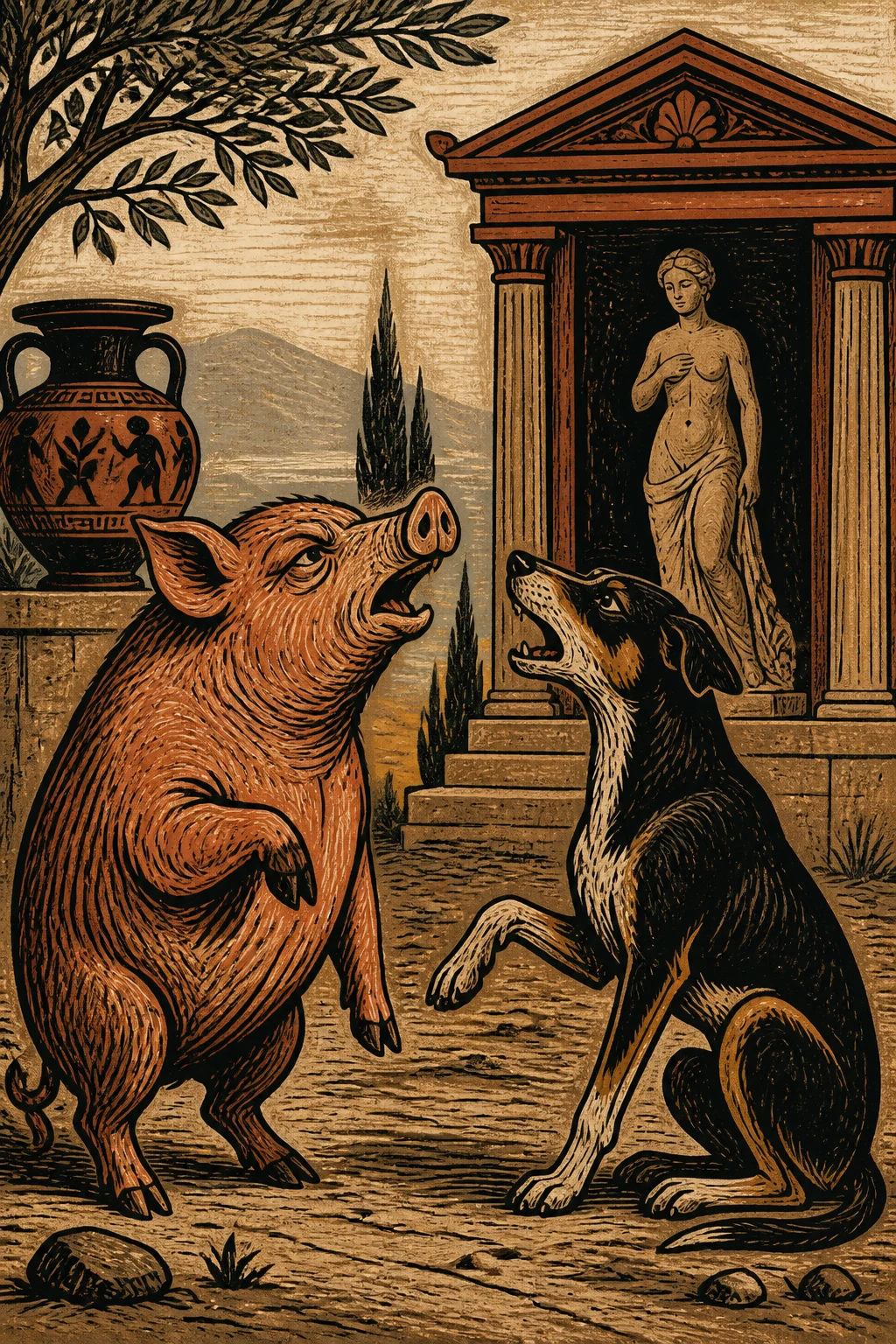
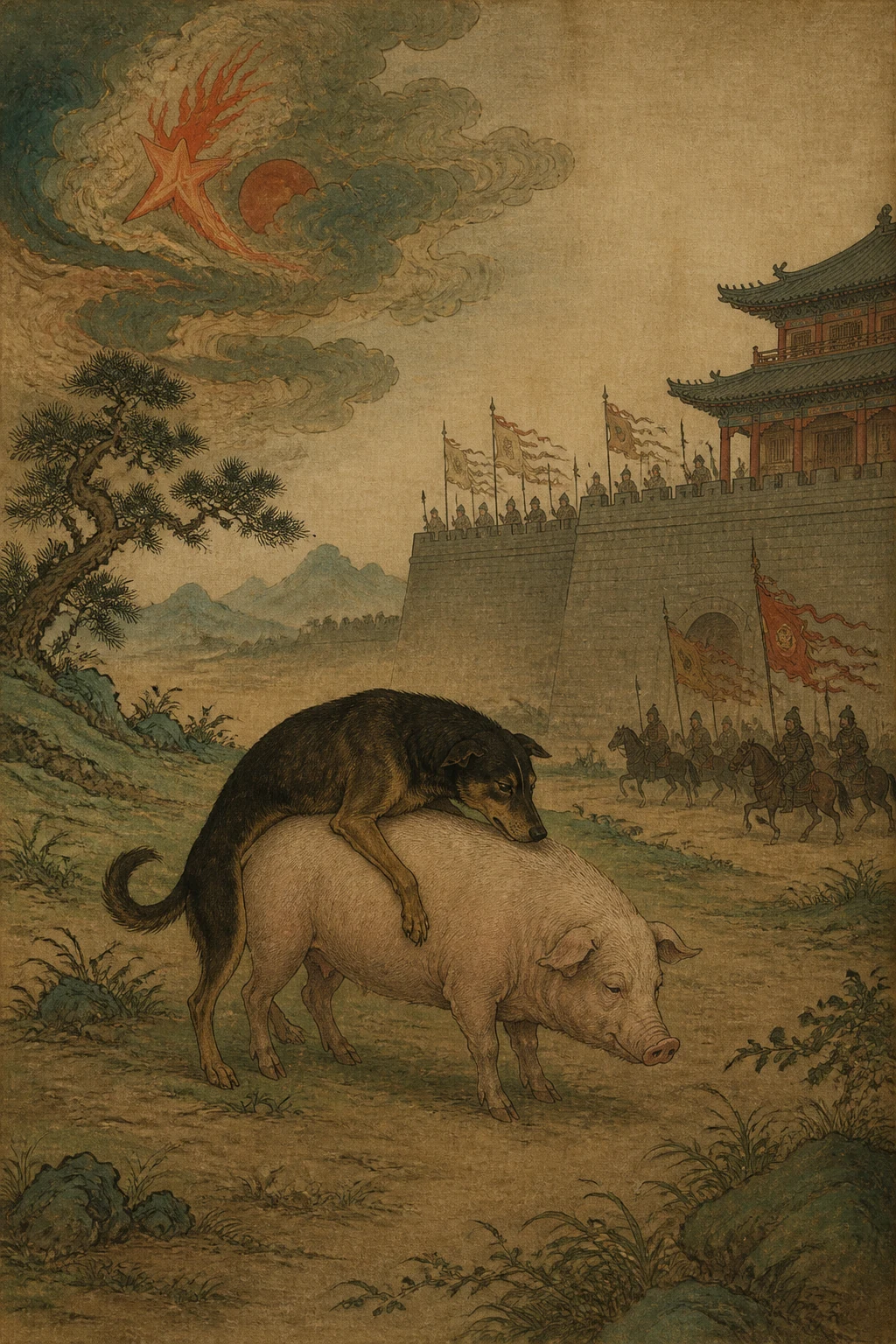
In the third year of Emperor Jing of Han’s reign, a dog mated with a pig in Handan. At the time, the King of Zhao was plotting rebellion; he subsequently rose against the throne with six other kingdoms and sought outside support through an alliance with the Xiongnu. The Treatise on the Five Elements interprets the portent thus: the dog foretold warfare and the loss of popular allegiance, while the pig represented the Xiongnu of the north. Rebellious words and a failure to heed sound counsel led to a union between unlike kinds, bringing calamity. Jing Fang’s Commentary on the Book of Changes says: “When the proper bounds between husband and wife are not strictly observed, the resulting portent is a dog mating with a pig. This is called the reversal of virtue, and warfare will arise in the state.”
Izvirnik
122 第06卷 · 第21則
Naslednje strani prikazujejo izvirno besedilo za primerjavo.
漢景帝三年,邯鄲有狗與彘交,是時趙王悖亂,遂與六國反,外結、匈奴以為援。五行志以為:犬,兵革失眾之占,豕,北方匈奴之象。逆言失聽,交於異類,以生害也。京房易傳曰:「夫婦不嚴,厥妖狗與豕交。茲謂反德,國有兵革。」
Nadaljuj z branjem