Prevod
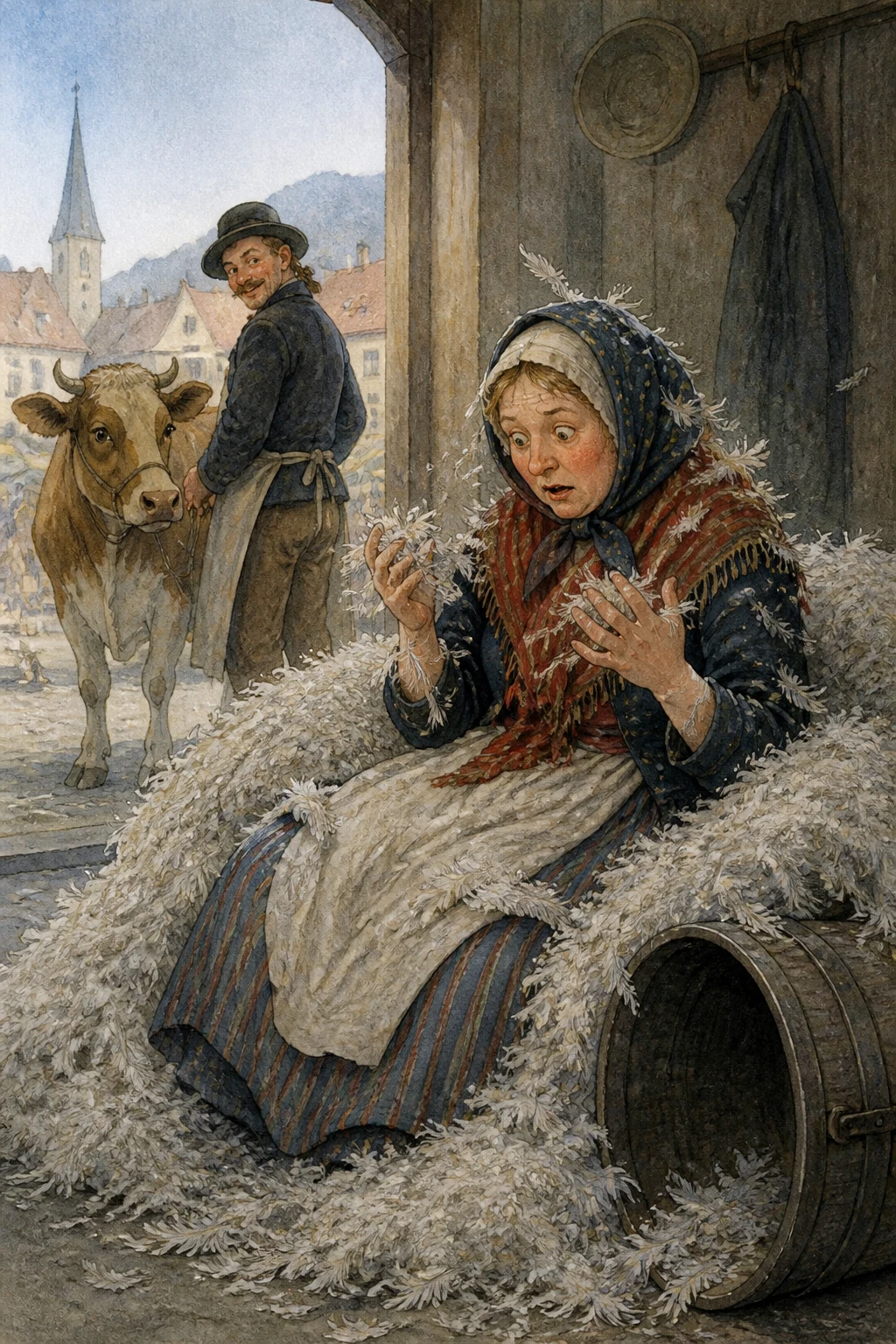
Once upon a time there was a woman who had a deaf husband, a good-natured simpleton; but she was all the fonder of the fellow in the other cottage, whom they called Paal Andrestuen. The deaf man’s hired lad could see well enough that there was something going on between those two, and one day he said to the wife, “Will you wager ten dollars, Mother, that I can make you confess your own shame?” “Yes, that I will,” she said, and so they wagered ten dollars.
Then one day, while the lad and the deaf man were threshing on the barn floor, the lad noticed Paal Andrestuen coming to see the wife. He said nothing, but a good while before breakfast time he turned towards the barn door and suddenly shouted, “Yes, coming!” “Well, are we to go in already?” said the man, who had noticed nothing. “Yes, I suppose we must, since Mother’s calling,” answered the lad.
When they reached the porch, the lad began coughing and clearing his throat, so that the wife would have time to hide Paal Andrestuen. When they went inside, there stood a dish of sour-cream porridge on the table. “Well, well, Mother!” said the man. “Are we to have sour-cream porridge today?” “Oh yes, you are,” said the wife, sour and furious. Once they had eaten and gone out again, she said to Paal, “That lad is a devil of a rascal; this was all his doing. But now you had better be off, and I’ll come down to you in the meadow with an afternoon bite.” The lad stood in the porch and heard it all.
“Father,” he said, “I think we had best go down into the valley now and mend that stretch of rail fence that has blown down, for the pigs from the other cottage are rooting up our meadow.” “Yes, I suppose we must,” said the man, for he did whatever he was told.
In the afternoon the wife came bustling down into the meadow with something under her apron. “Well, well, Mother, I do believe you’ve taken leave of your senses,” said the man. “Are we to have an afternoon bite as well?” “Oh yes, I suppose you are,” she said; she was more furious than ever. And they feasted well, eating both lefse and butter, with spirits to wash it down.
“I’ll take a little over to Paal Andrestuen too, Mother,” said the lad, “for I don’t suppose he’s had an afternoon bite.” “Yes, do!” said the wife, and all at once she was cheerful again.
On the way the lad crumbled the lefse, dropping a little here and there as he went. To Paal Andrestuen he said, “You had better look out, for our old man has noticed that you come over to see his wife rather too often. He doesn’t much care for it, and now he’s sworn he’ll bury his axe in you the moment he sets eyes on you.” Paal grew frightened and downcast, and the lad went back to the man. “There’s something wrong with Paal’s plough,” he said, “and he asked if you would bring your axe over and put it right.” So the man took his axe and went, but no sooner did Paal Andrestuen catch sight of him than he took to his heels as fast as he could. The man turned the plough this way and that and examined it from every side, and when he could find nothing wrong with it, he went back again. On the way he picked up the bits of lefse the lad had dropped. The wife stood watching for a while, wondering what it was her husband was gathering.
“Oh, Father’s picking up stones, I expect,” said the lad, “for he’s noticed that this Paal Andrestuen comes running over to our place so often. The old man doesn’t much care for it, and now he’s sworn he’ll stone Mother to death.” Away went the wife as fast as she could. “What’s Mother running off like that for?” asked the man when he came up. “Oh, I expect there’s a fire at home,” said the lad. The man ran after her, and the wife ran on ahead, screaming, “Oh, don’t kill me, don’t kill me, and I’ll never let Paal Andrestuen come to see me again!” “Now those ten dollars are mine!” cried the lad.