Prevod
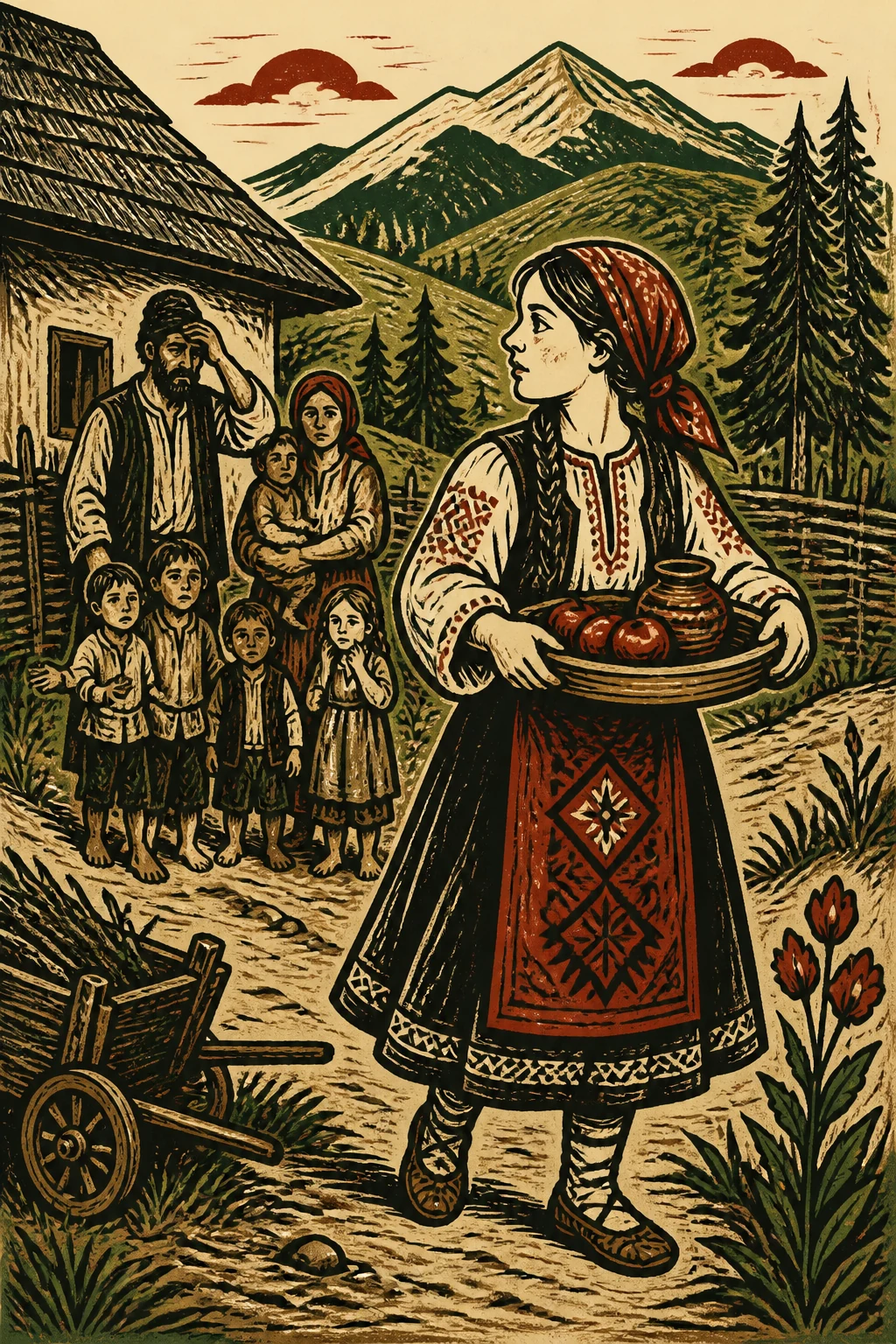
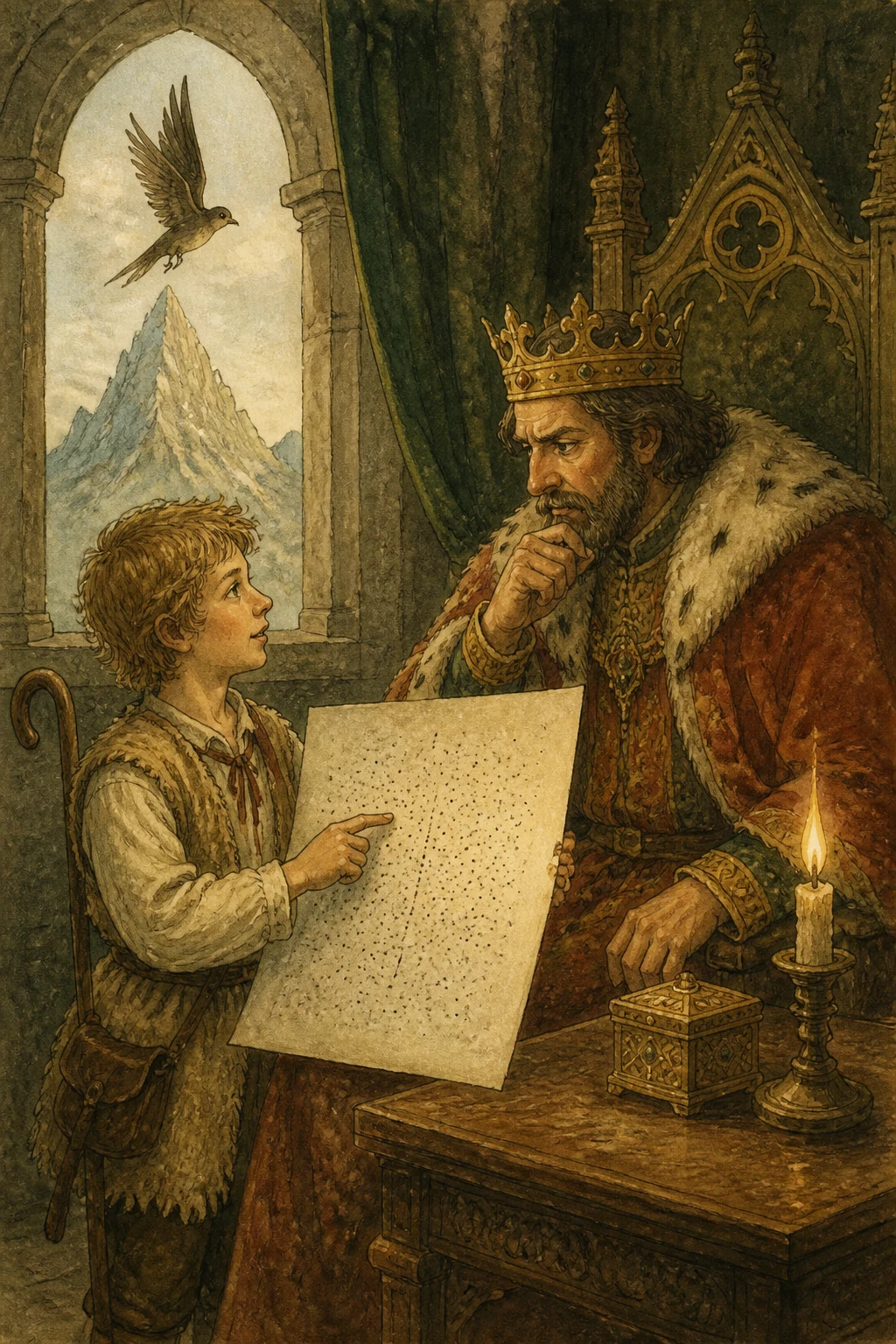
Once upon a time there was a poor peasant who had no land, only a little cottage and an only daughter. One day his daughter said, “We ought to ask our lord the king for a little patch of land to clear.” When the king heard of their poverty, he gave them a small piece of turf, which she and her father dug over, meaning to sow a little grain and other crops on it. When they had nearly finished digging the field, they found a mortar of pure gold in the earth. “Listen,” said the father to the girl, “since our lord the king has been so gracious and given us this field, we must give him the mortar in return.” But his daughter would not agree, and said, “Father, if we have the mortar but not the pestle, we shall have to find the pestle too, so we had better keep quiet.” But he would not listen to her. He took the mortar to the king and said he had found it on the heath, and asked whether the king would accept it as a gift. The king took the mortar and asked whether he had found anything else. “No,” answered the peasant. Then the king said he must bring him the pestle as well. The peasant said they had not found it, but he might as well have spoken to the wind: he was put in prison and was to remain there until he produced the pestle. Every day the servants had to bring him bread and water, such as one gets in prison, and they heard the man crying over and over, “Oh, if only I had listened to my daughter! Oh, oh, if only I had listened to my daughter!” So the servants went to the king and told him how the prisoner kept crying, “Oh, if only I had listened to my daughter!” and would neither eat nor drink. Then the king ordered the servants to bring the prisoner before him, and asked why he kept crying, “Oh, if only I had listened to my daughter!” “What did your daughter say?” “Well, she said I should not bring you the mortar, or I would have to find the pestle too.” “If you have such a clever daughter, let her come here.” So she had to appear before the king, who asked whether she was indeed so clever, and said he would set her a riddle; if she could solve it, he would marry her. She said at once that she would try. Then the king said, “Come to me neither clothed nor naked, neither riding nor driving, neither on the road nor off the road, and if you can do that, I will marry you.” So she went away and stripped herself stark naked, and thus she was not clothed. Then she took a large fishing net, sat down in it, and wrapped it all around herself, and thus she was not naked. She hired a donkey and tied the fishing net to its tail, so that it had to drag her along in it, and thus she was neither riding nor driving. But she made the donkey drag her along in the wheel rut, so that only her big toe touched the ground, and thus she was neither on the road nor off it. When she arrived in this fashion, the king said she had solved the riddle and fulfilled every condition. He released her father from prison, took her as his wife, and entrusted the whole royal estate to her.
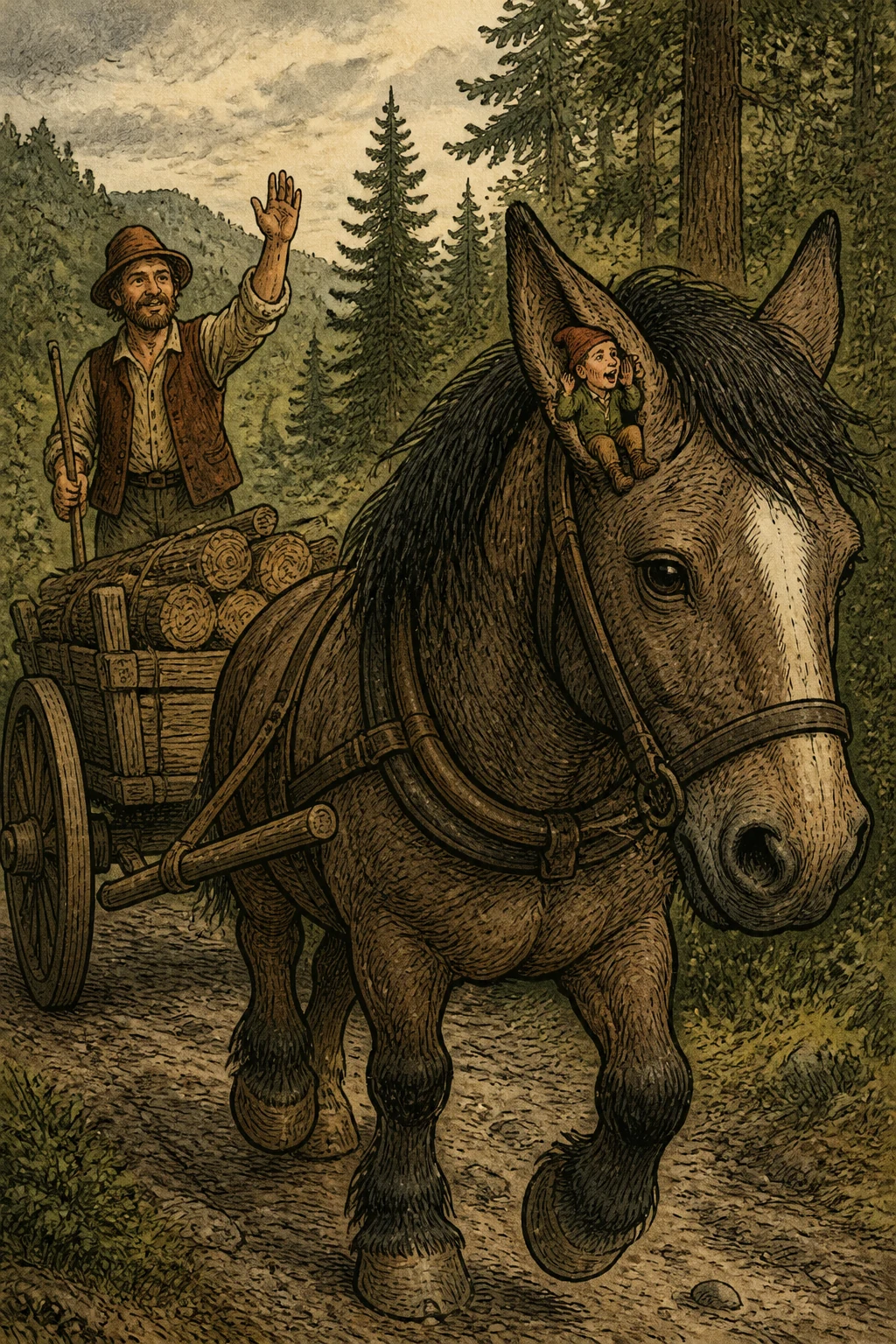
Several years had passed when, one day, the king went out to review his troops. It so happened that some peasants had stopped with their wagons outside the palace after selling wood; some had oxen harnessed to their wagons, and others horses. One peasant had three horses, and one of them gave birth to a little foal, which ran off and lay down between two oxen harnessed to a wagon. When the peasants came back, they began quarrelling, fighting, and making a great uproar. The owner of the oxen wanted to keep the foal, saying that his oxen had given birth to it, while the other said no, his horse had borne it, and it belonged to him. The dispute was brought before the king, who ruled that the foal should stay where it had been lying. So the peasant with the oxen got it, though it did not belong to him. The other went away weeping and lamenting over his foal. Now he had heard how kind the queen was, since she too had come from poor peasant folk, so he went to her and asked whether she could help him get his foal back. She said, “Yes, if you promise not to betray me, I will tell you what to do. Tomorrow morning, when the king is at the review of the guard, stand in the middle of the street where he must pass, take a large fishing net, and pretend to fish. Keep on fishing and emptying out the net as though it were full.” She also told him what to answer if the king questioned him. So the next day the peasant stood there fishing on dry ground. When the king passed by and saw him, he sent his runner to ask what the foolish man was doing. “I am fishing,” he answered. The runner asked how he could fish when there was no water. The peasant said, “If two oxen can give birth to a foal, I can just as well fish on dry ground.” The runner went back and brought the king this answer. Then the king summoned the peasant and told him he could not have thought of that himself: who had put him up to it? He must confess at once. But the peasant would not, and kept saying, “Heaven forbid! I thought of it myself.” So they laid him on a bundle of straw and beat and tormented him until he confessed that the queen had told him what to say. When the king came home, he said to his wife, “Why have you dealt so falsely with me? I will no longer have you as my wife. Your time is up. Go back where you came from, to your peasant cottage.” Yet he granted her one thing: she might take away whatever she held best and dearest, and that should be his parting gift. She said, “Yes, dear husband, if that is your command, I will do as you say.” She threw her arms around him and kissed him, saying she wished to bid him farewell. Then she had a strong sleeping draught brought so that they could drink a farewell toast. The king took a long draught, but she drank only a little. Soon he fell into a deep sleep, and when she saw this, she called a servant, took a fine white linen sheet, and wrapped him in it. The servants had to carry him to a carriage outside the door, and she drove him home to her little cottage. There she laid him in her little bed, and he slept without waking through the day and night. When he awoke, he looked around and said, “Good heavens, where am I?” He called for his servants, but none were there. At last his wife came to the bedside and said, “My dear lord king, you commanded me to take from the palace whatever I held best and dearest. Now I have nothing better or dearer than you, so I brought you with me.” Tears rose in the king’s eyes, and he said, “Dear wife, you shall be mine and I shall be yours.” He took her back to the royal palace and had their marriage celebrated anew; and no doubt they are still alive to this very day.