O besedilu
Orfejeva smrt
- Vir
- Ovidove preobrazbe
- Avtor
- Ovid
- Jezik branja
- English
- Jezik izvirnika
- Latin
- Čas branja
- 5 min branja
- Obseg
- 4 strani
- Naslov izvirnika
- The Death of Orpheus
O izvirniku
Ovidove preobrazbe
Pesniški tok antičnih preobrazb, kjer bogovi, ljudje in narava stalno menjavajo obliko. Bralni jezik je English, izvirnik pa prihaja iz vira Ovidove preobrazbe v jeziku Latin.
Besedilo
Orfejeva smrt
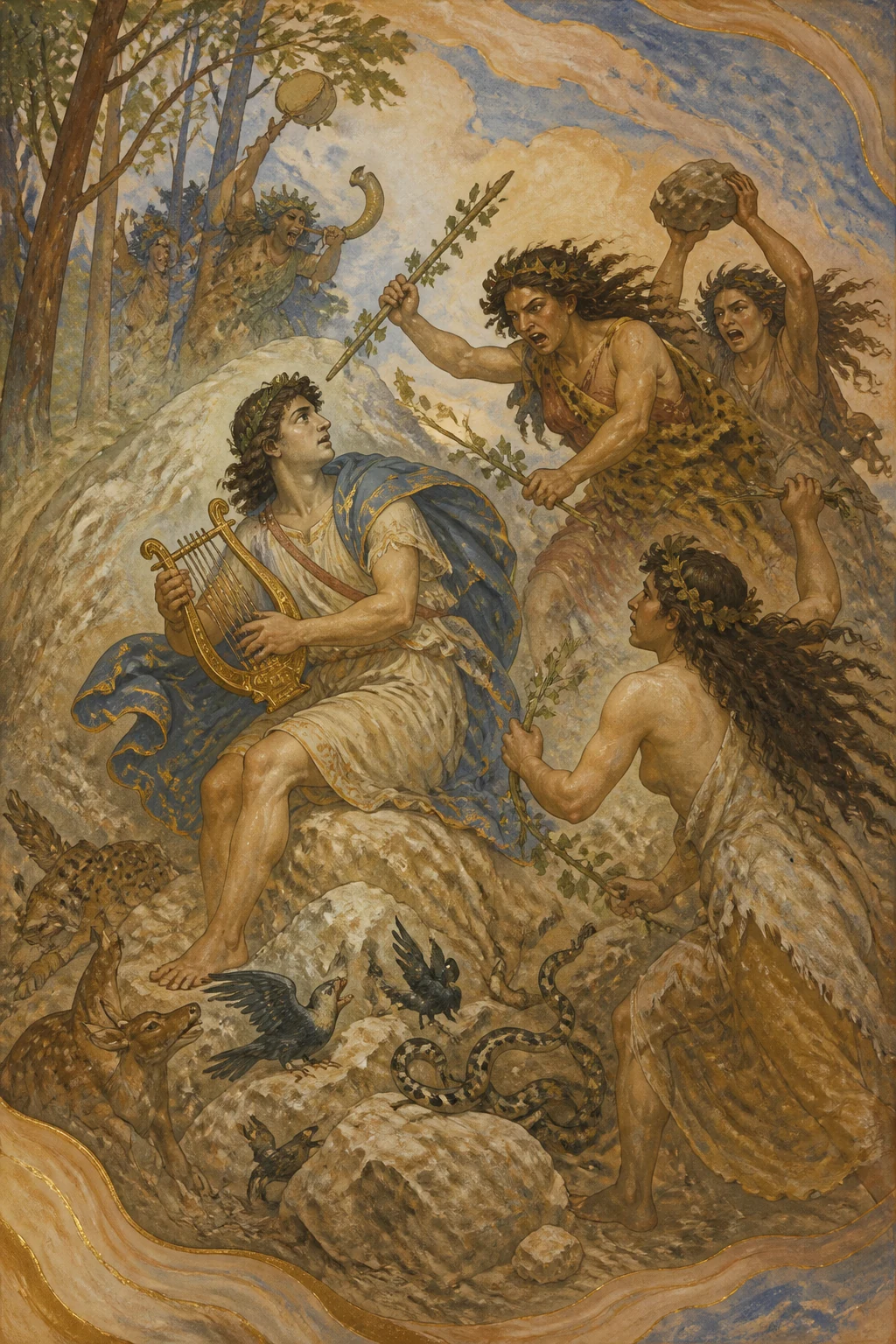
While with such a song the Thracian bard drew the woods, the hearts of wild beasts, and the very rocks to follow him, behold, the women of the Cicones, their frenzied breasts clothed in the skins of beasts, caught sight from a hilltop of Orpheus joining his song to the strings he struck. One of them, tossing her hair in the light breeze, cried, “Look! There he is, the man who scorns us!” and hurled a spear at the singing mouth of Apollo’s bard; but, tipped with leaves, it left a mark without a wound.
Another’s weapon was a stone, which, hurled through the air, was overcome in mid-flight by the harmony of voice and lyre and, as though begging pardon for so mad an assault, fell at his feet. Yet the reckless onslaught gathered force, all restraint was gone, and the raging Fury reigned. His song would have softened every weapon, but a mighty clamour, the Berecyntian pipe with its curved horn, drums, clapping hands, and Bacchic howls drowned the music of his lyre. Only then did the stones grow red with the blood of the bard whose song went unheard.
First the Maenads seized the countless birds, the snakes, and the throng of beasts still spellbound by his singing— the audience that was Orpheus’ glory—and tore them apart. Then, with bloodstained hands, they turned on Orpheus and flocked together like birds that catch sight of a bird of night abroad by day. As a doomed stag in the morning arena, with tiers of spectators on either side, falls prey to hounds, so they assailed the bard, hurling their leaf-green thyrsi, fashioned for no such use.
Some flung clods, others branches torn from trees, and some hurled flints. And lest their fury lack weapons, oxen happened to be turning the earth beneath the driven plough, and nearby, winning their harvest with much sweat, strong-armed farmers were digging the stubborn fields. At the sight of the troop they fled, leaving behind the weapons of their labour, scattered over the empty fields: hoes, heavy rakes, and long mattocks.
The savage women snatched these up, tore apart the oxen with their threatening horns, then rushed back to seal the bard’s fate. He stretched out his hands, and for the first time his words were powerless, his voice moved nothing; the impious women killed him. Through that mouth—O Jupiter!— which rocks had heard and the senses of wild beasts had understood, his spirit breathed its last and passed into the winds.
For you, Orpheus, the sorrowing birds, the throngs of beasts, the unyielding flints, and the woods that had so often followed your songs all wept; for you the trees shed their leaves and mourned with shorn tresses. They say the rivers, too, swelled with their own tears, while the Naiads and Dryads veiled their robes in black and let their hair hang loose. His limbs lay scattered in different places. You, Hebrus, received his head and lyre; and—wonder of wonders!—as they drifted down your stream, the lyre uttered some mournful lament, the lifeless tongue murmured mournfully, and the banks replied in mourning.
Now, borne out to sea, they left their native river and reached the shore of Methymnaean Lesbos. Here a savage serpent attacked the head cast up on foreign sands, and the flowing hair still dripping with spray. At last Phoebus appeared and checked it as it readied its bite, freezing the serpent’s gaping jaws to stone and hardening its mouth wide open as it was. His shade descended beneath the earth, and all the places he had seen before he knew again; searching the fields of the blessed, he found Eurydice and clasped her in his eager arms.
Here the two now stroll together, keeping step; now he follows as she leads, now he walks ahead, and Orpheus can safely look back at his Eurydice at last. Yet Lyaeus would not let this crime go unpunished. Grieving for the loss of the bard who had sung his sacred rites, he at once bound with twisting roots all the Edonian women in the woods who had witnessed the outrage.
For he stretched out their toes, just where each had pursued Orpheus, and drove their pointed tips into the solid earth. As a bird, once its leg is caught in a snare hidden by a cunning fowler, feels itself held fast, beats its wings and tightens the bonds with its frantic struggles, so each woman, finding herself rooted to the ground, tried in terror to escape, but all in vain: a pliant root held her fast and checked her leaps.
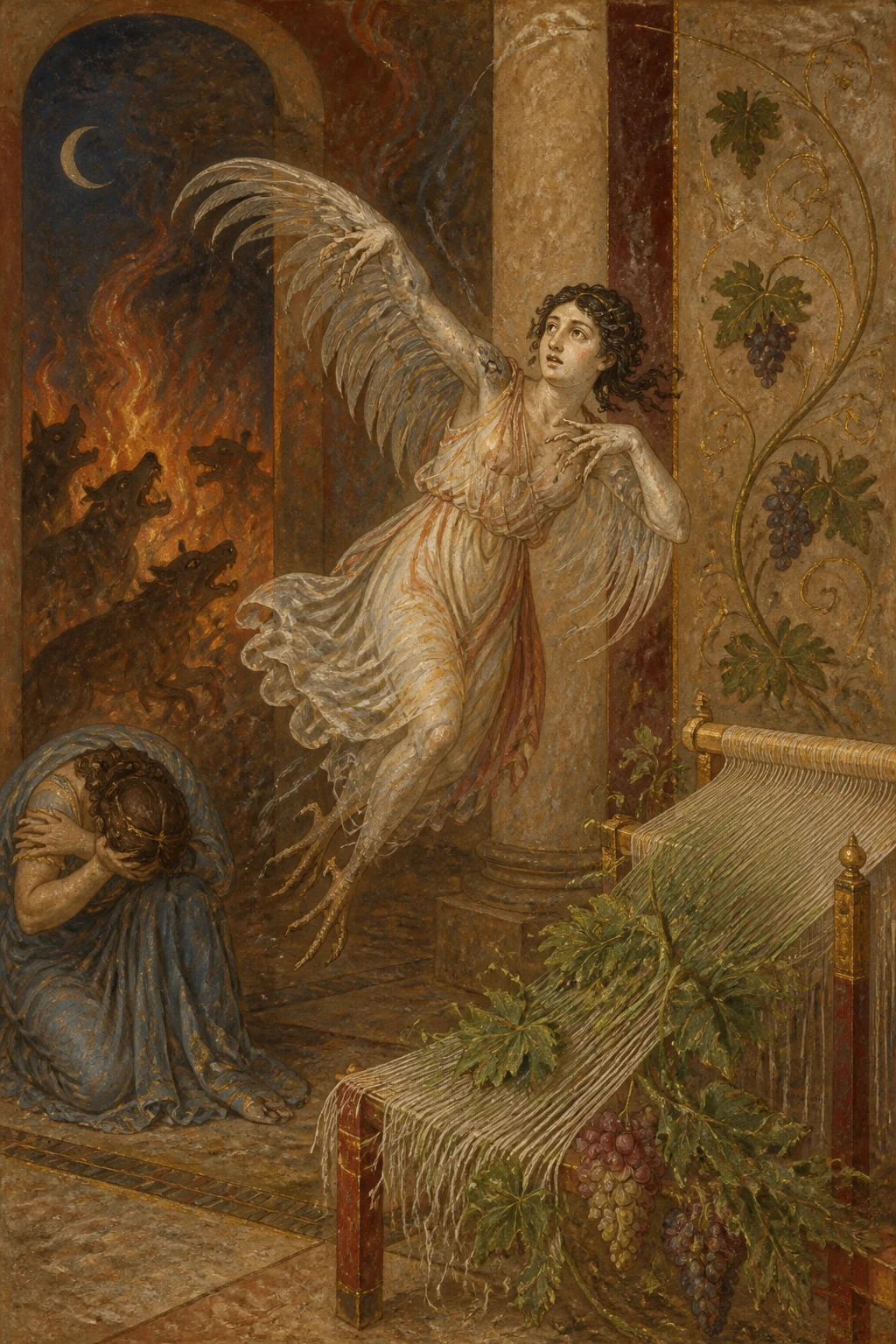
And as she looked for her toes, her foot, her nails, she saw wood creeping up her rounded calves; and when in grief she tried to beat her thigh with her hand, she struck oak. Her breast too became oak, her shoulders were oak, and her outstretched arms you would think were real branches—and in thinking so you would not be mistaken.
Izvirnik
The Death of Orpheus
Naslednje strani prikazujejo izvirno besedilo za primerjavo.
Source ID: ovid_metamorphoses_story_075 Citation: Ovid, Metamorphoses 11.1-11.84 Original language: Latin Source: PerseusDL canonical-latinLit Source URL: https://github.com/PerseusDL/canonical-latinLit/blob/master/data/phi0959/phi006/phi0959.phi006.perseus-lat2.xml Segmentation certainty: medium 1: Carmine dum tali silvas animosque ferarum 2: Threicius vates et saxa sequentia ducit, 3: ecce nurus Ciconum, tectae lymphata ferinis 4: pectora velleribus, tumuli de vertice cernunt 5: Orphea percussis sociantem carmina nervis.
6: E quibus una, leves iactato crine per auras, 7: “en,” ait “en hic est nostri contemptor!” et hastam 8: vatis Apollinei vocalia misit in ora, 9: quae foliis praesuta notam sine vulnere fecit; 10: alterius telum lapis est, qui missus in ipso 11: aere concentu victus vocisque lyraeque est 12: ac veluti supplex pro tam furialibus ausis 13: ante pedes iacuit. Sed enim temeraria crescunt 14: bella modusque abiit, insanaque regnat Erinys.
15: Cunctaque tela forent cantu mollita, sed ingens 16: clamor et infracto Berecyntia tibia cornu 17: tympanaque et plausus et Bacchei ululatus 18: obstrepuere sono citharae: tum denique saxa 19: non exauditi rubuerunt sanguine vatis. 20: Ac primum attonitas etiamnum voce canentis 21: innumeras volucres anguesque agmenque ferarum 22: Maenades, Orphei titulum, rapuere, theatri.
23: Inde cruentatis vertuntur in Orphea dextris 24: et coeunt ut aves, si quando luce vagantem 25: noctis avem cernunt. Structoque utrimque theatro 26: ceu matutina cervus periturus harena 27: praeda canum est, vatemque petunt et fronde virentes 28: coniciunt thyrsos non haec in munera factos. 29: Hae glaebas, illae direptos arbore ramos, 30: pars torquent silices. Neu desint tela furori, 31: forte boves presso subigebant vomere terram, 32: nec procul hinc multo fructum sudore parantes 33: dura lacertosi fodiebant arva coloni.
34: Agmine qui viso fugiunt operisque relinquunt 35: arma sui, vacuosque iacent dispersa per agros 36: sarculaque rastrique graves longique ligones. 37: Quae postquam rapuere ferae cornuque minaci 38: divulsere boves, ad vatis fata recurrunt 39: Tendentemque manus et in illo tempore primum 40: inrita dicentem nec quicquam voce moventem 41: sacrilegae perimunt. Perque os, pro Iuppiter! illud 42: auditum saxis intellectumque ferarum 43: sensibus in ventos anima exhalata recessit.
44: Te maestae volucres, Orpheu, te turba ferarum, 45: te rigidi silices, tua carmina saepe secutae 46: fleverunt silvae, positis te frondibus arbor 47: tonsa comas luxit. Lacrimis quoque flumina dicunt 48: increvisse suis, obstrusaque carbasa pullo 49: naides et dryades passosque habuere capillos. 50: Membra iacent diversa locis. Caput, Hebre, lyramque 51: excipis, et (mirum!) medio dum labitur amne, 52: flebile nescio quid queritur lyra, flebile lingua 53: murmurat exanimis, respondent flebile ripae.
54: Iamque mare invectae flumen populare relinquunt 55: et Methymnaeae potiuntur litore Lesbi. 56: Hic ferus expositum peregrinis anguis harenis 57: os petit et sparsos stillanti rore capillos. 58: Tandem Phoebus adest morsusque inferre parantem 59: arcet et in lapidem rictus serpentis apertos 60: congelat et patulos, ut erant, indurat hiatus. 61: Umbra subit terras et quae loca viderat ante, 62: cuncta recognoscit quaerensque per arva piorum 63: invenit Eurydicen cupidisque amplectitur ulnis.
64: Hic modo coniunctis spatiantur passibus ambo, 65: nunc praecedentem sequitur, nunc praevius anteit 66: Eurydicenque suam iam tutus respicit Orpheus. 67: Non impune tamen scelus hoc sinit esse Lyaeus, 68: amissoque dolens sacrorum vate suorum 69: protinus in silvis matres Edonidas omnes, 70: quae videre nefas, torta radice ligavit. 71: Quippe pedum digitos, in quantum est quaeque secuta, 72: traxit et in solidam detrusit acumina terram, 73: utque suum laqueis, quos callidus abdidit auceps, 74: crus ubi commisit volucris sensitque teneri, 75: plangitur ac trepidans adstringit vincula motu:
76: sic, ut quaeque solo defixa cohaeserat harum, 77: exsternata fugam frustra temptabat; at illam 78: lenta tenet radix exsultantemque coercet, 79: dumque ubi sint digiti, dum pes ubi, quaerit, et ungues, 80: adspicit in teretes lignum succedere suras, 81: et conata femur maerenti plangere dextra, 82: robora percussit: pectus quoque robora fiunt, 83: robora sunt umeri, porrectaque bracchia veros 84: esse putes ramos, et non fallere putando.
Nadaljuj z branjem