O besedilu
Orel in lisica
- Vir
- Ezopove basni
- Avtor
- Ezop / Karl Halm
- Jezik branja
- English
- Jezik izvirnika
- Ancient Greek
- Čas branja
- 2 min branja
- Obseg
- 2 strani
- Naslov izvirnika
- 5. Ἀετὸς καὶ Ἀλώπηξ. (S. 1. C. 1 et p.279 sq. F. 1.)
O izvirniku
Ezopove basni
Kratke basni, kjer živali v nekaj potezah razkrijejo človeške slabosti. Bralni jezik je English, izvirnik pa prihaja iz vira Ezopove basni v jeziku Ancient Greek.
Besedilo
Orel in lisica
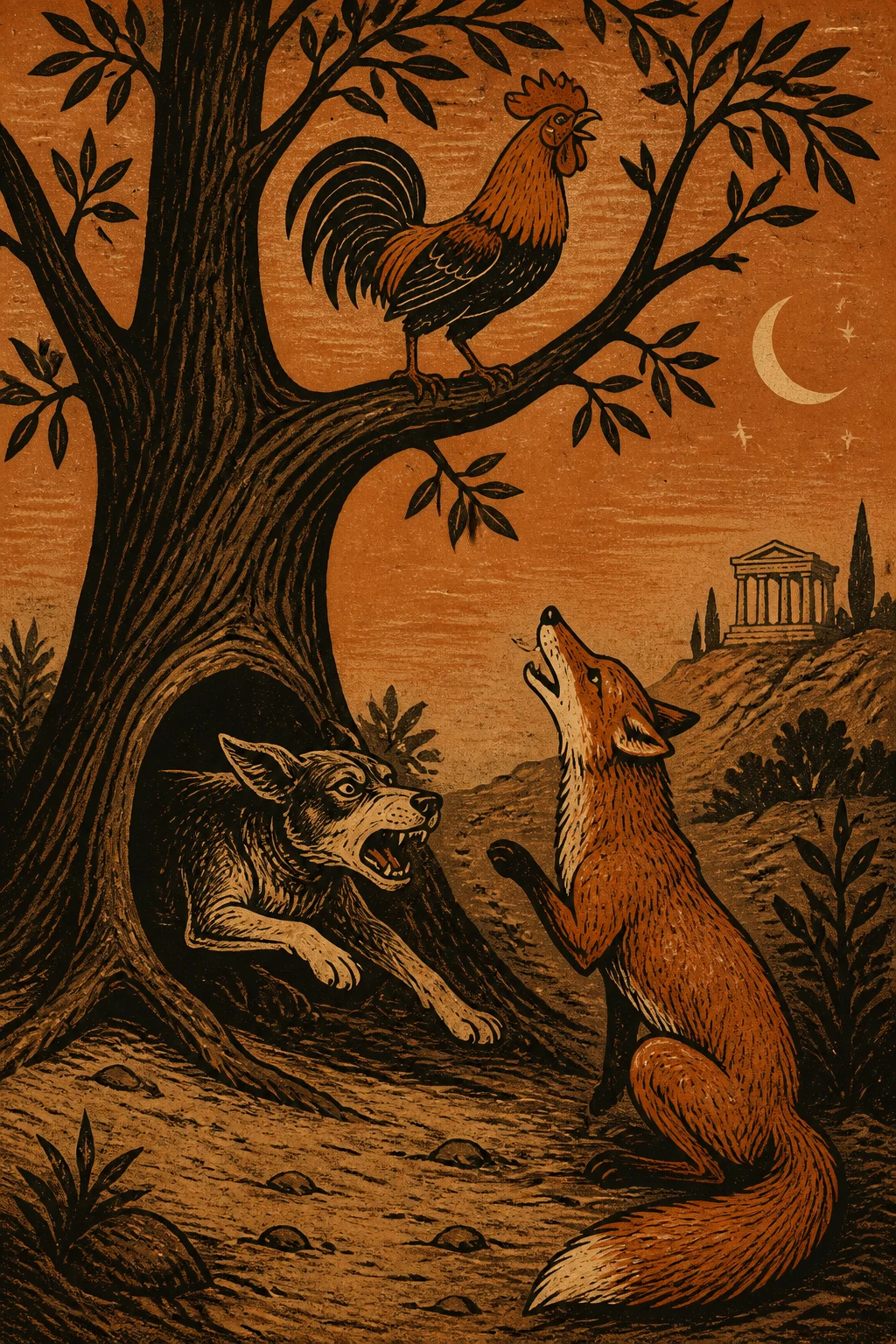
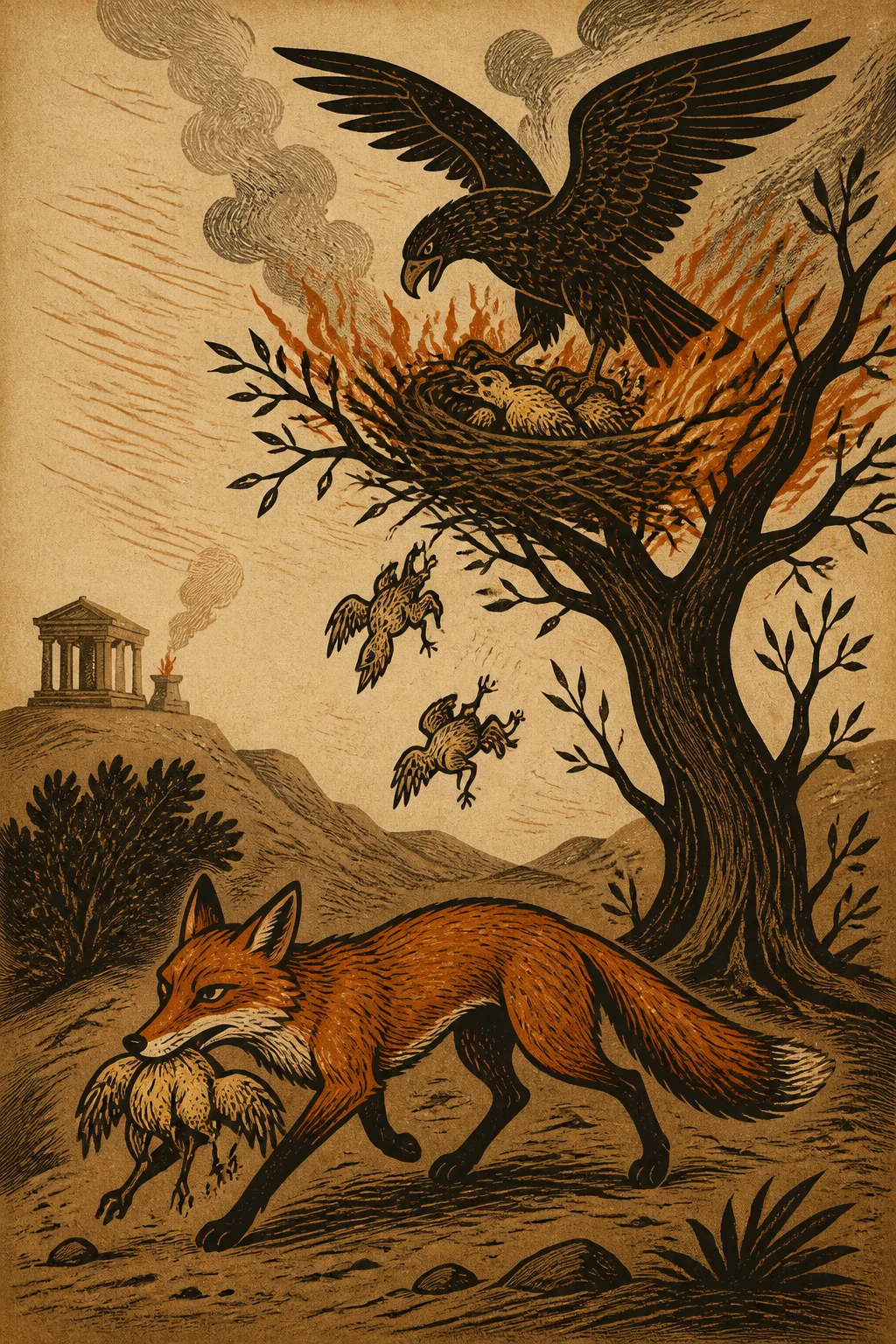
An eagle and a fox agreed to be friends and decided to live near one another, hoping that constant companionship would strengthen their friendship. So the eagle built his nest in a tall tree, while the fox made her den in the thicket beneath it and gave birth to her cubs. One day, when she had gone out in search of food, the eagle, finding himself short of provisions, swooped down into the thicket, snatched up the cubs, and feasted on them with his own nestlings. When the fox returned and learned what had happened, she grieved less over the death of her young than over her helplessness to avenge them: being a creature of the earth, she could not pursue one that flew. So she stood at a distance and cursed her enemy—the only recourse left to the weak and powerless. Before long, however, the eagle paid the penalty for betraying their friendship. Some people were sacrificing a goat in the countryside, and he swooped down upon the altar and carried off a piece of the entrails with a live ember clinging to it. Once he had brought it to his nest, a strong gust of wind fanned the dry, brittle straw into a bright flame. The nestlings were burned and fell to the ground, for the young eagles were not yet able to fly. The fox ran up and devoured every one of them before the eagle’s eyes.
The fable shows that those who betray a friendship may escape punishment at the hands of those they have wronged because their victims are powerless, but they cannot escape divine retribution.
Izvirnik
5. Ἀετὸς καὶ Ἀλώπηξ. (S. 1. C. 1 et p.279 sq. F. 1.)
Naslednje strani prikazujejo izvirno besedilo za primerjavo.
Ἀετὸς καὶ ἀλώπηξ φιλεῖν ἀλλήλους συνθέμενοι, πλησίον ἑαυτῶν οἰκεῖν διέγνωσαν, βεβαίωσιν φιλίας τὴν συνήθειαν ποιούμενοι. Καὶ δὴ ὁ μὲν ἀναβὰς ἐπί τι περίμηκες δένδρον ἐνεοττοποιήσατο· ἡ δὲ εἰσελθοῦσα εἰς τὸν ὑποκείμενον θάμνον ἔτεκεν. Ἐξελθούσης δέ ποτε αὐτῆς ἐπὶ νομὴν, ὁ ἀετὸς ἀπορῶν τροφῆς, καταπτὰς εἰς τὸν θάμνον καὶ τὰ γεννήματα ἀναρπάσας, μετὰ τῶν αὑτοῦ νεοττῶν κατεθοινήσατο. Ἡ δʼἀλώπηξ ἐπανελθοῦσα ὡς ἔγνω τὸ πραχθὲν, οὐ μᾶλλον ἐπὶ τῷ τῶν νεοττῶν θανάτῳ ἐλυπήθη, ὅσον ἐπὶ τῷ τῆς ἀμύνης ἀπόρῳ· χερσαία γὰρ οὖσα πτηνὸν διώκειν ἠδυνάτει. Διὸ πόῤῥωθεν στᾶσα, ὃ μόνον τοῖς ἀσθενέσι καὶ ἀδυνάτοις ὑπολείπεται, τῷ ἐχθρῷ κατηρᾶτο. Συνέβη δʼ αὐτῷ τῆς εἰς τὴν φιλίαν ἀσεβείας οὐκ εἰς μακρὰν δίκην ὑπελθεῖν· θυόντων γάρ τινων αἶγα ἐπʼ ἀγροῦ, καταπτὰς ἀπὸ τοῦ βωμοῦ σπλάγχνον ἔμπυρον ἀνήνεγκεν· οὐ ὗ κομισθέντος εἰς τὴν καλιὰν, σφοδρὸς ἐμπεσὼν ἄνεμος ἐκ λεπτοῦ καὶ παλαιοῦ κάρφους λαμπρὰν φλόγα ἀνῆψε· καὶ διὰ τοῦτο καταφλεχθέντες οἱ νεοττοὶ (καὶ γὰρ ἦσαν ἔτι ἀπτῆνες οἱ ἀετιδεῖς) ἐπὶ τὴν γῆν κατέπεσον. Καὶ ἡ ἀλώπηξ προσδραμοῦσα ἐν ὄψει τοῦ ἀετοῦ πάντας αὐτοὺς κατέφαγεν.
Ὁ λόγος δηλοῖ, ὅτι οἱ φιλίαν παρασπονδοῦντες, κἄν τὴν τῶν ἠδικημένων ἐκφύγωσι κόλασιν διʼ ἀσθένειαν, ἀλλ’ οὖν γε τὴν ἐκ θεοῦ τιμωρίαν διακρούονται οὐδʼ ὅλως.
Nadaljuj z branjem