Prevod
The Duke and Duchess of Toledo had no other child, but their boy was as lovely as a flower: healthy, handsome, fearless, and, in his tender years, so angelic and noble in disposition that the servants loved him scarcely less than his parents did. His mother dressed him in velvet trimmed with Dutch lace, with gloves of fragrant suede and jewelled ornaments glittering on the band of his cap; and when they saw him pass along the street, gallant and splendid as a knight in miniature, women blew him kisses from their fingertips, little old women laughed and winked as if to say, “What a sight you will be at twenty!” and grave clerics and austere friars, thrusting their heads from their cowls and their hands from their sleeves, bestowed a blessing on him as he went by.
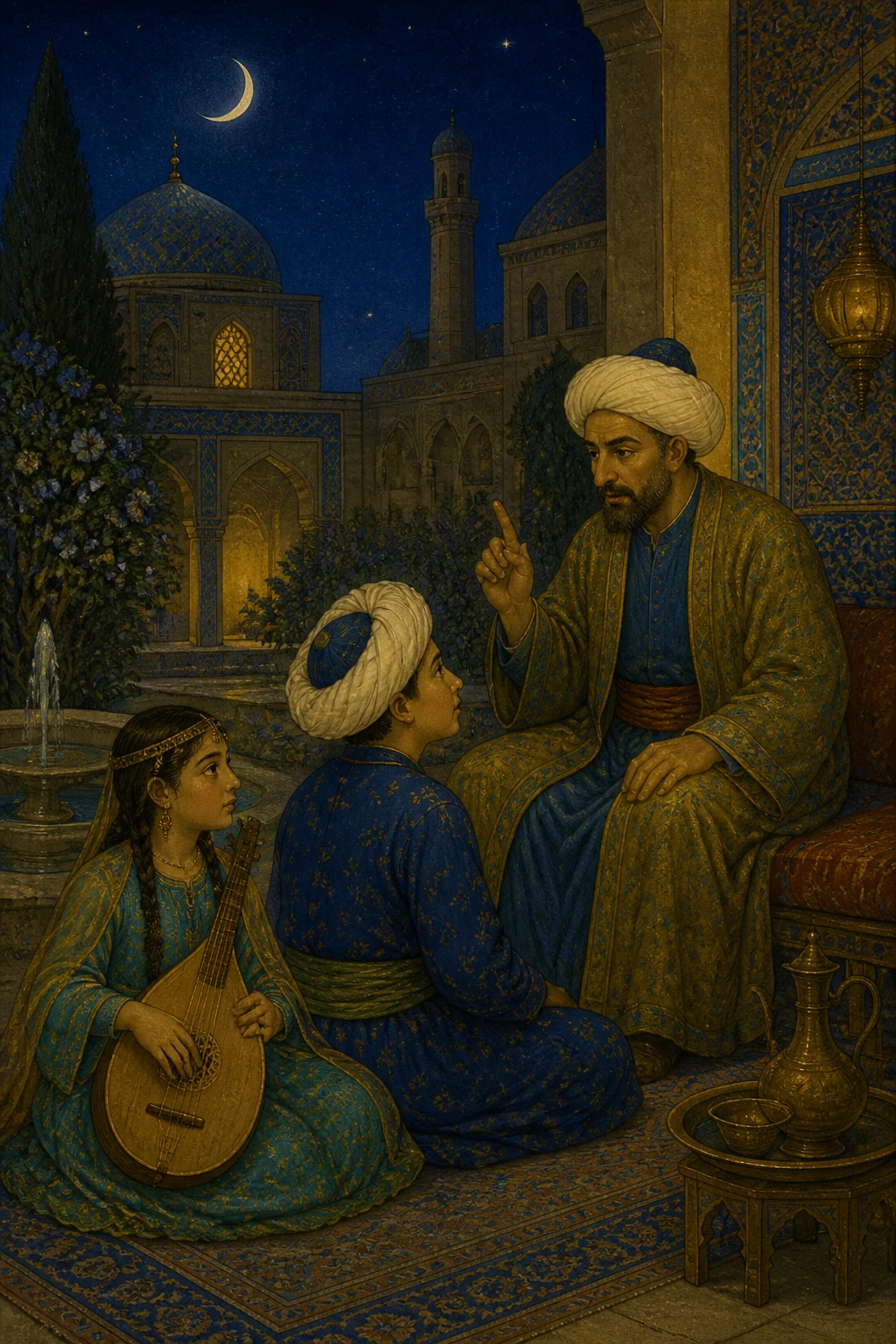
Yet the Duke of Toledo, proud as he was of his offspring, observed with growing uneasiness one bad quality in him, which increased as young Don Sancho grew older. The fault consisted in a kind of inveterate mania for blurting out the truth indiscriminately, whether it was relevant or not, on any subject and in anyone’s presence. An old courtier, well versed in the knowledge that everything at court is disguise, the Duke of Toledo foresaw with terror that his son, however brave, generous, clever, and quick-witted he might prove, would never attain the high station that was his due in the world unless he corrected so disastrous a tendency. “Discretion and truth are at odds, for truth is often indiscretion itself,” the duke would warn his son. “Like foolish fish, we commonly meet our death through our mouths; and that is no death for a prudent man, but for a brute creature, cold and witless,” he would often add. The boy was ashamed and distressed by these reprimands and warnings, and, persuaded that he was wrong to be so sincere, resolved in his heart to mend his ways; but his nature would not allow it. Some strange force brought the truth to his lips and gave him not a moment’s peace until at last he let it out, to the great affliction of the duke, who wore himself out repeating, “Sancho, my son, take care what you do! Truth is one of the most potent poisons; but instead of being taken through the mouth, it comes out of it. Once released into the air, it kills. If fatal truth seems so attractive to you, keep it within yourself and for yourself; share it with no one, and you will poison no one.”
Now it happened that, when the son of the Duke and Duchess of Toledo was approaching thirteen and growing handsomer, more accomplished, and more graceful by the day, the queen went to the cathedral to hear her first Mass after her confinement and caught sight of him as she passed. Charmed by his bearing and the grace with which he made her a most profound bow, she wished to know who he was, and scarcely had she learned than she summoned the duke and pressed him most earnestly to let her have Don Sancho as a page to her royal person. More terrified than flattered, the duke told his son of the honour the queen was bestowing upon them. “Now my fears are upon us, Sancho; now comes the danger! This fatal affliction of truthfulness will be the ruin of you and of us all. If reserve and the art of keeping a prudent silence are always useful, in the royal chambers they are indispensable, I swear to you.” “I should think rather, Father,” replied the precocious Don Sancho, “that truth itself must dwell beside kings, since they are the likeness and image of God. There can be no falsehood in them, nor any deed that ought to be hidden or kept secret.” This answer left the duke bewildered and perplexed, for certain court rumours concerning royal indiscretions and love affairs were scratching at his memory; but, gathering his courage, he exclaimed at last, “No, my son, it is not as you suppose. When you are older and your reason has matured, you will understand these mysteries. For now I shall tell you only this: if you go to court resolved to speak the truth, you had better take my head this very moment and deliver it to the executioner.” Don Sancho stood downcast and melancholy for some time, until, like a man making a pledge, he held out his hand with a strange gravity beyond his years. “I know the remedy,” he declared. “It is impossible for me to lie, but not to keep silent. You, Father, must spread the word that some mishap has robbed me of speech, and I promise, for your sake, to remain mute until the last day of my life, if need be.”
The duke approved of this expedient and spread the report of his son’s muteness; the remarkable thing was that, when the queen learned that the handsome boy was mute, she showed the greatest delight and an even stronger determination to have him in her service and at her command. And indeed, from that day forward Don Sancho served as a page in the queen’s chamber, his lips sealed by the padlock of his will, seeing and hearing everything that happened, but with no means of making it known. Little by little the queen grew exceedingly fond of him. Sancho would spend long idle hours stretched on velvet cushions at the foot of his mistress’s chair, his head resting in her lap, while with her delicate, ring-laden hand she stroked his dark, silky curls as a mother might. The first few times Don Sancho was charged with opening the secret door to a certain nobleman, and saw him slip furtively into the queen’s private chamber at an unseasonable hour, and the queen throw her arms about his neck, the little page was grieved and indignant; had he been able to loose his tongue, God knows what tragedy would have erupted in the palace. Fortunately, Sancho was mute; he could hear, however, and the conversations of the two lovers acquainted him with matters of the utmost gravity, with secrets of state and family; among them, that the king, for his part, went out every night in the greatest secrecy to visit a certain very beautiful Jewish woman, for whose sake he neglected his duties as husband and monarch, and under whose influence he favoured the Jews beyond all measure, to the detriment of his kingdoms and the depletion of his treasures. This intrigue was shrouded in mystery, known only to the nobleman and the queen; and Don Sancho, transferring his indignation from the wife’s offence to the husband’s, rejoiced once more that he had no voice, since he was thus in no danger of revealing so infamous a truth. As time passed, the freedom with which people spoke before the mute little page acquainted him with several great wickednesses being plotted at court: he learned how the royal favourite secretly did as he pleased with the public treasury, and how the king’s uncle was conspiring to dethrone him, along with countless other knaveries and villainies which continually roused and inflamed Don Sancho’s anger and virtuous impatience, putting his steadfastness in the absolute silence to which he had pledged himself sorely to the test.
Meanwhile, everyone loved him dearly, for that handsome, silent page, so noble and so obedient, had never done anyone the slightest harm. There is no need to say how the ladies favoured him, seeing him so graceful and knowing his discretion to be assured; and from the king down to the lowliest servant, everyone wished him well. His standing and favour grew so great that, when he reached twenty and had to leave his office as page for the noble profession of arms, the king, the queen, the royal favourite, and the infante vied with one another in heaping favours upon him, increasing the honours and privileges of his house and granting him command of strongholds, as well as fortresses, towns, and castles. And when Don Sancho left the palace, his cheeks still wet from the tear-soaked kiss with which the queen, who loved him as another son, had bidden him farewell, his neck weighed down by the gold chain the king had just clasped about it, and mounted the fiery Andalusian the infante had given him, he reflected on how many evils his strange resolve had spared him and how much prosperity it had brought. He felt his tongue with his teeth and said pensively to himself—for, as far as anyone else was concerned, he was firmly resolved not to utter a single word—“At the first word you let fly into the air, tongue of mine, I shall cut you out with these teeth or with my dagger, and throw you to the dogs.”
There are scholars who maintain that this story is the origin of the common saying, for which no other plausible explanation exists: He who keeps a wise silence is called Sancho.