Waltey
Mož, ki se je izdajal za pravega sina
Uji Shūi Monogatari · anonimna srednjeveška zbirkaO besedilu
Mož, ki se je izdajal za pravega sina
- Vir
- Uji Shūi Monogatari
- Avtor
- anonimna srednjeveška zbirka
- Jezik branja
- English
- Jezik izvirnika
- 日本語
- Čas branja
- 6 min branja
- Obseg
- 5 strani
- Naslov izvirnika
- 077 実子ニ非サル人実子ノ由シタル事
O izvirniku
Uji Shūi Monogatari
Srednjeveške japonske pripovedi o menihih, duhovih, čudežih, prevarah in vsakdanjih presenečenjih. Bralni jezik je English, izvirnik pa prihaja iz vira Uji Shūi Monogatari v jeziku 日本語.
Besedilo
Mož, ki se je izdajal za pravega sina
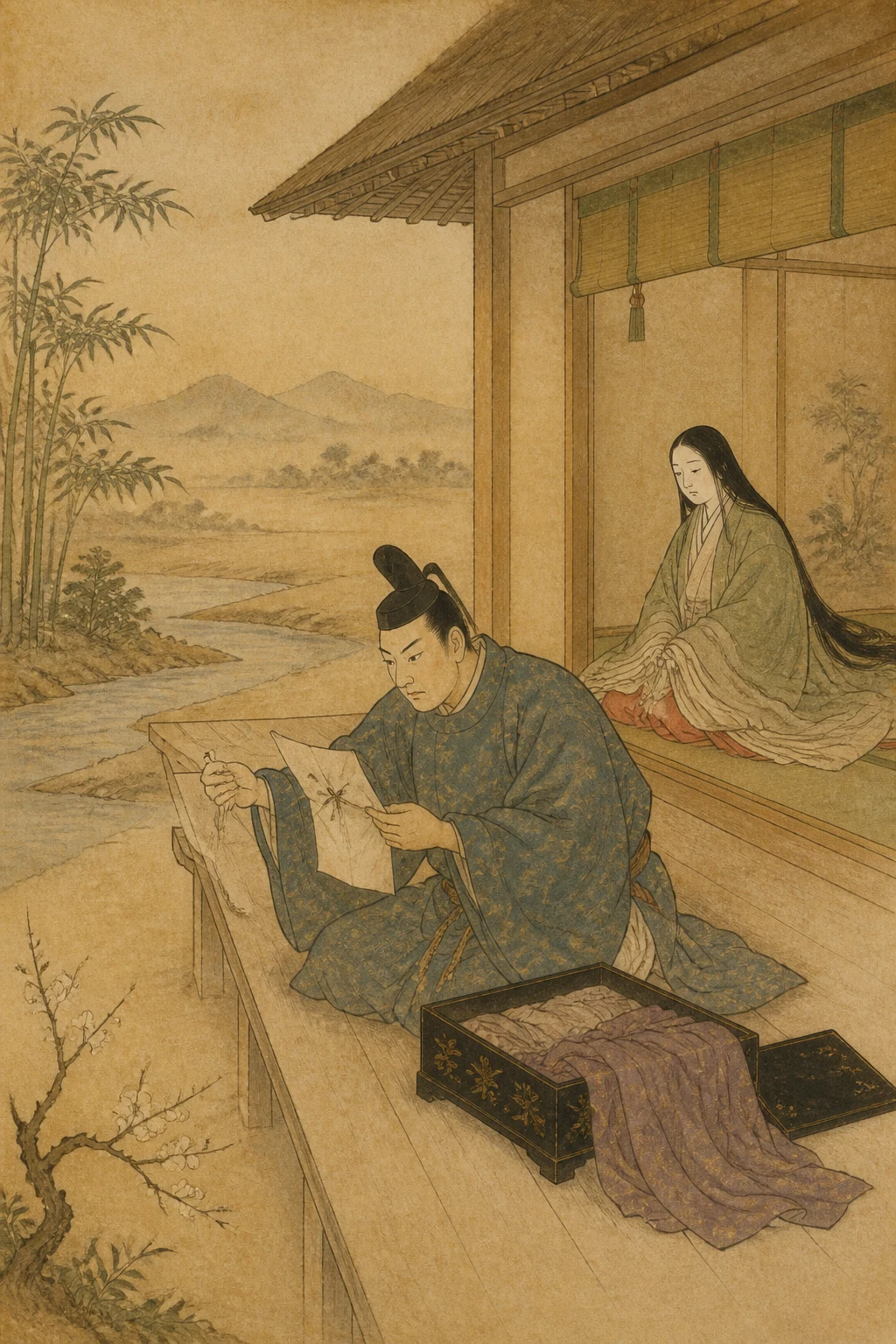
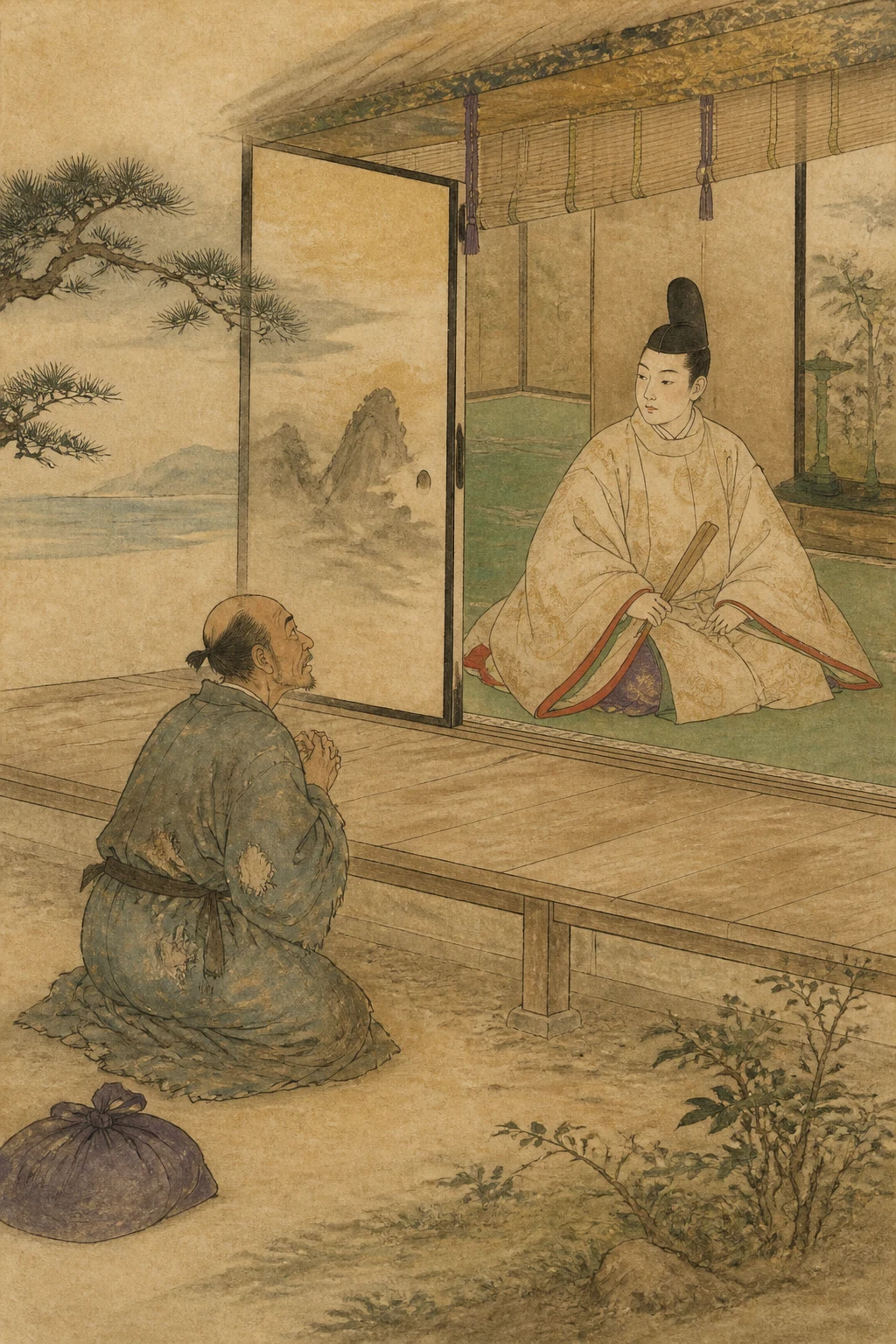
This, too, is a tale of long ago. There was a man whose claim to be a certain gentleman’s true son was far from established. People knew the circumstances and thought him ridiculous. After the man said to be his father had died, a retainer who had served in his household for many years, and who had gone to the country with his wife, lost her as well. With nothing left to keep him there, he returned to the capital. He had no means of making a living and no one to turn to, until he heard that this supposed son was insisting he was the rightful heir and had taken up residence in his father’s house. The retainer went to call. “A man named So-and-so, who served the late lord for many years, has come,” he announced. “He begs to be granted an audience.” The supposed son sent word out: “I seem to remember such a man. Let him wait a little. I shall see him.” Thinking that his troubles were now over, the retainer sat dozing until a servant in close attendance came out and said, “Please come into the residence.” Delighted, he went in. The servant who had brought him said, “Please wait here a moment,” and disappeared into the inner rooms. Looking about him, the retainer saw that the furnishings were no different from those of his old lord’s day, though the sliding screens seemed perhaps a little worn. Just then the central screen slid open. He looked up sharply, and out stepped the man who called himself the son. At the sight of him, the old retainer began to sob and weep so bitterly that his sleeves could scarcely hold his tears. Wondering why he should be crying so, the master sat down and asked, “Why are you weeping like this?” “Because you are so very like my late lord,” he replied. “It moves me deeply.” “Just as I thought! I myself have always felt that I resembled him. How outrageous that these people should say I am not his son!” Thinking thus, he said to the weeping retainer, “How very old you have grown! How have you been getting on? I was still a child and lived with my mother, so I do not remember my late father’s ways very well. I must look to you as I would to him. Tell me whatever I ought to know. I shall rely on you entirely. But first, you look cold. Put this on.” He took off a generously padded robe and gave it to him. “From now on, you must come here freely, without standing on ceremony.” The retainer sat there feeling that his fortune was made. Such words would have been welcome even from someone whose service he had entered only yesterday; how much more so from the son of the lord he had served for years. The master smiled. “How unfortunate that this fellow should have spent all these years without anyone to look after him!” He summoned his steward. “This man was a favorite of my late father’s. He has come up to the capital and has no settled lodging. See that he is properly provided for.” The steward answered with a low “Yes,” and withdrew. Now this retainer had solemnly vowed before the Buddha never to tell a lie. Meanwhile, the master thought, “I shall invite those people who question my birth and have this retainer tell them the whole story.” He summoned the steward again. “Some people have said they will come here the day after tomorrow. Put everything in proper order and see that they are entertained handsomely.” “Yes,” said the steward, and made all the necessary preparations. Four or five of the master’s close acquaintances gathered. He dressed with more care than usual to receive them, and after several rounds of wine he said, “There is a man here who spent many years in my father’s service. Would you care to see him?” The guests, by now in good spirits and red in the face, replied, “By all means, have him brought in. It would be touching, too, to hear how you resemble your late father.” “Is anyone there? Tell So-and-so to come.” A servant rose to fetch him. The man who appeared was over sixty, with thinning hair at his temples and a look about his eyes that suggested he could not possibly tell a lie. He wore a white hunting robe of beaten silk over a respectable robe of unbleached silk, evidently the one he had been given. Having been summoned, he made his formal salutations and crouched respectfully, holding his fan upright like a courtier’s baton. The master said, “Now then, you were brought up in my father’s service from his early days, were you not?” “Yes,” he replied. “How do you find me? Do I resemble him?” The retainer said, “As to that, sir, I entered my late lord’s service when I was thirteen, and until I was fifty I was never away from him, night or day. He always called me ‘young fellow, young fellow.’ Even when my circumstances were at their lowest, he had me sleep at his feet, and in the middle of the night or at dawn I would bring him his chamber pot and attend to such things. At the time I found it miserable and hard to bear, but since his death I have bitterly regretted ever feeling so.” The master said, “Well then, the other day, when I had you brought in and opened the sliding screen to come out, you looked up and burst into tears. What was the reason for that?” The retainer replied, “There was no special reason, sir. While I was in the country, I heard that my late lord had died. I wished to come here once more, if only to pay my respects and see how things were, and so I ventured to call, full of apprehension. You had me brought straight into the residence, which was altogether more kindness than I deserved. Then you slid open the screen, and when I looked up, the first thing to appear was your tall black cap, quite jet-black. It brought back to me how, when my late lord came out in just that way, his cap, too, had looked jet-black. At the memory, my tears came before I knew it.” The assembled guests suppressed their smiles. The master’s expression changed. “And in what other way do I resemble my late father?” he asked. “Apart from that,” said the retainer, “there is nothing whatever in which you resemble him.” Smiling to themselves, the guests slipped away, one or two at a time.
Izvirnik
077 実子ニ非サル人実子ノ由シタル事
Naslednje strani prikazujejo izvirno besedilo za primerjavo.
これも今は昔その人の一定子ともきこえぬ人有けり世の人はそのよしをしりておこかましく思けりそのててときこゆる人失にける後その人のもとに年比ありける侍の妻にくして田舎へいにけりそのめうせにけれはすへきやうもなく成て京へのほりにけりよろつあるへきやうもなくてたよりなかりけるに此子といふ人こそ一定のよしいひて親の家にゐたなれとききてこの侍まいりたりけり故殿に年ころさふらひしなにかしと申ものこそまいりて候へ御見参に入たかり候といへはこの子さる事ありとおほゆしはしさふらへ御対面あらんするそといひ出したりけれは侍しおほせつと思てねふりゐたる
程にちかうめしつかふ侍いてきて御ていへまいらせ給へと云けれは悦てまいりにけりこの召次しつる侍しはし候はせ給へといひてあなたへゆきぬ見まはせは御ていのさまことののおはしましししつらひに露かはらすみさうしなとはすこしふりたる程にやとみるほとに中のさうしをひきあくれはきとみあけたるにこの子となのる人あゆみ出たりこれをうちみるままに此としころの侍さくりもよよになく袖もしほりあへぬほとなりこのあるしいかにかくは泣ならんと思てついゐてとはなとかくなくそと問けれは故殿のおはしまししにたかはせおはしまさぬかあはれにおほえてといふされはこそ我も故殿にはたかはぬやうにおほゆるを此人々のあらぬなといふなるあさましき事と思て此なく侍にいふやうおのれこそ事のほかに老にけれ世中はいかやうにてすくるそ我はまたおさなくて母のもとに
こそありしかは故殿のありやうよくも覚ぬなりをのれをこそ故殿と憑てあるへかりけれ何事も申せ又ひとへにたのみてあらんするそまつ当時さむけなりこのきぬきよとて綿ふくよかなるきぬ一ぬきてたひていまはさうなしこれへまいるへき也といふこの侍しおふせてゐたり昨日けふのもののかくいはんたにありいはんやことのの年ころの物のかくいへは家主えみて此おのこの年来すちなくてありけん不便の事なりとてうしろみめしいててこれは故殿のいとおしくし給しものなりまつかく京に旅たちたるにこそ思はからひてさたしやれといへはひけなるこゑにてむといらへて立ぬこの侍はそらことせしといふ事をそ仏に申きりてけるさてこのあるし我を不定けにいふなる人々よひてこの侍に事の次第いはせてきかせんとてうしろみめしいててあさてこれへ人々わたらんといはるるに
さるやうに引つくろひてもてなしすさましからぬやうにせよといひけれはむと申てさまさまにさたしまうけたり此とくいの人々四五人はかりきあつまりにけりあるしつねよりもひきつくろひて出合て御酒たひたひまいりて後いふやう我おやのもとに年比おいたちたる物候をや御らんすへからんといへは此あつまりたる人々心ちよけにかほさきあかめあひてもともめしいたさるへく候故殿に似けるもかつあはれに候といへは人やあるなにかしまいれといへはひとりたちてめすなりみれは鬢はけたりおのこの六十余斗なるかまみの程なとそらことすへうもなきかうちたるしろきかりきぬにねり色のきぬのさるほとなるきたりこれは給はりたる衣とおほゆめしいたされて事うるはしく扇を笏にとりてうすくまりゐたり家主のいふやうややここのててのそのかみよりおのれは老たちたる物そかしなといへはむと
いふみえにたるかいかにといへは此侍いふやうその事に候故殿には十三よりまいりて候五十まてよるひるはなれまいらせ候はすこ殿の小冠者小冠者とめし候き無下に候し時も御あとにふせさせおはしまして夜中暁大つほまいらせなとし候しその時はわひしうたへかたくおほえ候しかをくれまいらせて後はなとさおほえ候けんとくやしうさふらふなりといふあるしのいふやう抑ひとひ汝をよひ入たりしおり我障子を引あけて出たりしおりうちみあけてほろほろと泣しはいかなりし事そといふその時侍かいふやうそれも別の事にさふらはすゐ中にさふらひて故殿うせ給にきとうけ給ていま一とまいりて心ありさまをたにもおかみ候はんと思て恐恐まいり候しさうなく御ていへめし入させおはしまして候し大方かたしけなく候しに御障子を引あけさせ給候しをきと見あけまいらせて候しに御ゑほう
しのまくろにてまつさしいてさせおはしまして候しか故殿のかくのことく出させおはしましたりしも御烏帽子はまくろにみえさせおはしまし候か思いてられおはしましておほえす涙のこほれさふらひしなりといふに此あつまりたる人々もえみをふくみたり又此あるしも気色かはりてさて又いつくか故殿には似たるといひけれは此侍そのほかは大かた似させおはしましたる所おはしまさすといひけれは人々ほをえみてひとりふたりつつこそ逃失にけれ
Nadaljuj z branjem