Waltey
Mlada modra šoja, ki ni bila dovolj pogumna, da bi jo bilo strah
055 THE YOUNG BLUE JAY WHO WAS NOT BRAVE ENOUGH TO BE AFRAID
Živalske zgodbe Clare Dillingham Pierson · Clara Dillingham PiersonO besedilu
Mlada modra šoja, ki ni bila dovolj pogumna, da bi jo bilo strah
- Vir
- Živalske zgodbe Clare Dillingham Pierson
- Avtor
- Clara Dillingham Pierson
- Jezik branja
- Slovenščina
- Jezik izvirnika
- English
- Čas branja
- 6 min branja
- Obseg
- 5 strani
- Naslov izvirnika
- 055 THE YOUNG BLUE JAY WHO WAS NOT BRAVE ENOUGH TO BE AFRAID
O izvirniku
Živalske zgodbe Clare Dillingham Pierson
Devetindevetdeset avtorskih zgodb o živalih na kmetiji, travniku, v gozdu, ob ribniku in ponoči. Bralni jezik je Slovenščina, izvirnik pa prihaja iz vira Živalske zgodbe Clare Dillingham Pierson v jeziku English.
Besedilo
Mlada modra šoja, ki ni bila dovolj pogumna, da bi jo bilo strah
Vsakdo, ki pozna Modre šoje, ve, da so zelo pogumna družina. To je najlepše, kar je mogoče povedati o njih. Resda so zelo lepo oblečene in v lepem zimskem jutru ni lepšega prizora od jate Modrih šoj, ki spreletavajo z veje na vejo, se gostijo z želodom na hrastih in nagibajo svoje čopaste glavice na stran, ko se razgledujejo po okolici. Takrat so zelo zgovorne in si nenehno dopovedujejo, kaj naj katera stori; vendar nobena nikoli ne naredi, kar ji rečejo, zato bi prav lahko nehale deliti nasvete.
Drugi prebivalci gozda Modrih šoj prav nič ne marajo in če katera zaide v težave, ji ne pomagajo iz njih. Tako je bilo od nekdaj in tako bo vedno. Če bi bila ves čas zima, bi bile Modre šoje lahko kar priljubljene, saj v mrazu jedo semena in oreške ter se manj prepirajo z drugimi. Poleti pa postanejo slabe sosede. Takrat živijo v najgostejših delih gozda in v svojih velikih, grobo spletenih gnezdih vzgajajo družinice drobnih, puhastih mladičkov. Takrat tudi zamenjajo svoje lepe suknjiče in medtem ko jim staro perje odpada in raste novo, niso prav nič lepe. O, takrat se je treba varovati Modrih šoj!
Poleti zelo malo govorijo in gozdni prebivalci ne vedo, kdaj prihajajo, razen če med vejami zagledajo utrip modrih kril. Modre šoje imajo razlog, da so takrat tiho. Počenjajo zahrbtne reči in nočejo, da bi jih kdo zalotil.
Drobni mladički hitro rastejo in njihovi kljunčki so vedno odprti, željni še več hrane. Oče Modri šojec in mati Modra šoja ves čas preživita v iskanju živeža, pri tem pa se ne zadovoljita s semeni in jagodami. Obiskujeta gnezda svojih ptičjih sosedov in tedaj se zgodi nekaj zelo žalostnega. Ko Modre šoje pridejo h gnezdu, so lahko v njem štiri jajca; ko odidejo, pa ne ostane nobeno, le koščki razbitih jajčnih lupin. To je zelo, zelo žalostno, vendar je tudi to ena tistih reči, ki bodo vedno takšne, in druge ptice ne morejo storiti nič drugega, kakor da budno pazijo in odganjajo šoje.
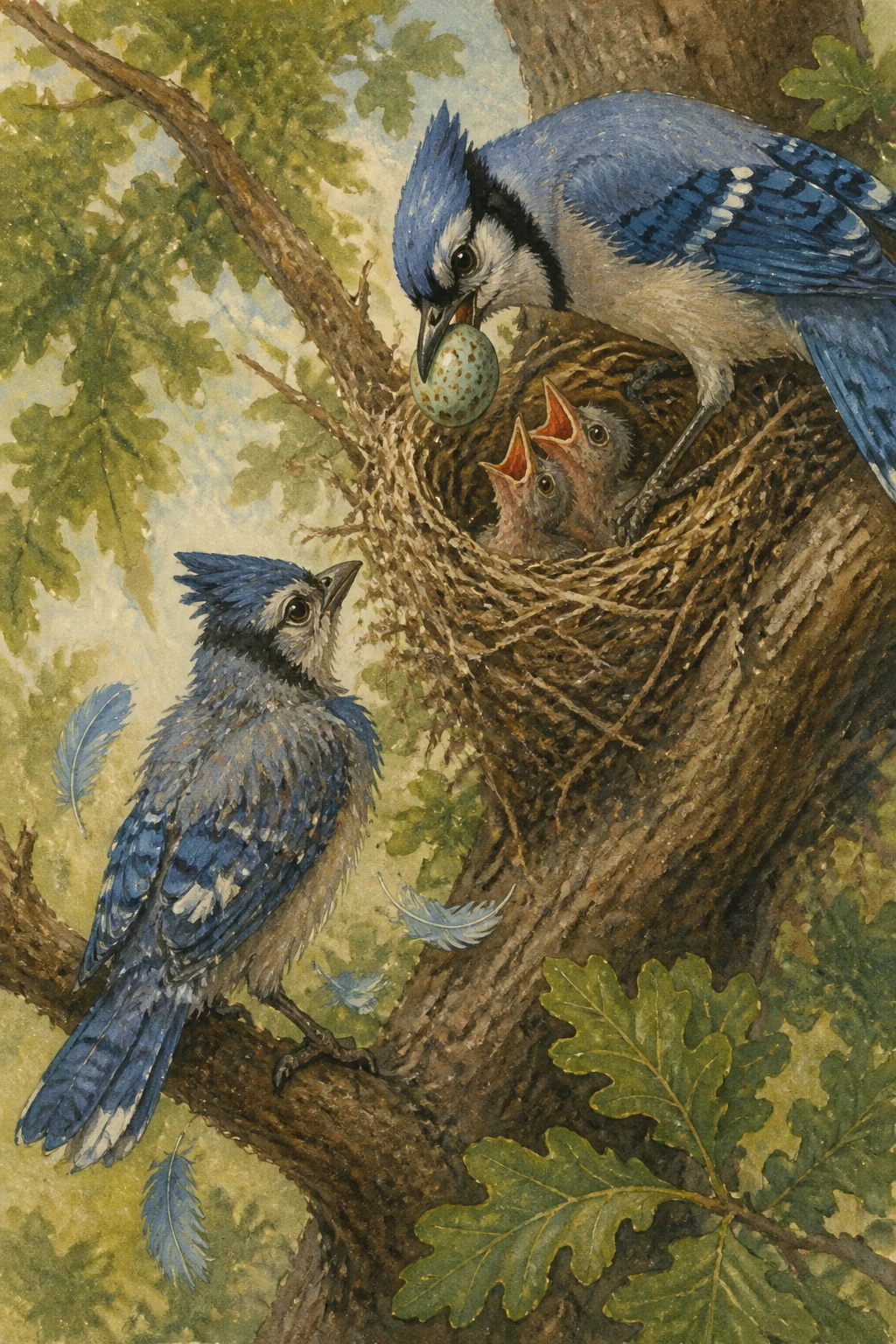
Nekoč je v gozdu živel mladi Modri šojec, ki je bil večji od svojih bratcev in sestric ter jih je nenehno odrival proti robu gnezda. Kadar je oče prinesel nekaj hrane zanje, je iztegnil noge, zaprhutal s krili in se stegnil po prvi grižljaj. In ker je bil največji in najmočnejši, ga je navadno tudi dobil. Včasih je bil prvi grižljaj celo tako velik, da za druge ni ostalo ničesar več. Bil je zelo požrešen fantič in ni imel nobene pravice vzeti več, kot mu je pripadalo, samo zato, ker je po naključju prvi v družini prebil jajčno lupino ali ker je hitro rasel.
Ta isti mladi Modri šojec se je rad bahal, kaj vse bo počel, ko bo prišel iz gnezda, in mati mu je govorila, da bo zašel v težave, če ne bo previden. Rekla mu je, da se morajo tudi Modre šoje paziti nevarnosti.
»Pha!« je rekel mladi Modri šojec. »Koga pa je strah?« »Zdaj govoriš kakor nasilnež,« je rekla mati Modra šoja, »kajti resnično pogumni so vedno pripravljeni biti previdni.«
Toda mladi Modri šojec je svoje bratce in sestrice le še bolj odrival kakor po navadi in si v svoji nespametni glavici, iz katere so komaj poganjala peresca, mislil, da jim bo ob prvi priložnosti pokazal, kaj je pogum.
Čez nekaj časa je njegova priložnost prišla. Vsi ptički so se že naučili prhutati z veje na vejo in prav živahno poskakovati po tleh. Nekega popoldneva so odšli v del gozda, kjer so bila tla vlažna in je bilo vse neznano. Oče in mati sta otrokom naročila, naj ostanejo tesno skupaj, pa bosta pazila nanje; toda nespametni mladi Modri šojec si je želel priložnosti, da bi šel sam, zato se je skril za drevo, dokler niso bili drugi že daleč spredaj, nato pa se je odpravil v drugo smer. Nekaj časa se mu je zdelo silno zabavno in kadar so pernati prebivalci pogledali dol proti njemu, je dvignil čopek više kot kdaj prej ter razmišljal, kako jih bo strašil, ko bo nekoliko starejši.
Mladi Modri šojec je ravno premišljeval o tem, ko je pred seboj na poti zagledal nekaj dolgega in bleščečega. Spomnil se je, kaj mu je oče pripovedoval o kačah in o neki vrsti, ki ima na repu ropotuljice. Vprašal se je, ali ima tudi ta ropotuljico, in sklenil pogledati, kako je pritrjena. »Modri šojec sem,« si je rekel, »in doslej se nisem bal še ničesar.«
Klopotač, kajti to je bil on, je dvignil glavo, da bi pogledal ptička. Mladi Modri šojec je opazil, da se mu oči močno svetijo. Zazrl se je naravnost vanje in na njihovi bleščeči površini videl drobni podobi samega sebe. Obst obstal je in strmel, Klopotač pa se je približal. Nato je mladi Modri šojec skušal pogledati njegov rep, toda čeprav se je še tako trudil, ni mogel odvrniti pogleda od Klopotačevih oči.
Klopotač je zdaj zvil telo, sploščil glavo in pokazal zobe, medtem ko mu je nenavadni razcepljeni jezik ves čas švigal iz gobca in spet vanj. Tedaj se je mladi Modri šojec skušal premakniti in ugotovil, da se ne more. Lahko je le stal tam, strmel v žareče oči in poslušal pesem, ki jo je zapel Klopotač:
»Skozi travo in praprot, v zavojih iščem pot, bleščeče telo drsi. V gozdni senci je moj dom, tam prebivam noč in dan, saj gozdni zakon to veli. Kdor v oči se mi zazre, k strupenemu gobcu gre, vse bliže k meni hiti; predrzne ptice začaram, jih uročene obdržim, saj gozdni zakon to veli.«
Klopotač se je vse bolj približeval in mladi Modri šojec se je tresel od strahu, ko je nenadoma zašumelo s krili. Oče in mati sta priletela navzdol in krožila okoli Klopotača, glasno klicala vse druge šoje ter prisilila kačo, da se je obrnila stran od nemočnega ptička, v katerega je že nameravala planiti. Dolgo je trajalo, preden se je gozd spet umiril, in ko se je, je bila družina Modrih šoj na varnem v svojem gnezdu, Klopotač pa je odšel domov brez večerje.
Ko si je mladi Modri šojec opomogel od strahu, se je začel pritoževati, ker ni videl Klopotačevega repa. Tedaj ga je njegova potrpežljiva mati oštela, kakor ga ni še nikoli v življenju, oče pa je rekel, da si za svojo nespamet zasluži nekaj krepkih kljunovih udarcev.
Ko je mladi Modri šojec pokazal, da mu je žal za vse težave, ki jih je povzročil, sta mu starša dovolila povečerjati in iti spat; vendar šele potem, ko se je naučil dveh izrekov, ki naj bi si ju za vedno zapomnil. Izreka sta se glasila: »Resnično pogumna ptica si upa nekaterih stvari tudi bati,« in: »Če se nevarnosti približaš toliko, da ji vidiš rep, te utegne udariti z glavo.«
Izvirnik
055 THE YOUNG BLUE JAY WHO WAS NOT BRAVE ENOUGH TO BE AFRAID
Naslednje strani prikazujejo izvirno besedilo za primerjavo.
Everybody who is acquainted with the Blue Jays knows that they are a very brave family. That is the best thing that you can say about them. To be sure, they dress very handsomely, and there is no prettier sight, on a fine winter morning, than a flock of Blue Jays flitting from branch to branch, dining off the acorns on the oak trees, and cocking their crested heads on one side as they look over the country. They are great talkers then, and are always telling each other just what to do; yet none of them ever do what they are told to, so they might just as well stop giving advice.
The other people of the forest do not like the Blue Jays at all, and if one of them gets into trouble they will not help him out. This always has been so, and it always will be so. If it could be winter all the time, the Blue Jays could be liked well enough, for in cold weather they eat seeds and nuts and do not quarrel so much with others. It is in the summer that they become bad neighbors. Then they live in the thickest part of the woods and raise families of tiny, fuzzy babies in their great coarse nests. It is then, too, that they change their beautiful coats, and while the old feathers are dropping off and the new ones are growing they are not at all pretty. Oh, then is the time to beware of the Blue Jays!
They do very little talking during the summer, and the forest people do not know when they are coming, unless they see a flutter of blue wings among the branches. The Blue Jays have a reason for keeping still then. They are doing sly things, and they do not want to be found out.
The wee babies grow fast and their mouths are always open for more food. Father and Mother Blue Jay spend all their time in marketing, and they are not content with seeds and berries. They visit the nests of their bird neighbors, and then something very sad happens. When the Blue Jays go to a nest there may be four eggs in it; but when they go away there will not be any left, nothing but pieces of broken egg-shell. It is very, very sad, but this is another of the things which will always be so, and all that the other birds can do is to watch and drive the Jays away.
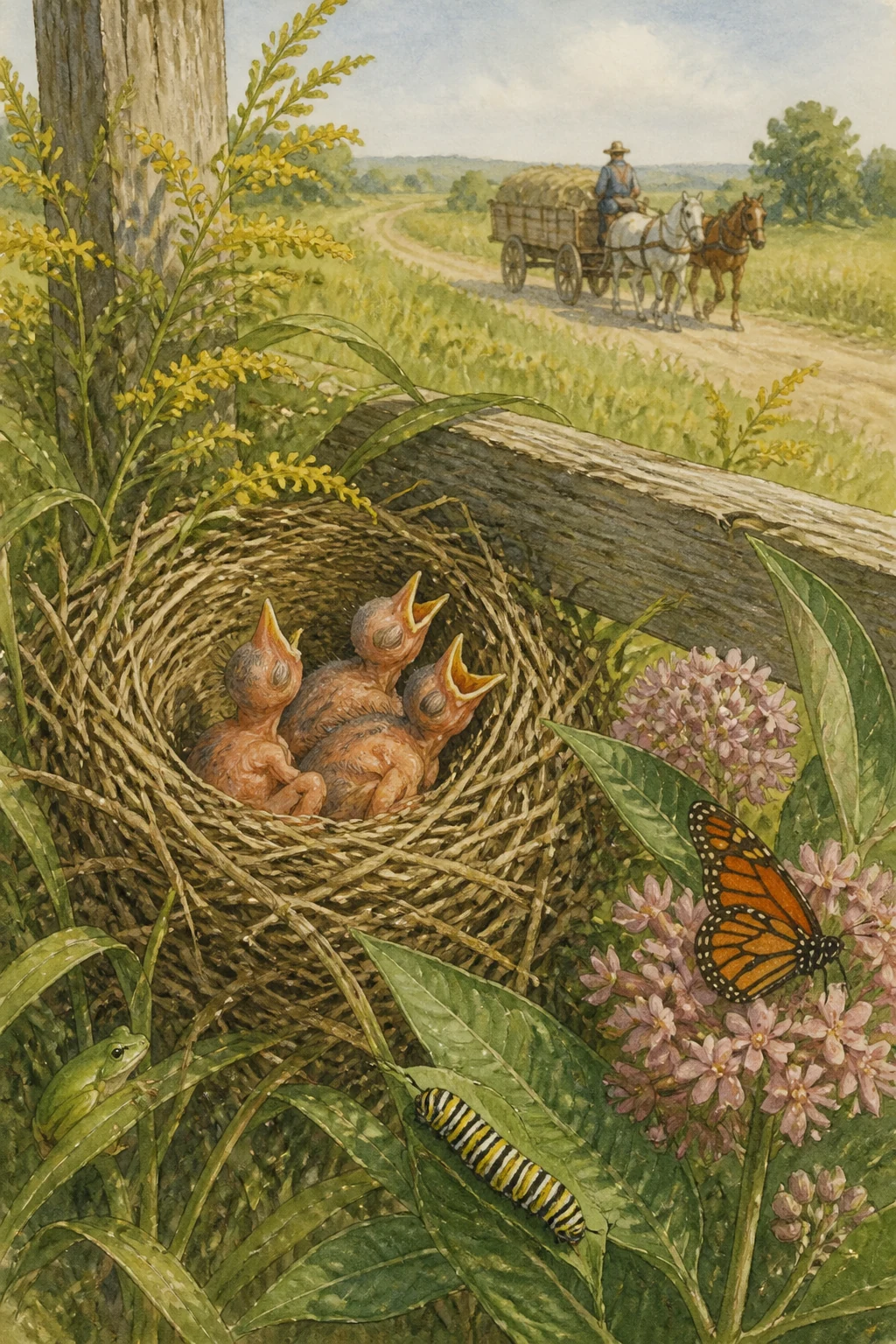
There was once a young Blue Jay in the forest who was larger than his brothers and sisters, and kept crowding them toward the edge of the nest. When their father came with a bit of food for them, he would stretch his legs and flutter his wings and reach up for the first bite. And because he was the largest and the strongest, he usually got it. Sometimes, too, the first bite was so big that there was nothing left for anyone else to bite at. He was a very greedy fellow, and he had no right to take more than his share, just because he happened to be the first of the family to break open the shell, or because he grew fast.
This same young Blue Jay used to brag about what he would do when he got out of the nest, and his mother told him that he would get into trouble if he were not careful. She said that even Blue Jays had to look out for danger.
"Huh!" said the young Blue Jay; "who's afraid?"
"Now you talk like a bully," said Mother Blue Jay, "for people who are really brave are always willing to be careful."
But the young Blue Jay only crowded his brothers and sisters more than usual, and thought, inside his foolish little pin-feathery head, that when he got a chance, he'd show them what courage was.
After a while his chance came. All the small birds had learned to flutter from branch to branch, and to hop quite briskly over the ground. One afternoon they went to a part of the forest where the ground was damp and all was strange. The father and mother told their children to keep close together and they would take care of them; but the foolish young Blue Jay wanted a chance to go alone, so he hid behind a tree until the others were far ahead, and then he started off another way. It was great fun for a time, and when the feathered folk looked down at him he raised his crest higher than ever and thought how he would scare them when he was a little older.
The young Blue Jay was just thinking about this when he saw something long and shining lying in the pathway ahead. He remembered what his father had said about snakes, and about one kind that wore rattles on their tails. He wondered if this one had a rattle, and he made up his mind to see how it was fastened on. "I am a Blue Jay," he said to himself, "and I was never yet afraid of anything."
The Rattlesnake, for it was he, raised his head to look at the bird. The young Blue Jay saw that his eyes were very bright. He looked right into them, and could see little pictures of himself upon their shining surfaces. He stood still to look, and the Rattlesnake came nearer. Then the young Blue Jay tried to see his tail, but he couldn't look away from the Rattlesnake's eyes, though he tried ever so hard.
The Rattlesnake now coiled up his body, flattened out his head, and showed his teeth, while all the time his queer forked tongue ran in and out of his mouth. Then the young Blue Jay tried to move and found that he couldn't. All he could do was to stand there and watch those glowing eyes and listen to the song which the Rattlesnake began to sing:
"Through grass and fern, With many a turn, My shining body I draw. In woodland shade My home is made, For this is the Forest Law.
"Whoever tries To look in my eyes Comes near to my poisoned jaw; And birds o'erbold I charm and hold, For this is the Forest Law."
The Rattlesnake drew nearer and nearer, and the young Blue Jay was shaking with fright, when there was a rustle of wings, and his father and mother flew down and around the Rattlesnake, screaming loudly to all the other Jays, and making the Snake turn away from the helpless little bird he had been about to strike. It was a long time before the forest was quiet again, and when it was, the Blue Jay family were safely in their nest, and the Rattlesnake had gone home without his supper.
After the young Blue Jay got over his fright, he began to complain because he had not seen the Rattlesnake's tail. Then, indeed, his patient mother gave him such a scolding as he had never had in all his life, and his father said that he deserved a sound pecking for his foolishness.
When the young Blue Jay showed that he was sorry for all the trouble that he had made, his parents let him have some supper and go to bed; but not until he had learned two sayings which he was always to remember. And these were the sayings: "A really brave bird dares to be afraid of some things," and, "If you go near enough to see the tail of a danger, you may be struck by its head."
Nadaljuj z branjem