Prevod
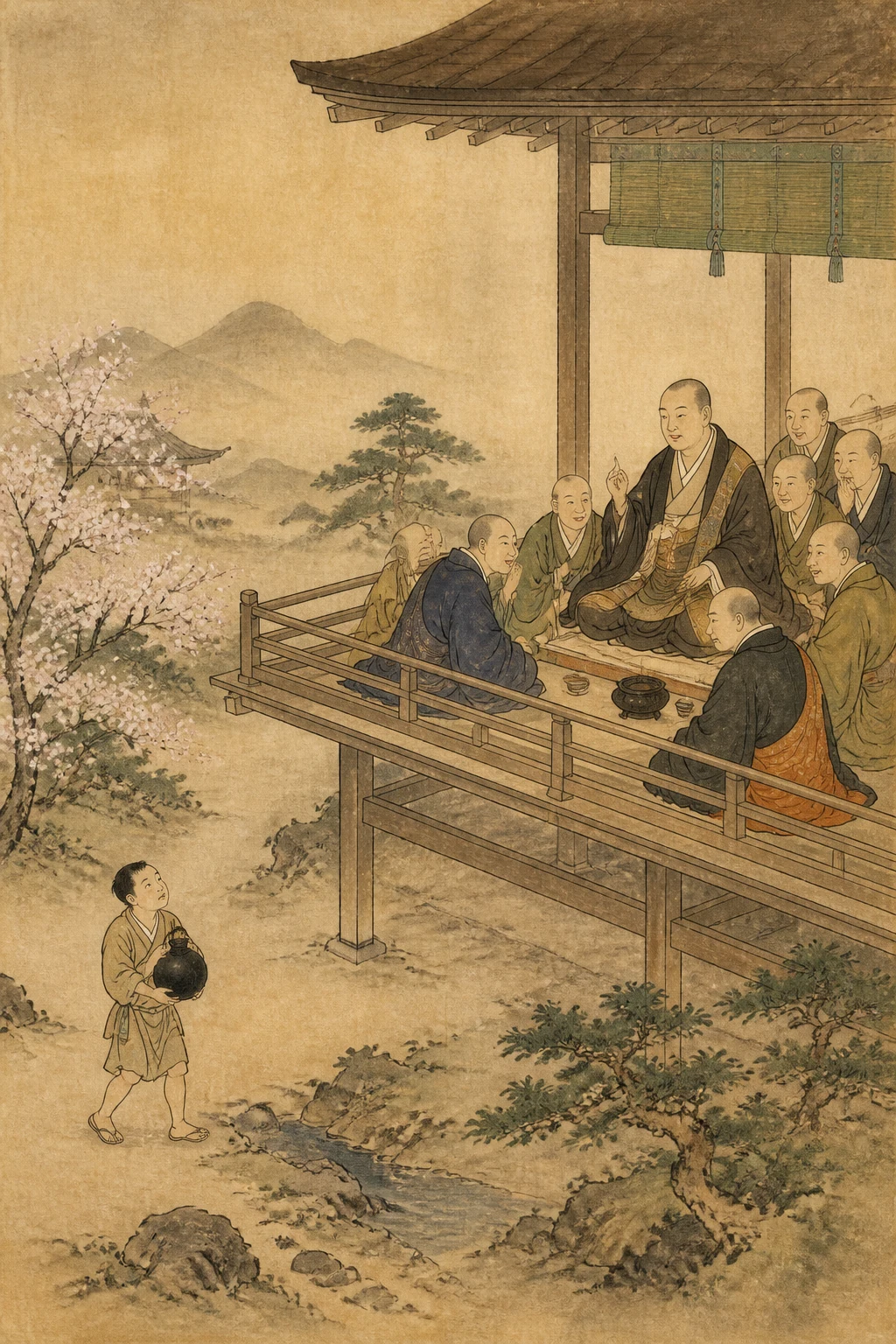
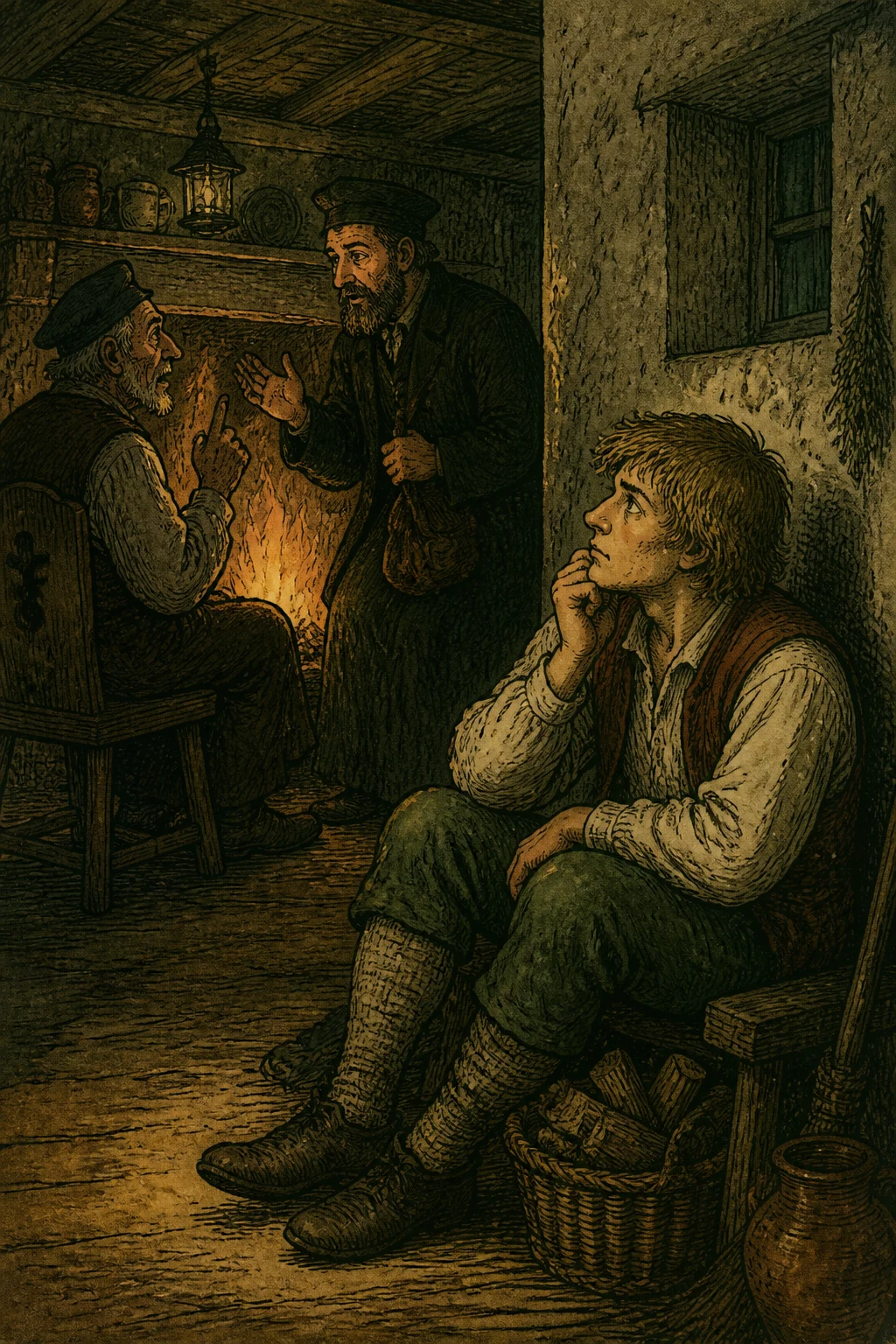
Long ago, there lived a man named Takashina no Toshihira, a former governor of Tango. In later life he became a monk and was known as the Tango Lay Monk. He had a younger brother who held no office. This brother had accompanied his lord down to Tsukushi and was staying there when a Chinese man newly arrived from across the sea proved to be extraordinarily skilled in divination with counting rods. He went to see the man and asked to learn the art, but at first the Chinese made no serious effort to teach him. After letting him try his hand a little, however, he said, “You seem likely to become remarkably good at this. But what use would that be to you in Japan? The art of reckoning is not held in much esteem here. If you will promise to come back to China with me, I will teach you.” The younger brother answered persuasively, “Only teach me well, and once I have mastered the art, I shall do as you say. If my skill will win me a position in China, I shall gladly go there with you.” Won over by these words, the Chinese began teaching him in earnest. As his lessons progressed, the pupil came to understand ten things from hearing just one, and the Chinese was greatly impressed. “There are many practitioners of this art in my country,” he said, “but none who understands it as you do. You must certainly come to China with me.” “Of course,” the younger brother replied. “I shall do as you say.” “This art includes a method of arranging the rods to cure a sick person. There is also a method of killing someone on the spot, even someone in perfect health, if you hate or resent him. I mean to pass all of it on to you, withholding nothing. Swear an oath that you will come with me.” The younger brother would not swear an unqualified oath, though he did make certain promises. The Chinese therefore said, “I shall teach you the method of killing people aboard the ship that takes us to China.” He taught him all the other arts thoroughly, but withheld that one alone. In time the younger brother had mastered everything he was taught. Then some business arose that obliged his lord to return suddenly to the capital, and he prepared to accompany him. When the Chinese heard of this, he tried to stop him, but the younger brother coaxed him, saying, “How could I fail to escort the lord I have served for so many years, when this business calls him so suddenly to the capital? Please understand. I shall not break my promise.” The Chinese thought this reasonable. “Then you must be sure to come back. I had been thinking of returning to China any day now, but I shall wait for you, and we shall sail together.” Renewing his promise solemnly, the younger brother went up to the capital. His disgust with the world made him think that perhaps he ought quietly to go away to China after all. Once he was back in the capital, however, those close to him urged him not to go, and when the lay monk Toshihira heard of the plan, he too forbade it. In the end, the younger brother could not even return to Tsukushi. The Chinese waited for a while, but when no word came, he sent a special messenger with a letter reproaching him. The younger brother sent back this answer: “I have an aged parent who may die today or tomorrow. I mean to stay until I have seen what becomes of my parent, and then I shall come.” But still he did not go. The Chinese waited a little longer, then concluded that he had been deceived. He laid a powerful curse upon his pupil and sailed back to China. Though the younger brother had once been exceptionally clever, after the Chinese cursed him he became so witless that he could scarcely remember anything. Unable to make a life for himself, he became a monk. People called him the Reverend Lay Monk, and he went about in a daze, doing nothing in particular, passing his days between Toshihira’s house and temples in the mountains. One night, when a group of young ladies had gathered to keep the Kōshin vigil, the Reverend Lay Monk was sitting vacantly in a corner. As the night wore on, they grew sleepy, and one of the younger, more high-spirited ladies said to him, “Reverend, people like you usually have amusing stories to tell. Tell us something that will make us all laugh. We can laugh ourselves awake.” He answered, “I am a poor speaker. I doubt I could tell a story that would make you ladies laugh. Still, if all you want is to laugh, I can certainly oblige you.” “You will not tell us a story, but you will make us laugh? Are you going to perform some comic entertainment? That would be even better than a story!” They laughed in anticipation, but he said, “No, nothing of that sort. I merely intend to make you laugh.” “What can he mean? Hurry and make us laugh, then! Come now, let us see!” Pressed by them, he brought something out into the bright firelight. As they watched to see what he would do, he untied a bag and poured out his counting rods with a clatter. At this the ladies mocked him. “Is this the amusing thing? Is it? Come, come, let us all laugh!” He made no answer, but sat there briskly arranging the rods. When he had finished, he took out one rod about an inch across and held it up in his hand. “Ladies,” he said, “do not laugh so hard that you find yourselves in distress. Now I shall make you laugh.” “The very sight of you holding up that rod is foolish enough to be funny! But why should we laugh so much that it hurts?” they said to one another. Then, just as they saw him add that last rod to the arrangement, every one of them burst into helpless laughter for no reason at all. They laughed furiously, and though they tried to stop, they could not. Their bellies felt as if their very entrails were being torn apart, and they thought they would die. Tears poured down their faces. Quite at a loss, and unable even to speak through their laughter, they turned to the lay monk and rubbed their hands together in supplication. “That is just what I warned you about,” he said. “Have you had enough laughter now?” They nodded frantically, rolling about and laughing, still rubbing their hands together in appeal. Only after he had made them suffer thoroughly did he sweep the rods out of their arrangement with a clatter. Their laughter ceased. “A little longer and we should have died!” they said to one another. “Never have we known anything so unbearable.” Exhausted by laughing, they lay huddled together as though they were ill. People said, “If he had also learned those methods he spoke of, by which one can arrange the rods to kill people or bring them back to life, what a dreadful thing that would have been!” The art of reckoning is a fearful thing indeed, so the story goes.