O besedilu
Lastovke in labodi
- Vir
- Ezopove basni
- Avtor
- Ezop / Karl Halm
- Jezik branja
- English
- Jezik izvirnika
- Ancient Greek
- Čas branja
- 2 min branja
- Obseg
- 2 strani
- Naslov izvirnika
- 416b. Ἄλλως. Χελιδόνες καὶ Κύκνοι. (C. 336. F. 408.)
O izvirniku
Ezopove basni
Kratke basni, kjer živali v nekaj potezah razkrijejo človeške slabosti. Bralni jezik je English, izvirnik pa prihaja iz vira Ezopove basni v jeziku Ancient Greek.
Besedilo
Lastovke in labodi
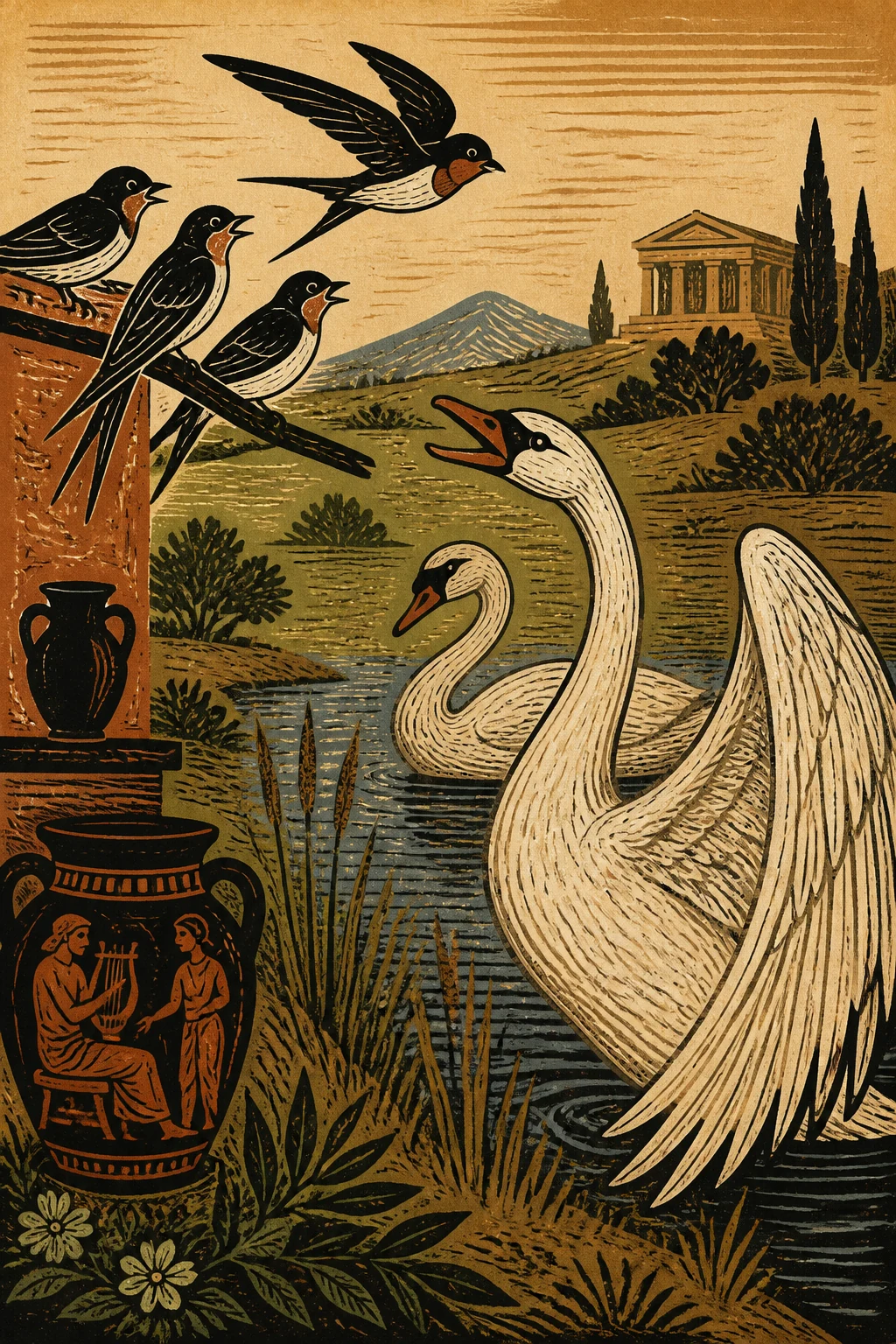
The swallows mocked the swans for refusing to associate with human beings or to share their music with the world, choosing instead to linger in meadows and by rivers, embracing solitude, singing little, and singing even that little only among themselves, as though ashamed of their music. “Ours,” they said, “are the cities, the people, and their chambers. We chatter away to human beings and tell them our story—all those ancient tales of Attica: Pandion, Athens, Tereus, Thrace, the journey abroad, the marriage, the outrage, the cutting out of the tongue, the written message, and, above all, Itys, and how we were changed from human beings into birds.” The swans, disgusted by their chatter, scarcely thought them worth an answer. But when at last they deigned to reply, they said, “Yet for our sake, my dears, someone might venture even into the wilderness to hear our music, when we let the west wind breathe something sweet and harmonious through our wings. If we do not sing much or before great crowds, that is precisely what is finest about us: we cultivate our song with restraint and do not mingle our music with noise. But people resent you even when you make your homes among them, and turn away when you sing—and quite rightly, since even with your tongues cut out you cannot keep quiet. You bewail your own lost voices and the suffering you endured, yet is there a single fluent speaker or accomplished singer whom you do not outdo in chatter?”
Izvirnik
416b. Ἄλλως. Χελιδόνες καὶ Κύκνοι. (C. 336. F. 408.)
Naslednje strani prikazujejo izvirno besedilo za primerjavo.
Ἐπέσκωπτον αἱ χελιδόνες τῶν κύκνων τὸ μὴ ἐθέλειν ὁμιλεῖν τοῖς ἀνθρώποις, μηδὲ δημοσιεύειν τὴν μουσικὴν, ἀλλʼ ἀμφὶ τοὺς λειμῶνας διάγειν καὶ τούς ποταμοὺς, καὶ τὴν ἐρημίαν ἀσπάζεσθαι, καὶ βραχέα μὲν ᾄδειν, ἅ δὲ καὶ ᾄδοιεν, ᾄδειν ἐν σφίσιν αὐτοῖς, ὥσπερ αἰσχυνομένους τὴν μουσικήν. ,,Ἡμῶν δὲ· ἔφασαν ,,εἰσὶν αἱ πόλεις καὶ οἱ ἄνθρωποι καὶ οἱ θάλαμοι, καὶ περιλαλοῦμεν τοῖς ἀνθρώποις, καὶ τὰ ἡμέτερα αὐτοῖς διηγούμεθα, ταῦτα δὴ [ταῦτα] τὰ ἀρχαῖα καὶ Ἀττικὰ, τὸν Πανδίονα, τὰς Ἀθήνας, τὸν Τηρέα, τὴν Θρᾴκην, τὴν ἀποδημίαν, τὸ κῆδος, τὴν ὕβριν, τὴν ἐκτομὴν τῆς γλώττης, τὰ γράμματα, καὶ ἐπὶ πᾶσι τὸν Ἴτυν, καὶ ὡς ἐγενόμεθα ἐξ ἀνθρώπων ὄρνιθες.“ Οί δὲ μόλις μὲν αὐτὰς ήξίωσαν καὶ λόγον, τῆς ἀδολεσχίας μισήσαντες· ἐπεὶ δὲ ήξίωσαν· ,,ἀλλʼ ἡμῶν μὲν ἕνεκεν, ὧ αὗταί, κἄν εἰς τὴν ἐρημίαν ἀφίκοιτό τις, ὥστε ἀκοῦσαι τῆς μουσικῆς, ὅταν ἀνῶμεν τῷ ζεφύρῳ τὰς πτέρυγας ἐμπνεῖν ἡδύ τι καὶ ἐναρμόνιον· ὥστʼ εἰ μὴ πολλὰ καὶ ἐν πολλοῖς ᾄδομεν, ἀλλʼ αὐτὸ δὴ τοῦτο κάλλιστόν ἐστιν ἡμῶν, ὅτι μέτρῳ φιλοσοφοῦμεν τὸ μέλος, καὶ οὐκ ἀναμίγνυμεν θορύβοις τὴν μουσικήν. Ὑμᾶς δὲ καὶ εἰσοικιζομένας οἱ ἄνθρωποι δυσχεραίνουσι, καὶ ᾀδούσας ἀποστρέφονται, καὶ μάλα ἐν δίκῃ, αἵγε οὐδὲ ἐκτμηθεῖσαι τὴν γλῶτταν δύνασθε σιωπᾶν, ἀλλʼ αὐταὶ τὴν ἀφωνίαν ὑμῶν ὀδυρύμεναι καὶ τὸ ἐφʼ ὑμῖν πάθος, ἔπειτά ἐστε λαλίστεραι τίνος οὐχὶ τῶν εὐγλώττων καὶ μουσικῶν;“
Nadaljuj z branjem