Waltey
Kri na stupi
Uji Shūi Monogatari · anonimna srednjeveška zbirkaO besedilu
Kri na stupi
- Vir
- Uji Shūi Monogatari
- Avtor
- anonimna srednjeveška zbirka
- Jezik branja
- English
- Jezik izvirnika
- 日本語
- Čas branja
- 5 min branja
- Obseg
- 4 strani
- Naslov izvirnika
- 030 唐卒都婆ニ血付事
O izvirniku
Uji Shūi Monogatari
Srednjeveške japonske pripovedi o menihih, duhovih, čudežih, prevarah in vsakdanjih presenečenjih. Bralni jezik je English, izvirnik pa prihaja iz vira Uji Shūi Monogatari v jeziku 日本語.
Besedilo
Kri na stupi
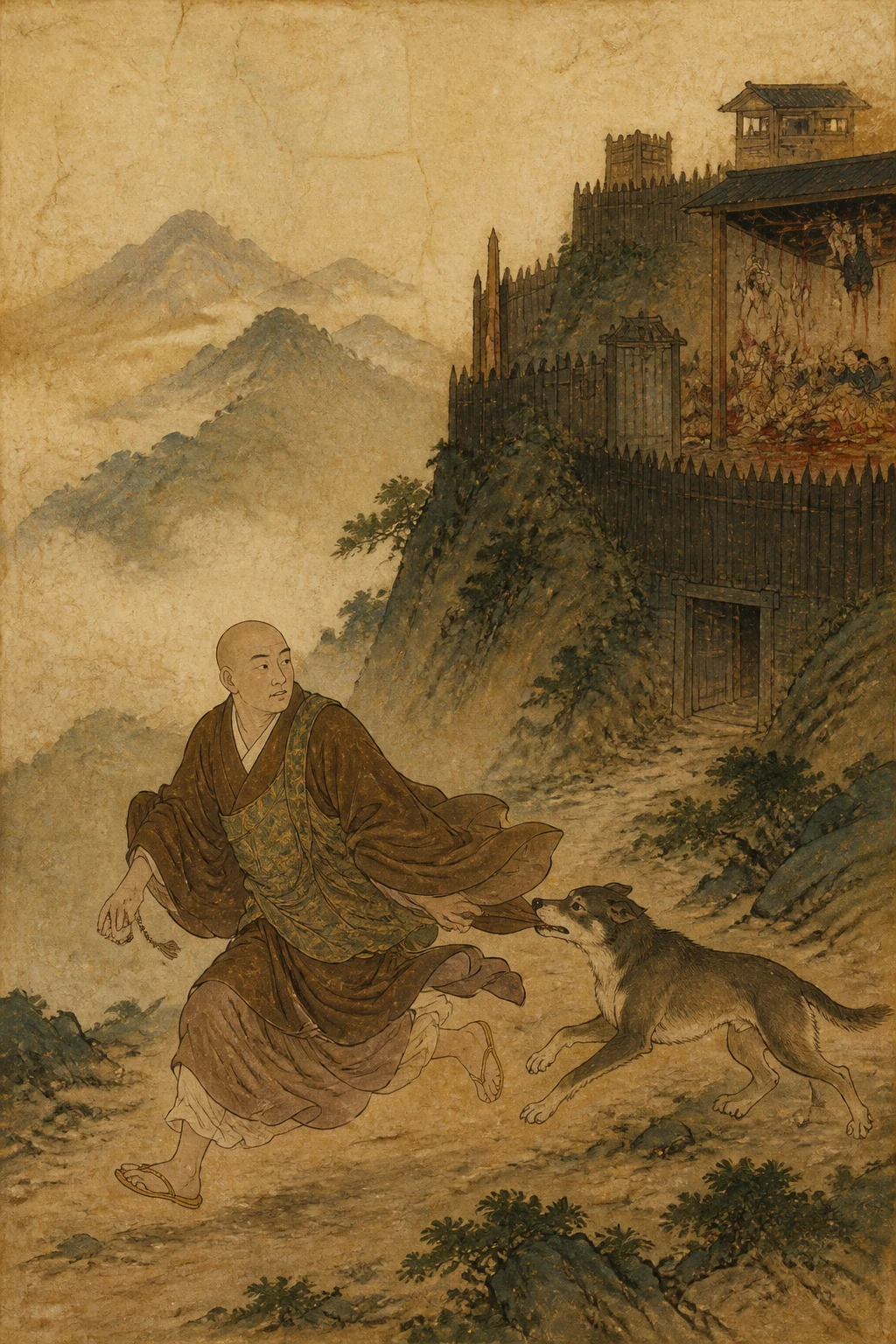
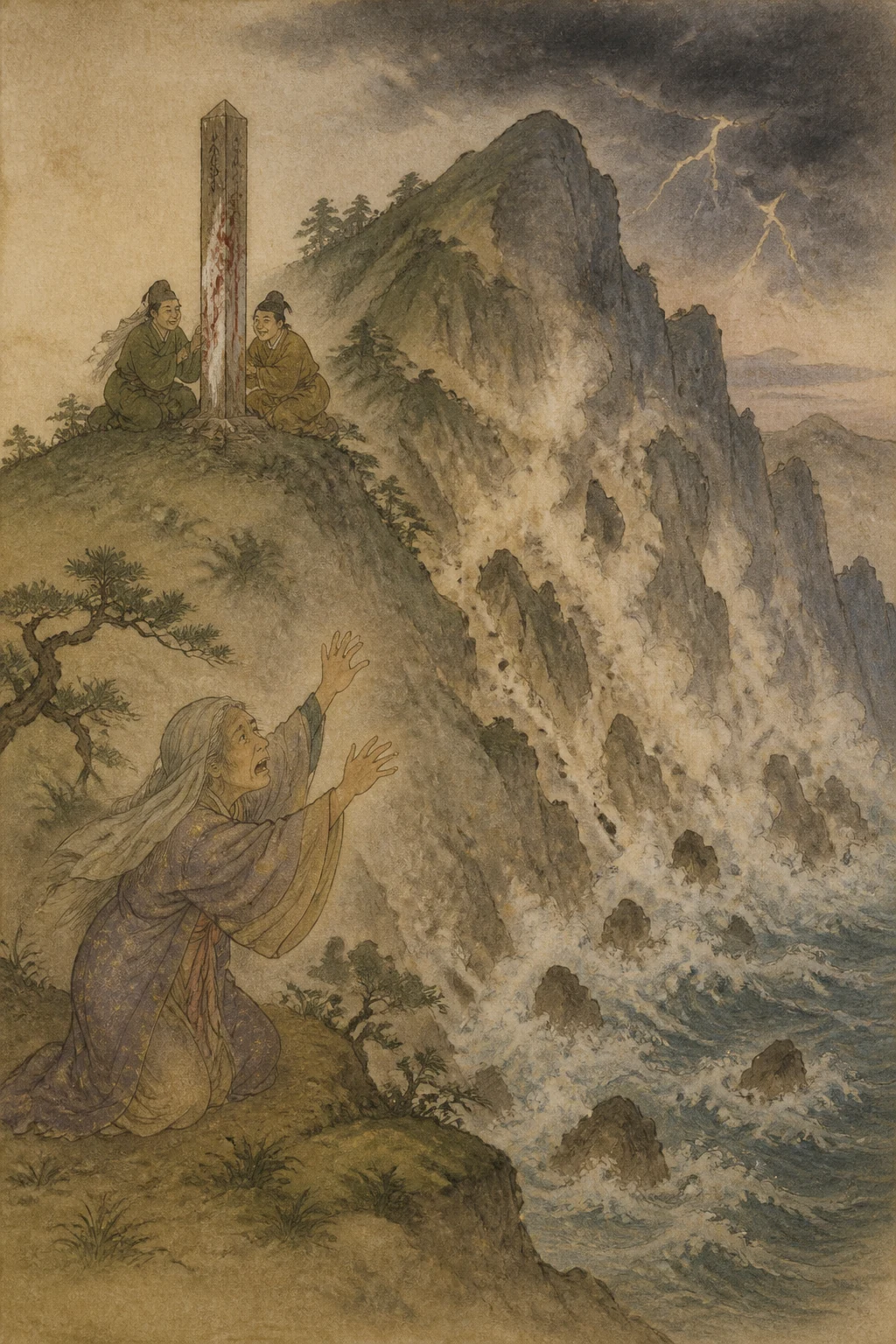
Long ago in China there was a great mountain, and on its summit stood a large stupa. In a village at the foot of the mountain lived a woman of about eighty, who made a point of going up once every day to look at the stupa on the peak. The mountain was high and vast, and the road from its foot to the summit was long, steep, and rugged. Yet whether rain or snow fell, whether the wind blew and thunder rolled, whether everything was frozen hard or the summer heat was oppressive, she never missed a day, but always climbed up to look at the stupa. No one understood why she did this. During the hot days of summer, some young men and boys climbed to the summit and sat cooling themselves beside the stupa. As they rested there, the old woman came up, wiping away her sweat, her back bent double and her weight resting on a staff. She approached the stupa and went around it. At first they thought she had come to worship, but she merely walked around it and then went straight home. The young men who came there to enjoy the cool air saw her do this not once but many times. Wondering what could possess her to undertake so arduous a journey, they agreed, “If she comes today, let us ask her about it.” Sure enough, as was her custom, the woman came laboring up the mountain. The young men said to her, “Old woman, what makes you do this? Even for us, who come here to escape the heat, this road is hot and exhausting, and the climb is no easy matter. Still, we come because we want to enjoy the cool air. But you do not rest in the cool, nor do you seem to have any other business here. You merely look around the stupa, and for that alone you climb up and down every day. What a strange thing for you to do! Please tell us the reason.” The woman replied, “Young masters, you must indeed find it strange. But it is not only lately that I have been coming here to look at this stupa. Ever since I was old enough to understand things, for more than seventy years now, I have climbed up every day to look at it.” “That makes it stranger still,” they said. “Please tell us why.” “My father died at the age of a hundred and twenty,” she told them, “and my grandfather lived to about a hundred and thirty. The fathers and grandfathers before them lived to be more than two hundred. My father passed down to me something those ancestors had said: when blood appeared on this stupa, this mountain would collapse and become a deep sea. Since I live at its foot, I fear that if the mountain falls, I shall be buried beneath it and killed. So I come to look every day, hoping that if blood appears, I may escape in time.” The young men who heard this thought her a fool and mocked her. “How terrifying! Be sure to tell us when it is going to fall!” they said, laughing. The woman did not realize they were making fun of her. “Of course I shall,” she replied. “How could I think of saving myself alone and fail to warn you?” With that, she went back down the mountain. The young men said to one another, “She will surely not come again today. Let us frighten her when she comes tomorrow and have a laugh watching her run.” They got some blood and smeared it liberally over the stupa. Then they went down to the village and told the people there, “We wondered why that old woman who lives at the foot of the mountain climbs to the summit every day to look at the stupa, so we asked her, and this is what she told us. We have smeared blood on the stupa to give her a fright and make her run tomorrow. Oh, yes, the mountain is sure to fall!” They laughed as they told the story, and the villagers passed it from one to another, laughing over it as an example of utter foolishness. The next day, the woman climbed the mountain and saw that the stupa was thickly smeared with blood. At the sight, her face changed color, and she went stumbling and tumbling down the path, running home. “People of this village!” she cried. “Flee at once and save your lives! This mountain is about to collapse and become a deep sea!” She went all around, warning everyone, then hurried to her house. She made her children and grandchildren shoulder their household belongings, took up what she could carry herself, and in great haste moved away from the village. Seeing this, the young men who had put the blood on the stupa clapped their hands and laughed. But while they were still laughing and talking noisily among themselves, a strange sound arose, though they could not tell what it was. Was the wind beginning to blow? Was thunder rolling? As they wondered, the sky grew pitch-dark, everything took on a dreadful and terrifying aspect, and the mountain began to heave. “What is happening? What is happening?” they shouted to one another. Then the mountain began to collapse, one part after another. “The old woman was right!” they cried. Some managed to flee, but they no longer knew where their parents were, had lost their children, and had no thought for their household possessions. Everywhere people were shrieking and wailing. The old woman alone had escaped beforehand with her children and grandchildren, without losing a single household belonging, and was sitting safely at ease. The whole mountain collapsed and became a deep sea, and all those who had mocked and laughed at her perished. A terrible thing indeed.
Izvirnik
030 唐卒都婆ニ血付事
Naslednje strani prikazujejo izvirno besedilo za primerjavo.
むかしもろこしに大なる山ありけりその山のいたたきに大なる卒都婆一たてりけりそのやまの麓の里に年八十斗なる女住けるか日に一度その山のみねにある卒塔婆をかならす見けりたかく大なる山なれは麓よりみねへのほるほとさかしくはけしく道遠かりけるを雨ふり雪ふり風ふき雷なりしみ氷たるにも又あつくくるしき夏も一日もかかさすかならすのほりて此卒塔婆を見けり
かくするを人えしらさりけるに若き男とも童部の夏あつかりける比峰にのほりて卒塔婆のもとに居つつすすみけるに此女あせをのこひて腰ふたへなる者の杖にすかりてそとはのもとにきてそとはをめくりけれはおかみたてまつるかとみれはそとはをうちめくりては則帰帰する事一度にもあらすあまたたひ此すすむ男ともにみえにけり此女は何の心ありてかくはくるしきにするにかとあやしかりてけふみえは此事をとはんといひ合ける程に常の事なれは此女はうはうのほりけり男とも女にいふやうわ女は何の心によりて我らかすすみにくるたにあつくくるしく大事なる道をすすまんとおもふによりてのほりくるにこそあれすすむ事もなし別にする事もなくてそとはをみめくるを事にて日々にのほりおるるこそあやしき女のしわさなれ此ゆへしらせ給へといひけれは此女わかきぬしたちはけにあやしと思ひ給らんかくまうてきて此そとはみる事は此比の事にしも侍らす物の心しりはしめてより後此七十余年日ことにかくのほりてそとはを
見たてまつる也といへはその事のあやしく侍なりそのゆへをのたまへととへはをのれか親は百廿にてなんうせ侍にし祖父は百卅斗にてそうせ給へりしそれか又父祖父なとは二百余斗まてそいきて侍けるその人々のいひをかれたりけるとて此卒塔婆に血のつかんおりになん此山はくつれてふかき海となるへきとなん父の申をかれしかは麓に侍る身なれは山崩なはうちおほはれて死もそすると思へはもし血つかは逃けてのかんとてかく日毎に見侍なりといへは此きく男ともおこかりあさけりておそろしき事哉崩ん時は告給へなと笑けるをも我をあさけりていふとも心えすしてさら也いかてかは我独逃んと思て告申ささるへきといひて帰くたりにけり此男とも此女はけふはよもこしあす又きてみんにおとしてはしらせてわらはんといひ合て血をあやしてそとはによくぬりつけて此男共帰おりて里の物ともに此麓なる女の日ことに峰にのほりてそとはみるをあやしさにとへはしかしかなんいへはあすおとしてはしらせんとてそとはに血を塗つる也
さそくつるらんものやなといひ笑を里の物ともきき伝ておこなる事のためしにひき笑けりかくて又の日女のほりてみるにそとはに血のおほらかに付たりけれは女うちみるままに色をたかへてたうれまろひはしり帰てさけひいふやう此里の人々とくにけのきて命いきよ此山はたた今崩てふかき海となりなんとすとあまねく告まはして家に行て子孫共に家の具足ともおほせもたせてをのれも持て手まとひして里うつりしぬ是をみて血つけし男とも手を打て笑なとする程にその事ともなくささめきののしりあひたり風のふきくるか雷のなるかとあやしむ程に空もつつやみに成てあさましくおそろしけにて此山ゆるきたちにけりこはいかにこはいかにとののしりあひたる程にたたくつれに崩もてゆけは女はまことしける物をなといひてにけにけえたる物もあれとも親のゆくゑもしらす子をもうしなひ家の物の具もしらすなとしておめきさけひあひたり此女ひとりそ子まこも引くして家の物の具一もうし
なはすしてかねて逃のきてしつかにゐたりけるかくてこの山みなくつれてふかき海と成にけれはこれをあさけり笑し物ともは皆死けりあさましき事なりかし
Nadaljuj z branjem