Prevod
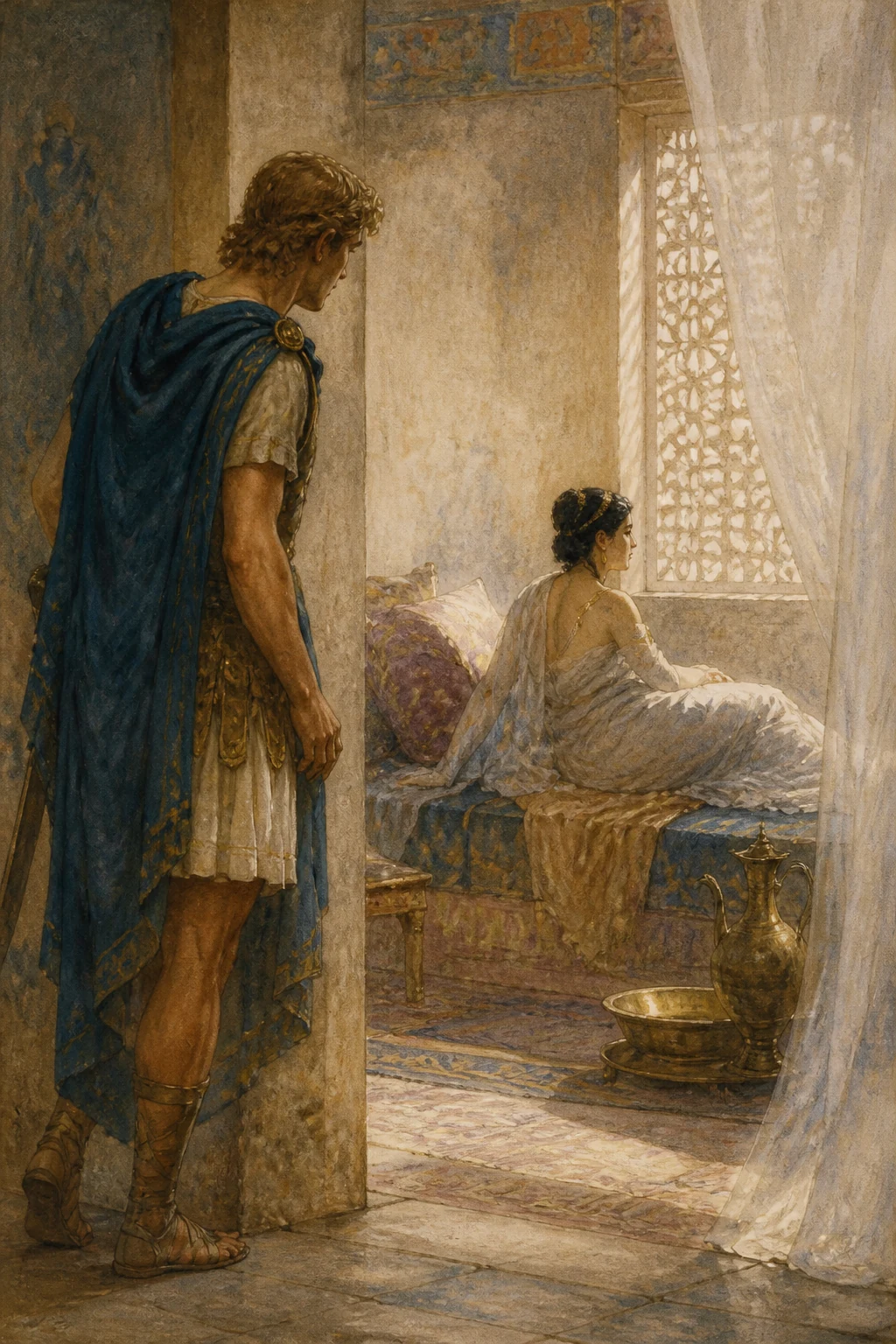
Then the vizier said, “It has also reached me, O King, that a certain prince once went out alone for his pleasure and came upon a green garden filled with trees, fruit, and birds, with streams flowing through it. Delighted with the place, he sat down, took out some sweetmeats he had brought with him, and began to eat. As he sat there, he suddenly saw a great cloud of smoke rising from that spot into the sky. Frightened, the prince climbed a tree and hid among its branches. From his perch he saw an ifrit emerge from the middle of the stream, carrying on his head a locked marble chest. He set it down in the garden and opened it, and out came a young woman, human, who was like the radiant sun in a cloudless sky. He seated her before him and gazed at her, then laid his head in her lap and fell asleep. She lifted his head, laid it on the chest, and rose to stroll about. Happening to glance up at the tree, she saw the prince and beckoned him to come down. He refused, but she swore at him, saying, ‘Unless you come down and do with me as I tell you, I shall wake the ifrit and tell him about you, and he will kill you on the spot.’ The prince was afraid of her and came down. At once she kissed his hands and feet and urged him to satisfy her desire, and he granted her request. When he had satisfied her, she said, ‘Give me that ring on your finger.’ He gave it to her, and she tied it up in a silk handkerchief she had with her, which already held more than eighty rings, adding his to the rest. ‘What do you do with all these rings?’ the prince asked. She replied, ‘This ifrit carried me off from my father’s palace, shut me in this chest, and locked me up with a lock whose key he keeps. Wherever he goes, he carries me inside it on his head. So fiercely jealous is he that he can scarcely bear to be parted from me for a single hour, yet he denies me what I desire. When I saw how he treated me, I swore I would refuse my favors to no man. These rings are equal in number to the men who have lain with me, for from each man who lies with me I take his ring and put it in this handkerchief.’ Then she said, ‘Go your way, so that I may wait for someone else, for he will not wake just yet.’ The prince could scarcely believe his good fortune and went on his way until he reached his father’s palace. The king knew nothing of the young woman’s wiles against his son, nor had she feared the consequences or given them a thought.
“When the king heard that his son’s ring had been lost, he ordered the young man to be put to death. Then he rose from his seat and went into his palace, but the viziers persuaded him to spare his son. One night the king sent for the viziers, and they all came before him. He rose to welcome them and thanked them for having dissuaded him from killing his son. The prince thanked them too, saying, ‘Excellent was the counsel you gave my father, by which my life was saved. I shall reward you well, if God Most High wills.’ Then the prince told them how he had lost his ring. They prayed that he might enjoy long life and rise to ever greater heights, and withdrew from the council. Consider, then, O King, the wiles of women and what they do to men.” So the king abandoned his resolve to kill his son.
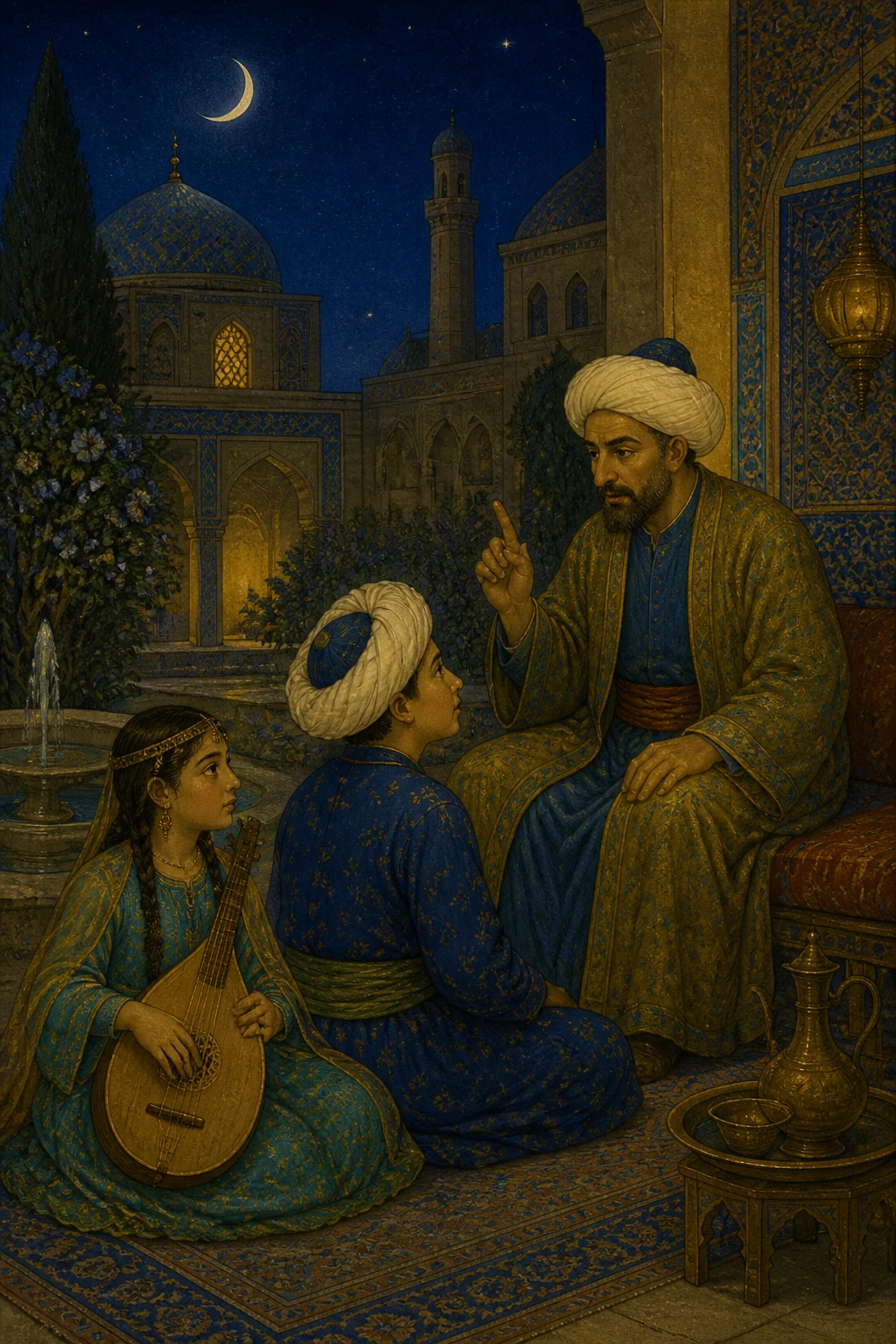
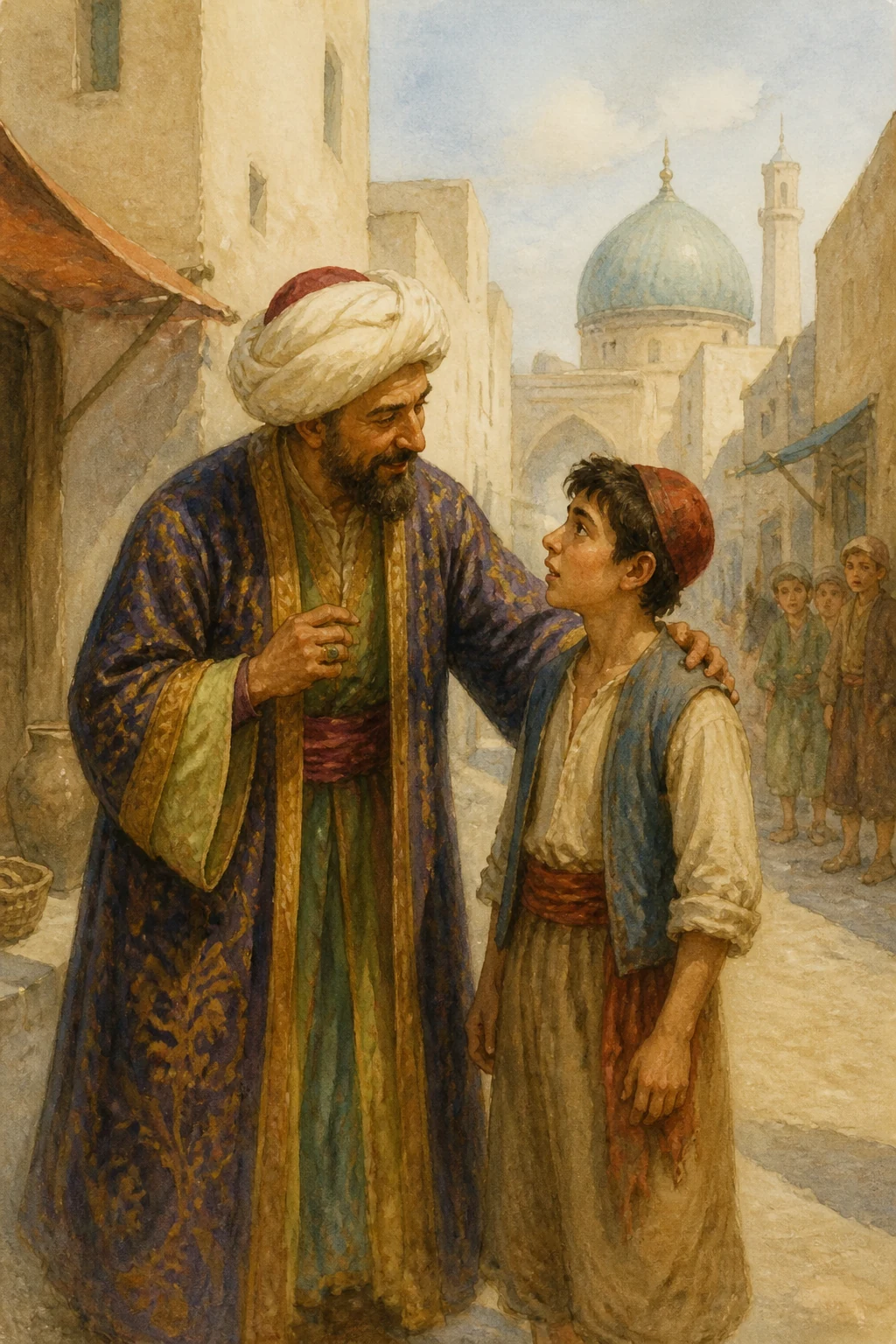
When morning came on the eighth day, the prince’s father took his seat, and his son entered, holding the hand of his tutor, Sindbad. He kissed the ground before him, then spoke with the utmost eloquence, praising his father, his viziers, and the great officers of his realm, thanking them and extolling their virtues. Scholars, emirs, soldiers, and men of noble birth were present in the assembly, and all marveled at the prince’s eloquence, his fine expression, and his mastery of speech. His father was overjoyed to hear him. He called him forward and kissed him between the eyes, then summoned his tutor, Sindbad, and asked why his son had remained silent for seven days. The tutor replied, “My lord, his welfare lay in his keeping silent, for I feared he would be killed during that time. I knew of this matter, my lord, on the day of his birth, for when I examined his horoscope, it revealed all this to me. Now, through the king’s good fortune, the danger has passed.” The king rejoiced and said to his viziers, “Had I killed my son, would the blame have rested with me, with the girl, or with his tutor, Sindbad?” All those present remained silent and gave no answer. Then Sindbad, the prince’s tutor, said to him, “Answer the question, my son.” But morning overtook Shahrazad, and she ceased her permitted tale.