Waltey
Kosmatinčev božič
Cuentos de Navidad y Reyes
Cuentos de Navidad, de la patria y antiguos · Emilia Pardo BazánO besedilu
Kosmatinčev božič
- Vir
- Cuentos de Navidad, de la patria y antiguos
- Avtor
- Emilia Pardo Bazán
- Jezik branja
- English
- Jezik izvirnika
- Español
- Čas branja
- 7 min branja
- Obseg
- 6 strani
- Naslov izvirnika
- 003 La Navidad del Peludo
O izvirniku
Cuentos de Navidad, de la patria y antiguos
Sedemintrideset avtorskih zgodb v treh zgodovinskih knjižnih skupinah. Bralni jezik je English, izvirnik pa prihaja iz vira Cuentos de Navidad, de la patria y antiguos v jeziku Español.
Besedilo
Kosmatinčev božič
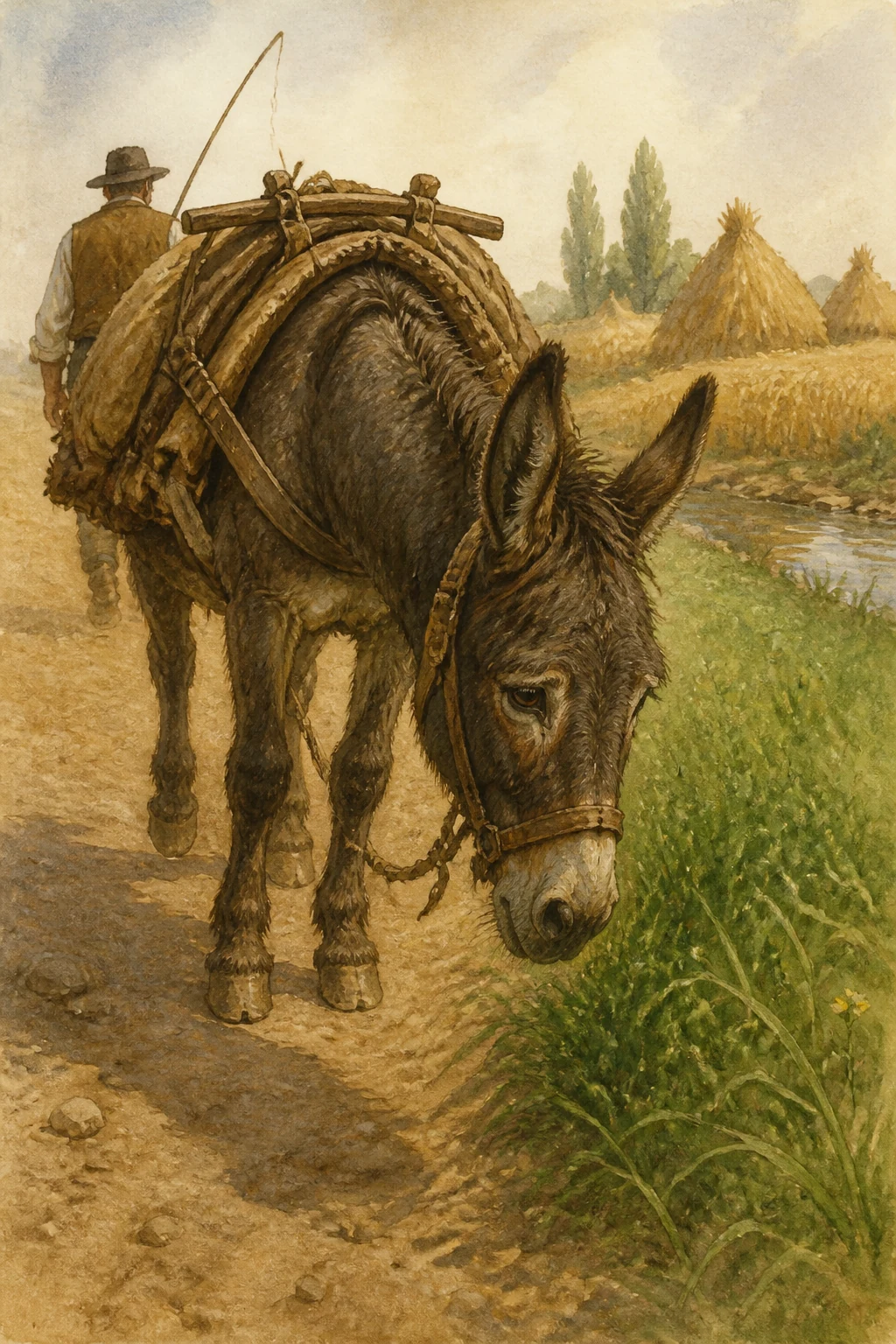
Fourteen years of unbroken toil could Peludo enter on his record of service; fourteen years in which not a day had passed without its ration of blows and hunger. The hunger above all! What torment!
To summon strength from weakness for his wretched little trot, driven on by the jabs of the stout goad; to endure the bites of horseflies and donkey flies, fierce and maddened by sun and dust, in the fresh sores rubbed by his harness; to suffer kicks from his rider’s heels and watch the cutting of the hazel or tamarisk switch that would whistle, supple, about his hide and raise its welts; to feel the spur’s sharp bite and the violent wrench of the bit; to receive punches on his soft muzzle and in his eyes, those great, gentle eyes whose gaze always spoke of meekness; to bend beneath an excessive load; to drag himself along, battered, struggling not to fall before the end of a journey three times more exhausting than any donkey’s strength could bear—all this, much though it was, seemed a trifling misery to Peludo beside passing within reach of a meadow green as hope, soft and velvety as a silken carpet, and being unable to fill his empty belly, round out his sunken, shrunken flanks and his gut, hollow as an organ pipe. So powerfully did the sight of the tempting, dewy, downy grass, the golden haystacks and the ripened grain affect Peludo; so great was his rage at hearing the murmur of a spring when the panting of his labour and the clinging dust of the highway parched his throat; so violent was his ravenous appetite, so fierce his colossal hunger, that more than once he—the meek, the resigned, the hardworking, the obedient—thought of doing something truly outrageous: sounding a warlike bray and assailing with kicks and bites his merciless rider, his driver, his master, his tyrant... What bliss to fling to the ground those sacks of flour, heavy as lead, to trample them, burst them open; to see the flour scattered over the road; to thrust his muzzle into it, toss it up, send it flying in clouds of dazzling white! And if his longing to eat was great, his longing to roll was no less. To roll! How long it had been since Peludo had rolled, all four legs beating the air and his grey belly turned to the sun—not since his tender infancy, his days as an innocent, frolicsome little foal!
These gusts of emancipation swept through the slave’s downtrodden brain, but never took hold; they were fleeting flutterings, instantly quelled by the conviction that his servitude was eternal, ordained by destiny, the fate that governs a donkey’s existence. Yes, the worst of it was that misfortune had made Peludo a fatalist; he expected nothing from Providence, nor dared believe that even a moment of relative happiness could ever shine upon him. Whatever he did, things would be the same... Hunger and blows, blows and hunger... Up with the load; onward along the path—and no protests, no chimerical dreams.
Patient Peludo had good reason to distrust his luck and look forward to still greater misfortunes; far from showing him any affection, any scrap of consideration, his master treated him more harshly as his strength, agility and spirit declined, assigning him the roughest, most menial tasks, the most backbreaking loads, and days of work with nothing to sustain him but blows. And so the freezing, rainy night of December 24 found poor Peludo enduring the weather with stoic patience, tethered to an iron ring outside the door of the well-known Pellejón tavern, one of several dotted along the road from Marineda to Brigos. On other occasions that temple of Bacchus had always afforded Peludo shelter in a stable or a midden, or at least beneath a shed roof near the hayloft; but this was a night of revelry and carousing, of merrymaking and brimming jugs of wine and brandy, and by the time Peludo approached the tavern at the faltering trot of his aged legs, neither room nor roof remained for him. With two sharp kicks his master drove him against the wall, tied him to the ring, and there the donkey stayed, with no roof but a vine trellis stripped of leaves, whose branches dripped threads of rainwater, forming a pool beneath his hooves.
Through the windowpanes Peludo could see the bright, cheerful tavern room, full of men playing cards, arguing, devouring cod stews and draining glasses of cane spirit and red wine. While the rational creatures celebrated Christmas in this fashion, the donkey, chilled and soaked to the bone, exhausted with fatigue and faint with want, had not even the strength to utter a mournful, pleading bray for food and warmth. A cloud veiled his eyes; his hocks gave way. He was about to fall into the liquid mud when he noticed a soft light, very different from the glow shed by the tavern’s foul-smelling little lamps, and, to his profound surprise, made out another donkey beside him: a silvery donkey, sleek-coated, lively and friendly. What welcome company! “Hee-haw!” fluted the decrepit, careworn beast softly. The newcomer began gnawing through the rope that held Peludo and soon set him free. The little silver donkey started off, and Peludo followed, asking no further questions, already joyful and strong. As they advanced, the night grew clear, starry and warm; the road easy, dry, level and lovely. To right and left, meadows of vivid green plush, enamelled with violets and buttercups, invited Peludo to satisfy his appetite; crystal streams offered to quench his thirst. And Peludo, falling upon this bounty, carefree and free, gave himself up to the succulent grass; the mill-like grinding of his old teeth as he chewed could be heard far away. He drank his fill at the springs; he stuffed himself with clover and tender grass, and as he devoured it his belly rounded like an inflating balloon, until suddenly the girths securing his packsaddle snapped, leaving him stark naked and happy as a king. Peludo certainly felt no fatalist now! So fortunate an adventure had made him the staunchest believer in Providence in the universe. In the distance a golden, smiling dawn was beginning to break; the meadow violets smelled of heaven; everything invited a delicious roll, and down went Peludo, swimming in that sea of green, steeping himself in floral scents, gathering chamomile leaves in his shaggy coat. The donkey felt triumphant, bathed in the light of glory. And somewhere in the air, far away, high above, mysterious voices repeated the prophetic words: “Unto us a child is born, and his name is Emmanuel...” The silver donkey, Peludo’s saviour, gazed at him with mingled pity and friendship, and brayed kindly: “Hee-haw! Don’t you know me? I am the one who warmed Jesus with his breath in the stable... and carried Mary of Nazareth into Egypt...”
At the tavern door, Peludo’s master, coming out at daybreak with the fumes of drunkenness still thick about him, saw his mount stretched out in the pool, his eyes glassy, his legs stiff. “The rope broke,” observed the tavern keeper. “Don’t kick him,” he added. “There’s little use in that; his ear’s cold; he’s dead.” But the master, with the obstinacy peculiar to drunkards, went on kicking the animal, swearing, blaspheming and cursing. At last, convinced that his efforts were useless, he let out a dull guffaw. “For all the use he was...” he grunted. “He couldn’t even carry me any more...”
Izvirnik
003 La Navidad del Peludo
Naslednje strani prikazujejo izvirno besedilo za primerjavo.
Catorce años de no interrumpida laboriosidad podía apuntar el Peludo en su hoja de servicios; catorce años en que no hubo día sin ración de palos y sin hambre. ¡El hambre especialmente! ¡Qué martirio!
Sacar fuerzas de flaqueza para el cochinero trote, obligado por los pinchazos del recio aguijón; aguantar picadas de tábanos y de moscas borriqueras, enconadas, feroces con el sol y el polvo, en las llagas de la reciente matadura; sufrir talonazos y ver cortar la vara de avellano ó de taray que, silbadora y flexible, se ha de ceñir á su piel averdugándola; probar la dentellada de la espuela y el sofrenazo violento del bocado; recibir puñadas en el suave hocico y en los ojos, en los dulces y grandes ojos cuya mirada siempre expresa mansedumbre; doblegarse bajo la excesiva carga; arrastrarse molido y pugnar por no caer al suelo antes de que se termine una caminata tres veces más fatigosa de lo que cabe dentro de los límites del vigor asnal;--todo esto, con ser tanto, le parecía miseriuca al Peludo, en cotejo de pasar rozando una pradería verde como la esperanza, mullida y aterciopelada como tapiz de seda, y no poder hartar la panza vacía, redondear los ijares metidos y chupados y la tripa hueca como tubería de órgano. Era tal la impresión que causaba al Peludo la vista de la hierba apetitosa, rociada, velluda, de los dorados pajares y de las mieses en sazón; tal la rabia que sentía al oir el murmurio de la fuente cuando secaba sus fauces el anhelo del trabajo y la polvareda pegajosa del camino real; tal la violencia de su furioso apetito y el ímpetu de su colosal gazuza, que más de una vez, él--el manso, el resignado, el trabajador, el obediente--pensó hacer una muy gorda y sonada: soltar un rebuzno de guerra y arremeter á coces y á muerdos contra su despiadado jinete, su espolique, su amo, su tirano... ¡Qué deleite arrojar al suelo el lastre de sacos de harina, que pesan cual plomo, patearlos, reventarlos; que la harina se esparciese por la carretera; meter en ella el hocico, aventarla, hacerla volar en blanquísimas nubes! Y si era mucha el ansia de comer, no menor la de revolcarse. ¡Revolcarse! ¡Cuánto tiempo, desde su tierna infancia, su época de buchecillo retozón y candoroso, que no se revolcaba, con las cuatro patas batiendo el aire y la gris barriga al sol, el Peludo!
Cruzaban estas ráfagas de emancipación por la deprimida mollera del esclavo, pero no adquirían consistencia; eran aleteos pasajeros que abatía al punto la convicción de su eterna servidumbre y de que la había dispuesto la suerte, el fatum que preside á la existencia del jumento. Sí; lo peor del caso es que al Peludo la desgracia le había hecho fatalista; no esperaba nada de la Providencia, ni se atrevía á creer que pudiese lucir para él jamás un instante de relativa dicha. Hiciese lo que hiciese, lo mismo tenía que ser... Hambre y palos, palos y hambre... Arriba con la carga; avante por la senda--y nada de protestas ni de quiméricos ensueños.
Razón llevaba el paciente Peludo en desconfiar de la suerte y en prometerse mayores desventuras; su amo, en vez de mostrarle algún apego, una pizca de consideración, á medida que el Peludo perdía fuerzas, agilidad y bríos, iba tratándole con mayor dureza y encomendándole las tareas más rudas y bajas, los transportes más reventadores y las jornadas á palo seco en todo el rigor de la frase. Por eso, la glacial y lluviosa noche del 24 de Diciembre encontró al cuitado Peludo sufriendo la intemperie con cachaza estoica, atado á una argolla de hierro, á la puerta de la conocida taberna del Pellejón, una de las varias que salpican las orillas de la carretera de Marineda á Brigos. Otras veces no faltaba para el Peludo en aquel templo báquico el abrigo de una cuadra ó de un estercolero, ó siquiera de un cobertizo cerquita del pajar; pero ésta era noche de bulla y parranda de regodeo y jarros colmados de vino y aguardiente, y cuando el Peludo, al trotecillo desmayado de sus provectas patas, se acercó á la taberna, no quedaba sitio ni techo para él. De dos puntillones, el amo le pegó á la pared, le amarró á la anilla, y allí se quedó el jumento, sin más techo que un emparrado desnudo de follaje, cuyas ramas goteaban hilos de agua llovediza, formando una charca bajo los cascos.
Veía el Peludo, al través de los vidrios de la ventana, la sala de la taberna iluminada, alegre, llena de hombres que jugaban á los naipes, disputaban, despachaban guisotes de bacalao y apuraban vasos de caña y tinto. Mientras los racionales celebraban así la Navidad, el asno, transido y empapado hasta los huesos, rendido de cansancio y desfallecido de necesidad, no tenía ánimos ni para exhalar un suplicante y doloroso rebuzno pidiendo sustento y calor. Una nube veló sus pupilas; sus corvas se doblaron. Iba á caer sobre el fango líquido, cuando advirtió una claridad suave, muy diferente de la que derramaban las pestíferas candilejas de la taberna, y divisó á su lado, con profunda sorpresa, á otro borrico: un asno plateado, de luciente pelo, vivaracho, cordial. ¡Qué compañía tan grata! «¡Hi--ho!» flauteó dulcemente el caduco y asendereado jumento. Púsose el recién venido á roer con los dientes la cuerda que al Peludo sujetaba, y presto le dejó libre. Echó á andar el argentado borriquillo, y detrás de él, sin meterse en más averiguaciones, el Peludo, ya regocijado y fuerte. A medida que adelantaban, la noche se hacía transparente, estrellada, tibia; el camino fácil, seco, llano, lindo. A derecha é izquierda, prados de un tono de felpa verdegay, esmaltados de violetas y ranúnculos, convidaban al Peludo á saciar su apetito; arroyos cristalinos le brindaban con qué apagar su sed. Y el Peludo, entrando á saco, descuidado, libre, se entregó á la hierba jugosa; desde lejos podía oírse el ruido de molino que al mascar producía su vieja dentadura. Bebió á su talante en los manantiales; atracóse de trébol y hierba mollar, y al paso que devoraba, redondeábase su panza como globo que se infla, hasta que de súbito estallaron las cinchas que sujetaban la albarda, y quedóse en pelota, feliz como un rey. ¡Ahora sí que no se sentía fatalista el Peludo! Tan dichosa aventura le convertía en el mayor providencialista del universo. En lontananza empezaba á despuntar la mañanica dorada y risueña; las violetas del prado olían á gloria; todo incitaba á un revuelco deleitable, y ¡zás! el Peludo se dejó caer y se puso á nadar en aquel golfo de verdura, impregnándose de olores floreales, recogiendo en su pelambrera hojas de manzanilla. El asno se sentía victorioso, envuelto en luces de gloria. Y allá en los aires, lejos, alto, voces misteriosas repetían la profética cláusula: «Nos ha nacido un niño, y se llama Emanuel...» El asno de plata, salvador del Peludo, le miraba entre compasivo y amigable, y le rebuznaba bondadosamente: «¡Hi--ho! ¿No me conoces? Soy el que calentó con su aliento á Jesús en el establo... y el que llevó á Egipto á María la Nazarena...»
A la puerta de la taberna, el amo del Peludo, al salir de madrugada con los humos de la embriaguez muy densos aún, vió á su montura tendida en la charca, los ojos vidriosos, las patas rígidas.--Rompióse la cuerda--observó el tabernero.--No le dé patadas--agregó--que de poco sirve; tiene la oreja fría; está difunto.--Pero el amo, con la terquedad característica de los beodos, seguía descargando puntapiés al animal, jurando, blasfemando y maldiciendo. Al fin, convencido de lo inútil de sus esfuerzos, soltó una opaca risotada.--Para lo que servía...--gruñó.--Ya ni podía conmigo...
Nadaljuj z branjem