Prevod
1. Catreus, the son of Minos, had three daughters, Aerope, Clymene, and Apemosyne, and a son, Althaemenes. When Catreus consulted the oracle about how his life would end, the god declared that he would die at the hands of one of his children. Catreus kept the oracle secret, but Althaemenes heard of it and, fearing that he might become his father’s murderer, sailed from Crete with his sister Apemosyne. He landed at a place in Rhodes, took possession of it, and named it Cretinia.
Climbing the mountain called Atabyrium, he gazed at the surrounding islands. When he caught sight of Crete as well, he was reminded of his ancestral gods and built an altar to Zeus Atabyrius. Not long afterward, he killed his sister with his own hands. For Hermes had fallen in love with her, but could not catch her as she fled, since she could outrun him. He therefore spread freshly flayed hides along the road. As she was returning from the spring, she slipped on them, and he raped her. She told her brother what had happened, but he thought she was invoking the god as an excuse, and leaped upon her and kicked her to death.
2. Catreus handed Aerope and Clymene over to Nauplius to be sold in foreign lands. Of these two, Aerope married Pleisthenes and bore him Agamemnon and Menelaus, while Nauplius married Clymene and became the father of Oeax and Palamedes.
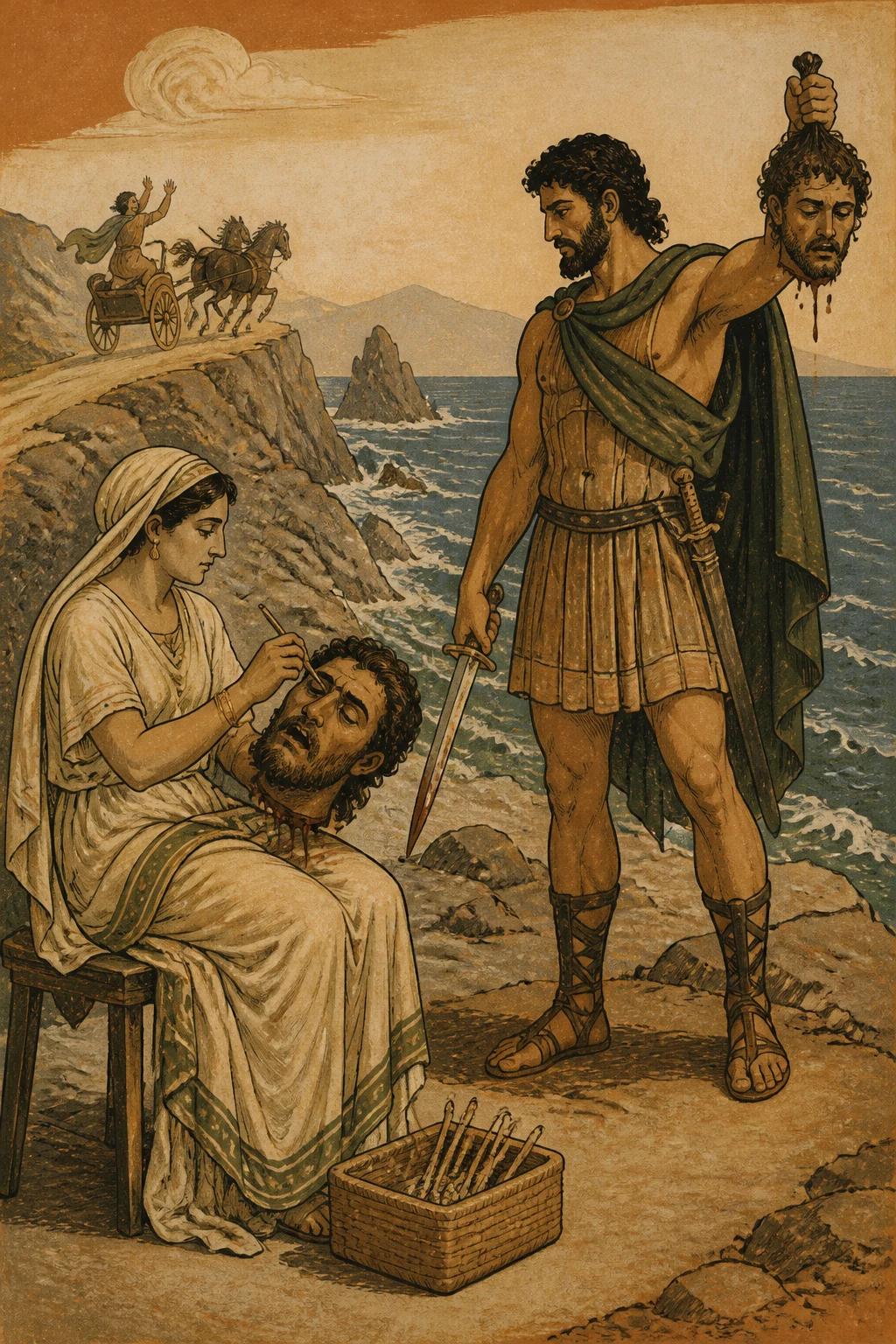
Later, when Catreus was weighed down by old age, he wished to hand over the kingdom to his son Althaemenes, and for this reason he went to Rhodes. He disembarked with his heroes at a deserted spot on the island, but the herdsmen drove them back, believing that pirates had landed. The barking of the dogs prevented them from hearing him as he explained the truth, and they continued to hurl stones. Althaemenes arrived and, not recognizing Catreus, killed him with a cast of his javelin. When he later learned what he had done, he prayed, and a chasm opened and swallowed him.