Prevod
You know the story of Holger Danske, of course; we shall not tell it to you, but ask whether you remember from it that “Holger Danske conquered the great land of India, eastward to the end of the world, to the tree called the Tree of the Sun,” as Christen Pedersen puts it. Do you know Christen Pedersen? Never mind if you do not. There Holger Danske gave Prester John power and dominion over the land of India. Do you know Prester John? Well, it does not matter if you do not know him either, for he does not appear in this story at all. You are to hear about the Tree of the Sun in “the land of India, eastward to the end of the world,” as people understood it in those days, people who had not studied geography as we have; but that does not matter either!
The Tree of the Sun was a splendid tree, such as we have never seen, nor will you ever see its like. Its crown spread for miles in every direction; it was really an entire forest. Each of its smallest branches was itself a whole tree: palms, beeches, stone pines, plane trees—indeed, every kind of tree found throughout the world sprang here like little twigs from the great boughs. These, with their curves and knots, formed something like valleys and hills, clothed in velvet-soft greenery teeming with flowers. Each bough was like a broad flowering meadow or the loveliest garden. The sun shone down upon it with blessed rays, for this was the Tree of the Sun, and birds from every corner of the world gathered here: birds from the primeval forests of distant America, from the rose gardens of Damascus, from the wilderness of forests in the heart of Africa, where the elephant and the lion imagine that they alone hold sway. The polar birds came, and of course the stork and the swallow came too. But birds were not the only living creatures to come here; the deer, the squirrel, the antelope, and a hundred other swift and graceful animals were at home here. The tree’s crown was a great fragrant garden, and within it, where the largest boughs stretched like green hills, stood a crystal castle with a view of every country in the world. Each tower rose like a lily; you could walk up through the stem, for there was a staircase inside—so you can understand how it was—and step out upon the leaves, which were balconies. At the very top, within the flower itself, was the loveliest, most radiant circular hall, with no roof but the blue sky and its sun or stars. Equally magnificent, in a different way, were the spacious halls below in the castle; the whole world around was reflected in their walls. You could see everything that happened, so there was no need to read newspapers, and they had none here. Everything could be seen in living pictures, if only you could manage to watch it all, or cared to do so; for too much is too much, even for the wisest man, and here lived the wisest man of all. His name is so difficult to pronounce that you could not say it, and so we may as well leave it at that. He knew everything that a human being can know or will ever come to know upon this earth; every invention that had been made or would be made—but no more than that, for there is a limit to everything. Wise King Solomon was only half as wise, and he was very wise indeed; he ruled over the forces of nature and mighty spirits, and even Death himself had to bring him word each morning, with a list of those who were to die that day. Yet King Solomon himself had to die, and that was the thought which often filled the mind of the seeker, the mighty lord of the castle in the Tree of the Sun, with a strange vividness. He too, however far his wisdom raised him above other men, must one day die; he knew it. His children must die; like the leaves of the forest they would crumble and turn to dust. He saw the generations of mankind blown away like the leaves of the tree, and new ones taking their place; but the fallen leaves never grew again. They turned to dust, became parts of other plants. What happened to human beings when the Angel of Death came? What was it to die? The body dissolved, and the soul—yes, what was that? What became of it? Where did it go? “To eternal life,” said the consolation of religion; but how did the passage take place? Where did one live, and how? “In Heaven above!” said the devout. “Up there we shall go!” “Up there!” repeated the wise man, looking towards the sun and stars. “Up there!” And he saw that, on the round globe of the earth, above and below were one and the same, according to where one stood upon that floating sphere. And if he rose as high as the summits of the earth’s highest mountains, the air which we below call clear and transparent, “the pure heavens,” became a pitch-black darkness, stretched taut as cloth; the sun could be seen glowing without rays, and our earth lay wrapped in an orange mist. The eye of the body could see only so far, and the eye of the soul was shut out too. How little we knew! Even the wisest knew so little of what matters most to us.
In the castle’s secret chamber lay the greatest treasure on earth: “The Book of Truth.” He read it leaf by leaf. It was a book in which every human being has the power to read, but only in fragments; the writing trembles before many an eye, so that it cannot spell out the words. On certain pages the writing often grows so pale, so faint, that only a blank leaf can be seen. The wiser one is, the more one can read, and the wisest reads most of all. Moreover, he knew how to gather starlight, sunlight, the light of hidden forces, and the light of the spirit; with this stronger illumination upon the pages, still more of the writing appeared to him. But in the section of the book headed “Life After Death,” not so much as a jot could be seen. This grieved him. Could he not find, here upon this earth, a light by which the words written there in the Book of Truth might be made visible to him?
Like wise King Solomon, he understood the language of animals; he heard their songs and speech, but they made him no wiser on this matter. He discovered the powers in plants and metals, powers to drive away sickness, to ward off death, but not to destroy it. In everything created that lay within his reach, he sought the light that could illuminate the certainty of eternal life, but he did not find it; the Book of Truth lay before him as though its pages were unwritten. In the Bible, Christianity showed him words of assurance about eternal life, but he wished to read them in his own book, and in that he saw nothing.
He had five children: four sons, educated as only the wisest father can educate his children, and one daughter, beautiful, gentle, and wise, but blind. Yet she did not seem to feel it as a loss; her father and brothers were eyes for her, and the depth of her own heart gave her the certainty of sight.
The sons had never been farther from the castle halls than the tree’s boughs extended, and their sister had gone even less far. They were happy children in their childhood home, in the land of childhood, in the lovely, fragrant Tree of the Sun. Like all children, they loved to hear stories, and their father told them much that other children would not have understood; but then these children were as wise as most old people are among us. He explained what they saw in the living pictures on the castle walls: the work of humankind and the course of events in every country on earth. Often the sons wished they could be out there, sharing in all those great deeds, and their father would tell them that life in the world was hard and bitter; it was not quite as they saw it from their lovely childhood world. He spoke to them of the beautiful, the true, and the good, and told them that these three things held the world together, and that under the pressure they endured they became a precious stone, clearer than the finest diamond. Its radiance had worth in the eyes of God; it outshone all else, and was in fact what is called “the Philosopher’s Stone.” He told them that, just as one came through creation to the certainty of God, so through human beings themselves one came to the certainty that such a jewel existed. He could tell them no more about it; he knew no more. Now this tale would have been difficult for other children to understand, but these children understood it, and no doubt the others will catch up in time.
They asked their father about the beautiful, the true, and the good, and he explained these things to them and told them a great deal. He also told them that when God created human beings from the earth, He gave His creation five kisses: kisses of fire, kisses of the heart, tender kisses from Our Lord, and these are what we now call the five senses. Through them the beautiful, the true, and the good are seen, perceived, and understood; through them they are cherished, protected, and fostered. Five powers of sense are given, inward and outward, root and crown, body and soul.
The children thought a great deal about this; it was in their minds night and day. Then the eldest brother dreamed a lovely dream, and, strange to say, the second brother dreamed it too, and the third dreamed it, and the fourth: each of them dreamed exactly the same thing. He dreamed that he went out into the world and found the Philosopher’s Stone. It shone like a bright flame upon his brow as, in the morning light, he rode his arrow-swift horse home across the velvet-green meadows of the garden and into his father’s castle. And the jewel cast so heavenly a light and radiance upon the pages of the book that the words written there about life beyond the grave became visible. Their sister did not dream of going out into the wide world; the thought never occurred to her. Her world was her father’s house.
“I shall ride out into the wide world!” said the eldest. “I must try its ways and make my way among people. I shall desire only the good and the true, and with these I shall defend the beautiful. Many things will be different when I have a hand in them!” Yes, his thoughts were bold and grand, as all our thoughts are at home in our cosy corner by the stove, before we go out into the world and meet rain and rough weather and thornbushes.
His five senses, inward and outward, were exceedingly fine, as were those of his brothers; but each brother had one sense in particular whose strength and development surpassed all the others. In the eldest it was sight, and this was to be of especial service to him. He had eyes for every age, he said, eyes for every people, eyes that could see straight down into the earth where treasures lay, and straight into human hearts, as though there were only a pane of glass before them—that is to say, he saw more than we can see in the cheek that flushes and pales, or the eye that weeps or laughs. Deer and antelope accompanied him to the western boundary; there the wild swans came flying towards the northwest. He followed them, and soon he was far out in the wide world, far from his father’s land, which stretched “eastward to the end of the world.”
How he opened his eyes! There was so much to see, and it is always a different matter to see the place and the thing itself rather than through pictures, however good they may be—and those at home in his father’s castle were extraordinarily good. At the very first moment he almost lost both eyes from sheer amazement at all the rubbish, all the tinsel of Shrovetide switches, that had been set up as the beautiful. But he did not lose them; he had other uses for them.
He meant to set about discerning the beautiful, the true, and the good thoroughly and honestly; but how did matters stand? He saw that ugliness usually received the bouquet that beauty should have had; goodness often went unnoticed, and mediocrity was clapped rather than slapped. People looked at a man’s name, not his worth; at his coat, not the man; at his office, not his calling. Apparently it could be no other way.
“Well, I had better get properly to work!” he thought, and he set to work. But as he sought the true, along came the Devil, who is the father of lies and falsehood itself. He would gladly have knocked both eyes out of the seer at once, but that was too crude. The Devil goes about things more subtly. He let him seek the true and look at it, and at the good as well; but as he looked, the Devil blew a mote into his eye, into both eyes, one mote after another. That was not good for his sight, even for the keenest sight. The Devil blew up the mote until it became a beam, and then those eyes were done for. There stood the seer like a blind man in the midst of the wide world, and he had no faith in it. He gave up his good opinion of the world and of himself, and when you give up both the world and yourself, well, then you are done for.
“Done for!” sang the wild swans as they flew eastward over the sea. “Done for!” sang the swallows as they flew east to the Tree of the Sun; and that was no good news for those at home.
“Things seem to have gone badly for the ‘seer’!” said the second brother. “But perhaps the ‘hearer’ will fare better!” It was his sense of hearing that he had sharpened most; he could hear the grass grow, so far had he brought it.
He took an affectionate farewell and rode away, well endowed with gifts and good intentions. The swallows followed him, and he followed the swans, and soon he was far from home, out in the wide world.
You can have too much of a good thing, as he was to discover. His hearing was too keen: he could hear the grass grow, but he could also hear every human heart beating in joy and pain. To him it was as though the whole world were a great clockmaker’s workshop, where all the clocks went “Tick, tick!” and all the tower clocks struck “Ding! Dong!” No, it was unbearable! Still, he kept his ears pricked up as long as he could. At last all the noise and shouting became too much for one human being. There were street urchins of sixty—for age is not what matters—shouting at the tops of their voices; that was laughable enough. But then came gossip, hissing through every house, lane, and street, and straight out along the high road. Lies spoke loudly and played the grand gentleman; the fool’s bell rang out and declared itself a church bell. It grew too much for the hearer, and he stuck his fingers in both ears. Yet he still heard false singing and sour notes, gossip and gabble; stubborn assertions, not worth a sour herring, flapped upon tongues until they went crack, crack, in polite society. There were sounds and shortcomings, clatter and crash, outward and inward—Heaven preserve us! It was unbearable; it was altogether too much! He thrust his fingers deeper into both ears, deeper and deeper, until his eardrums burst. Now he heard nothing, not even the beautiful, the true, and the good, where hearing should have been the bridge to his thoughts. He grew silent and suspicious, believed no one, and at last did not even believe himself, which is a very unhappy state. He would never find the mighty jewel and bring it home; he gave up the quest and himself as well, and that was the worst of all. The birds flying east carried word of it until it reached his father’s castle in the Tree of the Sun. No letter came; there was no postal service either.
“Now I shall try!” said the third. “I have a fine nose!” That was not a very fine way of putting it, but that was how he spoke, and one must take him as he was. He was good humour itself, and he was a poet, a true poet; he could sing what he could not say. Many things occurred to him long before they occurred to the others. “I smell a rat!” he said; and it was indeed his sense of smell that was highly developed, and to which he allotted a wide domain in the realm of beauty. “One person likes the scent of apples, another the smell of stables!” he said. “Every province of scent in beauty’s kingdom has its public. Some feel at home in the air of a tavern, beside the smoking wick of a tallow candle, where the reek of spirits mingles with foul tobacco smoke; others prefer to sit amid the cloying fragrance of jasmine or rub themselves with strong oil of cloves—that is something you can smell. Some seek the fresh sea breeze, the brisk gale, or climb to a lofty mountain peak and look down over the busy little lives below!” Yes, that was what he said. It was as though he had already been out in the world, lived among people, and come to know them; but he carried that wisdom within himself. It was the poet in him, the gift Our Lord had laid in his cradle.
Now he said farewell to his father’s home in the Tree of the Sun. He walked through the beauty of his home, but once outside he mounted an ostrich, which runs faster than a horse; and when, later, he saw the wild swans, he swung himself onto the back of the strongest. He was very fond of change, and so he flew over the sea to foreign lands, with great forests, deep lakes, mighty mountains, and proud cities. Wherever he came, it was as though sunshine passed over the countryside. Every flower and bush gave forth a stronger fragrance, sensing that a friend was near, a protector who valued and understood it. Even the downtrodden rosebush lifted its branches, unfolded its leaves, and bore the loveliest rose. Everyone could see it; even the black, wet forest slug noticed its beauty.
“I shall put my mark upon the flower!” said the slug. “There, I have spat on it; I can do no more!” “That is how beauty fares in the world!” said the poet, and he sang a song about it, sang it in his own fashion, but no one listened. So he gave the drummer two skilling and a peacock feather, and the drummer arranged the song for the drum and beat it out through the town, in every street and lane. Then people heard it and said they understood it: it was so profound! And now the poet could sing more songs, and he sang of the beautiful, the true, and the good. They heard of it in the tavern where the tallow candle smoked; they heard it in the fresh clover meadow, in the forest, and on the open sea. It seemed that this brother was having greater success than the other two. But the Devil did not like that, and so he came at once with royal incense and church incense and all the incense of honour that can be found, which the Devil knows so well how to distil: the most potent incense of all, which smothers every other scent and can turn even an angel’s head, let alone a poor poet’s. The Devil knows well enough how to handle such people! He plied the poet with incense until he was utterly lost in it and forgot his mission, his father’s home—everything, even himself. He went up in smoke and incense.
When all the little birds heard this, they mourned and did not sing for three days. The black forest slug grew blacker still, not from grief but from envy. “It was I,” he said, “who ought to have had the incense, for I gave him the idea for his most famous song, the one for the drum, about the ways of the world! It was I who spat on the rose; I can produce witnesses!”
But no word of this reached home in the land of India; all the little birds were mourning, you see, and kept silent for three days. And when the time of mourning was over, well, their grief had been so great that they had forgotten whom they were mourning for. That is how things go!
“Now I suppose I must go out into the world—and disappear like the others!” said the fourth brother. He was as good-humoured as the one before him, but he was not a poet, and so had all the more reason to be cheerful. Those two had brought merriment to the castle; now the last of its merriment was leaving. Sight and hearing have always been regarded as the two most important senses, the ones people especially wish to have strong and keen; the other three senses are considered less essential. But that was not this son’s opinion at all. He had particularly cultivated taste, in every sense of the word, and taste has great power and a mighty dominion. It governs both what passes through the mouth and what passes through the mind. So he tasted whatever was in pan and pot, in bottle and vessel; that, he said, was the coarse part of his office. To him every human being was a pan with something cooking in it, every country an enormous kitchen, spiritually speaking; that was the refined part, and now he wished to go out and try the refined.
“Perhaps I shall have better luck than my brothers!” he said. “I am off! But what means of transport shall I take? Have balloons been invented?” he asked his father, who, of course, knew of every discovery that had been made or ever would be made. But balloons had not been invented, nor had steamships or railways. “Then I shall take a balloon!” he said. “My father knows how they are made and steered; I shall learn! No one knows of the invention, so they will think it an apparition in the sky. When I have finished with the balloon, I shall burn it; so you must give me a few of that future invention called chemical matches!”
He was given all these things, and away he flew. The birds accompanied him farther than they had accompanied the other brothers; they wanted to see how this flight would turn out. More and more kept joining them, for they were curious; they thought it was a new kind of bird flying there. Yes, he certainly had company! The air grew black with birds; they came like a great cloud, like the swarm of locusts over the land of Egypt, and soon he was out in the wide world.
“I have had a good friend and helper in the east wind,” he said. “The east wind and the south wind, you mean!” said the winds. “There have been two of us taking turns, or you would never have travelled northwest!”
But he did not hear what the winds said, and that does not matter either. Nor did the birds accompany him any longer. Just when their numbers were greatest, a couple of them grew tired of the journey. Too much had been made of the whole affair, they said. He was getting above himself. “It is nothing to fly after, nothing at all! It is dull!” And so they stayed behind; all of them stayed behind. After all, the whole thing was nothing.
And the balloon descended over one of the largest cities, where the aeronaut took his seat on the highest point, which was the church spire. The balloon rose into the air again; it was not supposed to do that. Where it went would be hard to say, but never mind; it had not been invented.
There he sat at the very top of the church spire. The birds did not fly to him; they were tired of him, and he was tired of them. All the city’s chimneys smoked and gave forth their smells.
“Those are altars raised to you!” said the wind; it wanted to say something pleasant to him. He sat there boldly enough, looking down at the people in the streets. There went one proud of his purse, another proud of the key at his back, although he had nothing to unlock; one was proud of his coat, which moths were eating, and another of his body, which worms would eat.
“Vanity! Yes, I had better go down soon, stir the pot, and taste it!” he said. “But I shall sit here a little longer; the wind tickles my back so delightfully. It is a great pleasure. I shall stay here as long as this wind blows. I want a little rest. It is good to lie late in the morning when you have a great deal to do, as the lazy man says; but idleness is a root of all evil, and there is no evil in our family, I say—and so says every mother’s son in the street! I shall stay here as long as this wind blows; it suits my taste!”
And he stayed where he was; but he was sitting on the spire’s weathercock, which turned and turned with him, so that he thought the same wind was still blowing. He stayed where he was, and there he might sit a long time, enjoying the taste of it.
But in the land of India, in the castle in the Tree of the Sun, all had grown empty and quiet as the brothers left, one after another. “They are not faring well!” said their father. “Never will they bring home the shining jewel. It is not to be found for me. They are gone—dead!” And he bent over the Book of Truth, staring at the page where he should have read of life after death; but for him there was nothing to see or know.
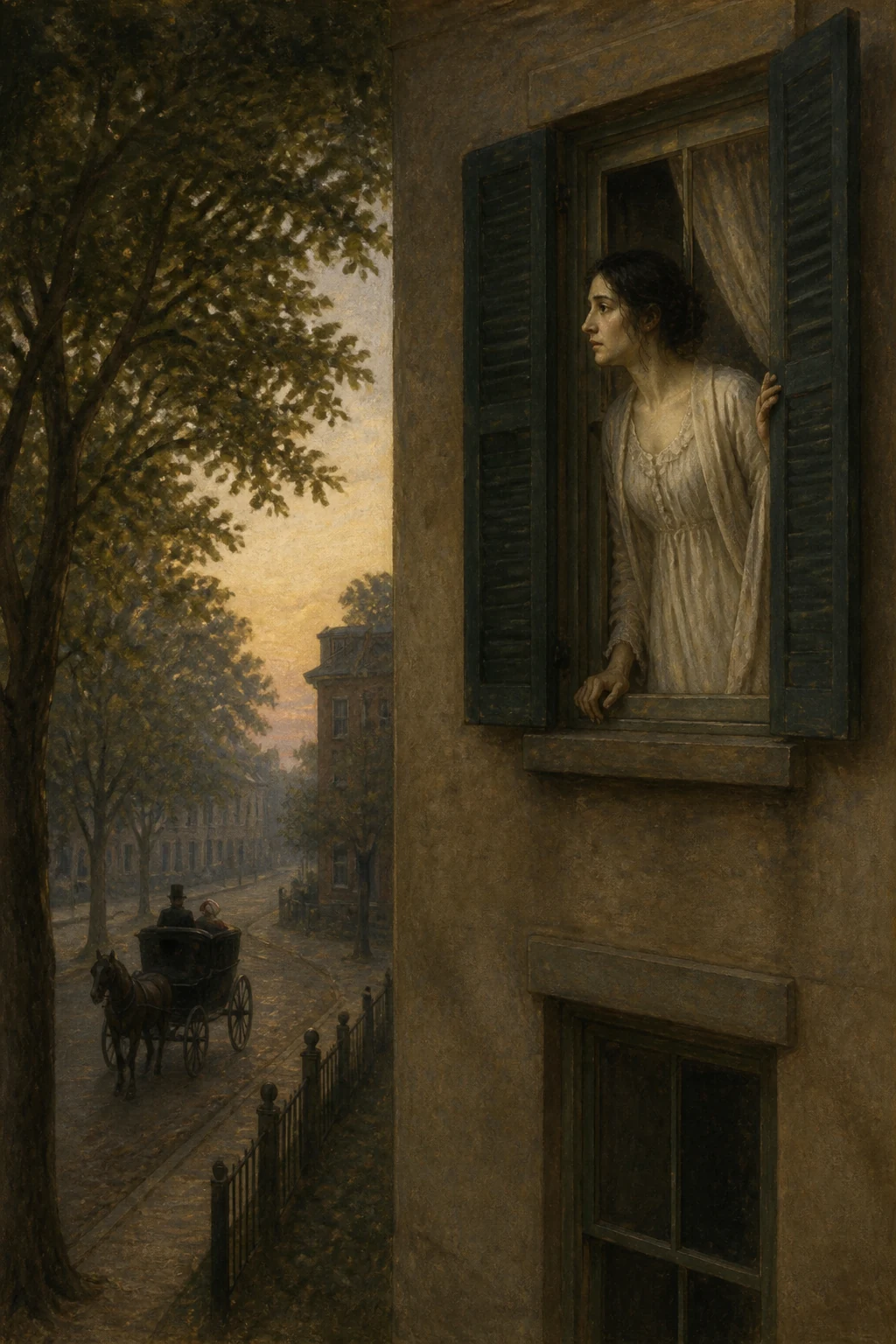
His blind daughter was his comfort and joy; she clung to him with such tender love. For his happiness and delight she wished that the precious jewel might be found and brought home. In grief and longing she thought of her brothers. Where were they? Where were they living? She wished so earnestly that she could dream of them; but, strangely enough, even in dreams she could not be with them. At last one night she dreamed that their voices reached her. They called to her, cried out from the wide world, and she had to go out there, far, far away; and yet she seemed still to be in her father’s house. She did not meet her brothers, but in her hand she felt something burning like fire, though it gave no pain: she held the shining jewel and brought it to her father. When she awoke, for a moment she believed she still held it; it was her distaff that her hand clasped. Through the long nights she had spun unceasingly, and on the spindle was a thread finer than a spider’s web; human eyes could not make out the single strand. She had moistened it with her tears, and it was as strong as an anchor cable. She rose; her decision was made, and the dream must come true. It was night; her father slept. She kissed his hand, then took her spindle and fastened the end of the thread to her father’s house, for otherwise she, being blind, could never find her way home again. She had the thread to hold to; she trusted in that, not in herself or others. She plucked four leaves from the Tree of the Sun; she would give them to wind and weather to carry to her brothers as letters of greeting, should she fail to meet them out in the wide world. How would she fare there, the poor blind child? Yet she had the invisible thread to hold to; and above all the others she possessed one gift: depth of heart. Through it she seemed to have eyes in her very fingertips and ears in the depths of her heart.
And so she went out into the bustling, rumbling, wondrous world, and wherever she went, the sky grew bright with sunshine. She could feel the warmth of its rays; the rainbow arched from the black cloud across the blue air. She heard the birds singing and caught the fragrance of orange groves and apple orchards, so strong that she thought she could taste it. Gentle music and lovely singing reached her, but so did howls and screams; thoughts and judgments rang out in strange discord. Into the recesses of her heart came the echoes of human hearts and minds; they swelled into a chorus:
"Our earthly life is rain and storm, a night of bitter weeping!" But another song rose too: "Our earthly life is a rosebush bright with sunshine and rejoicing."
And when the bitter cry rang out, "Each thinks of himself alone; that truth we all are given," the answer came: "A river of love runs through our earthly living!"
She heard the words plainly enough: "All things here are mean and small; each side has its reverse!" But she heard this too: "So much is done that's great and good, of which the world scarce hears!"
And when a swelling chorus sang all around her, "Mock everything, laugh all to scorn, join in the pack's loud barking!" a voice within the blind girl's heart replied: "Be true to yourself, hold fast to God; his will be done, amen!"
And wherever she appeared among men and women, among old and young, the knowledge of the true, the good, and the beautiful shone in their souls. Wherever she went—in the artist's workshop, in the rich and festive drawing room, or in the factory among the whirring wheels—it was as though a sunbeam had entered, a string had sounded, a flower had released its fragrance, and a refreshing dewdrop had fallen upon a withering leaf.
But the Devil could not put up with this. Now, he has more wit than ten thousand men, and so he devised a way to help himself. He went to the marsh, took bubbles from the stagnant water, and let a sevenfold echo of lying words resound over them, for that made them stronger. He ground to powder as many paid verses of praise and deceitful funeral sermons as he could find, boiled them in tears that envy had shed, sprinkled them with paint scraped from a sallow maiden's cheek, and from all this created a girl who resembled the blind, beneficent girl in form and movement. "The gentle angel of the heart," people called her, and now the Devil had set his game in motion. The world did not know which of the two was the true one—and how was the world to know?
"Be true to yourself, hold fast to God; his will be done, amen!" sang the blind girl in perfect trust. She gave the four green leaves from the tree of the sun to wind and weather to carry as letters and greetings to her brothers, and she was certain they would reach them. Yes, she was certain, too, that the jewel would be found, the jewel that outshone all earthly splendor; from the brow of humanity it would shine upon her father's house.
"To my father's house!" she repeated. "Yes, on earth is where the jewel lies, and I bring more than the certainty of its existence. I feel its glow; it swells greater and greater here in my closed hand! Every little grain of truth, however fine, that the keen wind swept up and carried, I caught and kept. I let it steep in the fragrance of all that is beautiful—and there is so much beauty in the world, even for the blind. I took the sound of the human heart beating with goodness and mingled it with the rest. All I bring is grains of dust, yet they are dust from the precious stone we sought, in rich abundance; my whole hand is full!" And she stretched it out toward—her father. She was home; on the wings of thought she had reached it, for she had never let go of the invisible thread that led to her father's house.
The powers of evil swept over the tree of the sun with the roar of a hurricane, and with a gust of wind burst through the open doorway into the secret chamber. "It will blow away!" cried her father, clasping the hand she had opened.
"No!" she cried in calm certainty. "It cannot blow away! I feel the ray warming my very soul!" And her father saw a shining flame as the sparkling dust streamed from her hand across the white page of the book that was to tell of the certainty of eternal life. In dazzling splendor an inscription appeared, only a single visible word, that one word:
Faith And the four brothers were with them again; longing for home had seized them and brought them back when the green leaf fell upon each one's breast. They had come, and the birds of passage had followed them, along with deer, antelopes, and all the creatures of the forest. They too wished to share in the joy—and why should animals not do so, when they can?
And just as we have often seen, when a sunbeam shines through a hole in the door into a dusty room, a gleaming column of dust whirling in its light, so—but not coarse and poor like that; even the rainbow is heavy and its colors too faint beside the vision revealed here—so, from the page of the book, from the shining word faith, rose every grain of truth, radiant with beauty, resonant with goodness, shining more brightly than the pillar of fire in the night when Moses and the people of Israel journeyed to the land of Canaan. From the word faith stretched the bridge of hope to all-embracing love in the infinite.