O besedilu
Kajnej in Nestorjeva pripoved
- Vir
- Ovidove preobrazbe
- Avtor
- Ovid
- Jezik branja
- English
- Jezik izvirnika
- Latin
- Čas branja
- 6 min branja
- Obseg
- 5 strani
- Naslov izvirnika
- Caeneus and Nestor's Tale
O izvirniku
Ovidove preobrazbe
Pesniški tok antičnih preobrazb, kjer bogovi, ljudje in narava stalno menjavajo obliko. Bralni jezik je English, izvirnik pa prihaja iz vira Ovidove preobrazbe v jeziku Latin.
Besedilo
Kajnej in Nestorjeva pripoved
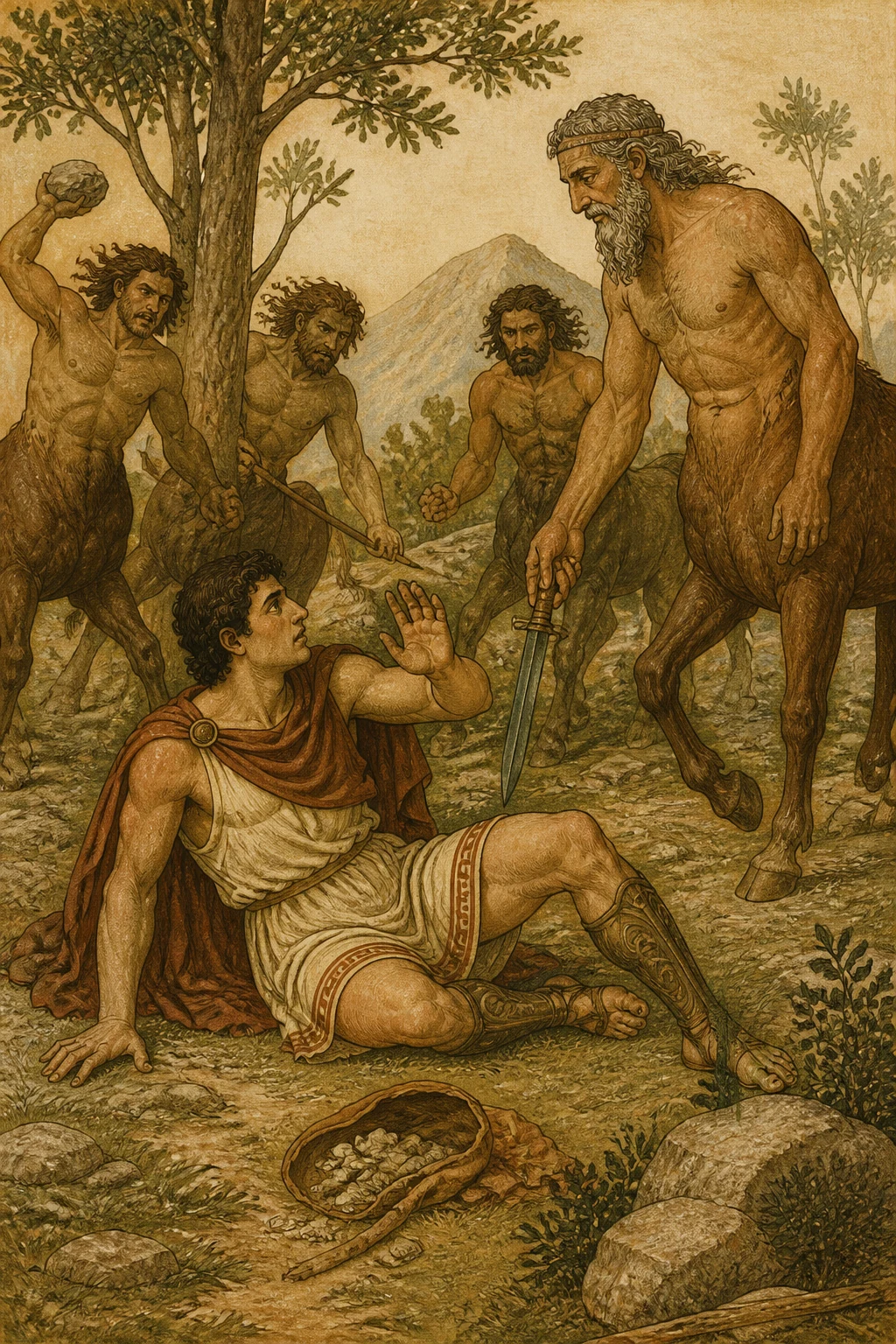
As the man of Pylos recounted these battles between the Lapiths and the half-human Centaurs, Tlepolemus could not endure in silence his grief that Hercules had been passed over, and said: “It is strange, old man, that you have forgotten the glory of Hercules! My father, at least, often used to tell me that he himself had subdued those cloud-born creatures.” Saddened, the man of Pylos replied: “Why force me to remember my sorrows, to tear open griefs long veiled from sight, and confess my hatred of your father and the wrongs he did me?
He did indeed—gods!—perform deeds beyond belief and fill the world with his services: I wish I could deny it. But we do not praise Deiphobus or Polydamas, or even Hector himself—for who would praise an enemy? That father of yours once leveled the walls of Messenia, destroyed the innocent cities of Elis and Pylos, and brought fire and sword upon my household gods. To say nothing of the others he killed, we were twelve sons of Neleus, a splendid band of young men: all twelve, save me alone, fell to Hercules’ might. That the others could be defeated, I can bear; but the death of Periclymenus was extraordinary. Neptune,
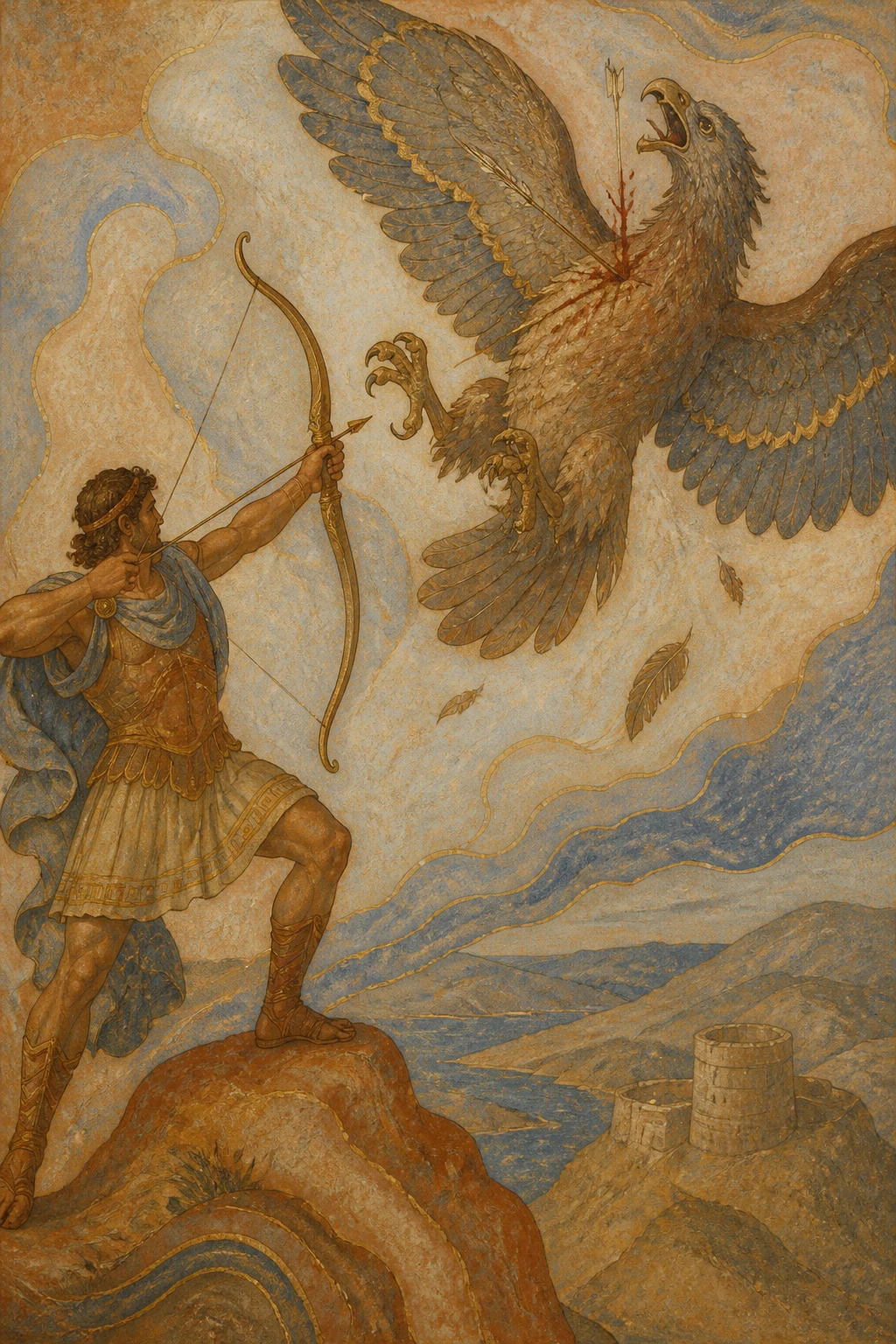
the forefather of Neleus’ line, had granted him the power to assume whatever shapes he wished, and cast them off again. When he had changed in vain into every form, he took the shape of the bird most dear to the king of the gods, which carries his thunderbolts in its curved talons. Using the bird’s strength, its wings, its hooked beak, and its crooked claws, he tore the hero’s face.
The Tirynthian aimed his all-too-unerring bow at him and, as he soared aloft among the clouds, struck him where the wing joins the side. The wound was not deep, but the sinews it had severed failed him, denying him movement and the strength to fly. He fell to earth, his weakened wings unable to catch the air, and the arrow, which had lodged lightly in his wing, was driven inward by the weight of his impaled body, passing through his upper side and out through the left of his neck.
Do you think I now owe praise to the deeds of your Hercules, most noble commander of the Rhodian fleet? Yet I avenge my brothers no further than by keeping silent about his brave deeds: my friendship with you remains unshaken.” When the son of Neleus had spoken these words in his gentle voice, they drank again of Bacchus’ gift after the old man’s tale, then rose from their couches. The rest of the night was given to sleep.
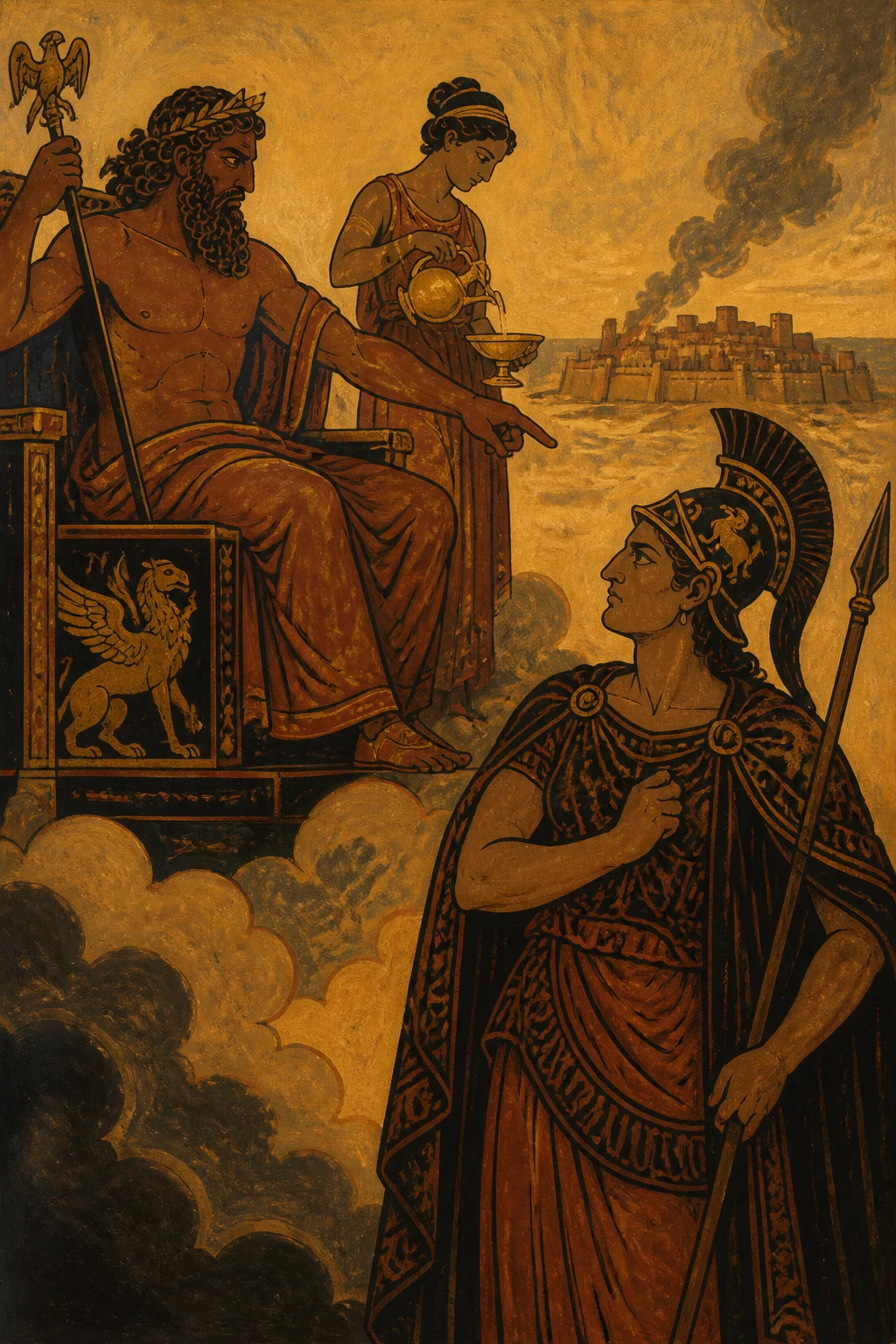
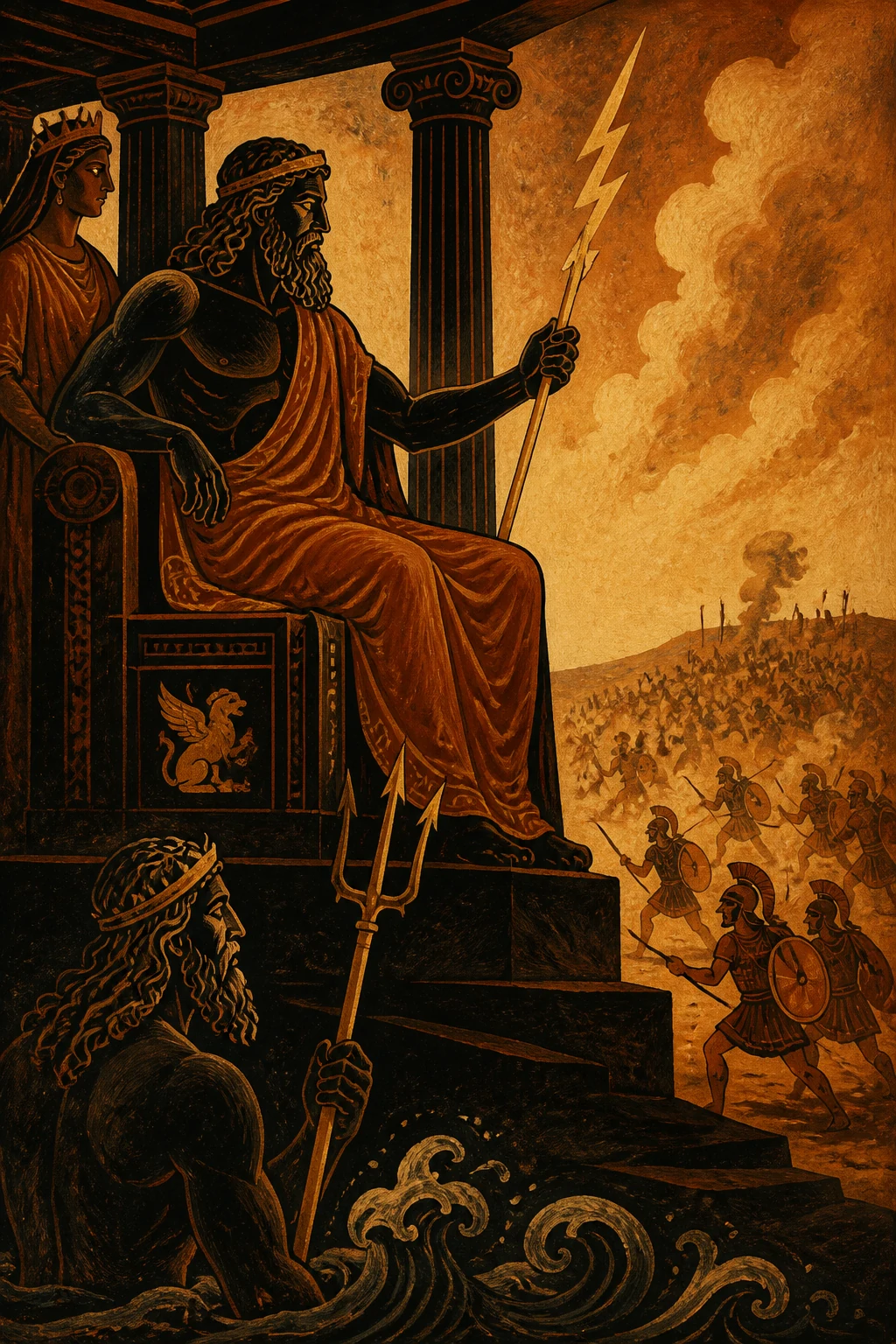
But the god who rules the sea’s waves with his trident grieved with a father’s heart that his son’s body had been changed into Phaethon’s bird, and, hating the savage Achilles, nursed his unforgetting anger with more than mortal fury. Now, when the war had dragged on for nearly ten years, he addressed the unshorn Smintheus in these words: “You who are by far the dearest to me of all my brother’s sons, who built with me the walls of Troy to no avail, do you not groan to see these towers on the brink of ruin?
Do you not grieve for the thousands slain defending these walls? To pass over all the rest, does not Hector’s ghost haunt you, dragged around his own citadel? Yet that savage Achilles, bloodier than war itself, still lives, the destroyer of our work. Let him face me! I will make him feel the power of my three-pronged spear. But since I am not allowed to meet the enemy at close quarters, kill him unawares with a hidden arrow!”
The Delian god assented, and, indulging both his uncle’s anger and his own, came veiled in mist among the ranks of Troy. There, amid the slaughter of men, he saw Paris scattering occasional arrows at nameless Greeks. Revealing himself as a god, he said: “Why waste your shafts on the blood of common soldiers? If you care at all for your people, turn against Achilles and avenge your slaughtered brothers!”
He spoke, and, pointing out the son of Peleus as he felled Trojan bodies with his sword, turned the bow toward him and guided the deadly arrow with an unerring hand. This was the one thing that could bring old Priam joy after Hector’s death: so you, Achilles, conqueror of so many, were conquered by the coward who stole a Greek man’s wife! Yet if you were destined to fall to a woman’s warfare, you would rather have fallen to an Amazon’s double-bladed axe!
Now that terror of the Phrygians, the glory and guardian of the Greek name, the descendant of Aeacus, invincible in war, had burned upon the pyre: the same god had armed him and consumed him. Now he is ashes, and of Achilles, once so great, there remains some little thing that scarcely fills a tiny urn. But his glory lives, enough to fill the whole world! This is the measure that befits the man; in this the son of Peleus is still his own equal, and knows nothing of empty Tartarus.
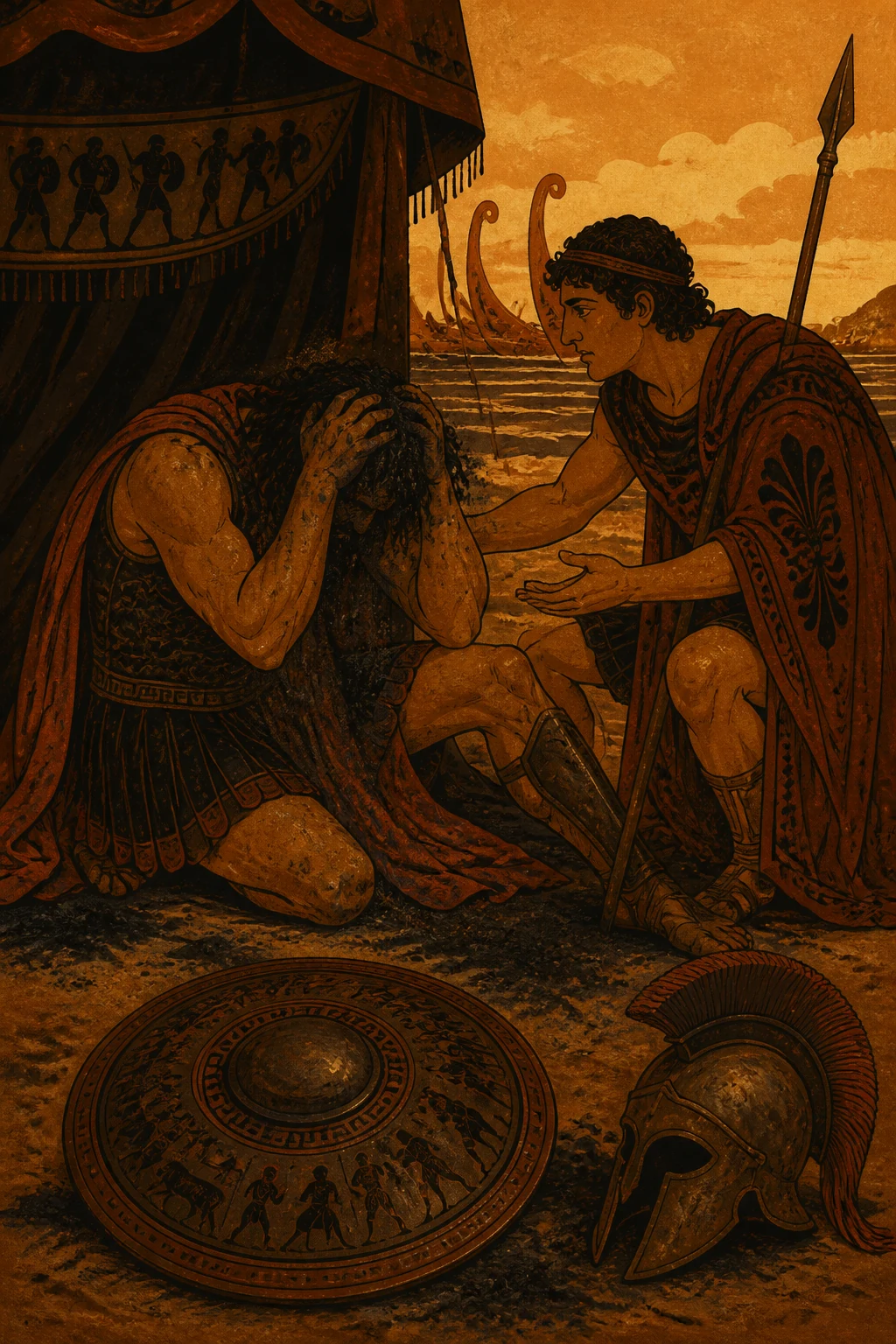
Even his shield, so that you might know whose it had been, stirs up war, and arms are taken up for the sake of arms. Neither the son of Tydeus nor Ajax, son of Oileus, dares to claim them, nor the younger son of Atreus, nor his brother, greater in war and years, nor any other: only the sons of Telamon and Laertes had the confidence to seek so great a prize. The descendant of Tantalus put aside the burden and the ill will it would bring, and ordered the Greek leaders to sit together in the midst of the camp, entrusting the judgment of the dispute to them all.
Izvirnik
Caeneus and Nestor's Tale
Naslednje strani prikazujejo izvirno besedilo za primerjavo.
Source ID: ovid_metamorphoses_story_084 Citation: Ovid, Metamorphoses 12.536-12.628 Original language: Latin Source: PerseusDL canonical-latinLit Source URL: https://github.com/PerseusDL/canonical-latinLit/blob/master/data/phi0959/phi006/phi0959.phi006.perseus-lat2.xml Segmentation certainty: medium 536: Haec inter Lapithas et semihomines Centauros 537: proelia Tlepolemus Pylio referente dolorem 538: praeteriti Alcidae tacito non pertulit ore 539: atque ait: “Herculeae mirum est oblivia laudis 540: acta tibi, senior! Certe mihi saepe referre 541: nubigenas domitos a se pater esse solebat.”
542: Tristis ad haec Pylius: “Quid me meminisse malorum 543: cogis et obductos oculis rescindere luctus 544: inque tuum genitorem odium offensasque fateri? 545: Ille quidem maiora fide, di! gessit et orbem 546: inplevit meritis, quod mallem posse negare: 547: sed neque Deiphobum nec Polydamanta nec ipsum 548: Hectora laudamus—quis enim laudaverit hostem? 549: Ille tuus genitor Messenia moenia quondam 550: stravit et inmeritas urbes Elimque Pylumque 551: diruit inque meos ferrum flammamque penatis 552: inpulit, utque alios taceam, quos ille peremit, 553: bis sex Nelidae fuimus, conspecta iuventus:
554: bis sex Herculeis ceciderunt me minus uno 555: viribus; atque alios vinci potuisse ferendum est: 556: mira Periclymeni mors est, cui posse figuras 557: sumere, quas vellet, rursusque reponere sumptas 558: Neptunus dederat, Nelei sanguinis auctor. 559: Hic ubi nequiquam est formas variatus in omnes, 560: vertitur in faciem volucris, quae fulmina curvis 561: ferre solet pedibus divum gratissima regi; 562: Viribus usus avis pennis rostroque redunco 563: hamatisque viri laniaverat unguibus ora: 564: tendit in hunc nimium certos Tirynthius arcus 565: atque inter nubes sublimia membra ferentem
566: pendentemque ferit, lateri qua iungitur ala; 567: nec grave vulnus erat sed rupti vulnere nervi 568: deficiunt motumque negant viresque volandi. 569: Decidit in terram, non concipientibus auras 570: infirmis pennis, et qua levis haeserat alae, 571: corporis adfixi pressa est gravitate sagitta 572: perque latus summum iugulo est exacta sinistro. 573: Nunc videor debere tui praeconia rebus 574: Herculis, o Rhodiae rector pulcherrime classis?
575: Nec tamen ulterius, quam fortia facta silendo 576: ulciscor fratres: solida est mihi gratia tecum.” 577: Haec postquam dulci Neleius edidit ore, 578: a sermone senis repetito munere Bacchi 579: surrexere toris: nox est data cetera somno. 580: At deus, aequoreas qui cuspide temperat undas, 581: in volucrem corpus nati Phaethontida versum 582: mente dolet patria saevumque perosus Achillem 583: exercet memores plus quam civiliter iras, 584: iamque fere tracto duo per quinquennia bello 585: talibus intonsum conpellat Sminthea dictis: 586: “O mihi de fratris longe gratissime natis,
587: inrita qui mecum posuisti moenia Troiae, 588: ecquid, ubi has iamiam casuras adspicis arces, 589: ingemis? Aut ecquid tot defendentia muros 590: milia caesa doles? Ecquid, ne persequar omnes, 591: Hectoris umbra subit circum sua Pergama tracti? 592: cum tamen ille ferox belloque cruentior ipso 593: vivit adhuc, operis nostri populator, Achilles. 594: Det mihi se! faxo, triplici quid cuspide possim, 595: sentiat; at quoniam concurrere comminus hosti 596: non datur, occulta necopinum perde sagitta!”
597: Adnuit atque animo pariter patruique suoque 598: Delius indulgens nebula velatus in agmen 599: pervenit Iliacum mediaque in caede virorum 600: rara per ignotos spargentem cernit Achivos 601: tela Parim fassusque deum “Quid spicula perdis 602: sanguine plebis?” ait. “Siqua est tibi cura tuorum, 603: vertere in Aeaciden caesosque ulciscere fratres!” 604: Dixit et ostendens sternentem Troica ferro 605: corpora Peliden, arcus obvertit in illum 606: certaque letifera direxit spicula dextra.
607: Quod Priamus gaudere senex post Hectora posset, 608: hoc fuit: ille igitur tantorum victor, Achille, 609: victus es a timido Graiae raptore maritae! 610: At si femineo fuerat tibi Marte cadendum, 611: Thermodontiaca malles cecidisse bipenni! 612: Iam timor ille Phrygum, decus et tutela Pelasgi 613: nominis, Aeacides, caput insuperabile bello, 614: arserat: armarat deus idem idemque cremabat; 615: iam cinis est, et de tam magno restat Achille 616: nescio quid parvam, quod non bene conpleat urnam: 617: at vivit totum quae gloria conpleat orbem!
618: Haec illi mensura viro respondet, et hac est 619: par sibi Pelides nec inania Tartara sentit. 620: Ipse etiam, ut, cuius fuerit, cognoscere posses 621: bella movet clipeus, deque armis arma feruntur. 622: Non ea Tydides, non audet Oileos Aiax, 623: non minor Atrides, non bello maior et aevo 624: poscere, non alii: solis Telamone creato 625: Laerteque fuit tantae fiducia laudis.
626: A se Tantalides onus invidiamque removit 627: Argolicosque duces mediis considere castris 628: iussit et arbitrium litis traiecit in omnes.
Nadaljuj z branjem