Waltey
Junak brez očeta
Legende sau basmele românilor · Petre IspirescuO besedilu
Junak brez očeta
- Vir
- Legende sau basmele românilor
- Avtor
- Petre Ispirescu
- Jezik branja
- English
- Jezik izvirnika
- Română
- Čas branja
- 25 min branja
- Obseg
- 20 strani
- Naslov izvirnika
- 011 Voinicul cel fără de tată
O izvirniku
Legende sau basmele românilor
Romunske ljudske pravljice o začaranih kraljestvih, preizkušnjah in junakih, zapisane iz ustnega izročila. Bralni jezik je English, izvirnik pa prihaja iz vira Legende sau basmele românilor v jeziku Română.
Besedilo
Junak brez očeta
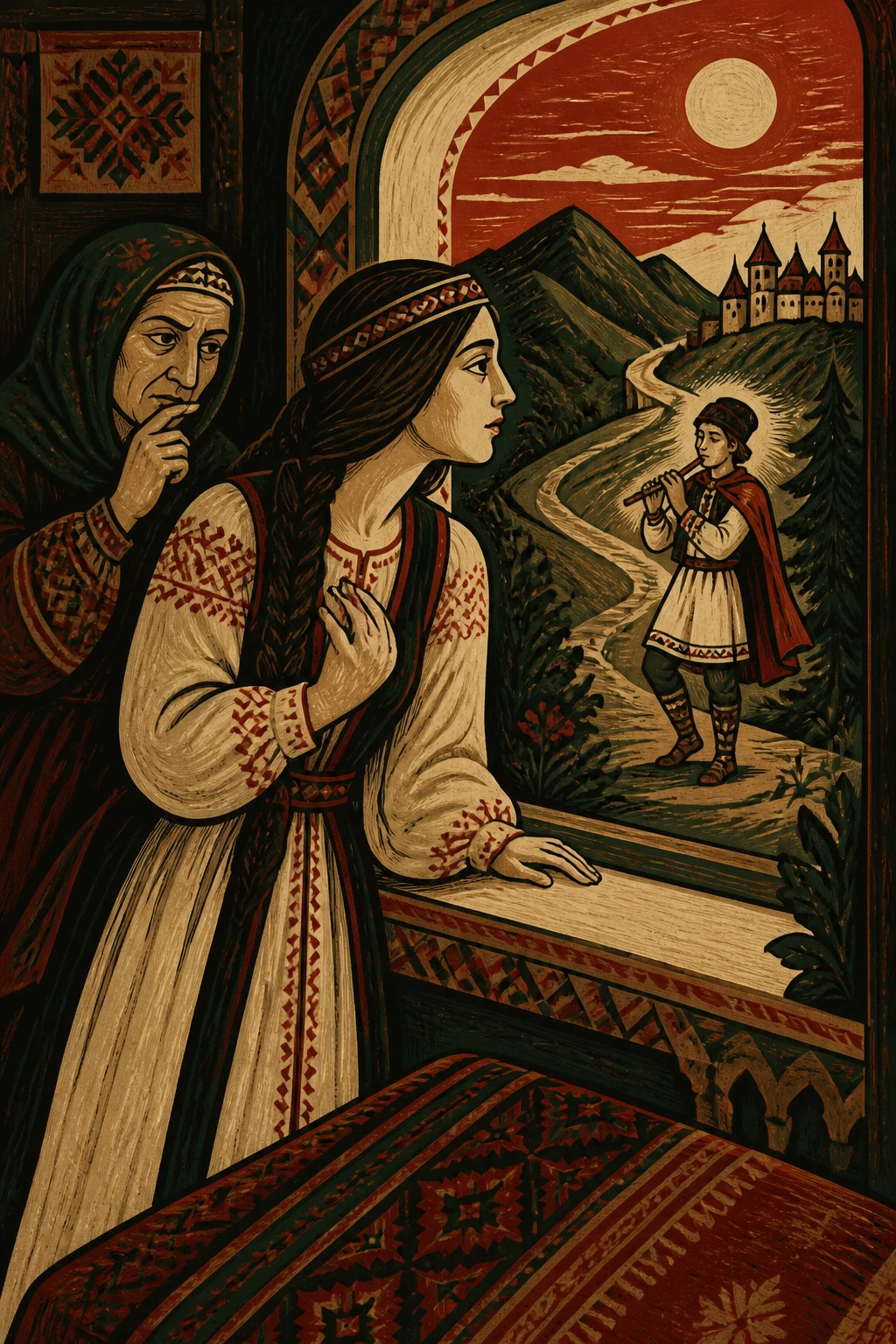
Once upon a time, as never before, there lived an emperor and an empress. They had but one daughter, and they cherished her as the light of their eyes. She was not allowed even into the garden without her nurse. The nurse watched her closely and never let her out of sight, not even for the time it takes to strike a spark from a flint. As the girl sat by the window, she would see a young good-for-nothing wandering to and fro. One day, while she was looking at him, he caught sight of her too and fixed his eyes on hers. A shiver ran through her, and then something like a spark of fire burned her heart. She drew back from the window and told her nurse what had happened. “Get away from that window, will you!” the nurse said. “Why must you keep staring and gaping at every idle fellow who passes?” Before long, the girl began to feel unwell. It seemed she had conceived, by some means beyond all understanding. She told her nurse, who was beside herself with dismay that such a thing could happen when the girl had never known a man. The fear that seized them both was beyond telling. “What will your father say when he finds out?” the nurse lamented. “What am I to answer when he questions me?” “How am I to stand before him with my belly swelling,” said the girl, “when God alone knows how innocent I am?” And indeed her father was a stern man. He would never in his life have forgiven them. So they went and told the empress all that had happened, begging her to plead with the emperor for forgiveness. The girl would not dare show herself before her father for anything in the world.
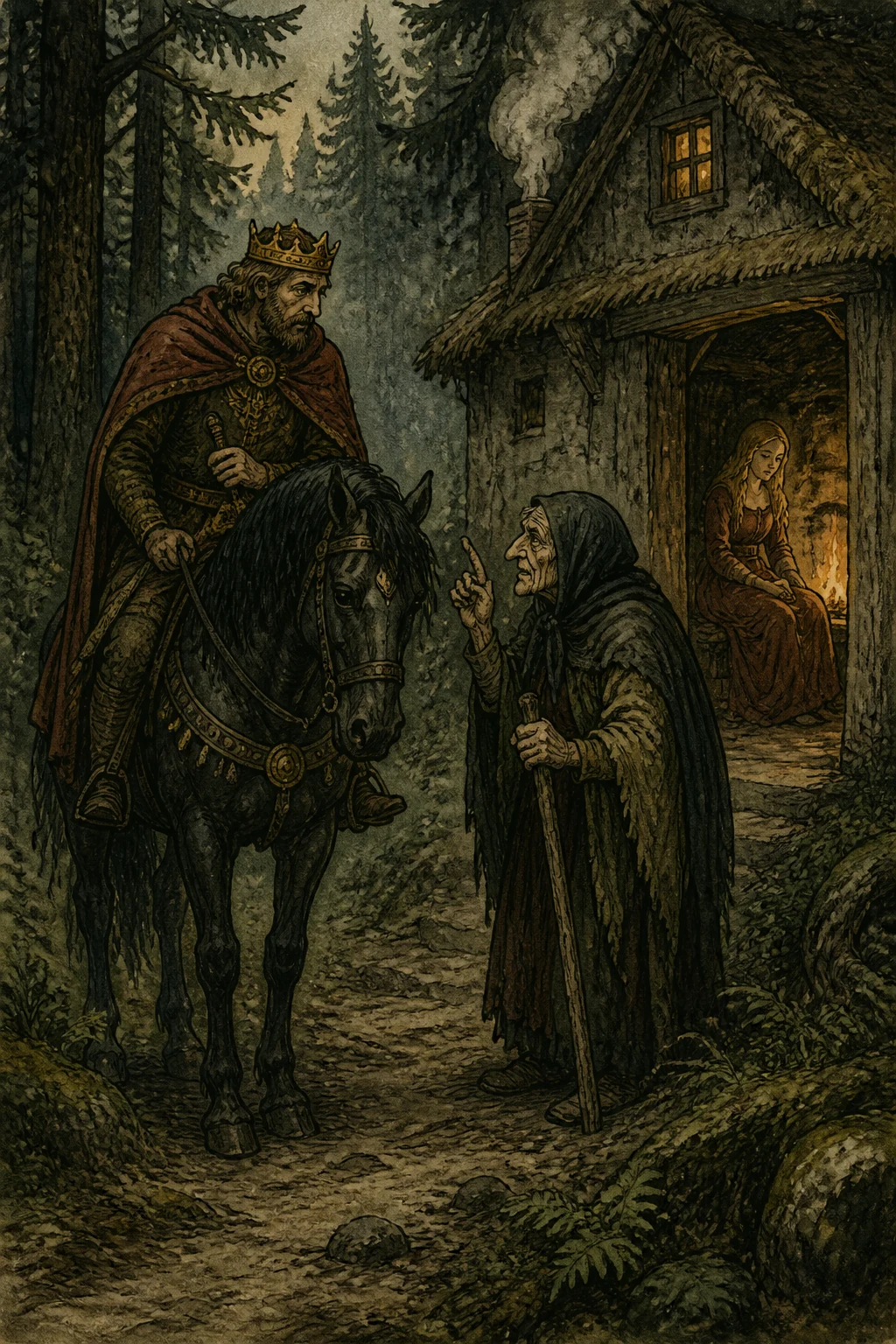
When the empress heard what had happened, she tore at her hair. She said it was impossible for anyone to become pregnant from a glance. You see, she knew how things went in the world, and such a miracle was the last thing she had expected. The matter could not remain hidden for long. Much as she dreaded it, the empress was obliged to tell the emperor the whole story. When he heard of this disgrace, he blazed with anger. He roared like a lion: “Who is the villain who has dishonoured the white hairs of my old age? Let him be put to death! Let him hang from the gallows! Let him be ground to dust and ashes!” The empress spoke gently to him and calmed him a little. You see, he did not believe what his daughter and her nurse had told him. He knew that such a thing had never been heard of before. After giving the nurse an imperial scolding, he turned his wrath upon his daughter. He ordered a little boat to be built, put the girl inside it with five loaves of bread and a small jug of water, and set it adrift, to carry her wherever God’s mercy might lead. As the boat floated along, she prayed to God from the depths of her soul to bring her safely to shore, for He knew her innocence, and she knew of no stain upon her soul. For several days she was tossed about upon the waves. On the third day her time came, and she gave birth to a plump little boy, as lovely as an angel. Poor woman! In her hour of trouble she had no human help, nothing but her suffering and God to comfort her. Yet she found some consolation in knowing herself undefiled. And by God’s will, one night the little boat came to a halt. She felt that it was no longer moving, but lying still. Until daybreak her heart beat with fear, for she did not know what shore she had reached. When it grew light, she saw that the boat had come to rest beside a forest. She went ashore with her baby in her arms and wandered here and there among the trees. At last she settled in the hollow of a great tree, thick as a barrel. There she lived for many years, feeding on herbs and roots and the fruit of certain trees. She brought up her little boy with loving care. From branches she made a cradle in which she laid him by day; at night she never let him leave her breast. To bathe him, she went down to the shallow bed of a brook that flowed nearby. The starry sky was their roof; the flowers of the field, the birds of the air, the butterflies and the insects were the child’s playmates. When he grew a little older, his mother taught him to hunt, and with tears in her eyes she told him how she had been brought up and how she was now obliged to bring him up. He listened and remembered everything she said. As he grew older still, he began to hunt farther from their dwelling. One day he spied a palace in the distance. He remembered what his mother had told him about her father’s palaces, and thought it looked rather like them. He ran back and told her what he had discovered. The next day he took his mother by the hand and led her there. When they reached the palace, she told him that it was not her father’s, though the palaces of the emperors of the world were much like it. More time passed, and the boy grew taller. One day, while hunting again, he somehow found himself once more before that palace. With his club over his shoulder, he took heart and entered the courtyard. Now, this palace belonged to some ogres. Our brave young fellow, who knew nothing of fear, went inside as well. He was almost beside himself with wonder, so astonished was he at all the things he had never seen in his life. And then, what should happen? All at once three ogres appeared before him. These were the masters of the palace. They rushed at him as though to tear him to pieces, and in harsh voices demanded, “How dare you, filthy wretch, set foot in our house?” The young hero did not utter a sound. He swung his club faster than lightning, striking one on the right and another on the left before either knew where the thunderbolt had come from, and laid them both stretched out upon the ground. Neither stirred again, for he had struck them good and hard. Seeing how matters stood, the third ogre vanished from before him like a ghost and hid in the cellar. He saw that he could not stand against such a hero, and resolved to bring about his ruin by other means. In the heat of battle, our brave young Romanian had not noticed what had become of the third ogre. He waited a while, and when he saw that no one else was coming, he went back for his mother, brought her to the palace and settled there. Wandering from room to room, he came upon the ogres’ weapons and marvelled at them. His mother told him that she had seen such weapons in her father’s house, and showed him how to use them. They served him well, for he found hunting much easier. Now he began to shoot deer and does, whereas until then he had caught only little birds in snares, and that with difficulty. He had become the mightiest hunter in the forest. There was no one who could stand against him. Often he stayed away from home for days at a time. One day the ogre came out of the cellar and went begging to the hero’s mother, asking her to take pity on him and let him stay at her household. He said he had been wandering for he knew not how long, groping his way through that wilderness. He told her he was an unfortunate man who had lost his way while hunting, and thanked the Lord for granting him the sight of human beings once more. The poor woman, who knew what hardship and want meant, lent an ear to the ogre’s deceitful pleas. Taking pity on his misfortunes, she promised to speak to her son about him. As soon as her son returned, she told him the whole sad story of the man who sought their mercy, and begged him to take pity on his wretchedness. “For we cannot know,” she said, “what God may yet have in store for us.” The young hero was pleased by this turn of events, thinking that at least there would be a servant in the house to keep his mother company while he was away and help her with the work. When he saw the fellow, he did not recognize him as an ogre, so well had the villain disguised himself. He told him what his duties would be and allowed him to stay. The many privations, the many troubles, the deep sorrow the hero’s mother had suffered, and her great longing for her country—but above all the thought of the shame that still lay upon her name in her parents’ house, though she was innocent—made her languish and waste away upon her feet. Seeing her so pale and always downcast, the ogre ventured one day, while the young man was hunting, to question her, pretending to speak with great diffidence. “Mistress, if I am not mistaken, you are not at all well.” “I am not well, my boy, for I long for my father and mother and my own country. You see, I am an emperor’s daughter, and because of a misfortune that befell me, I have been wandering through the world all these many years.” “I know a remedy for your illness, mistress, but there is no one to go and fetch it.” And he told her of all the wonders wrought by the remedy he claimed would do her good. When her son returned from hunting, she told him she had heard from their servant that she would recover if she ate apples from the Red Apple Tree. He was overjoyed to hear of a remedy that might make his mother well, and resolved to go and fetch it, however far away it might be. He bade her farewell and set out. But which way should he go? Until then he had never even heard of such a thing. Trusting to his luck, he headed east. As he made his way through the thick forest, he caught sight of a palace more beautiful than the one in which they lived. He went straight towards it. A wondrous fairy dwelt there. The moment he saw her, his heart went out to her. The fairy came to meet him, welcomed him as was fitting, led him into her palace and entertained him as a guest. As they talked of one thing and another, they soon came to understand each other. You see, this was a great turn of fortune ordained for him. Until then he had never seen any woman’s face but his mother’s. And the fairy was as beautiful and as delicate as a flower.
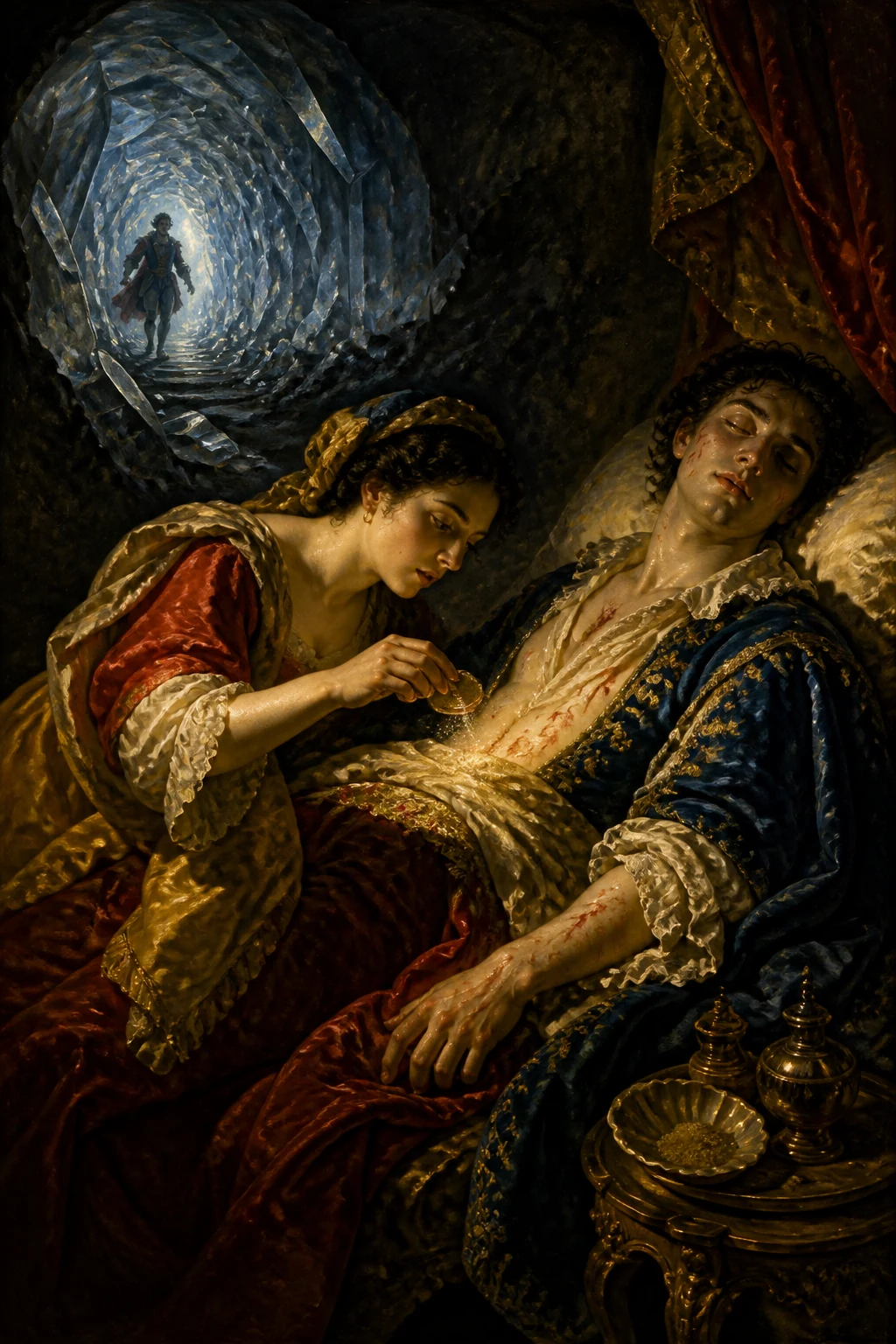
She, too, had plenty to admire in him, for he was a fine young Romanian, tall and straight as a fir tree. He lingered there, gazing at her. Then he remembered that he had set out to fetch his mother apples from the Red Apple Tree, and made to hurry away. But the wondrous fairy stopped him and asked where he was going. The young hero told her the whole story, from beginning to end. The fairy understood the ogre’s trickery, but said nothing. Instead, she directed him to the place where the Red Apple Tree grew and taught him how to gather its fruit. He bade the fairy farewell, promising to return by way of her palace, and set out. On and on he went, over a long road and a longer one still, until, after crossing lands and seas, he reached a garden enclosed entirely by roses. He went inside and found the Red Apple Tree planted in its very midst. He tried to approach it, but the tree said, “Come no nearer, brave youth, for you will lose your life, and that would be a pity.” The lad, who knew no fear, answered as the fairy had taught him: “Do not be afraid, poor afflicted tree. I shall rid you of your caterpillars and dead branches.” After cutting away the dead wood and removing the caterpillars, he picked three little apples, as lovely as those of paradise, and turned back. When he reached the forest, he called on the fairy. She welcomed him joyfully and put him in a room to rest. While he slept, she exchanged his apples for others. On waking, the young hero was eager to return to his mother with his errand accomplished. He took the apples and set off. Meanwhile, the accursed ogre was fawning upon the boy’s mother, trying with temptations and sly tricks to beguile her into yielding to him. The poor woman did not know what the devilish creature was about. In her heart she knew nothing of the temptations and snares of love, and so she gave the foul wretch no encouragement to grow bold. She knew only one thing: she was wasting away with longing for her parents and the country where she had been born. Whenever she sought a little comfort, her son was the one who gave it to her. At any other time you would find her with her eyes bathed in tears. When she saw her son, she came to life with joy. It seemed to revive her a little. She ate the apples he had brought, and thought them good. After a while, however, she sank back into her former languor. Seeing his mother’s health decline, the young hero did not know what else he could do to cheer her. As for that devil of an ogre, he showed himself so eager in his service that scarcely had his master opened his mouth before he guessed his wish; then he moved heaven and earth to fulfil it. The young hero noticed the servant’s zeal and faithfulness, and far from regretting having taken him into his household, began to look on him with favour. One day, when the hero was in good spirits, the ogre approached him and said in a pleading voice, “Master, I know how dearly you love your mother. I do not like the look of this wasting sickness of hers. If you will listen to me, you will not go wrong.” “Do you know of some remedy? Tell me, and I shall listen.” “In the country I come from, when people suffer from such an illness, they do everything they can to obtain the water of life and the water of death from the mountains that clash together. That water is the best remedy of all. I see that you are a great hero, and I believe in my heart that it would be easier for you than for others to bring it back.” Before he had finished speaking, the young hero went to his mother. “Mother,” he said when he reached her, “I see you always pale and wasting away upon your feet. I am going to fetch you a remedy. At the mountains that clash together there is the water of life and the water of death. I shall go all the way there to bring you some.” “Do not go, my darling boy. The Lord’s mercy is with us. If it is His will that I should be ill, then whatever water you bring me will be in vain. Do not leave me alone again. Loneliness has gnawed at my heart enough already. You are my comfort now, my child; if I am deprived of that too, I shall perish.” “Be brave, Mother, and keep your spirits up until I return. Once you have drunk the water of life, you will be cheerful and sound as a rock.” There was no holding him back. He made ready and set off. On his way he called on the wondrous fairy. As they talked, he mentioned that he was going on a journey, and told her where. The fairy smiled when she heard this and saw the little jugs the ogre had given him. She said nothing to arouse his suspicions, but gave him two wide-mouthed jars with which he could scoop up the water more quickly, and taught him what to do. At the very stroke of noon, when the sun stood high overhead, he was to raise a pole with a red kerchief tied to its tip. The mountains would stare at it, wide-eyed, and before they recovered from their bewilderment, he must rush in and fill the jars from the two springs. The young hero was most grateful for her advice. He bade her farewell and set out. He travelled on and on, until after a long journey he reached the place in question. He did as the fairy had taught him, then, still on horseback, darted between the mountains and filled his jars. As he turned to leave, the mountains realized that someone had taken water from the springs, and began clashing together again. The young hero was just riding back between them. Had he not hurried out, he would have perished on the spot. But he escaped unharmed. Only his horse’s tail was caught, and half of it remained behind. Ever since then, a horse’s tail has been half flesh and half hair. On his way home he stopped again at the fairy’s palace. As before, she urged him to rest a little, and while he slept she exchanged his water for other water. When he woke, he took the jars and went home. His mother needed nothing more than the sight of him. She did not know what to do for joy, and kissed him on one cheek and then the other. After drinking the water he had brought, she thought she felt a little stronger. So she said, at least! You see, she did not realize that it was the joy of seeing her son that made her feel somewhat livelier. The ogre was beside himself when he saw the young man return safe and sound, with his errand accomplished. In the son’s absence, he had tried every means he could think of to beguile the emperor’s daughter, but all his snares had come to nothing, for she had not fallen into the trap the foul creature was laying for her. She could not understand why he kept hovering about her with his blandishments and lures. She never dreamed what the accursed ogre had in mind. The truth was that he feared to meet the hero in open combat. He meant to destroy him by treachery, and then dishonour his mother too, to avenge his brothers’ deaths. But fortune did not favour him. From time to time the young hero went hunting and paid a visit to the fairy. Before long he noticed that his mother was not recovering, but growing ever more weary and wasting away. His heart was heavy to see that nothing did her any good and that he could give her no help. The wretched ogre saw how troubled the young man was about his mother’s health. One day he approached him and let fall another hint, for the villain was afraid to urge him too strongly. He feared the hero might grow suspicious and guess his wicked intentions. “When I was a child, master, I heard that grown people who suffer from a wasting sickness, and children who suffer from the dog’s sickness, can be cured by eating a piglet from the sow beneath the earth. It breaks my heart to see the life ebbing out of my good mistress. But I would not urge even you to go, for terrible danger awaits anyone who tries to steal a piglet and fails.” “Say no more,” the hero answered. “I know nothing of danger or fear.” And at once he set about preparing for a longer journey. He told his mother he was going hunting. Then he set out and called on the fairy, telling her what he intended to do. He knew, you see, how well her advice had served him. After teaching him how to succeed, she gave him a cake of soap, a comb and a brush to help him. The young hero thanked the fairy, bade her Godspeed, and departed. He travelled on and on until he reached a forest so dense and dark that he could scarcely force his way through. He groped about until he found the sow’s lair. But how was he to approach it? The lair was surrounded by logs and upturned roots, so thickly tangled that not even a magic bird could get through. The young hero did as the fairy had taught him. He dug a tunnel until he came beneath the sow’s bed, crawled inside and waited for her to come and lie down. The piglets were all clustered at her udder, suckling. Before the Swineherd’s Star rose, when all pigs wake, the piglets lay asleep with the teats still in their mouths. The young hero slipped his hand forward and took hold of one, so gently and so lightly that the teat slid out of its mouth without its feeling a thing. At once he clamped its snout shut so that it could not squeal, and away he went. That devil of a sow felt her teat growing cold. She woke and saw that one of her piglets was missing. She set off after the hero. Although his steed was a marvel of a horse, the sow caught up with him. When he saw that she was about to seize him in her tusks, the young hero threw down the soap. At once a stretch of sticky, foul-smelling mire appeared, so loathsome that it made your flesh crawl. The horse flew on with its belly close to the ground. The sow struggled and wallowed through the mire until you could no longer tell whether she was a sow or some devilish thing. She escaped from the mud and set off after the hero again. In an instant she had caught him up. Seeing his danger, the young man threw down the comb. A tall wall rose across her path, too high for her to leap. The sow set to work with her tusks and broke through it, making a hole just large enough to squeeze through. Then she was after him again! When the hero saw that she was drawing near once more, he threw down the brush. All at once there sprang up a forest so tall and thick that not even a fledgling could slip through it. The sow began gnawing at the trees, gnawing and gnawing until she had made herself a path. She followed him until, just as she was about to catch him, he rode into the fairy’s courtyard. The fairy came out at once, stretched out her hand and cried, “Back, shameless sow, and fear my father’s wrath!” At the sound of her voice, the sow stood rooted to the spot. Then, overcome with shame, she turned away. As she went she kept looking back, as though she could scarcely believe what she had seen and heard. Once again the young hero lay down to rest, and meanwhile the fairy exchanged his piglet for another. When he woke, he set off home in high spirits at what he had accomplished. There he came, my friend, his cap cocked to one side, the piglet in his arms, playing a tune on a leaf. Presently he met three travellers. They were the Wind, the Heat and the Frost. He took off his cap and bowed deeply. “God grant you good fortune, Uncle Wind!” “A good journey to you, my dear boy,” the Wind replied. “What’s this, lad? Is it only to the Wind that you bow?” asked the Heat. “Don’t you know I can send such sweltering weather and such scorching heat that your very guts will boil?” “I care for nothing,” the young hero answered, “so long as the Wind blows on me.” “And have you never heard of me, lad?” said the Frost. “I have the power to send such cold and bitter frost that your very guts will freeze.” “It troubles me not at all,” he answered, “so long as the Wind does not blow on me.” Little by little he made his way home. When his mother saw him and heard what perils he had passed through, she nearly died and came to life again with joy at seeing him once more in flesh and blood. He gave her the piglet to eat, but she confessed that she felt no relief. The ogre could have gone mad with rage! He saw that there was no way to destroy the hero except by treachery. So he waited for a suitable moment to carry out his wicked plan. One day the young hero returned from hunting utterly exhausted, and lay down in the garden in the shade of some rose bushes. The ogre found him there and hacked him to pieces with the sword he always kept hidden about him. So that the young man’s mother would not notice, he packed all the pieces into the saddlebags and laid them across the horse. Then he struck the horse a few times and drove it out through the gate. The horse had belonged to the fairy. She had given it to the young hero when he set out for the Red Apple Tree. Finding itself driven away, it ran straight to its mistress. When she saw it coming without its rider, she knew that some devilry must be afoot. She went down to it, and what she saw filled her with horror. She took the saddlebags into her house and laid out the body, piece by piece and bone by bone, each in its proper place. Then she poured the water of death over them. The pieces knit together, joining one to another; the flesh set like jelly and became whole. She sprinkled him with the water of life, and he revived, but he was deaf and dumb. Then she gave him one of the apples he had brought, and his speech returned. She took the piglet from the sow beneath the earth and made it squeal in his ears, and his hearing returned as well. “What a heavy sleep I have had, dear sister!” he said. “Heavy indeed, dear brother! And you would have slept as long as the world endures, had it not been for the wondrous things you brought for your mother. I kept them and put others in their place.” Then she told him who the enemy was that had sought his death. So that he might be certain she spoke the truth, she gave him the power to turn into a dove and go to see how the ogre was tormenting his mother. The young hero became a dove and flew in a single breath to the house where she lived. And what did he see there? He rubbed his eyes, wondering whether what lay before him was real or a vision. The ogre, who had failed with all his coaxing and lures to persuade the hero’s mother to yield to him, had now taken to torture. He had bound her with a red silk rope, kept her without food and left her staring into the sun. He was about to kill her just as the young hero arrived in the shape of a dove. The hero turned three somersaults, as the fairy had taught him, and became a man again, with his naked sword in his hand. In less time than it takes to say a word, he hacked that foul ogre, that devil’s creature, into little pieces. He freed his mother from her torment and gave her a little water of life to drink. As soon as she drank it, she revived and felt as cheerful and strong as a person in perfect health. Then the young hero married the fairy, and the three of them lived in happiness and harmony to a ripe old age. And I mounted a saddle, and so my tale is told.
Izvirnik
011 Voinicul cel fără de tată
Naslednje strani prikazujejo izvirno besedilo za primerjavo.
fest °data' ca nici ()data, etc. A fost un imperat imperatesa. Ei aveati numal a fata, si o patea ea lumina ochilorti lord. Ea n'avea voe sa esa nici pins in grad ina !Ara &Liam eI. Acesta o Pima de aprope §i n'o scapa din vedere nici cat ai da in cremene Fata totti §eclendu la ferestra vedea pe un june fluerA-vintil umblandti de colo pina colo. IRV() di uitandu-se la elu o ve4 §i elu, si tintindti ochii in ochil ei, ea 'sin* unit fior apoi ca o scantee de focti o arse ce-va la inima. Se trase fata' de la ferestra §i spuse dadacA-seI ce i se intempla. Atunci dlidaca eI ii clise : Ci ca fugi d-ta de ferestrA! Ce tot te sgaesdi si te uiti la toff d'alde taie cainilor fruncla. Nu trecu multu §i fata incepu a nu se sin* bine. Fag_ mi-te luase in pantice, fara scirea lui Dumne(Jeti. Spuse da data -seI. Acesta se da de cesulti mortis de ciuda, cum de sa se intemple una ca asta, fAr'd a scie fata; de barbatil. Frica .ce be coprinsese pe amandoa, era de nepovestitil, Ca ce o sä 4ica tats -teti acum cand va afla, se vaeta dadaca, ce o sä-I respunlyi eii, cand me va intreba ? Cum osa the eti acum inaintea cu bortulti la gull, 4ise §i fata, cand numaI unulti Dumnecieti scie cat suntti de nevinovat6 ? $i in adeverti ca tad-sett' era un omti aspru. Nu le-aril fi ertatti odata cu Se dusera, deci, si povesti imperateseI -LOW intemplarea, si se rugara de &Lusa, ca sa intre ea la imperatulti cu mijlocire -de ertare. §'o i infAti§ezd tats -meal, capuld.
Gaud audi imperatesa de cele ce se intemplase, se lug cu mainile de peril Ea dicea a este peste pote ca sit remae eineva insarcinata din vedere. Vedi ca ea scia cum riprgil lucrurile in lume. Si la o minune ca acesta nici ca se astepta. Lucrurile nu puteaii remanea multil timpu acoperite. Imperttesa, de silt de milt, fu nevoita a spune imperatului tots siritenia. Gaud audi Imperatulu de asta ntpaste, se facu tocii de intnie. Racnea ca unu leu : Cine st fie acelti neomenitti carele mi-a necinstitil peril cei albi al betranetelorilmele ? Cu mode sit se omore. In furci sa-11.1 atarne. Prafti si pulbere sit se alega de capulti lull Imperatesa flil lug cu binisorulti mai domoli o lecuta. Vedi ca elii nu punea credementil pe spusele fiicii sale si ale dadacei. Elii scia ca ast-felti de intemplare nu se mai audise. Dupa ce dojeni cu dojand imperttesca pe (Wad, oropsi pe fie-sa cu urge. Porunci de facu o corabiera, puse pe fatt inteinsa, si langa ea cinci paini si unu urciorase cu apt, si dete drumuhi pe Oda spre a o duce unde mita domnului o va scote. Mergendil corabiera pe apt, ea se ruga lui Dumuedeil cu sdrobire de rerunchi ca sit o scota la limanti bune, ca unulil ce cunosce nevinovatia el, si ca pe una ce nu se schl la sufletulil el cu fuel o prihana. Cate-va dile se btlabAni ea asa cu valurile apelorti. In dioa a treia 11 veni cesulu nascerii, si facu unit dolofanti de copilii ca unit ingerasiti. Biata femee ! caci n'avu ea nici unti ajutorti omenesce in dioa necazului, de cat(' suferintele el, si alingtorti pe Dumned.eil 1 se mangaia Ore-cum in sufletulil ei ca se scia nepangaritt. Si vrendil Dunmedeil cu densa, corabiera, 1ntr'una din noptI se opri. Ea simti ca corabia nu mai merge ; sta p e locii. Pint la diot, 4i ticti inima de fried, nesciindri pe ce termuri se va fi opritil. and se lumina, vedu et corabiera poposise de marginea unei ptduri. Esindil la uscate cu copilasulu in brace 2 rataci incoa si 'ncolo grin pAdure. Apoi se aseda in scorbura si-lit II
unui copaciti mare .si g-rosti ca butia. Acolo stete ea mai multi ani, brAnindu-se cu erburl si radacini, on cu rodele unoril pact. Ea isi crescea copilasulti cu Ea facu din ramurile unui copaciA un legAnA in care fsi punea copilulu diva ; era noptea departa de la sinulti ei, si pentru scaldAtOre, se ducea la vadul de la albiai unu piraiasil ce curgea p'aprope d'acolo. A.coperAmintil le era cerulil cu stelele ; tovarAsit de jucaril copilului ii era florile campulul, paserile cerului, flutureii si ganganiile. DupA ce se facu mai maricelA, ma -sa flu inveta la vanatii si-i spunea cu lacramile in °ch.): cum a fostti ea crescuta si cum este nevoita cresca pe densulu. Ear elti asculta si Naga la capti tote cele ce fi spunea ma -sa. Mai marindu-se elu o WA, incept' a cAta vAnatii mai pe departe de locuinta lorti. Eara intr'una din dile, Bari un palattl in depArtare. Eli fsi aduse aminte de cele ce fi spusese ma -sa despre palaturile tata-seti, si i se paru CA se cam asemena. Pete fuga si spune ma -sii ceea ce descoperise. Adoa cli pleca cu ma-sa de mans, si ajungendii la aceste palaturi, mums -sa fi spuse ca acelea nu suntil si ale tatatui el; darn cu tote cam asa suntil si ale imperatilorti din lume. Mai trecu ce mai trecu si mai marindu-se intr'una din dile, ducendu-se erasi la vanatu; cum, cum, elic se pomeni &Asti dinaintea acelul palati ; cu toroipanula la spinare, isi lua inima in ding si infra in curte. Pasa-mi-te palatulti a cela era alit unoric smel. Flecaiandrulti nostru celu vitezti, carele nu scia ce este frica, intra si in palatu. P'aci, p'aci era sA-si iasa din mind de mirare si sA-si piarda cumpetulti audit de atatealucruri, ce nu mai vecluse elii in viata lul. and, ce sA vecli D-ta? °data ii esi inainte trei smel. Acestia erati stapAnil palatulul. Si unde se repedira la densulti de pare ca sa-lii is in unghii, si cu graiti restitti dojenindu-1A, ii disera: cum de ai cutesatu, spurcatule, sA ne calci casa ? Voiniculti nu c,lise nici arc ! ci, aducendti toroipanulti, mai lute de catti fulgerulti, Mali pe unul la drepta, pe altulti la stanga, de nu sciur6 de uncle le veni trasnetulil, si II culc5 si &multi, codragft. nu-lit sa-id
la painentd. Si nici ca se mai miscara din loco, fiindd-c& II lovise cu nadejde. Alii treilea smell, veclendd cum merge treba, pen din 'naintea lui ca o naluce, si se duse de se ascunse in pivnila. Veda eld ca nu OW da peptil cu and asemenea vitezd, si se hoteri a-i purta sambetele. Voiniculd de romenasii in dardora luptei nu bega ce se facu aid treilea smed. Astepta, ce astepta, si data vedu ca nu mai vine nimeni, eld se intorse, lua pe muma-sa, o duse in acele palaturi si se aseda acolo. Umbland din camare in carnal* dete peste armele smeilord si se minund. Ma-sa ii spme ca veduse in casa tatatului seu asemenea arme, si ii a.rata cum Re intrebuinteza. Ii prinse bine, cad vedu ail merge mil lesne la yen ltd. Acum incepu. a sageta la cepriore si la ciute, caci pine acum vana numal paserele cu latuld, si 11 era cu gred. Ajunsese ca eld se fie tare si mare in padure. Nu era cinesa-I stea impotriva. De multe on nu venea cu dilele p'acase. Intr'una din Bile, smeuld esi din pivnita si vine milogindu-se la muma voinicului ca sa-si face pomana cu priimesca la curtea ei, caci, dicea &A, ca pribegesce nu sciii de catd timpd orbacaindii prin aceltibungetil de padure. Spuse ce este nail nenorocitd carele se ratacise, umblandd dupe vanatd, si da laud& Domnului ca Fa invrednicitd a mai di peste fiinte de omeni, Ea, bietd, care scia ce este necazuld si lipsa, isi piece urechia la rugaciunile cele viclene ale smeului, si facendu-i-se mild de nenorocirile Jul, ii fegadui ce va vorbi fiuldi ei de densulti. Cum veni fluid sell de unde era dusd, ea II ppuse tote siretenia nenorocirei omului ce nazuia la mila lord, si ildruge sa aiba mile de ticalosia lui, caci, qicea ea, nu scimu cum ne va mai aduce si pe not Dumneded. Voinicului ii paru bine de asta intemplare, mai cu semi, gindea elii, ca va fi barimu o slugs in curte care se tie de uritd. me-sii, in lipsa lul, si sa-i dea ajutord in trebile cunoscu ca este smed, tend ild vedu, atatil de bine scius sera,. case!. ebb sa-la Nu-lt
procletuld a se schimba. If spuse ce are de facutil si il11 primi sa seda la curtea lui. Mu ltele lipsurf, multele necazuri, multa mahnire ce suferise muma vitezului, si doruld celd mare de tara el, era mai cu sema suferintele el cand se gandea la rusinea ce remasese asupra numelul sell, in casa parinplor ei, ea fiindd nevinovata, o facu de laucedea si se topia d'a'n piciorele. Vedend'o smeulu asa serbeda si totd fare voe bung, se incumese intr'una din dile, pe cand voiniculd era la vanatOre, si o intrebe. : dard se prefacu el vorbesce cu sfiale. Cum bagd de soma, stapana, nu prea ti-e bine. Nu mT -e bine, me baete, cad mi-e don't d'ald de tata vi d'alti de mama, si de lera mea. Vedi ca eu suntti fata de Imperatti, si pentru o napaste ce a *ad pe capuld med. pribegescti de sunlit atiti marl de mil . Ed scid unit lecu pentru bola dumitale, stapana ; darn n'are tine se duce se. -lit aduca. $i ii spuse o sumedenie de minuni ce Meuse leculd ce dicea a ard fi bund pentru ea. Cand se intorse de la vanatore fiuld el, ea if spuse ca audise de la sluga lord, cum ca de va manta mere din me- Tula rosu se va face sanatosa. Eld fu bund bucurosu ca audise unit Med care sa faca pe ma -se. sanatosa, si se hotari a se duce tocmai acolo sä-1 akluca leculd. Isi lua diva buns si pleca. Dar incotro s'apuce ? cact nici nu mai audise pine. atunci de area ce-va. Apuca si eld inteunti norocu spre rasartd, si mergend prin desisurile. padurile Bari unit palatil mai frumosti de catd acela in care sedead ei. Se duse dreptti acolo. Aci locuia b dine maiastre. Cum o Oda elti ii cadu cu dragii Dare maiastra, esindu-i inainte, ild priimi, dupe cum i se auvenea, ild bags in palatil si ild omeni ca pe unit Ospe. Din una din alta se intelesera la cuvinte. Vedi ca, mare testa era scrisa lul. Elti nu mai veduse pina atunci alai chipd c muere, de catil p'ald. ma-si. $'apoi era attau de frumOsa vi de v,ingase ca o flare.
Ea Inca avea la ce se uita la eld; cAci era und bradu de romanasti. Elie se uitase acolo la densa. and isi aduse aminte ca elu plecase sa adued mume-sei mere de la merul rosu, voi sa o sbughiasca. Para Dina maiastra flu opri si-ld intrebd uncle se duce. Voiniculd ii spuse din firu pia. in ata tord siretenia. Dfna pricepu viclenia smeului si tAcu. Apoi ilu indreptd ea spre local acela cu merulu rosu, si inveta cum sa facd ca sa is merele. Dupd cliva bund si de la mdiastra lagadui ca se va intOree pe la densa, porni ; si aide, aide, merse tale lungd si mai lungs, pins ce, trecend leri si marl, ajunse la o grading ocolita numai de trandafirl. Infra in nauntru si dete peste meruld rosu carele era sada in mijloculd nei. Eta cercd a se aldtura de pomil, dar pomuld ii dise : Nu te apropia de mine, voinice, ca Ig vei perde viata si e pAcat de densa. Flaediasuld ce nu scia de fried, ii respunse cum ild inve-lase qina. Nu te teme, poind oropsitii, eh te void curela de osi de uscaturi. $i dupd ce-1 tdie usedturile si ii lu. omidile, culese trelmerisOre, ca cele din raid, si se intOrse inapoi. Ajungendu fn pAdure, dete pe la dina. Acesta cum ilii v6du, ild priimi cu bucurie, flu puse intr'o dinar& sa se odihnesed pind una, alta, ii schimba merele si ii puse altele in loculd lord. and se scula voiniculd, se grabi a se intorce la masa cu slujba fdeutd Lua deci merele si porni. Yn vremea acesta, procletulii de smed se lingusea pe JANA, muma bdiatului, si cu ispite si cu marghiolii umbla sa o dea in eapd sa se planisesca lui. Ea, bietti, nu scia unde bate diavoluld de smed. Nu cunoscea la sufletuld el ce suntd ispitele si cursele dragostei, si prin urmare nu da nasu spur-catului sa se batincla. Ea scia una si bund: se topea de dolt ce-si lua gradimiclY nitelu, si 1i -ld 1i.-1
sclupa fluid seu, dupa parinfil ei si dupa tera in care se nascuse. Cand o cautai era cu ochil scald* in lacrarni. Cum veclu pe fiu-sed WM de bucurie. I se paru a inviora -o lecuta Manca din meriOrele ce-i aduse, si i se paru Lune. Dupa ce mai trecu, ea caclu erA0 in pirotela de mai nainte. Voiniculd v6clandil ca sanatatea ma-sei tdnjasce, nu scia ce sa-1 mai faca spre a o mai inveseli. Iar dracul de smeil, atitil de harnic se arata in ale slujbei, in cat n'apuca sa iasa bine vorba din gura voinicului, si elu o ghicea ; apo I se Facea luntre si punte, ca sa-I indeplinesca voile. Voiniculd , %Aga si eld de soma tragerea-de-inima ce avea sluga spre a-i sluji cu credinta, qi nu se caia de iced ca l'a prima la curtea sa, ba Inca incepuse privi cu ochi buni. Intr'una din Pe, pe cand voinicul era cu voe bung, Sme- -ulu se apropie de eld. §i cu grain milogitd fi 4ise : Stapane, cunoscil iubirea ce ai pentru mamulita D-tale. Lance;lela de care patimesce, mie nu-ml prea place. De vei vrea sa me asculli, nu vei Scil tu ce-va lecuri ? spune ca te ascult. In Cara de unde suntd ea, Omenii patimni de asemenea bola, facd tad ce se pate de aducii apa vie si apa mOrta de la muntil ce se batii in capete. Acosta apa este leculd edit mai bunu. Te vLdu ca esti un mare vitezd §i amu credinta in sufletuld men CA D-tale Iti va fl mai upril de catd altora a o aduce. N'apuca sa ispravesca vorba si vitezuld se duse la ma-sa. -Mina acolo, eld ii dice : Mama, te vecld totii galena, si te perch' da'n piciorele. MA clued, mama, sa-ti aducii lecuri. La muntii ce se bad in . capete este apa vie si apa marts. Tocmai acolo m6 void duce aducti ape de aceea. Nu te duce, dragul mamei; mila Domnului este cu noi; .de va vrea eld sa fid bolnava, macar ord ce ell de apa imi vei educe, in dqertii va fi. Nu me mai lasa singura. Destuld mi-a rose rarunchil singuratatea. Mangaerea mea acum tu fetuld med, de void mai fi lipsita si de d6nsa, void peri. sa-ti a-ld gresi. esti,
Fit barbatA, mama, tined firea pinti me voiu intorce, si al s'd flu vesela si sanAtOsA ca piatra, dupa ce vei bea apa vie. Nu fu cu putintA tine. Se gad si plecA. In tale dete si pe la ()Ina mAiastra. Din una din alta veni vorba ca se duce in caletorie, si-i si spuse unde se duce. Zimbi Dina cand audi si vetl.0 urciorele ce-I dase smeulti. Nu clise insa nimicil care sä-I dea vr'o bAnuiala, ci ii dete doe borcane, cu care sA is aph mai in grabs, si ilti inveth cum sa Lea. Ii clise ca tocmai la amiacli, cand va fi &Vele in crud, sl Ingle o prAjina si in virfulii ei sä pue o mahrama rosie. Muntil orti cata la ea cu ochii bleojditi ; era elti, ping s'or 4lestepta el din buimacela, sA se repecla lute a lua apa cu borcanele din ambele fan-Cane. Yi paru multti bine voinicului pentru invelatura ce-i dete. Apoi luandu-si (Iioa bunk plech, Merse merse; merse, pricina. pica ce, dupa o caletorie Oita, ajunse la loculu cu Facu, precum flu invetase clina ; era elu d'a'n cAlarele, se repecli printre munti si umplu borcanele. and fu a se intorce, muntil prinsese de veste ca ore -tine a luatii apa din antanh, si incepu a se bate erAsi in capete. Tocmai atuuci si voiniculti se intorcea. Si data nu se grabea a esi mai lute, acolo lift prApadea. Scapa insA cu fats curata. Numai coda calului o apucA, si acolo remase de .jumatate. De atunci, este calulti cu coda jumetate de came si jumAtate de perti. Gaud se intorse acasa, dete erAsi pe la Dina. Ea, ea si de la randii, lift rug sA se dea nitelu odihnei; si in acelit timpti II schimbh apa, puindu-1 alta in loud celei ce aduse Sculandu-se duph sonanci, lug borcanele cu apa si yen acasa. Atka ii fu-se ma-sii ca vatic. Nu scia ce mai facea de bucurie. Ilu shruta si p'o parte si pe alta. Apoi dupa ce bell din apa ce-1 aduse, ei ii pAru eh mai prinse pitelu sufletti Vorbh sh. fie I Ea nu bap de sernA, vedi, cä bucuria pentru vederea fiului seu o face sA fie Ore-cum mai sprintena. Smeulit se da de cesulil mortil cand ilu vequ ca s'a intorsil a -lu yeti, sl-Id
cu isprava facuta. Elu batuse capulti multti si bine sa dea in cap."). pe fata imperatului, in lipsa fiului seu, dara tote mrejele liii remasesera de Asti; cad ea nu dete in clapca in care o 1mpingea spurcatulti. Ea nu$ putea da sera de ce tail urnbla elu pe langa densa cu §osele cu momele. Nici nu visa despre ce avea de gand procletul de smeti. Pass -mi-te smeulul. II era frica sa se is la lupta de fafa cu voinicul. Ci voia piar4a prin viclenie, §i apoi sa-0 bats jocu si de masa, ca sa-0 isbandesca pentru mortea fratilor sei. Dara nu-1 ajuta VoIniculti, din cand in cand mergea la vanatOre, §i da si cAte o raita pe la clina. Nu trecu multu §i elu bags de soma ca ma -sa nu se lndrepteza ci gaineza §i se topesce de pe piciOre. Se intrista in inima lui cand vedea ca nu-i da In de bine si ca nu-i pOte da nici un ajutorl Pacostea de smeii baga de soma ca voiniculii se framanta cu firea pentru sa'natatea ma-si, se apropie de densubl intro di si -i mai dise 'lute° Elora; cacI se temea spurcatulii alit mai indemna. Tema luI era sa nu se deV.epte sa-I ghicesca cugetele luI cele viclene. Am audit si eu, stapane, pe dad eram copilu ca omenil marl cand suntii patima§1 de langeclela §i copiiI cand bo, lescil de bOla caInesca, se tamaduescii, de va manta un purcebi de la scrofa de sub pamentil. Mi se rupe inima din mine cand veclu pe buna mea stapana cum i se stinge viata din sine. Dara nici pe d-ta nu to Indemnii a to duce, cad mare primejdie va cadea pe capubi acelui ce se va cerca a Pura purcelulti de nu va isbuti. Nu sporovoi mai multu, 11 respunse voinicuiu, en nu, sciii ce este primejdie si MCA. Numai de &Ail §i puse la tale cele de trebuinta pentruo caletorie mai lungs. Ma-sii 11 spuse ca se duce la vanatore- Plea §i dete si pe la pina, careea ii spuse ce avea de gandii sa, faca. Elu scia, ve;11, ca sfaturile el II prinsese multu bine' dupd ce it invera cum sa faca sa isbutesca, ii dete unu sapunii, unti peptene §i o perie, ca sa-I fie de slujba. voinicubl Dina. Elu. se-Id Dumnedee. pi
pled, si merse, nterse, Oita ce ajunse la o padure desA tutunecOs6 de abia putea sa rAsbesca. Bajbai elti p'acolo pina ce dete de ghizuina scrofei. Cum sfi. se apropie elti ? caci ghizuina era Inconjurata de buteni si de rascote, de nu se putea atinge nici pasare Maiastra, Volniculit fAcu precum ilu invetase dina. SAO unit sentu a (Audi ping ce ajunse sub culcuvlil scrofei, Infra acolo tepta pinA ce veni scrofa sk se culce. Purcell erail top in peril la ugerutti scrofei §i sugeaii. Mai 'nainte de a resari luceferult1 porcilorti, cand toti porcii se detepta, adorrniti land purceil cu tita in gurA, voinicult1 bagA mana binisoru §i apuca unit purcelit, dar asa de binisord flu apuca, si ass de uprit ilti trase In cAtit scap apta din gura farg sA sirup. Ile apuca numai de catti de botti ca sä nu guise, Si p'aici ti-e drumulil Draculti de scrag baga de sema ca ci iit. i se recesce, Se deteptd §i vedu c6. unu purcelti ii lipsesce. Se luA dupa voinicu. Si tote ca telegarulti voinicului era unii smeii de calti scrofa Ile ajunse. Gaud vedu ca are sä-lit inhale cu coltii voinitule arunca sapunuld. Atunci unde se facu unit noroill cleiosti §i puturosti, de ti se scutura carnea de pe tine. Calulii fugea de cld cu burta de pAmintit. Screfa, fAcu ce fAcu, se svareoli prin noroifi se tar- Mei de nu o mai cunosceai, scrota e, on ce dracu e. Scapa din nomolil §i se It& dupa voinicit. Intro clips 115. ajunse. Gaud vedu zorulti, voiniculit arunca peptenele, Si unde se facu unit didit 'naltil, curmediplit drumului ei, de nu fu cu putinta sa-lti sat A. &tuner scrota se puse cu coltii sei §i sparse zidulfi, facendti o gaurl numai cattl putea ea sA tred. sA to tii dupA densulii. Daca vedu voiniculd ca scrofa era s'a apropiat, arunc'a peria. De o data se fAcu o pAdure 'nalta si desa de nu se putea strecura nici puill de pasere. Cum vedu una ca asta, scrofa se puse §i rose, rose, la copaci,pina ce-0 facu drumit dupa pina ce, and fu ajunse, voiniculu intrase In curtea la Dina. A.cesta esi numai de catti, intinse mina, si itriga : si ascu el', Alb si 'naltil,d'a Si §i si si dbnsultil a-hi
inapoi, scrofa rusindsa, si teme-te de urgia tatalui meti. Cand II audi glasu1i, scrota remase Incremenita, si plina de rusine se intorse. Mergea si se totil uita inclaratil ; pare ca tot nu-I venea a crede ceea ce veduse si audise. Se culca si de asta data mtelu voiuiculii, ca sä se odihnesca, era pinA II schimba purcelulii, puindu-I altuld In loculii Dupd ce se destepta, se Intorcea la ma-sa cu voe buna, de isprava ce facuse. Venea, nene, cu caciula intr'o parte, cu purcelulti in brace si cAntAndil din frunda._ Cand, iatd ca se intiltiesoe cu trel insi. Pasami-te era Vintulii, Caklura si Gerulti. Ina caciula din cape, si cu multi plecacinne ii disc : Norocti bunt sa dea Dumnedeu, nea Vintule. Cale build, dragulii mei], ii respunse Vintulu. Da ce. me, numai Vintului to ploconesci dise ca-I dura. Nu scii tu the ca e t potu sa last o zapusela si o arsita, de sa fiarba matele din tine ? Nu-mi pasa de nimicti, respunse voiuiculu, numai tulti sa-mi bata. N'ai auditti tu ore de mine, mg., ii dise si Gerulu, ca tine, eii amt putere sa dau unit frigu si o geruiala peste de sa inghete matele in tine. Habarti, n'amu respunde si elu, numai Vintulti sa nu-mi bath'. Si incetti, incetu, ajunse acasa. Cand ilu vedu al-de masa si audi peste cite prapastil a datti, muri si inviP de bucurie ca-lu mai vedu o data is carne si in Ose. ii dete de maned purcelulti ; dard ea marturisi ca nu vede nici o usurare. SA inebunesca Smeulti de ciuda I vedu elu ca DU pOte altti felu repue pe Voinicii, ne catii prin viclenie. Cala deci vreme cu prileju ca di sa-s1 pue In lucrare cugetulii set celu nelegluitu. late° (And Voiniculti se intorsese de la vinatd si era ostenitti peste masura, se culca in grading la umbra unorti trandafiri. Smeulu dete peste densulti, iacu bucati, bump, cu luT. Elii i i II Yin- Ai-111
palo;ult pe care flu puril tott-d'autia ascunst la densult. Si ea sa nu bage de semi ma-srt, puse tote bucafelele in desagi le arida pe calf, §i dandil cite -va bite caluluI, flt dete pe porta afara. Calult fusese alit Dinei. Ea flu dedese in dart voInicului and fu a se duce la Merult rose. Elii, data se vedu gonitil, alergA dreptil la stapana-sa. Ea, cum it vedu viindil Cara stapinu-set, pricepu ca trebue sa fie vr'o drac:e la mijloct. Se dete jost, si ce vedu se spaImenta. Lua deci desagii, II aduse inctsa la ea, bucalica cu bucalicA, osit cu osii, si le arda una langa alta. lie-care la locnutil lore. Dupit aceea turns apa morta peste densele. Ele se inchiega, lipindu-se una de alb; pielea se facu ca piftia, Intrupantiu-se. 110 stropi si cu apd viet, se insufleti; dart mutt si surdil. Atunci ii dete sa manance unit mart de care adusese eft If veni grtiri. Lua si purcelult scrOfei de pe sub pamintd si flit fact sa-i guile la urechi si if veni audit. Atunci dise: Dart greit somnil dormiiii, soru-mea. Gret, trait:we; si aI fi dormitit cAtit lumea si pamantult de nu erat maestritele lucruri ce to ai adust pentru ma -ta; era et le -amt °prat pust allele in tomtit Atunci ii spuse tine era dusmanulit care voice sa-lt rapue.Si cr sa se incrdinfeze de adeverulit celoril spuse de densa, ii dote putere sa se fact porumbelt, si sa se duct sa yacht cum stneulii chinuesce pe ma-sa. Voinicult se facu porumbelt ajunse intr'unt sufletil la carele uncle rdea mums -sa. Cand acolo ce sa yacht ? Se freed la ochi ca sa se incrdinfeze de suntii aevea cele ce i se infatia sat nalueirt Smeult, carele cu sosele cu momele nu putuse da in capil pe mu na voinicului a se planisi lui, acum o pusese la annul. 0 legase cu o franghie de matase rode, o tined nemAncata Si cu ochii in sore. Elt voia sa o om6re tocmai cand voinicult ajunse in chipt de porunbelt. Se dete de trei on peste capii, cum lit invelase Dina, si se fact omit cu sabia gout in mina. Si catil al dice meit, facu mici larime pe nectiratult de smell, bala draculit. Scapa pe murna sa de la chinurI, si ills s: si lore. si si si h hi,
viindii pina ii date de beu nitica apa vie. Cum bau vac,lu InsufleteFe §i se simte voiosa ca unit omit plinit do sanatate Apoi voiniculti se insoti cu pina, si traira ate trel unit train plinu de fericire si de ingaduinta ping la adanci bateau*. Era eft Incalecaiti p 'o sea, etc
Nadaljuj z branjem