Waltey
Molitev v velikem tednu
Cuentos de Navidad y Reyes
Cuentos de Navidad, de la patria y antiguos · Emilia Pardo BazánO besedilu
Molitev v velikem tednu
- Vir
- Cuentos de Navidad, de la patria y antiguos
- Avtor
- Emilia Pardo Bazán
- Jezik branja
- English
- Jezik izvirnika
- Español
- Čas branja
- 12 min branja
- Obseg
- 10 strani
- Naslov izvirnika
- 018 La oración de Semana Santa
O izvirniku
Cuentos de Navidad, de la patria y antiguos
Sedemintrideset avtorskih zgodb v treh zgodovinskih knjižnih skupinah. Bralni jezik je English, izvirnik pa prihaja iz vira Cuentos de Navidad, de la patria y antiguos v jeziku Español.
Besedilo
Molitev v velikem tednu
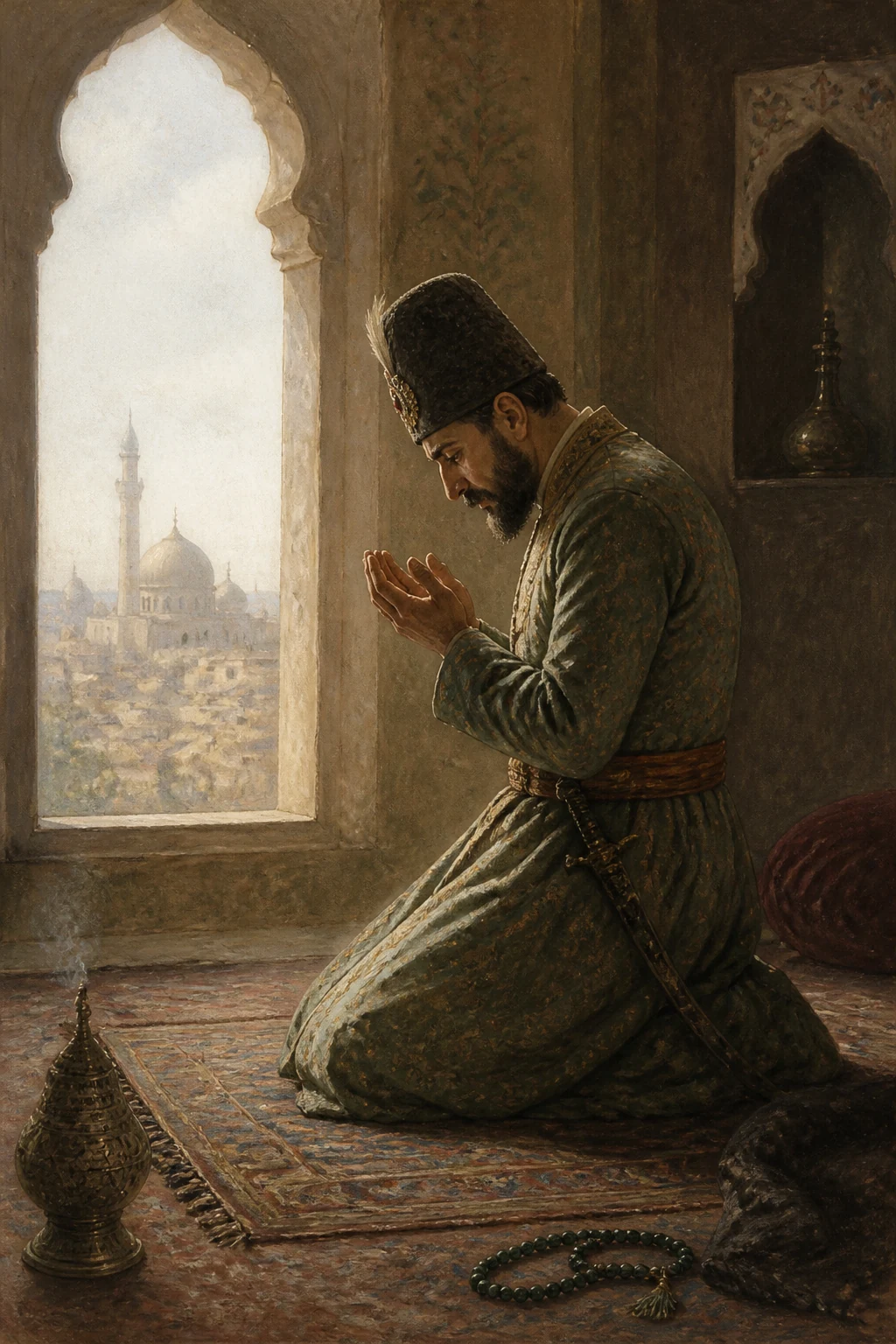
The last Shah of Persia, who, as everyone knows, died at the hands of a fanatic, had a chapter in his history known to very few, and I too would have remained ignorant of it had it not been told to me by an English traveller, one of those intrepid, tireless women who explore the remotest corners of the globe with wonder and curiosity. How Miss Ada Sharpthorn—for such is the Englishwoman’s name—contrived to gain the Shah’s confidence, and almost become his confidante, to enter the secluded splendour of his palace and come to know his intimates, dignitaries, courtiers, and generals, is a difficult matter to fathom. Yet Miss Ada certainly employed no reprehensible means to attain this end, for in this courageous explorer, decency and propriety of habits vie with the strictness of her moral judgement and the delicacy of her conduct. If Miss Ada enjoyed privileges unknown in Persia, they must be attributed to the tenacity the Anglo-Saxon race knows how to exert in pursuit of its aims—a tenacity that is making that race master of the world.
Miss Ada told me the episode I am about to relate on the afternoon of Maundy Thursday, as we walked through the streets of Avila, making our visits to the churches. In those streets, which still recall the Spanish Middle Ages in so many ways, the name of Persia sounded like that of some fantastic country out of a minstrel’s legend or an old ballad; it was hard to believe it existed. Perhaps Persia’s very unreality in the peaceful atmosphere of Saint Teresa’s city heightened the interest of the strange memories of travel Miss Ada evoked, which I shall try to set down on paper without altering them.
“Nasreddin,” the Englishwoman began, “was an absolute monarch, whom his subjects called the Shadow of God, and who held unconditional sway over their property and their lives. I do not know whether Persia’s internal system of government has since changed; at that time—and these are quite recent days—there was no law there but Nasreddin’s all-powerful will. To his subjects’ greater misfortune, the Shah knew nothing of Christianity, or rather, wished to know nothing of it, nor would he allow any opinion departing from the code of Muhammad to be spread throughout his dominions. Perhaps he understood that Christ our Lord is the true enemy of despots, and that freedom and human dignity had their cradle in the humble stable at Bethlehem.
“This very intransigence towards our holy religion prompted me to see whether I could draw the Shah into controversy, so as to combat his errors. Taking advantage of the unusual kindness with which he received me, I devoted myself to instructing Nasreddin in the faith, and, seeking the vulnerable point in his pride, began by depicting the glory and prosperity of Christian nations such as France and Great Britain, superior even in the arts of war to nations subject to Muslim fanaticism. My arguments seemed to make an impression on the monarch; sometimes I saw him grow thoughtful, stroking his intensely black, pointed beard, his long eyes with their jet-black lashes fixed upon the imaginary point of meditation. He was no fool; certain ideas stirred him to reflection; certain questions forced themselves upon him despite his Oriental indolence and his pride as the absolute master of many millions of rational beings. After a while he would generally answer me slowly, in correct English, with a certain inflection of contempt in his deep, resonant voice:
“‘I shall never be persuaded that nations which bow down before a humble God, put to death in a shameful execution, can be heroic and manly. God’s great attribute is power and strength. The only explanation I can find for this enigma is that your nations call themselves Christian without truly being so, and when they cast cannon and launch ironclad ships, they deny their God in deeds, though they acknowledge him in words. It is because they deny him that they have achieved their present supremacy. If they kept to the letter of their faith as we keep to ours, we would plant our feet upon their throats.’
“When Nasreddin spoke to me in this way, he left me confounded. I belong to the leagues for disarmament and universal peace, and I place more trust in the power of love and brotherhood than in all the armies of Europe combined. But how was I to make a barbarian understand the truth—and a barbarian who believed himself a demigod? Nevertheless, I tried. In my own way, using such arguments as my conviction suggested, I made him understand that even material force must rest upon moral strength, and that without a foundation of justice and reason all sovereignty crumbles. Then, turning to our God, I assured him that the very fact of his having suffered and died as he did was a glorious manifestation of his divine nature. Shaking his head, the Shah answered me with this atrocity:
“‘Every day, one or many of my subjects perish in the very manner in which your Prophet died. And even so we cannot manage to put an end to the pernicious sect of the Babis, whose doctrines resemble those of your Gospels.’
“I confess,” Miss Ada exclaimed at this point, “that so horrible a declaration overwhelmed me, and I was on the verge of bursting into invective against the tyrant. I restrained myself with difficulty, and suddenly Nasreddin, as though he had forgotten the turn our conversation had taken, announced that a theatrical performance would be held in the palace gardens the following day, and that he invited me to attend.
“These dramatic performances are a favourite entertainment among the Persians, and all travellers describe them: they take place at night, by the light of little lamps and lanterns and blazing torches, and nature herself provides the backdrop. A curtain of trees, a bed of flowers, a fountain, a delicate pavilion form the scenery. Accustomed though I was to attending such performances, I was nevertheless surprised by the appearance of the stage and the spectacle presented by the gathering. In front stood armchairs for the Shah and his high dignitaries; behind them, the servants and the multitude of officials and parasites who swarm through the palace, infesting its galleries, cloisters, courtyards, and halls. On the left was a kind of gallery or box enclosed by wooden latticework, gilded and brightly painted, from which Nasreddin’s wives watched the performance, hidden from every eye. I noted with surprise that no diplomats had been invited; I was the only foreigner. My armchair, placed very close to the sovereign, though a little behind him, occupied a position of great honour.
“As the performance began, from its very first scenes, I felt a shudder. I could not understand the language in which the actors spoke, a kind of highly literary, archaic Persian dialect—the very same beautiful, sonorous speech used by the poet Ferdowsi. Yet even without understanding the words, I seemed to grasp their meaning, and even felt it was familiar to me, like something I had heard a thousand times and cherished as often in my heart. The scenes of the drama recalled intimate things, seen, as it were, through a cloudy, broken pane that distorted objects, altering their colours and features without entirely concealing them. At the end of the first act—let us call it that; the transition consisted of stretching a sumptuous cloth across the front of the stage and letting it fall five minutes later—while we were being offered great trays laden with sweets, refreshments, and sorbets, I suddenly saw clearly: the subject of the drama was nothing less than the life of Jesus Christ, interpreted in the Persian manner.
“An involuntary sadness took hold of me. I feared some profanation, some mockery, some outrage that would wound my feelings and might even oblige me to show disrespect to the monarch by rising and withdrawing. In a low voice I asked him whether he thought I could remain there; the Shah reassured me with a slow inclination of his head, then turned towards me and murmured gravely, with all his Oriental majesty:
“‘Fear no offence to your faith, or to your great Prophet.’ And indeed, the principal episodes of the sacred Life unfolded, interpreted with varying degrees of naïveté and strangeness, but with a profound sense of reverence and sympathy for the Saviour of mankind. Jesus appeared as a child, playing in the forecourt of the Temple; then we saw him preaching to the multitudes; we witnessed the temptation on the mountain, the dialogue with Eblis, the spirit of evil; and at last, in the third act, we entered fully into the drama of the Passion, when Jesus was taken prisoner in the Garden. This was not accomplished without a fierce and bitter battle between the disciples and the guards, all armed to the teeth with khanjars, daggers, English pistols, and muskets, which they fired until their powder was exhausted. This part of the performance, an amusing anachronism, seemed to delight the audience most of all. There could be no doubt that the villains’ parts were played by the enemies of Jesus; this was apparent even in the actors’ dress and make-up, which made them look sinister, ferocious, and thoroughly repellent.
“At the beginning of the fourth act, which was to be the last, the actor playing Jesus appeared bound to a jasper column, and the scourging scene began, setting my nerves on edge from the very first instant. I supposed it was a theatrical illusion, yet even so I started in my seat and discreetly covered my eyes with my handkerchief. The actor was a young man of about twenty-eight, with noble Semitic features; he wore his black hair long and arranged in curls, and in the temptation scene, as he spoke with Eblis, his voice had held notes of dignity, disdain, and gentleness that moved even those of us who could not understand the words. Now, bound to the red pillar, his torso bare and his face breathing a mysterious fervour, a thirst for suffering, he revealed himself as a tragic actor of genius—so true was his pretence, so expressive the force of his bearing. For that very reason I did not wish to look at him: he moved me too deeply. The whistle of ropes and whips rent the air; I heard the sound they made as they struck living flesh, and even caught a stifled groan that seemed involuntary... And the Shah’s voice, his commanding tone, grave yet courteous, forced me to attend against my will, as he said in English, with an ironic inflection:
“‘Do not refuse to look. What is happening there is no pretence, but reality itself. See for yourself how easy it is to suffer with resignation, and even with joy. The part of your Prophet is being played to the life, and without protest, by a Babi condemned to death... You will see him crucified afterwards.’
“The cry I uttered must have been terrible, for the executioners stopped, and Nasreddin transfixed me with a stern, sombre, imposing glance. Another woman might have quailed; but an Englishwoman, in such a case, draws from her racial pride and her Christianity strength enough not to falter, even if the whole world should fall upon her. I do not know what I said to the Shah: first, I believe, I announced a crusade of the civilised nations against his kingdoms and his power, and foretold human vengeance and the wrath of Heaven. But as the tyrant remained unmoved, still resolute and clinging to his cruelty, inspiration told me that the cause of Jesus must be upheld through pity and tears. Suddenly throwing myself at Nasreddin’s feet, I seized his hands, covered with magnificent rings, kissed them, bathed them in tears, held them fast and pressed them, until a voice, which seemed to me to have descended from Heaven, murmured almost in my ear:
“‘Rise, foreigner. Your wish shall be granted. I give you that dog’s life.’ I do not know what I answered. My transports of joy must have been such that the Shah’s grave, pale face was lit by a fleeting smile, and his right hand, sprinkled with my tears, which glittered upon his jewelled rings, stretched forth in a commanding gesture, instantly understood by those who were torturing the unfortunate man, already covered in blood. That silent gesture granted him not only life, but freedom, and in the excess of my joy I burst into tears again...”
At this point the Englishwoman fell silent, and I could only ask: “And what became of the man you saved?” “That man...” Miss Ada faltered, “two years later... murdered Nasreddin... Yes, the very same man, the one who had been pardoned!... You see how there is but one truth in the world, the truth of Jesus... To a Christian, a man who had shown mercy, if only once, would be sacred. And ever since then, especially during these days of Holy Week, I always pray for the man who gave me a life; I beseech God as I beseeched the absolute king, who at last heard me and relented... Perhaps praying for Nasreddin is an illusion, but it is an illusion that consoles me.”
“And for the murderer—do you not pray for him?” I asked as we stopped before the cathedral’s beautiful portal. “I must do that too!” Miss Ada exclaimed, after a moment’s hesitation.
Izvirnik
018 La oración de Semana Santa
Naslednje strani prikazujejo izvirno besedilo za primerjavo.
El último chá de Persia, que, según nadie ignora, murió á manos de un fanático, tuvo en su historia una página de muy pocos conocida, y yo la ignoraría también á no referírmela una viajera inglesa, de esas mujeres intrépidas é infatigables que registran con emoción y curiosidad los más apartados confines del planeta. Cómo se las arregló miss Ada Sharpthorn (que así se llama la inglesita) para obtener la confianza y casi la privanza del chá, y penetrar en la cerrada magnificencia de su palacio y conocer íntimamente á sus allegados, áulicos, cortesanos y generales, es punto de difícil investigación; pero seguramente, al aspirar á este resultado, no se valió miss Ada de ningún medio reprobable, pues compiten en esta valiente exploradora la decencia y pulcritud de las costumbres con la austeridad del criterio moral y la delicadeza de la conducta. Si miss Ada gozó privilegios desconocidos en Persia, debe atribuirse á la tenacidad que sabe desplegar la raza anglo-sajona para conseguir sus propósitos--tenacidad que va haciendo á esa raza dueña del mundo.
Contóme miss Ada el episodio que voy á narrar la tarde del Jueves Santo, mientras recorríamos las calles de Avila visitando Estaciones. En aquellas calles que todavía recuerdan por varios estilos la Edad media española, el nombre de Persia sonaba como el de un país fantástico, de juglaresca leyenda ó de romance tradicional; costaba trabajo admitir que existiese. Quizás la misma irrealidad de Persia en la pacífica atmósfera de la ciudad teresiana, acrecentó el interés de los extraños recuerdos de viaje que evocaba miss Ada, y que intentaré trasladar al papel sin alterarlos.
«Nasaredino--empezó la inglesa--era un monarca absoluto, á quien sus vasallos llamaban sombra de Dios, y que disponía de haciendas y vidas, con dominio incondicional. No sé si ahora se habrá modificado el régimen interior de Persia; entonces--y son épocas bien recientes--no había allí más ley que la omnímoda voluntad de Nasaredino. Para mayor desventura de sus súbditos, el chá no conocía el cristianismo, ó por mejor decir, no quería conocerlo, ni permitía que se propagase en sus Estados opinión alguna que se apartase del código de Mahoma. Quizás comprendía que Cristo nuestro Señor es el verdadero enemigo de los déspotas, y que la libertad y la dignidad humana tuvieron su cuna en el humilde establo de Belén.
»Esta misma intransigencia del chá con nuestra santa religión me incitó á probar si le atraía al terreno de la controversia, á fin de combatir sus errores. Aprovechando la rara amabilidad con que me acogía, me dediqué á catequizar á Nasaredino, y buscando el flaco de su orgullo, comencé por pintarle la gloria y prosperidad de naciones cristianas como Francia y la Gran Bretaña, superiores en las mismas artes de la guerra á las naciones sujetas al fanatismo musulmán. Mis argumentos parecían hacer mella en el monarca; á veces le ví quedarse pensativo, acariciando la negrísima y puntiaguda barba, con los rasgados ojos de pestañas de azabache fijos en el punto imaginario de la meditación. No era un necio; ciertas ideas le movían á reflexionar; ciertos problemas se le imponían á pesar suyo, al través de su oriental indolencia y su soberbia de dueño absoluto de muchos millones de seres racionales.--Despaciosamente, en correcto inglés, solía, transcurrido un rato, contestarme, no sin alguna inflexión de desprecio en su voz grave y bien timbrada:
--»Jamás me convenceré de que sean heroicas y viriles naciones que se postran ante un Dios humilde, muerto en un suplicio afrentoso. El gran atributo de Dios es el poder y la fuerza. La única explicación que encuentro á ese enigma es que vuestras naciones se llaman cristianas sin serlo realmente, y cuando funden cañones y botan al agua barcos blindados, niegan á su Dios con los hechos, aunque le reconozcan con la palabra. Y porque lo niegan han logrado el predominio que ejercen. Si se atuviesen á la letra de su fe, como nos atenemos nosotros á la nuestra, nosotros les pondríamos la planta del pie sobre la garganta.
»Al hablarme así Nasaredino, dejábame confusa. Pertenezco á las Ligas del desarme y de la paz universal, y confío más en la energía del amor y de la fraternidad, que en todos los ejércitos de Europa reunidos. Mas ¿cómo hacer entender la verdad á un bárbaro, y á un bárbaro que se cree un semidiós? Sin embargo, lo intenté. A mi manera, empleando los razonamientos que me sugirió la convicción, le dí á entender que la misma fuerza material necesita fundarse en la moral, y que sin base de derecho y razón se derrumba toda soberanía. Y pasando á tratar de nuestro Dios, le afirmé que precisamente el haber sufrido y muerto como murió fue esplendorosa muestra de su sér divino. El chá, moviendo la cabeza, me contestó entonces esta atrocidad:
--»De esa misma manera que pereció tu Profeta, sucumbe todos los días alguno ó muchos de mis vasallos. Y ni aun así conseguimos acabar con la perniciosa secta de los babistas, cuyas doctrinas se asemejan á las de vuestros Evangelios.
»Lo confieso--exclamó miss Ada al llegar á este punto:--tan horrible declaración me trastornó, y estuve á pique de prorrumpir en invectivas contra el tirano. Me reprimí trabajosamente, y Nasaredino, de pronto, como si se hubiese olvidado del giro de la conversación, me anunció que al día siguiente se verificaría una representación teatral en los jardines de palacio, y que me convidaba á ella.
»Son estas funciones dramáticas espectáculo favorito de los persas, y todos los viajeros las describen: se celebran de noche, á la luz de los farolillos y linternas y de las hachas encendidas, y el telón de fondo lo da hecho la naturaleza: una cortina de árboles, un macizo de flores, una fuente, un ligero kiosco, constituyen la decoración. Habituada á asistir á tales funciones, me sorprendió, sin embargo, el aspecto del escenario y el golpe de vista del concurso. En primer término, sillones para el chá y los altos dignatarios: detrás, la servidumbre, la multitud de funcionarios y parásitos que pululan en el palacio infestando sus galerías, claustros, patios y salones. A la izquierda, una especie de tribuna ó palco cerrado por rejas de madera dorada y pintada de colorines--desde el cual presenciaban la función, ocultas á los ojos de todos, las esposas de Nasaredino.--Con extrañeza noté que no se había invitado á ningún diplomático; la única extranjera, yo. Mi sillón, colocado muy cerca, aunque un poco atrás del soberano, era un puesto altamente honorífico.
»Al empezar la representación, desde las primeras escenas, percibí un estremecimiento. Yo no podía entender el idioma en que se expresaban los actores, y que es una especie de dialecto persa muy literario y arcaico--el habla misma, bella y sonora, que empleó el poeta Firdusi;--pero aun sin inteligencia de las palabras, me parecía darme cuenta del sentido, y hasta creía que era familiar para mí, como algo que hubiese escuchado mil veces, y otras tantas llevado en mi corazón. Las escenas del drama me recordaban cosas íntimas, vistas, por decirlo así, al través de un vidrio turbio y roto que desfiguraba los objetos, alterando sus colores y rasgos sin ocultarlos enteramente.--Al final del primer acto (llamémosle así; la transición consistía en extender un riquísimo paño por delante del escenario, y dejarlo caer á los cinco minutos), y mientras nos presentaban amplias bandejas cargadas de golosinas, refrescos y sorbetes, de súbito vi claro: el asunto del drama no era sino la vida de Jesucristo, interpretada á estilo persa.
»Se apoderó de mí una tristeza involuntaria. Temía una profanación, una burla, cualquier desmán que hiriese mis sentimientos, y hasta que pudiese obligarme á faltar al respeto al monarca levantándome y retirándome. En voz baja le pregunté si creía que me sería posible permanecer allí; y el chá, con lenta inclinación de cabeza, me tranquilizó; después, volviéndose hacia mí, murmuró seriamente, con toda su oriental majestad:
--»No temas ofensa alguna para tu fe, ni para tu gran Profeta.
»En efecto, las páginas principales de la sagrada Vida iban desarrollándose más ó menos ingenua y peregrinamente interpretadas, pero con profundo sentido de veneración y de simpatía hacia el Salvador de los hombres. Jesús aparecía niño, jugando en el atrio del templo; después le veíamos predicar á las multitudes; presenciábamos la tentación en la Montaña, el diálogo con Eblis, genio del mal, y por último, en el tercer acto, penetrábamos de lleno en el drama de la Pasión, al ser preso Jesús en el Huerto, no sin que se trabase ruda y encarnizada batalla entre los discípulos y los sayones, que todos iban armados hasta los dientes, con kanjiares, puñales, pistolas inglesas y espingardas, y dispararon hasta agotar la pólvora, siendo esta parte de la función, gracioso anacronismo, lo que más parecía entusiasmar al auditorio. Era indudable que el papel de traidores lo desempeñaban los enemigos de Jesús, lo cual se traslucía hasta en el modo de vestirse y de caracterizarse los actores, siniestros y feroces, antipáticos de veras.
»Al principiar el acto cuarto, que debía ser el último, el actor que desempeñaba el papel de Jesús apareció atado á una columna de jaspe, y empezó la escena de la flagelación, que desde el primer instante me crispó los nervios. Supuse que se trataba de un juego escénico, pero así y todo salté en el asiento, y me tapé los ojos con el pañuelo disimuladamente. Era el actor un hombre joven, como de unos veintiocho años, de noble tipo semítico; llevaba los negros cabellos crecidos y partidos en bucles, y en la escena de la tentación, dialogando con Eblis, había tenido acentos llenos de dignidad, de desdén y de dulzura, conmovedores hasta para los que no entendíamos los conceptos. Ahora, amarrado á la roja estela, con el torso desnudo y el rostro respirando un entusiasmo misterioso, una sed de sufrir, revelábase sin duda como trágico genial--tanta era la verdad de su ficción, la expresiva fuerza de su actitud.--Por lo mismo no quería verle: me conmovía demasiado. El silbido de las cuerdas y de los látigos rasgó el aire; escuché cómo sonaban al herir la carne viva, y hasta oí un sofocado gemido, que semejaba involuntario... Y la voz del chá, su acento de mando, grave y sin embargo cortés, me obligó á atender á pesar mío, diciéndome en inglés, con irónica entonación:
--»No te niegues á mirar. Lo que sucede ahí no es farsa, sino la realidad misma. Persuádete de lo fácil que es padecer resignadamente y hasta con gozo. El papel de tu Profeta lo está desempeñando á lo vivo y sin protestar un babista condenado á muerte... Ya le verás crucificar después.
»El grito que exhalé debió de ser terrible; como que se detuvieron los verdugos, y Nasaredino me fulminó una ojeada severa, tétrica, imponente. Otra mujer se hubiese acobardado; pero una inglesa, en caso tal, saca de su orgullo de raza y de su cristianismo fuerza bastante para no arredrarse aunque se le viniese encima el mundo. No sé lo que dije al chá: primero creo que le anuncié una cruzada de las naciones civilizadas contra sus reinos y su poder, y le vaticiné venganzas humanas y cóleras del cielo; mas como el tirano permaneciese impasible y aún firme y aferrado á su crueldad, una inspiración me sugirió que la causa de Jesús ha de sostenerse por medio de la piedad y de las lágrimas, y arrojándome de súbito á los pies de Nasaredino, cogiendo sus manos llenas de anillos magníficos, las besé, las mojé con llanto, las sujeté, las apreté, hasta que una voz, á mi parecer descendida del cielo, murmuró casi en mis oídos:
--»Levántate, extranjera. Serás complacida. Te regalo la vida de ese perro.
»No sé lo que respondí. Debieron de ser extremos de júbilo tales, que el grave y pálido rostro del chá se iluminó con una fugitiva sonrisa, y su mano derecha, salpicada de mi lloro, que resplandecía sobre las sortijas de piedras, se extendió en imperativo ademán, comprendido instantáneamente por los que torturaban al desdichado, ya cubierto de sangre. No era sólo la vida, era la libertad lo que le otorgaba aquel gesto mudo, y en el exceso de mi alegría, echéme á llorar otra vez...»
Al llegar aquí guardó silencio la inglesa, y yo sólo acerté á preguntar:
--¿Y qué fue del hombre á quien usted salvó?
--Ese hombre...--balbuceó miss Ada,--dos años después... asesinó á Nasaredino... ¡Sí, el mismo, el perdonado!... Ya ve usted cómo no hay en el mundo sino una verdad, que es la verdad de Jesús... Para un cristiano, sería sagrado el hombre que supo perdonar, siquiera una vez. Y yo, desde entonces, particularmente estos días de Semana Santa, rezo siempre por el que me regaló una vida; imploro á Dios como imploré al rey absoluto, que al fin me escuchó y se ablandó... Tal vez sea una ilusión rezar por Nasaredino, pero ilusión que me consuela.
--Y por el matador, ¿no reza usted?--interrogué cuando nos detuvimos ante el bello pórtico de la catedral.
--¡También debo hacerlo!--exclamó miss Ada después de vacilar un instante.
Nadaljuj z branjem