Prevod
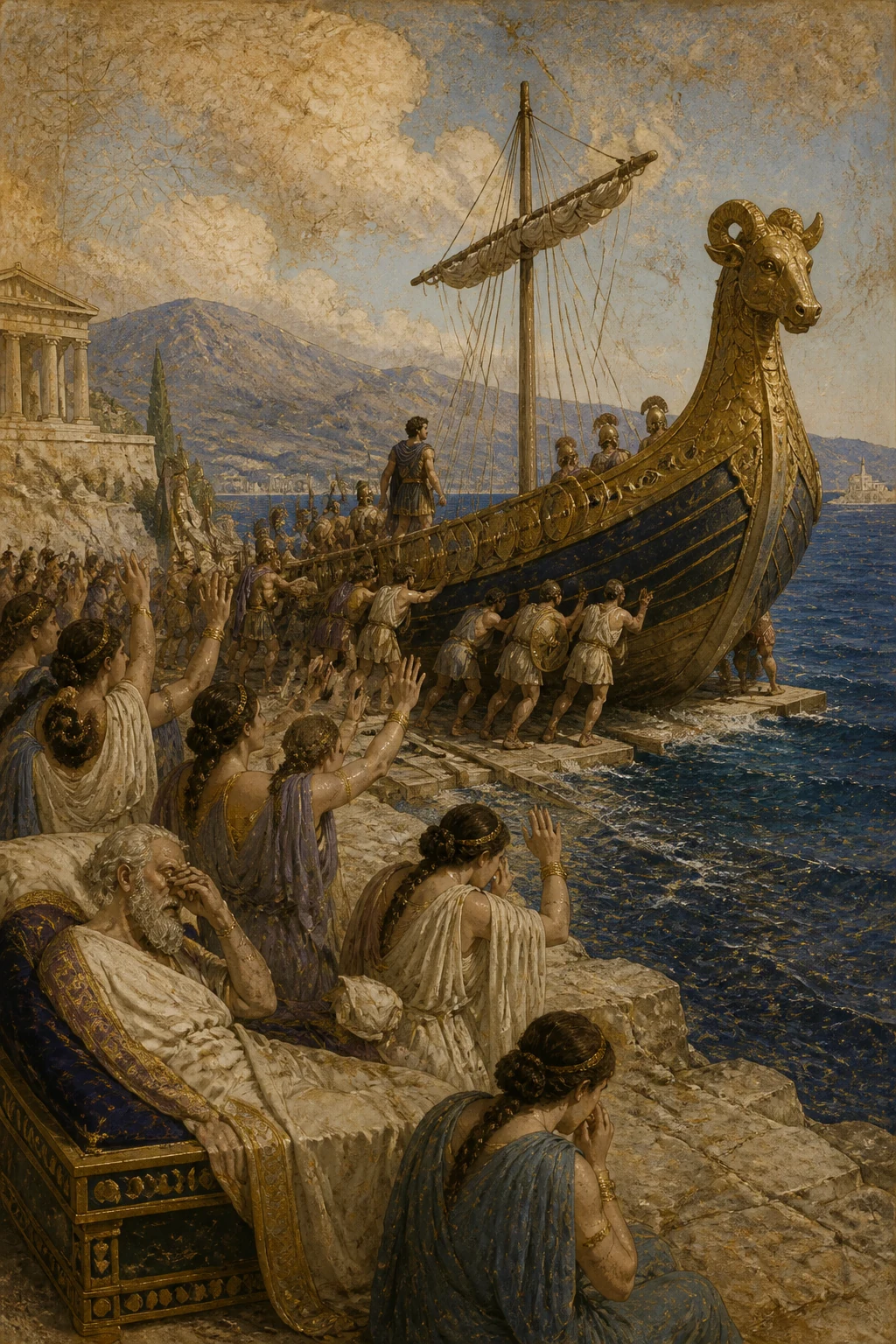
It is also related that among the Children of Israel there lived a man of great wealth and virtue, who had a good and blessed son. When death drew near, his son sat at his head and said, “My lord, give me your counsel.” He replied, “My son, never swear by God, whether truthfully or falsely.” Then the man died, and his son lived on after him. The wicked among the Children of Israel heard of this, and one after another would come to him and say, “Your father owed me such and such a sum, as you well know. Pay me what he owed, or swear an oath.” The young man held fast to his father’s counsel and gave each claimant all he asked. They persisted until his wealth was gone and he was reduced to dire poverty. Now he had a good and blessed wife, and by her two little sons. He said to her, “People have beset me with their claims. So long as I had anything with which to fend them off, I gave it, but now we have nothing left. If another claimant comes, you and I will be sorely tried. It would be better to save ourselves and go somewhere no one knows us, and live among the people there.” So he took her and his two sons aboard a ship, not knowing where he was bound. God decrees, and none can reverse His decree; and their plight seemed to say:
O you who leave your home in fear of foes, ease may come to meet you as you flee. Do not despair at exile’s long remove: a stranger may find honor far from home. Had the pearl remained within its shell, a royal crown would never be its dwelling. Now the ship was wrecked, and the man escaped upon a plank, the woman upon another, and each of the two boys upon a plank of his own. The waves scattered them: the woman reached one town, one of the boys another, while the other boy was picked up by the people of a ship at sea. As for the man, the waves cast him upon a remote island. He went ashore, performed his ablutions with seawater, called the faithful to prayer, and began his devotions. But morning overtook Shahrazad, and she fell silent, leaving her tale untold.
When it was the four hundred and eightieth night,
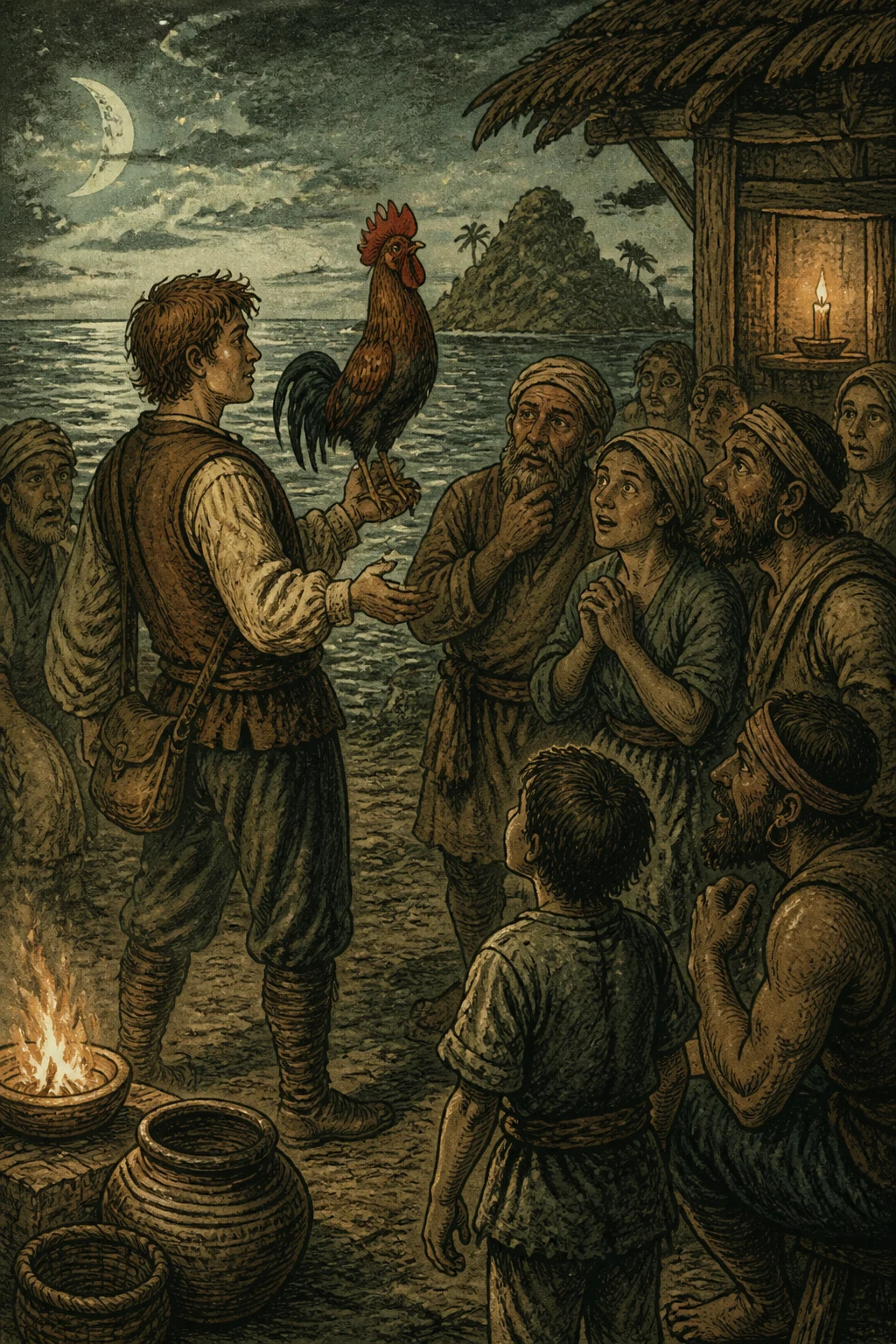
She said: It has reached me, O fortunate King, that when the man came ashore upon the island, he performed his ablutions with seawater, called the faithful to prayer, and began his devotions. Then figures of various colors emerged from the sea and prayed with him. When he had finished, he went to a tree on the island and ate of its fruit until his hunger was appeased. Then he found a spring, drank from it, and praised God, mighty and glorious. For three days he continued to pray, and people came forth to pray as he did. When the three days had passed, he heard a voice calling to him: “O righteous man, faithful to your father and reverent toward your Lord, do not grieve. God, mighty and glorious, will restore to you what you have lost. On this island are treasures, riches, and things of value which God intends you to inherit. They lie in such and such a place upon the island. Unearth them, and we shall bring ships to you. Treat people generously and invite them to come to you, for God, mighty and glorious, will incline their hearts toward you.” He went to that place on the island, and God Most High revealed the treasures to him. People began arriving in ships, and he treated them with great generosity, saying, “Perhaps you will tell others of me. I shall give them such and such, and provide them with this and that.” So people came from every region and country, and before ten years had passed, the island was flourishing and the man had become its king. No one sought refuge with him without receiving his kindness, and his fame spread far and wide. Meanwhile, his elder son had fallen into the care of a man who taught him and gave him a sound education. The younger had come into the hands of a man who brought him up well and taught him the ways of trade. The woman had found shelter with a merchant who entrusted her with his wealth and pledged never to betray her trust, but to help her in her obedience to God, mighty and glorious. He took her with him aboard his ship on his voyages to other lands, and she accompanied him wherever he went. The elder son heard of the king’s fame and sought him out, not knowing who he was. When he came before him, the king took him into his service, entrusted him with his secrets, and made him his secretary. The other son also heard of this just and righteous king and journeyed to him, likewise unaware of his identity. When he came before him, the king appointed him to oversee his affairs. They remained in his service for some time, none of the three knowing the others for who they were. The merchant with whom the woman lived heard of the king, of his kindness to people and his generosity toward them. He gathered some fine garments and rare curiosities from other lands, and sailed with the woman until he reached the island’s shore. Going ashore, he presented himself to the king and offered him his gift. The king examined it and was greatly pleased, and ordered a handsome reward for the merchant. Among the gifts were medicinal substances whose names and uses the king wished the merchant to explain, so he said to him, “Stay with us tonight.” But morning overtook Shahrazad, and she fell silent, leaving her tale untold.
When it was the four hundred and eighty-first night,
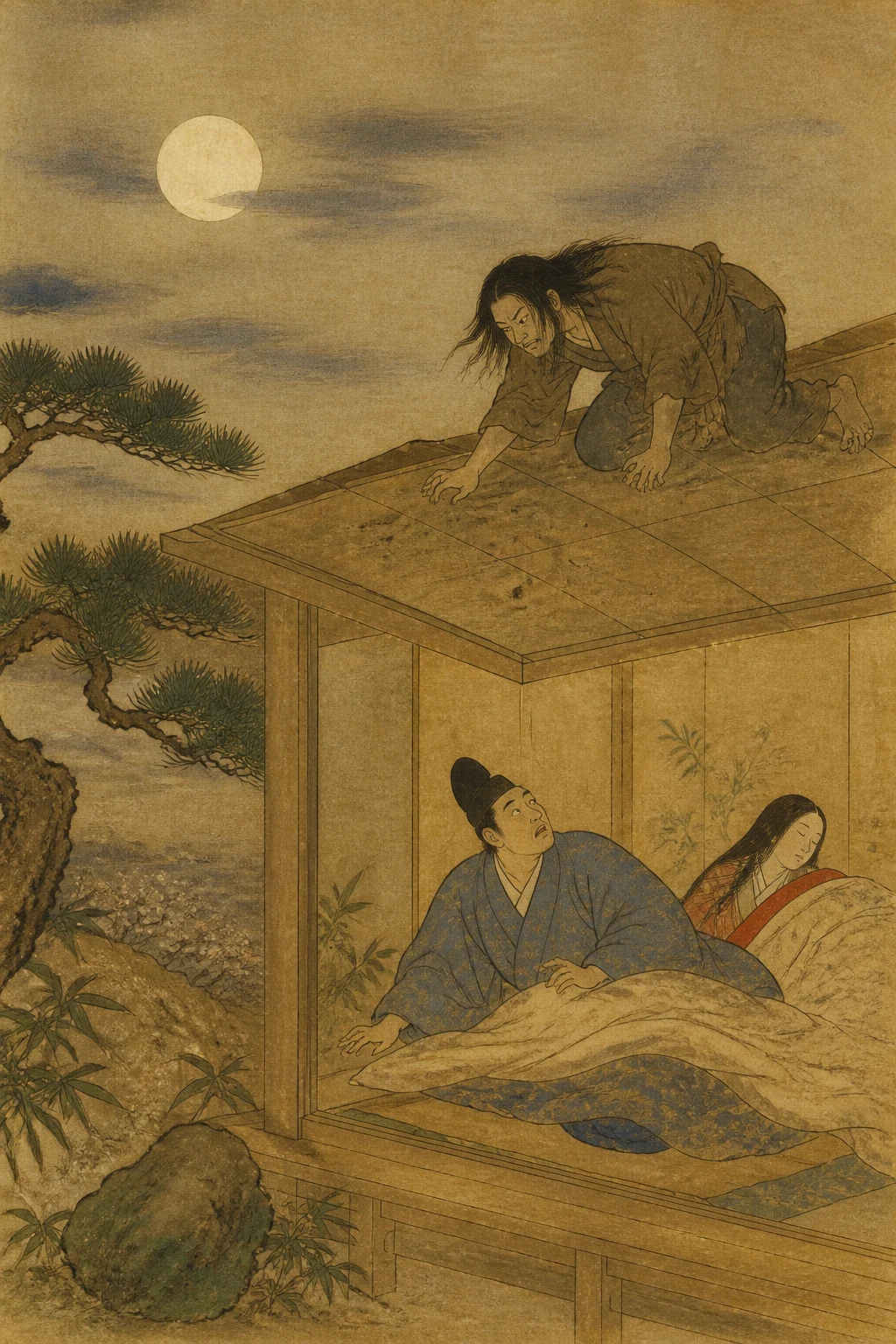
She said: It has reached me, O fortunate King, that when the king said to the merchant, “Stay with us tonight,” he replied, “Aboard my ship I have someone entrusted to my care, whom I have pledged never to leave in another’s charge. She is a righteous woman whose prayers have brought me good fortune, and whose counsel has proved a blessing.” The king said, “I shall send trustworthy men to spend the night watching over her and guarding all that she has.” The merchant agreed and remained with the king, who sent his secretary and his steward to her, saying, “Go and guard this man’s ship tonight, if God Most High wills.” They went aboard the ship, and one sat at the stern and the other at the bow. For part of the night they occupied themselves with the remembrance of God, mighty and glorious. Then one said to the other, “My friend, the king has ordered us to keep watch, and we must beware of falling asleep. Come, let us tell each other of the turns of fortune, and of the blessings and trials we have known.” The other replied, “Brother, among my trials was this: fate parted me from my father and mother and a brother whose name was the same as yours. It happened when our father took us to sea from such and such a town. The winds rose against us, blowing from every quarter, and wrecked the ship, and God scattered us.” When the other heard this, he said, “What was your mother’s name, brother?” He told him her name. “And your father’s?” He told him his father’s name. At this, his brother flung himself upon him, saying, “By God, you truly are my brother!” Each began to tell the other what had happened to him as a child. Their mother heard their words, but concealed her identity and restrained herself. When dawn broke, one said to the other, “Come, brother, let us talk at my house.” “Yes,” the other replied, and they went away. Then the merchant came and found the woman in great distress. “What has befallen you?” he asked. “What has happened?” She replied, “Last night you sent me two men who meant me harm, and I suffered great anguish because of them.” The merchant grew angry and went to the king, telling him what the two trusted men had done. The king summoned them at once. He loved them both, having found them honest and devout. Then he ordered the woman to be brought, so that she might tell him to their faces what they had done. When she was brought before him, he said, “Woman, what did you see of these two trusted men?” She replied, “O King, I beseech you by Almighty God, Lord of the Glorious Throne, to command them to repeat what they said last night.” The king said to them, “Repeat what you said, and conceal nothing.” They told their story again, and suddenly the king rose from his throne with a great cry, flung himself upon them, and embraced them, saying, “By God, you truly are my sons!” Then the woman unveiled her face and said, “And by God, I am their mother!” Thus they were all reunited and lived in the sweetest happiness and ease until death swept them away. Glory be to Him who delivers the servant who turns to Him, and never disappoints the hopes placed in Him! How beautifully it has been said:
For everything there is an appointed time; all matters, brother, may be erased or confirmed. Do not despair at a calamity that strikes you: signs have come to us that ease follows hardship. Many a sorrow shows its hurt by night, yet hides within itself a store of joys. Many a man despised by all who see him has risen from humiliation, clothed in honor. Here was a man whom anguish overtook, whom suffering assailed and disasters beset; time scattered his beloved companions, and after long together, all were torn apart. His Lord bestowed good fortune on him, then brought them back; in all of this are signs that point toward the Lord. Glory be to Him whose power embraces all creation, whose nearness is proclaimed by every sign! He is the Near, yet no mind can conceive His nature, nor can distances bring one closer to Him.