Waltey
Hladna palača
Cuentos de la Patria
Cuentos de Navidad, de la patria y antiguos · Emilia Pardo BazánO besedilu
Hladna palača
- Vir
- Cuentos de Navidad, de la patria y antiguos
- Avtor
- Emilia Pardo Bazán
- Jezik branja
- English
- Jezik izvirnika
- Español
- Čas branja
- 8 min branja
- Obseg
- 7 strani
- Naslov izvirnika
- 025 El Palacio frío
O izvirniku
Cuentos de Navidad, de la patria y antiguos
Sedemintrideset avtorskih zgodb v treh zgodovinskih knjižnih skupinah. Bralni jezik je English, izvirnik pa prihaja iz vira Cuentos de Navidad, de la patria y antiguos v jeziku Español.
Besedilo
Hladna palača
Do you remember that ailing princess, the daughter of the king of Magna, whom an old man cured as if by magic by showing her a certain very lovely panorama? Well, you must know that, many years later, the sceptre of Magna passed to a son of this princess, and this son, under the name of Basilio XXVII, reigned gloriously for more than a quarter of a century. The traces of his time upon the throne survive in several grand and venerable monuments, which archaeologists today study with particular interest, debating whether the distinctive style of these buildings was an invention belonging exclusively to the twenty-seventh Basilio, or whether it arose from his mother’s influence, and perhaps even went back to his grandfather’s. Twelve bulky books and some sixty exceedingly learned monographs have been written on this point.—What particularly set the scholars knocking their heads against the wall were certain imposing ruins known in popular tradition as the Cold Palace. Until quite recently, no one had managed to discover the origin of this name, which contrasts so strangely with the appearance of what remains standing.
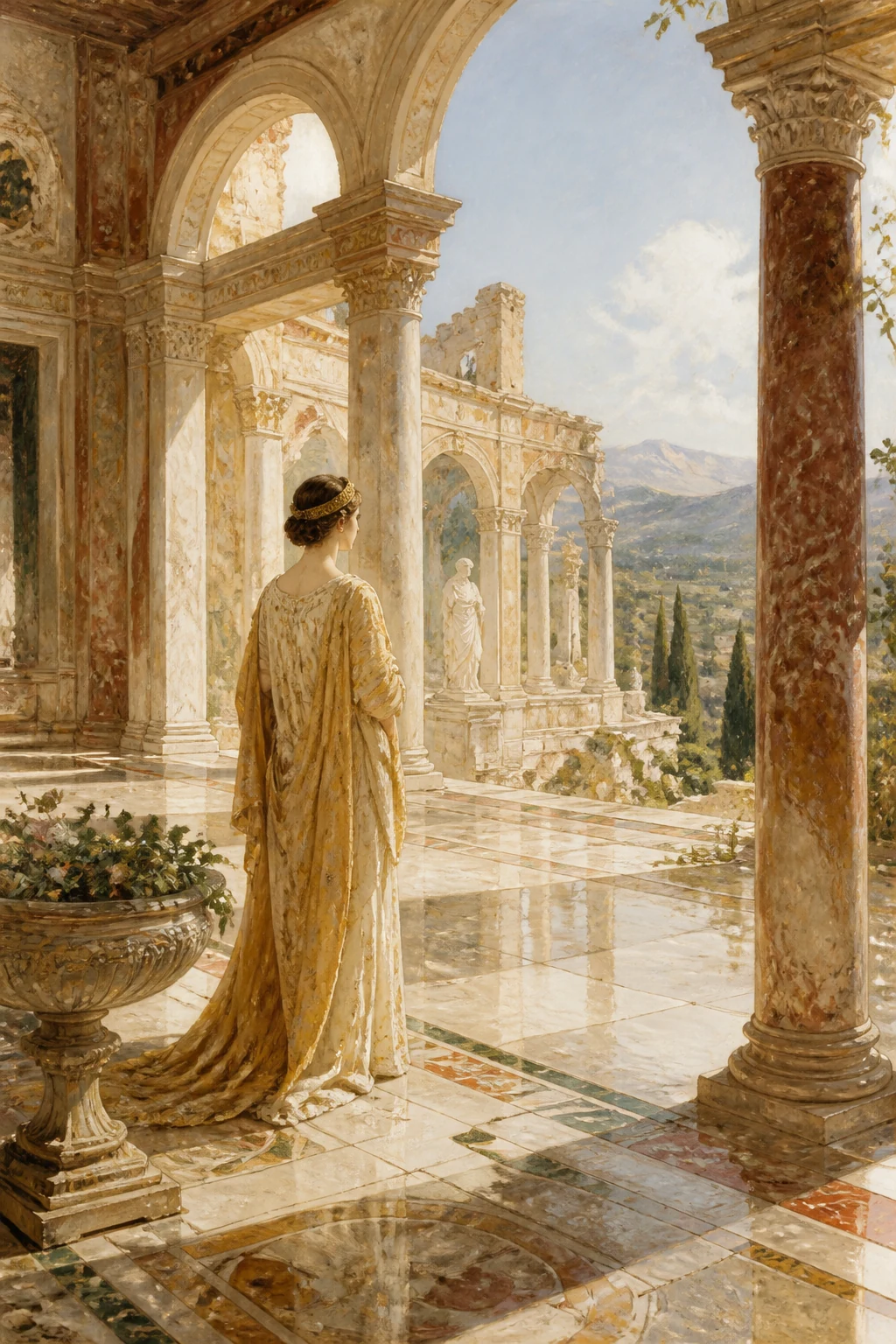
Indeed, the palace, whose surviving galleries, halls, and chambers are adorned with remnants of rich woods and precious marbles and jaspers, seems to have been built by the mother of Basilio XXVII as a haven for happy married love; and its design, its ornamentation, its whole character, in short, are distinctly gracious and cheerful, with the gaiety of a sovereign happiness, splendid and triumphant. Its site, its southern aspect, its position on the most open ground, commanding the loveliest view over the bay and set among little groves of orange, lemon, and pomegranate trees perpetually in bloom, likewise offered no clue as to why it should have been called cold, a name that seems to suggest solemnity and sadness.—The riddle of this tradition came to occupy the mind of Dr. Herr Julius Tiefenlehrer, a German professor of prodigious learning, who resolved to decipher it at all costs. With the unhurried patience of a man who does not begrudge his time, he took up residence in the ruins themselves; and by scraping here, digging there, rummaging in one place and peering into another, he managed to unearth, at the foot of a column in the crypt beneath what had once been the throne room, a small iron chest containing a roll of manuscripts. Dr. Tiefenlehrer very nearly went mad with joy at this priceless discovery, for the manuscripts were nothing less than a set of most elaborate instructions in Basilio XXVII’s own hand, intended for his heirs and successors, to school them in the proper governance of the state and the conduct befitting a monarch. But what above all sent Herr Julius into transports was that, by way of example, Basilio recounted there in detail the history of the Cold Palace. And we, in translating it from the enormous German volume in which the learned professor published it, enriching it with every sort of document, gloss, caution, reference, note, commentary, plan, and comparative study of other traditions of Magna and all the other nations of the world, shall swiftly abridge it and give only the bare account of the strange occurrence that caused the palace of Basilio XXVII to be called cold.
It so happened that when the young Basilio inherited the crown, he found himself in a state of mind resembling the fervour of those entering a religious order, and began to ponder how he ought to conduct himself in order to fulfil his duties and perform to perfection the lofty and arduous task allotted him by destiny. Imbued with a sense of the greatness and even the sanctity of his office, he asked God for light and strength, that his name might pass into history with the halo and prestige of those kings who know how to wield supreme power for the benefit and honour of their country. Yet these excellent intentions foundered upon one difficulty: the king desired the good, but did not know where it lay, what it consisted of, or how he was to go about discovering it.
Such was the state of affairs when, as Basilio pondered how to choose the right course, he began to notice an astonishing phenomenon: inside his palace—that delightful palace built by a queen in love as a dwelling place for happiness, and set in an oasis in the finest part of a country blessed with a naturally mild climate—it was cold, very cold, cruelly cold. The sensation of this cold, at first subtle and almost imperceptible, grew steadily stronger and more penetrating. No one will doubt that the king at once resorted to the usual remedies for a fall in temperature; and the first was to wrap himself up in winter clothes. From the quilted silk greatcoat to the mantle of fine polar-rat fur, a living quilt that creates a soft, warm atmosphere around the body; from the velvet coat with its half-inch pile to the satin covering stuffed with wild-duck down; from the shaggy fleece of a white lamb to the thick woollen blanket, Basilio tried everything he thought might warm him, yet that peculiar cold would not disperse, but grew ever more intense. Despairing now of keeping himself warm with clothing, he hastened to heat the palace. From that time date the splendid, spacious fireplaces that adorn it on every side, in which, night and day, a whole forest of dry wood burned, sending up a thousand tongues and shreds of flame. No other system of heating was known in those days; but this was more than enough to dispel any natural cold that could be explained in human terms. Nevertheless, the cold continued, sharpened, redoubled, penetrating to the very marrow of the king, whose teeth chattered at all hours.
When Basilio XXVII asked his ministers and grandees and the thousand flatterers who swarm around the powerful whether they felt that strange cold as he did, he was driven to despair by hearing them vaguely reply that they did, while at the same time seeing them go about without cloaks and fan themselves as he huddled up, his teeth chattering. The courtiers noticed their sovereign’s displeasure and wished to humour him, and it was a most comical sight to see them pretend that they too were freezing, dressed for the depths of winter and sweating like pigs. And the young king, whose spirit was sincere and loyal, was indignant at this playacting, and regarded his courtiers with profound contempt when he saw that, in so plain and evident a matter, they lied to him and deceived him without fear. Assailed by gloomy misgivings, and seeking the truth from science, Basilio summoned a physician and asked him whether the terrible cold from which he alone suffered might be due to some fatal illness. The learned man reflected, then wished to know whether the king felt the same cold everywhere. Opening a window, he begged Basilio to lean out; and though the king expected to shiver and freeze to death, he found, on the contrary, that the outside air warmed and greatly revived him.
“The solution to this problem does not lie with medicine,” declared the doctor. “Your Majesty is not ill. Consult not me, but your conscience and God; and since you are cold in here and not out there, go out, go out at all hours; live outside this fatal palace.”
And Basilio did indeed go out, fleeing the splendid dwelling where his blood froze, where the marble seemed like blocks of ice and the gilding like sunlight shimmering on the walls of some icehouse. He took to the streets at all hours, delighting in the mild air—and little by little he began to take an interest in his surroundings, studying and coming to understand his subjects’ concerns and needs.—He saw with astonishment that the world was not as his courtiers painted it, and it seemed to him that cobwebs were being swept from his eyes, that his mind was clearing and his wits awakening. A thousand questions he had not understood became clear and transparent; he learned of the people’s needs, heard their grievances, absorbed their aspirations, made their wishes and struggles his own, and entered so fully into the lives of his subjects that his heart came to beat in perfect unison with the great heart of his country, as though the same blood flowed through both, and the same joys and sorrows made them swell and contract. Basilio was enraptured; the only thing that still troubled him was that, whenever he returned to the palace, the cold assailed him once more. And in a moment of inspiration, it occurred to him that, since it was warm outside, perhaps the palace might grow warmer if its doors and windows were thrown wide open to let in the air from outside, the breezes from the streets, and even the people from the streets, the humble folk. He therefore gave the order, and the doors of the royal palace were opened to his subjects. And as the people, respectful and full of love for their good monarch, passed through the magnificent rooms, the miracle came to pass: the ice melted, the air grew soft and mild; the little birds in their aviaries sang, the potted plants burst into bloom, and the sweet breath of spring smiled.—The riddle was solved. Basilio XXVII was never cold in his palace again.
Izvirnik
025 El Palacio frío
Naslednje strani prikazujejo izvirno besedilo za primerjavo.
¿Os acordáis de aquella princesa enferma, hija del rey de Magna, á quien curó como por ensalmo un viejo mostrándola cierto panorama muy lindo? Pues habéis de saber que á la vuelta de muchos años el cetro de Magna vino á recaer en un hijo de esta princesa, y este hijo, bajo el nombre de Basilio XXVII, reinó gloriosamente por espacio de más de un cuarto de siglo, persistiendo la huella de su paso por el trono en varios monumentos grandiosos y venerables, que estudian hoy los arqueólogos con particular interés, discutiendo si el estilo peculiar de tales construcciones es invención que exclusivamente pertenezca al vigesimoséptimo Basilio ó procede ya de la influencia de su madre y quizás se remonta hasta la de su abuelo. Punto es éste acerca del cual se han escrito doce voluminosos libros y cosa de sesenta monografías asaz doctas.--Lo que especialmente hizo darse de calabazadas á los sabios fueron ciertas imponentes ruinas que la tradición popular llama del Palacio frío, sin que hasta hace poco tiempo se consiguiese averiguar el origen de tal nombre, que contrasta con el aspecto de lo que del edificio resta en pie.
En efecto; el palacio, del cual se conservan galerías, salones y estancias que decoran restos de ricas maderas y preciosos mármoles y jaspes, parece haber sido erigido por la madre de Basilio XXVII para asilo de un feliz amor conyugal; y su traza, su adorno, su carácter, en fin, son marcadamente amables y alegres, con la alegría de una dicha soberana, ostentosa y triunfante. El emplazamiento, su orientación al Mediodía, su situación en el punto más despejado y dominando la perspectiva más risueña, sobre la bahía y entre bosquecillos de naranjos, limoneros y granados siempre en flor, tampoco permitían inducir por qué hubo de ser llamado frío, nombre que parece delatar solemnidad y tristeza.--El enigma de semejante tradición llegó á preocupar al Dr. Herr Julius Tiefenlehrer, sabihondo catedrático alemán, que se propuso descifrarlo á toda costa. Con la cachaza del que no regatea tiempo, se instaló en las mismas ruinas, y araña de aquí, escarba de allí, rebusca por allá y escudriña por acullá, consiguió desenterrar, al pie de una columna, en la cripta bajo lo que fue salón del trono, un cofrecillo de hierro que contenía un rollo de manuscritos. A pique estuvo el Dr. Tiefenlehrer de volverse loco de júbilo con el inestimable descubrimiento; como que los manuscritos eran nada menos que unas instrucciones muy prolijas, de puño y letra del mismo Basilio XXVII, y destinadas á sus herederos y sucesores, para adoctrinarles en la recta gobernación del Estado y en la conducta que debe seguir un monarca. Pero lo que sobre todo arrebató á Herr Julius al quinto cielo, fue que, por vía de ejemplo, Basilio refería allí con pormenores la historia del Palacio frío. Y nosotros, al traducirla del enorme volumen en lengua alemana en que el sabihondo la publicó, enriqueciéndola con toda especie de documentos, glosas, advertencias, referencias, notas, comentarios, planos y estudios comparativos con otras tradiciones de Magna y de los demás pueblos del mundo, la extractamos rápidamente y sólo damos en forma escueta el relato del extraño suceso por el cual se llamó frío el palacio de Basilio XXVII.
Es el caso que cuando el joven Basilio heredó la corona, hallóse en un estado de ánimo parecido al fervor de los que ingresan en una orden religiosa, y se dió á pensar cómo debía conducirse á fin de cumplir sus deberes y desempeñar á perfección la alta y ardua tarea que le señalaba el destino. Penetrado de la grandeza y hasta de la santidad de su cargo, pidió á Dios luz y fuerza para que su nombre pasase á la Historia con la aureola y el prestigio de los reyes que saben ejercer el poder sumo en provecho y honor de la patria. Sin embargo, tan excelentes intenciones se estrellaban contra una dificultad: el rey quería el bien, pero no sabía dónde estaba, ni en qué consistía, ni cómo era preciso arreglárselas para descubrirlo.
Así las cosas, y mientras Basilio cavilaba en el modo de acertar, empezó á darse cuenta de un sorprendente fenómeno; y es que dentro de su palacio--aquel deleitoso palacio construído por una reina enamorada para albergue de la dicha, y enclavado en un oasis, en lo mejor de un país de clima naturalmente benigno,--hacía frío, mucho frío, un frío cruel. La sensación de este frío, al principio sutil y casi imperceptible, iba siendo á cada paso más fuerte y penetrante. Nadie dudará que el rey aplicó al punto los remedios que suelen emplearse contra el descenso de la temperatura; y el primero fue abrigarse, envolverse en ropas de invierno. Desde la hopalanda de enguatada seda hasta el manto de finas pieles de rata polar, colchón vivo que crea una atmósfera suave y tibia en torno del cuerpo; desde el casacón de terciopelo de media pulgada de alto hasta la funda de raso rehenchida de plumón de pato silvestre; desde la vedijosa zalea de cordero blanco hasta la gruesa manta lanuda, Basilio usó cuanto juzgó á propósito para entrar en calor, sin que se desvaneciese aquel frío singular, siempre más intenso. Desesperando ya del abrigo suyo, se dió prisa á calentar el palacio. De entonces procede la construcción de las suntuosas y amplias chimeneas que por todas partes lo decoran, y en las cuales noche y día se quemaba un monte entero de leña seca, levantando mil lenguas y jirones de llama. No se conocía en aquel tiempo otro sistema de calefacción; pero sobraba para disipar cualquier frío natural y explicable en lo humano. No obstante, el frío continuó, arreció, redobló, invadiendo ya la médula del rey, que daba diente con diente á todas horas.
Cuando Basilio XXVII preguntaba á sus ministros y magnates y á los mil agradadores que bullen alrededor de los poderosos si sentían como él aquel extraño frío, le desesperaba oirles responder vagamente que sí, y al mismo tiempo verles andar á cuerpo y abanicarse, mientras él se encogía castañeteando los dientes. Notaron los áulicos la contrariedad del soberano, quisieron llevarle la corriente y fue muy gracioso verles fingir que también se helaban, vestidos de riguroso invierno y sudando como pollos. Y el joven rey, que tenía un espíritu sincero y leal, se indignó ante la comedia y miró á sus cortesanos con desprecio profundo al observar que en cosa tan evidente y palmaria le mentían y engañaban sin temor. Acometido de tristes recelos, pidiendo la verdad á la ciencia, Basilio llamó á un médico y le preguntó si el terrible frío que sólo él padecía sería debido á mortal enfermedad. Reflexionó el sabio, y después quiso saber si el rey notaba el mismo frío en todas partes. Abriendo una ventana, suplicó á Basilio que se asomase; y cuando éste pensó tiritar y morir helado, observó que, por el contrario, el aire exterior le calentaba y reanimaba mucho.
--La solución de este problema no depende de la Medicina--declaró el doctor.--V. M. no está enfermo. No me consulte á mí, sino á su conciencia y á Dios, y pues aquí tiene frío y ahí no, salga, salga á todas horas; viva fuera de este palacio fatal.
Y Basilio salió, en efecto, huyendo de la espléndida morada en que se congelaba su sangre y los mármoles parecían témpanos, y los dorados, irisaciones del sol en las paredes de alguna nevera. Echóse á todas horas á la calle, gozando con delicia la suave temperatura,--y poco á poco fue tomándose interés en lo que le rodeaba y estudiando y conociendo lo que preocupaba y convenía á sus vasallos.--Vió con extrañeza que el mundo no era como sus cortesanos lo pintaban, y le pareció que se le barrían de los ojos unas telarañitas y que el cerebro se le despejaba y se le despabilaba el sentido. Mil cuestiones que no comprendía se le aparecieron claras, transparentes; conoció las necesidades, oyó las quejas, se asimiló las aspiraciones, hizo suyos los deseos y afanes del pueblo, y de tal modo se identificó á la vida de sus súbditos, que su corazón llegó á latir enteramente al unísono del gran corazón de la Patria, como si á los dos los regase la misma sangre y los dilatasen y contrajesen iguales alegrías y tristezas. Basilio estaba transportado; lo único que todavía le contrariaba era que, al retirarse á palacio, le acometía el frío otra vez. Y, en un momento de inspiración, se le ocurrió que, pues fuera hacía calor, quizás el palacio se templaría abriendo de par en par las puertas y las ventanas para que lo llenase el ambiente exterior, las ráfagas de la calle y hasta la gente de la calle, la gente humilde. Dió, pues, la orden, y fueron franqueadas á los súbditos las puertas del regio alcázar. Y á medida que el pueblo, respetuoso y lleno de amor por su buen monarca, recorría las estancias magníficas, verificábase el portento: derretíase el hielo, el aire se hacía blando, templado; las avecillas de las pajareras cantaban, los tiestos florecían, reía el dulce hálito de la primavera.--Resuelto estaba el enigma. Basilio XXVII no volvió á tener frío en su palacio.
Nadaljuj z branjem