Waltey
Gosja pastirica
006 The Goose Girl
Mother's Nursery Tales · Katharine PyleO besedilu
Gosja pastirica
- Vir
- Mother's Nursery Tales
- Avtor
- Katharine Pyle
- Jezik branja
- Slovenščina
- Jezik izvirnika
- English
- Čas branja
- 12 min branja
- Obseg
- 10 strani
- Naslov izvirnika
- 006 The Goose Girl
O izvirniku
Mother's Nursery Tales
Štiriintrideset zgodovinskih literarnih priredb starejših pravljic, ki jih je Pyle tudi ilustrirala. Bralni jezik je Slovenščina, izvirnik pa prihaja iz vira Mother's Nursery Tales v jeziku English.
Besedilo
Gosja pastirica
Nekoč je živela lepa mlada princesa, ki je bila obljubljena v zakon princu iz daljne dežele. Ko je napočil čas za poroko, se je pripravila na pot v njegovo deželo, saj naj bi se poročila tam, ne v svoji domovini.
Mati ji je za na pot pripravila najrazličnejše dragocene dragulje in lepa oblačila, pohištvo in platneno perilo, podarila pa ji je tudi čudovitega konja po imenu Falada, ki je znal govoriti.
Tik preden se je princesa odpravila na pot, jo je mati poklicala k sebi, se rahlo urezala v prst in pustila, da so na robček padle tri kaplje krvi.
»Na, moj otrok, vzemi to s seboj,« je rekla kraljica. »Spravi ga v nedrje in ga skrbno varuj. Čaroben je, in dokler ga boš imela pri sebi, ti nobeno zlo ne bo moglo do živega.«
Princesa se je zahvalila materi in si spravila robček v nedrje, kakor ji je bilo naročeno. Nato je nežno poljubila kraljico, se poslovila od nje in se odpravila na pot s svojo služabnico, ki je jezdila ob njej.
Ta služabnica, ki je jezdila s princeso, pa je bila zelo hudobnega srca. Bila je pretkana in zahrbtna. Pred kraljico se je pretvarjala, da ima princeso nadvse rada, v resnici pa jo je ves čas sovražila in ji zavidala ter bi ji prav rada storila kaj žalega.
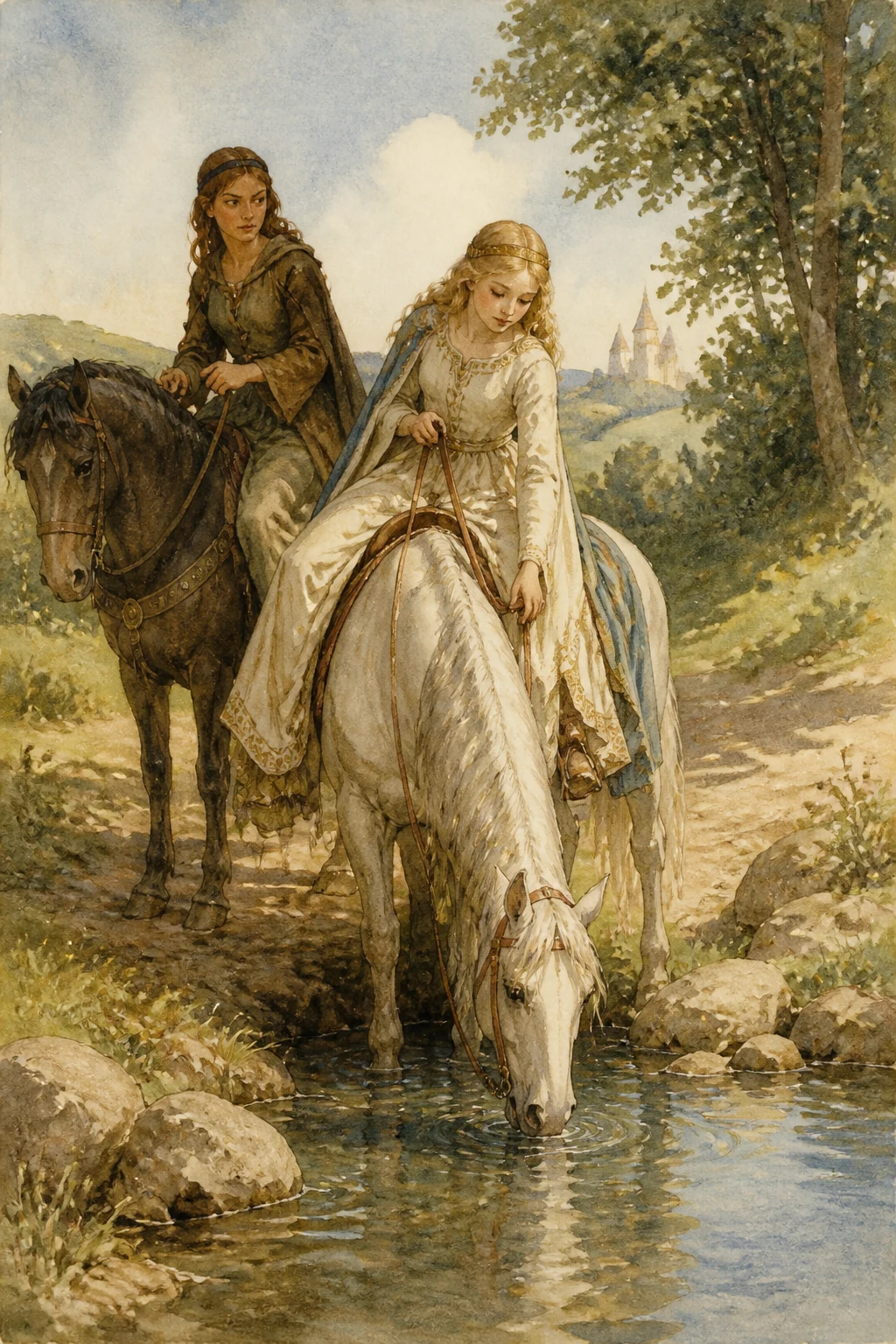
Nekaj časa sta skupaj potovali dalje. Sonce je močno pripekalo in cesta je bila prašna, zato je princeso zažejalo. Kmalu sta prišli do potoka in princesa je ustavila konja ter rekla služabnici: »Razjahaj, prosim te, in napolni mojo malo zlato čašo, da se napijem, kajti žejna sem.«
Služabnica pa se je namrščila in osorno odgovorila: »Sama razjahaj in pij iz potoka, če si žejna. Dovolj imam tega, da ti strežem.«
Princesa je bila nad takšnim odgovorom zelo presenečena. A ker je bila mlada in plašna, je brez besed zdrsnila s konja. Ni si upala prositi za čašo, ki jo je nosila služabnica, zato se je sklonila in pila iz potoka, ki je žuborel čez kamenje.
Medtem so ji kaplje krvi na robčku spregovorile: »Če bi mati tvojo usodo poznala, bi ji žalost srce razdejala.« Princesa ni odgovorila, temveč je, ko se je odžejala, spet zajahala konja in odjezdila dalje, kmalu pa je pozabila na služabničino osornost.
Čez nekaj časa sta prišli do drugega potoka. Ker je bila princesa spet žejna, je rekla služabnici: »Razjahaj, prosim te, in napolni mojo čašo z vodo, da se napijem.«
Služabnica pa je odgovorila še bolj osorno kot prej: »Ne, ne bom. Sama stopi s konja in si zajemi vodo, kajti ne bom ti več stregla.«
Princesa je globoko vzdihnila in zdrsnila s konja. Ko se je sklonila nad potok, so ji tri kaplje krvi spregovorile: »Če bi mati tvojo usodo poznala, bi ji žalost srce razdejala.«
Princesa ni odgovorila. Ko pa se je sklonila še niže, da bi pila, ji je robček zdrsnil iz nedrja in odplaval po potoku. Princesa tega ni opazila, ker je imela oči polne solz. Služabnica pa je opazila in srce ji je preplavilo veselje, kajti zdaj princese ni nič več varovalo in hudobna služabnica je lahko z njo ravnala, kakor se ji je zljubilo.
Ko se je princesa vzravnala in hotela zajahati Falado, ji je služabnica rekla: »Počakaj malo! Dovolj imam tega, da sem tvoja služabnica. Zdaj bova poskusili drugače. Daj mi svoja lepa oblačila, ti pa se obleci v te preproste reči, ki jih nosim jaz.«
Princesa si ni upala odkloniti. Služabnici je dala svojo lepo obleko in dragulje, sama pa se je oblekla v preprosta oblačila. Spet je hotela zajahati Falado, a služabnica jo je znova ustavila. »Ti boš jezdila mojega konja,« je rekla, »jaz pa Falado.« In kakor je rekla, tako se je zgodilo. Služabnica je princeso tudi prisilila, da je prisegla, da nobeni živi duši ne bo povedala, kdo je. Princesa si ni upala odkloniti, saj se je bala za svoje življenje. Falada pa ni ničesar takega obljubil in je videl ter slišal vse, kar se je zgodilo.
Ko sta spet odjezdili, je bila služabnica spredaj, oblečena v razkošna oblačila in na Faladovem hrbtu, princesa pa je jezdila za njo na služabničinem konju. Čeprav je nosila preprosta oblačila, je bila še vedno veliko lepša od služabnice.
Prispeli sta do palače in princ je prišel naproti svoji nevesti. Služabnici je pomagal s Faladovega hrbta, saj je mislil, da je princesa, in jo popeljal po veličastnem stopnišču v sobano, kjer je sedel kralj. Princesa pa je ostala spodaj na dvorišču in nihče se ni zmenil zanjo.
Kralj je bil presenečen, ko je zagledal služabnico, saj jo je imel za princeso in je pričakoval, da bo veliko lepša. Vendar o tem ni nikomur nič rekel, temveč jo je prijazno sprejel. Kmalu je po naključju pogledal skozi okno in spodaj zagledal pravo princeso. »Kdo stoji tam na dvorišču?« je vprašal, kajti takoj je opazil, da je zelo lepa, in to je vzbudilo njegovo radovednost.
»Oh, to je samo moja služabnica,« je malomarno odgovorila lažna nevesta. »Želim si, da bi ji dali kakšno delo, da je brezdelje ne pokvari.«
»Ne vem, kaj bi lahko počela drugega, kakor pazila gosi,« je odgovoril kralj. »Conrad, ki pase gosi, je še deček in bi bil vesel pomoči pri delu.«
»Prav, pa naj bo gosja pastirica,« je odgovorila lažna nevesta. Tako je princesa odšla na polje pomagat pri paši gosi, služabnica pa je živela v palači in uživala vse najboljše, kar je bilo tam. Toda princ ni bil srečen, saj je bila njegova nevesta osorna in zlovoljna in je ni mogel vzljubiti.
Nekega dne je lažna nevesta rekla princu: »Želim si, da bi dali Faladi odsekati glavo. Naveličala sem se ga, poleg tega pa se spotika, kadar ga jezdim.« V resnici se je bala, da bi Falada spregovoril in povedal vse, kar je videl.
Princ je bil zgrožen. »Zakaj bi hotela ubiti konja, ki je tako lep in krotek?« je vprašal. »Ker ga, kot ti pravim, ne maram,« je odgovorila služabnica. »Poleg tega je konj moj in lahko z njim naredim, kar hočem. Če tega ne boš dal storiti, bom prav dobro vedela, da me ne ljubiš.«
Princ si ni več upal odkloniti. Poklical je nekega moža in mu naročil, naj Faladi odseka glavo. Ko je prava princesa to izvedela, je bridko jokala. Poklicala je tistega moža in mu ponudila zlatnik, če ji prinese Faladovo glavo in jo pribije nad vrata, skozi katera je hodila vsako jutro.
Mož si je zelo želel zlata. Vzel je denar in pribil Faladovo glavo nad vrata, kamor je želela princesa. Naslednje jutro, ko sta princesa in Conrad gnala gosi na pašo, je pogledala k Faladi in rekla:
»Ah, Falada, da moraš viseti tu!« Falada pa je odgovoril: »Ah, princesa, da moraš hoditi tod! Če bi mati tvojo usodo poznala, bi ji žalost srce razdejala!«
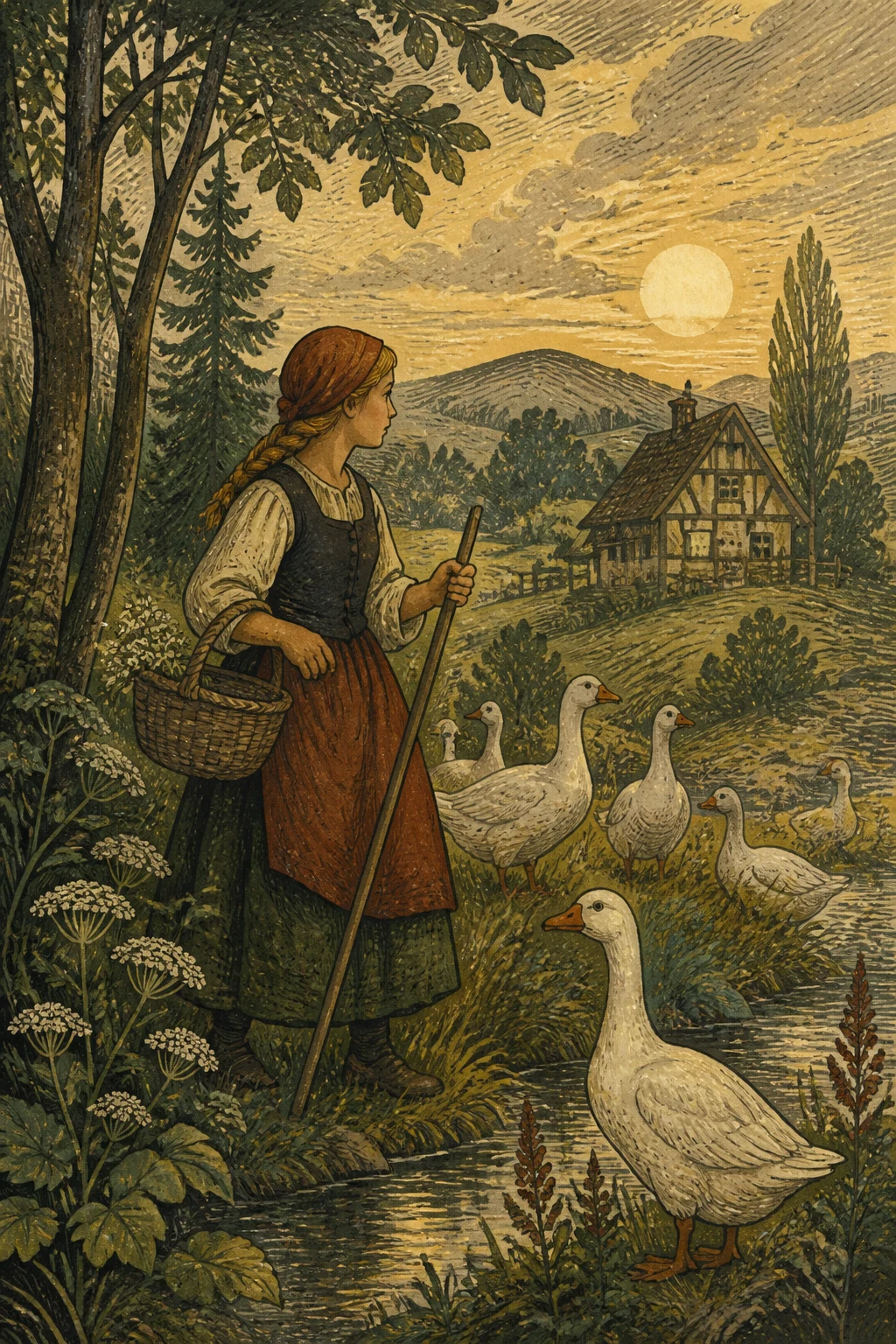
Mali gosji pastir je strmel in se čudil pogovoru med gosjo pastirico in konjsko glavo, a ni rekel ničesar. S princeso sta šla naprej na travnike in gnala gosi pred seboj. Ko sta bila daleč na travnikih, kjer ju nihče ni mogel videti, je princesa sedla in si razpustila zlate lase, da so se kakor slap usuli okoli nje, ter jih začela česati.
Conrad v vsem svojem življenju še ni videl ničesar tako lepega, kajti njeni lasje so v soncu tako sijali in se lesketali, da bi človeka skoraj zaslepili. Zaželel si je, da bi lahko obdržal vsaj en sam las, zato se je prikradel princesi za hrbet, da bi ga izmaknil. Toda princesa je vedela, kaj namerava. Ravno ko je stegnil roko, je zapela:
»Pihaj, veter, pihaj zdaj! Conradov klobuk odnesi stran! Naj se kotali prek planjav, ne odnehaj, dokler las ne počešem in ne spnem nazaj.« Veter je pri priči zgrabil Conradov klobuk in ga odnesel z njegove glave, da je letel in se kotalil po travnikih. Conrad je moral steči za njim, sicer bi ga izgubil.
Ko se je vrnil s klobukom, si je princesa že počesala lase in jih spela pod čepico, tako da ni bilo videti niti enega lasu.
Conrad je bil tisti večer, ko se je s princeso vračal domov, zelo jezen. Niti besede ni spregovoril z njo. Naslednje jutro, ko sta se z gosmi odpravila na pašo, sta šla kakor po navadi skozi vrata in princesa je pogledala navzgor ter rekla:
»Ah, Falada, da moraš viseti tu!« Glava pa je odgovorila: »Ah, princesa, da moraš hoditi tod! Če bi mati tvojo usodo poznala, bi ji žalost srce razdejala.«
Conrad je poslušal in se čudil, a ni rekel ničesar. Ko sta prišla na travnik, si je princesa kakor prej razpustila lase in jih začela česati. Bili so tako lepi, bleščeči in svetli, da se je Conradu zazdelo, da mora dobiti vsaj enega. Prikradel se ji je za hrbet, in ravno ko ga je hotel zgrabiti, je princesa zapela:
»Pihaj, veter, pihaj zdaj! Conradov klobuk odnesi stran! Naj se kotali prek planjav, ne odnehaj, dokler las ne počešem in ne spnem nazaj.« Veter je pri priči zavrtinčil Conradov klobuk čez travnike in deček je moral steči za njim, da ga je ujel.
Ko se je vrnil, je bil tako čemeren, da princese niti pogledati ni hotel, ona pa si je medtem že počesala lase in jih spela pod čepico.
Tistega večera je gosji pastir stopil h kralju in rekel: »Nočem, da bi to dekle še hodilo z menoj na travnike. Raje bom sam pazil gosi.«
»Zakaj?« je vprašal kralj. »Kaj je narobe z njo?« »Oh, jezi me in ima čudne navade, ki jih ne razumem.« »Kakšne navade?« je vprašal kralj.
Conrad mu je nato povedal, kako dekle vsak dan, ko gresta skozi vrata, pogleda h konjski glavi in reče: »Ah, Falada, da moraš viseti tu!«
In kako ji glava odgovori: »Ah, princesa, da moraš hoditi tod! Če bi mati tvojo usodo poznala, bi ji žalost srce razdejala.« »Ne maram takšnih čudnih navad,« je rekel Conrad.
Kralj se je zamislil in si pogladil brado. Nato je Conradu naročil, naj o tem nikomur nič ne pove. »Jutri zjutraj bom sam prežal pri vratih,« je rekel, »saj želim na lastna ušesa slišati, kaj si govorita dekle in Falada.«
Naslednje jutro se je kralj že zelo zgodaj skril v senco ob vratih in kmalu sta prišla princesa in Conrad, ki sta pred seboj gnala gosi.
Ko sta prišla do vrat, je princesa pogledala navzgor in vzdihnila: »Ah, Falada, da moraš viseti tu!« Glava pa je odgovorila: »Ah, princesa, da moraš hoditi tod! Če bi mati tvojo usodo poznala, bi ji žalost srce razdejala.«
Ko sta si to povedala, je kralj stopil iz sence in poklical princeso. »Kaj pomenijo te besede?« jo je vprašal. »Kdo si in kakšna je tvoja zgodba?«
Princesa je zajokala. »Žal ne morem odgovoriti,« je rekla, »saj sem prisegla, da ne bom povedala niti eni živi duši.« »Prav,« je rekel kralj, »če si prisegla, moraš držati prisego. Toda nocoj, ko bodo vsi služabniki zapustili pekarno, pojdi tja in povej svojo zgodbo veliki peči, ki stoji v njej.«
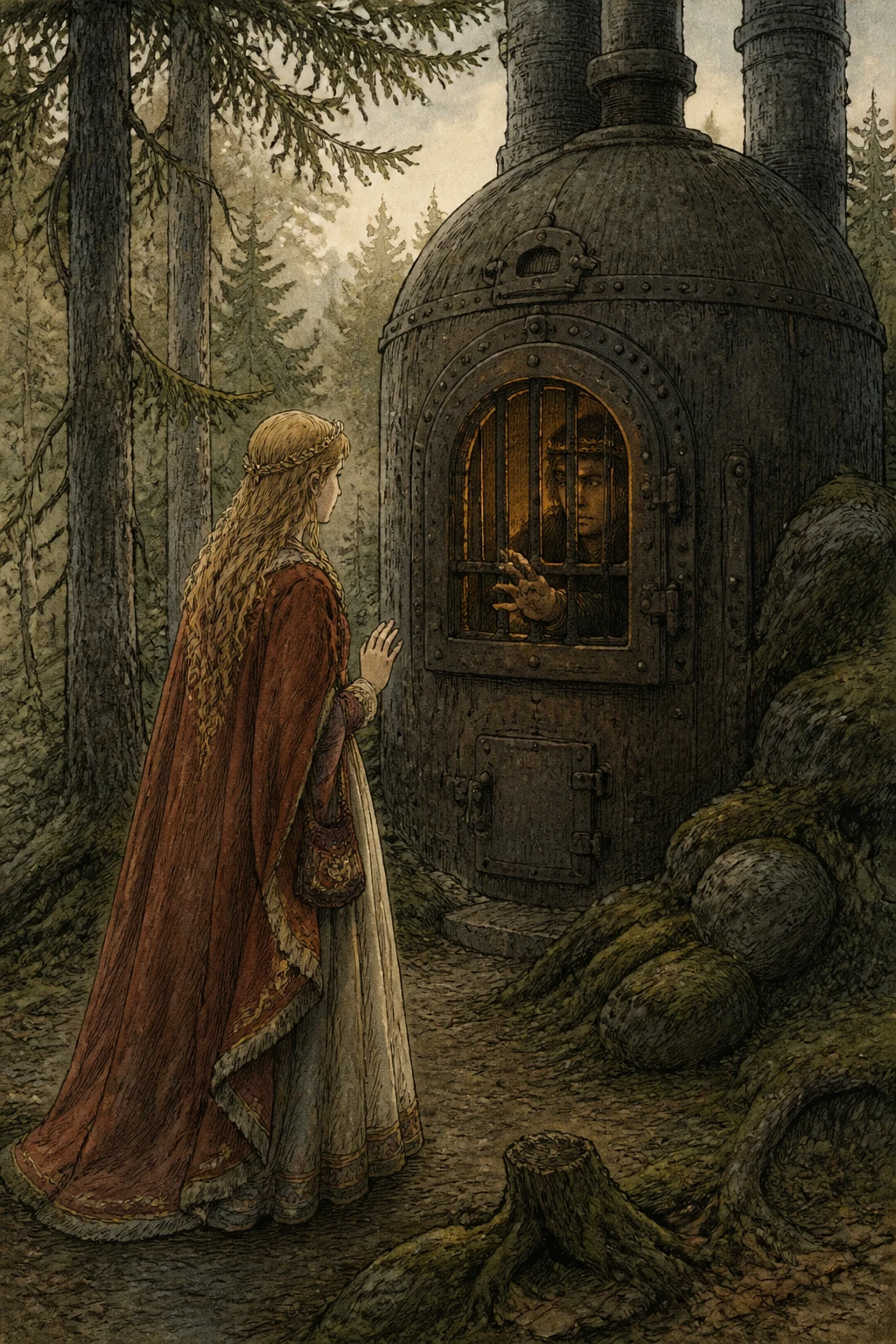
Princesa je obljubila, da bo tako storila. Tistega večera je torej, ko se je vrnila domov, odšla v pekarno in se ozrla okoli sebe. Nikogar ni videla in mislila je, da je sama, a kralj se je skril v peč, ne da bi ona to vedela.
Nato je princesa začela pripovedovati svojo zgodbo peči. Povedala je, kako je odšla od doma s svojo zahrbtno služabnico. Povedala je, kako je izgubila robček s kapljami krvi in kako jo je služabnica prisilila, da je z njo zamenjala oblačila in se oblekla kakor služabnica. Povedala je tudi, kako je morala priseči, da o vsem tem ne bo povedala nobeni živi duši. Vse, prav vso svojo zgodbo je povedala krušni peči, kralj pa je sedel v njej, poslušal in vse razumel.
Ko je končala pripoved, je kralj prišel iz peči in jo prijel za roko. »Zelo kruto so ravnali s teboj,« je rekel, »a zdaj je tvojih bridkosti konec.«
Nato je princeso popeljal v palačo, kjer so jo oblekli v najrazkošnejša oblačila, kar so jih premogli. Ko je bila oblečena, je bila lepa kakor luna, čez katero drsijo oblaki.
Kralj je poklical princa, in ko je ta zagledal princeso, sta ga preplavila veselje in ljubezen. Takoj je vedel, da mora biti to njegova prava nevesta.
S kraljem sta skupaj skovala načrt, kako kaznovati lažno nevesto. In storila sta takole: priredili so veliko gostijo z zabavo. Princ je sedel na privzdignjenem sedežu, na eni strani je imel lažno nevesto, na drugi pa pravo. Toda lažna nevesta je bila tako zaslepljena od vsega razkošja in lastnega napuha, da princese sploh ni opazila.
Vsi so jedli in pili, kolikor jim je srce poželelo, nato pa je kralj začel zastavljati uganke. Po ugankah je rekel, da bo gostom povedal zgodbo. Povedal jim je zgodbo o princesi in služabnici, toda lažna nevesta je bila še vedno preveč zaslepljena od lastnega blišča, da bi jo razumela.
Ko je kralj končal zgodbo, je vprašal: »Kakšno kazen bi si zaslužila tako zahrbtna služabnica?« Tedaj je lažna nevesta drzno vzkliknila: »Odpeljati bi jo morali na visoko pečino in jo vreči v morje.«
»Tako se bo tudi zgodilo,« je strogo vzkliknil kralj, »kajti ti sama si tista zahrbtna služabnica, tukaj pa sedi prava nevesta, ki si ji storila krivico.« Tedaj je služabnica doumela, kaj je storila, in prevzela jo je groza. Toda princesa se je je usmilila in prosila, naj ji prizanesejo. Tako služabnice niso vrgli v morje, temveč so ji slekli razkošna oblačila in jo pregnali, da si je morala po svetu izprositi kruh.
Nato sta se princ in princesa poročila in srečno živela do konca svojih dni. Faladovo glavo pa so sneli in jo položili nazaj na njegovo telo, in konj je spet oživel. Še mnogo let je živel v grajskem hlevu in princesa ga je imela nadvse rada.
Izvirnik
006 The Goose Girl
Naslednje strani prikazujejo izvirno besedilo za primerjavo.
There was once a beautiful young Princess who had been promised in marriage to the Prince of a far country.
When the time for the marriage came she made ready to journey to his country, for it was there that the wedding was to be celebrated, and not in her own land.
Her mother furnished her with all sorts of grand jewels and beautiful clothes to carry with her, and furniture and linens, and she also made her a present of a wonderful horse named Falada, that could talk.
Just before the Princess was ready to set out, her mother called her to her, and made a little cut in her finger, and allowed three drops of blood to fall upon a handkerchief.
“Here, my child, take this with you,” said the Queen; “put it in the bosom of your dress, and guard it carefully. It is a charm, and as long as you have it no evil of any kind can have power over you.”
The Princess thanked her mother, and put the handkerchief in the bosom of her dress as she was told. Then she kissed the Queen tenderly, and bade her farewell, and set out upon the journey with her waiting-maid riding beside her.
Now this waiting-maid, who rode with the Princess, had a very bad heart. She was both sly and deceitful. She pretended to the Queen that she loved the Princess dearly, but all the while she hated and envied her, and would have been glad enough to do her an ill turn.
She and the Princess journeyed on together for some time, and the sun shone bright and hot and the road was dusty, so the Princess became very thirsty. Presently they came to a stream, and there the Princess drew rein, and said to the waiting-maid, “Light down, I pray of you, and fill my little golden cup that I may drink, for I am thirsty.”
But the waiting-maid scowled and answered rudely, “Light down yourself, and drink from the stream, if you are thirsty. I am tired of serving you.”
The Princess was very much surprised at being answered in such a manner. However, she was young and timid, and without more words she slipped from her horse, and as she was afraid to ask for the cup, which the waiting-maid carried, she stooped over and drank from the brook as it rippled over its stones.
As she did so the drops of blood upon the handkerchief said to her:—
“If thy mother knew thy fate Then her heart would surely break.”
The Princess made no answer, but having quenched her thirst she mounted her horse again and rode forward, and presently forgot her maid’s rudeness.
After awhile they reached another stream, and as the Princess was again thirsty, she said to the waiting-maid, “Light down, I pray you, and fill my cup with water, that I may drink.”
But the waiting-maid answered even more rudely than before, “No, I will not; get down and get the water for yourself, for I will serve you no more.”
The Princess slipped from her horse, sighing deeply, and as she bent over the stream the three drops of blood said to her:
“If thy mother knew thy fate, Then her heart would surely break.”
The Princess made no answer, but as she stooped still lower to drink the handkerchief slipped from her bosom and floated away on the stream, but the Princess did not notice this because her eyes were full of tears. The waiting-maid noticed it, however, and her heart was filled with joy, because now the Princess had nothing to protect her, and the wicked servant could do with her as she chose.
When the Princess arose and was about to mount Falada the waiting-maid said to her, “Wait a bit! I am tired of acting as your servant. Now, we will try it the other way around. Give me your fine clothes, and you can dress yourself in these common things I am wearing.”
The Princess was afraid to refuse; she gave the waiting-maid her beautiful dress and her jewels, and dressed herself in the common clothes.
Again she was about to mount Falada, but again the waiting-maid bade her stay; “You shall ride my horse,” said she, “and I will ride Falada.” As she said so it was done. The waiting-maid also made the Princess swear that she would tell no living soul who she was. The Princess dared not refuse for fear of her life. But Falada made no such promise, and he had seen and heard all that had happened.
When they rode on again the waiting-maid was in front, dressed in the fine clothes and mounted on Falada, and the Princess came behind on the waiting-maid’s horse, and she was dressed in the common clothes, but even so she was far more beautiful than the servant.
They reached the palace, and the Prince came out to meet his bride. He lifted down the waiting-maid from Falada, for he thought she was the Princess, and he led her up the grand stairway and into the room where the King sat, but the Princess was left below in the courtyard, and no one paid any attention to her.
The King was surprised when he saw the waiting-maid, for he supposed her to be the Princess, and he had expected her to be much more beautiful. However, he said nothing about it to anyone, but made her welcome. Presently he happened to look out of the window, and there he saw the true Princess down below. “Who is that standing in the courtyard?” he asked, for he saw at once that she was very beautiful, and he was curious about it.
“Oh, that is only my waiting-maid,” answered the false bride carelessly. “I wish you would give her some work to do so that she may not be spoiled by idleness.”
“I do not know what she can do except take care of the geese,” answered the King. “Conrad, who is the goose-herd, is only a boy, and he would be glad of help in caring for them.”
“Very well; then let her be a goose-herd,” answered the false bride.
So the Princess went out in the field to help tend the geese, and the waiting-maid lived in the palace, and was treated to all that was best there. But the Prince was not happy, for his bride was rude and ill-tempered, and he could not love her.
One day the false bride said to the Prince, “I wish you would have Falada’s head cut off. I am weary of him, and besides he stumbles when I ride him.” But really she feared Falada might speak and tell all he had seen.
The Prince was shocked. “Why should you kill a horse that is so beautiful and gentle?” he asked.
“Because, as I tell you, I do not like him,” answered the waiting-maid. “Besides the horse is mine, and I can do as I like with him. If you refuse to have this done I shall know very well that it is because you do not love me.”
The Prince dared refuse no longer. He sent for a man and had Falada’s head cut off.
When the true Princess heard this she wept bitterly. She sent for the man and offered him a piece of gold if he would bring Falada’s head and nail it up over the gateway through which she passed every morning.
The man was anxious to have the gold. He took the money and nailed Falada’s head up over the gateway where the Princess wished it put.
The next morning as the Princess and Conrad drove the geese out to pasture she looked up at Falada and said:
“Ah, Falada, that thou shouldst hang there!”
And Falada answered:
“Ah, Princess, that thou shouldst pass here! If thy mother knew thy fate, Then her heart would surely break!”
The little goose-herd stared and wondered to hear this talk between the goose-girl and the horse’s head, but he said nothing. He and the Princess went on out to the meadows driving the geese before them, and when they were far off in the meadows where no one could see, the Princess sat down and unbound her golden hair, so that it fell all about her in a shower, and began to comb it.
Conrad had never seen anything so beautiful in all his life before, for her hair shone and glittered in the sunshine until it was enough to dazzle one. He longed to have just one thread of it to keep, so he crept up behind the Princess, meaning to steal one. But the Princess knew what he was about. Just as he reached out his hand she sang:
“Blow, wind, blow! Blow Conrad’s hat away. It is rolling! Do not stay Till I have combed my hair And tied it up again.”
At once the wind caught Conrad’s hat from his head and sent it flying and rolling across the meadows, and Conrad was obliged to run after it or he would have lost it.
By the time he came back again with the hat the Princess had combed her hair and fastened it up under her cap so that not a thread of it could be seen.
Conrad was very cross when he went home with the Princess that evening. He would not speak a word to her.
The next morning when they started out with the geese they passed under the gateway as usual, and the Princess looked up and said:
“Ah, Falada, that thou shouldst hang there!”
And the head answered:
“Ah, Princess, that thou shouldst pass here! If thy mother knew thy fate, Then her heart would surely break.”
Conrad listened and wondered, but said nothing.
When they reached the meadow the Princess let down her hair as before and began to comb it. It looked so beautiful and glittering and bright that Conrad felt he must have a hair of it. He crept up behind her and then, just as he was about to seize it, the Princess sang:
“Blow, wind, blow! Blow Conrad’s hat away. It is rolling! Do not stay Till I have combed my hair And tied it up again.”
At once the wind whirled Conrad’s hat away across the meadows, and he had to run after it to catch it.
When he came back he was so sulky that he would not even look at the Princess, but already she had her hair combed and fastened up under her cap.
That evening the goose-herd went to the King and said, “I do not wish that girl to go out to the meadows with me any more. I would rather take care of the geese by myself.”
“Why?” asked the King. “What is the matter with her?”
“Oh, she vexes me, and she has strange ways that I cannot understand.”
“What ways?” asked the King.
Then Conrad told him how every day as he and the girl passed through the gateway she would look up at the horse’s head and say:
“Ah, Falada, that thou shouldst hang there!”
And how the head would answer:
“Ah, Princess that thou shouldst pass here! If thy mother knew thy fate, Then her heart would surely break.”
“I do not like such strange ways,” said Conrad.
The King looked thoughtful and stroked his beard. Then he told Conrad not to say anything about this matter to anyone. “I myself,” said he, “will watch by the gateway to-morrow morning, for I wish to hear for myself exactly what passes between the girl and Falada.”
So the next morning very early the King hid himself in the shadow beside the gateway, and presently the Princess and Conrad came along driving the geese before them.
As they reached the gateway the Princess looked up and sighed:
“Ah, Falada, that thou shouldst hang there!”
And the head answered:
“Ah, Princess, that thou shouldst pass here! If thy mother knew thy fate, Then her heart would surely break.”
After they had spoken thus the King stepped out from the shadow and called to the Princess. “What is the meaning of these words?” asked he. “Who are you, and what is your story?”
The Princess began to weep. “Alas, I cannot answer,” said she, “for I have sworn that I would not tell a single living soul.”
“Very well,” said the King, “if you have sworn, then you must keep your oath; but to-night, after all the servants have left the bakehouse go and tell your story to the great oven that is there.”
This the Princess promised she would do. So that night, when she came home, she went into the bakehouse and looked about her. She saw no one, and she thought she was alone there, but the King had hidden himself inside the oven, though she did not know it.
Then the Princess began to tell her story to the oven. She told how she had left home with her false-hearted waiting-maid. She told of how she had lost the kerchief with the drops of blood upon it, and how the waiting-maid had made her exchange clothing with her and dress herself as a servant; and she told how she had been forced to swear that she would not tell all this to a living soul. All, the whole story, she told to the bake-oven, and the King sat inside of it and listened and understood.
When she had made an end of speaking the King came out and took her by the hand. “You have been very cruelly treated,” said he, “but now your sorrows are over.”
He then led the Princess into the palace, and she was dressed in the richest clothes that were there, and when this was done she was as beautiful as the moon when the clouds drift over it.
The King sent for the Prince, and when he saw the Princess he was filled with joy and love, and he knew at once that this must be his true bride.
He and the King planned together as to how the false bride should be punished. And this is what was done:
A grand feast and entertainment were arranged. The Prince sat upon a high seat with the false bride upon one hand and the true bride upon the other. But the false bride was so dazzled by all the splendor, and by her own pride that she did not even see the Princess.
Everyone ate and drank to his heart’s content, and then the King began asking riddles. After the riddles he said he would tell the guests a story, and the story he told was that of the Princess and the waiting-maid, and still the false bride was too dazzled by her own splendor to understand the story.
When he had finished the story the King asked, “What should be the punishment of such a false servant as that?”
Then the false bride cried boldly, “She should be taken to a high cliff and thrown over into the sea.”
“So shall it be,” cried the King sternly, “for you yourself are that false servant, and here sits the true bride whom you have wronged.”
Then the waiting-maid understood what she had done, and she was filled with terror. But the Princess had pity on her, and begged for mercy for her. So the waiting-maid was not thrown into the sea, but her fine clothes were stripped from her, and she was driven out to beg her way through the world.
Then the Prince and Princess were married and lived happily ever after, and Falada’s head was taken down and placed upon his body and he came to life again and lived for many years in the castle stable, and the Princess loved him dearly.
Nadaljuj z branjem