O besedilu
Gad in vodna kača
- Vir
- Ezopove basni
- Avtor
- Ezop / Karl Halm
- Jezik branja
- English
- Jezik izvirnika
- Ancient Greek
- Čas branja
- 1 min branja
- Obseg
- 1 stran
- Naslov izvirnika
- 147. Ἔχις καὶ Ὕδρα. (S. 91. C.185. F.272)
O izvirniku
Ezopove basni
Kratke basni, kjer živali v nekaj potezah razkrijejo človeške slabosti. Bralni jezik je English, izvirnik pa prihaja iz vira Ezopove basni v jeziku Ancient Greek.
Besedilo
Gad in vodna kača
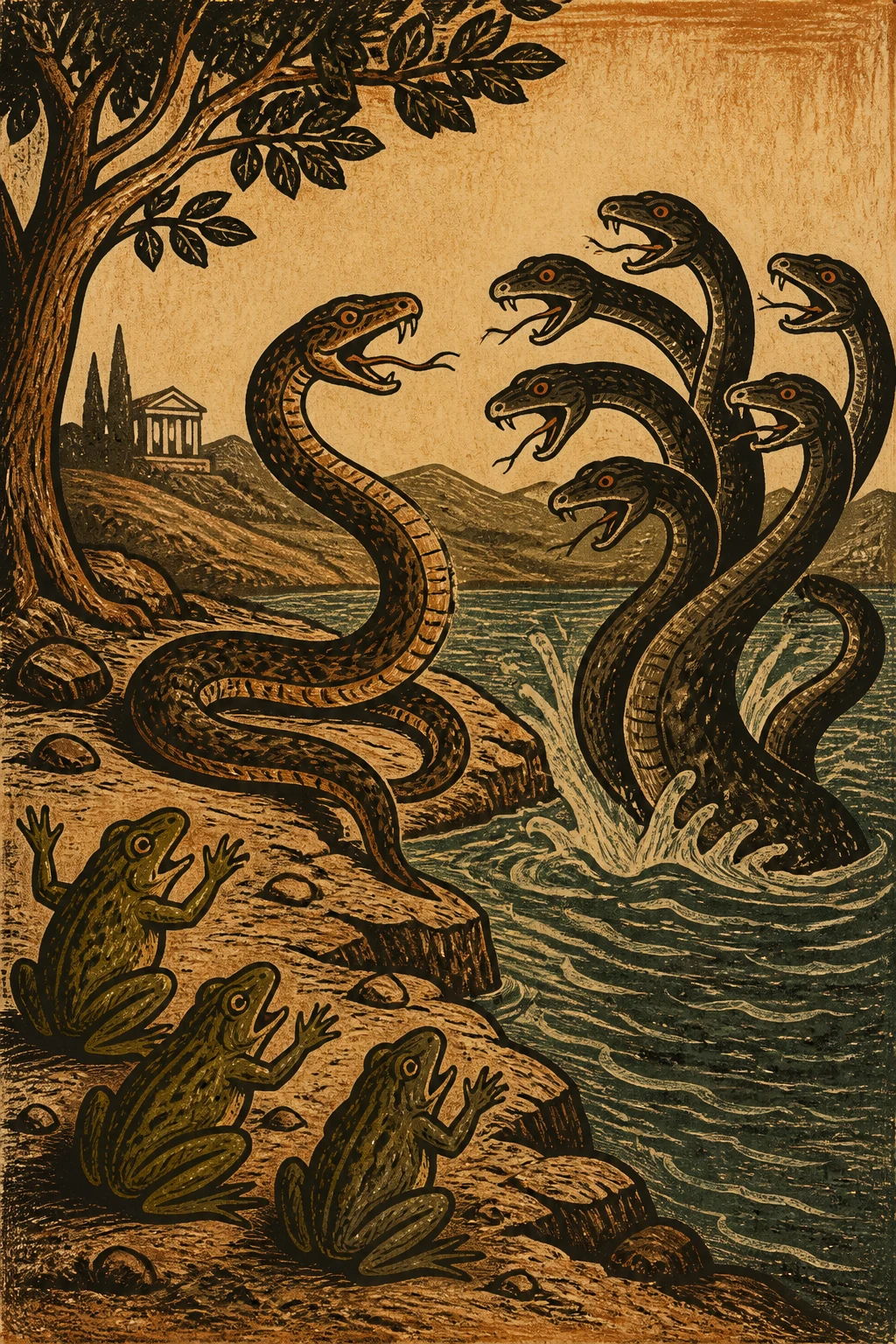
A viper used to visit a spring to drink, but the water snake that lived there tried to stop him, indignant that he was not content with his own domain but came intruding upon hers as well. As their quarrel grew ever fiercer, they agreed to fight, with the winner to have possession of both the land and the water. Once they had appointed a day, the frogs, who hated the water snake, came to the viper and encouraged him, promising to fight at his side. When the battle began, the viper fought the water snake, while the frogs, unable to do anything more, croaked at the tops of their voices. After winning, the viper reproached them: though they had promised to fight alongside him, during the battle they had not helped at all, but had merely sung. They replied, “You should understand, my friend, that our support consists not in deeds, but in our voices alone.” The fable shows that where action is needed, help offered only in words is of no use.
Izvirnik
147. Ἔχις καὶ Ὕδρα. (S. 91. C.185. F.272)
Naslednje strani prikazujejo izvirno besedilo za primerjavo.
Ἔχις φοιτῶν ἐπί τινα κρήνην, ἔπινεν· ἡ δὲ ἐνταῦθα οἰκοῦσα ὕδρα ἐκώλυεν αὐτὸν, ἀγανακτοῦσα εἴγε μὴ ἀρκεῖται τῇ ἰδίᾳ νομῇ, ἀλλὰ καὶ ἐπὶ τὴν ἑαυτῆς δίαιταν ἀφικνεῖται. Ἀεὶ δὲ τῆς φιλονεικίας αὐξανομένης, συνἐθεντο ὅπως εἰς μάχην ἀλλήλοις καταστῶσι, καὶ τοῦ νικῶντος ἥ τε τῆς γῆς καὶ τοῦ ὕδατος νομὴ γένηται. Ταξαμένων δʼ αὐτῶν τὴν προθεσμίαν, οἱ βάτραχοι διὰ μῖσος τῆς ὕδρας παραγενόμενοι πρὸς τὸν ἔχιν παραθαδῥύνουσιν αὐτὸν, ἐπαγγελλόμενοι καὶ αὐτοὶ συμμαχήσειν αὐτῷ. Ἐνσταθείσης δὲ τῆς μάχης ὁ μὲν ἔχις πρὸς τὴν ὕδραν ἐπολέμει, οἱ δὲ βάτραχοι, μηδὲν περαιτέρω δυνάμενοι δρᾶν, μεγάλα ἐκεκράγεισαν. Καὶ ὁ ἔχις νικήσας ᾐτιάσατο αὐτούς, ὅτι συμμαχήσειν αὐτῷ ὑποσχόμενοι παρὰ τὴν μάχην οὐ μόνον οὐκ ἐβοήθουν, ἀλλὰ καὶ ᾖδον. Οἱ δὲ ἔφασαν πρὸς αὐτόν· ,,ἀλλʼ εὖ ἴσθι, ὦ οὗτος, ὅτι ἡ ἡμετέρα συμμαχία οὐ διὰ χειρῶν, ἀλλὰ διὰ μόνης φωνῆς καθέστηκεν.“
Ὁ λόγος δηλοῖ, ὅτι, ἔνθα χειρῶν χρεία ἐστὶν, ἡ δία λόγων βοήθεια οὐδὲν λυσιτελεῖ.
Nadaljuj z branjem