Waltey
Emir Šudža ad Din in Frankinja
Tisoč in ena noč · arabska pripovedna tradicijaO besedilu
Emir Šudža ad Din in Frankinja
- Vir
- Tisoč in ena noč
- Avtor
- arabska pripovedna tradicija
- Jezik branja
- English
- Jezik izvirnika
- Arabic
- Čas branja
- 10 min branja
- Obseg
- 8 strani
- Naslov izvirnika
- حكاية الأمير شجاع الدين والمرأة الإفرنجية - الليالي ٨٩٤ إلى ٨٩٦
O izvirniku
Tisoč in ena noč
Zgodbe v zgodbah, polne trgovcev, dvorov, preoblek in nočnih zapletov. Bralni jezik je English, izvirnik pa prihaja iz vira Tisoč in ena noč v jeziku Arabic.
Besedilo
Emir Šudža ad Din in Frankinja
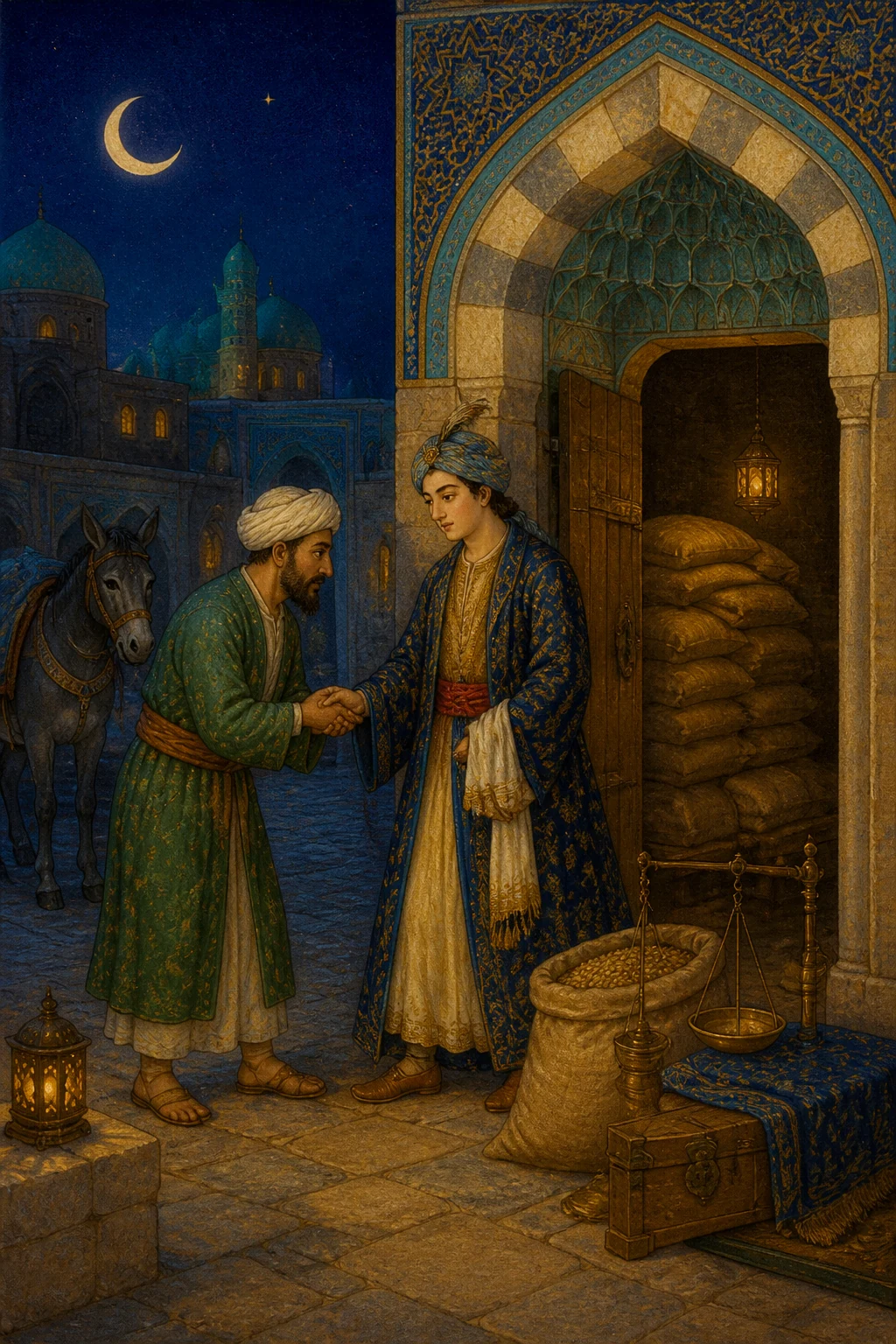
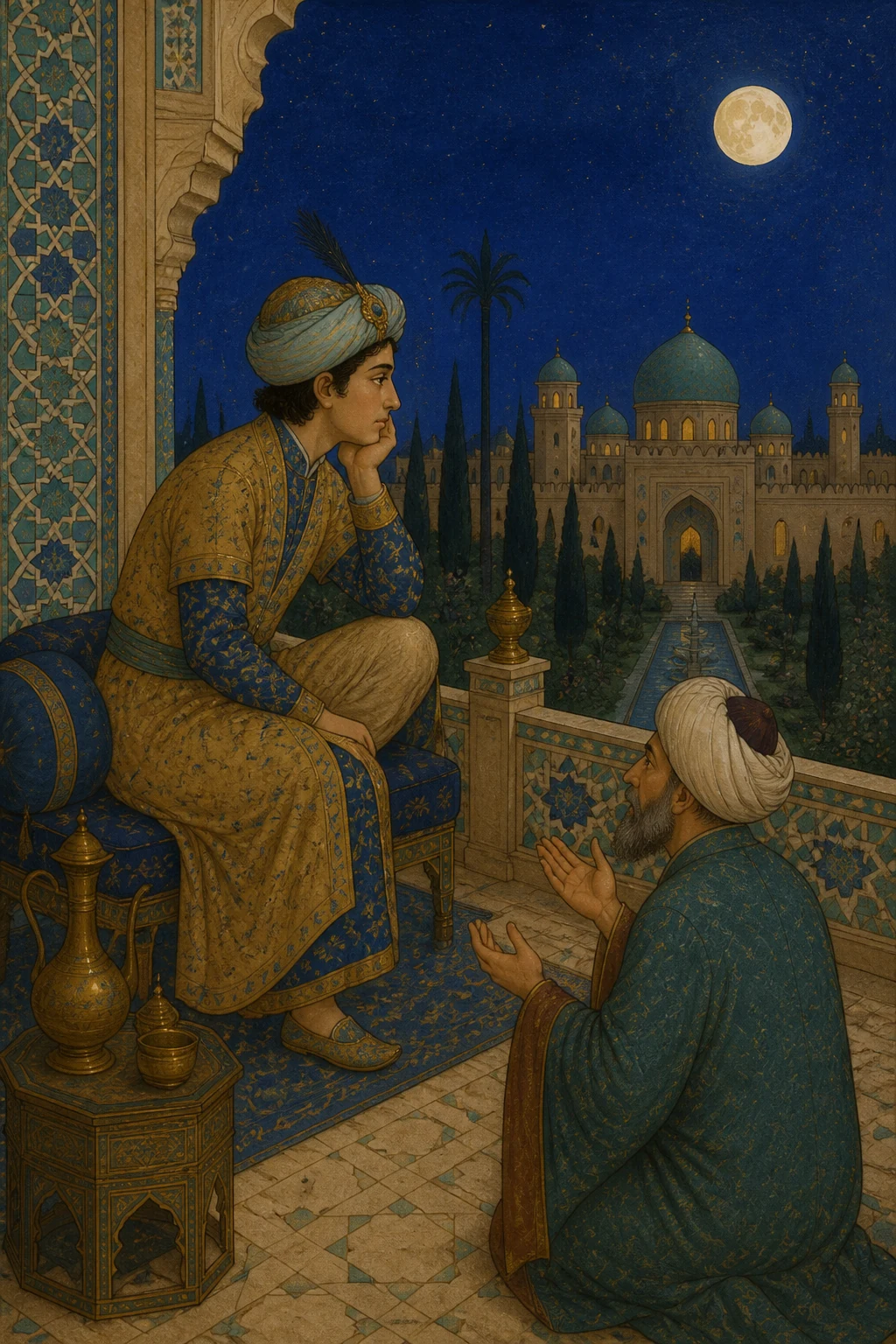
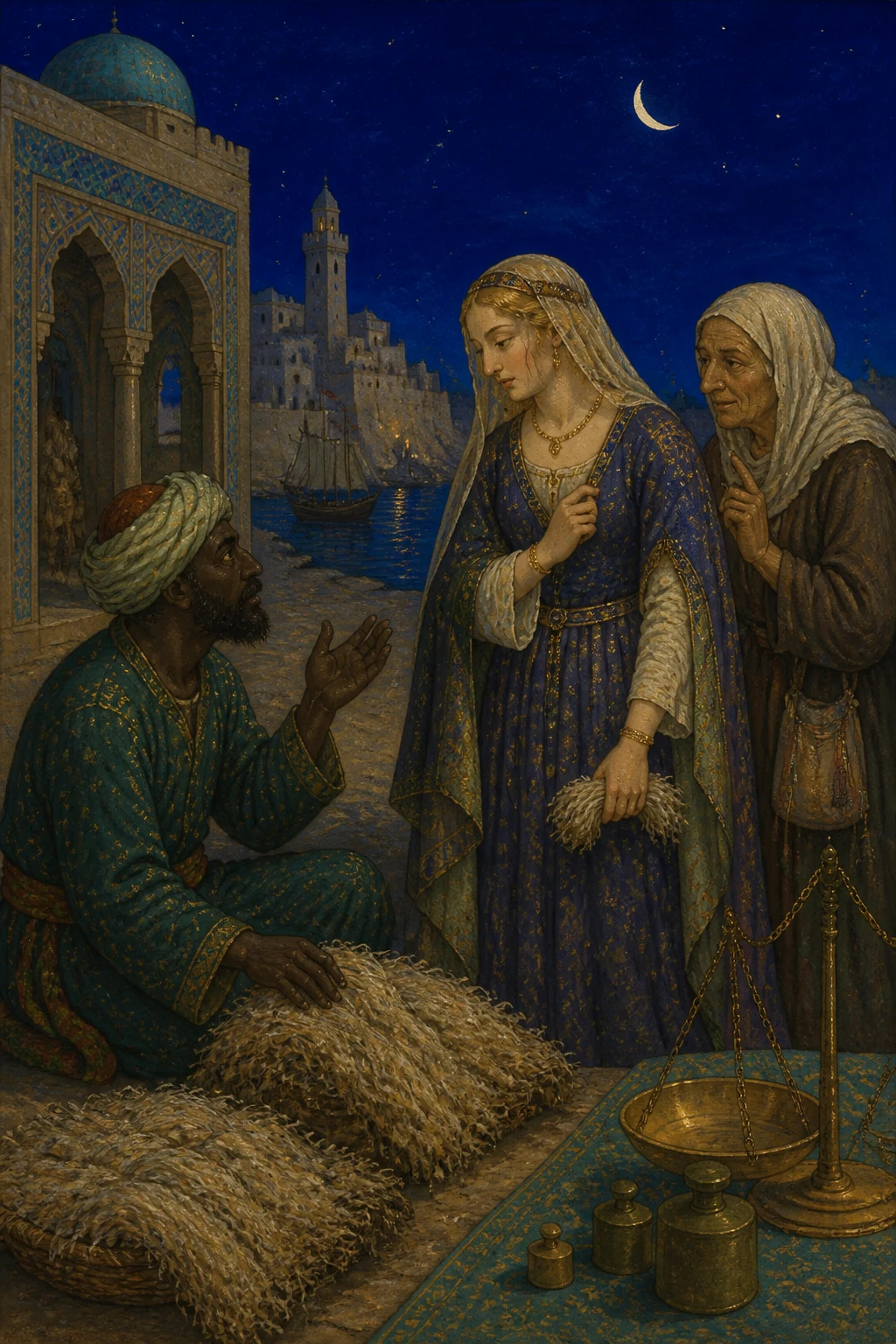
It is also told that the emir Shuja al-Din Muhammad, governor of Cairo, said: We once spent the night with a man from Upper Egypt, who entertained us generously and treated us with great honor. He was an old man, very dark of complexion, yet he had young children whose fair skin was tinged with rose. We said to him, “How is it that these children of yours are fair, while you are so dark?” He replied, “Their mother is a Frankish woman whom I took as my own, and I have a remarkable story to tell about her.” “Favor us with it,” we said. “Gladly,” he answered. “You must know that I once planted flax in this town, harvested it, and shook out its seed, spending five hundred dinars on it. When I came to sell it, however, I could get no more than that sum. People advised me, ‘Take it to Acre; perhaps you will make a handsome profit there.’ Acre was then in the hands of the Franks, so I took the flax there and sold some of it on six months’ credit. While I was selling, a Frankish woman passed by me—for Frankish women customarily walk through the market unveiled—and came over to buy some flax. Her beauty so dazzled me that I sold her some at a very easy price. She took it and went away, then returned a few days later, and I sold her more, letting her have it even more cheaply than before. She came to me again and again, and realized that I loved her. She usually walked with an old woman, so I said to her companion, ‘I am consumed with love for her. Can you contrive some way for me to be with her?’ The old woman replied, ‘I can arrange it for you, but this secret must remain between the three of us—you, she, and I. And you will have to spend some money.’ I said, ‘Even if being with her cost me my life, it would be no great price.’” Then dawn overtook Shahrazad, and she fell silent, leaving off her permitted tale.
When it was the eight hundred and ninety-fifth night
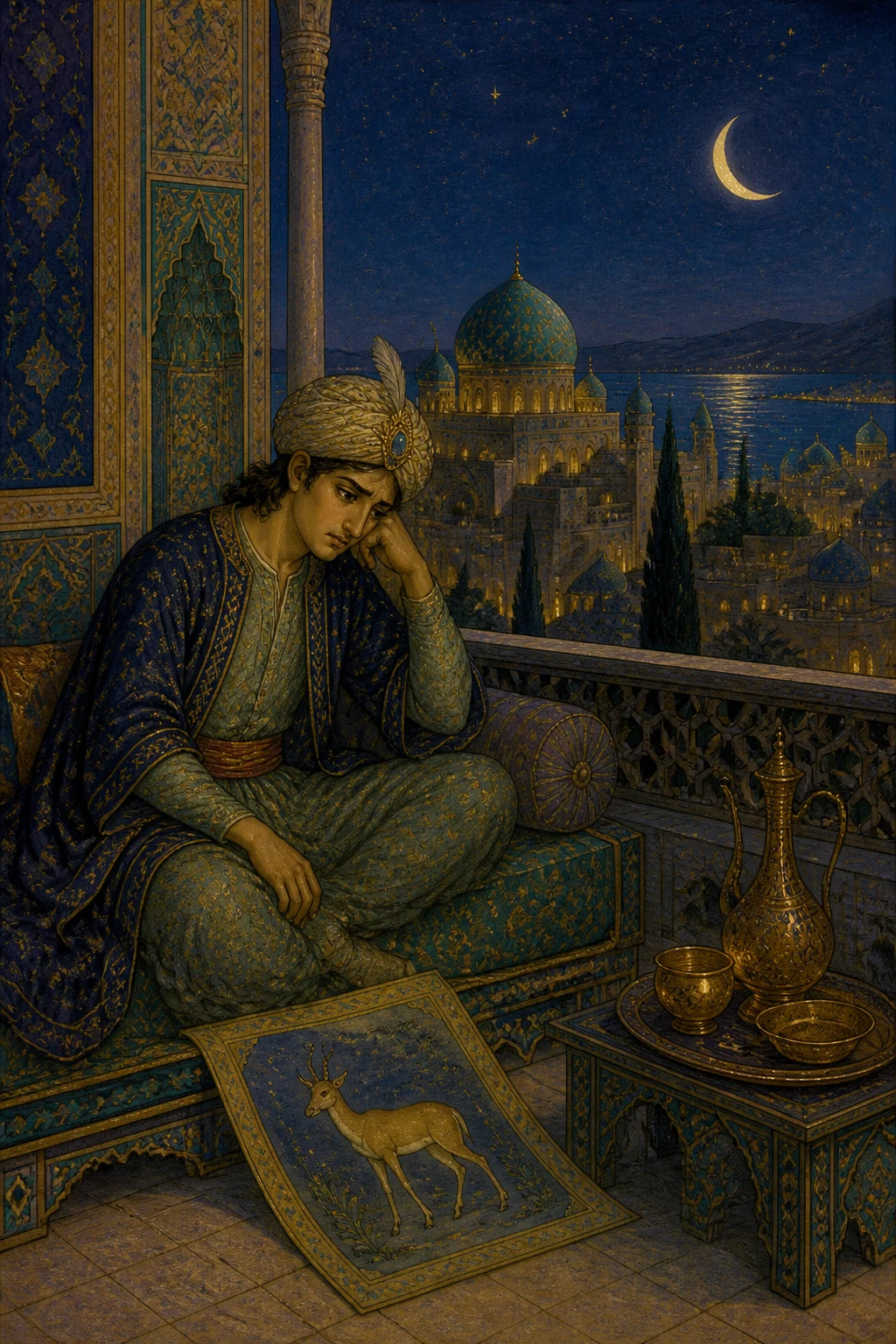
She said: It has reached me, O fortunate king, that when the old woman answered the man, she said, “But this secret must remain between the three of us—you, she, and I. And you will have to spend some money.” He replied, “Even if being with her cost me my life, it would be no great price.” They agreed that he should pay her fifty dinars and the woman would come to him, so he made ready the fifty dinars and handed them to the old woman. When she had taken them, she said, “Prepare a place for her in your house, and she will come to you tonight.” The man continued: “I went off and provided what I could of food, drink, candles, and sweetmeats. My house overlooked the sea, and as it was summertime, I spread bedding on the roof. The Frankish woman came, and we ate and drank. When night had fallen, we lay beneath the open sky, with the moon shining upon us, and watched the stars reflected in the sea. Then I said to myself, ‘Have you no shame before Almighty God? Here you are, a stranger in this land, beneath the open sky and beside the sea, about to disobey God Most High with a Christian woman and earn the torment of Hell!’ I said, ‘O God, I call You to witness that I shall abstain from this Christian woman tonight, out of shame before You and fear of Your punishment.’
“Then I slept until morning. She rose before dawn, angry, and went home. I went to my shop and sat there, and presently she passed by with the old woman, still angry and lovely as the moon. I was beside myself and said in my heart, ‘Who are you to turn away from such a girl? Are you al-Sari al-Saqati, or Bishr the Barefoot, or al-Junayd of Baghdad, or al-Fudayl ibn Iyad?’ I caught up with the old woman and said, ‘Bring her back to me.’ She replied, ‘By the truth of Christ, she will not return to you for less than a hundred dinars.’ ‘I will give you a hundred dinars,’ I said. I paid her the money, and the woman came to me a second time. But once she was with me, the same thought returned, and I abstained from her and left her untouched for the sake of God Most High. Afterward I went back to my place of business. Then the old woman passed by, angry, and I said to her, ‘Bring her back to me.’ She replied, ‘By the truth of Christ, you shall never enjoy her company again for less than five hundred dinars, though you die of longing!’ I trembled at this and resolved to spend the whole price of the flax to deliver myself from my torment. But suddenly I heard a herald proclaiming, ‘O Muslims, the truce between us and you has expired. We grant the Muslims here one week to settle their affairs and return to their own lands.’ Thus I was cut off from her. I set about collecting the money owed by those who had bought my flax on credit, and bartering what remained of it. I acquired a good stock of merchandise and left Acre, my heart still filled with passionate love and longing for the Frankish woman, for she had taken both my heart and my money.
“I traveled on until I reached Damascus, where I sold the goods I had brought from Acre at the highest prices, for supplies had ceased to arrive with the expiry of the truce. God, glorified and exalted be He, blessed me with a handsome profit. I began trading in captive slave girls, hoping to rid my heart of its longing for the Frankish woman, and continued in that trade for three years. Meanwhile, King al-Nasir fought his battles against the Franks, and God granted him victory over them. He captured all their kings and, by God’s leave, conquered the coastal lands. It happened that a man came to me seeking a slave girl for King al-Nasir. I had a beautiful girl, whom I showed him, and he bought her from me for the king for a hundred dinars. He paid me ninety, leaving ten still owing. That day they could not find the balance in the king’s treasury, for he had spent all his money on the war against the Franks. When they told him of this, the king said, ‘Take him to the place where the captives are kept, and let him choose one of the Frankish girls in payment of his ten dinars.’” Then dawn overtook Shahrazad, and she fell silent, leaving off her permitted tale.
When it was the eight hundred and ninety-sixth night
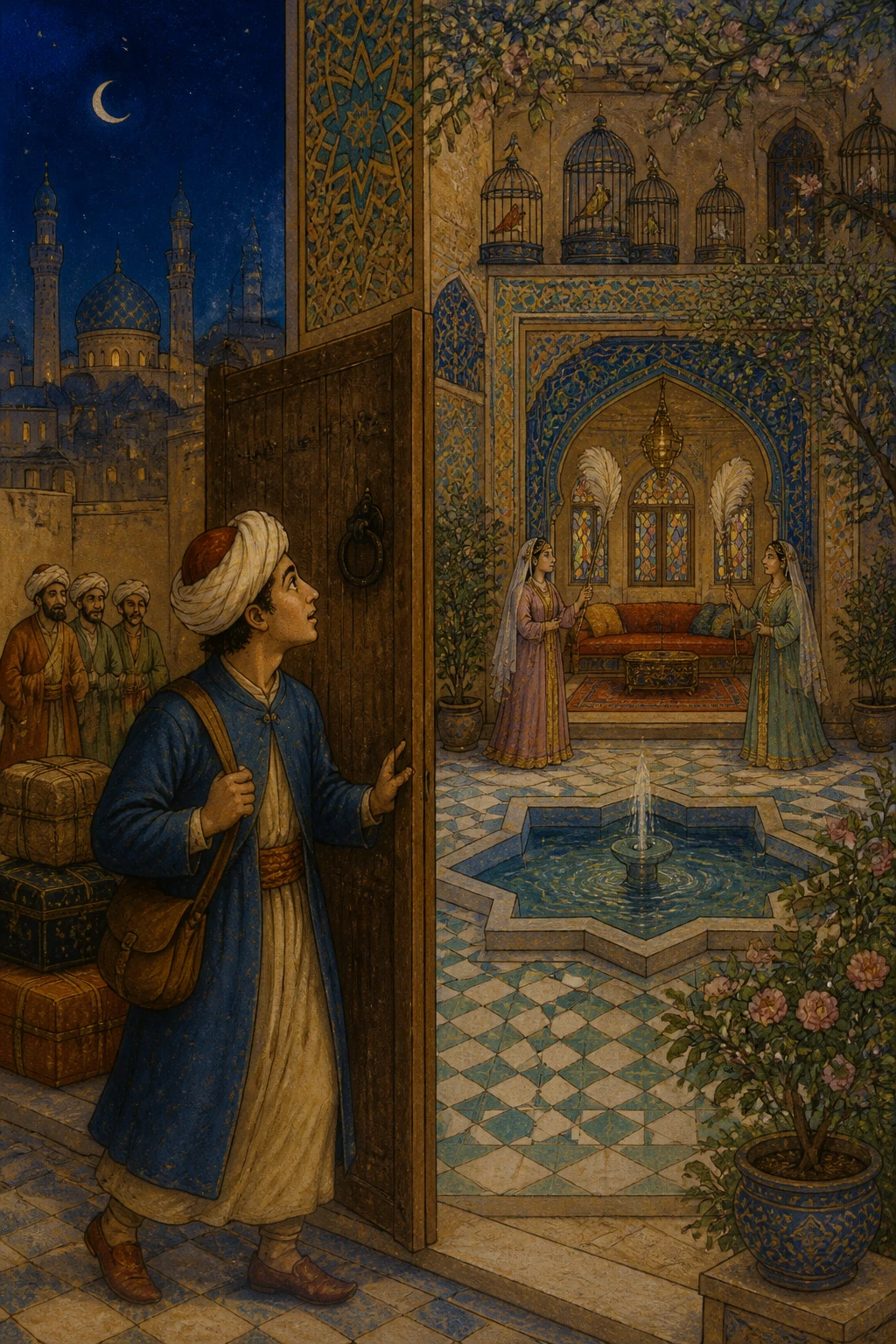
She said: It has reached me, O fortunate king, that when King al-Nasir said, “Let him choose one of them in payment of the ten dinars owed him,” they took the man to the place where the captives were kept. He continued: “I looked about and examined all the captives, and there I saw the Frankish woman with whom I had fallen in love. I recognized her beyond any doubt. She was the wife of one of the Frankish knights. ‘Give me this one,’ I said. I took her away to my tent and asked, ‘Do you know me?’ ‘No,’ she replied. I said, ‘I am your old acquaintance, the flax merchant. You remember what passed between us: you took my gold and said, “You shall not see me again for less than five hundred dinars.” Now I have acquired you as my slave for ten dinars.’ She said, ‘This is the mystery of your true faith. I bear witness that there is no god but God, and I bear witness that Muhammad is the Messenger of God.’ She embraced Islam and became a devout Muslim. Then I said to myself, ‘By God, I will not lie with her until I have freed her and laid the matter before the judge.’ So I went to Ibn Shaddad and told him what had happened, and he drew up our marriage contract. After that I spent the night with her, and she conceived. The army then departed, and we came to Damascus. Only a few days had passed when the king’s envoy arrived to demand the prisoners and captives, in accordance with an agreement made between the kings. All the captive men and women were returned, and none remained but the woman who was with me. They said, ‘The wife of such-and-such a knight has not appeared.’ They asked after her and pressed their inquiries until they were told that she was with me, whereupon they demanded her surrender. I came to her in great distress, my face drained of color. She asked, ‘What is wrong? What has happened to you?’ I replied, ‘The king’s envoy has come to take back all the captives, and they have demanded you from me.’ She said, ‘Do not be afraid. Take me to the king; I know what to say before him.’ So I took her and brought her before the sultan, King al-Nasir, with the envoy of the Frankish king seated at his right hand. I said, ‘This is the woman who is with me.’ King al-Nasir and the envoy asked her, ‘Will you return to your own country or to your husband? God has set you free from captivity, along with the others.’ She said to the sultan, ‘I have embraced Islam and am with child. Here is my belly, as you can see. The Franks have no further use for me.’ The envoy asked, ‘Which do you prefer: this Muslim or your husband, the knight so-and-so?’ She gave him the same answer she had given the sultan. The envoy said to the Franks with him, ‘Have you heard what she says?’ ‘Yes,’ they replied. Then he said to me, ‘Take your wife and go.’ I went away with her, but he immediately sent after me and said, ‘Her mother entrusted something to me for her, saying, “My daughter is a captive and has no clothes. I want you to deliver this chest to her.” Take it and give it to her.’ I received the chest, carried it home, and gave it to her. She opened it and found her very own clothes inside, along with the two purses of gold—the fifty dinars and the hundred dinars. I saw that both were still tied just as I had tied them, with nothing disturbed, and I praised God Most High. These children are hers. She is still alive, and it was she who prepared this food for you.” We marveled at his tale and at the good fortune that had befallen him. And God knows best.
Izvirnik
حكاية الأمير شجاع الدين والمرأة الإفرنجية - الليالي ٨٩٤ إلى ٨٩٦
Naslednje strani prikazujejo izvirno besedilo za primerjavo.
فلما كانت الليلة ٨٩٤
ومما يُحكَى أيضًا أن الأمير شجاع الدين محمد متولي القاهرة قال: بتنا عند رجل من بلاد الصعيد فضيَّفَنا وأكرمنا، وكان ذلك الرجل أسمرَ شديدَ السُّمْرة وهو شيخ كبير، وكان له ولاد صغار بيض، بياضهم مشرَّب بحُمْرة، فقلنا: يا فلان، ما بال أولادك هؤلاء بيضًا وأنت شديد السُّمْرة؟ فقال: هؤلاء أمهم إفرنجية، أخذتها ولي معها حديث عجيب. فقلنا له: أَتْحِفْنا به. فقال: نعم، اعلموا أني قد كنتُ زرعتُ كتَّانًا في هذه البلدة وقلعته ونفضته وصرفت عليه خمسمائة دينار، ثم أردتُ بيعه فلم يجئ لي منه شيء أكثر من ذلك. فقالوا لي: اذهبْ به إلى عكاء لعلك تربح فيه ربحًا عظيمًا. وكانت عكاء ذلك الوقت في يد الإفرنج، فذهبتُ به إلى عكاء وبعتُ بعضه صبرًا إلى ستة أشهر، فبينما أنا أبيع إذ مرَّتْ بي امرأة إفرنجية، وعادةُ نساءِ الإفرنج أن تمشي في السوق بلا نقابٍ، فأتَتْ لتشتري مني كتَّانًا، فرأيتُ من جمالها ما بهر عقلي، فبعتُ لها شيئًا وتساهلت في الثمن، فأخذته وانصرفت، ثم عادت إليَّ بعد أيامٍ فبعتُ لها شيئًا وتساهلتُ معها أكثرَ من المرة الأولى، فكرَّرَتْ مجيئها لي وعرفت أني أحبها، وكان عادتها أن تمشي مع عجوز، فقلت للعجوز التي معها: إني قد شُغِفْتُ بحبها، فهل تتحيَّلين لي في الاتصال بها؟ فقالت: أتحيَّل لكَ في ذلك، ولكن هذا السر لا يخرج من بين ثلاثتنا، أنا وأنت وهي، ومع ذلك لا بد من أن تبذل مالًا. فقلتُ لها: إذا ذهبتْ رُوحي باجتماعي عليها فما هو كثير. وأدرك شهرزاد الصباح، فسكتَتْ عن الكلام المباح.
فلما كانت الليلة ٨٩٥
قالت: بلغني أيها الملك السعيد، أن العجوز لما أجابَتْ ذلك الرجلَ، قالت له: ولكن هذا السر لا يخرج من بين ثلاثتنا، أنا وأنت وهي، ولا بد من أن تبذل مالًا. فقال لها: إذا ذهبتْ رُوحي باجتماعي عليها فما هو كثير. واتفق الحال على أن يدفع لها خمسين دينارًا وتجيء إليه، فجهَّزَ الخمسين دينارًا وسلَّمَها للعجوز. فلما أخذت الخمسين دينارًا قالت له: هيِّئ لها موضعًا في بيتك وهي تجيء إليك في هذه الليلة. ثم قال: فمضيتُ وجهَّزْتُ ما قدرتُ عليه من مأكل ومشرب وشمع وحلوى، وكانت داري مُطِلَّة على البحر، وكان ذلك في زمن الصيف، ففرشتُ على سطح الدار، وجاءت الإفرنجية فأكلنا وشربنا، وجَنَّ الليل فنمنا تحت السماء والقمر يضيء علينا، وسرنا ننظر خيالَ النجوم في البحر؛ فقلتُ في نفسي: أَمَا تستحي من الله عز وجل وأنت غريب وتحت السماء وعلى البحر وتعصي الله تعالى مع نصرانية، وتستوجب عذابَ النار؟ اللهم إني أُشهِدُكَ أني قد عففتُ عن هذه النصرانية في هذه الليلة حياءً منك وخوفًا من عقابك.
ثم إني نمتُ إلى الصبح وقامت في السَّحَر وهي غَضْبى ومضَتْ إلى مكانها، ومشيتُ أنا إلى حانوتي فجلستُ فيه، وإذا هي قد عبرَتْ عليَّ هي والعجوز وهي مُغضَبة وكأنها القمر، فهلكتُ وقلتُ في نفسي: مَن هو أنت حتى تترك هذه الجارية؟ هل أنت السَّرِيُّ السَّقَطي، أو بِشْر الحافي، أو الجُنَيْد البغدادي، أو الفُضَيْل بن عياض؟ ثم لحقتُ العجوزَ وقلتُ لها: ارجعي إليَّ بها. فقالت العجوز: وحقِّ المسيح ما ترجع إليك إلا بمائة دينار. فقلتُ: أعطيكِ مائة دينار. ثم أعطيتُها المائةَ دينار وجاءت إليَّ ثاني مرة، فلما صارت عندي رجعتُ إلى تلك الفكرة، فعففتُ عنها وتركتها لله تعالى، ثم مضيتُ ومشيتُ إلى موضعي. ثم عبرَتْ عليَّ العجوزُ وهي غَضْبى، فقلت لها: ارجعي بها إليَّ. فقالت: وحقِّ المسيح، ما بقيتَ تفرح بها عندك إلا بخمسمائة دينار وتموت كمدًا. فارتعدتُ لذلك، وعزمتُ أن أغرم ثمنَ الكتَّان جميعه وأفدي نفسي بذلك، فما شعرتُ إلا والمنادي ينادي ويقول: يا معاشر المسلمين، إن الهدنةَ التي بيننا وبينكم قد انقضَتْ، وقد أمهلنا مَن هنا من المسلمين جمعةً ليقضوا أشغالهم وينصرفوا إلى بلادهم. فانقطعَتْ عني وأخذْتُ في تحصيل ثمن الكتَّان الذي اشتراه مني الناسُ مؤجلًا والمقايَضة على ما بقي منه، وأخذت معي بضاعةً حسنةً، وخرجتُ من عكاء وأنا في قلبي من الإفرنجية ما فيه من شدة المحبة والعشق؛ لأنها أخذَتْ قلبي ومالي.
ثم خرجتُ وسرتُ حتى وصلتُ دمشقَ وبعتُ البضاعةَ التي أخذتها من عكاء بأقصى ثمنٍ لانقطاع وصولها بسبب انقضاء مدة الهدنة، ومَنَّ الله سبحانه وتعالى عليَّ بكسبٍ جيد، وصرتُ أتَّجِر في جواري السَّبْي ليذهب ما بقلبي من الإفرنجية، ولازمتُ التجارةَ فيهن، فمضَتْ عليَّ ثلاثُ سنوات وأنا بتلك الحالة، وجرى للملك الناصر مع الإفرنج ما جرى من الوقائع ونصَرَه الله عليهم وأسَرَ جميعَ ملوكهم وفتح بلاد الساحل بإذن الله تعالى، فاتفق أنه جاء رجل وطلب مني جارية للملك الناصر، وكان عندي جارية حسناء فعرضتُها عليه، فاشتراها له مني بمائة دينار، فأوصلني تسعين دينارًا وبقي لي عشرة دنانير، فلم يجدوها في خزنته ذلك اليوم؛ لأنه أنفق الأموال جميعها في حرب الإفرنج، فأخبروه بذلك، فقال الملك: امضوا به إلى خزنة السَّبْي وخيِّروه بين بنات الإفرنج ليأخذ واحدةً منهن في العشرة دنانير. وأدرك شهرزاد الصباح، فسكتَتْ عن الكلام المباح.
فلما كانت الليلة ٨٩٦
قالت: بلغني أيها الملك السعيد، أن الملك الناصر لما قال: خيِّروه في واحدةٍ منهن ليأخذها في العشرة دنانير التي له، أخذوني وتوجَّهوا بي إلى خزنة السَّبْي، فنظرتُ ما فيها وتأمَّلْتُ في جميع السَّبْي فرأيتُ الجاريةَ الإفرنجية التي كنتُ تعلَّقْتُ بها وعرفتها حق المعرفة، وكانت امرأةَ فارسٍ من فرسان الإفرنج، فقلتُ: أعطوني هذه. فأخذتُها ومضيتُ إلى خيمتي وقلتُ لها: أتعرفينني؟ قالت: لا. قلتُ: أنا صاحبك الذي كنتُ أتاجر في الكتَّان، وقد جرى لي معك ما جرى، وأخذتِ مني الذهب وقلتِ: ما بقيتَ تنظرني إلا بخمسمائة دينار، وقد أخذتُكِ ملكًا بعشرة دنانير. فقالت: هذا سرُّ دينك الصحيح، أنا أشهد أن لا إله إلا الله، وأشهد أن محمدًا رسول الله. فأسلمَتْ وحسُنَ إسلامها، فقلتُ في نفسي: والله لا أفضي إليها إلا بعد عتقها وإطلاع القاضي. فرُحْتُ إلى ابن شداد وحكيتُ له ما جرى وعقد لي عليها، ثم بعد ذلك بتُّ معها فحملَتْ، ثم رحل العسكر وأتينا دمشق، فما كان إلا أيام قلائل وأتى رسول الملك يطلب الأسارى والسَّبْي باتفاقٍ وقَعَ بين الملوك، فرُدَّ كلُّ مَن كان أسيرًا من النساء والرجال، ولم يَبْقَ إلا المرأة التي عندي، فقالوا: إن امرأةَ الفارس فلان لم تحضر. وسألوا عنها وألَحُّوا في السؤال والكشف، فأُخبِروا بأنها عندي، فطلبوها مني، فحضرتُ وأنا في شِدَّة الوَلَه وقد تغيَّرَ لوني. فقالت لي: ما لك، وما الذي أصابك؟ فقلتُ: جاء رسول الملك يأخذ الأسارى جميعهم وطلبوكِ مني. فقالت: لا بأس عليك، أوصلني إلى الملك وأنا أعرف الذي أقوله بين يديه. قال: أخذتُها وأحضرتُها قدام السلطان الملك الناصر، ورسول ملك الإفرنج جالِسٌ على يمينه. وقلتُ: هذه المرأة التي عندي. فقال لها الملك الناصر والرسول: أتروحين إلى بلادك أم إلى زوجك؟ فقد فكَّ الله أسْرَكِ أنت وغيركِ. فقالت للسلطان: أنا قد أسلمتُ وحملتُ وها بطني كما ترون، وما بقيت الإفرنج تنتفع بي. فقال الرسول: أيما أحَبُّ إليك، أهذا المسلم أم زوجك الفارس فلان؟ فقالت له كما قالت للسلطان. فقال الرسول لمَن معه من الإفرنج: هل سمعتم كلامها؟ قالوا: نعم. ثم قال لي الرسول: خذ امرأتك وامضِ بها. فمضيتُ بها، ثم إنه أرسَلَ خلفي عاجلًا وقال: إن أمها أرسلَتْ إليها معي وديعةً وقالت: إن بنتي أسيرة وهي عريانة، ومرادي أن توصل إليها هذا الصندوق، فخذه وسلِّمْه إليها. فتسلَّمْتُ الصندوقَ ومضيتُ به إلى الدار وأعطيته لها، ففتحَتْه فرأَتْ فيه قماشها بعينه ووجدت الصرَّتَيْن الذهب والخمسين دينارًا والمائة دينار، فرأيتُ الجميعَ برباطي لم يتغيَّر منها شيء، وحمدت الله تعالى، وهؤلاء الأولاد منها، وهي تعيش إلى الآن، وهي التي عملَتْ لكم هذا الطعام. فتعجَّبْنا من حكايته وما حصل له من الحظ، والله أعلم.
Nadaljuj z branjem