Prevod
There were two cocks, one on the dunghill and one on the roof, both of them proud; but which accomplished more? Tell us what you think—we shall keep our own opinion all the same.
A wooden fence separated the poultry yard from another yard, where there was a dunghill, and on it grew a large cucumber, fully conscious of being a hothouse plant:
“One is born to it!” it said to itself. “Not everyone can be born a cucumber; there have to be other living species too! The hens, the ducks, and all the livestock in the yard next door are creatures as well. Now I look up to the farmyard cock on the fence: he really is a personage of quite another order than the weathercock, who has been set up so high and cannot even creak, let alone crow! He has neither hens nor chicks; he thinks of nothing but himself and sweats verdigris! No, the farmyard cock—there is a cock for you! Watch him step: that is dancing! Hear him crow: that is music! Wherever he goes, you learn what a trumpeter is! If only he would come in here, if only he would eat me up, leaf and stalk, if only I could become part of his body—what a blessed death that would be!” said the cucumber.
During the night a dreadful storm arose; the hens, the chicks, and the cock himself took shelter. The fence between the yards blew down with a tremendous crash; roof tiles fell, but the weathercock held fast. He did not even turn—he could not—and yet he was young, newly cast, but sober and sedate. He had been born old and was nothing like the fluttering birds of the air, the sparrows and swallows, whom he despised: “Chirping birds, small and common!” The pigeons were large, glossy and gleaming like mother-of-pearl, and looked rather like weathercocks, but they were fat and stupid; all they thought about was getting something into their crops, said the weathercock, and they were dull company. The birds of passage had paid visits too, telling of foreign lands, of caravans through the air, and dreadful tales of robbery by birds of prey. It was new and interesting the first time, but afterwards the weathercock discovered that they repeated themselves, that it was always the same thing, and that was boring! They were boring and everything was boring; there was no one fit to associate with, every last one was insipid and dull.
“The world is no good!” he said. “Nonsense, all of it!” The weathercock was what is called blasé, and that would certainly have made him interesting to the cucumber, had she known it; but she looked up only to the farmyard cock, and now he was in the yard with her.
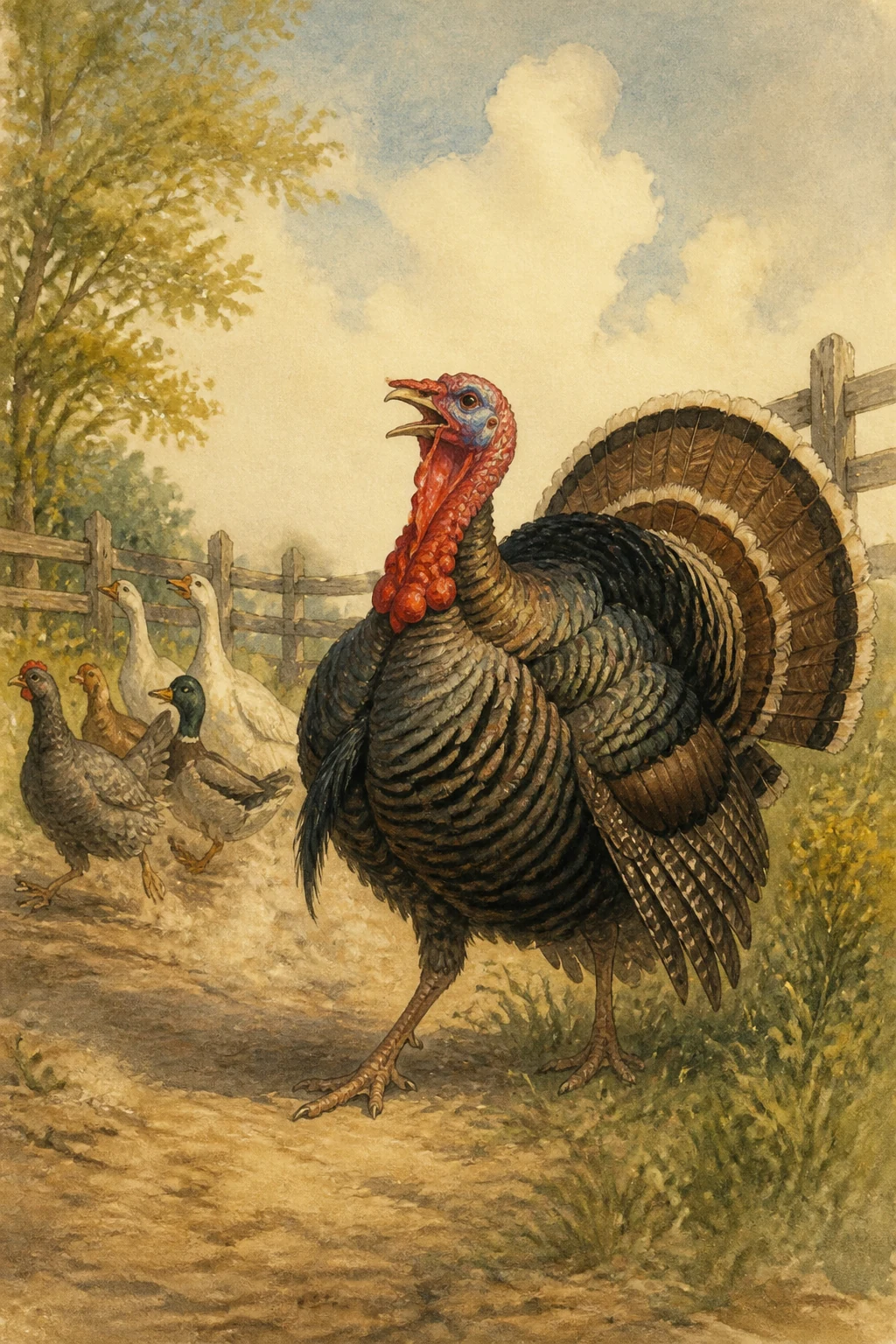
The fence had blown down, but the thunder and lightning were over. “What do you think of that crowing?” the farmyard cock asked the hens and chicks. “A little rough, wasn't it? Lacking in elegance!”
And the hens and chicks stepped onto the dunghill; the cock came strutting like a cavalryman. “Garden produce!” he said to the cucumber, and in those two words she sensed the whole breadth of his education and forgot that he was pecking at her and eating her.
“A blessed death!” And the hens came and the chicks came, and when one runs, another runs along too, and they clucked and they cheeped and they looked at the cock. They were proud of him: he was one of their own kind.
“Cock-a-doodle-doo!” he crowed. “Chicks turn into full-grown hens at once when I say so in the poultry yard of the world!” And the hens and chicks clucked and cheeped after him!
And the cock announced a great piece of news. “A cock can lay an egg! And do you know what is inside that egg? A basilisk! No one can endure the sight of it! Human beings know that, and now you know it too; you know what dwells within me! You know what a devil of a fellow I am in any poultry yard!”
Then the farmyard cock flapped his wings, raised his comb, and crowed again; and all the hens and all the little chicks shuddered, but they were terribly proud that one of their own was such a devil of a fellow in any poultry yard. They clucked and cheeped so loudly that the weathercock could not help hearing, and he did hear, but it did not move him.
“Nonsense, all of it!” the weathercock said to himself. “The farmyard cock will never lay an egg, and I cannot be bothered! If I wanted to, I could easily lay an empty egg! But the world is not worth an empty egg! Nonsense, all of it!—Now I cannot even be bothered to sit here!”
And with that the weathercock snapped off, but he did not kill the farmyard cock, “though that was what he meant to do!” said the hens. And what does the moral say? “It is better, after all, to crow than to be blasé and snap off!