Prevod
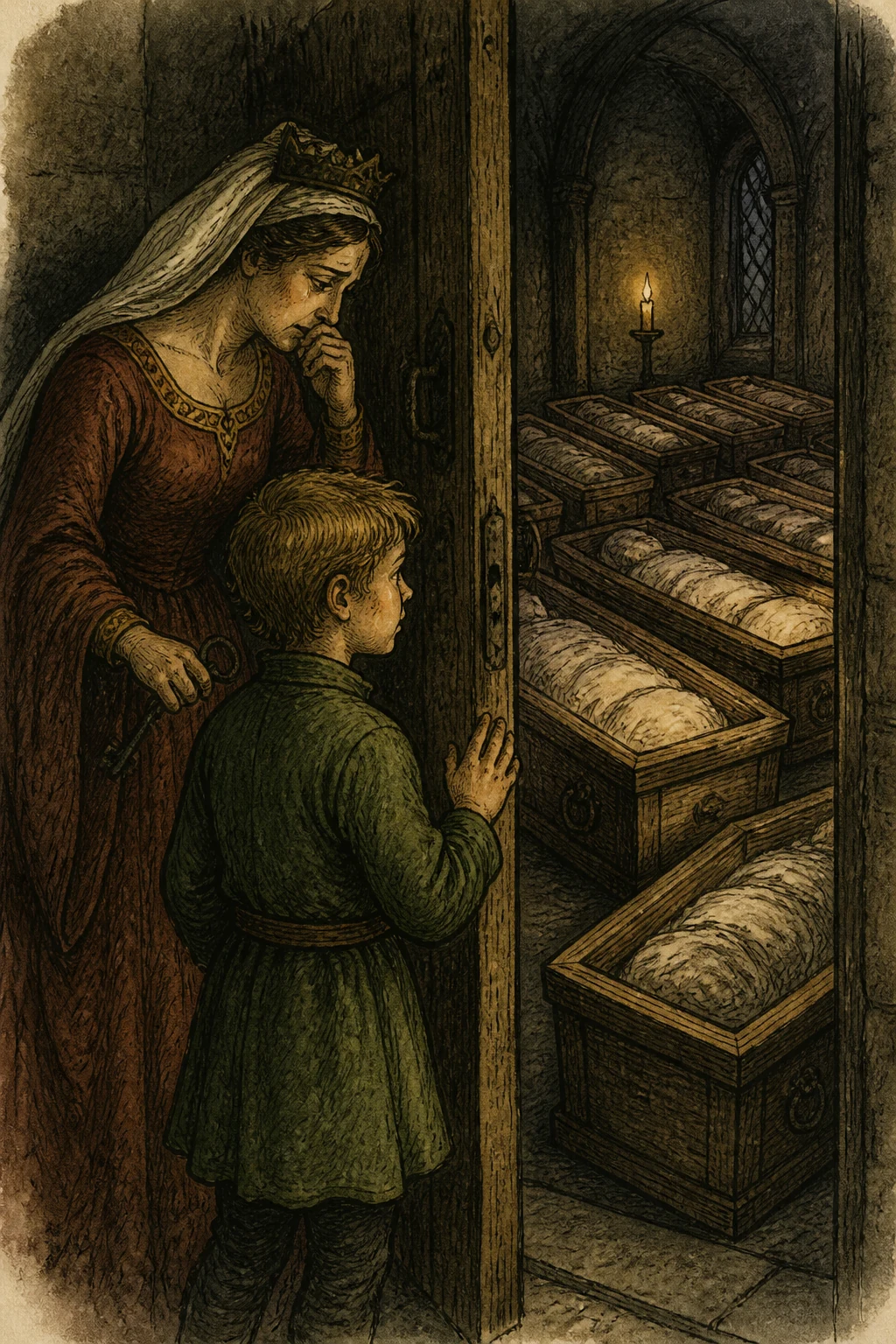
Once upon a time there was a queen who went out for a drive one winter when fresh snow had fallen. When she had gone a little way along the road, her nose began to bleed, and she had to get out of the sleigh. As she stood beside the fence, looking at the red blood and the white snow, she began to think of her twelve sons and how she had no daughter, and she said to herself, “If I had a daughter as white as snow and as red as blood, I should not mind what became of my sons.” Scarcely had she spoken when a witch appeared before her. “A daughter you shall have,” she said, “and she shall be as white as snow and as red as blood, and your sons shall be mine. But you may keep them with you until the child is christened.” When the time came, the queen gave birth to a daughter, and she was as white as snow and as red as blood, just as the old witch had promised, so they named her Snow-white and Rose-red. There was great rejoicing at the palace, and the queen was happy beyond measure; but when she remembered what she had promised the witch, she had a silversmith make twelve silver spoons, one for each prince, and then she had him make one more, which she gave to Snow-white and Rose-red. No sooner had the princess been christened than the princes were changed into twelve wild ducks and flew away. No one saw any more of them; they were gone, and gone they remained. The princess grew up tall and beautiful, but she was often so strange and sorrowful that no one could understand what ailed her. Then one evening, when the queen too was feeling sorrowful—for many strange thoughts must have troubled her when she thought of her sons—she said to Snow-white and Rose-red, “Why are you so sad, my daughter? If there is anything you lack, tell me! If there is anything you wish for, you shall have it.” “Oh, it seems so lonely here,” said Snow-white and Rose-red. “Everyone else has brothers and sisters, but I am all alone; I have none. That is what makes me sad.” “You once had brothers too, my daughter,” said the queen. “I had twelve sons, who were your brothers, but I gave them all away so that I might have you,” she said, and then she told her the whole story.
When the princess heard this, she could find no peace. However much the queen wept and lamented, it was no use: she would go, and go she must, to search for her brothers, for she felt that it was all her fault. At last she left the palace. She walked and walked, so far out into the wide world that you would never have believed so delicate a maiden could have managed to go such a distance.
Once, after she had been walking for a long time through a great, great forest, she grew tired and sat down on a hummock, where she fell asleep. Then she dreamed that she went farther into the forest to a little log cabin, and there were her brothers. At that very moment she awoke, and right before her she saw a well-trodden path through the green moss, leading deeper into the forest. She followed it, and at long last she came to just such a little log house as she had seen in her dream.
When she went inside, there was no one there, but there were twelve beds and twelve chairs and twelve spoons, and twelve of everything else in the house. At the sight of this she felt happier than she had been for many years, for she knew at once that her brothers lived there, and that the beds and chairs and spoons belonged to them. She set about building up the fire, sweeping the floor, making the beds, cooking food, and putting everything in order as best she could. When she had cooked and prepared a meal for them all, she ate something herself, but forgot her spoon on the table. Then she crept beneath her youngest brother’s bed and lay down there.
Scarcely had she lain down when she heard a rushing and whistling in the air, and all twelve wild ducks came flying in; but the moment they crossed the threshold, they turned into princes.
“Oh, how warm and comfortable it is in here!” they said. “God bless whoever built up the fire and cooked such good food for us!” Then each took his silver spoon and was about to eat.
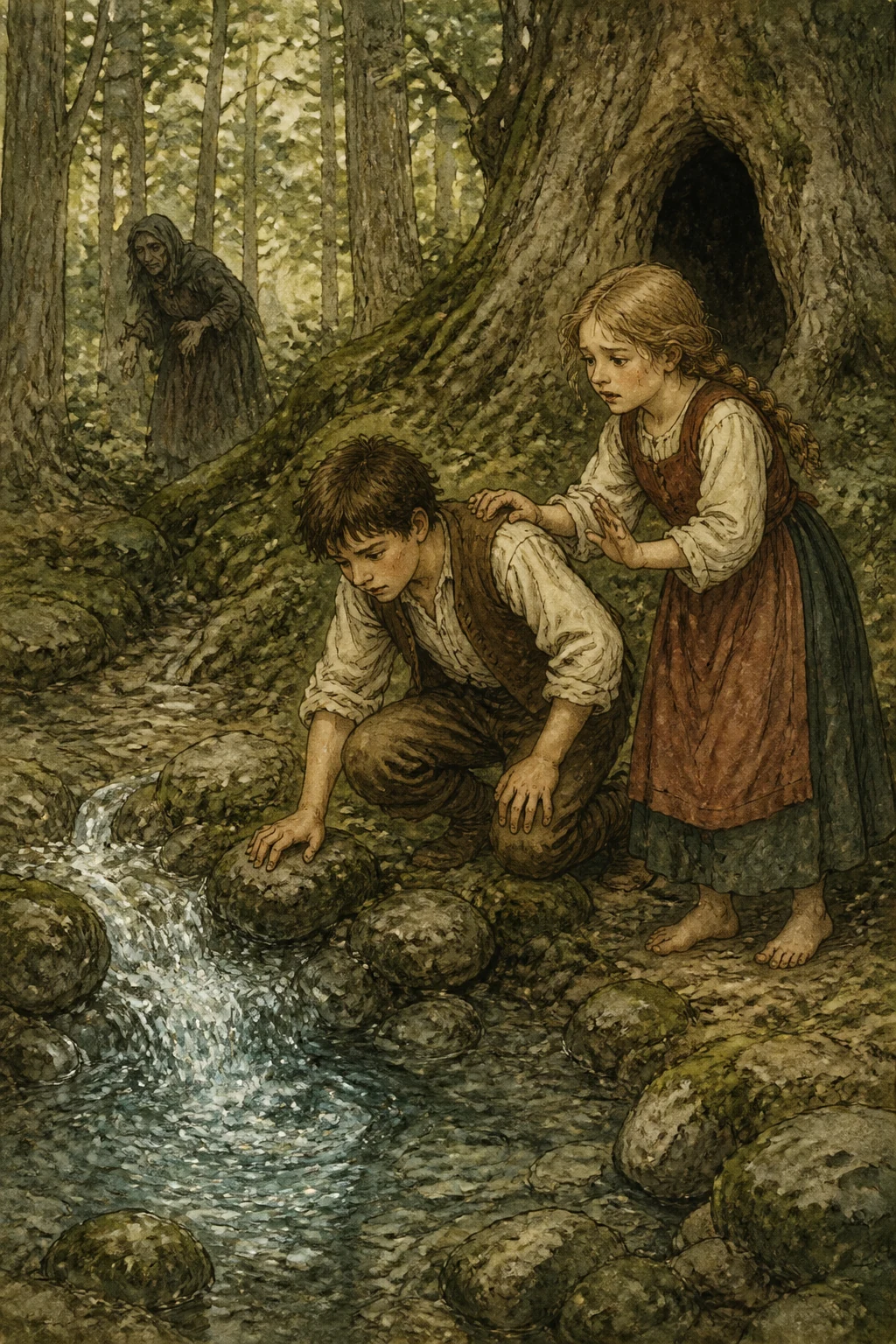
But when each had taken his own, there was still one left, and it was so like the others that they could not tell it apart from them. They looked at one another in wonder. “That is our sister’s spoon,” they said, “and if her spoon is here, she cannot be far away.” “If it is our sister’s spoon, and she is here, she must be killed, for she is to blame for all the misery we suffer,” said the eldest prince, and she lay beneath the bed listening. “No,” said the youngest, “it would be a sin to kill her for that. She cannot help our suffering. If anyone is to blame, it must be our own mother.” Then they began to search for her high and low, and at last they looked beneath all the beds as well. When they came to the youngest prince’s bed, they found her and pulled her out.
Again the eldest prince insisted that she must be killed, but she wept and pleaded so earnestly for her life. “Oh, dear God, do not kill me,” she said. “I have spent many years wandering in search of you, and if I could save you, I would gladly give my life.” “Well, if you will save us,” they said, “you shall be allowed to live, for you could do it if you wished.” “Only tell me how it can be done, and I will do it, whatever it may be,” said the princess. “You must gather cotton-grass,” said the princes, “and card it and spin it and weave it into cloth. When you have done that, you must cut out and sew twelve caps, twelve shirts, and twelve kerchiefs, one for each of us, and while you are doing it you must neither speak nor laugh nor weep. If you can do that, we shall be saved.” “But where am I to find enough cotton-grass for so many kerchiefs and caps and shirts?” said Snow-white and Rose-red.
“We will show you,” said the princes, and they took her to a great, great marsh, so thick with cotton-grass nodding in the wind and glistening in the sunshine that its gleam could be seen a long way off. Never before had the princess seen so much cotton-grass, and at once she began plucking and gathering it as carefully and quickly as she could. When she came home in the evening, she set about carding it and spinning it into yarn.
And so things went well for a long time. She gathered cotton-grass and carded and spun, and in between she kept house for the princes, cooking their meals and making their beds. In the evening they came rushing and whirring home as wild ducks; at night they were princes, but in the morning they flew away again and were wild ducks all day.
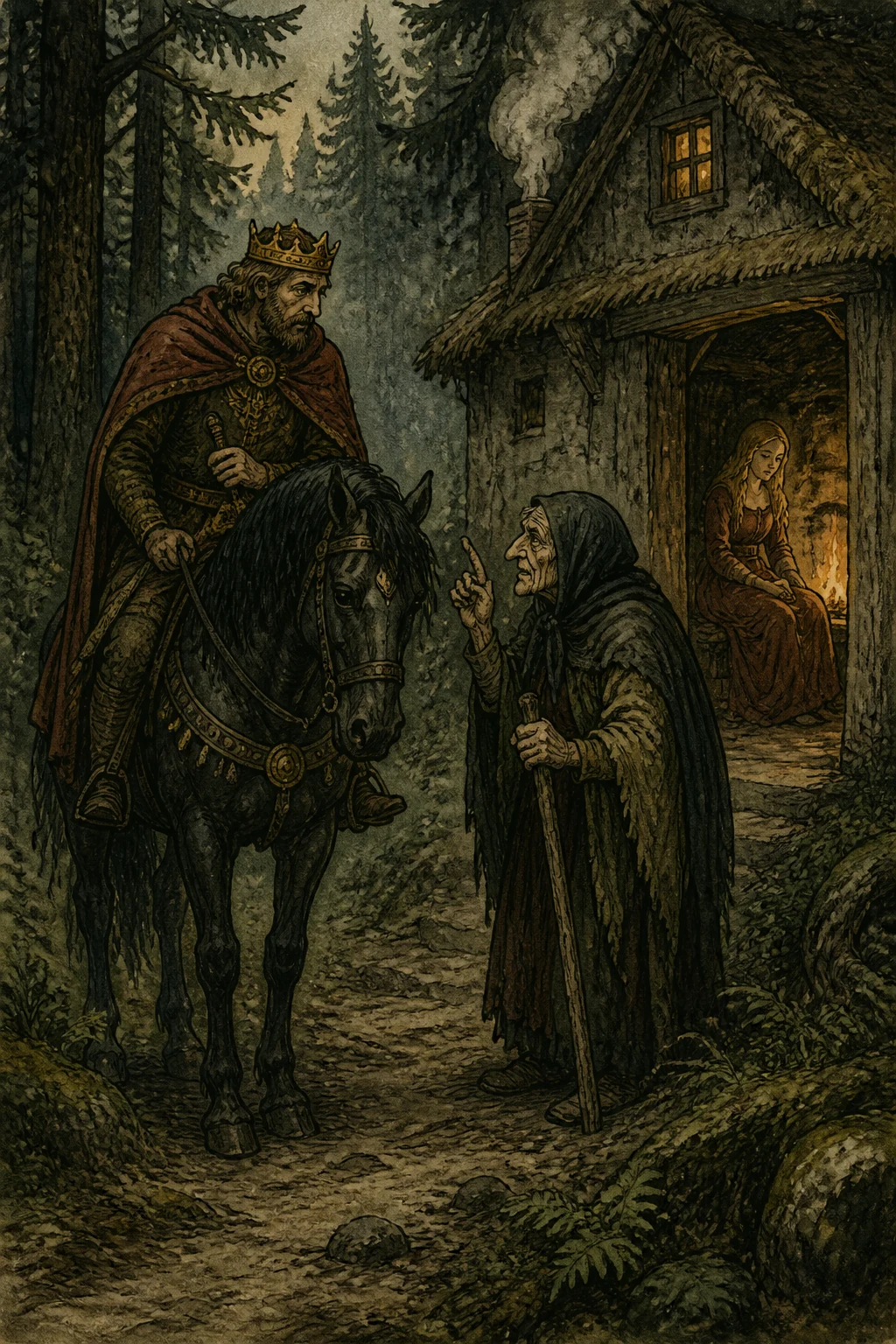
But once, while she was on the marsh gathering cotton-grass—and unless I am mistaken, it was the very last time she needed to go there—the young king who ruled the country happened to be out hunting. He came riding to the marsh and caught sight of her. He stopped and wondered who this lovely maiden could be, walking about the marsh gathering cotton-grass, and he asked her who she was. When she gave no answer to his questions, he wondered all the more, and he was so taken with her that he wished to bring her home to his castle and marry her. So he ordered his servants to take her and set her on his horse. Snow-white and Rose-red wrung her hands and made signs to them, pointing to the sacks in which she kept all her work. When the king understood that she wanted to bring them along, he told his servants to load up the sacks as well. Once they had done that, the princess gradually grew calmer, for the king was both a good man and a handsome one, and he treated her as gently and kindly as a physician. But when they reached the palace and the old queen, who was his stepmother, saw Snow-white and Rose-red, she grew so angry and so jealous of her beauty that she said to the king, “Can you not see that this woman you have brought home and mean to marry is a witch? She neither speaks nor laughs nor weeps.” The king paid no heed to what she said, but celebrated his wedding and married Snow-white and Rose-red, and they lived in great joy and splendour;
but for all that, she did not forget to go on sewing the shirts. Before the year was out, Snow-white and Rose-red gave birth to a prince, and this made the old queen angrier and more jealous than ever. Late that night she stole into Snow-white and Rose-red’s room while she slept, took the child, and threw him into the snake pit. Then she cut the young queen’s finger, smeared the blood about her mouth, and went to the king. “Come and see,” she said, “what sort of woman you have made your queen. Now she has eaten her own child.” The king was so grieved that he was almost in tears, and he said, “Yes, it must be true, since I see it with my own eyes, but surely she will never do it again. This time I will spare her.” Before the year was out, she gave birth to another son, and exactly the same thing happened to him as to the first. The king’s stepmother grew angrier and more jealous still. She stole into the queen’s room at night while she slept, took the child and threw him into the snake pit, cut the queen’s finger and smeared the blood about her mouth, and then told the king that she had eaten her own child. The king was more sorrowful than you could ever imagine, and he said, “Yes, it must be true, since I see it with my own eyes, but surely she will never do it again. Even so, I will spare her once more.” Before another year was out, Snow-white and Rose-red gave birth to a daughter, and the old queen took her too and threw her into the snake pit while the young queen slept. She cut her finger, smeared the blood about her mouth, and went to the king, saying, “Now you may come and see whether I am not right in saying she is a witch, for now she has eaten her third child as well.” The king’s grief knew no bounds, for now he could spare her no longer, but had to order her to be burned alive on a pyre. When the pyre was blazing and she was about to be placed upon it, she made signs that they should bring twelve boards and lay them around the fire. On these she laid the kerchiefs and caps and shirts for her brothers, but the youngest brother’s shirt lacked its left sleeve, for she had not had time to finish it.
No sooner had she done this than they heard a rushing and whirring in the air, and twelve wild ducks came flying over the forest. Each took his clothing in his beak and flew away with it. “Do you see now?” said the wicked queen to the king. “Now you can plainly see that she is a witch. Hurry and burn her before the wood burns away.” “Oh,” said the king, “we have wood enough. I will wait a little longer, for I should like to see how this ends.” Just then the twelve princes came riding up, as handsome and well-grown as any you could wish to see; but the youngest prince had a wild duck’s wing in place of his left arm. “What is happening here?” asked the princes. “My queen is to be burned because she is a witch and has eaten her own children,” replied the king.
“She has not eaten her children,” said the princes. “Speak now, sister. You have saved us; now save yourself.” Then Snow-white and Rose-red spoke and told how it had all happened: how, each time she had given birth, the old queen, the king’s stepmother, had stolen into her room at night, taken her child away, cut her finger, and smeared the blood about her mouth. The princes took the king and led him to the snake pit, where the three children lay playing with snakes and toads, and lovelier children you could never have seen. The king took them up and carried them to his stepmother, and asked her what punishment she thought someone deserved who could have the heart to betray an innocent queen and three such blessed children. “Such a person deserves to be fastened between twelve untamed horses, so that each tears away a piece,” said the old queen. “You have pronounced the sentence yourself, and you shall suffer it yourself,” said the king. And so the wicked old queen was fastened between twelve untamed horses, and each tore away a piece of her. But Snow-white and Rose-red took the king and her children and the twelve princes, and together they travelled home to her parents and told them all that had happened. And now there was great rejoicing throughout the kingdom, because the princess had been saved and had saved her twelve brothers too.