Waltey
Dekle je ugnalo cesarja
Srpske narodne pripovijetke · Vuk Stefanović KaradžićO besedilu
Dekle je ugnalo cesarja
- Vir
- Srpske narodne pripovijetke
- Avtor
- Vuk Stefanović Karadžić
- Jezik branja
- English
- Jezik izvirnika
- Српски
- Čas branja
- 6 min branja
- Obseg
- 5 strani
- Naslov izvirnika
- 025 Дјевојка цара надмудрила
O izvirniku
Srpske narodne pripovijetke
Srbske ljudske pripovedi o junakih, čudežnih bitjih, preizkušnjah in ljudski modrosti. Bralni jezik je English, izvirnik pa prihaja iz vira Srpske narodne pripovijetke v jeziku Српски.
Besedilo
Dekle je ugnalo cesarja
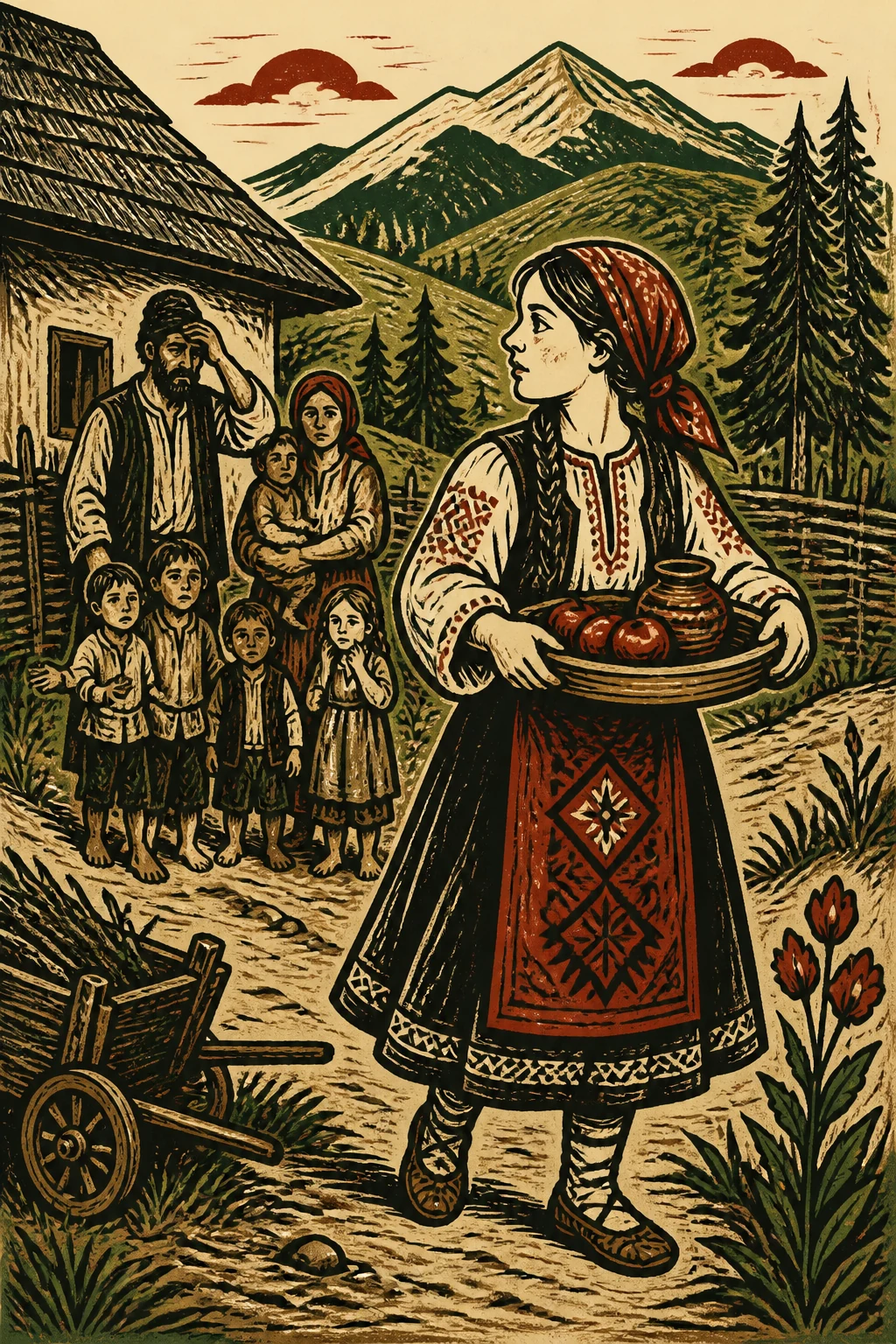
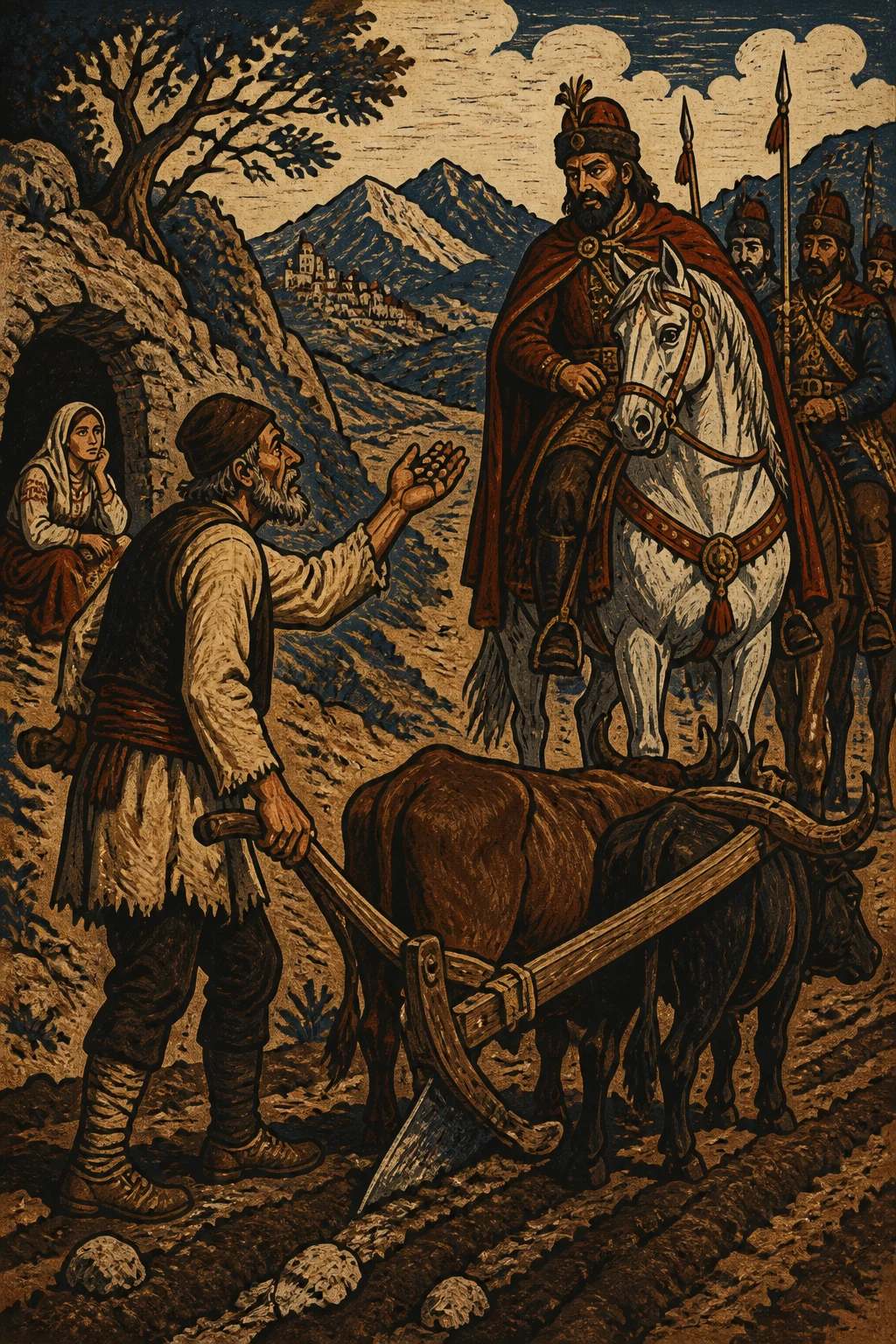
A poor man once lived in a cave and had nothing but a daughter, who was very wise. She went about begging and even taught her father how to beg and speak wisely. One day the poor man went to the emperor to ask for alms. The emperor asked where he came from and who had taught him to speak so wisely. The man told him where he lived and how his daughter had taught him. “And who taught your daughter?” asked the emperor. “God gave her wisdom,” the poor man replied, “and so did our wretched poverty.” Then the emperor gave him thirty eggs and said, “Take these to your daughter and tell her to hatch chicks from them for me. If she does, I shall reward her handsomely, but if she does not, I shall have you put to torture.” The poor man went back to the cave in tears and told his daughter everything. She saw that the eggs were boiled and told her father to go and rest, for she would see to it all. Her father obeyed her and went to sleep, while she took a pot, filled it with water and broad beans, and set it on the fire. When the beans were boiled, she called her father in the morning and told him to take a plough and oxen and go plough beside the road where the emperor would pass. “When you see the emperor,” she said, “take the beans and sow them, calling out, ‘Gee up, oxen! God grant that these boiled beans may bear!’ When the emperor asks you how boiled beans can bear, say, ‘Just as boiled eggs can hatch chicks.’” The poor man did as his daughter told him and went off to plough. When he saw the emperor approaching, he began to call, “Gee up, oxen! God grant that these boiled beans may bear!” Hearing these words, the emperor stopped in the road and said to the poor man, “Poor fellow, how can boiled beans bear?” The man replied, “Your Majesty, just as boiled eggs can hatch chicks.” The emperor realized at once that the daughter had taught him this, so he ordered his servants to seize the man and bring him before him. Then he handed him a hank of flax, saying, “Take this and make from it all the ropes and sails needed for a ship. If you fail, you shall lose your head.” In great fear, the poor man took the hank and went home weeping, and told his daughter everything. She sent him to bed, promising to see to it all. The next morning she took a small piece of wood, woke her father, and said, “Here, take this wood to the emperor and ask him to make me a distaff, a spindle, a loom, and everything else I need from it. Then I shall make him all he commands.” The poor man obeyed his daughter and told the emperor everything just as she had instructed him. When the emperor heard this, he marvelled and began to consider what to do. Then he took a little cup and said, “Take this cup to your daughter and tell her to empty the sea with it, so that dry land remains.” The poor man obeyed and carried the little cup to his daughter in tears, telling her everything the emperor had said. The girl told him to leave it until the next day, and she would see to it all. The next morning she called her father, gave him a pound of tow, and said, “Take this to the emperor and tell him to plug all the springs and all the lakes with it, and then I shall empty the sea.” The poor man went and told the emperor this. Seeing that the girl was far wiser than he was, the emperor ordered the man to bring her before him. When he brought her and they had both bowed, the emperor asked her, “Tell me, girl, what can be heard farthest away?” The girl replied, “Your Majesty, thunder and a lie can be heard farthest away.” Then the emperor took hold of his beard and, turning to his courtiers, asked, “Guess how much my beard is worth.” Some named one price and some another, but the girl told them that none had guessed correctly. “The emperor’s beard,” she said, “is worth three summer rains.” The emperor marvelled and said, “The girl has given the best answer.” Then he asked whether she would be his wife, saying that it must be so and could be no otherwise. The girl bowed and said, “Your Majesty, let it be as you wish. I ask only that you write with your own hand on a sheet of paper that, should you ever grow angry with me and send me away, I may take from your palace whatever is dearest to me.” The emperor agreed to this and signed the paper. After some time had passed, the emperor grew angry with her and said, “I no longer want you for my wife. Leave my palace and go where you will.” The empress replied, “Your Majesty, I shall obey. Only let me stay the night, and I shall leave tomorrow.” The emperor allowed her to stay the night. Then, as they sat at supper, the empress mixed brandy and some fragrant herbs into his wine, and urged him to drink, saying, “Drink merrily, my emperor, for tomorrow we shall part. And believe me, I shall be happier than when we first came together.” The emperor grew drunk and fell asleep, and the empress had a carriage made ready and took him to the rocky cave. When the emperor awoke in the cave and saw where he was, he cried, “Who brought me here?” The empress answered, “I brought you.” The emperor asked her, “Why have you done this to me? Did I not tell you that you were no longer my wife?” Then she took out the paper and said, “It is true, Your Majesty, that you told me so. But look at what you signed on this paper: that when I left you, I might take with me whatever was dearest to me in your house.” When the emperor saw this, he kissed her, and they returned together to the imperial palace.
Izvirnik
025 Дјевојка цара надмудрила
Naslednje strani prikazujejo izvirno besedilo za primerjavo.
Један сиромах живљаше у једној пећини и немаше ништа до једну шћер, која бијаше много мудра и иђаше свуда у прошњу, па и оца свога учаше како ће просити и паметно говорити. Дође једном сиромах к цару да му штогођ удијели; цар га упита окле је и ко га је научио мудро говорити. Ови му одговори окле је и како га је шћер научила. ,.А шћер твоја од кога се научила?" упита цар, а сиромах одговори: "Бог је њу умудрио и наша јадна сиромаштина." Тада му цар даде тридесет јаја и рече му: "Понеси ово твојој шћери и реци јој нека ми из тијех јаја излеже пилад, пак ћу је добро даровати, ако ли пак не излеже, хоћу те ставити на муке." Сиромах отиде плачући у пећину и каже све шћери. Она позна да су јаја варена, и рече оцу да пође починути а да ће се она за све бринути. Отац је послуша и отиде спавати, а она дохвати пињату и настави на ватру пуну воде и боба, иа кад свари боб, зовне ујутро оца и рече му да узме рало и волове пак да иде орати покрај пута куда ће пасати цар, и рече му: "Кад видиш цара, узми боб пак сиј, и вичи: ""хај волови, помози Боже да роди варени боб."" Кад те цар запита како може родити варени боб, а ти реци: као и из варенијех јаја излећи се пилад." Сиромах послуша шћер па отиде те стане орати; кад угледа цара ђе иде, он стане викати: "Хај волови, помози Боже да роди варени боб." Чувши цар ове ријечи, стане на путу и рече сиромаху: "Сиромаше, како може родити варени боб?" А он му одговори: "Честати паре, као и из варенијех јаја излећи се пилад." Стави се цар одмах да га је шћер научила, па заповједи слугама те га ухвате и доведу предањ, па му онда пружи повјесмо лана говорећи: "Узми то, и од тога имаш учинити гумину и једра сва што је од потребе за један брод; ако ли не, изгубићеш главу." Ови сиромах с великијем страхом узме повјесмо и плачући отиде дома и каже све својој шћери. Шћер га пошље да спава обећавајући да ће она све то учинити. Сјутрадан узме мали комад дрвета, пак пробуди оца и рече му: "На ти ово дрво и понеси га цару нека ми од њега направи куђељу и вретено и стативе и остало што требује, пак ћу ја њему направити све што наређује." Сиромах послуша шћер и искаже цару све као што га је она научила. Цар чувши ово зачуди се и стане мислити шта ће чинити, па онда дохвати једну малу чашицу и рече му: "Узми ову чашицу и понеси твојој шћери нека ми њом пресека море да остане поље." Сиромах послуша и плачући понесе шћери ону чашицу и каже јој све што је цар рекао. Ђевојка му рече да остави до сјутра и да ће она све учинити А сјутрадан зовне оца и да му литру ступе и рече "Понеси ово цару и реци му нека овијем затисне све изворе и сва језера, пак ћу ја пресекати море." Сиромах отиде и овако цару рече. Цар видећи да је ђевојка много мудрија од њега, заповједи му да је доведе пред њега; а кад је доведе и обоје се поклоне пред њим, онда је цар запита: "Погоди, ђевојко, шта се може најдаље чути?" Ђевојка одговори "Честити царе, најдаље се може чути гром и лаж." Тада се цар дохвати за браду и обрнувши се својој господин запита их: "Погодите колико ваља моја брада?" Кад једни стану говорити оволико други онолико, онда ђевојка одговори свијема да нијесу погодили, пак рече: "Царева брада ваља колико три кише љетне." Цар се зачуди па рече: "Ђевојка је најбоље погодила." Па је онда запита хоће ли бити његова жена, и да друкчије не може бити него тако. Ђевојка се поклони и рече: "Честити царе! како ти хоћеш нека буде, само молим да ми напишеш на карти својом руком, ако би се кад гођ на ме расрдио и мене од себе оћерао, да сам госпођа узети из твога двора оно што ми је најмилије." Цар јој ово одобри и потпише. Пошто паса неколико времена, цар се на њу ражљути и рече јој: "Нећу те више за жену, него хајде из мога двора куд знаш." Царица му одговори: "Свијетли царе, послушаћу, само ме пусти да преноћим а сјутра ћу поћи." Цар јој допусти да преноћи, онда царица кад су били при вечери помијеша му у вино ракију и нека мирисна биља, и нудећи га да пије говораше му: "Пиј царе весело, јер ћемо се сјутра растати, и вјеруј ми да ћу бити веселија него кад сам се с тобом састала." Цар се опјани и заспи, а царица справи кароцу и понесе цара у камену пећину. Кад се цар у пећини пробуди и види ђе је, повиче: "Ко ме овђе донесе?" А царица му одговори: "Ја сам те донијела." Цар је упита: "За што си ти то од мене учинила? да ли ти нијесам рекао да више нијеси моја жена?" Онда му она извадивши ону карту рече: "Истина је, честити царе, да си ми то казао, али погледај што си на овој карти потписао: што ми буде најмилије у твојему дому да понесем собом кад од тебе пођем." Цар видећи то, пољуби је и поврате се опет у царски двор.
Nadaljuj z branjem