O besedilu
Cipus
- Vir
- Ovidove preobrazbe
- Avtor
- Ovid
- Jezik branja
- English
- Jezik izvirnika
- Latin
- Čas branja
- 4 min branja
- Obseg
- 4 strani
- Naslov izvirnika
- Cipus
O izvirniku
Ovidove preobrazbe
Pesniški tok antičnih preobrazb, kjer bogovi, ljudje in narava stalno menjavajo obliko. Bralni jezik je English, izvirnik pa prihaja iz vira Ovidove preobrazbe v jeziku Latin.
Besedilo
Cipus
Yet others’ sorrows cannot ease Egeria’s grief, and, lying at the mountain’s very foot, she dissolves in tears, until, moved by pity for her sorrow, Phoebus’ sister makes her body a cold spring and melts her limbs into ever-flowing waters. The marvel moved the nymphs, and the Amazon’s son stood as astonished as the Tyrrhenian ploughman who saw, in the midst of his fields, a fateful clod first move of its own accord, with no one stirring it, then take on human shape and lose its earthen form, and open its newborn lips to tell the fates to come (the natives called him Tages, who first taught the Etruscan
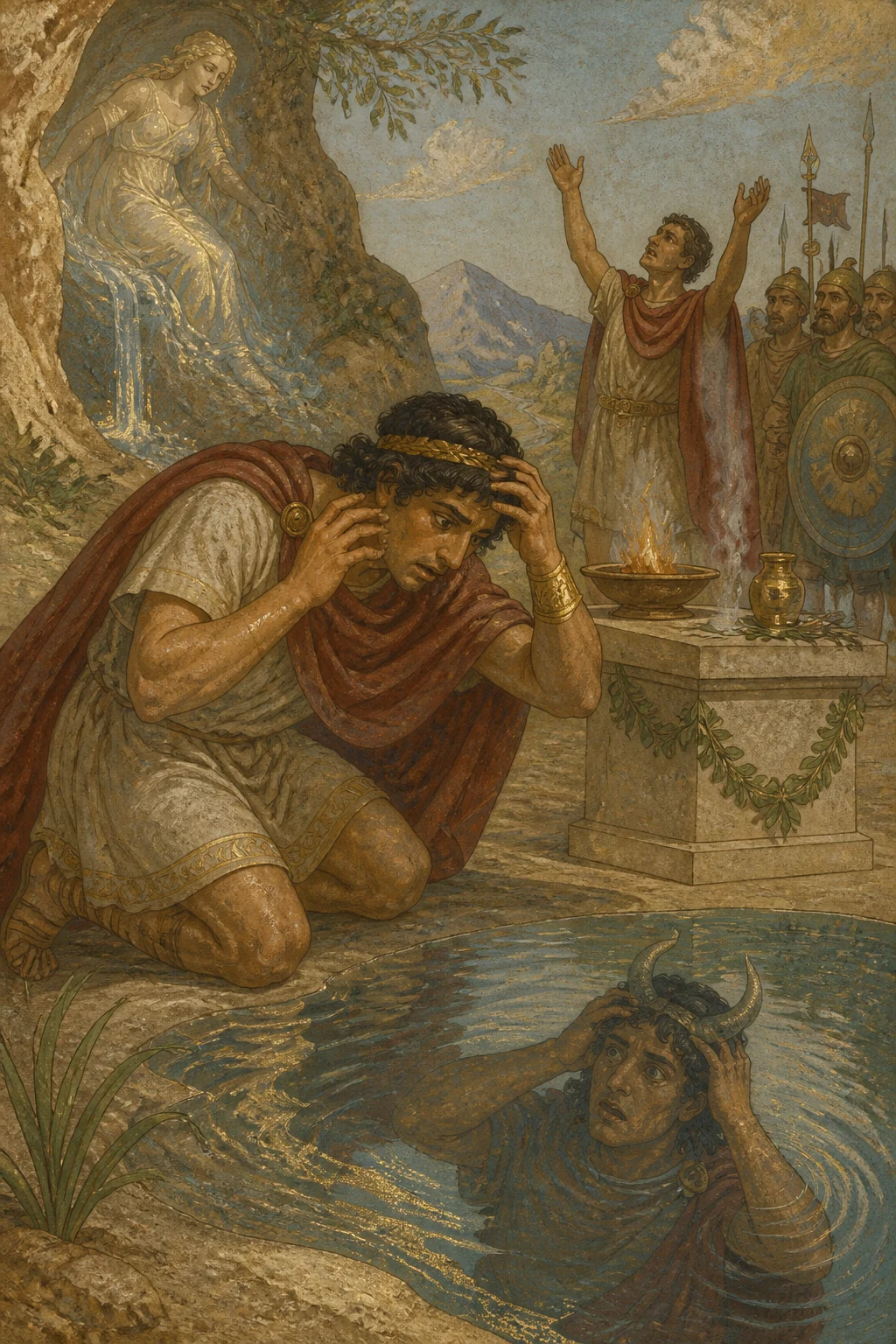
people how to reveal events still in the future); or as Romulus, when long ago he saw his spear, lodged in the Palatine hill, suddenly put forth leaves, standing fast by fresh roots, not its driven iron point, no longer a weapon, but a tree with supple branches, offering unexpected shade to those who marvelled; or as Cipus, when in a river’s water he saw his horns—for he did see them—and, believing the reflection false, repeatedly raised his fingers to his brow and touched what he had seen. No longer doubting his eyes, he halted on his victorious return from conquering the enemy, and, lifting his hands and eyes alike to heaven,
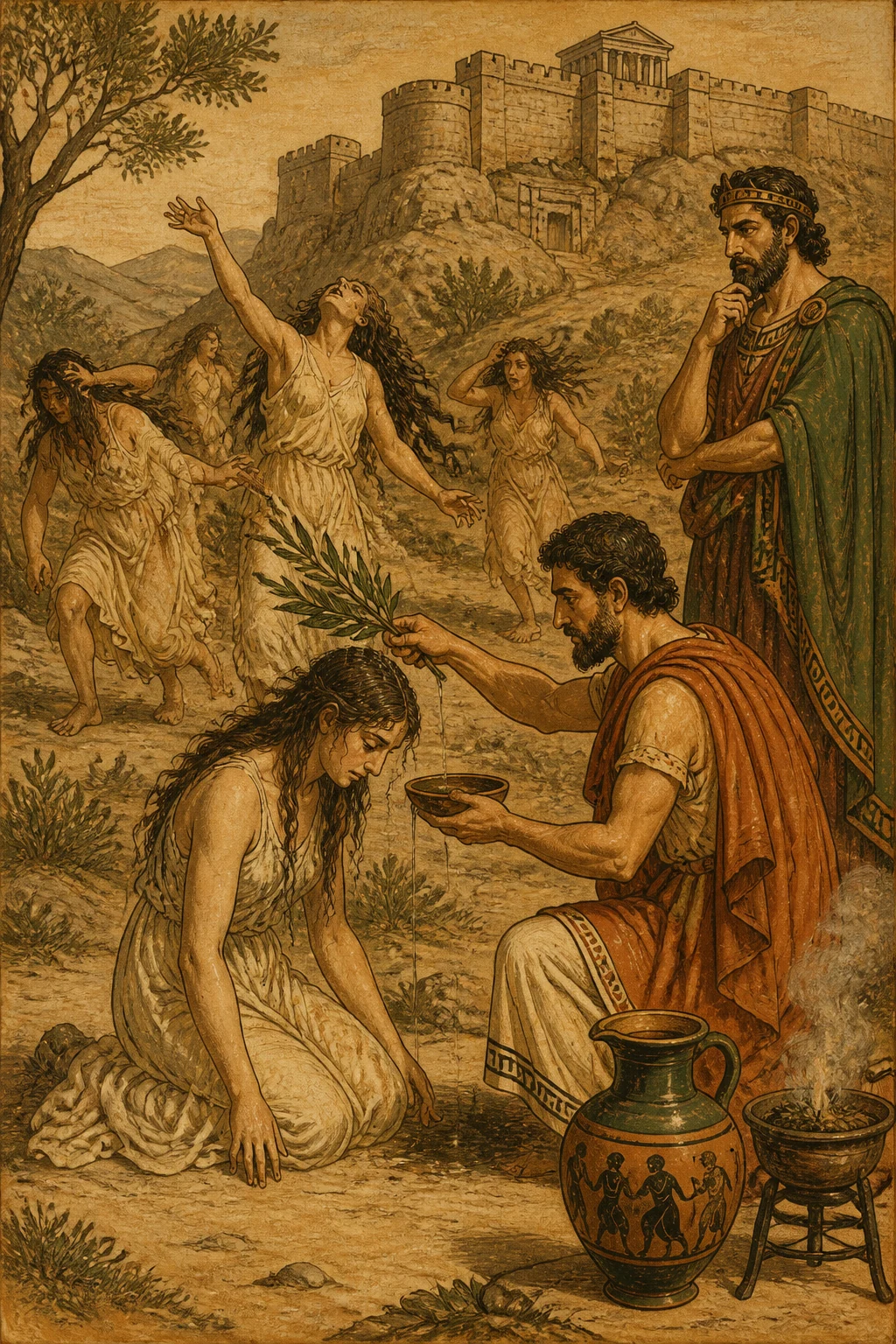
said, “Whatever this portent foretells, you gods above, if it is good, let it bring good to my country and Quirinus’ people; if it threatens evil, let that fall on me!” Then, on altars built of green turf, he kindled fragrant fires to appease the gods, poured wine from bowls, and sought in the quivering entrails of slaughtered sheep to learn what the omen meant for him.
As soon as a soothsayer of the Etruscan people examined them, he saw momentous upheavals foreshadowed there, though their meaning was obscure. But when he raised his keen eyes from the victim’s entrails to the horns of Cipus, “Hail, O king!” he cried. “For you, Cipus, you and your horns, this place and the citadels of Latium shall obey. Only make haste: waste no time, but hurry through the open gates! So fate commands; for once admitted to the city, you shall be king and wield the sceptre securely for ever.”
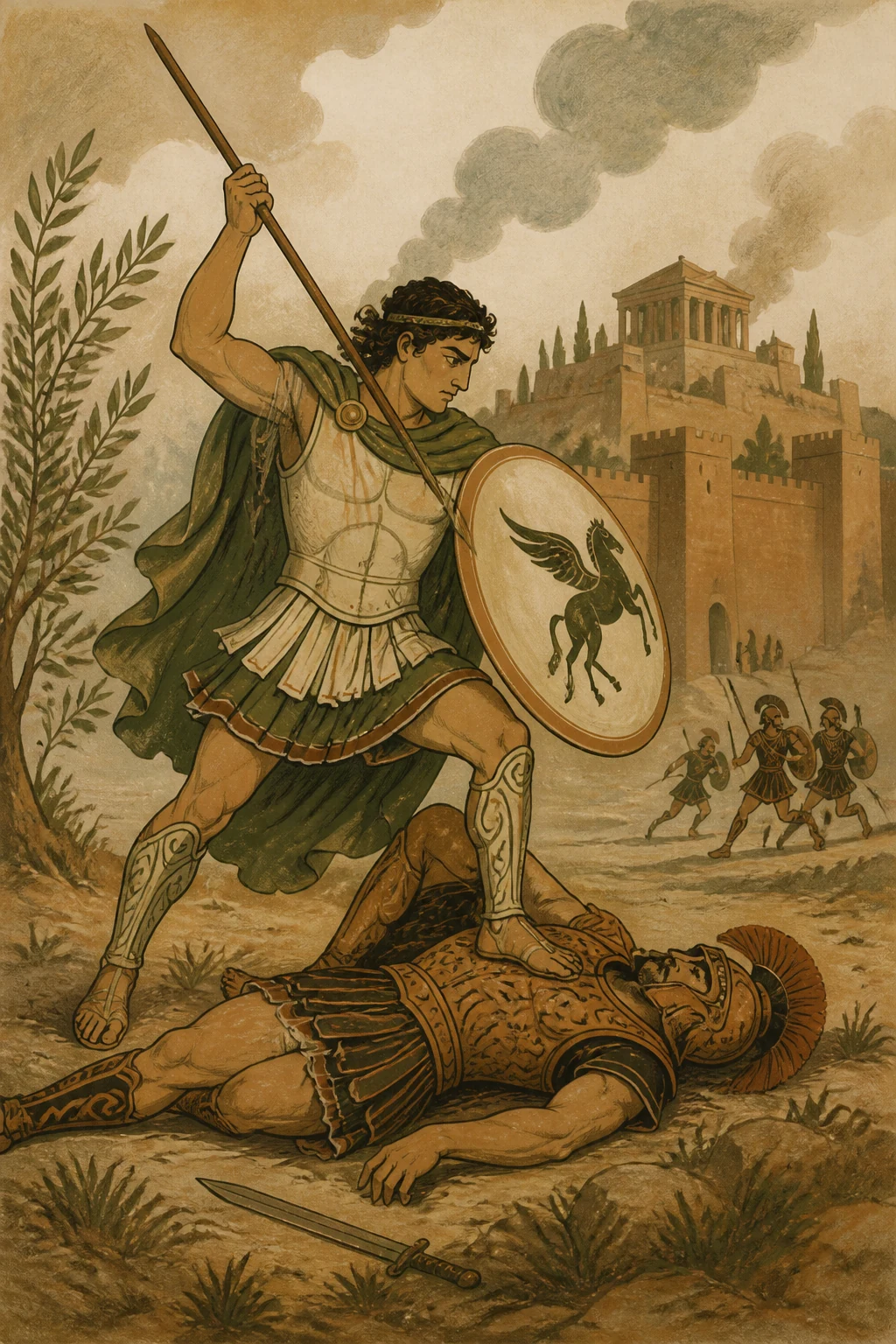
Cipus stepped back and, turning his stern face away from the city walls, cried, “Far away! May the gods avert such omens! Far better that I should live out my days in exile than that the Capitol should see me king!” He spoke, and at once summoned the people and the august senate, but first veiled his horns with laurel, the token of peace. He mounted a mound raised by his valiant soldiers and, after praying to the ancient gods as custom prescribed, said, “There is one man here who, unless you drive him from the city, will be king. I shall identify him by a sign, not by name: he bears horns upon his brow. The soothsayer declares that, if he enters Rome, he will impose the laws of slavery on you.
He could indeed have burst through the open gates, but I stood in his way, though no one is more closely bound to me than he. Keep this man from the city, fellow citizens, or, if he deserves it, bind him with heavy chains, or end your fear by killing this king foretold by fate!” As pine groves murmur when the fierce east wind hisses through their lofty trunks, or as the waves of the sea sound to someone listening from afar, so the people roared; yet through the crowd’s confused and clamorous words one cry rose clear: “Who is he?”
They scanned each other’s brows, searching for the foretold horns. Then Cipus spoke again: “The man you seek is here.” And, taking the wreath from his head, though the people protested, he revealed his temples, marked by their twin horns. All lowered their eyes and groaned, and—who could believe it?—they could not bear to look upon that head renowned for noble deeds. Nor would they let it remain unhonoured, but set the festive wreath upon it.
And since you were forbidden to enter the walls, the leaders gave you, Cipus, as an honour, as much farmland as you could encircle with a plough sunk into the earth, drawn by yoked oxen, between sunrise and the close of day; and on the bronze-clad gateposts they carved horns to recall that wondrous form, a memorial for ages to come.
Izvirnik
Cipus
Naslednje strani prikazujejo izvirno besedilo za primerjavo.
Source ID: ovid_metamorphoses_story_102 Citation: Ovid, Metamorphoses 15.547-15.621 Original language: Latin Source: PerseusDL canonical-latinLit Source URL: https://github.com/PerseusDL/canonical-latinLit/blob/master/data/phi0959/phi006/phi0959.phi006.perseus-lat2.xml Segmentation certainty: medium 547: Non tamen Egeriae luctus aliena levare 548: damna valent, montisque iacens radicibus imis 549: liquitur in lacrimas, donec pietate dolentis 550: mota soror Phoebi gelidum de corpore fontem 551: fecit et aeternas artus tenuavit in undas.
552: Et nymphas tetigit nova res, et Amazone natus 553: haud aliter stupuit, quam cum Tyrrhenus arator 554: fatalem glaebam mediis adspexit in arvis 555: sponte sua primum nulloque agitante moveri, 556: sumere mox hominis terraeque amittere formam 557: oraque venturis aperire recentia fatis 558: (indigenae dixere Tagen, qui primus Etruscam 559: edocuit gentem casus aperire futuros); 560: utve Palatinis haerentem collibus olim 561: cum subito vidit frondescere Romulus hastam, 562: quae radice nova, non ferro stabat adacto 563: et iam non telum, sed lenti viminis arbor
564: non exspectatas dabat admirantibus umbras; 565: aut sua fluminea cum vidit Cipus in unda 566: cornua (vidit enim) falsamque in imagine credens 567: esse fidem, digitis ad frontem saepe relatis, 568: quae vidit, tetigit, nec iam sua lumina damnans 569: restitit, ut victor domito veniebat ab hoste, 570: ad caelumque manus et eodem lumina tollens 571: “quiquid” ait, “superi, monstro portenditur isto, 572: seu laetum est, patriae laetum populoque Quirini, 573: sive minax, mihi sit!” viridique e caespite factas 574: placat odoratis herbosas ignibus aras 575: vinaque dat pateris mactatarumque bidentum,
576: quid sibi significent, trepidantia consulit exta. 577: Quae simul adspexit Tyrrhenae gentis haruspex, 578: magna quidem rerum molimina vidit in illis, 579: non manifesta tamen. Cum vero sustulit acre 580: a pecudis fibris ad Cipi cornua lumen, 581: “rex” ait, “o salve! Tibi enim, tibi, Cipe, tuisque 582: hic locus et Latiae parebunt cornibus arces. 583: Tu modo rumpe moras portasque intrare patentes 584: adpropera! sic fata iubent; namque urbe receptus 585: rex eris et sceptro tutus potiere perenni.”
586: Rettulit ille pedem torvamque a moenibus urbis 587: avertens faciem “procul a! procul omina” dixit 588: “talia di pellant! Multoque ego iustius aevum 589: exsul agam, quam me videant Capitolia regem!” 590: Dixit et extemplo populumque gravemque senatum 591: convocat, ante tamen pacali cornua lauro 592: velat; et aggeribus factis a milite forti 593: insistit priscosque deos e more precatus 594: “est” ait “hic unus, quem vos nisi pellitis urbe, 595: rex erit. Is qui sit, signo, non nomine dicam: 596: cornua fronte gerit. Quem vobis indicat augur, 597: si Romam intrarit, famularia iura daturum.
598: Ille quidem potuit portas inrumpere apertas, 599: sed nos obstitimus, quamvis coniunctior illo 600: nemo mihi est. Vos urbe virum prohibete, Quirites, 601: vel, si dignus erit, gravibus vincite catenis, 602: aut finite metum fatalis morte tyranni!” 603: Qualia succinctis, ubi trux insibilat eurus, 604: murmura pinetis fiunt, aut qualia fluctus 605: aequorei faciunt, siquis procul audiat illos, 606: tale sonat populus; sed per confusa frementis 607: verba tamen vulgi vox eminet una “quis ille est?”, 608: et spectant frontes praedictaque cornua quaerunt.
609: Rursus ad hos Cipus “quem poscitis” inquit, “habetis” 610: et dempta capiti, populo prohibente, corona 611: exhibuit gemino praesignia tempora cornu. 612: Demisere oculos omnes gemitumque dedere 613: atque illud meritis clarum (quis credere possit?) 614: inviti videre caput; nec honore carere 615: ulterius passi, festam imposuere coronam. 616: At proceres, quoniam muros intrare vetaris, 617: ruris honorati tantum tibi, Cipe, dedere, 618: quantum depresso subiectis bubus aratro 619: complecti posses ad finem lucis ab ortu, 620: cornuaque aeratis miram referentia formam
621: postibus insculpunt, longum mansura per aevum.
Nadaljuj z branjem