Prevod
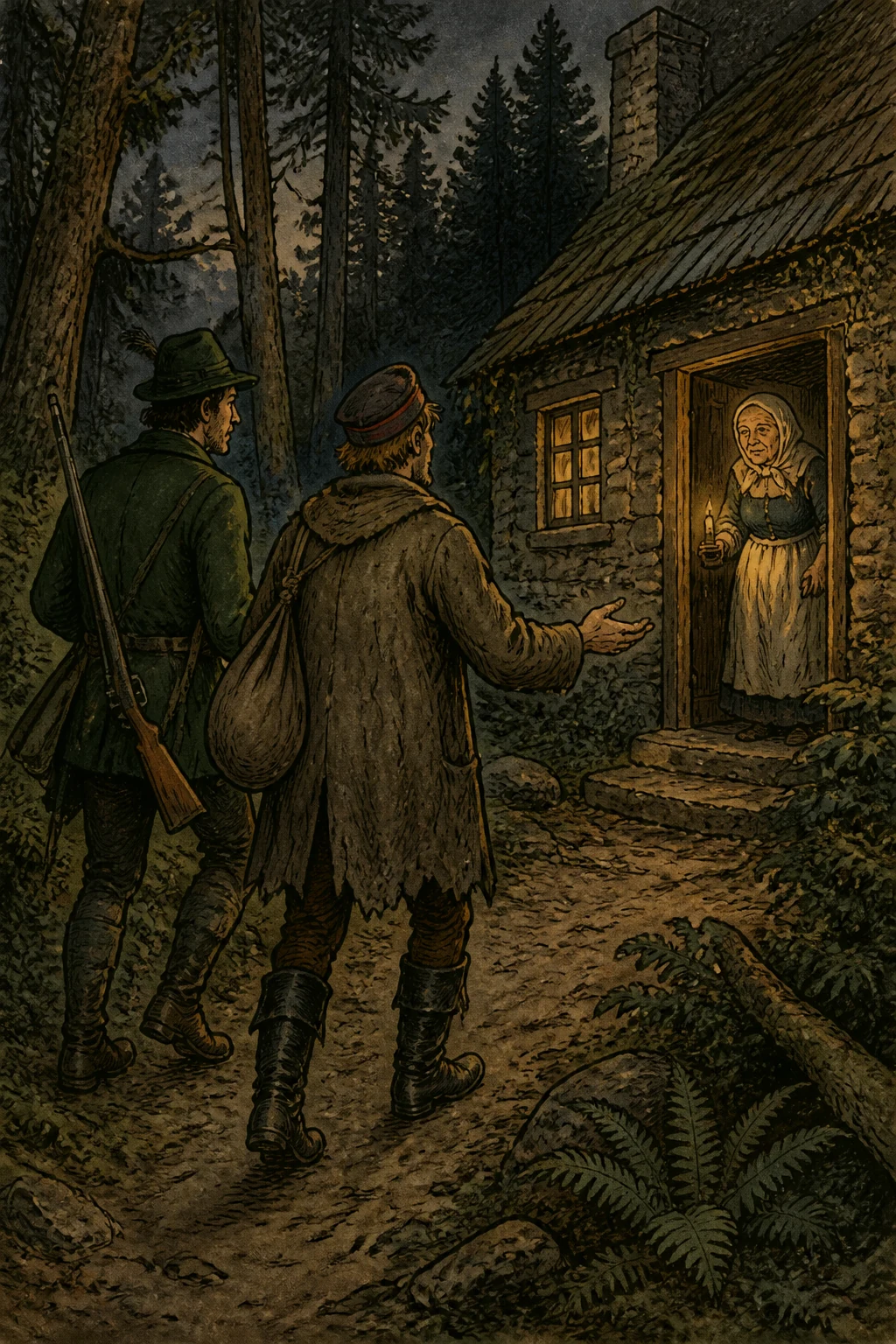
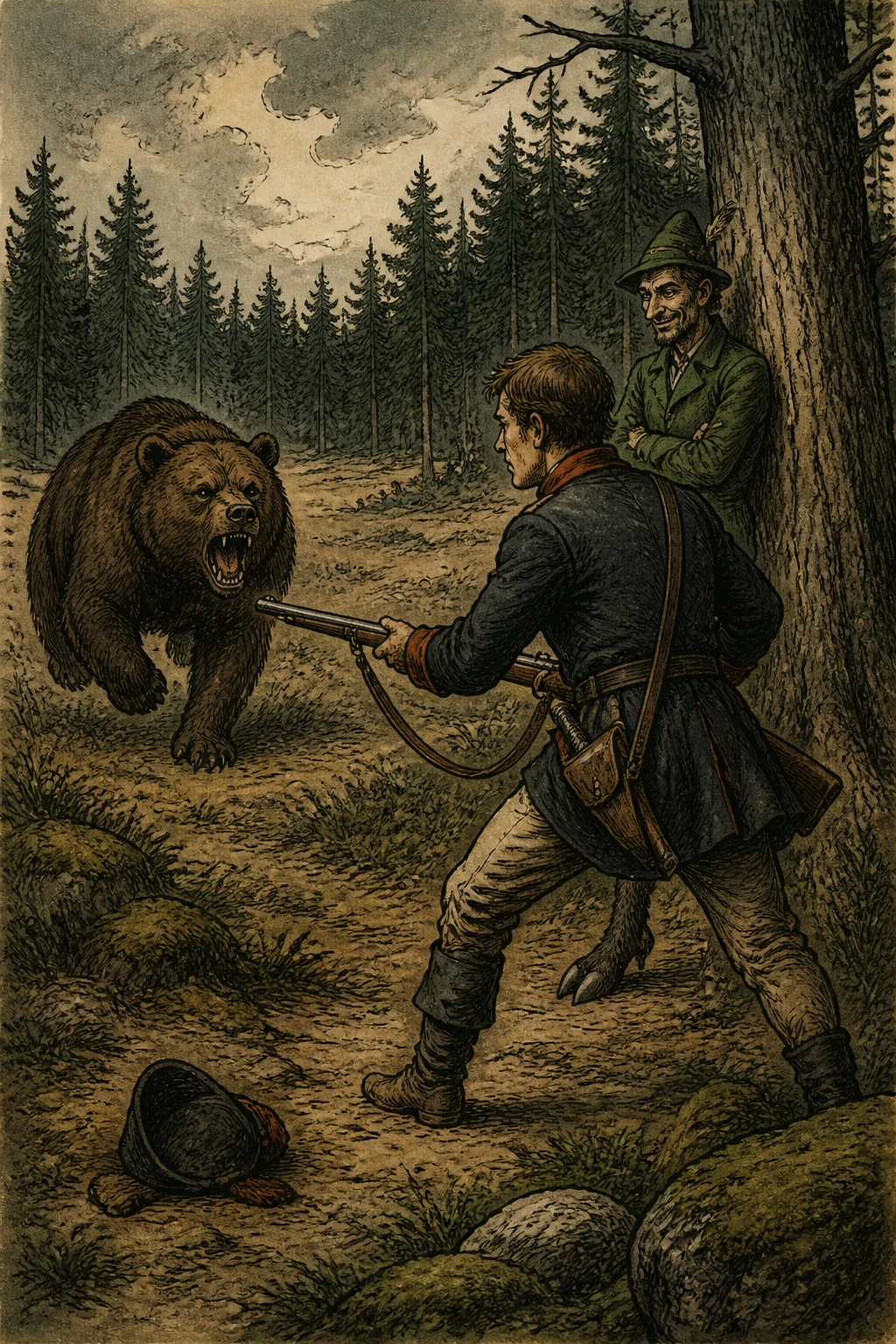
Once upon a time there was a great war, and when it was over, many soldiers were discharged. Brother Lustig received his discharge too, and nothing else but a small loaf of army bread and four kreuzers in money; with these he set off. Now Saint Peter had seated himself by the roadside in the guise of a poor beggar, and when Brother Lustig came along, he asked him for alms. “My dear beggar,” he replied, “what am I to give you? I was a soldier, and now I’ve been discharged, and I’ve nothing but this little loaf of army bread and four kreuzers. When that’s all gone, I’ll have to beg just as you do. Still, I’ll give you something.” With that he divided the loaf into four pieces and gave the apostle one, along with a kreuzer. Saint Peter thanked him, went on ahead, and sat down by the soldier’s path again, in another guise, as a beggar. When the soldier reached him, he asked for a gift as before. Brother Lustig answered as he had the first time, and again gave him a quarter of the bread and a kreuzer. Saint Peter thanked him and went on, but for a third time he sat down by the roadside in a different guise as a beggar and called to Brother Lustig. Brother Lustig gave him the third quarter of the bread and the third kreuzer too. Saint Peter thanked him, and Brother Lustig went on his way with no more than a quarter of a loaf and one kreuzer. With these he went into an inn, ate the bread, and spent his kreuzer on beer to drink with it. When he had finished, he set off again, and Saint Peter came towards him, this time also in the guise of a discharged soldier, and spoke to him. “Good day, comrade. Could you give me a piece of bread and a kreuzer for a drink?” “Where am I to get them?” answered Brother Lustig. “I was given my discharge, and nothing else but a loaf of army bread and four kreuzers. I met three beggars on the highway, and I gave each of them a quarter of my bread and a kreuzer. I ate the last quarter at the inn and spent the last kreuzer on a drink to go with it. Now I’ve nothing left, and if you’ve nothing either, we can go begging together.” “No,” answered Saint Peter, “that won’t really be necessary. I know a little about doctoring, and I’ll earn as much as I need that way.” “Well,” said Brother Lustig, “I know nothing about that, so I’ll have to go begging on my own.” “Just come along with me,” said Saint Peter. “Whatever I earn, you shall have half.” “That suits me very well,” said Brother Lustig. So they went on together.
Presently they came to a farmhouse and heard a terrible wailing and crying inside. They went in and found the farmer lying there desperately ill and close to death, while his wife sobbed and wept aloud. “Stop your wailing and weeping,” said Saint Peter. “I’ll make your husband well again.” He took an ointment from his pocket and healed the sick man in an instant, so that he could get up and was quite well. In their great joy, the man and his wife said, “How can we repay you? What shall we give you?” But Saint Peter would take nothing, and the more the farmers begged him, the more firmly he refused. Brother Lustig nudged Saint Peter and said, “Do take something. We need it, after all.” At last the farmer’s wife brought a lamb and told Saint Peter he must accept it, but he would not. Then Brother Lustig nudged him in the side and said, “Take it, you silly fool. We need it.” At last Saint Peter said, “Very well, I’ll take the lamb, but I won’t carry it. If you want it, you must carry it yourself.” “That’s no trouble,” said Brother Lustig. “I’ll carry it readily enough,” and he hoisted it onto his shoulder. They went on and came to a forest. By now the lamb had grown heavy on Brother Lustig’s shoulder, and he was hungry, so he said to Saint Peter, “Look, there’s a fine spot where we could cook the lamb and eat it.” “That suits me,” answered Saint Peter, “but I know nothing about cooking. If you’ll do the cooking, here’s a kettle. Meanwhile I’ll walk about until it’s ready. But you mustn’t begin eating before I return. I’ll be back in good time.” “Off you go,” said Brother Lustig. “I know how to cook. I’ll see to it.” So Saint Peter went away, and Brother Lustig slaughtered the lamb, lit a fire, threw the meat into the kettle, and cooked it. But the lamb was done and the apostle had still not returned, so Brother Lustig took it out of the kettle, cut it up, and found the heart.
“That’s supposed to be the best part,” he said, and tasted it; in the end he ate it all. At last Saint Peter returned and said, “You may eat the whole lamb yourself. I only want the heart; give me that.” Brother Lustig took his knife and fork and pretended to search eagerly among the meat, but he could not find the heart. At last he said bluntly, “There isn’t one.” “Well, where can it be, then?” said the apostle. “I don’t know,” answered Brother Lustig. “But look here, what fools we both are, searching for a lamb’s heart, and neither of us remembering that a lamb has no heart!” “Why,” said Saint Peter, “that’s something quite new. Every animal has a heart. Why should a lamb have none?” “No, truly, brother, a lamb has no heart. Just think it over properly and you’ll remember. It really hasn’t one.” “Very well, then,” said Saint Peter. “If there’s no heart, I don’t want any of the lamb either. You may eat it all yourself.” “Whatever I can’t finish, I’ll take along in my knapsack,” said Brother Lustig. He ate half the lamb and put the rest into his knapsack.
They went on, and Saint Peter caused a great stream to flow across their path, so that they had to wade through it. “You go first,” said Saint Peter. “No,” answered Brother Lustig, “you go first,” thinking, “If the water’s too deep for him, I’ll stay behind.” So Saint Peter waded across, and the water came only to his knees. Brother Lustig then tried to cross as well, but the water grew deeper and rose to his neck. “Brother, help me!” he cried. Saint Peter said, “Will you admit that you ate the lamb’s heart?” “No,” he answered, “I didn’t eat it.” Then the water rose still higher, right up to his mouth. “Help me, brother!” cried the soldier. Once more Saint Peter said, “Will you admit that you ate the lamb’s heart?” “No,” he answered, “I didn’t eat it.” But Saint Peter would not let him drown, so he made the water fall again and helped him across.
They travelled on and came to a kingdom where they heard that the king’s daughter lay at death’s door. “Hello, brother,” said the soldier to Saint Peter, “here’s a fine catch for us. If we make her well, we’ll be provided for till the end of our days.” Saint Peter was not moving fast enough to please him. “Come, pick up your feet, dear brother,” he said, “so we get there in time.” But Saint Peter walked more and more slowly, however much Brother Lustig urged and pushed him, until at last they heard that the king’s daughter had died. “There we are,” said Brother Lustig. “That comes of your sleepy pace.” “Be quiet,” answered Saint Peter. “I can do more than heal the sick. I can also bring the dead back to life.” “Well, if that’s so,” said Brother Lustig, “I’ve no objection, but you must earn us at least half the kingdom for it.” Then they went to the royal palace, where everyone was in deep mourning, and Saint Peter told the king that he would restore his daughter to life. He was led to her, and then he said, “Bring me a kettle of water.” When it had been brought, he ordered everyone to leave; only Brother Lustig was allowed to stay with him. Then he cut the dead girl’s limbs apart and threw them into the water, lit a fire beneath the kettle, and left them to boil. When all the flesh had fallen from the bones, he took out the lovely white bones and laid them on a table, arranging and fitting them together in their natural order. When this was done, he stood before them and said three times, “In the name of the most Holy Trinity, dead maiden, arise.” At the third time, the king’s daughter rose, alive, healthy, and beautiful. The king was overjoyed and said to Saint Peter, “Name your reward. Even if it is half my kingdom, I will give it to you.” But Saint Peter answered, “I ask nothing for it.” “Oh, you great fool!” thought Brother Lustig. He nudged his companion in the side and said, “Don’t be so stupid. If you want nothing, I still need something.” But Saint Peter would take nothing. The king, however, seeing that the other man would gladly have something, ordered his treasurer to fill Brother Lustig’s knapsack with gold.
They went on their way, and when they came to a forest, Saint Peter said to Brother Lustig, “Now we shall divide the gold.” “Yes,” he answered, “so we shall.” Saint Peter divided the gold into three shares. Brother Lustig thought, “What strange notion has he got into his head now? He makes three shares, and there are only two of us.” But Saint Peter said, “Now I’ve divided it fairly: one share for me, one for you, and one for whoever ate the lamb’s heart.” “Oh, I ate that,” answered Brother Lustig, quickly scooping up the gold. “You may believe me.” “How can that be true?” said Saint Peter. “A lamb has no heart.” “Oh, come, brother, what are you thinking of? A lamb has a heart just like any other animal. Why should it alone have none?” “Very well, then,” said Saint Peter. “Keep all the gold yourself. But I shall stay with you no longer; I mean to go my own way.” “As you please, dear brother,” answered the soldier. “Farewell.”
Saint Peter took another road, and Brother Lustig thought, “It’s just as well he’s trotting off. He’s a peculiar sort of saint.” Now, although he had plenty of money, he did not know how to manage it. He squandered it and gave it away, and after a while he had nothing again. Then he came to a country where he heard that the king’s daughter had died. “Aha!” he thought. “This could turn out well. I’ll bring her back to life and make them pay me handsomely for it.” So he went to the king and offered to raise the dead girl. Now the king had heard that a discharged soldier was travelling about bringing the dead back to life, and he thought Brother Lustig was the man. Yet since he had no confidence in him, he first consulted his councillors. They said he might venture it, since his daughter was dead in any case. Brother Lustig then had a kettle of water brought to him, ordered everyone to leave, cut off the limbs, threw them into the water, and lit a fire underneath, just as he had seen Saint Peter do. The water began to boil and the flesh fell away, so he took out the bones and put them on the table. But he did not know the order in which they belonged and laid them all in a muddle. Then he stood before them and said, “In the name of the most Holy Trinity, dead maiden, arise.” He said it three times, but the bones did not stir. He said it another three times, but again in vain. “You confounded girl, get up!” he cried. “Get up, or it’ll be the worse for you!” Just as he said this, Saint Peter suddenly came in through the window in his former guise as a discharged soldier and said, “You godless man, what are you doing? How can the dead girl rise when you’ve thrown her bones together in such a jumble?” “Dear brother, I did it as well as I could,” he answered. “This time I’ll help you out of trouble, but I warn you, if you ever attempt such a thing again, you’ll come to grief. And you must neither ask nor accept the slightest thing from the king in return.” Then Saint Peter laid the bones in their proper order and said to her three times, “In the name of the most Holy Trinity, dead maiden, arise.” The king’s daughter stood up, healthy and beautiful as before. Saint Peter went out through the window again. Brother Lustig was glad things had turned out so well, yet he was annoyed that he was to take nothing for it. “I’d only like to know,” he thought, “what queer notions he has in his head. What he gives with one hand, he takes away with the other. There’s no sense in it.” The king now offered Brother Lustig whatever he wished, but he was not allowed to accept anything. Still, by hints and cunning, he contrived to have the king order his knapsack filled with gold, and with that he departed. When he came out, Saint Peter was standing before the gate and said, “See what sort of man you are! Didn’t I forbid you to take anything? And now your knapsack is full of gold after all.” “How can I help it,” answered Brother Lustig, “if they put it in for me?” “I warn you not to attempt such things again, or you’ll fare badly.” “Oh, brother, don’t worry. Now that I have gold, why should I bother with washing bones?” “Yes,” said Saint Peter, “that gold will last a long time indeed! But so that you don’t turn to forbidden ways again afterwards, I shall give your knapsack the power to hold whatever you wish into it. Farewell. You will not see me again.” “God be with you,” said Brother Lustig, thinking, “I’m glad you’re going, you queer fellow. I certainly shan’t follow you.” And he gave no further thought to the wondrous power bestowed on his knapsack.
Brother Lustig roamed about with his gold, wasting and squandering it as he had before. When he had only four kreuzers left, he passed an inn and thought, “This money must go.” So he ordered three kreuzers’ worth of wine and one kreuzer’s worth of bread. As he sat there drinking, the smell of roasting geese reached his nose. Brother Lustig peered about and saw that the innkeeper had two geese in the oven. Then he remembered that his companion had told him whatever he wished into his knapsack would be there. “Aha, you must try that with the geese!” So he went outside, and at the door he said, “I wish those two roast geese out of the oven and into my knapsack.” As soon as he had said it, he unbuckled the knapsack and looked inside, and there they both lay. “Ah, that’s the way!” he said. “Now I’m a made man.” He went off to a meadow and took out the roast geese. While he was eating with great enjoyment, two journeymen came along and gazed hungrily at the one goose that was still untouched. Brother Lustig thought, “One is enough for you.” He called the two young men over and said, “Here, take this goose and eat it to my health.” They thanked him, took it to the inn, ordered half a measure of wine and a loaf of bread, unpacked the goose they had been given, and began to eat. The innkeeper’s wife watched them and said to her husband, “Those two are eating a goose. Go and see whether it’s one of ours from the oven.” The innkeeper ran to look, and the oven was empty. “What’s this, you thieving scoundrels? You think you can eat geese so cheaply? Pay up at once, or I’ll give you a taste of my green hazel stick!” The two said, “We’re not thieves. A discharged soldier gave us the goose out in the meadow.” “Don’t try to pull the wool over my eyes. The soldier was here, but he went out through the door an honest fellow. I kept an eye on him. You’re the thieves, and you shall pay.” But since they could not pay, he took his stick and beat them out of the door.
Brother Lustig went on his way and came to a place where there stood a splendid castle, with a shabby inn not far away. He went into the inn and asked for a night’s lodging, but the innkeeper turned him away, saying, “There’s no room left. The house is full of distinguished guests.” “That surprises me,” said Brother Lustig, “that they come to you instead of going to that splendid castle.” “Yes,” answered the innkeeper, “but spending a night there is no simple matter. No one who has tried it has ever come out alive.” “If others have tried it,” said Brother Lustig, “I’ll try it too.” “Leave well alone,” said the innkeeper. “It’ll cost you your neck.” “It won’t come to that so quickly,” said Brother Lustig. “Just give me the keys, and plenty to eat and drink.” The innkeeper gave him the keys and food and drink, and Brother Lustig went to the castle and enjoyed his supper. When at last he grew sleepy, he lay down on the floor, for there was no bed. He soon fell asleep, but in the night he was woken by a tremendous noise. When he roused himself, he saw nine hideous devils in the room, who had formed a circle round him and were dancing about him. Brother Lustig said, “Dance as long as you like, but let none of you come too close.” But the devils pressed nearer and nearer, almost treading on his face with their filthy feet. “Keep quiet, you devilish phantoms,” he said, but they only grew worse. Then Brother Lustig became angry and cried, “Aha, I’ll soon put a stop to this!” He seized a chair leg and struck into their midst. But nine devils against one soldier were too many, and whenever he struck at those in front, the others seized him by the hair from behind and tugged at it cruelly. “You devil’s rabble!” he cried. “This is too much! But just you wait! All nine of you into my knapsack!” In a flash they were inside, and he buckled it shut and threw it into a corner. At once all was quiet, and Brother Lustig lay down again and slept until broad daylight. Then the innkeeper and the nobleman who owned the castle came to see what had become of him. When they found him safe and sound, they were astonished and asked, “Did the spirits do you no harm?” “Not a bit of it,” answered Brother Lustig. “I have all nine of them in my knapsack. You may live in your castle in perfect peace again. From now on, nothing will haunt it!” The nobleman thanked him, gave him rich gifts, and begged him to remain in his service, promising to provide for him for the rest of his life. “No,” he answered. “I’m used to wandering about. I’ll travel on.” So Brother Lustig went away, called at a smithy, and laid the knapsack with the nine devils inside it on the anvil. Then he asked the smith and his journeymen to hammer away at it. They struck with their great hammers with all their might, until the devils set up a pitiful shrieking. When he opened the knapsack afterwards, eight were dead, but one, who had been sitting in a fold, was still alive. He slipped out and fled back to hell.
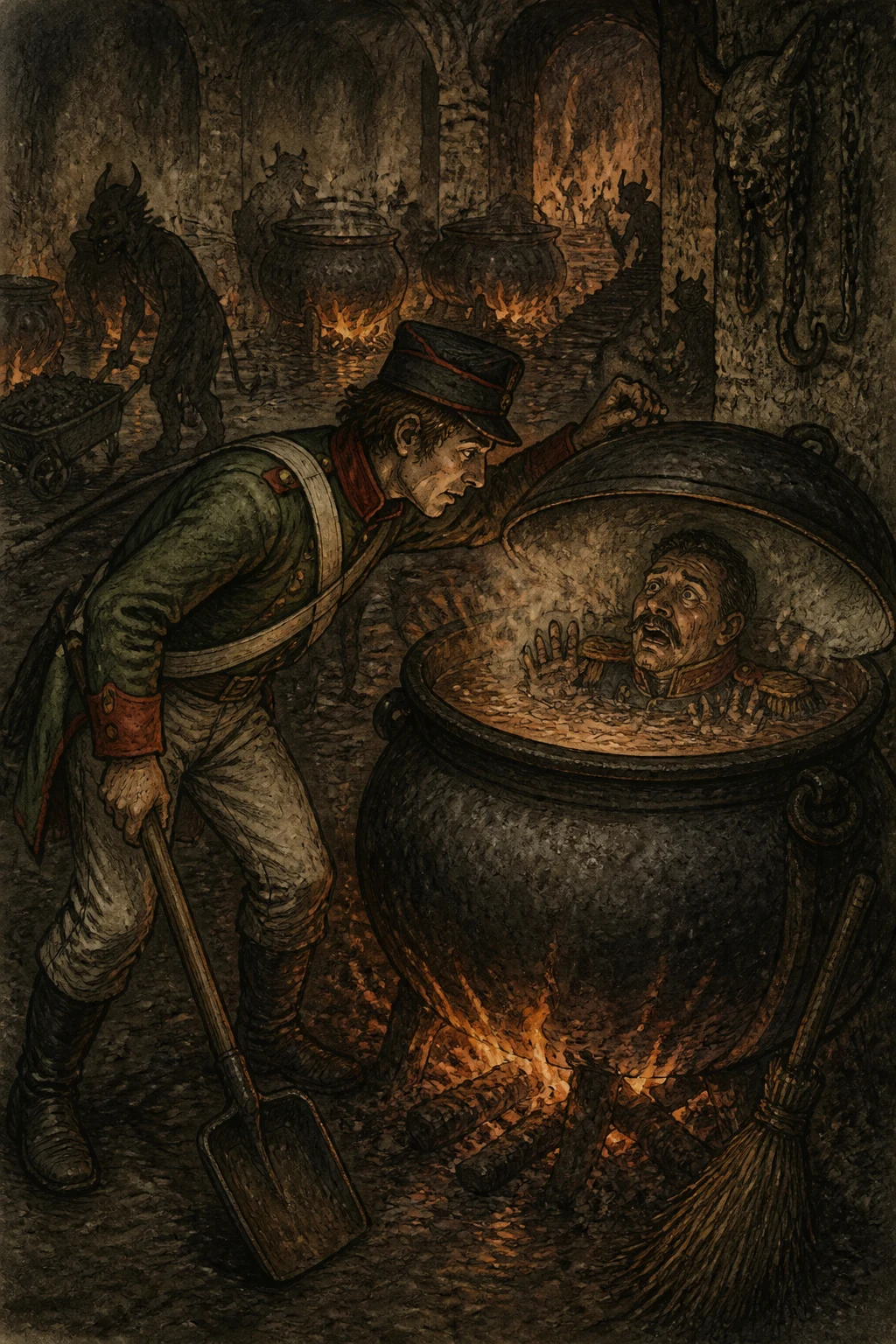
After this, Brother Lustig wandered about the world for a long time, and anyone who knew his adventures could tell many a tale of them. At last, however, he grew old and began to think of his end. He went to a hermit who was known to be a devout man and said to him, “I’m tired of wandering, and now I want to try to enter the kingdom of heaven.” The hermit answered, “There are two roads. One is broad and pleasant and leads to hell; the other is narrow and rough and leads to heaven.” “I’d have to be a fool,” thought Brother Lustig, “to take the narrow, rough road.” He set off along the broad, pleasant road and at last came to a great black gate, which was the gate of hell. Brother Lustig knocked, and the gatekeeper peered out to see who was there. But when he saw Brother Lustig, he took fright, for he was none other than the ninth devil, who had been in the knapsack and had escaped with a black eye. So he quickly shot the bolt again, ran to the chief of the devils, and said, “There’s a fellow outside with a knapsack who wants to come in. But on no account let him in, or he’ll wish the whole of hell into his knapsack. He once had me hammered horribly inside it.” So they called out to Brother Lustig that he must go away again; he would not be admitted. “If they don’t want me here,” he thought, “I’ll see whether I can find lodgings in heaven. I must stay somewhere.” So he turned back and travelled on until he came to the gate of heaven, where he knocked as well. Saint Peter happened to be sitting there as gatekeeper. Brother Lustig recognized him at once and thought, “Here’s an old friend. Things will go better here.” But Saint Peter said, “Surely you don’t mean to come into heaven?” “Do let me in, brother. I must find shelter somewhere. If they’d taken me into hell, I wouldn’t have come here.” “No,” said Saint Peter, “you shall not come in.” “Well, if you won’t let me in, take back your knapsack. Then I’ll have nothing at all from you,” said Brother Lustig. “Give it here, then,” said Saint Peter. Brother Lustig passed the knapsack through the bars into heaven, and Saint Peter took it and hung it beside his chair. Then Brother Lustig said, “Now I wish myself into my knapsack.” In a flash he was inside it, and there he sat in heaven, and Saint Peter had to let him stay.
Izvirnik
Ein Märchen der Brüder Grimm
Es war einmal ein großer Krieg, und als der Krieg zu Ende war, bekamen viele Soldaten ihren Abschied. Nun bekam der Bruder Lustig auch seinen Abschied und sonst nichts als ein kleines Laibchen Kommißbrot und vier Kreuzer an Geld; damit zog er fort. Der heilige Petrus aber hatte sich als ein armer Bettler an den Weg gesetzt, und wie der Bruder Lustig daherkam, bat er ihn um ein Almosen. Er antwortete: "Lieber Bettelmann, was soll ich dir geben? Ich bin Soldat gewesen und habe meinen Abschied bekommen, und habe sonst nichts als das kleine Kommißbrot und vier Kreuzer Geld, wenn das all ist, muß ich betteln, so gut wie du. Doch geben will ich dir was." Darauf teilte er den Laib in vier Teile und gab davon dem Apostel einen und auch einen Kreuzer. Der heilige Petrus bedankte sich, ging weiter und setzte sich in einer andern Gestalt wieder als Bettelmann dem Soldaten an den Weg, und als er zu ihm kam, bat er ihn, wie das vorigemal, um eine Gabe. Der Bruder Lustig sprach wie vorher und gab ihm wieder ein Viertel von dem Brot und einen Kreuzer. Der heilige Petrus bedankte sich und ging weiter, setzte sich aber zum drittenmal in einer andern Gestalt als ein Bettler an den Weg und sprach den Bruder Lustig an. Der Bruder Lustig gab ihm auch das dritte Viertel Brot und den dritten Kreuzer. Der heilige Petrus bedankte sich, und der Bruder Lustig ging weiter und hatte nicht mehr als ein Viertel Brot und einen Kreuzer. Damit ging er in ein Wirtshaus, aß das Brot und ließ sich für den Kreuzer Bier dazu geben. Als er fertig war, zog er weiter, und da ging ihm der heilige Petrus gleichfalls in der Gestalt eines verabschiedeten Soldaten entgegen und redete ihn an: "Guten Tag, Kamerad, kannst du mir nicht ein Stück Brot geben und einen Kreuzer zu einem Trunk?" "Wo soll ichs hernehmen," antwortete der Bruder Lustig, "ich habe meinen Abschied und sonst nichts als einen Laib Kommißbrot und vier Kreuzer an Geld bekommen. Drei Bettler sind mir auf der Landstraße begegnet, davon hab ich jedem ein Viertel von meinem Brot und einen Kreuzer Geld gegeben. Das letzte Viertel habe ich im Wirtshaus gegessen und für den letzten Kreuzer dazu getrunken. Jetzt bin ich leer, und wenn du auch nichts mehr hast, so können wir miteinander betteln gehen." "Nein," antwortete der heilige Petrus, "das wird just nicht nötig sein: ich verstehe mich ein wenig auf die Doktorei, und damit will ich mir schon so viel verdienen, als ich brauche." "Ja," sagte der Bruder Lustig, "davon verstehe ich nichts, also muß ich allein betteln gehen." "Nun komm nur mit," sprach der heilige Petrus, "wenn ich was verdiene, sollst du die Hälfte davon haben." "Das ist mir wohl recht," sagte der Bruder Lustig. Also zogen sie miteinander fort.
Nun kamen sie an ein Bauernhaus und hörten darin gewaltig jammern und schreien, da gingen sie hinein, so lag der Mann darin auf den Tod krank und war nah am Verscheiden, und die Frau heulte und weinte ganz laut. "Laßt Euer Heulen und Weinen," sprach der heilige Petrus, "ich will den Mann wieder gesund machen," nahm eine Salbe aus der Tasche und heilte den Kranken augenblicklich, so daß er aufstehen konnte und ganz gesund war. Sprachen Mann und Frau in großer Freude: "Wie können wir Euch lohnen? Was sollen wir Euch geben?" Der heilige Petrus aber wollte nichts nehmen, und je mehr ihn die Bauersleute baten, desto mehr weigerte er sich. Der Bruder Lustig aber stieß den heiligen Petrus an und sagte: "So nimm doch was, wir brauchens ja." Endlich brachte die Bäuerin ein Lamm und sprach zu dem heiligen Petrus, das müßte er annehmen, aber er wollte es nicht. Da stieß ihn der Bruder Lustig in die Seite und sprach: "Nimms doch, dummer Teufel, wir brauchens ja." Da sagte der heilige Petrus endlich: "Ja, das Lamm will ich nehmen, aber ich trags nicht: wenn dus willst, so mußt du es tragen." "Das hat keine Not," sprach der Bruder Lustig, "das will ich schon tragen," und nahms auf die Schulter. Nun gingen sie fort und kamen in einen Wald, da war das Lamm dem Bruder Lustig schwer geworden, er aber war hungrig, also sprach er zu dem heiligen Petrus: "Schau, da ist ein schöner Platz, da könnten wir das Lamm kochen und verzehren." "Mir ists recht," antwortete der heilige Petrus, "doch kann ich mit der Kocherei nicht umgehen: willst du kochen, so hast du da einen Kessel, ich will derweil auf- und abgehen, bis es gar ist. Du mußt aber nicht eher zu essen anfangen, als bis ich wieder zurück bin; ich will schon zu rechter Zeit kommen." "Geh nur," sagte Bruder Lustig, "ich verstehe mich aufs Kochen, ich wills schon machen." Da ging der heilige Petrus fort, und der Bruder Lustig schlachtete das Lamm, machte Feuer an, warf das Fleisch in den Kessel und kochte. Das Lamm war aber schon gar und der Apostel immer noch nicht zurück, da nahm es der Bruder Lustig aus dem Kessel, zerschnitt es und fand das Herz.
"Das soll das Beste sein," sprach er und versuchte es, zuletzt aber aß er es ganz auf. Endlich kam der heilige Petrus zurück und sprach: "Du kannst das ganze Lamm allein essen, ich will nur das Herz davon, das gib mir." Da nahm Bruder Lustig Messer und Gabel, tat, als suchte er eifrig in dem Lammfleisch herum, konnte aber das Herz nicht finden; endlich sagte er kurzweg: "Es ist keins da." "Nun, wo solls denn sein?, sagte der Apostel. "Das weiß ich nicht," antwortete der Bruder Lustig, "aber schau, was sind wir alle beide für Narren, suchen das Herz vom Lamm, und fällt keinem von uns ein, ein Lamm hat ja kein Herz!" "Ei," sprach der heilige Petrus, "das ist was ganz Neues, jedes Tier hat ja ein Herz, warum sollt ein Lamm kein Herz haben?" "Nein, gewißlich, Bruder, ein Lamm hat kein Herz, denk nur recht nach, so wird dirs einfallen, es hat im Ernst keins." "Nun, es ist schon gut," sagte der heilige Petrus, "ist kein Herz da, so brauch ich auch nichts vom Lamm, du kannsts allein essen." "Was ich halt nicht aufessen kann, das nehm ich mit in meinem Ranzen," sprach der Bruder Lustig, aß das halbe Lamm und steckte das übrige in seinen Ranzen.
Sie gingen weiter, da machte der heilige Petrus, daß ein großes Wasser quer über den Weg floß und sie hindurch mußten. Sprach der heilige Petrus: "Geh du nur voran." "Nein," antwortete der Bruder Lustig, "geh du voran," und dachte, "wenn dem das Wasser zu tief ist, so bleib ich zurück." Da schritt der heilige Petrus hindurch, und das Wasser ging ihm nur bis ans Knie. Nun wollte Bruder Lustig auch hindurch, aber das Wasser wurde größer und stieg ihm an den Hals. Da rief er: "Bruder, hilf mir." Sagte der heilige Petrus: "Willst du auch gestehen, daß du das Herz von dem Lamm gegessen hast?" "Nein," antwortete er, "ich hab es nicht gegessen." Da ward das Wasser noch größer und stieg ihm bis an den Mund, "hilf mir, Bruder," rief der Soldat. Sprach der heilige Petrus noch einmal: "Willst du auch gestehen, daß du das Herz vom Lamm gegessen hast?" "Nein," antwortete er, "ich hab es nicht gegessen." Der heilige Petrus wollte ihn doch nicht ertrinken lassen, ließ das Wasser wieder fallen und half ihm hinüber.
Nun zogen sie weiter, und kamen in ein Reich, da hörten sie, daß die Königstochter todkrank läge. "Hallo, Bruder," sprach der Soldat zum heiligen Petrus, "da ist ein Fang für uns, wenn wir die gesund machen, so ist uns auf ewige Zeiten geholfen." Da war ihm der heilige Petrus nicht geschwind genug, "nun, heb die Beine auf, Bruderherz," sprach er zu ihm, "daß wir noch zu rechter Zeit hinkommen." Der heilige Petrus ging aber immer langsamer, wie auch der Bruder Lustig ihn trieb und schob, bis sie endlich hörten, die Königstochter wäre gestorben. "Da haben wirs," sprach der Bruder Lustig, "das kommt von deinem schläfrigen Gang." "Sei nur still," antwortete der heilige Petrus, "ich kann noch mehr als Kranke gesund machen, ich kann auch Tote wieder ins Leben erwecken." "Nun, wenn das ist," sagte der Bruder Lustig, "so laß ich mirs gefallen, das halbe Königreich mußt du uns aber zum wenigsten damit verdienen." Darauf gingen sie in das königliche Schloß, wo alles in großer Trauer war: der heilige Petrus aber sagte zu dem König, er wolle die Tochter wieder lebendig machen. Da ward er zu ihr geführt, und dann sprach er: "Bringt mir einen Kessel mit Wasser," und wie der gebracht war, hieß er jedermann hinausgehen, und nur der Bruder Lustig durfte bei ihm bleiben. Darauf schnitt er alle Glieder der Toten los und warf sie ins Wasser, machte Feuer unter den Kessel und ließ sie kochen. Und wie alles Fleisch von den Knochen herabgefallen war, nahm er das schöne weiße Gebein heraus und legte es auf eine Tafel, und reihte und legte es nach seiner natürlichen Ordnung zusammen. Als das geschehen war, trat er davor und sprach dreimal: "Im Namen der allerheiligsten Dreifaltigkeit, Tote, steh auf." Und beim drittenmal erhob sich die Königstochter lebendig, gesund und schön. Nun war der König darüber in großer Freude und sprach zum heiligen Petrus: "Begehre deinen Lohn, und wenns mein halbes Königreich wäre, so will ich dirs geben." Der heilige Petrus aber antwortete: "Ich verlange nichts dafür." "O, du Hans Narr!, dachte der Bruder Lustig bei sich, stieß seinen Kameraden in die Seite und sprach: "Sei doch nicht so dumm, wenn du nichts willst, so brauch ich doch was." Der heilige Petrus aber wollte nichts; doch weil der König sah, daß der andere gerne was wollte, ließ er ihm vom Schatzmeister seinen Ranzen mit Gold anfüllen.
Sie zogen darauf weiter, und wie sie in einen Wald kamen, sprach der heilige Petrus zum Bruder Lustig: "Jetzt wollen wir das Gold teilen." "Ja," antwortete er, "das wollen wir tun." Da teilte der heilige Petrus das Gold, und teilte es in drei Teile. Dachte der Bruder Lustig: "Was er wieder für einen Sparren im Kopf hat! Macht drei Teile, und unser sind zwei." Der heilige Petrus aber sprach: "Nun habe ich genau geteilt, ein Teil für mich, ein Teil für dich, und ein Teil für den, der das Herz vom Lamm gegessen hat." "O, das hab ich gegessen," antwortete der Bruder Lustig und strich geschwind das Gold ein, "das kannst du mir glauben." "Wie kann das wahr sein," sprach der heilige Petrus, "ein Lamm hat ja kein Herz." "Ei, was, Bruder, wo denkst du hin! Ein Lamm hat ja ein Herz, so gut wie jedes Tier, warum sollte das allein keins haben?, "Nun, es ist schon gut," sagte der heilige Petrus, "behalt das Gold allein, aber ich bleibe nicht mehr bei dir und will meinen Weg allein gehen." "Wie du willst, Bruderherz," antwortete der Soldat, "leb wohl.'
Da ging der heilige Petrus eine andere Straße, Bruder Lustig aber dachte: "Es ist gut, daß er abtrabt, es ist doch ein wunderlicher Heiliger." Nun hatte er zwar Geld genug, wußte aber nicht mit umzugehen, vertats, verschenkts, und wie eine Zeit herum war, hatte er wieder nichts. Da kam er in ein Land, wo er hörte, daß die Königstochter gestorben wäre. "Holla!, dachte er, "das kann gut werden, die will ich wieder lebendig machen und mirs bezahlen lassen, daß es eine Art hat." Ging also zum König und bot ihm an, die Tote wieder zu erwecken. Nun hatte der König gehört, daß ein abgedankter Soldat herumziehe und die Gestorbenen wieder lebendig mache, und dachte, der Bruder Lustig wäre dieser Mann, doch weil er kein Vertrauen zu ihm hatte, fragte er erst seine Räte, die sagten aber, er könnte es wagen, da seine Tochter doch tot wäre. Nun ließ sich der Bruder Lustig Wasser im Kessel bringen, hieß jedermann hinausgehen, schnitt die Glieder ab, warf sie ins Wasser und machte Feuer darunter, gerade wie er es beim heiligen Petrus gesehen hatte. Das Wasser fing an zu kochen, und das Fleisch fiel herab, da nahm er das Gebein heraus und tat es auf die Tafel; er wußte aber nicht, in welcher Ordnung es liegen mußte, und legte alles verkehrt durcheinander. Dann stellte er sich davor und sprach: "Im Namen der allerheiligsten Dreifaltigkeit, Tote, steh auf," und sprachs dreimal, aber die Gebeine rührten sich nicht. Da sprach er es noch dreimal, abergleichfalls umsonst. "Du Blitzmädel, steh auf," rief er, "steh auf, oder es geht dir nicht gut." Wie er das gesprochen, kam der heilige Petrus auf einmal in seiner vorigen Gestalt, als verabschiedeter Soldat, durchs Fenster hereingegangen und sprach: "Du gottloser Mensch, was treibst du da, wie kann die Tote auferstehen, da du ihr Gebein so untereinander geworfen hast?" "Bruderherz, ich habs gemacht, so gut ich konnte," antwortete er. "Diesmal will ich dir aus der Not helfen, aber das sag ich dir, wo du noch einmal so etwas unternimmst, so bist du unglücklich, auch darfst du von dem König nicht das Geringste dafür begehren oder annehmen." Darauf legte der heilige Petrus die Gebeine in ihre rechte Ordnung, sprach dreimal zu ihr: "Im Namen der allerheiligsten Dreifaltigkeit, Tote, steh auf," und die Königstochter stand auf, war gesund und schön wie vorher. Nun ging der heilige Petrus wieder durchs Fenster hinaus: der Bruder Lustig war froh, daß es so gut abgelaufen war, ärgerte sich aber doch, daß er nichts dafür nehmen sollte. "Ich möchte nur wissen," dachte er, "was der für Mucken im Kopf hat, denn was er mit der einen Hand gibt, das nimmt er mit der andern: da ist kein Verstand drin." Nun bot der König dem Bruder Lustig an, was er haben wollte, er durfte aber nichts nehmen, doch brachte er es durch Anspielung und Listigkeit dahin, daß ihm der König seinen Ranzen mit Gold füllen ließ, und damit zog er ab. Als er hinauskam, stand vor dem Tor der heilige Petrus und sprach: "Schau, was du für ein Mensch bist, habe ich dir nicht verboten, etwas zu nehmen, und nun hast du den Ranzen doch voll Gold." "Was kann ich dafür," antwortete Bruder Lustig, "wenn mirs hineingesteckt wird." "Das sag ich dir, daß du nicht zum zweitenmal solche Dinge unternimmst, sonst soll es dir schlimm ergehen." "Ei, Bruder, sorg doch nicht, jetzt hab ich Gold, was soll ich mich da mit dem Knochenwaschen abgeben." "Ja," sprach der heilige Petrus, "das Gold wird lang dauern! Damit du aber hernach nicht wieder auf unerlaubten Wegen gehst, so will ich deinem Ranzen die Kraft geben, daß alles, was du dir hineinwünschest, auch darin sein soll. Leb wohl, du siehst mich nun nicht wieder." "Gott befohlen," sprach der Bruder Lustig und dachte: "Ich bin froh, daß du fortgehst, du wunderlicher Kauz, ich will dir wohl nicht nachgehen." An die Wunderkraft aber, die seinem Ranzen verliehen war, dachte er nicht weiter.
Bruder Lustig zog mit seinem Gold umher, und vertats und verfumfeits wie das erstemal. Als er nun nichts mehr als vier Kreuzer hatte, kam er an einem Wirtshaus vorbei und dachte: "Das Geld muß fort," und ließ sich für drei Kreuzer Wein und einen Kreuzer Brot geben. Wie er da saß und trank, kam ihm der Geruch von gebratenen Gänsen in die Nase. Bruder Lustig schaute und guckte, und sah, daß der Wirt zwei Gänse in der Ofenröhre stehen hatte. Da fiel ihm ein, daß ihm sein Kamerad gesagt hatte, was er sich in seinen Ranzen wünschte, das sollte darin sein. "Holla, das mußt du mit den Gänsen versuchen!" Also ging er hinaus, und vor der Türe sprach er: "So wünsch ich die zwei gebratenen Gänse aus der Ofenröhre in meinen Ranzen." Wie er das gesagt hatte, schnallte er ihn auf und schaute hinein, da lagen sie beide darin. "Ach, so ists recht," sprach er, "nun bin ich ein gemachter Kerl," ging fort auf eine Wiese und holte den Braten hervor. Wie er so im besten Essen war, kamen zwei Handwerksburschen daher und sahen die eine Gans, die noch nicht angerührt war, mit hungrigen Augen an. Dachte der Bruder Lustig: "Mit einer hast du genug," rief die zwei Burschen herbei und sprach: "Da nehmt die Gans und verzehrt sie auf meine Gesundheit." Sie bedankten sich, gingen damit ins Wirtshaus, ließen sich eine Halbe Wein und ein Brot geben, packten die geschenkte Gans aus und fingen an zu essen. Die Wirtin sah zu und sprach zu ihrem Mann: "Die zwei essen eine Gans, sieh doch nach, obs nicht eine von unsern aus der Ofenröhre ist." Der Wirt lief hin, da war die Ofenröhre leer. "Was, ihr Diebsgesindel, so wohlfeil wollt ihr Gänse essen! Gleich bezahlt, oder ich will euch mit grünem Haselsaft waschen." Die zwei sprachen: "Wir sind keine Diebe, ein abgedankter Soldat hat uns die Gans draußen auf der Wiese geschenkt." "Ihr sollt mir keine Nase drehen, der Soldat ist hier gewesen, aber als ein ehrlicher Kerl zur Tür hinaus gegangen, auf den hab ich acht gehabt: ihr seid die Diebe und sollt bezahlen." Da sie aber nicht bezahlen konnten, nahm er den Stock und prügelte sie zur Türe hinaus.
Bruder Lustig ging seiner Wege und kam an einen Ort, da stand ein prächtiges Schloß und nicht weit davon ein schlechtes Wirtshaus. Er ging in das Wirtshaus und bat um ein Nachtlager, aber der Wirt wies ihn ab und sprach: "Es ist kein Platz mehr da, das Haus ist voll vornehmer Gäste." "Das nimmt mich wunder," sprach der Bruder Lustig, "daß sie zu Euch kommen und nicht in das prächtige Schloß gehen." "Ja," antwortete der Wirt, "es hat was an sich, dort eine Nacht zu liegen, wers noch versucht hat, ist nicht lebendig wieder herausgekommen." "Wenns andere versucht haben," sagte der Bruder Lustig, "will ichs auch versuchen." "Das laßt nur bleiben," sprach der Wirt, "es geht Euch an den Hals." "Es wird nicht gleich an den Hals gehen," sagte der Bruder Lustig, "gebt mir nur die Schlüssel und brav Essen und Trinken mit." Nun gab ihm der Wirt die Schlüssel und Essen und Trinken, und damit ging der Bruder Lustig ins Schloß, ließ sichs gut schmecken, und als er endlich schläfrig wurde, legte er sich auf die Erde, denn es war kein Bett da. Er schlief auch bald ein, in der Nacht aber wurde er von einem großen Lärm aufgeweckt, und wie er sich ermunterte, sah er neun häßliche Teufel in dem Zimmer, die hatten einen Kreis um ihn gemacht und tanzten um ihn herum. Sprach der Bruder Lustig: "Nun tanzt, solang ihr wollt, aber komm mir keiner zu nah." Die Teufel aber drangen immer näher auf ihn ein und traten ihm mit ihren garstigen Füßen fast ins Gesicht. "Habt Ruh, ihr Teufelsgespenster," sprach er, aber sie triebens immer ärger. Da ward der Bruder Lustig bös und rief: "Holla, ich will bald Ruhe stiften!" kriegte ein Stuhlbein und schlug mitten hinein. Aber neun Teufel gegen einen Soldaten war doch zuviel, und wenn er auf den vordern zuschlug, so packten ihn die andern hinten bei den Haaren und rissen ihn erbärmlich. "Teufelspack," rief er, "jetzt wird mirs zu arg: wartet aber! Alle neune in meinen Ranzen hinein!" Husch, steckten sie darin, und nun schnallte er ihn zu und warf ihn in eine Ecke. Da wars auf einmal still, und Bruder Lustig legte sich wieder hin und schlief bis an den hellen Morgen. Nun kamen der Wirt und der Edelmann, dem das Schloß gehörte, und wollten sehen, wie es ihm ergangen wäre; als sie ihn gesund und munter erblickten, erstaunten sie und fragten: "Haben Euch denn die Geister nichts getan?" "Warum nicht gar," antwortete Bruder Lustig, "ich habe sie alle neune in meinem Ranzen. Ihr könnt Euer Schloß wieder ganz ruhig bewohnen, es wird von nun an keiner mehr darin umgehen!" Da dankte ihm der Edelmann, beschenkte ihn reichlich und bat ihn, in seinen Diensten zu bleiben, er wollte ihn auf sein Lebtag versorgen. "Nein," antwortete er, "ich bin an das Herumwandern gewöhnt, ich will weiterziehen." Da ging der Bruder Lustig fort, trat in eine Schmiede und legte den Ranzen, worin die neun Teufel waren, auf den Amboß, und bat den Schmied und seine Gesellen zuzuschlagen. Die schlugen mit ihren großen Hämmern aus allen Kräften zu, daß die Teufel ein erbärmliches Gekreisch erhoben. Wie er danach den Ranzen aufmachte, waren achte tot, einer aber, der in einer Falte gesessen hatte, war noch lebendig, schlüpfte heraus und fuhr wieder in die Hölle.
Darauf zog der Bruder Lustig noch lange in der Welt herum, und wers wüßte, könnte viel davon erzählen. Endlich aber wurde er alt und dachte an sein Ende, da ging er zu einem Einsiedler, der als ein frommer Mann bekannt war, und sprach zu ihm: "Ich bin das Wandern müde und will nun trachten, in das Himmelreich zu kommen." Der Einsiedler antwortete: "Es gibt zwei Wege, der eine ist breit und angenehm und führt zur Hölle, der andere ist eng und rauh und führt zum Himmel." "Da müßt ich ein Narr sein," dachte der Bruder Lustig, "wenn ich den engen und rauhen Weg gehen sollte." Machte sich auf und ging den breiten und angenehmen Weg, und kam endlich zu einem großen schwarzen Tor, und das war das Tor der Hölle. Bruder Lustig klopfte an, und der Torwächter guckte, wer da wäre. Wie er aber den Bruder Lustig sah, erschrak er, denn er war gerade der neunte Teufel, der mit in dem Ranzen gesteckt hatte und mit einem blauen Auge davongekommen war. Darum schob er den Riegel geschwind wieder vor, lief zum Obersten der Teufel und sprach "draußen ist ein Kerl mit einem Ranzen und will herein, aber laßt ihn beileibe nicht herein, er wünscht sonst die ganze Hölle in seinen Ranzen. Er hat mich einmal garstig darin hämmern lassen." Also ward dem Bruder Lustig hinausgerufen, er sollte wieder abgehen, er käme nicht herein. "Wenn sie mich da nicht wollen," dachte er, "will ich sehen, ob ich im Himmel ein Unterkommen finde, irgendwo muß ich doch bleiben." Kehrte also um und zog weiter, bis er vor das Himmelstor kam, wo er auch anklopfte. Der heilige Petrus saß gerade dabei als Torwächter: Der Bruder Lustig erkannte ihn gleich und dachte: "Hier findest du einen alten Freund, da wirds besser gehen." Aber der heilige Petrus sprach: "Ich glaube gar, du willst in den Himmel?" "Laß mich doch ein, Bruder, ich muß doch wo einkehren; hätten sie mich in der Hölle aufgenommen, so wär ich nicht hierher gegangen." "Nein," sagte der heilige Petrus, "du kommst nicht herein." "Nun, willst du mich nicht einlassen, so nimm auch deinen Ranzen wieder: dann will ich gar nichts von dir haben," sprach der Bruder Lustig. "So gib ihn her," sagte der heilige Petrus. Da reichte er den Ranzen durchs Gitter in den Himmel hinein, und der heilige Petrus nahm ihn und hing ihn neben seinen Sessel auf. Da sprach der Bruder Lustig: "Nun wünsch ich mich selbst in meinen Ranzen hinein." Husch, war er darin, und saß nun im Himmel, und der heilige Petrus mußte ihn darin lassen.