Waltey
Blagoslov ali bogastvo
Swahili Tales · Edward Steere; pripovedovalci z ZanzibarjaO besedilu
Blagoslov ali bogastvo
- Vir
- Swahili Tales
- Avtor
- Edward Steere; pripovedovalci z Zanzibarja
- Jezik branja
- English
- Jezik izvirnika
- Kiswahili
- Čas branja
- 14 min branja
- Obseg
- 11 strani
- Naslov izvirnika
- 013 Ao Rathi, Ao Mali
O izvirniku
Swahili Tales
Svahilijske pripovedi z Zanzibarja o zvijači, živalih, vladarjih in nenavadnih preobratih. Bralni jezik je English, izvirnik pa prihaja iz vira Swahili Tales v jeziku Kiswahili.
Besedilo
Blagoslov ali bogastvo
There was once a man and his wife who prayed to God for a child. Their firstborn was a boy, and their second a girl. The father earned his living cutting firewood. They lived together until the children were grown. Then their father fell ill. He called his children to him and asked, “Do you want my blessing, or do you want my wealth?” The son said, “I want your wealth.” The daughter said, “I want your blessing.” Her father blessed her warmly. Then he died.
They observed the mourning rites, and when these were over, their mother fell ill. She too called her children to her and asked, “Do you want my blessing, or do you want my wealth?” The son said, “I want your wealth.” The daughter said, “I want your blessing.” Her mother gave her blessing to the girl. Then their mother died.
They observed the mourning rites until the seventh day, when the mourning ended. Then the brother went to his sister and said, “Bring out everything that belonged to my father and mother.” The young woman brought everything out, keeping nothing back from him, and he took it all.
People said to him, “Will you leave your sister nothing at all, not even some small thing?” He replied, “I will leave her nothing. I asked for wealth, and she asked for blessings.” He left her a cooking pot and a mortar, but he did not leave her even a little food.
Her neighbours would come and borrow the mortar to pound their grain. When they had finished, they gave her a little rice, which she cooked and ate. Others came and borrowed her cooking pots, and when they had finished cooking, they too gave her a little food. This was how she lived each day.
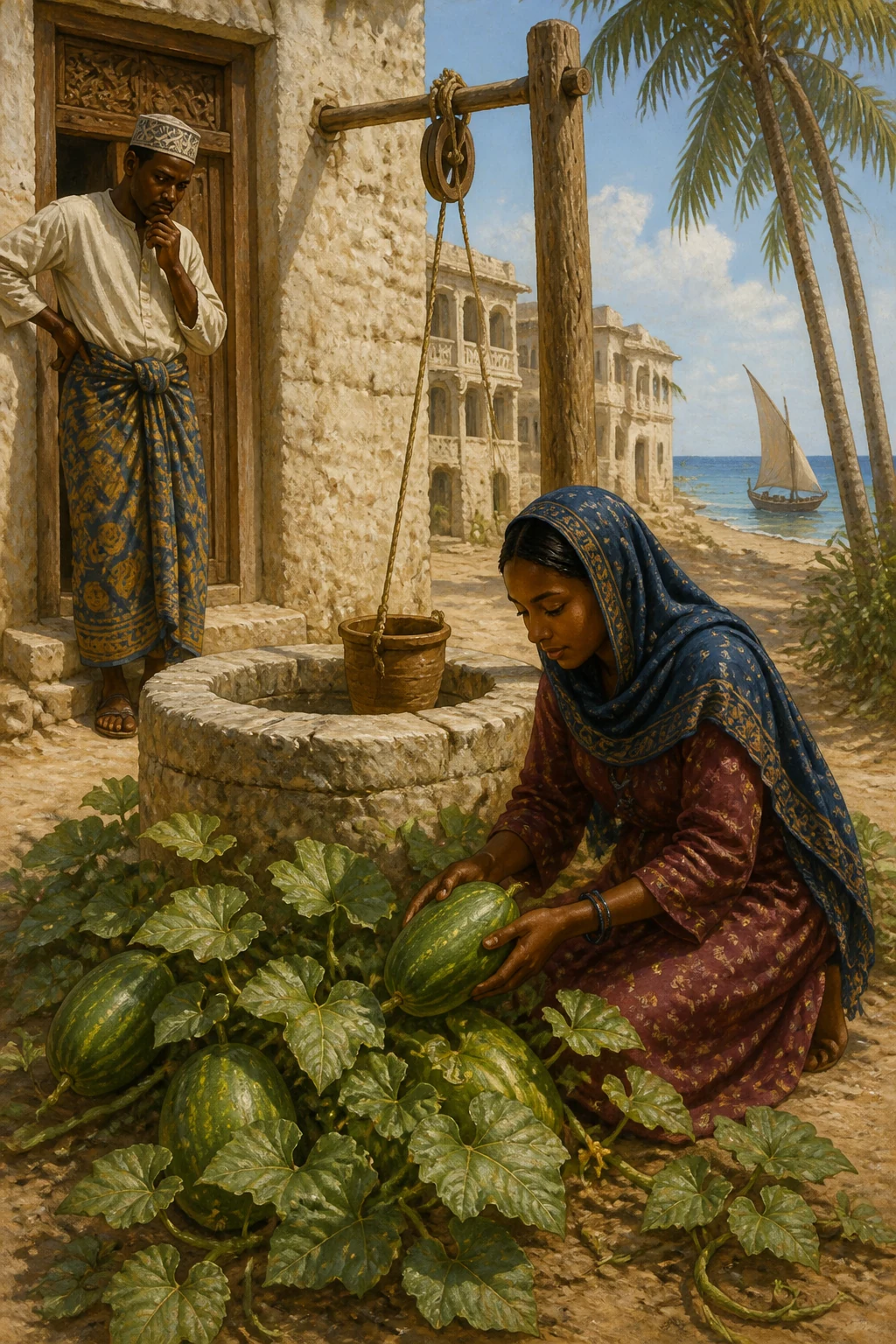
She searched and searched through her father and mother’s house, but found nothing except a pumpkin seed. She took it and went to plant it at the foot of the well. A vine sprang up and bore many pumpkins.
Her brother knew nothing of this. He asked people, “Where does my sister get her food?” They told him, “People borrow her mortar to pound their grain, and give her a little food. They also borrow her pots to cook in, and give her some food.”
Her brother got up, went to her, and took away the mortar and the pots. After that, she rose one morning and looked for food, but could find none. She waited until nine o’clock, then said, “I will go and look at my pumpkin vine, to see whether it has grown.” She went and found that it had borne many pumpkins. She gave thanks to God.
She picked some pumpkins, went to sell them, and obtained food. From then on, her daily work was to pick pumpkins and take them to market. By the third day, everyone who had eaten her pumpkins had found them wonderfully sweet. People brought grain to her plot and bought them. Many days passed, and she became wealthy.
Her brother’s wife heard the news and sent her slave with some grain to buy a pumpkin. The young woman told her, “They are all gone.” But when she learned that the slave belonged to her brother’s wife, she said, “Take that one and give it to her, and take your grain back with you.” The slave went away, and her mistress cooked the pumpkin and found it delicious. The next day she sent someone again. The young woman said, “There are none at all today.” The messenger returned and told her mistress, who became very angry.
When her husband came home, he asked, “What is the matter, my wife?” She said, “I sent someone to your sister with my own grain to get some pumpkins, but she sent me nothing. She told me there were none, though everyone else buys from her!” He said to his wife, “Let us sleep tonight. Tomorrow I will go and uproot her pumpkin vine.”
At daybreak he went to his sister and said, “My wife sent you grain, and you refused to sell her a pumpkin.” She replied, “They are all gone. Yesterday she sent someone, and I gave her one for nothing.” He said, “Then why are you selling them to other people?” She answered, “They are finished. There are no more; no new ones have grown.” Her brother said, “I will go and cut down your pumpkin vine.” She told him, “You would not dare. You will have to cut off my hand before you cut down my vine.” Her brother seized her right hand and cut it off, then went and cut down the whole pumpkin vine as well.
The young woman heated some water, bathed her wounded arm, applied medicine, and bound it with a cloth. He took away everything she owned and drove her out of the house. She wandered away into the forest. Her brother sold the house, gathered together a great deal of wealth, and settled down to spend it.
She wandered through the forest until, on the seventh day, she came to another town. She climbed a great tree, eating its fruit and sleeping among its branches at night. The next day, a king’s son came that way, shooting birds with his men. By noon he was tired and said, “I will go and rest beneath that tree. You carry on shooting birds.” He sat down under the tree with his slave.
The young woman wept until her tears fell upon the king’s son below. He said to his slave, “Look out there. Is it raining?” The slave replied, “No, master.” “Then climb the tree,” he said, “and see what bird has soiled me.” His slave climbed up and saw a very beautiful young woman weeping. He said nothing to her, but climbed down again. He told his master, “There is a very beautiful young woman up there. I did not dare speak to her.” His master asked, “Why not?” He replied, “I found her weeping. Perhaps you should go yourself.” His master climbed up, went over to her, and said, “What is the matter, my lady? Are you human, or a spirit?” She said, “I am human.” He asked, “Why are you weeping?” She replied, “I am thinking of the ways of the world. I am a human being like you.”
He said, “Come down, and let us go home.” She asked, “Where is your home?” He replied, “With my father and mother. I am the king’s son.” She asked, “What have you come here to do?” He said, “I have come to shoot birds. We do this every month, and I have come with many companions.” The young woman told the king’s son, “I do not want anyone to see me.” He said, “No one will see us.” Then she climbed down.
He sent his slave away, saying, “Go quickly into town and bring me a litter.” His slave went at once and returned with a litter and four bearers. The prince put the young woman inside and told his slave, “Fire a gun so that all our companions will come.” The slave fired a gun, and the others came and asked, “What is the matter, prince?” He replied, “I have a chill, and I want to go back to town.” They gathered up the game they had killed and set off. The king’s son got into the litter with the young woman, and his companions knew nothing of her presence.
They travelled back to their town and arrived at his house. He told someone, “Go and tell my mother and father that I have a fever today. I want some porridge at once; have them send it to me.” His mother and father were alarmed. Porridge was cooked and brought to him.
His father came with his ministers to see him. That night his mother came with her attendants to visit him. The next day he came out and went to his mother and father. He told them, “I have found a young woman, and I want you to arrange our marriage. But she has only one hand.” They said, “Why would you want her?” He replied, “I want her just as she is.” The Sultan loved his only son dearly, so he held a wedding and married them.
The news spread through the town that the Sultan’s son had married a young woman with only one hand. They lived together until his wife became pregnant and gave birth to a boy. His parents were overjoyed.
Then the Sultan’s son went away on a journey to visit his father’s towns. While he was gone, his wife’s brother arrived. He had nothing left to live on and went about begging. One day he heard people talking: “The king’s son has married a woman with only one hand.” Her brother asked, “Where did the king’s son find this young woman?” They told him, “He found her in the forest.” Then he knew that she was his sister.
He went to the king and said, “Your son has married a woman with only one hand. She was driven out of her own town because she is a witch. She kills every man who marries her.”
The king went and told his wife, and they asked each other, “What shall we do?” They loved their only son dearly, so they decided to banish the young woman from the town. Her brother told them, “Kill her. In her own town they cut off her hand; here you should kill her.” They replied, “We cannot kill her. We will drive her out of the town.” So they went and banished her and her child. She gave thanks to God.
She left, carrying a small basket, and went away into the forest, not knowing where she was going or where she had come from. She sat down to nurse her child. Looking up, she saw a snake rushing towards her. As it came close, she said, “Today I shall die.”
The snake said to her, “Child of Adam, open your basket and let me in. Save me from the sun, and I will save you from the rain.” She opened it, the snake went inside, and she covered it. When she looked up, she saw another snake coming swiftly towards her. It asked, “Has my companion passed this way?” She replied, “There he goes.” It hurried on.
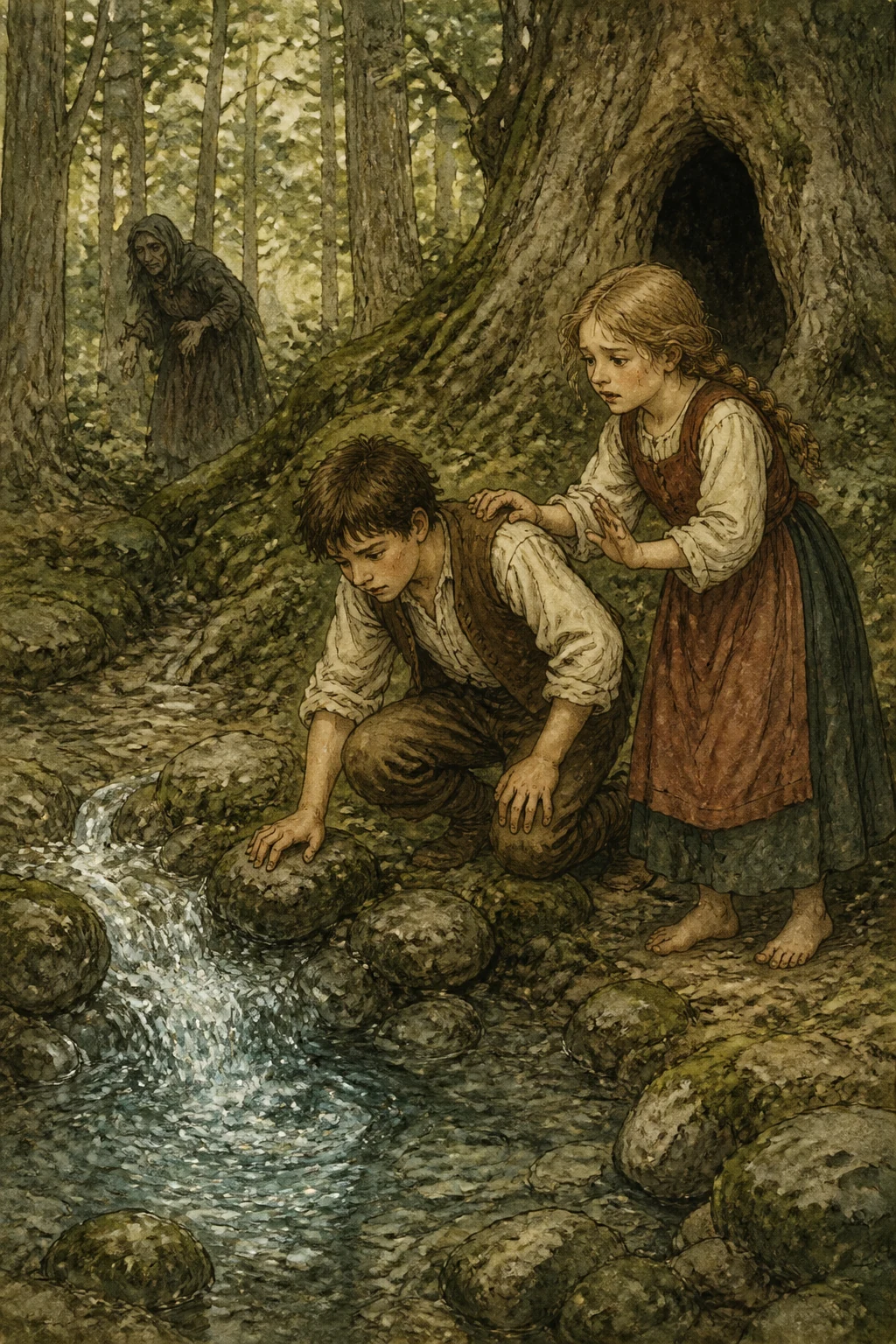
The snake inside the basket said, “Uncover me.” She uncovered it, and it gave thanks to God. Then it asked her, “Where are you going, child of Adam?” She replied, “I do not know where I am going. I am wandering lost in the forest.” The snake said, “Follow me, and let us go to my home.” They went along together until they came to a large lake. The snake said, “Child of Adam, let us rest. The sun is hot. Go and bathe in the lake with your child.” She took her little boy and went to wash him, but he slipped into the lake and disappeared. The snake asked, “What is the matter over there, child of Adam?” She replied, “My child has disappeared into the water.” It said, “Search carefully for him.” She searched for a whole hour but could not find him. Then it said, “Put in your other hand.” She replied, “Snake, you are mocking me.” It asked, “Why?” She said, “I have put in my sound hand and could not find him. What use will this maimed one be?” The snake said, “Just put them both in.” The woman did so, found her child, and took hold of him. As she lifted him out, her hand was whole again. The snake asked, “Have you found him?” She replied, “I have found him, and I have my hand back, whole and sound.” She was filled with joy.
The snake said to her, “Now let us go to my parents, so that I may reward your kindness there.” She replied, “This is enough: I have my hand back.” It said, “Not yet. Let us go to my parents.” They went on, and when they arrived, the snake’s parents were delighted and grew very fond of the young woman. She stayed there for many days, with food to eat and a place to sleep.
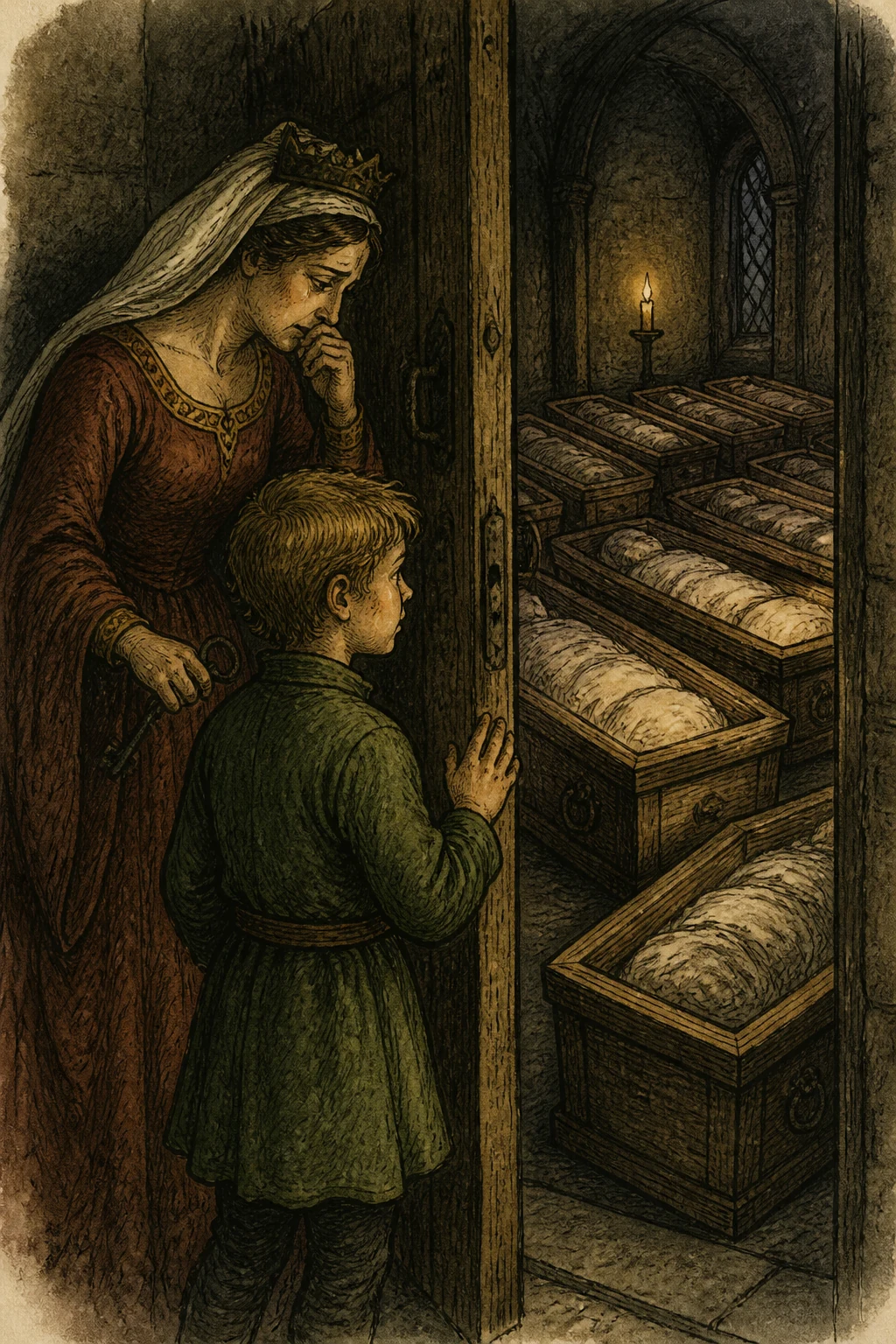
Meanwhile, her husband was still away on his travels. His parents had two graves made, one for his wife and one for his child. Her brother had become an important man at the king’s court.
When her husband, the king’s son, returned, he asked, “Where is my wife?” They told him, “She is dead.” “And where is my child?” They answered, “He is dead.” He asked, “Where are their graves?” They took him to see them.
When he saw them, he wept bitterly. He observed the mourning rites and gave thanks to God. Many days passed. The young woman in the forest said to her friend the snake, “I want to go home.” It told her, “Go and take leave of my mother and father. They will give you permission to leave. If they offer you gifts, accept nothing but my father’s ring and my mother’s little basket.”
She went to bid them farewell, and they offered her great riches. She refused, saying, “I am only one person. How could I carry all this wealth?” They asked, “What do you want?” She replied, “Father, I want your ring, and Mother, I want your little basket.” They were deeply distressed and asked her, “Who told you about these things?” She answered, “I know of them myself.” They said, “No, it was that brother of yours who told you.”
The father took off his ring and gave it to her, saying, “I give you this ring. If you want food, if you want clothes, if you want a house to sleep in, tell the ring, and it will provide them, with the blessing of God and of me, your father.” The mother gave her the little basket and told her the same thing. They also gave her their blessing.
She set out and travelled to her husband’s town, but did not go to his house. When she reached the outskirts, she said to the ring, “I want you to bring forth a great house.” It brought forth a house, furnishings, and slaves. She settled there with her son, who had now grown into a big boy.
The king heard that a great house had appeared on the outskirts of town. He sent people to look, and they came back and told him it was true. Then the Sultan set out with his ministers and his son.
As they drew near, the young woman looked through a telescope and saw her husband, her husband’s father, and many other people. Her brother was among them. She told her servants, “Prepare food quickly.” They cooked and laid the table. When the visitors arrived, they were welcomed and brought inside. They asked how she was, and she replied, “I am well.” She told them, “Come and eat. I have come from far away. When you have finished eating, I will tell you my story.” They ate, and when they had finished, she told them everything, beginning with the birth of herself and her brother, and continuing to the very end, just as it had all happened. The king’s son went to embrace his wife, and they wept together. Everyone there wept, and they understood that her brother was a wicked man.
The king asked her, “What shall we do with your brother?” She replied, “Only banish him from the town.” And she lived happily with her husband for the rest of their days.
Izvirnik
013 Ao Rathi, Ao Mali
Naslednje strani prikazujejo izvirno besedilo za primerjavo.
Palikuwa na mtu miime na mkewe, wakaomba kwa Muuugu kupata kijana, Avakapata wa kwanza manamume, na wa pili mauamuke. Na baba yao, kazi yake kixchanja kuni. Wakakaa hatta wanakuwa waana wazima. Baba yao akasbikwa na iigonjwa. Akawaita waanawe, akawauliza, wataka ratbi, ao wataka mali ? Yule manamiune akamwambia, nataka mali. Manamuko akamwambia, nataka ratbi. Akampa ratbi babaye sana. Babaye akafa.
Wakakaa matanga, batta walipoondoka, mama yao akaugua, naye akawaita waanawe, akawaambia, wataka ratbi, ao wataka mali ? Mwanamume akaniwambia, nataka mali. Na mwanamuke akamwambia, nataka rathi. Akampa ratbi mamaye yule. Akafa mama yao.
Wakakaa matanga, hatta alipoondoka ikijjata siku ya saba. Akaenda mwanamume, akamwambia nduguye mwanamuke, toa vitu vyote vya baba yangu na mama yangu. Akatoa manamuke, asimsazic kitu, Akacbukua vyote.
Watu wakamwambia, buyu nduguyo mwanamuke humwacbii walao kitu kidogo ? Akancna, sitamwacbia,
miini iiiilitaka mali, yee akataka rathi. Akarawacliia cliuugii na kiuu, liatta cliakula kidogo liakiimwacliia.
Wale jirani zake huja wakaazima kinu, wakatwangia, wakiisha, wakampa mcliele kidogo, akapika, akala. Na wangiue liuja, wakaazima vyungu, wakapikia, wakiiska, walzampa iiaje cliakula kidogo. Killa siku kazi yake ni liii.
Akatafutatafuta nyumbani iiiNva babaye na mamaye, asipate kitu, ela mbegu ya maboga. Akatwaa, akaenda, akapanda chini ya kisima. Ukaota mboga, ukazaa maboga meDgi.
Yule nduguye hana habari, akauliza watu — chakula anapata wapi ndugu yaugu? Wakamwambia, kuazima watu kinu, wakatwangia, wakampa naye chakula kidogo, na vyungu vyake kuazima watu, wakapikia, wakampa naye cliakula.
Ndugu yake akaondoka, akaenda, akamnyang'anya kinu na vyungu. AmekwisLa, akaamka subui akatafuta cbakula hapati. Akakaahatta saa a tatu, akanena, nitakwenda kuangalia mboga wangu, unieota. Akaenda, akaona maboga mengi yamezaa. Akashukuru Muungu.
Akachuma maboga, akaenda, akanza, akapata chakula. Ikawa ndio kazi yake killa siku kuchuma, kaenda kuuza. Ikipata siku ya tatu, killa mtu, aliokula maboga yale akaona matamu mno. Killa mtu huchukua nafaka wakamwendea pale pahali pake, wakanunua. Siku nyingi zimepita, akafanya mali.
Mke wa ndugu yake akasikia habari ilc, akatuma
mtumwa wake na nafaka kiienda kumnunulia boga. Akamwambia, yamekwisha. Alipojua mtumwa yule wa mke wa uduguye, akamwambia, twaa ile moja, mpelekee, na nafaka yako rudi nayo. Akaenda akalipika, akaona tamu mno. Siku ya pili akamj)eleka tena mtu. Akamwambia, liaj)ana kabisa leo. Akaenda, akamjibu bibi yake, akakasii'ika mno.
Hatta mumewe alipokuja, akamwuuza, una nini mke wangu ? Akamwambia, nimepeleka mtu kwa ndugu yako na nafaka yangu, kuenda kutaka maboga, bakuniletea, amcniambia, hakuna, na watu wote liununua kwake ! Akamwambia mkewe, na tulalc liatta kesho uitakwcnda kung'oa mboga wake.
Hatta subn.i kukiclia akaenenda kwa nduguye, akamwambia. mke wangu kuleta nafaka ukakataa kumliza boga. Akamwambia, yamekwisha, jana alileta mtu, nikampa burre. Akamwambia, mbona watu unawaliza? Akamwambia, yamekwisha, hakuna tena, hayajazaa. Ndugu yake manamume akamwambia, nitakwenda ukata mboga wako. Akamwambia, huthubutu, labuda ukate mkono wangu kwanza, ndipo mboga uukate. Ndugu yake akakamata mkono wake w^a kuume, akamkata, akaenda akaukata na mboga wote pia.
Yule manamke akateleka maji ya moto, akatia mkono wake, akatia na dawa, akafunga kitambaa.
Akamnyang'anya vitu vyote, akamtoa na nyumba.
Akapotea yule nduguye ndani ya mwitu. Nduguye huyu akauza nyumba, akakusanya mali mengi, akakaa akitumia.
Yule akapotea na mwitu, liatta siku ya saba akatokea mji mgine. Akapanda juu yamti mkubwa, akila matunila ya mti, usiku liulala mle mtini. Hatta siku ya pili, akatokea kijaua clia mfalme anaj^iga ndege, yea na watu wake. Hatta saa ya sita ameclioka, asema, nitakwenda pale mtini, nikapumzike, na ninyi pigeni ndege. Akakaa chini ya mti, yee na mtumwa wake.
Yule kijana manamke akalia hatta macbozi yakamwangukia mtoto wa mfalme ckini. Akamwambia mtumwa wake, angalia nje, liakuna mvua ? Akamwambia, hakuna, bwana. Akamwambia, bassi, panda mtini uangalie ndege gani alionitia mavi. Akapanda mtumwa wake, akamwona manamke mzuri mno analia, asimwambie neno, akashuka. Akamwambia bwana wake, kuna kijana manamke mzuri mno, sikuthubutu kumwambia neno. Bwana wake akamwuliza, kwa nini ? Akamwambia, nimemkuta, analia, labuda wende wewe. Akapanda bwana wake, akaenda, akamwona, akamwambia, una nini, bibi yangu, weye mtu, ao pepo ? Akamwambia, mimi mtu. Akamwambia, unalilia nini? Akamwambia, nakumbuka ulimwengu, mimi ni mtu kana wewe.
Akamwambia, sbuka, twende zetu kwetu. Akamwambia, kwenu wapi ? Akamwambia, kwa baba yangu ua mama yangu, mimi ui kijaua cha mfalme. Akamwambia, umckuja fanya nini buku ? Akamwambia, nimekuja kupiga ndege, mwezi hatta mwezi ndio kazi yetu, nimekuja na wenzaugu wengi. Akamwambia, mimi sitaki kuonekana na mtu. Yule manamke, amemwambia kijana cha mfalme. Akamwambia, hatuonekani na mtu. Akashuka chini.
Akamtuma mtumwa wake — enenda mjini upcsi, uka-
niletee macliola. Akaciula mtnmwa wake marra liiyo akarcjea Ba macliela iia watu wanne, wakaiucliukiia. Akamtia maiiamke, akamwambia mtumwa wake, piga bimduki, wapate kuja jamaa yote. Akapiga bunduki, wakaja watu wenzi wake, wakamwambia, iiua iiini, kijana cha mfalme ? Akamwambia, una baridi, nataka kwenda zangu mjini. Wakacbukua nyama iliopata, wakaenda zao. Na kijana cba mfalme ameingia ndani ya machera, yeye na yule kijana nianamke. Na wale wenziwe bawana habari.
Wakaenda batta mjini kwao, wakafikia nyumbani kwake. Akamwambia mtu — enenda kamwambia mama na baba, nna homa leo, nataka uji upesi, waniletee. Wakafatbaika mamaye na babaye, akapikiwa uji, akapelekewa.
Na babaye akaenda na mawiziri yake wakaenda kumtezama. Hatta usikii mamaye akaenda na watu wake kumtezama.
Hatta siku ya pili akatokea nje, akaenda, akamwambia mamaye na babaye, nimeokota kijana manamke nataka mnioze, walakini bana mkono moja. \N' akamwambia, wa nini? Akawaambia, nataka vivyo bivyo. Na yule Sultani ampenda sana mwanawe mmoja tu, akafanya barusi, wakamwoza.
Watu wakapata babari mjini, mtoto wa Sultani ameoa kijana manamke, bana mkono moja.
Wakakaa kitako batta mkewe akacbukua mimba, akazaa mtoto manamumc, wakafnrabi mno wazee wake.
Yule kijana cba Sultani akasafiri, akaenda kutembca katika miji ya baba yake.
Huko nyuma akatokea yule ndugu yake mauamume, bana kitu cba kutumia, anakwcnda akiomba. Hatta siku moja, akasikia watu wanazumgumza — kijana cba mfahne
ameoa manamke, hana mkono moja. Yule nduguye manamume akauliza, amempata wapi kijana huyu mtoto wa mfalme ? Wakamwambia, amemwokota mwituui. Akamjua kuwa iidugiiye.
Akaenda liatta kwa mfalme. Akaenda akamwambia, mtoto wako ameoa manamke hana mkono moja, amctolewa huyu katika mji wao kwa sababu mcbawi, killa mume anayemwoa bumwua.
Na mfalme akaenda akamwambia mkewe, wakanena, kufanya shauri gani? Nao wanampeuda saua mtoto wao mmoja tu, wakasema, kumtoa mji yule. Xduguye mwanamume akawaambia, mwueni, kwani huko kwao amekatwa mkono, na hapa mwueni. "Wakamwambia, liatuwezi kumwua, tutamtoa mji. Wakaenda, wakamtoa mji, yeye na mwanawe. Akasbukui-u Muungu.
Akatoka, amecbukua kitunga, akaenda zakc, batta mwitimi, bajui anapokwenda, wala anakotoka. Akakaa kitako, akamwonyesba manawe, akitupa macbo, akaona, nyoka anakuja mbio batta karibu yake, akauena, leo nimekufa.
Nyoka akamwambia, mwana Adamu, funua kitunga chako niingie, imiponye wa jua nitakuponya wa mvua. Akafunua akaingia, akafunika. Akitezama, akaona nyoka mgine anakuja mbio, akamwambia, bakupita mweuzangxi ? Akamwambia, huyu anakwenda. Akajjita mbio.
Yule nyoka, aliomo kitungani, akamwambia, nifunua. Akamfunua, akasbukuru Muungu, akamwambia yule mwana Adamu, unakwenda wapi weye? Akamwambia, sijui ninapokwenda, ninapotea katika mwitu. Akamwambia nyoka, fuata mimi, twende kwetu. Wakafua-
taua batta njiani wakaona zivva kiibwa. Nyoka akamwambia, mwana Adamii, tukae tupumzike, jaa kali, enenda kaogc ziwaui ua mtoto. Akamcbukua kijana cbakc, akaenda kumwosba, akatumbukia, akampotea ziwani. Akamwiiliza, una nini, mwaua Adamu, huko? Akamwambia, mtoto wangu amopotea ndaui ya maji. Akamwambia, mtafute sana. Akamtafuta saa mzima, asimwone. Akamwambia, tia mkono wa pili. Akamwambia, weye nyoka unanifauyia mzaba. Akamwuliza, kwa nini? Akamwambia, nimetia buu mzima, sikumwona, buu mbovu utafaa nini? Nyoka akamwambia, tia tu weye yote miwili. Akatia mwana Adamu, akaenda akamwona mwanawe, akamsliika, akimtoa mkono wake mzima. Akamwambia, umemwona? Akamwambia, nimemwona na mkono wangu nimepata mzima. Akafurahi sana.
Akamwambia nyoka, sasa twonde zetu kwa wazee wangu, nikakulipe fatbali liuko. Akamwambia, bii yatosha, kupata mkono wangu. Akamwambia, bado, twende wazee wangu. Wakaenda batta walipofika, wakafurabi sana, wakampenda ynlo kijana manamke. Akakaa kitako, akila, na knlab^, siku nyingi.
Yule mumcwe akanidi kutcmbea. Wale wazee wake wakafauyiza makaburi mawili, moja la mkewe, na moja la mtoto wake. Na yule ndugu yako mauamumc amekua mtu mkubwa kwa mfalme.
Akaja mumewe kijana cba mfalme. Akauliza, mke wangu yu wapi ? Wakamwambia, amekufa. Na mtoto wangu yu wapi ? Wakamjibu, amekufa. Akauliza, makaburi yao yako wapi ? Wakampelcka kueuda kuyaona.
Alipoona akalia sana. Akafauya matanga. Akasliiiknni Muungu.
Sikii uyiiigi zinicpita. Yule kijana mwanamke mwituni akamwambia rafiki yake nyoka, nataka kwenda zangu kwetu. Akamwambia, kamwage mama yangu na baba yangu, -watakaiiokiipa rukusa kweutla zako, wakikupa zawadi, usikubali ela pete ya baba ua kijamauda cha inama.
Akaenda akawaaga, wakampa mali mengi, akakataa akawaambia, mimi mtu mmoja nitacbukuaje mali baya ? Wakamwambia, wataka nini ? Akamwambia, weye, baba, nataka pete yako, na weye, mama, nataka kijamanda cbako. Wakasikitika muo, wakamwuliza, aliokwambia nani babari bii ? Akawaambia, mimi mwenyewe najua. Wakamwambia, hakmia, ni buyo nduguyo, aliokwambia.
Akatwaa pete, akampa, akamwambia, pete bii uaknpa, ukitaka cbakiila, nkitaka nguo, ukitaka nyumba ya kiilala, yambie pete, itakutolea, kwa ratbi ya Muungu na mimi babayo. Xa mamaye akampa kijamanda, akamwambia vile vile. Wakampa na ratbi.
Akatoka, akaenda zake, batta kule mjiui kwa mumewe asifike nyumbani kwa mumewe. Akifika kiungani, akayambia pete, nataka utoe nyumba kubwa. Ikatoa nyumba, na pambo la nyumba, na watumwa. Akakaa kitako, yee na mwanawe. Na mvvanawe amekuwa kijana mkubw'a.
Mfalmc akapata babari, kuwa nyumba kubwa kiungani, akatuma watu kuenda kutczama, wakamjibu, kweli. Akaoudoka Sultani na mawaziri yake na kijana cbake.
Wakaencla, wakikaribia, akatezama durabini yule manamke, akamwona mumewe, na baba ya mumewe, na watu wengi, na yule nduguye yumo. Akawaambia watu, fanyeni vyakula upesi. Wakafanyiza, wakaandika meza. Wakafika, wakakaribishwa, wakaingia ndani, wakamwuliza habari. Akamwambia, njema. Akawaambia, kaleui chakula, natoka mbali mimi, mklisLa chakula, niwape habari yangu,
Wakala chakula, hatta walipokwisha, akawaambia, toka mwanzo alipozawa, yeye na nduguye manamume, hatta yakaisha yote, kama yalipokuwa. Yule kijana cha mfalme akaenda kumkamata mkewe, wakalizana sana, na waliopo wote wakalia, wakajua kuwa nduguye manamume si mwema.
Mfalme akamwuliza, tumfanyieje nduguyo mwanamume ? Akamwambia, mtoeni mji tu. Akakaa na mumewe hatta hatima kwa furaha.
Nadaljuj z branjem