O besedilu
Biblida
- Vir
- Ovidove preobrazbe
- Avtor
- Ovid
- Jezik branja
- English
- Jezik izvirnika
- Latin
- Čas branja
- 13 min branja
- Obseg
- 11 strani
- Naslov izvirnika
- Byblis
O izvirniku
Ovidove preobrazbe
Pesniški tok antičnih preobrazb, kjer bogovi, ljudje in narava stalno menjavajo obliko. Bralni jezik je English, izvirnik pa prihaja iz vira Ovidove preobrazbe v jeziku Latin.
Besedilo
Biblida
When Themis, who foresaw what was to come, had spoken these words with prophetic lips, the gods broke into a babble of voices, murmuring, “Why should others not be allowed to grant the same gifts?” The daughter of Pallas lamented her husband's old age; gentle Ceres lamented that Iasion was turning gray; Mulciber demanded renewed youth for Erichthonius. Venus too was troubled by thoughts of the future and bargained to restore Anchises' youth.
Every god had someone to champion, and their partisanship swelled into clamorous rebellion, until Jupiter opened his mouth and said, “If you have any respect for me, where are you rushing? Does anyone imagine his power so great that he can conquer fate itself? By fate Iolaus returned to the years he had already lived; by fate Callirhoe's sons must grow to manhood, not through influence or force.
You too are ruled by fate, and, to help you bear this more calmly, so am I. If I could change its decrees, the weight of years would not bend my son Aeacus, and Rhadamanthus would enjoy the everlasting flower of youth, with my own Minos, who, beneath the bitter burden of old age, is scorned and no longer reigns with his former standing.” Jupiter's words moved the gods, and none could bring himself to complain when he saw Rhadamanthus, Aeacus, and Minos worn with years. Minos, while still in his prime, had terrified mighty nations with his very name.
Now he was feeble, and greatly feared Miletus, descendant of Deion, proud of his youthful strength and of Phoebus, his father. Though he believed the young man was rising against his kingdom, he did not dare to drive him from his ancestral home. Of your own accord you fled, Miletus, and in a swift ship crossed the Aegean waters; on Asian soil you founded a city bearing its founder's name.
Here Cyanee, daughter of Maeander, who winds back so often upon himself, became known to you as she followed her father's curving banks, and bore you twins of surpassing beauty, Byblis and Caunus. Byblis serves as a warning that girls should love only as they may: Byblis, seized with desire for her brother, Apollo's grandson, loved him not as a sister loves a brother, nor as she ought.
At first she did not recognize the fire within her, nor think it wrong to kiss him over and over, or clasp her arms around her brother's neck; for a long time the false appearance of sisterly affection deceived her. Gradually her love went astray. She dressed herself finely to see her brother, longed too eagerly to seem beautiful, and envied any girl there more beautiful than herself.
But she did not yet understand herself, and formed no wish beneath that fire; nevertheless, she burned within. Now she called him her lord, now hated the names of kinship: she would rather he called her Byblis than his sister. Yet, waking, she did not dare admit shameful hopes into her heart. Relaxed in peaceful sleep, she often saw the one she loved; she even dreamed of joining her body with her brother's, and blushed, though she lay asleep.
Sleep departed. She lay silent a long while, recalling the vision of her dream, then spoke with a wavering mind: “Wretched me! What does this vision of the silent night mean? How I wish it would not come true! Why did I dream it? He is handsome indeed, even to unfriendly eyes, and I delight in him; were he not my brother, I could love him, and he was worthy of me. But being his sister stands in the way.— So long as I attempt nothing like this while awake, let sleep return often with such a dream!
Dreams have no witnesses, yet offer a semblance of delight. Oh, Venus, and winged Cupid with your tender mother, what joy I felt! How real the pleasure was that touched me! How I lay, melted to my very marrow! How sweet to remember it! Yet that pleasure was brief, and the night rushed past, begrudging what we had begun. Oh, if only we could be joined under different names, how well I could have been your father's daughter-in-law, Caunus!
How well you could have been my father's son-in-law! If only the gods had made everything ours in common except our ancestors! I wish your birth were nobler than mine! Some woman I do not know, then, loveliest of men, you will make a mother; but to me, who had the misfortune to share your parents, you will be nothing but a brother. Our one bond will be our obstacle.
What, then, do my visions signify?—Yet what weight do dreams possess?—Or do dreams too have weight? Gods, spare me!—Yet the gods have married their own sisters: so Saturn took Ops, his own blood, as his wife, Oceanus married Tethys, and the ruler of Olympus Juno. The gods have laws of their own! Why do I seek to measure human customs by heavenly ones, and attempt such different unions?
Either this forbidden fire will be driven from my heart, or, if I cannot drive it out, I pray I may die first, be laid dead upon my bier, and receive my brother's kisses.— And yet this matter needs the consent of two. Suppose it pleases me: he will think it a crime! But the sons of Aeolus did not fear their sisters' marriage beds! Yet how do I know of them? Why have I gathered these examples?
Where am I being carried? Away with you, unholy flames! Let me love my brother only as a sister lawfully may!— Yet if he himself had first been seized with love for me, perhaps I could indulge his madness. Then I, who would not have rejected his suit, shall woo him myself! Can you speak? Can you confess? Love will compel me: I can! Or, if shame seals my lips, a secret letter will confess my hidden fire.
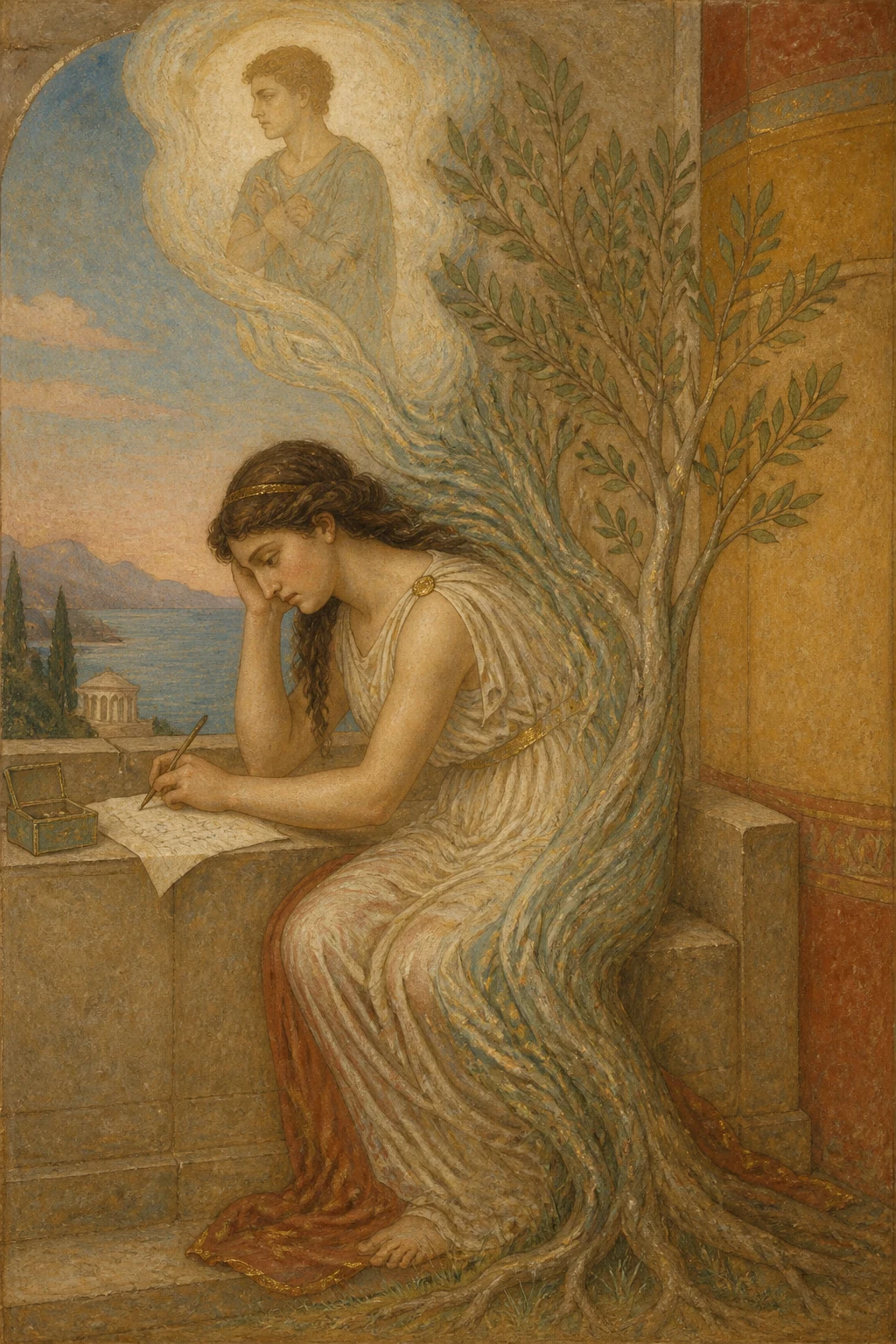
Yes, this is best: this resolve has conquered my wavering mind.” She raised herself upon her side, leaning on her left elbow. “Let him decide,” she said. “Let me confess my mad love. Alas! Where am I slipping? What fire is my heart conceiving?” And with a trembling hand she set down the words she had rehearsed: her right hand held the stylus, the other the blank wax.
She began and hesitated, wrote and rejected what she had written, inscribed and erased, altered, condemned, approved, and by turns laid down the tablets and took them up again. She did not know what she wanted; whatever she seemed about to do displeased her. Her face mingled boldness with shame. She had written “sister”; she decided to erase “sister” and inscribe these words upon the corrected wax: “The health she cannot have unless you grant it, a lover sends to you. I am ashamed, ah, ashamed to give my name.
And if you ask what I desire, I wish my plea could be made without my name, and that I need not be known as Byblis until my hopes were sure of fulfillment. Indeed, my color, my thinness, my expression, my often tearful eyes, my sighs arising without apparent cause, my frequent embraces, and kisses which, if you happened to notice, you might have felt were not a sister's—all could have revealed my wounded heart.
Yet, though my heart was deeply wounded, though fiery madness raged within, I did everything to regain my senses at last—the gods are my witnesses— and long, unhappy, struggled to escape Cupid's violent weapons. I endured more suffering than you would think a girl could bear. Defeated, I am forced to confess, and beg your help with timid prayers. You alone can save the one who loves you; you alone can destroy her.
Choose which you will do! No enemy begs this of you, but one who, bound to you most closely, longs to be closer still, and tied to you by a nearer bond. Let old men know the laws, inquire into what is permitted, what is forbidden, what is right, and keep the scales of justice: reckless love befits our years! We do not yet know what is allowed; we believe all things allowed, and follow the example of the mighty gods.
No stern father, no regard for reputation, no fear will hinder us—if only we have something to fear! Beneath the name of sibling love we shall hide our stolen joys. I am free to speak with you in private; we embrace and exchange kisses openly: how little remains! Have pity on one who confesses her love, and would not confess unless the fiercest passion forced her.
Do not deserve to have your name inscribed upon my tomb as the cause of death!” As her hand plowed these futile words, the wax filled up and left no room; the final line clung to the very edge. At once she sealed her guilty words with the impress of her gem, which she moistened with tears, for her tongue had lost all moisture. Then, blushing, she summoned one of her servants and coaxed the frightened man: “Take these, most faithful servant, to my—” she said, and only after a long pause added, “brother.”
As she handed them over, the tablets slipped and fell from her hands. The omen troubled her; still, she sent them. The servant found a fitting moment, approached, and delivered the secret message. The young descendant of Maeander, thunderstruck with sudden anger, read part of the tablets he had received and flung them away. Barely restraining his hands from the trembling servant's face, he cried, “Escape while you can, you wicked agent of forbidden lust! Had your death not brought disgrace upon me too, you would have paid for this with your life.”
The servant fled in terror and reported Caunus' savage words to his mistress. You turned pale, Byblis, on hearing his refusal, and your body shook, seized by an icy chill. Yet when her senses returned, her madness returned as well, and her tongue barely stirred the air with words like these: “And rightly so! Why did I rashly reveal this wound? Why did I so quickly entrust words that should have stayed hidden to a hasty letter?
I should first have sounded out his feelings with ambiguous words. Lest he fail to follow my course, I should have tested the breeze with a little of my sail and sailed on a safe sea; instead I spread all my canvas to winds I had not tried. So I am swept upon the rocks, overturned, and drowned beneath the whole ocean; my sails have no way back. And was I not warned by unmistakable omens not to indulge my love, when, as I ordered the letter delivered, the wax fell from my hands and brought our hopes down with it?
Should I not have changed the day, or my whole intention— though better to have changed the day? A god himself was warning me, giving clear signs, had I not been out of my mind. Yet I should have spoken myself, not trusted myself to wax, and laid bare my madness in his presence. He would have seen my tears, seen a lover's face! I could have said more than the tablets held.
I could have thrown my arms around his unwilling neck; if he rejected me, I could have seemed about to die, clasped his feet, and, prostrate, begged him for my life. I would have done everything; if each plea alone could not bend his hard heart, all together might have done so. Perhaps the servant I sent was partly to blame: he did not approach him properly, did not, I imagine, choose a suitable moment, or seek an unoccupied hour and mind.
These things harmed my cause. For he was not born of a tigress, nor does he carry hard flint, solid iron, or adamant in his breast; he drank no lioness's milk. He will yield! I must try him again, and never grow weary of my purpose while this breath remains. For, if I could recall what I have done, the best course would have been never to begin; the next best is to win what I began.
Even if I now abandon my hopes, he cannot help remembering forever what I dared; and because I have desisted, my desire will seem a passing whim, or he may think I was testing him and setting him a trap; at least he will believe I was conquered not by this god, who weighs so heavily on my heart and burns it, but by lust. In short, I can no longer claim to have committed no forbidden act.
I have written, I have pleaded: my purpose is already stained. Even if I go no further, I cannot be called innocent. What remains is much toward my desire, but little toward my guilt.” So she spoke, and—such is the discord of an unsettled mind— though she regretted her attempt, she wished to try again. She passed all bounds, and in her misery invited repeated rejection.
At last, since there was no end to it, he fled his country and its sin and founded a new city in a foreign land. Then indeed, they say, the sorrowing daughter of Miletus lost all her reason; then she tore her clothing from her breast and beat her arms in frenzy. Now she was openly mad, and confessed her forbidden hope of love: she left her country and her hated home and followed the footsteps of her fleeing brother.
As the Ismarian women, roused by your thyrsus, son of Semele, celebrate the returning rites of Bacchus every third year, so the women of Bubasus saw Byblis howling across the open fields. Leaving them behind, she wandered through Caria, among the warlike Leleges, and through Lycia. Already she had passed Cragus, Limyra, and the waters of Xanthus, and the ridge where the Chimaera had fire in her middle, a lioness's breast and face, and a serpent's tail.
The forests gave out as you, exhausted by pursuit, collapsed, Byblis, and lay with your hair spread on the hard earth, your face pressed into fallen leaves. Often the Lelegeian nymphs tried to lift you in their tender arms; often they urged you to cure your love, offering comfort to a mind that could not hear. Byblis lay speechless, clutching the green grass with her nails, while a stream of tears soaked the turf.
They say the Naiads placed beneath those tears a spring that could never run dry: what greater gift could they give? At once, as drops ooze from the cut bark of a pine, as sticky bitumen flows from the laden earth, or as, at the coming of the west wind's gentle breath, water bound by frost softens again beneath the sun, so Byblis, descendant of Phoebus, consumed by her own tears, was changed into a spring, which even now in those valleys bears its mistress's name and flows beneath a dark holm oak.
Izvirnik
Byblis
Naslednje strani prikazujejo izvirno besedilo za primerjavo.
Source ID: ovid_metamorphoses_story_065 Citation: Ovid, Metamorphoses 9.418-9.665 Original language: Latin Source: PerseusDL canonical-latinLit Source URL: https://github.com/PerseusDL/canonical-latinLit/blob/master/data/phi0959/phi006/phi0959.phi006.perseus-lat2.xml Segmentation certainty: medium 418: Haec ubi faticano venturi praescia dixit 419: ore Themis, vario superi sermone fremebant, 420: et “cur non aliis eadem dare dona liceret” 421: murmur erat: queritur veteres Pallantias annos 422: coniugis esse sui, queritur canescere mitis 423: Iasiona Ceres, repetitum Mulciber aevum
424: poscit Erichthonio. Venerem quoque cura futuri 425: tangit et Anchisae renovare paciscitur annos. 426: Cui studeat, deus omnis habet, crescitque favore 427: turbida seditio, donec sua Iuppiter ora 428: solvit et “o nostri siqua est reverentia,” dixit 429: “quo ruitis? Tantumne aliquis sibi posse videtur, 430: fata quoque ut superet? Fatis Iolaus in annos, 431: quos egit, rediit, fatis iuvenescere debent 432: Callirhoe geniti, non ambitione nec armis.
433: Vos etiam, quoque hoc animo meliore feratis, 434: me quoque fata regunt. Quae si mutare valerem, 435: nec nostrum seri curvarent Aeacon anni, 436: perpetuumque aevi florem Rhadamanthus haberet 437: cum Minoe meo, qui propter amara senectae 438: pondera despicitur nec quo prius ordine regnat.” 439: Dicta Iovis movere deos, nec sustinet ullus, 440: cum videat fessos Rhadamanthon et Aeacon annis 441: et Minoa, queri. Qui, dum fuit integer aevi, 442: terruerat magnas ipso quoque nomine gentes.
443: Tunc erat invalidus Deionidenque iuventae 444: robore Miletum Phoeboque parente superbum 445: pertimuit credensque suis insurgere regnis, 446: haud tamen est patriis arcere penatibus ausus. 447: Sponte fugis, Milete, tua, celerique carina 448: Aegaeas metiris aquas et in Aside terra 449: moenia constituis positoris habentia nomen. 450: Hic tibi, dum sequitur patriae curvamina ripae, 451: filia Maeandri totiens redeuntis eodem 452: cognita Cyanee, praestantia corpora forma, 453: Byblida cum Cauno, prolem est enixa gemellam.
454: Byblis in exemplo est, ut ament concessa puellae: 455: Byblis Apollinei correpta cupidine fratris: 456: non soror ut fratrem, nec qua debebat, amabat. 457: Illa quidem primo nullos intellegit ignes 458: nec peccare putat, quod saepius oscula iungat, 459: quod sua fraterno circumdet bracchia collo, 460: mendacique diu pietatis fallitur umbra. 461: Paulatim declinat amor, visuraque fratrem 462: culta venit nimiumque cupit formosa videri 463: et siqua est illic formosior, invidet illi.
464: Sed nondum manifesta sibi est nullumque sub illo 465: igne facit votum: verumtamen aestuat intus. 466: Iam dominum appellat, iam nomina sanguinis odit: 467: Byblida iam mavult, quam se vocet ille sororem. 468: Spes tamen obscenas animo demittere non est 469: ausa suo vigilans: placida resoluta quiete 470: saepe videt, quod amat; visa est quoque iungere fratri 471: corpus et erubuit, quamvis sopita iacebat.
472: Somnus abit: silet illa diu repetitque quietis 473: ipsa suae speciem dubiaque ita mente profatur: 474: “Me miseram! tacitae quid vult sibi noctis imago? 475: Quam nolim rata sit! cur haec ego somnia vidi? 476: Ille quidem est oculis quamvis formosus iniquis 477: et placet, et possim, si non sit frater, amare, 478: et me dignus erat. Verum nocet esse sororem.— 479: Dummodo tale nihil vigilans committere temptem, 480: saepe licet simili redeat sub imagine somnus!
481: testis abest somno, nec abest imitata voluptas. 482: Pro! Venus et tenera volucer cum matre Cupido, 483: gaudia quanta tuli! quam me manifesta libido 484: contigit! ut iacui totis resoluta medullis! 485: ut meminisse iuvat! quamvis brevis illa voluptas 486: noxque fuit praeceps et coeptis invida nostris. 487: O ego, si liceat mutato nomine iungi, 488: quam bene, Caune, tuo poteram nurus esse parenti!
489: quam bene, Caune, meo poteras gener esse parenti! 490: Omnia, di facerent, essent communia nobis, 491: praeter avos: tu me vellem generosior esses! 492: Nescioquam facies igitur, pulcherrime, matrem: 493: at mihi, quae male sum quos tu sortita parentes, 494: nil nisi frater eris. Quod obest, id habebimus unum. 495: Quid mihi significant ergo mea visa?—quod autem 496: somnia pondus habent?—an habent et somnia pondus?
497: Di melius!—di nempe suas habuere sorores: 498: Sic Saturnus Opem iunctam sibi sanguine duxit, 499: Oceanus Tethyn, Iunonem rector Olympi. 500: Sunt superis sua iura! Quid ad caelestia ritus 501: exigere humanos diversaque foedera tempto? 502: Aut nostro vetitus de corde fugabitur ardor, 503: aut hoc si nequeo, peream, precor, ante toroque 504: mortua conponar, positaeque det oscula frater.— 505: Et tamen arbitrium quaerit res ista duorum.
506: Finge placere mihi: scelus esse videbitur illi! 507: At non Aeolidae thalamos timuere sororum! 508: Unde sed hos novi? Cur haec exempla paravi? 509: Quo feror? Obscenae procul hinc discedite flammae, 510: nec, nisi qua fas est germanae, frater ametur!— 511: Si tamen ipse mei captus prior esset amore, 512: forsitan illius possem indulgere furori. 513: Ergo ego, quae fueram non reiectura petentem, 514: ipsa petam! Poterisne loqui? poterisne fateri?
515: Coget amor: potero! vel, si pudor ora tenebit, 516: littera celatos arcana fatebitur ignis: 517: hoc placet, haec dubiam vicit sententia mentem.” 518: In latus erigitur cubitoque innixa sinistro 519: “viderit: insanos” inquit “fateamur amores. 520: Ei mihi! quo labor? quem mens mea concipit ignem?” 521: et meditata manu componit verba trementi: 522: dextra tenet ferrum, vacuam tenet altera ceram.
523: Incipit et dubitat, scribit damnatque tabellas 524: et notat et delet, mutat culpatque probatque, 525: inque vicem sumptas ponit positasque resumit. 526: Quid velit ignorat; quidquid factura videtur, 527: displicet. In vultu est audacia mixta pudori. 528: Scripta “soror” fuerat, visum est delere sororem 529: verbaque correctis incidere talia ceris: 530: “Quam, nisi tu dederis, non est habitura salutem, 531: hanc tibi mittit amans: pudet, a! pudet edere nomen.
532: Et si, quid cupiam, quaeris, sine nomine vellem 533: posset agi mea causa meo, nec cognita Byblis 534: ante forem, quam spes votorum certa fuisset. 535: Esse quidem laesi poterat tibi pectoris index 536: et color et macies et vultus et umida saepe 537: lumina nec causa suspiria mota patenti 538: et crebri amplexus, et quae, si forte notasti, 539: oscula sentiri non esse sororia possent: 540: ipsa tamen, quamvis animo grave vulnus habebam, 541: quamvis intus erat furor igneus, omnia feci 542: (sunt mihi di testes), ut tandem sanior essem, 543: pugnavique diu violenta Cupidinis arma
544: effugere infelix et plus, quam ferre puellam 545: posse putes, ego dura tuli. Superata fateri 546: cogor opemque tuam timidis exposcere votis. 547: Tu servare potes, tu perdere solus amantem: 548: elige, utrum facias! Non hoc inimica precatur, 549: sed quae, cum tibi sit iunctissima, iunctior esse 550: expetit et vinclo tecum propiore ligari. 551: Iura senes norint et, quid liceatque nefasque 552: fasque sit, inquirant legumque examina servent: 553: conveniens Venus est annis temeraria nostris!
554: Quid liceat, nescimus adhuc et cuncta licere 555: credimus et sequimur magnorum exempla deorum. 556: Nec nos aut durus pater aut reverentia famae 557: aut timor impediet (tantum sit causa timendi!). 558: Dulcia fraterno sub nomine furta tegemus: 559: est mihi libertas tecum secreta loquendi, 560: et damus amplexus et iungimus oscula coram, 561: quantum est, quod desit? Miserere fatentis amores 562: et non fassurae, nisi cogeret ultimus ardor, 563: neve merere meo subscribi causa sepulcro!”
564: Talia nequiquam perarantem plena reliquit 565: cera manum, summusque in margine versus adhaesit. 566: Protinus inpressa signat sua crimina gemma, 567: quam tinxit lacrimis (linguam defecerat umor), 568: deque suis unum famulis pudibunda vocavit 569: et pavidum blandita “fer has, fidissime, nostro”— 570: dixit, et adiecit longo post tempore “fratri.” 571: Cum daret, elapsae manibus cecidere tabellae.
572: Omine turbata est: misit tamen. Apta minister 573: tempora nactus adit traditque latentia verba. 574: Attonitus subita iuvenis Maeandrius ira 575: proicit acceptas lecta sibi parte tabellas 576: vixque manus retinens trepidantis ab ore ministri 577: “dum licet, o vetitae scelerate libidinis auctor, 578: effuge!” ait: “qui, si nostrum tua fata pudorem 579: non traherent secum, poenas mihi morte dedisses.”
580: Ille fugit pavidus dominaeque ferocia Cauni 581: dicta refert. Palles audita, Bybli, repulsa, 582: et pavet obsessum glaciali frigore corpus. 583: Mens tamen ut rediit, pariter rediere furores, 584: linguaque vix tales icto dedit aere voces: 585: “Et merito! quid enim temeraria vulneris huius 586: indicium feci? Quid, quae celanda fuerunt, 587: tam cito commisi properatis verba tabellis?
588: Ante erat ambiguis animi sententia dictis 589: praetemptanda mihi. Ne non sequeretur euntem, 590: parte aliqua veli, qualis foret aura, notare 591: debueram tutoque mari decurrere, quae nunc 592: non exploratis inplevi lintea ventis. 593: Auferor in scopulos igitur subversaque toto 594: obruor oceano, neque habent mea vela recursus. 595: Quid quod et ominibus certis prohibebar amori 596: indulgere meo, tum cum mihi ferre iubenti 597: excidit et fecit spes nostras cera caducas?
598: Nonne vel illa dies fuerat vel tota voluntas, 599: sed potius mutanda dies? Deus ipse monebat 600: signaque certa dabat, si non male sana fuissem. 601: Et tamen ipsa loqui, nec me committere cerae 602: debueram praesensque meos aperire furores 603: (vidisset lacrimas, vultum vidisset amantis!), 604: plura loqui poteram, quam quae cepere tabellae. 605: Invito potui circumdare bracchia collo 606: et, si reicerer, potui moritura videri 607: amplectique pedes adfusaque poscere vitam.
608: Omnia fecissem, quorum si singula duram 609: flectere non poterant, potuissent omnia, mentem. 610: Forsitan et missi sit quaedam culpa ministri: 611: non adiit apte nec legit idonea, credo, 612: tempora nec petiit horamque animumque vacantem. 613: Haec nocuere mihi. Neque enim est de tigride natus 614: nec rigidas silices solidumve in pectore ferrum 615: aut adamanta gerit nec lac bibit ille leaenae.
616: Vincetur! Repetendus erit, nec taedia coepti 617: ulla mei capiam, dum spiritus iste manebit. 618: Nam primum, si facta mihi revocare liceret, 619: non coepisse fuit: coepta expugnare secundum est. 620: Quippe nec ille potest, ut iam mea vota relinquam, 621: non tamen ausorum semper memor esse meorum, 622: et, quia desierim, leviter voluisse videbor 623: aut etiam temptasse illum insidiisque petisse; 624: vel certe non hoc, qui plurimus urget et urit 625: pectora nostra, deo, sed victa libidine credar.
626: Denique iam nequeo nil commisisse nefandum. 627: Et scripsi et petii: temerata est nostra voluntas; 628: ut nihil adiciam, non possum innoxia dici. 629: Quod superest, multum est in vota, in crimina parvum.” 630: Dixit, et (incertae tanta est discordia mentis) 631: cum pigeat temptasse, libet temptare: modumque 632: exit et infelix committit saepe repelli. 633: Mox ubi finis abest, patriam fugit ille nefasque 634: inque peregrina ponit nova moenia terra.
635: Tum vero maestam tota Miletida mente 636: defecisse ferunt, tum vero a pectore vestem 637: diripuit planxitque suos furibunda lacertos. 638: Iamque palam est demens inconcessamque fatetur 639: spem veneris, siquidem patriam invisosque penates 640: deserit et profugi sequitur vestigia fratris. 641: Utque tuo motae, proles Semeleia, thyrso 642: Ismariae celebrant repetita triennia bacchae, 643: Byblida non aliter latos ululasse per agros 644: Bubasides videre nurus. Quibus illa relictis 645: Caras et armiferos Lelegas Lyciamque pererrat.
646: Iam Cragon et Limyren Xanthique reliquerat undas, 647: quoque Chimaera iugo mediis in partibus ignem, 648: pectus et ora leae, caudam serpentis habebat; 649: deficiunt silvae, cum tu lassata sequendo 650: concidis et dura positis tellure capillis, 651: Bybli, iaces frondesque tuo premis ore caducas. 652: Saepe etiam nymphae teneris Lelegeides ulnis 653: tollere conantur; saepe, ut medeatur amori, 654: praecipiunt surdaeque adhibent solacia menti: 655: muta iacet viridesque suis tenet unguibus herbas 656: Byblis, et umectat lacrimarum gramina rivus.
657: Naidas his venam, quae numquam arescere posset, 658: subposuisse ferunt: quid enim dare maius habebant? 659: Protinus, ut secto piceae de cortice guttae, 660: utve tenax gravida manat tellure bitumen, 661: utve sub adventu spirantis lene favoni 662: sole remollescit, quae frigore constitit, unda, 663: sic lacrimis consumpta suis Phoebeia Byblis 664: vertitur in fontem, qui nunc quoque vallibus illis 665: nomen habet dominae nigraque sub ilice manat.
Nadaljuj z branjem