Waltey
Bistri pastirček
Legende sau basmele românilor · Petre IspirescuO besedilu
Bistri pastirček
- Vir
- Legende sau basmele românilor
- Avtor
- Petre Ispirescu
- Jezik branja
- English
- Jezik izvirnika
- Română
- Čas branja
- 19 min branja
- Obseg
- 15 strani
- Naslov izvirnika
- 023 Ciobănașul cel isteț sau turloaiele blendei
O izvirniku
Legende sau basmele românilor
Romunske ljudske pravljice o začaranih kraljestvih, preizkušnjah in junakih, zapisane iz ustnega izročila. Bralni jezik je English, izvirnik pa prihaja iz vira Legende sau basmele românilor v jeziku Română.
Besedilo
Bistri pastirček
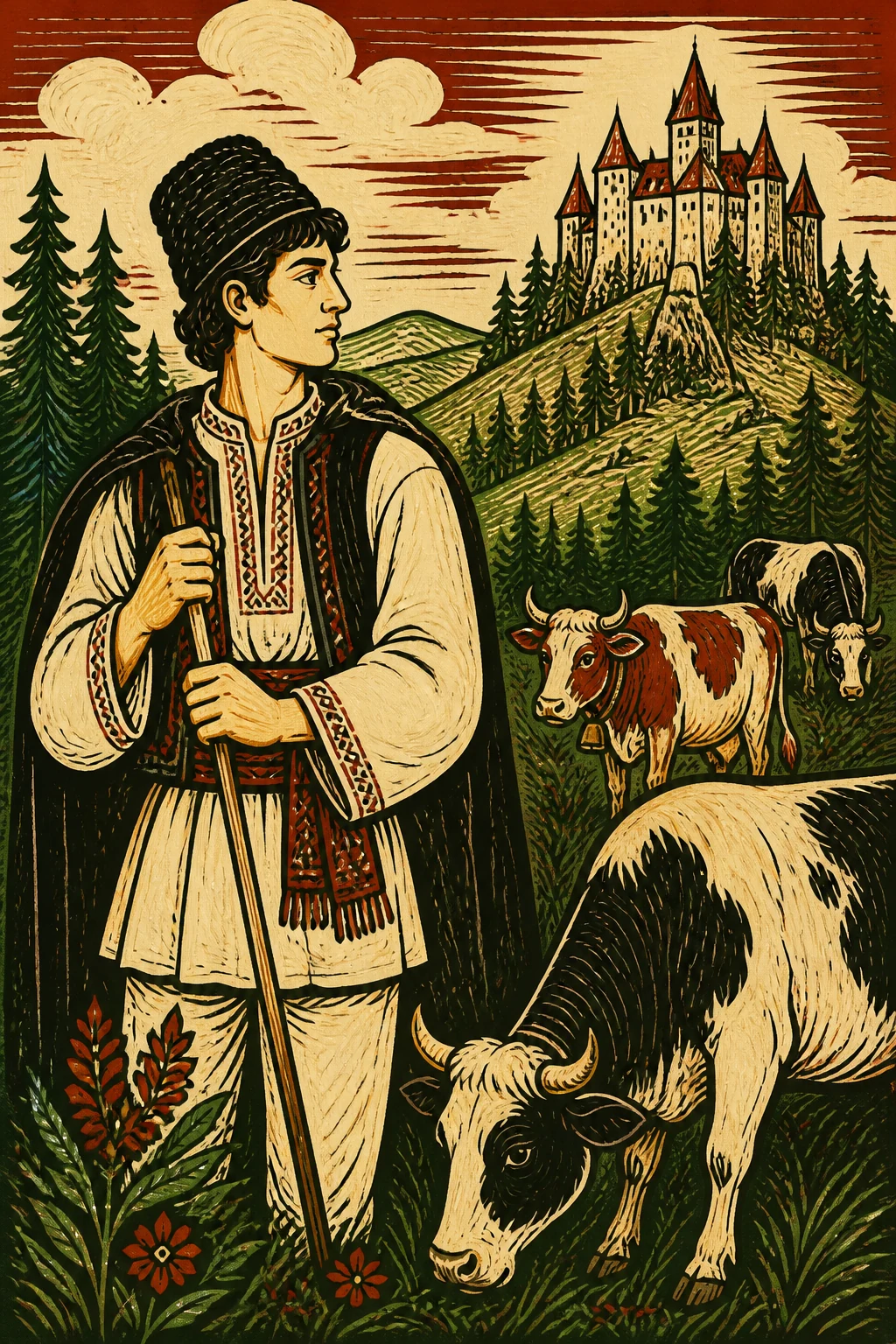
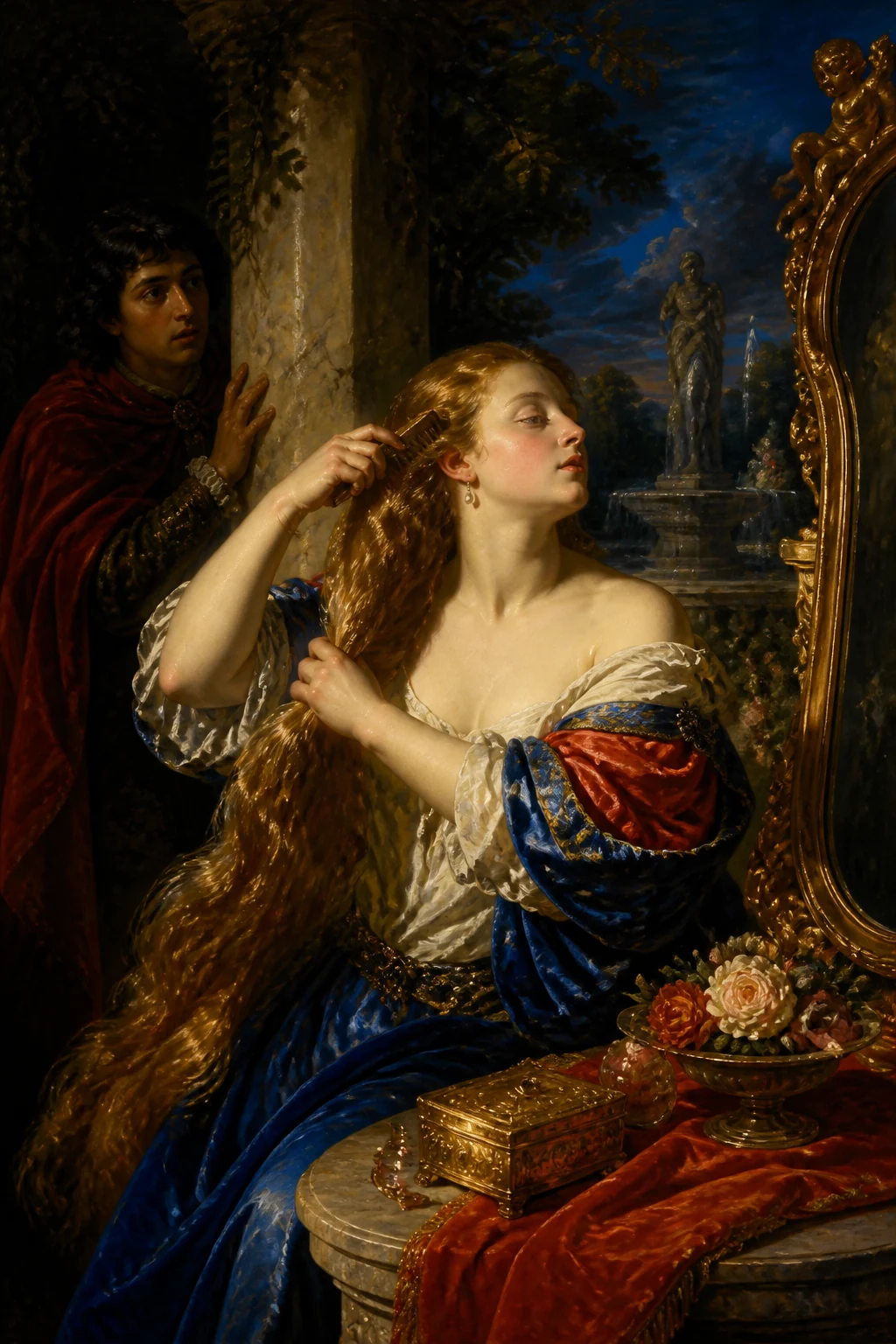
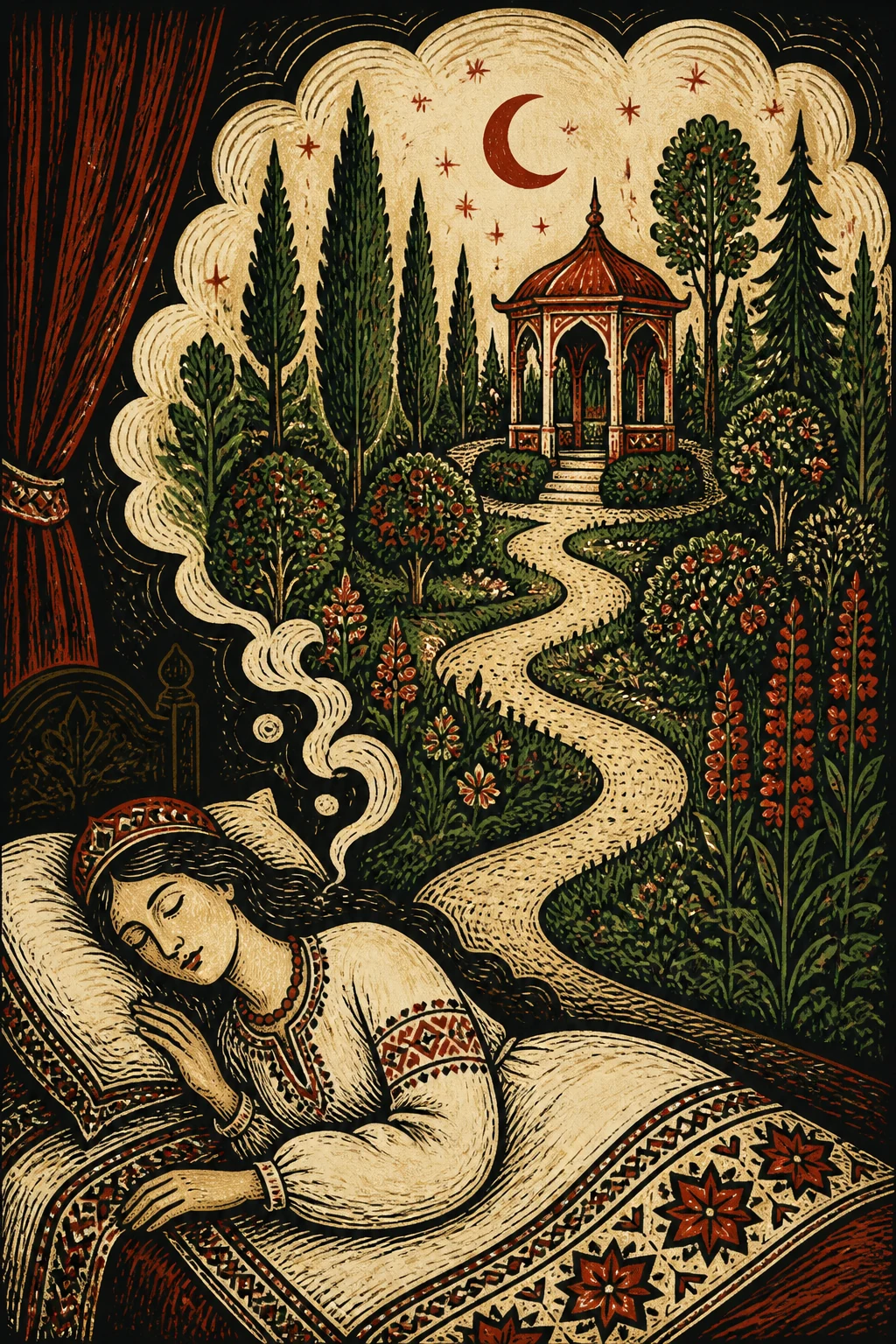
Once upon a time, as never before; and so on. There once lived an emperor and an empress. Both were good-hearted and handsome, and they loved one another dearly. Yet they were forever sad and sorrowful because they had no children. None of the remedies the empress had taken from healers and wise women had done her any good. So the emperor and empress took to fasting and praying, hoping that God might hear them and grant them a child. Some days later, one evening when they had spent part of the night praying more fervently than ever, they went to bed rather late. No sooner had their heads touched the pillows than they fell fast asleep, as though someone had struck them senseless. Before long, the empress gave a cry and started out of her sleep. “What is it, my dear empress?” asked the emperor. “Why do you cry out so terribly?” “What should it be, Your Majesty? I have just had a beautiful and wondrous dream. Listen, and I shall tell it to you. I dreamed I was in a garden, a garden so beautiful that I had never seen its like. There were tall, leafy trees, so finely shaped that they seemed painted, standing in rows along the path I was following. To the right and left stretched a wood of just such trees, a delight to look upon. Walking on and marvelling, I found myself near the middle of the garden. And there—what shall I say?—was all the beauty in the world. Winding, twisting paths were covered with a carpet of fine grass, as though rugs had been spread over them. Here and there, wherever you looked, stood clusters of shrubs: some round and flowering, others long and planted with little trees, and others shaped into sheltered hiding places. There were flowers of every colour, with a fragrance that went to your head. I lost my way, gazing open-mouthed about me, looking at the fruit that weighed down the trees and listening to the thousands of little birds singing on the branches, quite unafraid of me. Near the middle of the garden, I dreamed, stood a fountain of marble as white as milk, and water flowed from a hundred spouts, clear as crystal and cold as ice. As I wandered to and fro, unable to have my fill of the flowers and their fragrance, I heard a voice like a nightingale’s, saying over and over, ‘Whoever eats me shall conceive!’ I stood still and looked about to see where the voice came from. It seemed to rise from the middle of a little thicket of trees, lovelier than any I had seen till then. So I followed the voice and went towards it. And what should I see? The thicket was surrounded by slender green grass, growing above my knees, with a little flower among every blade, so that you could scarcely bear to tread upon it. When the wind stirred, it bent and rose again, like waves upon the water. Very gently, stepping carefully so as not to spoil that lovely grass and those flowers, I reached the thicket. There, among the little trees, stood one a little taller than the rest, as though it had been made so on purpose, to catch the eye of anyone passing. On its branches hung tiny apples, rosy on one side as though they had been roasted. I stood and listened. It seemed that they were speaking to me, for they never ceased saying, ‘Whoever eats me shall conceive!’ I could hold back no longer. I reached over the other little trees, picked one of those apples, put it in my mouth and ate it. But as I turned to go, I caught myself on a thorn. The wretched thorn pierced me so sharply that I cried out and woke.” “A lovely dream you have dreamed,” said the emperor, “but you cried out so loudly that you frightened me.” Not long afterwards, the empress felt that she had conceived. Nine months later she gave birth to a daughter as lovely as a fairy. Joy and merrymaking filled the imperial court for many days. The more the girl grew, the more beautiful she became. The emperor and empress gazed at her as though she were the sun itself. As she grew older, it became clear that she was clever and sensible as well. She liked to go out into the fields to play, gather flowers, chase butterflies and bathe in the stream that ran behind the imperial garden, its waters as clear as a tear. Her nurse had noticed that the girl also loved to listen to the tunes a young shepherd played on his pipe. He had a few lambs, which he grazed on the other side of the stream. One day the emperor’s daughter went into the fields with her nurse. Hearing no piping, they thought themselves alone, undressed and went bathing. The young shepherd was asleep at the foot of a tree, and his lambs had strayed across the meadow. Just then a gnat stung him so sharply that it woke him. As he opened his eyes, there was the emperor’s daughter coming out of the water. He was struck dumb by what he saw. After the emperor’s daughter and her nurse had gone, he gathered his lambs and went about his own affairs. Whatever piping he had done before was nothing to what followed: now he put his whole soul into it and played such plaintive songs that they could lull you to sleep. Seeing that the girl was far too fond of listening to the pipe, the nurse said nothing to anyone, but took care not to bring her that way again. The young shepherd, a handsome lad, slender as though drawn through a ring, saw that the girl no longer came there, and set off into the wide world. He went to another town and hired himself out to tend cattle. Meanwhile, the emperor and empress adored their daughter all the more as they watched her grow ever lovelier and wiser. When she was old enough to marry, the emperor said to the empress, “My beloved empress, our daughter is grown now. We must find her a husband among the sons of emperors, one as handsome and wise as she is.” “Our daughter shall marry the man who guesses the marks upon her body,” replied the empress. “Otherwise, God forbid that I should give her in marriage.” The emperor heeded her words and sent a proclamation throughout his land and to all the neighbouring empires, declaring that whoever guessed the marks upon his daughter’s body should have her for his wife. When this imperial decree became known, there was a great stir among princes and common folk alike, and they all set out for the imperial court to try their luck. When the young shepherd heard of it, he asked his master for his wages, sold what few spare clothes he possessed, and bought a horse as good as his money would afford, along with a change of clothing. Then he took some provisions and set out too. As soon as he reached the open country, he dismounted and, with tears in his eyes, prayed to God to help him on his journey and grant him success. Then he mounted again and rode on in good spirits. On and on he went until evening, when he stopped to rest. And what should he see but a whole company of emperors’ sons and great noblemen’s sons coming along, dressed in nothing but silks and riding stallions that seemed to eat fire. They swaggered as though the whole world were too small to hold them. The poor fellow moved aside. He had seen fine horses before, splendidly saddled and bridled; he had seen young noblemen in costly clothes, and had heard that some of them were chatterers, spoiled, mocking and so puffed up with pride that you could not reach their noses with an ox-goad. But the likes of these—never, never, never! They too stopped there for the night. They had a great fire made, big enough, it seemed, to roast an ox, settled around it, and after supper began talking of everything under the sun, more ill than good. There was nothing in the world they did not find fault with. They sprawled on mats covered with finely woven rugs. The night was beautiful, without a wisp of cloud. From time to time the crickets and the night birds called, reminding you that you were still alive in the world. A little breeze stirred so softly that you could scarcely feel it caressing your cheeks. The shepherd had slipped quietly beside a flowering thorn bush, near which his horse was grazing, and sat lost in thought. He looked up at the Milky Way, the Road of the Slaves, watched the turning of the Wain, and made out the girl carrying water in buckets hung from a yoke. He marvelled at the rays shining from the bright stars and longed to know which of those lamps hung in heaven belonged to the emperor’s daughter, so that he might bow before it. While he was deep in thought, the emperors’ sons and noblemen’s sons noticed that someone else was there. They questioned him and learned that he too was going to the imperial city. Since they saw that he gave them no cause for quarrelling, they began mocking him of their own accord. “Look,” said one, “another suitor for the emperor’s beautiful daughter!” “He is sure to be the one who guesses her marks,” said another. “And a fine match he will make for the emperor’s daughter, this handsome prince!” put in a third. The shepherd held his tongue and swallowed his anger, listening to their tasteless, thoughtless talk. When they saw that he would not answer a word, they went up to him and said, among other things, “So many princes and emperors’ sons have tried, and none has guessed the marks on the emperor’s daughter. And you, my friend, expect to prove cleverer than them all?” “A man ought to try his luck once or twice, three times at most,” said the shepherd, “and the man who does so is sensible. But anyone who is forever trying must be a fool with a screw loose. I am troubling no one. Nor do I boast that I shall guess anything. Still, may God grant that one of you wins such a dainty morsel, for surely you deserve her.” The noblemen’s sons could not stomach the shepherd’s words. They resolved to pay him back, then lay down to sleep. The next morning the shepherd rose early, washed his face at a spring, said his prayers, mounted his nag and jogged along alone. The noblemen’s and emperors’ sons rose late, fooled about a little longer, then set out themselves. They caught up with him and rode past. Once again they taunted him and went out of their way to pick a quarrel. The shepherd kept his mouth shut and went on his way. He knew that a silent tongue makes for a peaceful journey. That evening the princes and young noblemen stopped at the edge of a forest. At last the shepherd arrived too, weary beyond telling. He settled a little way apart, made himself a small fire, tended his horse, ate his supper and lay down. The restless young noblemen decided to amuse themselves at his expense. They waited until he was asleep, built up the fire, took his hat and tossed it into the flames. Then one of them woke him, saying, “Hey, friend, your hat has fallen into the fire! Get up and fetch it, or it will burn.” “Let it burn,” he answered, as though overcome with sleep. The young noblemen laughed until they had to clutch their sides, then lay down and fell asleep themselves. Now the shepherd rose, gathered all their weapons—spears, arrows, bows and swords—and laid them on the fire. When everything had burned away but the iron, and that was glowing red with heat, he woke them, stirring the embers with a splinter of wood. “Get up, gentlemen, and look at the stays of my hat!” When the young noblemen rose and saw all that scorched iron, they could scarcely believe their eyes. They went to the places where they had hung their weapons, but there was nothing left to find. At last they understood that they had been tricked. They were black with rage, but had to swallow it. The shepherd was ready to leave, for dawn was just breaking. He mounted and made off as fast as he could; truth to tell, he was rather afraid they might do him some harm. Once more the young noblemen caught up with him and rode past, mocking him as they went. Again it was late when the shepherd reached the place where they had stopped for the night. As before, he settled apart, tended his horse, ate and lay down. Before long he heard the young noblemen plotting. The place where they were spending the night was near a muddy marsh. As soon as they thought the shepherd asleep, they took his horse and led it into the mire. Then they woke him and said, “Hey, friend, get up! Your old nag is stuck in the mud and cannot get out.” The shepherd knew he had tethered his horse securely, and understood that there must be some mischief afoot. “What devil made her go into the mud?” he answered. “Leave her there. She will get out if she wants to.” Again the noblemen laughed until the tears came, then went to bed. When they were asleep, the shepherd rose, took their stallions, flayed the skin from their legs, starting at the hooves, and tied it up with strips of lime-tree bark a little above the knees. He wedged a stick into each horse’s mouth to leave its teeth bared, then drove them into the mud beside his own horse. After that he went to wake the noblemen’s sons. “Get up, gentlemen, and see a wonder! Your stallions saw my old nag stuck in the marsh, rolled up their breeches and went to pull her out. That is why they are laughing—look at them, fit to burst!” Hearing this, the noblemen feared that he had played some trick on them, and so indeed he had. When they saw what the shepherd had done, they tore their hair. They had nothing to say. Yet one of them, more insolent than the rest, swore to stick to the shepherd and give him no peace. The shepherd, meanwhile, pulled his horse out of the mire and slipped away in the confusion. Off he went, leaving them crestfallen, with folded arms, whistling over their losses. The arrogant, shameless young nobleman followed him, caught up with him, and clung to his side with coaxing words and flattery. When they reached the imperial city, the shepherd presented himself before the emperor to guess the princess’s marks; but the young nobleman would not leave his side for so much as the striking of a spark.
When the emperor saw the shepherd, neatly dressed and freshly washed, with clean clothes on his back and the first down of a moustache on his lip, he took a liking to him, especially as the lad was handsome and stood before him upright and fearless. He therefore allowed him to make his guess. Appearing before the imperial council, where the emperor, the empress and their daughter were gathered, the shepherd darted a swift glance at the girl and said, “Most exalted emperor and empress, Your Majesties’ daughter has the sun upon her breast, the moon upon her back, and two bright stars upon her shoulders.” “That is just what I was about to say,” declared the shameless nobleman from behind the shepherd. Everyone was astonished to hear the marks the shepherd named and the emperor’s confirmation that they were indeed correct. Until then, all sorts of guesses had been made. Some said the girl must have a hunchback; others that she must be lame. Others said she bore the mark of an olive, a cherry, a cornel berry or some other fruit which the empress had craved while carrying her, and had stolen to satisfy her longing. After eating the fruit, they said, wherever the empress had first laid her hand upon her own body, there the fruit’s mark had appeared upon her daughter’s. Some claimed the mark was in one place, others in another; one said this, another said that. The emperor and empress now found themselves in a great quandary. They did not know which of the two to choose. Some members of the imperial council said they should choose the great nobleman’s son, since he had declared that he had been about to give the same answer. Others said they should choose the shepherd, for he had been the first to guess the girl’s marks. The emperor decided that the girl should choose whichever man she wished the following morning, before him and the council. In this way he gave her until the next day to think it over. Meanwhile, he ordered that both young men should be honoured as distinguished guests and lodged in the imperial palace. A chamber with two beds was made ready for them to spend the night.
Before nightfall, the shepherd slipped away from the nobleman’s son and went to buy some popped corn. When he returned, the nobleman’s son asked him, “Where have you been, my friend?” “To buy myself a little knife,” he answered. “What do you want it for?” “I have a use for it.” Hearing this, the nobleman’s son went and bought himself a little knife as well. By the time he returned, supper was ready. They sat down to eat, then went to bed. The chamber they entered was so splendidly furnished that the poor shepherd wondered how he could bring himself to tread upon the costly rugs and carpets spread across the floor. He was all the more astonished to see the great nobleman’s son walk in and trample them without a care, as though they were so many old rags. The walls were white as milk, adorned with bands of gold. At the windows hung curtains of fine, heavy silk, spread upon golden rods. Along the walls stood benches and a table of fragrant wood, all skilfully fashioned. The beds stood on either side of the chamber, each beneath a canopy of the finest silk, embroidered with gold thread and resting on four spiral-carved posts streaked with gold. The bed linen was white as snow and so delicate that you could have pierced it with your tongue. The pillow was covered in the choicest silk cloth. The shepherd entered timidly. He scarcely dared set his feet down, for fear of spoiling the rugs. He eased himself gently into bed, taking care not to rumple the linen. The nobleman’s son, on the other hand, flung himself onto a bed as soon as he entered, as though he were at home, and sprawled out. Once the candle had been put out, the shepherd began crunching his popped corn in the dark. Hearing him, the nobleman’s son asked from his bed, “What are you doing over there, my friend?” “What should I be doing? I have cut off my nose and am eating it. That is what I bought the knife for.” At once the nobleman’s son took out his little knife, cut off his nose and began chewing it too, convinced that there must be something to this. He could not believe that such a deed would fail to bring him some advantage in winning the prize he hoped to grasp. Hurt it did, to be sure, but he chuckled to himself like a fool, already imagining how he would outdo them all. A little later he again heard the shepherd crunching. “And what are you doing now, my friend?” “What should I be doing? I have cut off my ears and am eating them.” At once the nobleman’s son cut off his ears as well and began chewing them, determined not to be outdone by a mere shepherd. All night long he could find no rest for the pain. He writhed like a leech sprinkled with salt, yet was ashamed to cry out or groan. The shepherd fell asleep and slept so soundly until morning that it was a wonder to behold. When they rose, they were summoned before the imperial council so that the girl might choose her bridegroom. And what should everyone see but the nobleman’s son, mutilated, shorn of his ears and covered in blood like a carcass! They threw him out like a good-for-nothing. Then the emperor ordered fresh clothes to be brought for the shepherd and took him to the church, where he was wed to the princess. Let us leave aside how long the wedding festivities lasted. Seeing that his son-in-law was no fool, and that his wits seemed to grow sharper by the day, the emperor set him to judge several of the most difficult disputes. The emperor’s son-in-law was by nature a just man, honest and God-fearing. The imperial council was left open-mouthed at the fairness of his judgments. Proud that God had sent him so quick-witted a son-in-law, the emperor, who was now an old man, stepped down from his throne and made his son-in-law emperor in his place. And if he is still alive, he reigns there to this day. As for me, I mounted a thorny tree, that one and all might listen to me.
Izvirnik
023 Ciobănașul cel isteț sau turloaiele blendei
Naslednje strani prikazujejo izvirno besedilo za primerjavo.
fostu odata ca nici odata; etc. A fostit odata unu imperatu si o imperatesa. AmOndoi erau omeni de treba si frumo.i. Et se iubeaii nevoe mare I Dara erau totu mihniti si amarill ca nu faceau copii. Tote lecurile ce luase imperatesa de pe la vraci si vrajitore nu-i folosise intru Imperatulu ci imperatesa se pusera pe posh' si pe ruaciune, cu giludu ca dora ii va asculta Dumnetleti ci le va da si lord unii copilu. Dupa trecere de cafe -va (Jule, intr'una din serf cand 1 etrecura el o parte din nopte rugandu-se mai ferbinte, se culcara mai tarcliu. Guru puse capulu pe perina, adormire indata parca -i lovise tine -va cu muchia in capu. Nu trecu multil §i imperatesa dete unu tipotu rasgrindii din somnii. Da ce al, draga mea imperalesa, clise imperatulii, de tipi aka de grozavil Ce sa amu, marite irnperate, eca mit ve4utii unu visit frumosu si minunatii. Asculta, sa ti-lu povestescii : Se facea ca eramil intr'o grading, frumosi, frumosg, cum n'amil mai vet.lutil. Erail nisce pomi inalti, stufog si bine potrivitrde parea ca erau scriA si wclati in tramba pe drumulti pe care mergeamil. In drepta gi in stanga era o padure tota cu de astili-felil de pemi de iti placea sA-i privesci. Totit mergendii si minunandu-me, m'amil pomenitit catre midloculi' gradinel. Aid era, ce spui? frumusetea de pe lume. Nisce carari sucite si. cotite, acoperite cu unit ten de (srba maruntica, de parea ea erau nisce covOre aternute. Din loci' in loci' si mai catti colea, se Ikea ca erail cA void sa-ti nimied aee-
date nisce stufisuri, unele rotunde si cu flori, allele lunguefe si cu pomisori, era allele facute ca nisce ascuncletoi. Flori cu fell de febi de fete Si cu unit mirosti de te imbata. Me retacisemu cescanail gura in tote part le, ullandu-me la pómele cu care erail incarcati pomil si ascultande la miile de. paserele ce cantaii pe ramuele si fare a se sill de mine. Mai catre mielloculu gradinei sa facea ea era o fantane de marmura alba ca laptele, si apa curgea pe de o sula de pup, limpede ca viera, si rece ca. ghiata. Totil umblandu incoa si incolo, nesaturandu-me do privirea ilorilorit si de miosii, auclu un glasu Ca de privighetore care to-tit clicea : tine m'o manta, remane area 1 St ru in loco, caute se veclii de unde vine glasulu, si mi se parea ca ese din miclloculit unui stufulefil de pomisori, mai fumosi de catil cel -lalti pe care ii veclusemil pins aci. Me iail si eft dupa glasti s'o plecit inteacolo. Gaud, ce sa vecli ? stufuletulu se facea ca era inconjuratii de nisce erba verde, sublirica si nalta de-mi venea pins mai susil de genuclii, firicelu de erba si floricica ; astil-felit in catii nu te indural sa calci peste ele. Si card adia ventulii, se culcail si se ridicail de pares ca suntii nisce valuri de apa. Eft, pise, binisoril, me ferearnil sa nu stricit a frumusefe de erba si flori, si ajungit pina la stufuleffi. Acolo in midloculit unorii pomisori, era unulu ce-va mai nalticelii, pare ea de dinadinsil era facutit asa, ca -vela on -tine o trece. Pe ramurile lui sta nisce merisore mici i p'o parte rumene de 'Area ca -ere] prajite. Stet si ascultn. Ele, se facea ca min Ifni vobeati, caci nu mai incetaii de a tail dice : tine manta remane grea. Eit n'amii mai pututii sa me oprescii. Me irtinclii peste cei-lalli pomisori, iaii unit merisoii d'alea, bagu in aura manancii, dare, tend sa me intorcu, dab. ghimpe. Asa de m'a sagetatii pustiulit de ghimpe, in catii ame lipatil si m'amil desteptatil. Fumosil visit ai visatit, clise imperatulii; dar sr tare ai fipatil, In dta speriatii. Nu trecu multii dupd asta si imperatesa simfi ea a fostil sa-ltit ild sale inteund m'amd pipe, m'o
luatil in pantece. Dupd noue luni, nascu o fata ca o dina. Bucueia si veseliile linura la curtea imperatesca mai multe dile. Fata de ce crescea, d'aia se facea mai frumosa. Imperatula ci imperatesa se uita la densa ca la sore. Dupa ce mai crescu, se vedu ca fata este isteta si cu minte. II placea sa esa pe campil sa se joke, sa adune floricele, sa alerge dupa fluturel si sa se scalde In pirlia, ilu ce curtea pe la spatele gradinei imperatesci si care era limpede ca lacrima. Dadaca bagase de sema ca fetel, pe linga placea sa asculte si la viersula ce scotea din fluera unu ciobanasu care avea cote -va miele si le pa5tea dincolo de piriiasa. inteuna din Bile fata finperatului merse cu dadaca-sa la campii, si neaudinda fluerrrlii, credu ca sunta singure, se desbracara si se scaldara. Ciobanasula dormia la radacina until copacia si mielele se rataciqera pe campie. Cand, unit tintara ilu intepa aka de tare, in catil ilu destepta. Desteptandu-se elu, eca fata imperatului ca esea din apa. Remase uimitil de ceea ce vedu. Pupa ce se duse fata imperatului cu dadaca-sa, Isi cauta si ela mielele si se duse si elu inteale sale. Pind aci cantase ela nu cantase ; dera dupa asta isi puce si ela puterile si clicea din fluera nisce dome de to adormea. Vedenda dadaca ca fetei ii placea prea multa BA asculte la fluera, nu dise nimenui nimira, dard se feri de a mai veni cu fata pe acolo. Ciobanasula, una flacaiandru chipesa si trasa ca p'in inelu, data vedu ca nu mai vine fata pe acolo, isi 1ua si &SI lumea In capii, si se duse in alta parte la una ora,,i1 de se bags argata la vite. Imperatulii si imperatesa se topea dupa fata lora, vedend'o ca de ce merge se face mai frumosa si mai cu minte. Cand ajunse de maritata, imperatulil dise imperatesei /mperatesa mea iubita, fata nostra s'a Mugu. mare ; acumil sa-i cautamii unit harbata dintre fiii de imperati tutu a§a de Mimosa si de cu minte ca si densa. Fata nestra va lua de harbata pe acela, dise imperaale-lalte, 'II
tesa, care ii va ghici semnele ce are pe trupti; altil-felti nu o maritu, D6mne feresce. Imp6ratulii asculta de vorbele imperatesel si dete scara In fora si pe la tote imperatiile, precumil ca sä se scie ca or! -tine va ghici semnele ce are fata imperatulul pe trupti, accluia i-o va da de sotie. Cand se amli de asta hotarire imperatesca, se facu mare vilva intre si Ornenil loculu!, si toll cu totulii se sculara sa merga la curtea imperatesca sa-si cerce noroculti. Iar data aucli si ciobanasultt, ceru simbria de la stapdnu-sett, isI mai vendu si ce bruma de tole mai avea, isi cumpera unii calii de atattl pe catil H ajunsese bani si haine de primenela, 1 I lua ce-va merinde si pleca si Wt. Cum se veclu la camp% descaleca, si cu ochil inmuiati in lacrami facu o rugaciune la Dumneciett sa-i fie de ajutorti in caletorie si sä isbandescd, apol incaleca din nuoil si porni cu voie buns. Si asa, aide, aide, merse pins insera si se puse a se odihni. Cand, ce sa vecli D-ta ? unde venea o cots de fiT de impel.* si de hoer! mar!, imbracati numal In fira si pe nisce armasari de mancaii foal'. Se parea ca nu-I mai incape locultit. Eta, biettl, se dete mai la o parte. Mai v64luse elii cal bun!, inselati si fnfranati frumosii; mai vecluse si fii tineri de hoer! imbracati cu haine scumpe, auclise ca unit dinteensii suntti limbuti, desmerdati, lautori in risii si infumurati, de nu le ajunge cine-va cu stramurarea la nasil, dar ca si acestia, ha, ba, ba! Trase si ei aci spre a manea peste nOpte. Pusera deci de le Men unit focti mare de parea ca ati sa triga unit' boil, se pusera pe langa densuld si dupa ce cinara, incepura a vorbi vercli si uscate ; mai multe rele de cattl bune. Nu le scapase nimicti pe lume de care sa nu se alege. Stall tolaniti pe nisce rogojini pe d'asupra carora erati asternute nisce velinte lucrate cu mestesugti. Noptea era frumosa. Picti de nuorii nu se vedea. Din cand In cand greed! si prigoriile to faceati si-ti mai aduci aminte ca traesci pe lume. Unii vinticelti adia in catti de abia imperati isi ilti
Limteai ea vine sell mangaie obrajil. Ciobanul se Meuse mitstelu lenge un maracine infloritfi, pe lenge care pastea si se puse pe genduri. Se uita pe cerii la drumulit robilorii, vedea cum se misca carulu, fata care duce apa in doniti pe cobilite. Se mira de raclele ce esa din. luceferil, si ceuta cu mare dorint5. se cunosce care din candelele atarnate in cerd aril fi aceea a fetei imperatului ca se se inchine la ea. Pe sand era cufundat in gandire, fiii de impel.* si de boeri bigara de seine ce mai era cine-va. Il intrebara si a-. flare ea merge el h cetatea imperetesce unde mergeail si et Si fiind-ca vNitra ce el nu le da pricing de vorbe, incepura el :=ä-1 vorbesca carat is peste piciora. Fate, clise unul din el', ance un petitorti pentru fata cea frumosa a imperatului. As-fa negreitil ce are sa-i ghicesca semnele, dise altulii. Da bine are se sede fetel imperatului cu estil fetii-frumosii, grai unit alu treilea. Ciobanulit tatea si inghitea ; asculta si elii la vorbele lord cele nesdrate si necumpetate. Deed veijura si vetjura ad ell nu respunde nici unii mersera la densulii si intre altele ii disera : Atatf flu de domni si de imperati au fostii si nimeni n'aii pututil ghici semnele fetei imperatului, si tocmai dumneta prietene, o se to gasesci mai firoscesill Omulil este datorti se-si t erce noroculit o data de done, multil de trei ors, clise ciobanulii, si acela care face asa este omit cu minte. Gehl ce inse umbla mereu cercandil, este unit nesebuitil ceruia trebue lipsesce vre-o dogs. Ell nu aducii nip:tenni nici o superare. Nu me incumetti erasi ca o se ghicescii ce-va. Dar'aril Dumneclet insa se apuce unulii din dumnevostra o asa bucatice bung, find ca vi se cuvine. Feciorii de boeri nu putura mistui vorbele ciobanasului. tsi pusere in gandf sa i-o coca si se culcara. A doua di ciobenasulti se scula de dimineta, isi vela fata la o fOntana, isT Men rugaciunea, incalece. pe marldga treti, trei, mergea singuril. Feciorii de boeri si de impel.* se seil, si cuvinlul si ci sit -lit tel%
sculara tarclin, se mai sbeguira, si apoi plecara si ei ; ilu ajunsera de pe urma si ilu si intrecura. Si de asta data se alegara de densuld si-i cauta cearta cu luminarea. Ciobanasul Wu din gura gi isi cauta de drumft. scia ca tine tace merge in pace. Sera fecioril de impArati si de domni masera In marginea noel paduri. Cand, tocmai ajunse si ciobanasulti ostenitti ca vai de elf' ; se puse si el la o narte, facu unti focsorn; ingriji de calf', apoi cina si se culca. Feciorii de boeri, neastamper* cum eraii, voira saVi HO de elf'. Asteptara pina adormi ciobanasulti, mai atitara foculn, ii luara palaria si i-o aruncara pe focu. Iar unulti din el desteptandu-In. ii ;Use : IIei, prietene, caclutti blenda pe foctl, scOld-te de o ia, ca se arde. Las'o sa arcla, respunse elf', cats de somnil. Dupd ce se culcara si boerii cavil risers pind se tinura cu mainile de inima, 'adormira si ei. Ciobanaul s6 scOla si elf', le ia tote armele, sulfite, sageti, arcuri, palop, si le puse pe focu. Dupa ce se arsera de ramasera numai fiarele, si acestea se facusera rosii, thud incinse de focil, ii scula, pe cand el rascolea jarateculti cu o tandara de lenann, clicendu-le : Ia sculati boeri, de vedeti turloele blendei. Cand se sculara boerii si veclura atatea feare arse, nu le venea a crede ochilorn. Se dusera ia armele de undo le agatasera, dara ia-le de unde nu e. Veclura in cele din urma ca pacaliti, se catranira de mane, insa Inghitira galusca. Ciobanaplil era gata de plecare, find -ca tocmai se ingana .ioa cu nOptea, incaleca si o lua la sanatOsa ; vedi ca se cam §i temea sa nu pata ce-va din mana Boeril erasi Ilu ajunsera de pe urma si ilu si intrecura, batanduil jocil de dansulii, cand erau p'in dreptuln lui. Sera ia- TAO tarclin sosi si ciobanasulft la loculn unde se ase4asera ei sa conacesca. Cum ajunse, se trase la o parte ca si in cliva trecuta, ingriji apoi cina si se cults. Elii tarcliu hell sunlit boerilorh. de deli, dill sa-di
Loculii unde masers el noptea acesta era aprope de o la coviste nomolosa. Boerii cum vequra ca ciobanasuld a adormitd, ii luara calulii si i1u inomolira in lacoviste. Apoi, desteptandu-lii, ii clisera : Hel, prietene, scold ca ti s'a inomolit martoga si nu mai pole esi. Ciobanasulti scia priponise calulfi bine ; intelese ca trebue sa fie vre-o dracie aci la mijlocii, si respunse : Cine draculil a pus-o sa se inamblesca ? las-o ca va esi ea de va voi. Risers si de asta data boerii cu lacrami, apoi se culcara, Dupa ce adormird, se scold si ciobanasultl, le is armasaril. le jupoe pieile picioreloril de la copite in susii si le legs cu teiu ce-va mai susil de genuchi, le pune cate un protapii in gura ca sa stea cu dinti rinjiti, si ii bags in nomold pe langa calulu lui. Apoi se duse sa destepte pe fiii de boeri : Sculati, boeri, de vedeff minune : Arinasarii D-v, ve;lendu mdrfoga mea inomolita in lacoviste, si-a sumesfi nadragil sad dusii ca s'o saga din noroiti. Pentru acesta ridft, ride, uite de sa se prapadescd. Cand audira boerii de una ca asta se temura sa nu le fi jucatil 61.41 vr'unil renghiu, si de unde sa nu fie a;a,se scusi cAnd vdclura cum i-a poticalitu ciobanasuld, se luard cu mainele de peril. N'avura ce dice. Cu tote astea unulti din ei, care era si mai semetti, se °Uri sa se tie de capulit ciobanasuluI, sa nu-lit lase sa se sfintesca. Ciobanasult1 ins& 41 qcOse caluld min nomola, si in .invalmasela se strecura le fi-e drumulii : pleca si ii lass Cu buzele umflate, cu bratele incrucisate si fluerdndu a paguba. Boerulil celii semetil si nerusinatil se lua dupa densulu, flu ajunse, si told cu aosele cu momele umbla pe Wig/ Dui:4 ce sosi la cetatea imperatesca, ciobanuld se infatisa si .e11.1 la imperatulti ca sa gbicesca semnele fetei ; dart boerulii nu se deslipea de Tanga densulit, nici catii ai da in cremene lora, r ca-al yi n, in elb.
Imperatulti Baca vertu pe cioban, dichisitu, spalatelu, cu tole curate re d6nsulti si cu mustaciora mijindA, II placu si lul ; mai alesil ca era si mandru si sta infiptu inaintea lui si cu coraju, ilia priimi deci sä vie sa ghicesca. Infatisindu-se inaintea sfatuliu impe'ratescii, unde se afla si impbratulil cu imperatesa si cu fata lorti, elu dupa ce tg aruncA ()chi! ca unit serpe la fats, qise : Prea mite imperate si imferAtesa, fata Mariiloru vóstre are sOrele in peptii, luna in spate si duo! luceferi in ceI duoI umeri. Asa eramit sa riicil si eu, respunse de la spatele ciobanului boerulil celd nerusinatii. Teta lumen remase uimita dud aucli semnele ce spusese ciobanulii si marturisirea imperatului ca asa este de unde pins aci se aw.lira clicendu-se de unit Ba, ca fata aril fi cocosatA. Ba, ca arti fi schicipti. Ba, ca aru avea vr'un semnti de maslinA, ciresA, coma ori de alte pOme pe care imperatesa, fiind grea cu fata, aril fi poftitil la vre una dinteensele, si ca ar fi furat-o spre potoli pofta. Ca, dupa ce aril fi mancatti pome, in loculu unde a push mina mai inteiu pe trupulil e!, In acelasI locil s'a fAcutil, semnulti pOrneI pe trupulil fete!. Ca acelil semnii aru fi in cutare orI in cutare Unil, ha, ca una. Altil. ba ca alta. Imperatulti si imperatesa se afla intro mare incurcAtura. Nu scia pe care sä alegA din duo!. Unil din sfatulti Imperatiei tlicea sa alega pe fiulti de boerii mare, thud-a elii clisese ca tocmai asa era sA spue si elu. Alta clicea sa alega pe ciobanu, fiindil ea elil ghicise cell intaiil semnele fete!. imperatulti ca alegA fata pe tine va voi maine de diminetA, tail de fag en sfatulii. LasA adeca fete! timpA sa se gadesca pinA a doa PinA atunci imp6ratulil porunci sa-I omenescA pe aniindoi ca pe nisce mosafiri marl si sA4 gAsduescA in palaturile Imperatesci. Le pregatira o cAmara cu doue paturi in care sa mile peste nopte. : alit: a-si loch. last sail cli.
Pina a nu insera, ciobanula se furise de flult1 de boeril si se Buse de-si cumperd nitele floricele-bObe. Intorcendu-se, ilia intrebd flula de boerti : Dark uncle fusesi, prietene de -m cumperaia unit cutitasii, respunse elit Ce sa fad cu ela ? Imi trebue. Cum midi asa flubl de boeril, se duse de-si cumpt1ra gi elti unit culitasti. Dupa ce se inttrse, cina find gata, se pusera de cinarA, apol merserd sa se culce. Camara in care intrard era asa de mandru impodobita, in catt bietula ciobana se mira cum o sa calce eft pe velintele siscortele alea scumpele ce eratiasternute pe josti.Elt se ciudi si mai multi clad vedu pe flulti de boeril mare ca intra si calca tarn mils peste densele, ca si cum aril fi fostil cine scie ce sdrente.. Paretil emit albi ca laptele si cu nisce vergT de aura. La ferestre era(' nisce perdele de mdtase d'aia buna si grOsa, Intinse pe nisce drugl de aura. Pe land pareti nisce lavite si o masa de lemna mirositort, lucrate cu mestesuga. Paturile erait de o parte si de alta ale camarii si cu tinit felt de oranista d'asupra numal de mata'sarie d'aia buna in-. mutate In fil, asedate pe patru stalpi lucrati ca melcult si cu nisce dungi de aunt. Asternittula era de nisce panza alba ea zapada si sublire de s'o spargi cu limbs. Perina de capti, era imbracata cu panza de borangicti de cea mai alesA. Ciobanulii intra cu sfiala. Abia calm, ca sa nu strice yelintele. Se puse binisoril In path ca sa nu se mototolesca. albiturile. Tara f WA de boeru cumil infra se arunca pe unt path, par'c'ara if fostit la densulti acasa, si se toldni. Pupa ce se stinse luminarea, ciobanult Incepu a rontai la_ floricele prin intunerecti. Cum midi feciorulti de boera, in-. treba din. patulit set : Da ce mai faci to acolo, prietene ? Eaca ce sa fact? mi -amt taiatil nasult si fit mar-Omar pentru aceea cumperatil cutitasula. 1146 duseiii nd-ame
Indatd si feciorulii de boerii, isi scOse cutitasulu, isi taie na- -sulft, si incepu a rontgi si elft, creclendft ca asta trebue sä fie ce-va. Nu-i veni lui sa creda ca o asemenea fapti u'o sa insemneze vre-o isbanda la noroculfi pe care naddjduia sa pue mina. 11 durea de durutii; dard rada in piele ca unfi -ping o vedea cum o s'o scold la tale. Mal tarcliti iara aude pe cioband rontaindit. Bard ce mai faci to acolo, prietene ? Ce sa filed ? eta mi-arrifi tdiatfi urechile si le manancu. Indata 'si le tae si feciorulil de boerit si incepu a rontai si densulti, ca sa nu ramie mai pe josit de Mu ciobanulti. Tóä noptea nu s'a pututil odihni de durere. Se svarcolea ca lipitorea cud ii dai sire. Dud Hera rusine sa tipe on sa gema. Ciobanulti ad irmi si trase unu puid de somnu pita a doa de sa se clued vestea. CAM se sculard, fury poftiti inaintea sfatului imperdtescii -ca sa -si aleg5. fata uuti m're; cinl colo, ce sa vacia? Feciorulft de boetii, slutfi cioutd si plinii de singe ca unit starve, pe care Hu deter afara ca pe unit martafol si Apoi porunci sa schimhe hainele ciobanului, si ilu lua de-lit fluse hi biserici undo ilu cunund Cu fata. S5 lasarnit ca veseliile Iinurd multi vreine; darn bdg,andii de semi Imperatulii ca ginere-seti nu e prostfi, ci ca din ce in ce iscusinta lui se astute, fig puse sa judece cite-va pricini din cele mai grele. Ginerele imperatului era din firea lui omit dreptil, bandit si cu frica lui Dumnecleil. Sfatulit imperdliei remase cu gura cascatd cand aucti hotdririle cele drepte ce dase elu. Atunci Imperatulti, mindru ca i-a trimisti Lumnedeft unit asa ginere agerd la minte, se cohori de pe scannulti imperatiei, fiind-cd era si botranft, si puse pe ginere-sed imperatil iu loculu lui, care, de va fi traindil imperatesce si acli. Iaril eft; Ncalecaiit p'unti mdracine, Sä m'asculte on si tine.
Nadaljuj z branjem