Prevod
When Themis, who foresaw what was to come, had spoken these words with prophetic lips, the gods broke into a babble of voices, murmuring, “Why should others not be allowed to grant the same gifts?” The daughter of Pallas lamented her husband's old age; gentle Ceres lamented that Iasion was turning gray; Mulciber demanded renewed youth for Erichthonius. Venus too was troubled by thoughts of the future and bargained to restore Anchises' youth.
Every god had someone to champion, and their partisanship swelled into clamorous rebellion, until Jupiter opened his mouth and said, “If you have any respect for me, where are you rushing? Does anyone imagine his power so great that he can conquer fate itself? By fate Iolaus returned to the years he had already lived; by fate Callirhoe's sons must grow to manhood, not through influence or force.
You too are ruled by fate, and, to help you bear this more calmly, so am I. If I could change its decrees, the weight of years would not bend my son Aeacus, and Rhadamanthus would enjoy the everlasting flower of youth, with my own Minos, who, beneath the bitter burden of old age, is scorned and no longer reigns with his former standing.” Jupiter's words moved the gods, and none could bring himself to complain when he saw Rhadamanthus, Aeacus, and Minos worn with years. Minos, while still in his prime, had terrified mighty nations with his very name.
Now he was feeble, and greatly feared Miletus, descendant of Deion, proud of his youthful strength and of Phoebus, his father. Though he believed the young man was rising against his kingdom, he did not dare to drive him from his ancestral home. Of your own accord you fled, Miletus, and in a swift ship crossed the Aegean waters; on Asian soil you founded a city bearing its founder's name.
Here Cyanee, daughter of Maeander, who winds back so often upon himself, became known to you as she followed her father's curving banks, and bore you twins of surpassing beauty, Byblis and Caunus. Byblis serves as a warning that girls should love only as they may: Byblis, seized with desire for her brother, Apollo's grandson, loved him not as a sister loves a brother, nor as she ought.
At first she did not recognize the fire within her, nor think it wrong to kiss him over and over, or clasp her arms around her brother's neck; for a long time the false appearance of sisterly affection deceived her. Gradually her love went astray. She dressed herself finely to see her brother, longed too eagerly to seem beautiful, and envied any girl there more beautiful than herself.
But she did not yet understand herself, and formed no wish beneath that fire; nevertheless, she burned within. Now she called him her lord, now hated the names of kinship: she would rather he called her Byblis than his sister. Yet, waking, she did not dare admit shameful hopes into her heart. Relaxed in peaceful sleep, she often saw the one she loved; she even dreamed of joining her body with her brother's, and blushed, though she lay asleep.
Sleep departed. She lay silent a long while, recalling the vision of her dream, then spoke with a wavering mind: “Wretched me! What does this vision of the silent night mean? How I wish it would not come true! Why did I dream it? He is handsome indeed, even to unfriendly eyes, and I delight in him; were he not my brother, I could love him, and he was worthy of me. But being his sister stands in the way.— So long as I attempt nothing like this while awake, let sleep return often with such a dream!
Dreams have no witnesses, yet offer a semblance of delight. Oh, Venus, and winged Cupid with your tender mother, what joy I felt! How real the pleasure was that touched me! How I lay, melted to my very marrow! How sweet to remember it! Yet that pleasure was brief, and the night rushed past, begrudging what we had begun. Oh, if only we could be joined under different names, how well I could have been your father's daughter-in-law, Caunus!
How well you could have been my father's son-in-law! If only the gods had made everything ours in common except our ancestors! I wish your birth were nobler than mine! Some woman I do not know, then, loveliest of men, you will make a mother; but to me, who had the misfortune to share your parents, you will be nothing but a brother. Our one bond will be our obstacle.
What, then, do my visions signify?—Yet what weight do dreams possess?—Or do dreams too have weight? Gods, spare me!—Yet the gods have married their own sisters: so Saturn took Ops, his own blood, as his wife, Oceanus married Tethys, and the ruler of Olympus Juno. The gods have laws of their own! Why do I seek to measure human customs by heavenly ones, and attempt such different unions?
Either this forbidden fire will be driven from my heart, or, if I cannot drive it out, I pray I may die first, be laid dead upon my bier, and receive my brother's kisses.— And yet this matter needs the consent of two. Suppose it pleases me: he will think it a crime! But the sons of Aeolus did not fear their sisters' marriage beds! Yet how do I know of them? Why have I gathered these examples?
Where am I being carried? Away with you, unholy flames! Let me love my brother only as a sister lawfully may!— Yet if he himself had first been seized with love for me, perhaps I could indulge his madness. Then I, who would not have rejected his suit, shall woo him myself! Can you speak? Can you confess? Love will compel me: I can! Or, if shame seals my lips, a secret letter will confess my hidden fire.
Yes, this is best: this resolve has conquered my wavering mind.” She raised herself upon her side, leaning on her left elbow. “Let him decide,” she said. “Let me confess my mad love. Alas! Where am I slipping? What fire is my heart conceiving?” And with a trembling hand she set down the words she had rehearsed: her right hand held the stylus, the other the blank wax.
She began and hesitated, wrote and rejected what she had written, inscribed and erased, altered, condemned, approved, and by turns laid down the tablets and took them up again. She did not know what she wanted; whatever she seemed about to do displeased her. Her face mingled boldness with shame. She had written “sister”; she decided to erase “sister” and inscribe these words upon the corrected wax: “The health she cannot have unless you grant it, a lover sends to you. I am ashamed, ah, ashamed to give my name.
And if you ask what I desire, I wish my plea could be made without my name, and that I need not be known as Byblis until my hopes were sure of fulfillment. Indeed, my color, my thinness, my expression, my often tearful eyes, my sighs arising without apparent cause, my frequent embraces, and kisses which, if you happened to notice, you might have felt were not a sister's—all could have revealed my wounded heart.
Yet, though my heart was deeply wounded, though fiery madness raged within, I did everything to regain my senses at last—the gods are my witnesses— and long, unhappy, struggled to escape Cupid's violent weapons. I endured more suffering than you would think a girl could bear. Defeated, I am forced to confess, and beg your help with timid prayers. You alone can save the one who loves you; you alone can destroy her.
Choose which you will do! No enemy begs this of you, but one who, bound to you most closely, longs to be closer still, and tied to you by a nearer bond. Let old men know the laws, inquire into what is permitted, what is forbidden, what is right, and keep the scales of justice: reckless love befits our years! We do not yet know what is allowed; we believe all things allowed, and follow the example of the mighty gods.
No stern father, no regard for reputation, no fear will hinder us—if only we have something to fear! Beneath the name of sibling love we shall hide our stolen joys. I am free to speak with you in private; we embrace and exchange kisses openly: how little remains! Have pity on one who confesses her love, and would not confess unless the fiercest passion forced her.
Do not deserve to have your name inscribed upon my tomb as the cause of death!” As her hand plowed these futile words, the wax filled up and left no room; the final line clung to the very edge. At once she sealed her guilty words with the impress of her gem, which she moistened with tears, for her tongue had lost all moisture. Then, blushing, she summoned one of her servants and coaxed the frightened man: “Take these, most faithful servant, to my—” she said, and only after a long pause added, “brother.”
As she handed them over, the tablets slipped and fell from her hands. The omen troubled her; still, she sent them. The servant found a fitting moment, approached, and delivered the secret message. The young descendant of Maeander, thunderstruck with sudden anger, read part of the tablets he had received and flung them away. Barely restraining his hands from the trembling servant's face, he cried, “Escape while you can, you wicked agent of forbidden lust! Had your death not brought disgrace upon me too, you would have paid for this with your life.”
The servant fled in terror and reported Caunus' savage words to his mistress. You turned pale, Byblis, on hearing his refusal, and your body shook, seized by an icy chill. Yet when her senses returned, her madness returned as well, and her tongue barely stirred the air with words like these: “And rightly so! Why did I rashly reveal this wound? Why did I so quickly entrust words that should have stayed hidden to a hasty letter?
I should first have sounded out his feelings with ambiguous words. Lest he fail to follow my course, I should have tested the breeze with a little of my sail and sailed on a safe sea; instead I spread all my canvas to winds I had not tried. So I am swept upon the rocks, overturned, and drowned beneath the whole ocean; my sails have no way back. And was I not warned by unmistakable omens not to indulge my love, when, as I ordered the letter delivered, the wax fell from my hands and brought our hopes down with it?
Should I not have changed the day, or my whole intention— though better to have changed the day? A god himself was warning me, giving clear signs, had I not been out of my mind. Yet I should have spoken myself, not trusted myself to wax, and laid bare my madness in his presence. He would have seen my tears, seen a lover's face! I could have said more than the tablets held.
I could have thrown my arms around his unwilling neck; if he rejected me, I could have seemed about to die, clasped his feet, and, prostrate, begged him for my life. I would have done everything; if each plea alone could not bend his hard heart, all together might have done so. Perhaps the servant I sent was partly to blame: he did not approach him properly, did not, I imagine, choose a suitable moment, or seek an unoccupied hour and mind.
These things harmed my cause. For he was not born of a tigress, nor does he carry hard flint, solid iron, or adamant in his breast; he drank no lioness's milk. He will yield! I must try him again, and never grow weary of my purpose while this breath remains. For, if I could recall what I have done, the best course would have been never to begin; the next best is to win what I began.
Even if I now abandon my hopes, he cannot help remembering forever what I dared; and because I have desisted, my desire will seem a passing whim, or he may think I was testing him and setting him a trap; at least he will believe I was conquered not by this god, who weighs so heavily on my heart and burns it, but by lust. In short, I can no longer claim to have committed no forbidden act.
I have written, I have pleaded: my purpose is already stained. Even if I go no further, I cannot be called innocent. What remains is much toward my desire, but little toward my guilt.” So she spoke, and—such is the discord of an unsettled mind— though she regretted her attempt, she wished to try again. She passed all bounds, and in her misery invited repeated rejection.
At last, since there was no end to it, he fled his country and its sin and founded a new city in a foreign land. Then indeed, they say, the sorrowing daughter of Miletus lost all her reason; then she tore her clothing from her breast and beat her arms in frenzy. Now she was openly mad, and confessed her forbidden hope of love: she left her country and her hated home and followed the footsteps of her fleeing brother.
As the Ismarian women, roused by your thyrsus, son of Semele, celebrate the returning rites of Bacchus every third year, so the women of Bubasus saw Byblis howling across the open fields. Leaving them behind, she wandered through Caria, among the warlike Leleges, and through Lycia. Already she had passed Cragus, Limyra, and the waters of Xanthus, and the ridge where the Chimaera had fire in her middle, a lioness's breast and face, and a serpent's tail.
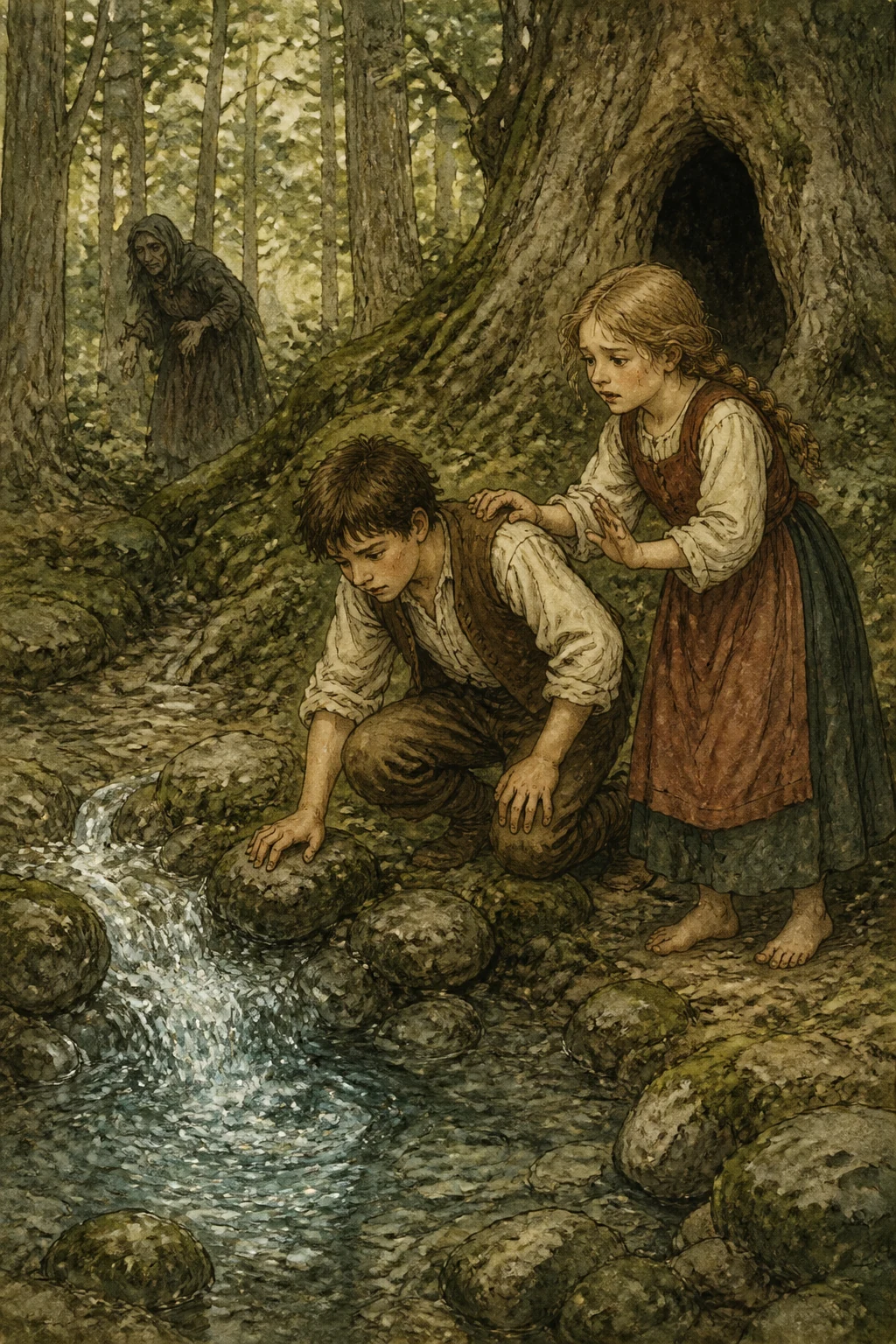
The forests gave out as you, exhausted by pursuit, collapsed, Byblis, and lay with your hair spread on the hard earth, your face pressed into fallen leaves. Often the Lelegeian nymphs tried to lift you in their tender arms; often they urged you to cure your love, offering comfort to a mind that could not hear. Byblis lay speechless, clutching the green grass with her nails, while a stream of tears soaked the turf.
They say the Naiads placed beneath those tears a spring that could never run dry: what greater gift could they give? At once, as drops ooze from the cut bark of a pine, as sticky bitumen flows from the laden earth, or as, at the coming of the west wind's gentle breath, water bound by frost softens again beneath the sun, so Byblis, descendant of Phoebus, consumed by her own tears, was changed into a spring, which even now in those valleys bears its mistress's name and flows beneath a dark holm oak.