Prevod
With that the river god fell silent. The wondrous tale had moved them all; but Ixion’s son laughed at those who believed, for he scorned the gods and was arrogant at heart. “You tell us fictions, Achelous,” he said, “and think the gods too powerful, if they can grant and take away our forms.” All were aghast and disapproved of what he said, above all Lelex, mature in mind and years, who spoke: “Heaven’s power is boundless and has no end; whatever the gods have willed is done.
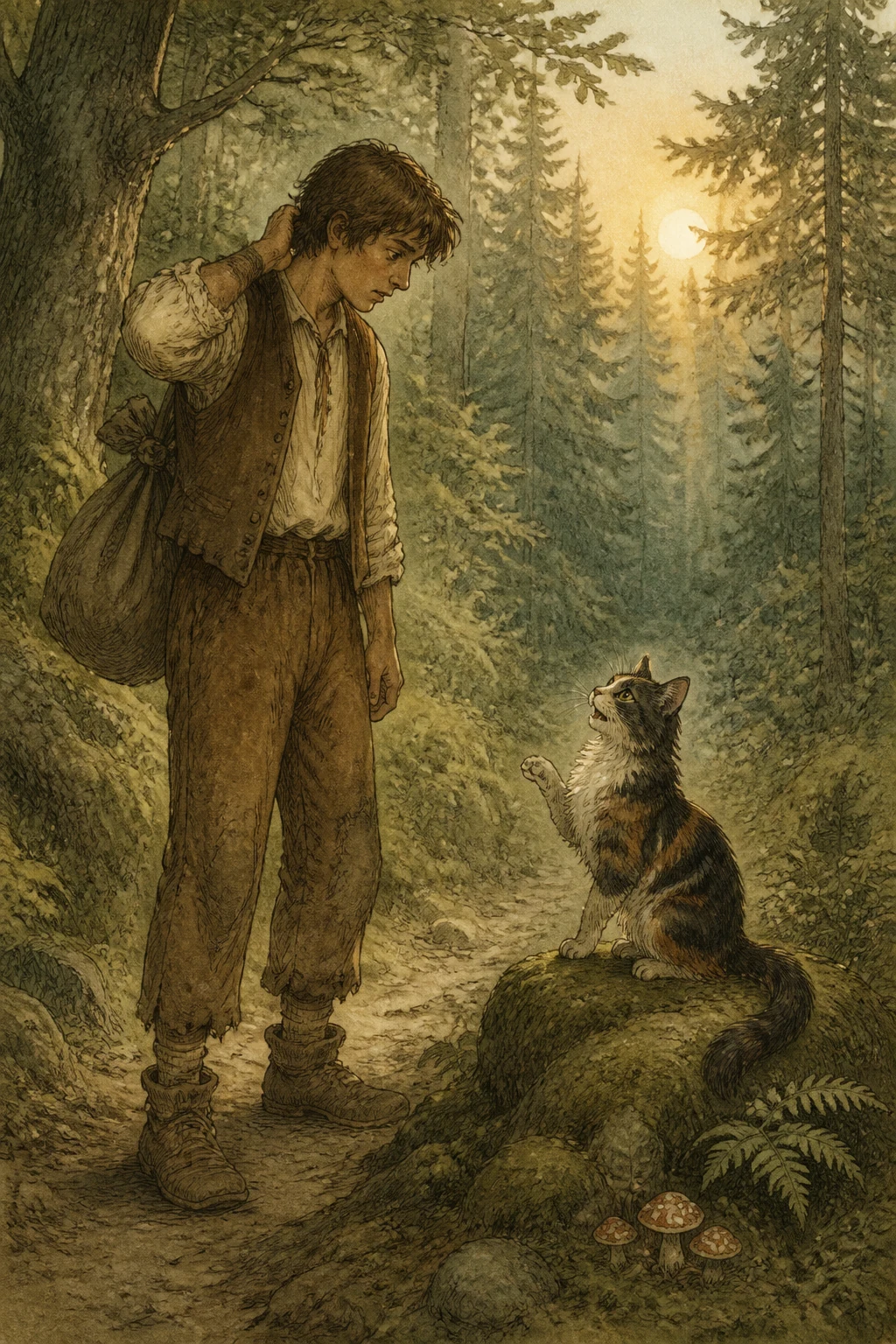
And so that you may doubt no longer, an oak stands beside a lime tree in the Phrygian hills, enclosed by a low wall. I saw the place myself, for Pittheus sent me to the land of Pelops, over which his father once held sway. Not far from there lies a marsh, once habitable land, now waters thronged with diving birds and marsh-dwelling coots. Here Jupiter came in mortal guise, and with his father came Mercury, Atlas’s grandson, bearing his wand but shorn of his wings.
They approached a thousand houses, seeking shelter and rest; a thousand houses barred their doors. Yet one received them, small indeed, thatched with straw and marsh reeds. There lived the pious old Baucis and Philemon, her equal in years; in that cottage they had been joined in youth, and there they had grown old, making their poverty light by acknowledging it and bearing it without resentment.
It made no difference whether you asked for masters or servants: those two were the whole household, both giving orders and obeying them. So when the heavenly visitors reached that humble home and bowed their heads to pass beneath its low doorway, the old man set out a bench and invited them to rest their limbs, while busy Baucis spread a rough-woven cloth upon it.
Then she stirred the warm ashes in the hearth and woke the embers of yesterday’s fire, feeding them with leaves and dry bark and blowing them to flame with her old woman’s breath. She brought down split kindling and dry twigs from the loft, broke them up, and placed them beneath a little bronze pot. She stripped the leaves from vegetables her husband had gathered in his well-watered garden; then with a two-pronged fork she lifted down a smoke-darkened chine of pork hanging from a blackened beam, cut a small piece from the meat so long preserved, and softened the slice in boiling water.
Meanwhile they passed the intervening time in conversation, keeping their guests from noticing the delay. There was a beechwood basin, hanging from a nail by its sturdy handle. They filled it with warm water for their guests to soothe their limbs. In the middle stood a mattress of soft sedge, laid upon a couch, and so on. They shook out the mattress of soft river sedge, laid upon a couch with a willow frame and legs.
They covered it with cloths they were accustomed to spread only on feast days; yet even these coverings were cheap and old, well suited to a willow couch. The gods reclined. With skirts tucked up and trembling hands, the old woman set out the table, but its third leg was too short. A potsherd made it level. Once this had been slipped beneath and stopped the slant, she wiped the level surface with fresh mint.
Here she placed the two-colored olives of pure Minerva, autumn cornel cherries preserved in liquid wine lees, endive, radishes, a round of curdled milk, and eggs gently turned in ashes of a modest heat, all in earthenware. Next came a wine bowl fashioned from the same precious “silver,” and cups of beechwood, their hollow interiors coated with golden wax. After a brief delay, the hearth sent forth the hot meal, and wine of no great age was brought round once again, then moved a little aside to make room for the second course.
Here were nuts, here dried figs mixed with wrinkled dates, plums, fragrant apples in broad baskets, and grapes gathered from purple-laden vines. In the middle lay a gleaming honeycomb. And beyond all these were kindly faces and a generosity neither grudging nor poor. Meanwhile they saw that the wine bowl, drained so often, refilled itself, and the wine rose of its own accord.
Awestruck and frightened by this marvel, with palms turned upward Baucis and trembling Philemon began to pray, begging pardon for their meal and their lack of preparation. They had a single goose, guardian of their tiny homestead, which its owners meant to slaughter for their divine guests. Swift on its wings, it wore them out, slow as they were with age, and long eluded them, until at last it seemed to flee to the gods themselves for refuge. The gods forbade its slaughter.
“We are gods,” they said, “and your impious neighbors shall pay the penalty they deserve. You shall be spared this calamity. Only leave your home and follow in our footsteps; come with us up the mountainside.” Both obeyed, and leaning on their sticks, they struggled to set foot upon the long ascent. They were as far from the summit as an arrow can travel in a single flight, when they turned their eyes and saw all else submerged in a marsh, their own home alone remaining.
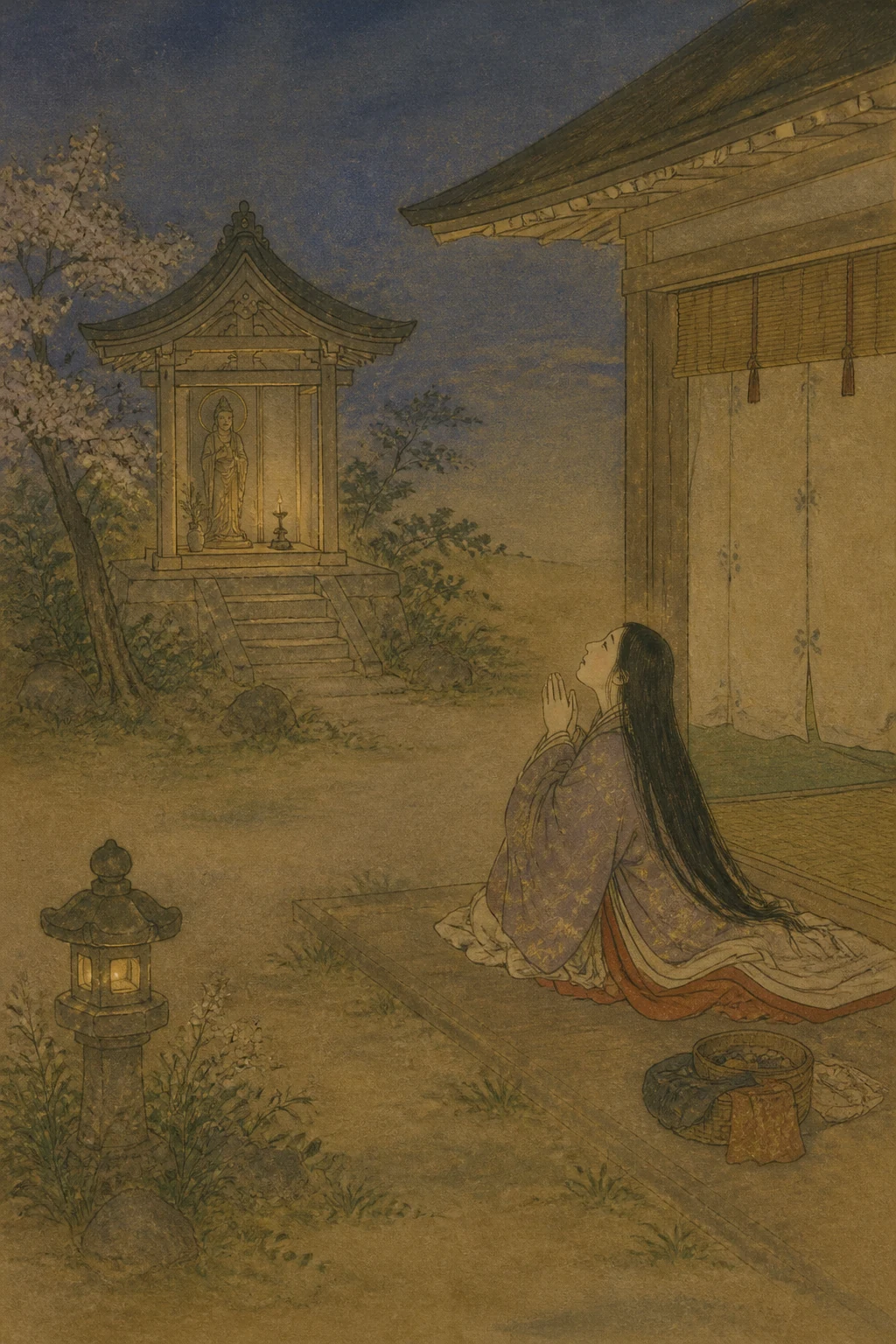
While they marveled at this, while they mourned their neighbors’ fate, that old cottage, small even for its two inhabitants, became a temple: columns replaced its forked wooden props, the thatch turned golden, and a gilded roof appeared, with carved doors and a floor paved in marble. Then Saturn’s son spoke these words with a kindly expression: “Tell us, righteous old man, and woman worthy of so righteous a husband, what you desire.” After a few words with Baucis, Philemon revealed their shared decision to the gods: “We ask to be your priests and tend your shrine; and since we have lived our years in harmony, let the same hour take us both, so that I may never see
my wife’s tomb, nor have to be buried by her.” Their prayer was granted. They were guardians of the temple as long as life was given them. Worn down with age and years, they happened to be standing before the sacred steps, recounting the fortunes of the place, when Baucis saw Philemon putting forth leaves, and aged Philemon saw leaves springing from Baucis. And now, as treetops grew above their faces, they exchanged words while they still could. “Farewell, my love,” they said together, and together the foliage covered and concealed their lips. To this day the people of Thynia there point out the neighboring trunks that sprang from their two bodies.
Trustworthy old men told me this, and had no reason to deceive me. Indeed, I saw garlands hanging from the branches, and, laying fresh ones there, I said: “Let those whom the gods cherish be gods, and those who worshiped be worshiped.””