Prevod
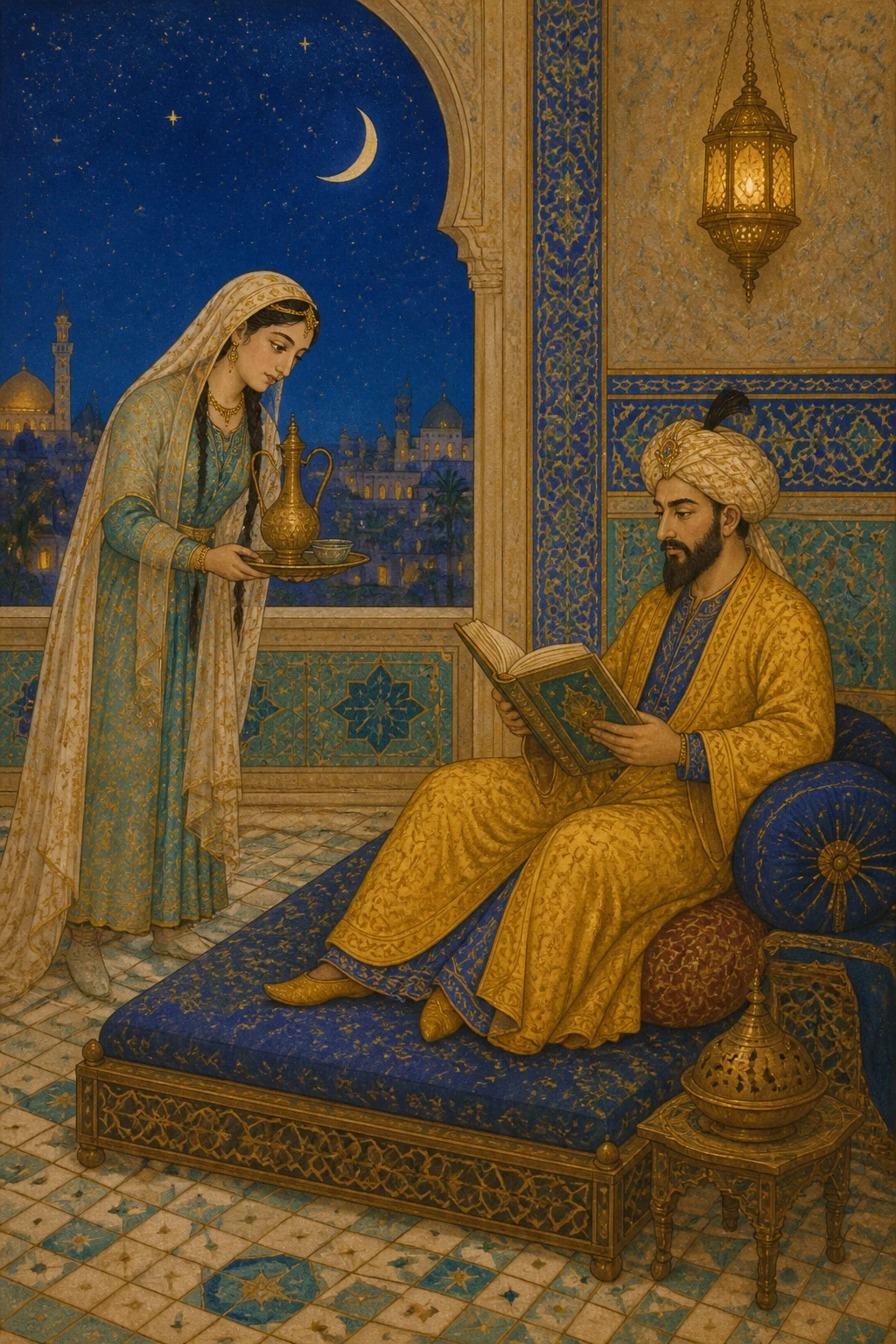
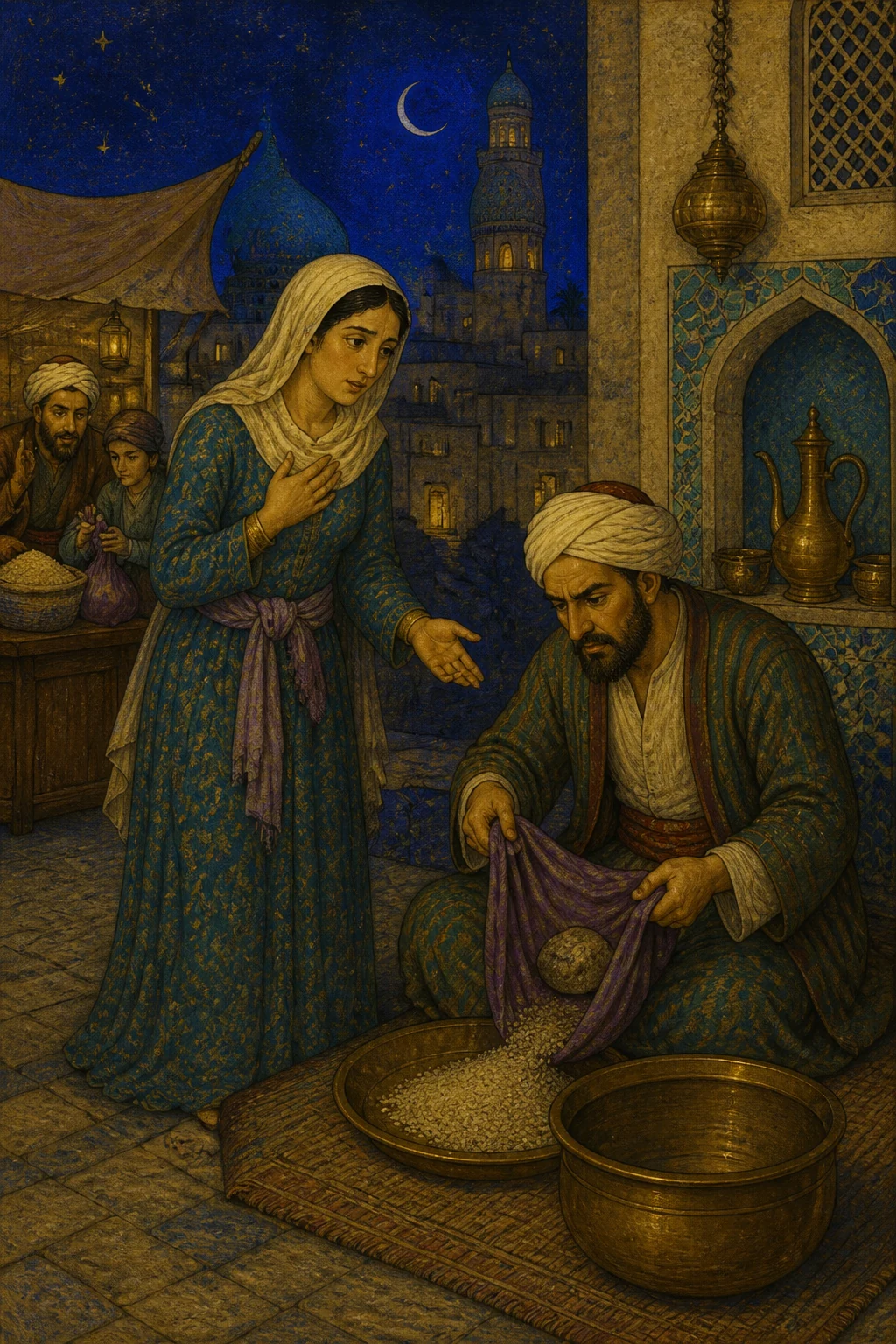
The vizier said, “It has reached me, O King, that a woman of a merchant family had a husband who traveled often. He once journeyed to a distant country and remained away so long that her loneliness grew unbearable, and she fell in love with a handsome young man, the son of a merchant. She loved him dearly, and he loved her no less. One day the young man quarreled with another man, who complained of him to the governor of the city, and the governor imprisoned him. When the merchant’s wife, his beloved, heard what had happened, she was beside herself with distress. She rose, put on her finest clothes, and went to the governor’s house. After greeting him, she handed him a petition that said: ‘The man you have imprisoned is my brother, so-and-so, who quarreled with so-and-so. Those who testified against him bore false witness, and he is unjustly confined in your prison. I have no one but him to visit me and see to my needs, and I beseech my lord’s generosity to release him.’ When the governor read the petition, he looked at her and fell in love with her. ‘Come into the house,’ he said, ‘while I have him brought before me. Then I shall send for you, and you may take him away.’ She replied, ‘My lord, I have no one but Almighty God. I am a stranger here and cannot enter just anyone’s house.’ The governor said, ‘I will not release him for you unless you come inside and let me have my pleasure with you.’ She answered, ‘If that is what you wish, you must come to my house, where you may sit, sleep, and rest the whole day long.’ ‘Where is your house?’ he asked. ‘In such-and-such a place,’ she replied.
“Then she left him, having set his heart aflame. From there she went to the city’s qadi and said, ‘My lord the qadi!’ ‘Yes?’ he answered. ‘Look into my case,’ she said, ‘and may God reward you.’ ‘Who has wronged you?’ he asked. She replied, ‘My lord, I have a brother, and no one else in the world. It is on his account that I have been obliged to come to you, for the governor has imprisoned him, and men have falsely testified that he is a wrongdoer. All I ask is that you intercede for him with the governor.’ When the qadi looked at her, he fell in love with her and said, ‘Come into the house with the serving girls and rest with us for an hour. We shall send word to the governor to release your brother. If we knew how many dirhams he owed, we would pay them ourselves, so that you might grant our desire, for your sweet speech has charmed us.’ She said, ‘If you yourself behave so, my lord, how can we blame anyone else?’ The qadi replied, ‘If you will not come into our house, then go your way.’ She said, ‘If that is what you wish, my lord, it would be more discreet and better at my house than at yours, with all its serving girls and servants and people coming and going. I am a woman who knows nothing of such matters, but necessity drives one to them.’ ‘Where is your house?’ asked the qadi. ‘In such-and-such a place,’ she replied, and she made an appointment with him for the same day she had appointed for the governor.
“Then she left the qadi and went to the vizier’s house. She laid her case before him and complained of her brother’s plight, telling him that the governor had imprisoned him. The vizier sought to seduce her, saying, ‘Grant me my pleasure, and I shall have your brother released.’ She replied, ‘If that is what you wish, let it be at my house, where it will be more discreet for both of us. The house is not far away, and you know what cleanliness and elegance such an occasion requires.’ ‘Where is your house?’ asked the vizier. ‘In such-and-such a place,’ she replied, and made an appointment with him for that same day.
“Then she left him and went to the king of the city. She laid her case before him and asked him to release her brother. ‘Who imprisoned him?’ he asked. ‘The governor,’ she replied. As the king listened to her, she pierced his heart with the arrows of love, and he bade her enter the palace with him while he sent to the governor to secure her brother’s release. She said, ‘O King, this is a thing you can easily accomplish, whether I consent or am compelled. If the king desires this of me, it is my good fortune. Yet if he were to come to my house, he would honor me by directing his noble footsteps there, as the poet said:
“‘My two friends, have you ever seen or heard of a visit to my home from one whose virtues are so exalted?’ The king said to her, ‘We shall deny you nothing.’ So she made an appointment with him for the same day she had appointed for the others, and told him where she lived.” Then dawn overtook Shahrazad, and she fell silent, leaving her tale untold.
When it was the five hundred and ninety-fourth night,
She said, “It has reached me, O fortunate King, that when the woman consented to the king’s wish, she told him where she lived and made an appointment with him for the same day she had appointed for the governor, the qadi, and the vizier. Then she left him and went to a carpenter. ‘I want you to make me a cupboard with four compartments, one above another,’ she told him, ‘each with a door that can be locked. Tell me your price, and I shall pay it.’ He replied, ‘Four dinars. But if you would favor me with your embraces, my chaste lady, that is all I desire, and I shall take nothing from you.’ She said, ‘If it must be so, make me five compartments, each with its lock.’ ‘With pleasure and all respect,’ he replied. She arranged for him to bring her the cupboard on that very day, but the carpenter said, ‘My lady, sit here, and you shall have what you need at once. I can come along afterward at my leisure.’ So she sat with him until he had made her the cupboard with its five compartments. Then she returned home and set it in the room where she received her guests. Next she took four garments to the dyer and had each dyed a different color. She set about preparing food, drink, fragrant flowers, fruit, and perfumes. When the appointed day came, she put on her finest clothes, adorned and perfumed herself, and spread the reception room with splendid carpets of every kind. Then she sat waiting to see who would come. The qadi was the first to arrive. When she saw him, she rose to her feet, kissed the ground before him, and led him to a seat on the carpets. She lay down beside him and sported with him, but when he sought to have his pleasure with her, she said, ‘My lord, take off your clothes and turban, put on this yellow gown, and cover your head with this veil while we bring the food and drink. Afterward you may have your pleasure.’ She took his clothes and turban, and he put on the gown and veil. Just then someone knocked at the door. ‘Who is that knocking?’ asked the qadi. ‘My husband,’ she replied. ‘What is to be done?’ he asked. ‘Where can I go?’ She said, ‘Do not be afraid. I shall put you in this cupboard.’ ‘Do as you think best,’ he replied. She took him by the hand, put him into the lowest compartment, and locked him in.
“Then she went to the door and opened it, and there stood the governor. When she saw him, she kissed the ground before him, took him by the hand, and seated him on the couch. ‘My lord,’ she said, ‘this place is yours, and this house is yours. I am your handmaid, one of your servants, and you shall spend this whole day with me. Take off your clothes and put on this red robe, for it is a sleeping robe.’ She wound a scrap of cloth she had about his head as a makeshift turban. After taking away his clothes, she came to him on the couch, and they sported together. When he reached out to her, she said, ‘My lord, this day is yours, and no one shall share it with you. But of your grace and kindness, write me an order for my brother’s release from prison, so that my mind may be at ease.’ ‘I hear and obey, with all my heart,’ he replied. He wrote a letter to his treasurer, saying: ‘The moment this letter reaches you, release so-and-so, without delay or neglect, and do not question its bearer by so much as a word.’ Then he sealed it, and she took it from him and began sporting with him again on the couch. Just then someone knocked at the door. ‘Who is that?’ he asked. ‘My husband,’ she replied. ‘What am I to do?’ he asked. ‘Get into this cupboard,’ she said, ‘until I send him away and come back to you.’ She took him, put him into the second compartment, and locked him in. All this while the qadi could hear what she was saying.
“Then she went to the door and opened it, and there was the vizier. When she saw him, she kissed the ground before him, welcomed him, and attended to him. ‘My lord,’ she said, ‘you have honored our house by coming. May God never deprive us of the sight of you!’ Then she seated him on the couch and said, ‘Take off your clothes and turban, and put on these lighter things.’ He took off what he was wearing, and she dressed him in a blue gown and a red pointed cap. ‘My lord,’ she said, ‘leave the robes of office for their proper time. At this hour, these are the clothes for companionship, pleasure, and sleep.’ When the vizier had put them on, she sported with him on the couch, and he with her. He sought to have his pleasure with her, but she held him off, saying, ‘My lord, there is no fear of our missing that.’ While they were talking, someone knocked at the door. ‘Who is that?’ he asked. ‘My husband,’ she replied. ‘What shall we do?’ he asked. She said, ‘Get up and go into this cupboard while I send my husband away. I shall come back to you, so have no fear.’ Then she put him into the third compartment and locked him in. She went out and opened the door, and in came the king. When she saw him, she kissed the ground before him, took his hand, and led him to the place of honor, where she seated him on the couch. ‘You have honored us, O King,’ she said. ‘If we offered you the whole world and all it contains, it would not repay a single step you have taken toward us.’” Then dawn overtook Shahrazad, and she fell silent, leaving her tale untold.
When it was the five hundred and ninety-fifth night,
She said, “It has reached me, O fortunate King, that when the king entered the woman’s house, she said to him, ‘If we gave you the whole world and all it contains, it would not repay a single step you have taken toward us.’ When he had seated himself on the couch, she said, ‘Give me leave to say one word to you.’ ‘Say whatever you wish,’ he replied. She said, ‘Make yourself comfortable, my lord, and take off your clothes and turban.’ The clothes he was wearing were worth a thousand dinars, but when he took them off, she dressed him in a worn-out robe worth no more than ten dirhams. Then she began to entertain him and sport with him. All the while, the men in the cupboard could hear what passed between them, but not one dared speak. When the king put his hand about her neck and sought to have his pleasure with her, she said, ‘There is no fear of our missing that. I promised before now to attend upon you at this gathering, and I have something to delight you.’ While they were talking, someone knocked at the door. ‘Who is that?’ he asked. ‘My husband,’ she replied. The king said, ‘Get him to oblige us by going away, or I shall go out and drive him off by force.’ ‘That must not be, my lord,’ she replied. ‘Only wait until I send him away by my own skill.’ ‘And what am I to do?’ he asked. She took him by the hand, put him into the fourth compartment, and locked him in.
“Then she went to the door and opened it, and there stood the carpenter. When he entered and greeted her, she said, ‘What sort of cupboard is this you have made?’ ‘What is wrong with it, my lady?’ he asked. ‘This compartment is too narrow,’ she replied. ‘My lady, it is spacious,’ he said. ‘Get in and see,’ she told him. ‘There is not even room for you.’ ‘It would hold four,’ he replied, and stepped inside. As soon as he was in, she locked the fifth compartment upon him.
“Then she took the governor’s letter and went with it to the treasurer. He took it, read it, accepted the order, and released her lover from prison. She told him what she had done, and he asked, ‘What are we to do now?’ She replied, ‘We must leave this city for another. After what I have done, we cannot remain here.’ So they gathered their belongings, loaded them onto camels, and set out at once for another city.
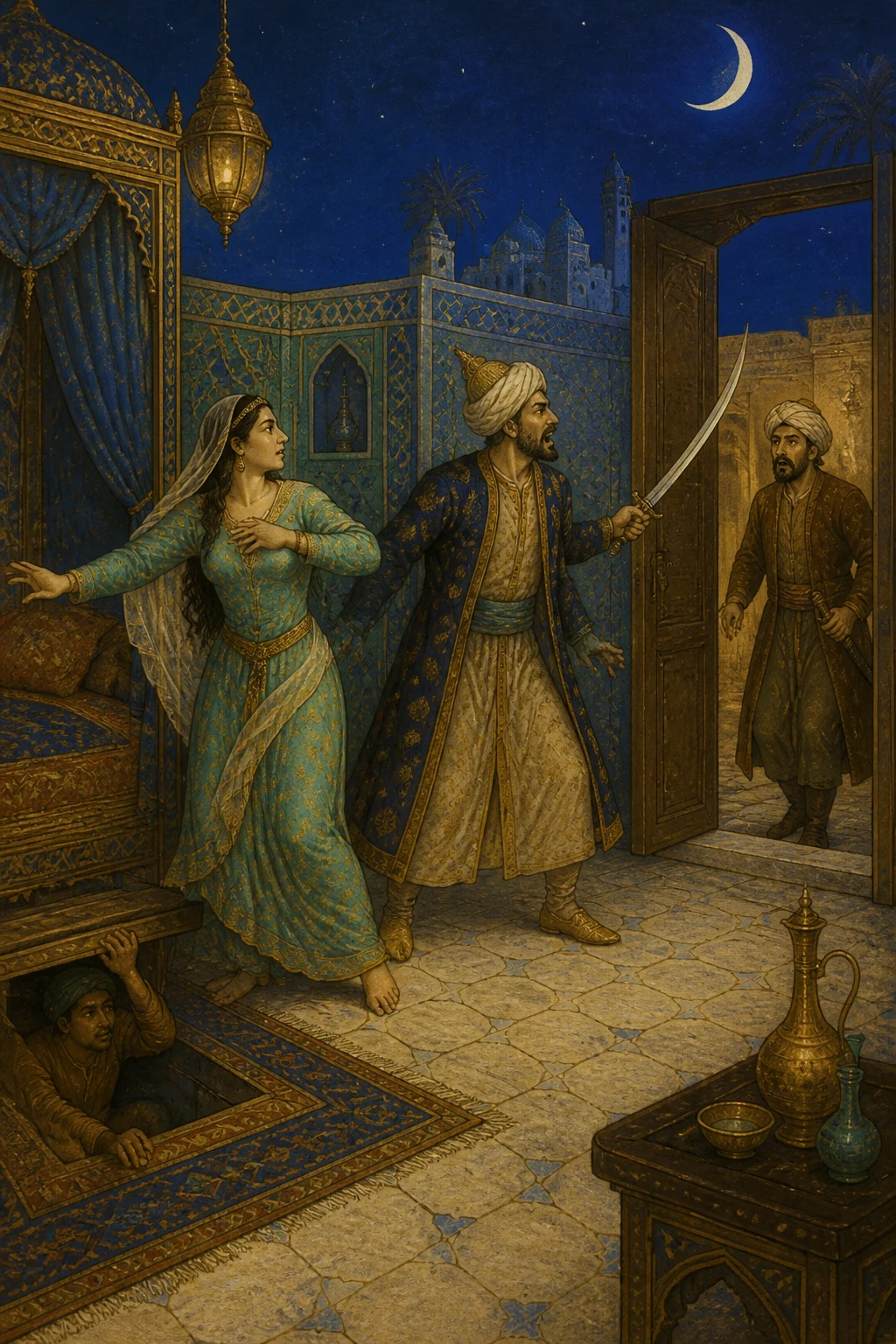
“As for the men, they remained in the cupboard’s compartments for three days without food. Their bladders were painfully full, for they had not urinated in all that time. So the carpenter urinated on the sultan’s head, the sultan on the vizier’s head, the vizier on the governor’s head, and the governor on the qadi’s head. The qadi cried out, ‘What is this filth? Is our plight not bad enough without your pissing on us?’ The governor raised his voice and said, ‘May God amply reward your patience, O Qadi!’ When the qadi heard him, he recognized the governor. Then the governor called out, ‘What is this filth?’ The vizier raised his voice and said, ‘May God amply reward your patience, O Governor!’ Hearing him, the governor recognized the vizier. Then the vizier called out, ‘What is this filth?’ The king raised his voice and said, ‘May God amply reward your patience, O Vizier!’ The king had recognized the vizier’s voice, but then fell silent and concealed his own presence. The vizier said, ‘God curse this woman for what she has done to us! She has brought every officer of state to her house except the king.’ When the king heard them, he said, ‘Be silent! I was the first to fall into this shameless harlot’s net.’ When the carpenter heard their words, he said, ‘And what was my crime? I made her a cupboard for four gold dinars and came to ask for my wages, but she tricked me into this compartment and locked me in.’
“Then they began talking among themselves, entertaining the king with their conversation and easing his distress. Meanwhile, the neighbors came to the house and found it deserted. They said to one another, ‘Only yesterday our neighbor, so-and-so’s wife, was here, but now we hear no sound and see no one about. Break down these doors and find out what has happened, lest the governor or the king hear of it and imprison us, leaving us to regret not having acted sooner.’ So the neighbors broke down the doors and went inside. They saw a wooden cupboard, and within it they found men groaning from hunger and thirst. ‘Is there a jinni in this cupboard?’ they asked one another. One of them said, ‘Let us gather firewood and burn it.’ But the qadi cried out, ‘Do not do that!’” Then dawn overtook Shahrazad, and she fell silent, leaving her tale untold.
When it was the five hundred and ninety-sixth night,
She said, “It has reached me, O fortunate King, that when the neighbors were about to fetch firewood and burn the cupboard, the qadi cried out, ‘Do not do that!’ The neighbors said to one another, ‘Jinn can take human form and speak in human voices.’ When the qadi heard them, he recited a passage from the glorious Quran, then said to the neighbors, ‘Come closer to the cupboard we are in.’ When they approached, he said, ‘I am so-and-so, and you are so-and-so and so-and-so. There are several of us in here.’ The neighbors said to the qadi, ‘Who brought you here? Tell us what happened.’ He told them the whole story from beginning to end. They brought a carpenter, who opened the qadi’s compartment, then those of the governor, the vizier, the king, and the carpenter. Each emerged in the clothes he was wearing, and when they looked at one another, each began laughing at the others. Then they went out and searched for the woman, but could find no trace of her. She had taken everything they had been wearing. Each sent to his household for clothes, and garments were brought to them, so that they could go out decently dressed before the people. Consider, then, my lord the king, the trick this woman played upon these men.”