Waltey
Žena in izgubljeni dirhem
Tisoč in ena noč · arabska pripovedna tradicijaO besedilu
Žena in izgubljeni dirhem
- Vir
- Tisoč in ena noč
- Avtor
- arabska pripovedna tradicija
- Jezik branja
- English
- Jezik izvirnika
- Arabic
- Čas branja
- 3 min branja
- Obseg
- 3 strani
- Naslov izvirnika
- حكاية امرأة والدرهم الضائع - الليلة ٥٨٢
O izvirniku
Tisoč in ena noč
Zgodbe v zgodbah, polne trgovcev, dvorov, preoblek in nočnih zapletov. Bralni jezik je English, izvirnik pa prihaja iz vira Tisoč in ena noč v jeziku Arabic.
Besedilo
Žena in izgubljeni dirhem
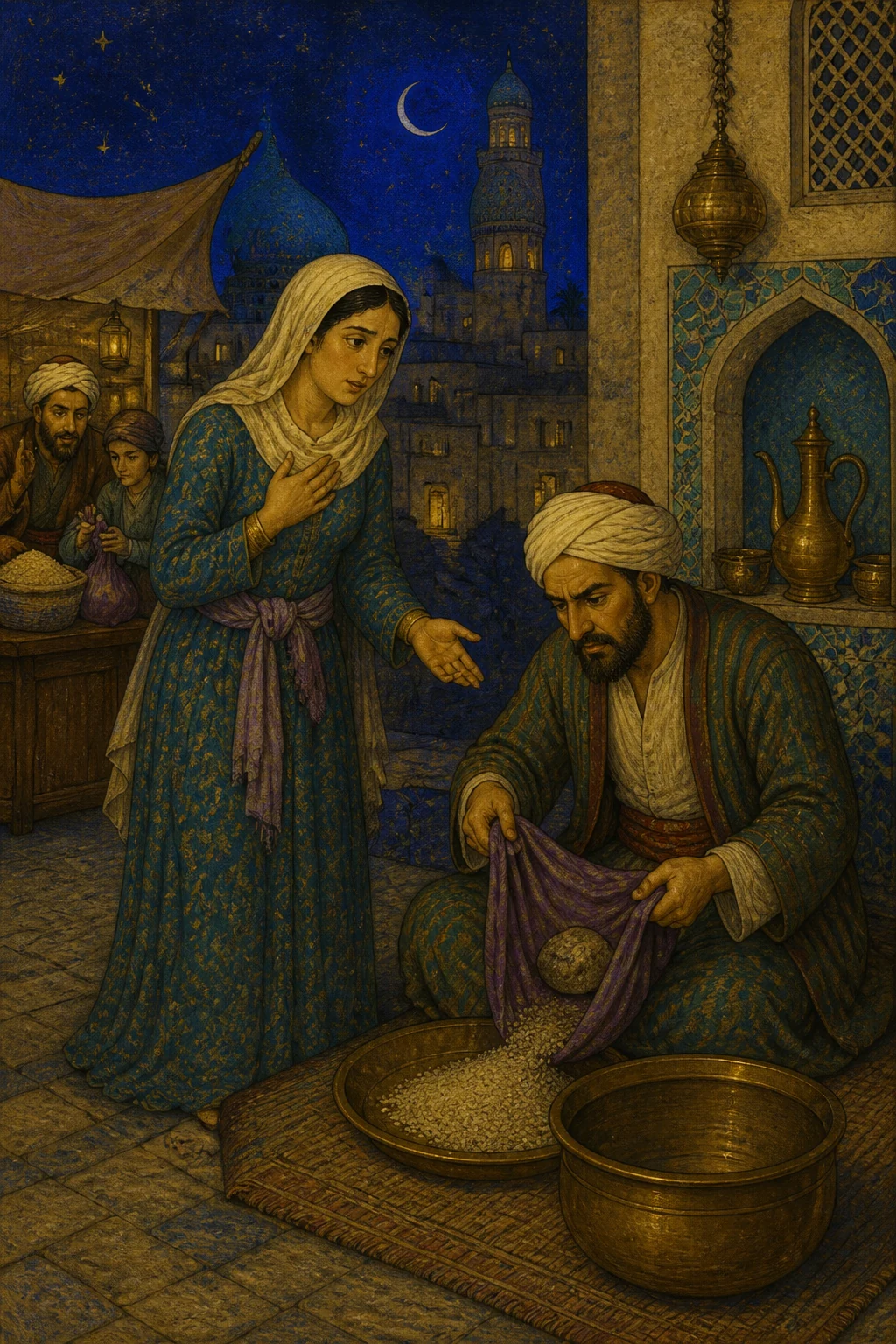
It has also reached me, O King, among the tales of women’s wiles, that a woman was given a dirham by her husband to buy rice. She took the coin and went to the rice seller, who gave her the rice and began to flirt with her and wink at her, saying, “Rice is only good with sugar. If you would like some, come inside with me for an hour.” So the woman went into his shop with him, and the rice seller said to his slave, “Weigh out a dirham’s worth of sugar for her.” His master gave him a secret sign, and the slave took the woman’s kerchief, emptied out the rice, and put earth in its place, with a stone instead of the sugar. Then he tied up the kerchief and left it for her. When the woman came out, she took her bundle and went home, thinking that it held rice and sugar. On reaching home, she set the kerchief before her husband, who found earth and a stone inside. When she brought in the cooking pot, he said, “Did we tell you we had building work to do, that you have brought us earth and a stone?” When she saw what was there, she realized that the merchant’s slave had tricked her. Since she had come with the pot in her hand, she said to her husband, “My good man, I was so distracted that I went to fetch the sieve and brought the pot instead.” “And what has distracted you?” he asked. She replied, “My good man, the dirham I had with me fell from my hand in the market. I was ashamed to search for it in front of everyone, yet I could not bear to lose it. So I gathered up the earth from the spot where it fell, intending to sift it. I was going to fetch the sieve, but brought the pot instead.” Then she went and fetched the sieve, handed it to her husband, and said, “Sift it, for your eyesight is better than mine.” So the man sat sifting the earth until his face and beard were covered with dust, knowing nothing of her cunning or what she had done. This, O King, is one example of women’s wiles. Consider the words of God Most High: “Truly, your guile is great,” and His words, glorified and exalted be He: “Truly, Satan’s guile is weak.”
When the king heard the vizier’s words, which convinced and satisfied him and restrained his passions, and reflected on the verses of God that he had recited to him, the light of good counsel shone in the firmament of his mind and heart, and he abandoned his resolve to kill his son. On the fourth day, the slave girl came before the king, kissed the ground at his feet, and said, “O fortunate King, wise in judgment, I have plainly shown you the justice of my claim, yet you have wronged me and neglected to punish the man who wronged me, because he is your son and the darling of your heart. But God, glorified and exalted be He, will surely grant me victory over him, just as He granted the king’s son victory over his father’s vizier.” The king asked her, “And how was that?”
Izvirnik
حكاية امرأة والدرهم الضائع - الليلة ٥٨٢
Naslednje strani prikazujejo izvirno besedilo za primerjavo.
فلما كانت الليلة ٥٨٢
وقد بلغني أيها الملك من جملة كيد النساء أن امرأة دفع لها زوجها درهمًا لتشتري به أرزًا، فأخذت منه الدرهم وذهبت به إلى بياع الأرز، فأعطاها الأرز وجعل يلاعبها ويغامزها ويقول لها: إن الأرز لا يطيب إلا بالسكر، فإن أردتِه فادخلي عندي قدر ساعة. فدخلت المرأة عنده في الدكان، فقال بياع الأرز لعبده: زن لها بدرهم سكرًا. وأعطاه سيده رمزًا، فأخذ العبد المنديل من المرأة وفرغ منه الأرز، وجعل في موضعه ترابًا، وجعل بدل السكر حجرًا، وعقد المنديل وتركه عندها، فلما خرجت المرأة من عنده أخذت منديلها وانصرفت إلى منزلها وهي تحسب أن الذي في منديلها أرز وسكر. فلما وصلت إلى منزلها وضعت المنديل بين يدي زوجها، فوجد فيه ترابًا وحجرًا، فلما أحضرت القدر قال لها زوجها: هل نحن قلنا لك أن عندنا عمارة حتى جئتِ لنا بتراب وحجر؟ فلما نظرت إلى ذلك، علمت أن عبد البياع نصب عليها، وكانت قد أتت بالقدر في يدها، فقالت لزوجها: يا رجل، من شغل البال الذي أصابني ذهبتُ لأجيء بالغربال فجئت بالقدر. فقال لها زوجها: وأي شيء أشغل بالك؟ قالت له: يا رجل، إن الدرهم الذي كان معي سقط مني في السوق، فاستحييت من الناس أن أدور عليه، وما هان عليَّ أن الدرهم يروح مني، فجمعت التراب من ذلك الموضع الذي وقع فيه الدرهم وأردت أن أغربله، وكنت رائحة أجيء بالغربال فجئت بالقدر. ثم ذهبت وأحضرت الغربال وأعطته لزوجها، وقالت له: غربله فإن عينك أصح من عيني. فقعد الرجل يغربل في التراب إلى أن امتلأ وجهه وذقنه من الغبار وهو لا يدرك مكرها وما وقع منها. فهذا أيها الملك من جملة كيد النساء، وانظر إلى قول الله تعالى: إِنَّ كَيْدَكُنَّ عَظِيمٌ ، وقوله سبحانه وتعالى: إِنَّ كَيْدَ الشَّيْطَانِ كَانَ ضَعِيفًا .
فلما سمع الملك من كلام الوزير ما أقنعه وأرضاه وزجره عن هواه، وتأمَّلَ ما تلاه عليه من آيات الله، سطعت أنوار النصيحة على سماء عقله وخلده، ورجع عن تصميمه على قتل ولده، فلما كان اليوم الرابع دخلت الجارية على الملك وقبَّلَتِ الأرض بين يديه وقالت له: أيها الملك السعيد ذو الرأي الرشيد، قد أظهرتُ لك حقي عيانًا، فظلمتَني وأهملت مقاصصة غريمي لكونه ولدك ومهجة قلبك، وسوف ينصرني الله سبحانه وتعالى عليه كما نصر الله ابن الملك على وزير أبيه. فقال لها الملك: وكيف كان ذلك؟
Nadaljuj z branjem