Prevod
First came the golden age, which, with no one to enforce it, freely, without laws, cherished good faith and right. Punishment and fear were absent; no threatening words were read on bronze tablets, nor did a pleading crowd dread the face of its judge: without protectors, all were safe. No pine, felled on its native mountains to visit a foreign world, had yet descended to the flowing waves, and mortals knew no shores beyond their own.
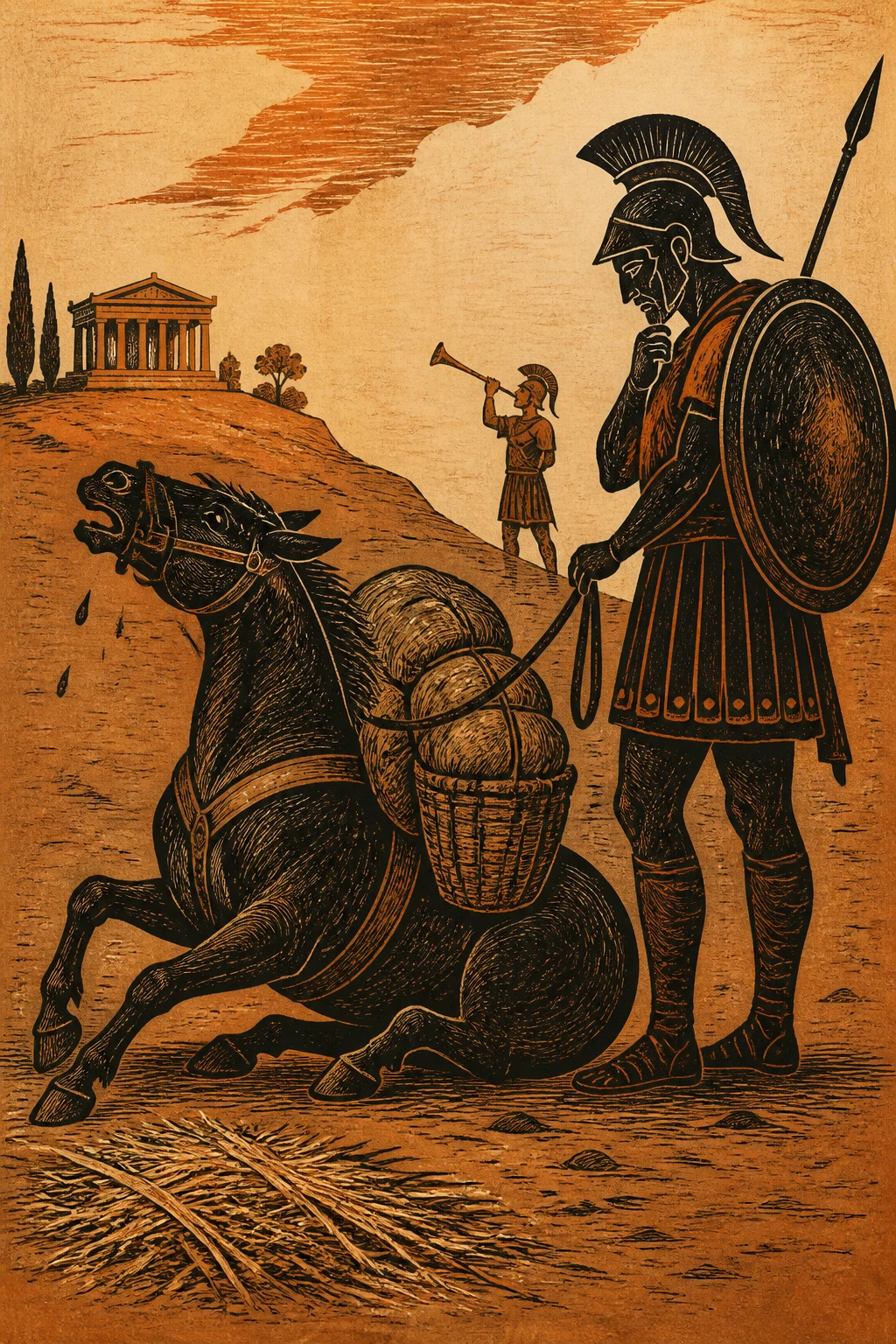
No steep-sided moats yet girdled towns; there were no straight trumpets, no horns of curving bronze, no helmets and no swords: with no need of soldiers, the peoples lived at ease in tranquil leisure. The earth herself, free of all demands, untouched by the hoe, unwounded by any ploughshare, gave everything of her own accord; content with food that grew without compulsion, they gathered fruit from strawberry trees and mountain strawberries, cornel cherries and blackberries clinging to thorny brambles, and acorns fallen from Jupiter’s spreading tree.
Spring was eternal, and gentle west winds, with their warm breath, caressed the flowers that sprang up without seed. Soon, too, the unploughed earth bore grain, and fields untilled grew pale with heavy ears; now rivers of milk, now rivers of nectar flowed, and golden honey dripped from the green holm oak. After Saturn had been cast into the darkness of Tartarus, and the world was under Jupiter, a silver race arose, inferior to gold, but more precious than tawny bronze.
Jupiter shortened the span of that ancient spring and divided the year into four seasons: winter, summer, changeable autumn, and a brief spring. Then for the first time the air, scorched by dry heat, blazed, and ice hung frozen hard by the winds. Then for the first time people took shelter in homes—homes were caves, dense thickets, and branches bound together with bark.
Then for the first time the seeds of Ceres were buried in long furrows, and bullocks groaned beneath the yoke. After that came the third race, of bronze, fiercer in spirit and readier for savage warfare, yet not wicked. The last was of hard iron. At once, into this age of baser metal, every evil burst: shame, truth, and good faith fled, and in their place came fraud and deceit, treachery, violence, and the wicked lust for gain.
The sailor spread his sails to winds he scarcely knew as yet; and trees that had long stood on lofty mountains now, as ships, went leaping over unknown waves. The ground, once common to all like sunlight and air, the wary surveyor marked with long boundary lines. Nor was the fertile soil asked only for crops and the food it owed: men plunged into the earth’s entrails, and the wealth she had hidden near the shades of Styx was dug out—wealth that goads men on to evil.
Now deadly iron and gold, more deadly still, had emerged; and war emerged, which fights with both, and shook its clashing weapons in a bloodstained hand. People lived by plunder: guest was not safe from host, nor father-in-law from son-in-law; even brothers seldom loved. The husband plotted his wife’s death, and she her husband’s; fearsome stepmothers mixed deadly, pale aconite; the son inquired into his father’s years before their time.
Piety lay defeated, and the maiden Astraea, last of the immortals, left the blood-soaked earth.