Waltey
Škrati iz Cuzca
Tradiciones peruanas
Tradiciones peruanas · Ricardo PalmaO besedilu
Škrati iz Cuzca
- Vir
- Tradiciones peruanas
- Avtor
- Ricardo Palma
- Jezik branja
- English
- Jezik izvirnika
- Español
- Čas branja
- 13 min branja
- Obseg
- 10 strani
- Naslov izvirnika
- 001 Los duendes del Cuzco
O izvirniku
Tradiciones peruanas
Šestindvajset Palmovih avtorskih zgodovinskih tradicij iz konkretnega Gutenbergovega zvezka. Bralni jezik je English, izvirnik pa prihaja iz vira Tradiciones peruanas v jeziku Español.
Besedilo
Škrati iz Cuzca
A CHRONICLE OF HOW THE POET VICEROY UNDERSTOOD JUSTICE This tradition has no authority behind it but the tale the people tell. Everyone in Cuzco knows it just as I present it today. No chronicler mentions it, and only in a manuscript of hasty jottings, covering the period from the viceroyalty of the Marquis of Salinas to that of the Duke of La Palata, do I find the following lines:
“During this time, under the government of the Prince of Squillace, the Admiral of Castile, known as the Excommunicate, met a dreadful death in Cuzco at the hands of the devil.”
As may be seen, these lines shed very little light, and I am assured that the Annals of Cuzco, which Bishop Ochoa possesses in manuscript, go no further either, except that they place the mysterious event in a different period from the one I assign to it.
In choosing the time of Don Francisco de Borja y Aragón, I have considered not only the note already quoted, but also the very particular circumstance that, knowing the character of the poet viceroy, the witty words that close this legend are entirely in keeping with him.
Having made these qualifications to ease my conscience as a chronicler, I put a full stop to preliminaries and come to the matter at hand. I Don Francisco de Borja y Aragón, Prince of Esquilache and Count of Mayalde, a native of Madrid and a knight of the Orders of Santiago and Montesa, was thirty-two years old when Philip III, who held him in high esteem, appointed him Viceroy of Peru. The courtiers criticized the appointment, for until then Don Francisco had occupied himself only with writing verses, gallantries, and duels. But Philip III, whose royal ear, contrary to custom, was reached by the murmuring, said: “It is true that he is the youngest of the viceroys who have gone to the Indies thus far; but Esquilache has a head on his shoulders, and, better still, a strong right arm.”
The monarch was not mistaken. Peru was threatened by buccaneer fleets, and however fine a governor Don Juan de Mendoza y Luna, Marquis of Montesclaros, might be, he lacked the vigor of youth. Jorge Spitberg, with a Dutch squadron, after laying waste the coasts of Chile, made for Callao. The Spanish squadron sailed out to meet him on July 22, 1615, and after five hours of fierce and bitter fighting off Cerro Azul, or Cañete, the flagship caught fire, several vessels sank, and the victorious pirates put the prisoners to the sword.
The viceroy, the Marquis of Montesclaros, went to Callao to direct the resistance, more to fulfill his duty than from any hope of preventing, with the few and wretched resources at his disposal, the pirates’ landing and the consequent sack of Lima. Sheer panic reigned in the City of Kings, and the churches were crowded not only with frail women but with men who, far from thinking of bravely defending their homes, invoked divine protection against the Dutch heretics. The aged and courageous viceroy had scarcely a thousand men at Callao, and it should be noted that, according to the census of 1614, Lima had a population of 25,454.
But Spitberg contented himself with firing a few cannon shots, which met with a feeble reply, and set a course for Paita. Peralta, in his Lima Founded, and the Count of La Granja, in his poem on Saint Rose, give details of those grievous days. Christian devotion attributes the pirates’ withdrawal to a miracle performed by the virgin of Lima, who died two years later, on August 24, 1617.
On December 18, according to some, or December 23, according to others, in the year 1615, the Prince of Esquilache entered Lima, having providentially escaped falling into the pirates’ hands on the voyage from Panama to Callao.
The reception given this viceroy was sumptuous, and the city council spared no expense to make it splendid. His first concern was to establish and fortify the port, which held the buccaneers’ audacity in check until the government of his successor, when the Dutchman Jacobo L’Heremite undertook his formidable piratical venture. A descendant of Pope Alexander VI (Rodrigo Borgia) and of Saint Francis Borgia, Duke of Gandía, the Prince of Esquilache, like his successor and kinsman the Count of Lemos years later, governed Peru under the influence of the Jesuits.
Once the anxiety inspired by the buccaneers’ threats had subsided, Don Francisco devoted himself to putting the public finances in order, issued wise ordinances for the mines of Potosí and Huancavelica, and on December 20, 1619, established the tribunal of the Consulate of Commerce.
A man of letters, he founded the famous Prince’s College for the education of the sons of caciques, and allowed no plays or sacramental dramas to be performed unless they had first passed his scrutiny. “It is the duty of a ruler,” he would say, “to take care that taste is not corrupted.”
The scrutiny exercised by the Prince of Esquilache was purely literary, and in truth no judge could have been better qualified. Among the constellation of poets of the seventeenth century, the century that produced Cervantes, Calderón, Lope, Quevedo, Tirso de Molina, Alarcón, and Moreto, the Prince of Esquilache is one of the most notable, if not for the grandeur of his thought, then for the freshness and correctness of his form. His occasional poems and his historical poem Naples Recovered are enough to earn him a distinguished place on the Spanish Parnassus.
He is no less notable as a writer of pure and elegant prose. One of the volumes of the Memoirs of the Viceroys contains the Account of his term of government, a document he delivered to the Audiencia to be passed on to his successor, Don Diego Fernández de Córdova, Marquis of Guadalcázar. Purity of expression and clarity of thought stand out in this work, which truly deserves a less cursory appraisal.
To give some idea of Esquilache’s devotion to letters, it will be enough to mention that in Lima he established an academy, or literary club, as we call it today, whose meetings were held on Saturdays in one of the palace rooms. According to a writer friend of mine who cultivated the art of the chronicle, those attending numbered no more than twelve, all men of the highest standing in the law, the military, or the Church. “Among them were the profound theologian and humanist Don Pedro de Yarpe Montenegro, an army colonel; Don Baltasar de Laza y Rebolledo, a judge of the Royal Audiencia; Don Luis de la Puente, an eminent lawyer; Friar Baldomero Illescas, a Franciscan and a great scholar of the Greek and Latin classics; Don Baltasar Moreyra, a poet; and others whose names have failed to cross the two and a half centuries separating us from their time. The viceroy received them with exquisite courtesy, and buns, candied biscuits, chocolate, and sorbets provided diversions from his guests’ literary discussions. What a pity no minutes were kept of those meetings, for they would surely be preferable to those of our Congresses.”
Among the Prince of Esquilache’s witticisms, it is said that he told a particularly thickheaded fellow who read a great deal and gained nothing from it: “Give up books, my friend, and remember that the longer an egg is boiled, the harder it gets.”
Upon his return to Spain in 1622, Esquilache was held in high regard by the new monarch, Philip IV, and died in 1658 in the crowned city of the bear and the strawberry tree.
The arms of the house of Borja were a bull gules on a field or, with a bordure vert bearing eight sprigs of heather or. Having introduced the poet viceroy, let us turn to the popular tradition.
II In the city of Cuzco there stands a magnificent house known as the Admiral’s; and it seems that the admiral in question was about as much of a seaman as a certain fellow I know who has only ever seen the sea in a painting. The truth is that the title was hereditary and passed from father to son.
The house was a most remarkable work. Its aqueduct and carved ceilings, one of which bears a modeled bust of the admiral who built it, are especially striking.
That four admirals lived in Cuzco is proved by the family tree which Don Sixto Laza submitted to the Sovereign Congress of Peru in 1861, asking to be declared the sole legitimate representative of the Inca Huáscar, with a right to a share of the guano deposits, the dukedom of Medina de Ríoseco, the marquisate of Oropesa, and various other choice morsels. The pleasure of having a prince in our midst was going to cost us a pretty penny! But let the fact be recorded for the day when we tire of the republic, whether theoretical or practical, and proclaim, for a change of fare, a monarchy, absolute or constitutional; for anything may happen, God willing and with the bustling little trot we keep up.
According to this family tree, the first admiral was Don Manuel de Castilla, the second Don Cristóbal de Castilla Espinosa y Lugo, who was succeeded by his son Don Gabriel de Castilla Vázquez de Vargas; the fourth and last was Don Juan de Castilla y González, whose descendants disappear into the female line.
As proof of how puffed up the Castillas were with their lineage, it is said that when reciting the Hail Mary they used these words: Holy Mary, Mother of God, our kinswoman and our lady, pray for us.
The arms of the Castillas were: a shield divided diagonally; the first quarter gules, with a castle or, its openings azure; the second argent, with a lion rampant gules and a bend vert issuing from two dragons’ heads, likewise vert.
It would be rash to determine which of the four is the hero of this tradition, and in this uncertainty the reader may saddle any one of them with the blame, for he certainly will not return from the next world to bring a suit for slander.
This admiral was a man with more airs than a chimney has smoke, very proud of his pedigrees and stiffer than his starched ruff. In the courtyard of his house stood a magnificent stone fountain, to which the neighbors came for their supply of water, taking quite literally the saying that water and fire should be denied to no one.
But one morning His Lordship rose in a devilish temper and ordered his servants to thrash any creature of the rabble who dared cross his threshold in search of the refreshing element.
One of the first to suffer this punishment was a poor old woman, which caused something of an outcry in the town. The following day her son, a young priest serving the parish of San Jerónimo, a few leagues from Cuzco, arrived in the city and learned of the outrage inflicted on his aged mother. He went straight to the admiral’s house; and the man of pedigrees called him a son of a goat and a green candle, and out of that aristocratic mouth poured verbs and gerunds, toads and snakes, ending with a royal thrashing for the priest.
The outrage caused immense agitation. The authorities did not dare declare themselves openly against the magnate, and let time take its course, since in the end it calms everything. But the churchmen and the people declared the proud admiral excommunicate.
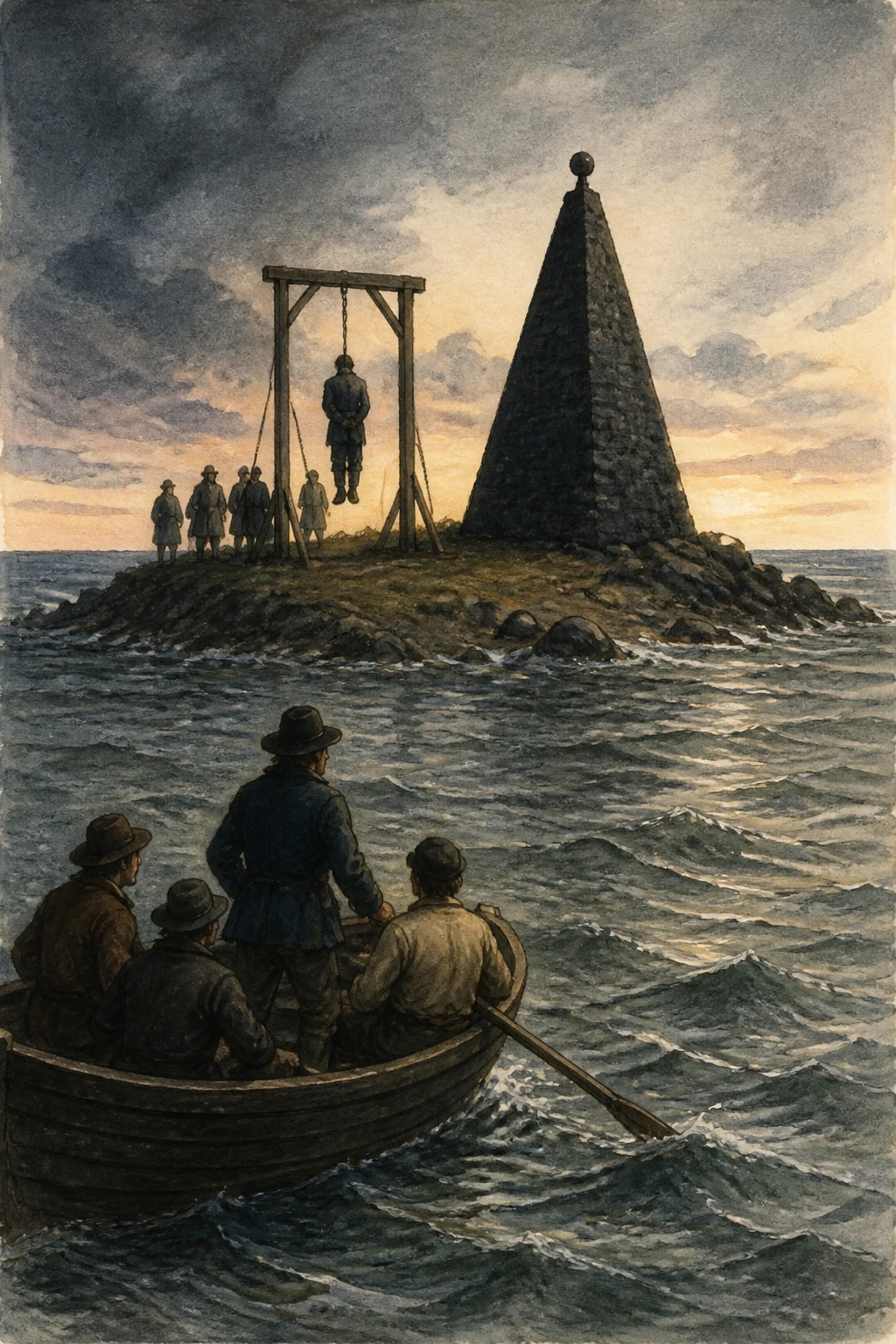
A few hours after suffering the affront, the insulted priest went to the Cathedral and knelt in prayer before the image of Christ presented to the city by Charles V. When he had finished praying, he left at the feet of the Supreme Judge a petition setting forth his grievance and demanding God’s justice, convinced he would obtain none from men. They say he returned to the church the following day and retrieved his complaint, endorsed in the margin with the decree: Granted as requested: justice shall be done. And so three months passed, until one day dawn revealed a gallows in front of the house, with the corpse of the excommunicate hanging from it. No one could discover the perpetrators of the crime, though suspicion fell heavily upon the priest, who managed to establish an alibi through numerous witnesses.
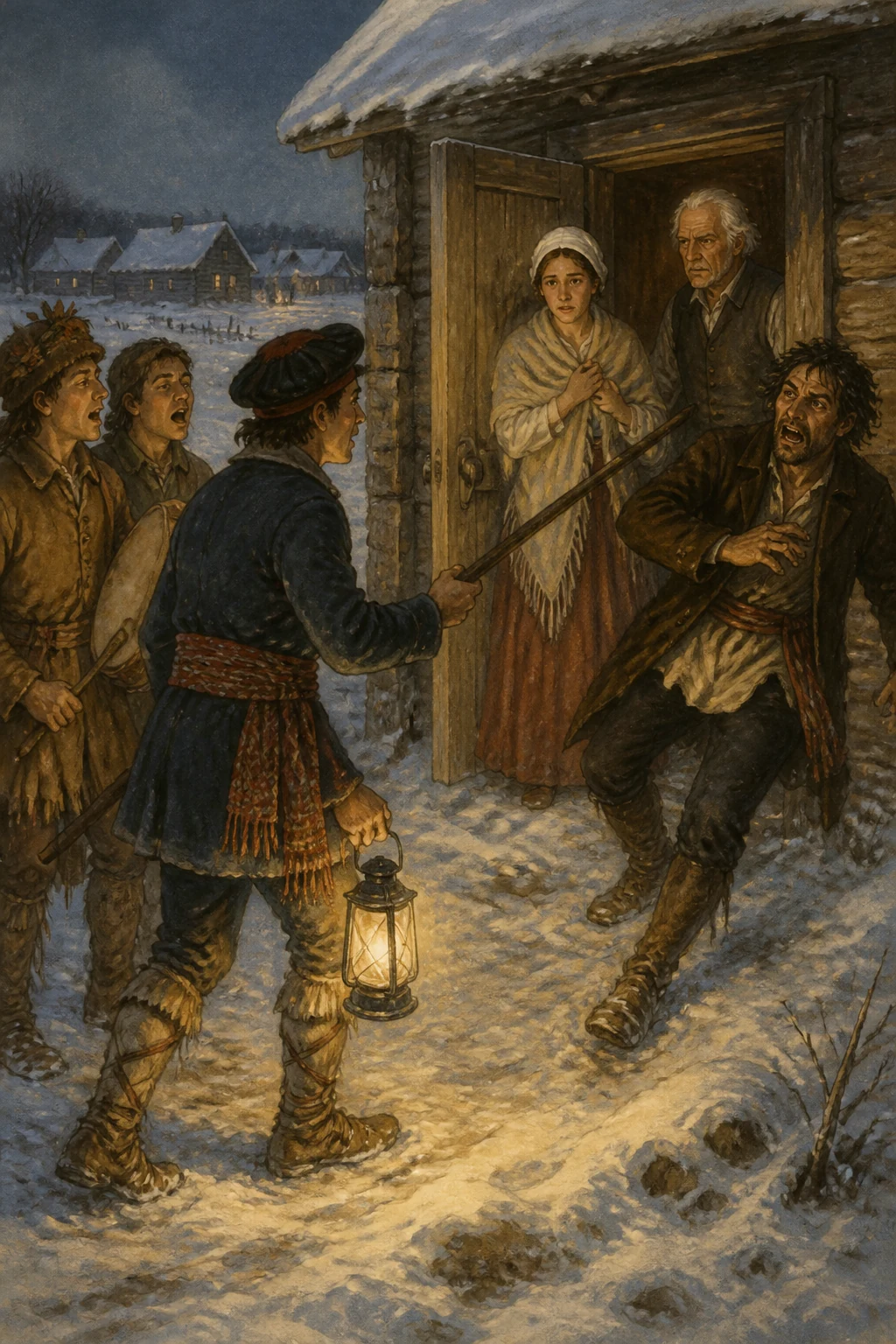
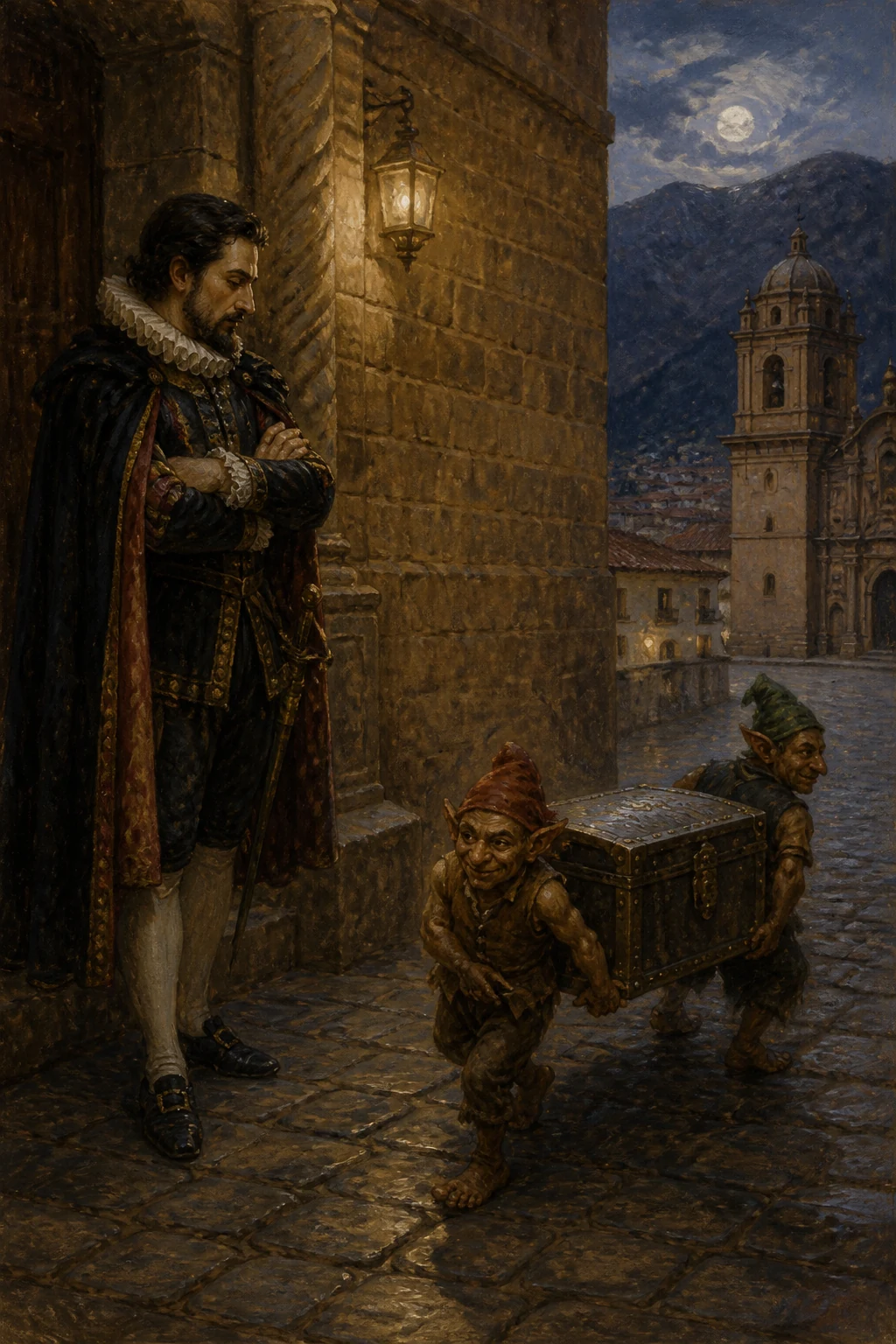
In the proceedings that followed, two women of the neighborhood testified that they had seen a group of tiny men with enormous heads, commonly called goblins, preparing the gallows; and that when it had been raised, they knocked three times at the door of the house, which opened at the third knock. A little later the admiral, dressed in his finery, came out surrounded by the goblins, who without further ceremony strung him up like a bunch of grapes.
With such testimony, justice was left in the dark, and since it could not prosecute the goblins, it thought it prudent to dismiss the case. If the people believe as an article of faith that goblins put an end to the excommunicated admiral, no chronicler is going to get himself into a mire trying to persuade them otherwise, however much the unbelievers of that time may have whispered that the whole affair was the work of the Jesuits, intended to enhance the importance and respect accorded the priesthood.
III The intendant and magistrates of Cuzco reported everything to the viceroy, who, after hearing the detailed report read aloud, said to his secretary:
“What a splendid subject for a Moorish ballad! What do you make of it, my good Estúñiga?” “That Your Excellency ought to give those foolish, stiff-collared magistrates a reprimand for failing to find a trail leading to the perpetrators of the crime.”
“And then the poetry of the affair would be lost,” replied Esquilache, smiling. “True, my lord; but justice would have been done.” The viceroy remained thoughtful for a few seconds; then, rising from his chair, he laid a hand on his secretary’s shoulder:
“My friend, what has been done is well done; and the world would fare better if, in certain cases, justice were administered not by scheming pettifoggers and the other crows of Themis, but by goblins. And with that, good night, and may God and Holy Mary keep us in their holy care and deliver us from goblins and remorse.”
Izvirnik
001 Los duendes del Cuzco
Naslednje strani prikazujejo izvirno besedilo za primerjavo.
CRÓNICA QUE TRATA DE CÓMO EL VIRREY POETA ENTENDÍA LA JUSTICIA
Esta tradición no tiene otra fuente de autoridad que el relato del pueblo. Todos la conocen en el Cuzco tal como hoy la presento. Ningún cronista hace mención de ella, y sólo en un manuscrito de rápidas apuntaciones, que abarca desde la época del virrey marqués de Salinas hasta la del duque de la Palata, encuentro las siguientes líneas:
«En este tiempo del gobierno del príncipe de Squillace, murió malamente en el Cuzco, a manos del diablo, el almirante de Castilla, conocido por el descomulgado».
Como se ve, muy poca luz proporcionan estas líneas, y me afirman que en los Anales del Cuzco, que posee inéditos el señor obispo de Ochoa, tampoco se avanza más, sino que el misterioso suceso está colocado en época diversa a la que yo le asigno.
Y he tenido en cuenta para preferir los tiempos de don Francisco de Borja; y Aragón, no sólo la apuntación ya citada, sino la especialísima circunstancia de que, conocido el carácter del virrey poeta, son propias de él las espirituales palabras con que termina esta leyenda.
Hechas las salvedades anteriores, en descargo de mi conciencia de cronista, pongo punto redondo y entro en materia.
I
Don Francisco de Borja y Aragón, príncipe de Esquilache y conde de Mayalde, natural de Madrid y caballero de las Ordenes de Santiago y Montesa, contaba treinta y dos años cuando Felipe III, que lo estimaba, en mucho, le nombró virrey del Perú. Los cortesanos criticaron el nombramiento, porque don Francisco sólo se había ocupado hasta entonces en escribir versos, galanteos y desafíos. Pero Felipe III, a cuyo regio oído, y contra la costumbre, llegaron las murmuraciones, dijo:--En verdad que es el más joven de los virreyes que hasta hoy han ido a Indias; pero en Esquilache hay cabeza, y más que cabeza brazo fuerte.
El monarca no se equivocó. El Perú estaba amagado por flotas filibusteras: y por muy buen gobernante que hiciese don Juan de Mendoza y Luna, marqués de Montesclaros, faltábale los bríos de la juventud. Jorge Spitberg, con una escuadra holandesa, después de talar las costas de Chile, se dirigió al Callao. La escuadra española le salió al encuentro el 22 de julio de 1615, y después de cinco horas de reñido y feroz combate frente a Cerro Azul o Cañete, se incendió la capitana, se fueron a pique varias naves, y los piratas vencedores pasaron a cuchillo a los prisioneros.
El virrey marqués de Montesclaros se constituyó en el Callao para dirigir la resistencia, más por llenar el deber que porque tuviese la esperanza de impedir, con los pocos y malos elementos de que disponía, el desembarque de los piratas y el consiguiente saqueo de Lima. En la ciudad de los Reyes dominaba un verdadero pánico; y las iglesias no sólo se hallaban invadidas por débiles mujeres, sino por hombres que, lejos de pensar en defender como bravos sus hogares, invocaban la protección divina contra los herejes holandeses. El anciano y corajudo virrey disponía escasamente de mil hombres en el Callao, y nótese que, según el censo de 1614, el número de habitantes de Lima ascendía a 25.454.
Pero Spitberg se conformó con disparar algunos cañonazos que le fueron débilmente contestados, e hizo rumbo para Paita. Peralta en su Lima fundada, y el conde de la Granja, en su poema de Santa Rosa, traen detalles sobre esos luctuosos días. El sentimiento cristiano atribuye la retirada de los piratas a milagro que realizó la virgen limeña, que murió dos años después, el 24 de agosto de 1617.
Según unos el 18 y según otros el 23 de diciembre de 1615, entró en Lima el príncipe de Esquilache, habiendo salvado providencialmente, en la travesía de Panamá al Callao, de caer en manos de los piratas.
El recibimiento de este virrey fué suntuoso, y el Cabildo no se paró en gastos para darle esplendidez.
Su primera atención fué crear y fortificar el puerto, lo que mantuvo a raya la audacia de los filibusteros hasta el gobierno de su sucesor, en que el holandés Jacobo L'Heremite acometió su formidable empresa pirática Descendiente del Papa Alejandro VI (Rodrigo Borgia) y de San Francisco de Borja, duque de Gandía, el príncipe de Esquilache, como años más tarde su sucesor y pariente el conde de Lemos, gobernó el Perú bajo la influencia de los jesuítas.
Calmada la zozobra que inspiraban los amagos filibusteros, don Francisco se contrajo al arreglo de la hacienda pública, dictó sabias ordenanzas para los minerales de Potosí v Huancavelica, y en 20 de diciembre de 1619 erigió el tribunal del Consulado de Comercio.
Hombre de letras, creó el famoso colegio del Príncipe, para educación de los hijos de caciques, y no permitió la representación de comedias ni autos sacramentales que no hubieran pasado antes por su censura. «Deber del que gobierna--decía--es ser solícito por que no se pervierta el gusto».
La censura que ejercía el príncipe de Esquilache era puramente literaria, y a fe que el juez no podía ser más autorizado. En la plévade de poetas del siglo XVII, siglo que produjo a Cervantes, Calderón, Lope, Quevedo, Tirso de Molina, Alarcón y Moreto, el príncipe de Esquilache es uno de los más notables, si no por la grandeza de la idea, por la lozanía y corrección de la forma. Sus composiciones sueltas y su poema histórico Nápoles recuperada, bastan para darle lugar preeminente en el español Parnaso.
No es menos notable como prosador castizo y elegante. En uno de los volúmenes de la obra Memorias de los virreyes se encuentra la Relación de su época de mando, escrito que entregó a la Audiencia para que ésta lo pasase a su sucesor don Diego Fernández de Córdova, marqués de Guadalcázar. La pureza de dicción y la claridad del pensamiento resaltan en este trabajo, digno, en verdad, de juicio menos sintético.
Para dar una idea del culto que Esquilache rendía a las letras, nos será suficiente apuntar que, en Lima, estableció una academia o club literario, como hoy decimos, cuyas sesiones tenían lugar los sábados en una de las salas de palacio. Según un escritor amigo mío y que cultivó el ramo de crónicas, los asistentes no pasaban de doce, personajes los más caracterizados en el foro, la milicia o la iglesia. «Allí asistía el profundo teólogo y humanista don Pedro de Yarpe Montenegro, coronel de ejército; don Baltasar de Laza y Rebolledo, oidor de la Real Audiencia; don Luis de la Puente, abogado insigne; fray Baldomero Illescas, religioso franciscano, gran conocedor de los clásicos griegos y latinos; don Baltasar Moreyra, poeta, y otros cuyos nombres no han podido atravesar los dos siglos y medio que nos separan de su época. El virrey los recibía con exquisita urbanidad; y los bollos, bizcochos de garapiña chocolate y sorbetes distraían las conferencias literarias de sus convidados. Lástima que no se hubieran extendido actas de aquellas sesiones, que seguramente serían preferibles a las de nuestros Congresos».
Entre las agudezas del príncipe de Esquilache, cuentan que le dijo a un sujeto muy cerrado de mollera, que leía mucho y ningún fruto sacaba de la lectura:--Déjese de libros, amigo, y persuádase que el huevo mientras más cocido, más duro.
Esquilache, al regresar a España en 1622, fué muy considerado del nuevo monarca Felipe IV, y murió en 1658 en la coronada villa del oso y el madroño.
Las armas de la casa de Borja eran un toro de gules en campo de oro, bordura de sinople y ocho brezos de oro.
Presentado el virrey poeta, pasemos a la tradición popular.
II
Existe en la ciudad del Cuzco una soberbia casa conocida por la del Almirante; y parece que el tal almirante tuvo tanto de marino, como alguno que yo me sé y que sólo ha visto el mar en pintura. La verdad es que el título era hereditario y pasaba de padres a hijos.
La casa era obra notabilísima. El acueducto y el tallado de los techos, en uno de los cuales se halla modelado el busto del almirante que la fabricó, llaman preferentemente la atención.
Que vivieron en el Cuzco cuatro almirantes, lo comprueba el árbol genealógico que en 1861 presentó ante el Soberano Congreso del Perú el señor don Sixto Laza, para que se le declarase legítimo y único representante del Inca Huáscar, con derecho a una parte de las huaneras, al ducado de Medina de Ríoseco, al marquesado de Oropesa y varias otras gollerías. ¡Carillo iba a costarnos el gusto de tener príncipe en casa! Pero conste, para cuando nos cansemos de la república, teórica o práctica, y proclamemos, por variar de plato, la monarquía, absoluta o constitucional, que todo puede suceder, Dios mediante y el trotecito trajinero que llevamos.
Refiriéndose a ese árbol genealógico, el primer almirante fué don Manuel de Castilla, el segundo don Cristóbal de Castilla Espinosa y Lugo, al cual sucedió su hijo don Gabriel de Castilla Vázquez de Vargas, siendo el cuarto y último don Juan de Castilla y González, cuya descendencia se pierde en la rama femenina.
Cuéntase de los Castilla, para comprobar lo ensoberbecidos que vivían de su alcurnia, que cuando rezaban el Avemaría usaban esta frase: Santa María, madre de Dios, parienta y señora nuestra, ruega por nos.
Las armas de los Castilla eran: escudo tronchado; el primer cuartel en gules y castillo de oro aclarado de azur; el segundo en plata, con león rampante de gules y banda de sinople con dos dragantes también de sinople.
Aventurado sería determinar cuál de los cuatro es el héroe de la tradición, y en esta incertidumbre puede el lector aplicar el mochuelo a cualquiera, que de fijo no vendrá del otro barrio a querellarse de calumnia.
El tal almirante era hombre de más humos que una chimenea, muy pagado de sus pergaminos y más tieso que su almidonada gorguera. En el patio de la casa ostentábase una magnífica fuente de piedra, a la que el vecindario acudía para proveerse de agua, tomando al pie de la letra el refrán de que agua y candela a nadie se niegan.
Pero una mañana se levantó su señoría con un humor de todos los diablos, y dió orden a sus fámulos para que moliesen a palos a cualquier bicho de la canalla que fuese osado a atravesar los umbrales en busca del elemento refrigerador.
Una de las primeras que sufrió el castigo fué una pobre vieja, lo que produjo algún escándalo en el pueblo.
Al otro día el hijo de ésta, que era un joven clérigo que servía la parroquia de San Jerónimo, a pocas leguas del Cuzco, llegó a la ciudad y se impuso del ultraje inferido a su anciana madre. Dirigióse inmediatamente a casa del almirante; y el hombre de los pergaminos lo llamó hijo de cabra y vela verde, y echó verbos y gerundios, sapos y culebras por esa aristocrática boca, terminando por darle una soberana paliza al sacerdote.
La excitación que causó el atentado fué inmensa. Las autoridades no se atrevían a declararse abiertamente contra el magnate, y dieron tiempo al tiempo, que a la postre todo lo calma. Pero la gente de iglesia y el pueblo declararon excomulgado al orgulloso almirante.
El insultado clérigo, pocas horas después de recibido el agravio, se dirigió a la Catedral y se puso de rodillas a orar ante la imagen de Cristo, obsequiada a la ciudad por Carlos V. Terminada su oración, dejó a los pies del Juez Supremo un memorial exponiendo su queja y demandando la justicia de Dios, persuadido que no había de lograrla de los hombres. Diz que volvió al templo al siguiente día, y recogió la querella proveída con un decreto marginal de Como se pide: se hará justicia. Y así pasaron tres meses, hasta que un día amaneció frente a la casa una horca y pendiente de ella el cadáver del excomulgado, sin que nadie alcanzara a descubrir los autores del crimen, por mucho que las sospechas recayeran sobre el clérigo, quien supo, con numerosos testimonios, probar la coartada.
En el proceso que se siguió declararon dos mujeres de la vecindad que habían visto un grupo de hombres cabezones y chiquirriticos, vulgo duendes, preparando la horca; y que cuando ésta quedó alzada, llamaron por tres veces a la puerta de la casa, la que se abrió al tercer aldabonazo. Poco después el almirante, vestido de gala, salió en medio de los duendes, que sin más ceremonia lo suspendieron como un racimo.
Con tales declaraciones la justicia se quedó a obscuras y no pudiendo proceder contra los duendes, pensó que era cuerdo el sobreseimiento.
Si el pueblo cree como artículo de fe que los duendes dieron fin del excomulgado almirante, no es un cronista el que ha de meterse en atolladeros para convencerlo de lo contrario, por mucho que la gente descreída de aquel tiempo murmurara por lo bajo que todo lo acontecido era obra de los jesuítas, para acrecer la importancia y respeto debidos al estado sacerdotal.
III
El intendente y los alcaldes del Cuzco dieron cuenta de todo al virrey, quien después de oír leer el minucioso informe le dijo a su secretario:
--¡Pláceme el tema para un romance moruno! ¿Qué te parece de esto, mi buen Estúñiga?
--Que vuecelencia debe echar una mónita a esos sandios golillas que no han sabido hallar la pista de los fautores del crimen.
--Y entonces se pierde lo poético del sucedido--repuso el de Esquilache sonriéndose.
--Verdad, señor; pero se habrá hecho justicia.
El virrey se quedó algunos segundos pensativo; y luego, levantándose de su asiento, puso la mano sobre el hombro de su secretario:
--Amigo mío, lo hecho está bien hecho; y mejor andaría el mundo si, en casos dados, no fuesen leguleyos trapisondistas y demás cuervos de Temis, sino duendes, los que administrasen justicia. Y con esto, buenas noches y que Dios y Santa María nos tengan en su santa guarda y nos libren de duendes y remordimientos.
Nadaljuj z branjem