Waltey
Zgodba o oskrbniku
Tisoč in ena noč · arabska pripovedna tradicijaO besedilu
Zgodba o oskrbniku
- Vir
- Tisoč in ena noč
- Avtor
- arabska pripovedna tradicija
- Jezik branja
- English
- Jezik izvirnika
- Arabic
- Čas branja
- 15 min branja
- Obseg
- 12 strani
- Naslov izvirnika
- حكاية المباشِر - الليلة ٢٧
O izvirniku
Tisoč in ena noč
Zgodbe v zgodbah, polne trgovcev, dvorov, preoblek in nočnih zapletov. Bralni jezik je English, izvirnik pa prihaja iz vira Tisoč in ena noč v jeziku Arabic.
Besedilo
Zgodba o oskrbniku
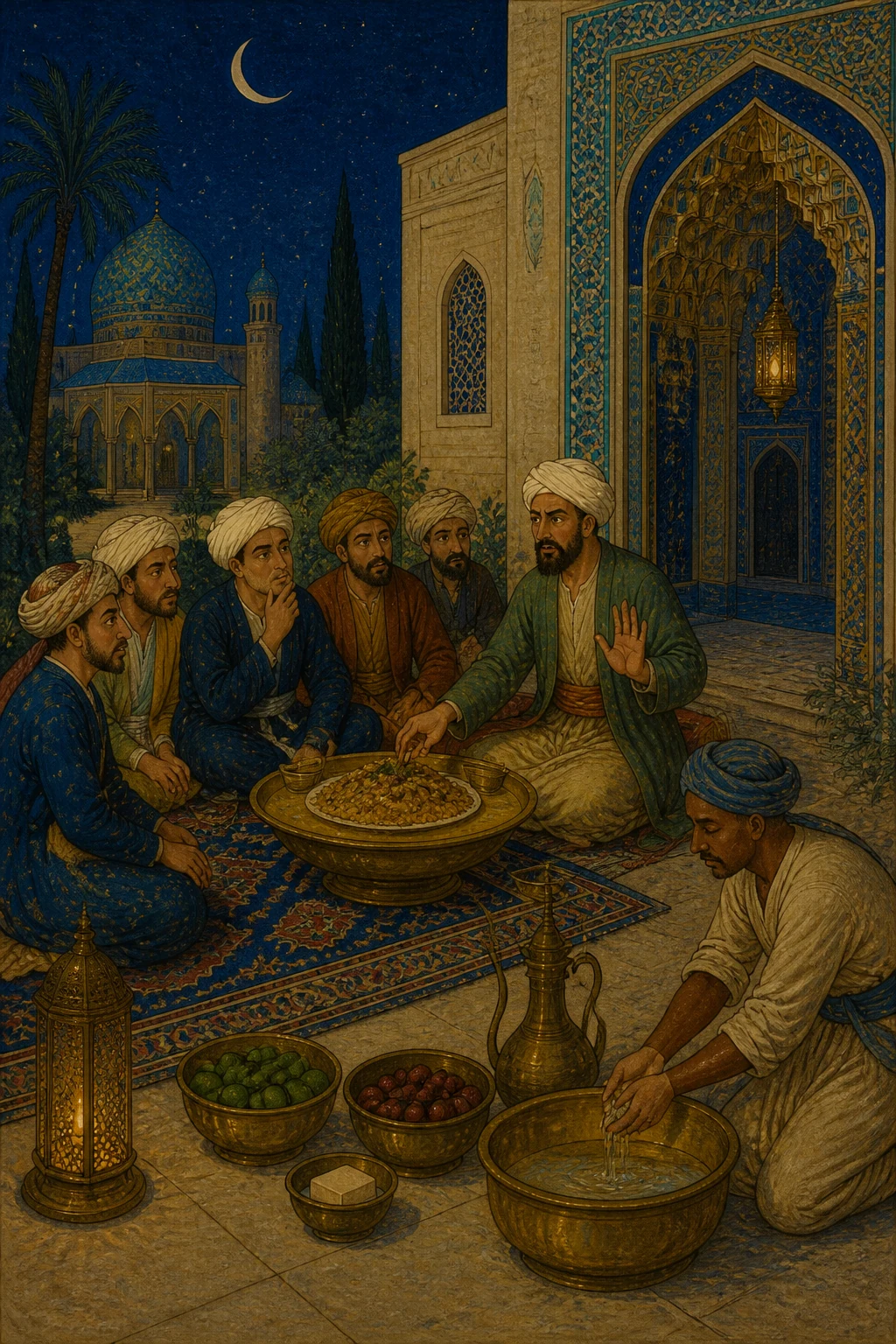
He said, “Know that last night I was with a company who had arranged a complete recitation of the Quran and invited the learned doctors of the law. When the reciters had finished, the cloth was spread for the meal. Among the dishes served was zirbaja. We all drew near to eat it, but one of our number held back and refused to taste it. We pressed him in God’s name, but he swore he would eat none. When we urged him still more, he said, ‘Do not press me. What I have already suffered through eating it is enough.’ Then he recited this verse:
‘Cherish your friend: if you neglect his heart, no cunning will avail to win him back.’ When we had finished eating, we said to him, ‘Tell us, by God, why do you refuse to eat this zirbaja?’ He replied, ‘Because I will not eat it unless I first wash my hands forty times with alkali, forty times with sedge root, and forty times with soap—a hundred and twenty washings in all.’ At this our host ordered his servants to bring water and everything he had asked for. He washed his hands as he had said, then reluctantly came forward and sat down. He reached out as though afraid, put his hand into the zirbaja, and began eating with great reluctance. We watched him in utter astonishment, for his hand was trembling. Then he raised the stump of his thumb, and we saw that it had been cut off: he was eating with four fingers. ‘Tell us, by God,’ we asked, ‘what has happened to your thumb? Were you born so, or did some mishap befall it?’ ‘My brothers,’ he answered, ‘it is not this thumb alone, but the other as well, and the great toes of both my feet. Look for yourselves.’ He showed us his other hand, and we found it was like the right; his feet, too, had no great toes. At this our amazement grew, and we said, ‘We can wait no longer to hear your story. Tell us why the thumbs of both your hands and the great toes of both your feet were cut off, and why you wash your hands a hundred and twenty times.’
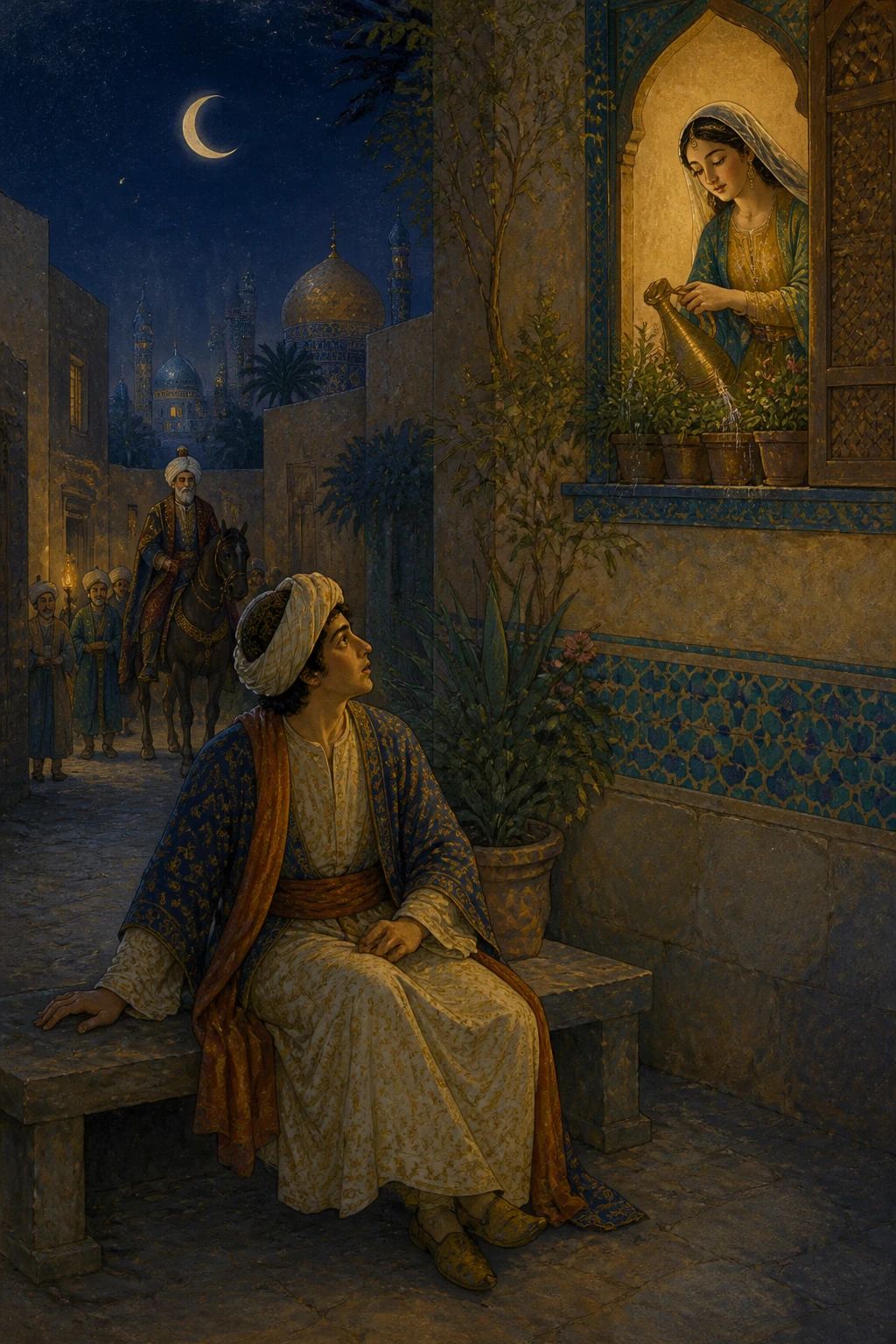
He said, ‘Know that my father was a wealthy merchant, indeed the foremost merchant in Baghdad in the days of the Caliph Harun al-Rashid. He was passionately fond of drinking wine and listening to the lute, and when he died he left nothing. I made the arrangements for his burial and had the Quran recited in full for his soul, and mourned him for days and nights. Then I opened his shop and found that he had left very little stock, but a great many debts. I persuaded his creditors to be patient and soothed their minds, and began buying and selling, paying them something from week to week. I continued in this way until I had cleared the debts and increased my capital. One day, as I sat in my shop, I saw a young woman more beautiful than any my eyes had ever beheld. She wore jewels and splendid garments and rode a mule, with one slave before her and another behind. She stopped the mule at the entrance to the market and came in, followed by an attendant who said, “My lady, come away, and let no one know, or you will bring fire down upon us.” Then he shielded her from view. She looked at the merchants’ shops and found none finer than mine. When she reached me, with the attendant behind her, she sat down at my shop and greeted me. Never had I heard lovelier speech or sweeter words. Then she unveiled her face, and I cast a glance at her that left me sick with longing. My heart was caught in love for her, and I could not keep my eyes from her face. I recited these two verses:
“Tell the beauty in the dove-grey veil: death alone can ease the torment you inflict. Grant me a visit, that I may live again; see, I stretch out my palm to beg your favour.” When she heard these verses, she answered with the following:
“May I lose my heart if ever it forgets you, for my heart loves none but you. If my eyes should gaze on beauty other than yours, may they never rejoice to see you after parting. I have sworn an oath never to forget your love; my heart is sorrowful, enthralled by longing for you. Love gave me a cup of pure affection to drink—would that, when he gave it me, he had given you one too! Take what life is left in me wherever distance carries you, and wherever you dwell, bury me beside you. If you speak my name beside my grave, the moaning of my bones will answer your call. Were I asked what I desired of God, I would say, ‘The favour of the Merciful, and then your own.’” When she had finished her poem, she said, “Young man, have you any fine lengths of cloth?” I replied, “My lady, your servant is a poor man, but wait until the merchants open their shops, and I shall bring you whatever you wish.” We sat talking, while I drowned in the sea of love for her and wandered lost in passion, until the merchants opened their shops. Then I rose and fetched everything she asked for. The price came to five thousand dirhams. I handed it all to the attendant, who took it, and they went out of the market. Her mule was brought forward and she mounted, without telling me where she lived. I was too shy to ask. I had pledged myself to pay the merchants and was now liable for five thousand dirhams. I went home drunk with love for her. Supper was brought, but I had scarcely eaten a mouthful before the memory of her beauty and loveliness drove all thought of food from my mind. I tried to sleep, but sleep would not come.
‘I remained in this state for a week. The merchants demanded their money, and I persuaded them to wait another week. At the end of it she came riding her mule, accompanied by an attendant and two slaves. She greeted me and said, “My lord, we have been slow in bringing you the price of the cloth. Fetch the money-changer and take your payment.” The money-changer came, and the eunuch brought out the money for him, and I received it. She and I sat talking until the market grew busy and the merchants had opened their shops. Then she said, “Get me this and that.” I obtained everything she wanted from the merchants; she took it and went away without saying a word about payment. As soon as she had gone, I regretted what I had done, for the goods I had fetched for her cost a thousand dinars. When she was out of sight, I said to myself, “What sort of love is this? She has paid me five thousand dirhams and taken goods worth a thousand dinars!” I feared bankruptcy and the loss of other people’s money. “The merchants know no one but me,” I thought. “This woman can be nothing but a swindler who has deceived me with her beauty and charm. She saw how young I was and made a fool of me—and I never even asked where she lived!”
‘I was tormented by these fears, and she stayed away for more than a month. The merchants pressed me hard for payment, until I put my property up for sale and stood on the brink of ruin. Then one day, as I sat brooding, she suddenly dismounted at the entrance to the market and came into my shop. The moment I saw her, my worries vanished, and I forgot all my troubles. She began speaking to me in her lovely way, then said, “Bring the scales and weigh out what is owing to you.” She paid me the price of everything she had taken, with something extra, and began to talk with me freely. I was almost beside myself with joy and delight. Then she asked, “Have you a wife?” “No,” I answered. “I have never known a woman.” At this I began to weep. “Why are you crying?” she asked. “Something came into my mind,” I replied. Then I took a few dinars and gave them to the attendant, asking him to intercede for me. He laughed and said, “She loves you even more than you love her. She has no need of the cloth; she comes only for love of you. Tell her what you wish, and she will not refuse you.” She saw me giving the attendant the dinars, and came back and sat down. I said to her, “Have pity on your servant, and forgive him for what he is about to say.”
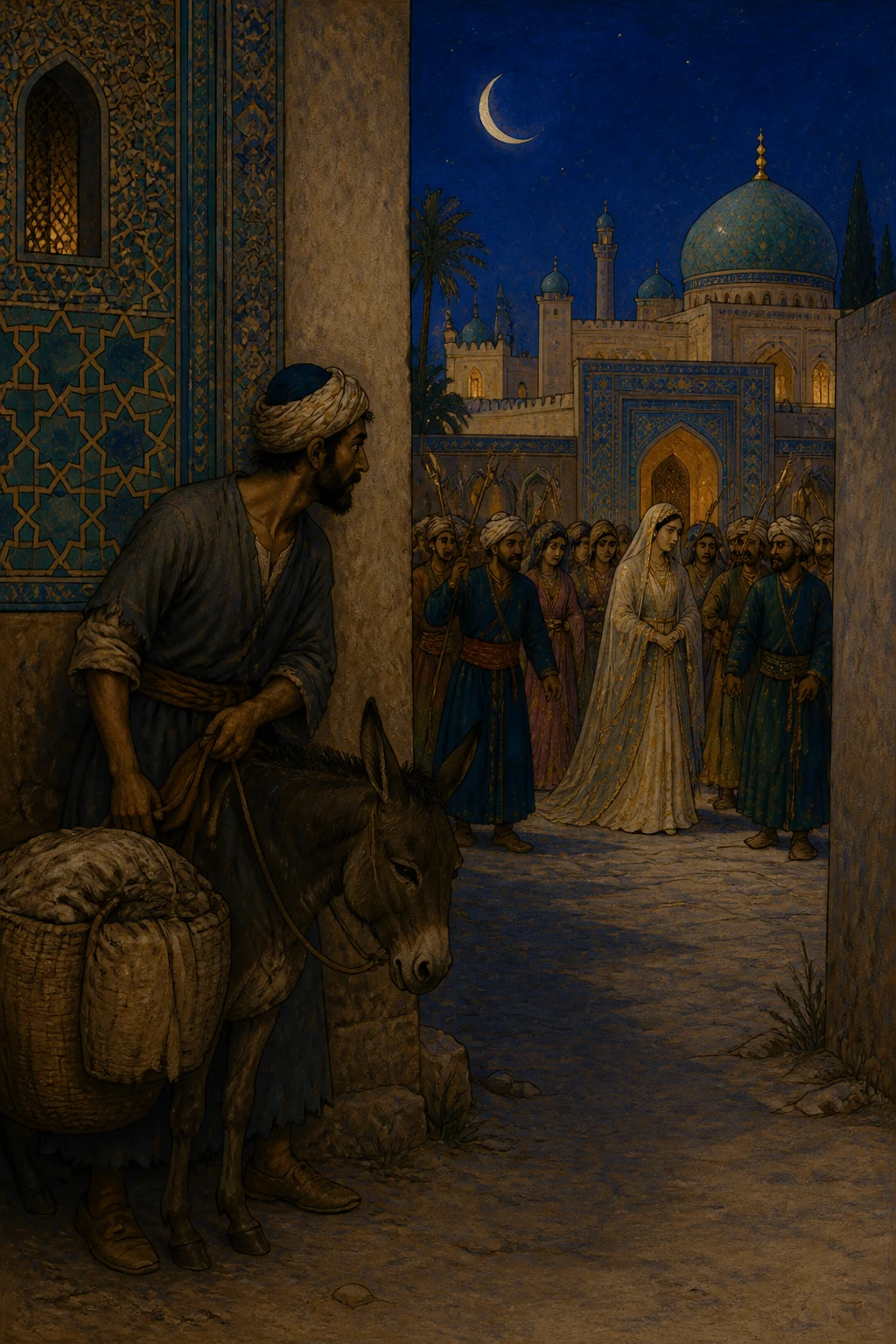
‘Then I told her what was in my heart. She was pleased and consented, saying, “This attendant will bring you my message. Do whatever he tells you.” She rose and went away, and I paid the merchants their money. They all made a profit, but I did not, for once she had gone I was miserable at having no news of her and lay awake all night. Only a few days passed before her attendant came to me. I welcomed him with honour and asked after her. “She is ill,” he said. “Tell me about her,” I begged. He replied, “This young woman was brought up by the Lady Zubayda, the wife of Harun al-Rashid, and is one of her slave girls. She asked her mistress for leave to come and go, and permission was granted. In time, through going in and out on her business, she became her stewardess. She has now told her mistress about you and asked to be married to you. Her mistress said, ‘I will not agree until I have seen this young man. If he desires you, I shall marry you to him.’ We now wish to bring you into the palace. If you enter without anyone discovering you, she will succeed in marrying you; but if your presence is discovered, your head will be struck off. What do you say?” “Yes,” I answered, “I will go with you and face what you have told me.” The attendant said, “Tonight, go to the mosque which the Lady Zubayda built beside the Tigris. Say your prayers there and stay the night.” “Gladly, and with all my heart,” I replied.
‘When the time came for the night prayer, I went to the mosque, prayed, and stayed there. Towards dawn I saw two attendants arrive in a boat with some empty chests. They brought them into the mosque and went away, but one remained behind. I looked closely and recognized the man who had served as go-between. An hour later, my beloved came up to us. I rose to meet her and embraced her; she kissed me and wept. We talked for a while, then she took me and put me into a chest, shutting the lid upon me. Before I knew it, I was in the Caliph’s palace. A great quantity of goods was brought to me, worth fifty thousand dirhams. Then I saw twenty more slave girls, full-breasted maidens, with the Lady Zubayda among them, so laden with jewels and rich garments that she could scarcely walk. As she approached, the girls drew away from her. I went forward and kissed the ground before her. She motioned to me to sit, and I sat before her while she questioned me about my circumstances and my family. I answered all her questions, and she was pleased. “By God,” she said, “our upbringing of this girl has not been wasted.” Then she said to me, “Know that this girl is as dear to us as a child of our own flesh, and in your keeping she will be a trust from God.”
‘I kissed the ground before her, and she consented to my marriage with the girl. Then she ordered me to remain with them for ten days. I stayed for that time without seeing anything of my bride; only some of the serving girls came to attend to me and bring my morning and evening meals. At the end of those days, the Lady Zubayda asked her husband, the Commander of the Faithful, for permission to marry her slave girl. He granted it and ordered that she be given ten thousand dinars. The Lady Zubayda then sent for the judge and witnesses, and my marriage contract was drawn up. Sweets and sumptuous dishes were prepared and distributed among all the households, and the festivities continued for another ten days. When the twenty days were over, they took the girl to the bath to prepare her for the wedding night. Then they brought a meal, among whose dishes was a great bowl of zirbaja, richly sweetened with sugar and sprinkled with rosewater scented with musk. There were various kinds of browned chicken and other dishes beyond counting, enough to dazzle the mind. By God, no sooner was the food set down than I fell upon the zirbaja and ate my fill. I wiped my hands but forgot to wash them, and sat there until darkness fell. The candles were lit, and the singing women arrived with tambourines. They continued displaying the bride in her finery, showering her with gold coins, until she had been taken through the whole palace. Then they brought her to me and removed her garments. When at last I was alone with her in bed, I embraced her, scarcely believing that we were united. But she smelled the zirbaja on my hands. The moment she caught its scent, she gave a scream, and the slave girls came running from every side. I began to tremble, not knowing what had happened. “What is it, sister?” the girls asked. “Take this madman away from me!” she cried. “I thought he was a man of sense!” “What madness have you seen in me?” I asked her. “You fool!” she said. “Why did you eat zirbaja and not wash your hands? By God, I will not accept you, with your lack of sense and your vile behaviour!” Then she seized a whip from beside her and laid into my back and buttocks until I lost consciousness under the blows. She told the girls, “Take him to the governor of the city, and have him cut off the hand with which he ate zirbaja and which he failed to wash.” When I heard this, I cried, “There is no power and no strength save in God! Is my hand to be cut off because I ate zirbaja and did not wash it?” The slave girls went to her and said, “Sister, do not punish him for what he has done this once.” But she replied, “By God, I must cut off some part of his extremities!”
‘Then she went away and stayed out of my sight for ten days. At the end of that time she came to me and said, “You black-faced wretch! I am no fit wife for you. How could you eat zirbaja and fail to wash your hands?” Then she called the slave girls, who bound my arms, and took a sharp razor and cut off my thumbs and great toes, as you see, my friends. I fainted, and she sprinkled a powder on the wounds, which stopped the bleeding. I said to myself, “Never again, as long as I live, will I eat zirbaja without first washing my hands forty times with alkali, forty times with sedge root, and forty times with soap.” She made me solemnly swear that I would never eat zirbaja until I had washed my hands as I have described to you. So when this zirbaja was brought, the colour drained from my face, and I thought, “This is what cost me my thumbs and great toes!” When you forced me to eat, I said to myself, “I must keep the oath I swore.”’
In the presence of the whole company, I asked him, ‘What happened to you after that?’ He replied, ‘Once I had sworn the oath, her heart was appeased, and I slept with her. We lived together in this way for some time. Then she said, “The people of the Caliph’s household know nothing of what has passed between us here. No stranger but you has ever entered this place, and you entered only through the favour of the Lady Zubayda.” Then she gave me fifty thousand dinars and said, “Take this money and go and buy us a spacious house.” I went out and bought a fine, spacious house, and moved all her possessions into it, together with the money, cloth, and treasures I had put by. That is how I came to lose my thumbs.’ We finished our meal and went our ways. Afterwards there befell me with the hunchback what has already been told. That is my whole story, and peace be upon you.”
The king said, “This is no more entertaining than the story of the hunchback. Indeed, the hunchback’s story is better, and you must all be hanged.” Then the Jew came forward, kissed the ground, and said, “O King of the Age, I shall tell you a tale more marvellous than the story of the hunchback.” The King of China said to him, “Let us hear what you have to tell.”
Izvirnik
حكاية المباشِر - الليلة ٢٧
Naslednje strani prikazujejo izvirno besedilo za primerjavo.
فلما كانت الليلة ٢٧
فقال: اعلم أني كنتُ تلك الليلة الماضية عند جماعة عملوا ختمة، وجمعوا الفقهاء، فلما قرأ المقرئون وفرغوا، مدوا السماط، فمن جملة ما قدَّموا زرباجة، فتقدَّمْنا لنأكل من الزرباجة، فتأخَّرَ واحد منَّا، وامتنع من الأكل منها، فحلفنا عليه فأقسم أنه لا يأكل منها، فشددنا عليه فقال: لا تشددوا عليَّ، فكفاني ما جرى لي من أكلها، ثم أنشد هذا البيت:
رَاعِ الصَّدِيقَ فَإِنْ لَمْ تَرْعَ خَاطِرَهُ فَلَنْ تُعِينَ عَلَى إِرْجَاعِهِ الْحِيَلُ
فلما فرغنا قلنا له: بالله ما سبب امتناعك عن الأكل من هذه الزرباجة؟ فقال: لأني لا آكل منها إلا إنْ غسلتُ يدي أربعين مرة بالأشنان، وأربعين مرةً بالسعد، وأربعين مرةً بالصابون، فجملتها مائة وعشرون مرةً. فعند ذلك أمر صاحب الدعوة غلمانه، فأتوا بالماء وبالذي طلبه، فغسل يدَيْه كما ذكر، ثم تقدَّمَ وهو متكرِّه، وجلس ومد يده وهو مثل الخائف، ووضع يده في الزرباجة، وصار يأكل وهو متغصِّب، ونحن نتعجَّب منه غاية التعجب، ويده ترتعد، فنصب إبهام يده فإذا هو مقطوع، وهو يأكل بأربعة أصابع، فقلنا له: بالله عليك ما لإبهامك هكذا؟ أهو خلقة الله أم أصابه حادث؟ فقال: يا إخواني، ما هو هذا الإبهام وحده، ولكن إبهام الأخرى، وكذلك رجلاي الاثنان، ولكن انظروا. ثم كشف إبهام يده الأخرى، فوجدناها مثل اليمين، وكذلك رجلاه بلا إبهامين، فلما رأيناه كذلك ازددنا عجبًا، وقلنا له: ما بقي لنا صبر على حديثك وأخبار سبب قطع إبهامَيْ يدَيْك وإبهامَيْ رجلَيْك، وسبب غسل يدَيْك مائةً وعشرين مرة.
فقال: اعلموا أن والدي كان تاجرًا من التجار الكبار، وكان أكبر تجار مدينة بغداد في أيام الخليفة هارون الرشيد، وكان مولعًا بشرب الخمر، وسماع العود، فلما مات لم يترك شيئًا، فجهَّزته وقد عملت له ختمات، وحزنتُ عليه أيامًا وليالي، ثم فتحتُ دكانه، فما وجدتُه خلف إلا يسيرًا، ووجدتُ عليه ديونًا كثيرة، فصبَّرْتُ أصحابَ الديون، وطيَّبْتُ خواطرهم، وصرتُ أبيع وأشتري من الجمعة إلى الجمعة، وأعطي أصحاب الديون، ولا زلت على هذه الحالة مدةً إلى أن وفَّيْتُ الديون، وزدتُ على رأس مالي، فبينما أنا جالس يومًا من الأيام إذا بي رأيت صبية لم تَرَ عيني أحسنَ منها، عليها حلي وحلل فاخرة، وهي راكبة بغلة، وقدامها عبد ووراءها عبد، فأوقفَتِ البغلةَ على رأس السوق، ودخلَتْ ودخل وراءها خادم، وقال: يا سيدتي، اخرجي ولا تعلمي أحدًا، فتطلقي فينا النار. ثم حجبها الخادم، فلما نظرَتْ إلى دكاكين التجار لم تجد أفخر من دكاني، فلما وصلَتْ إلى جهتي والخادم خلفها، جلسَتْ على دكاني وسلَّمَتْ عليَّ، فما سمعتُ أحسنَ من حديثها، ولا أعذب من كلامها، ثم كشفَتْ عن وجهها، فنظرتها نظرةً أعقبتني حسرةً، وتعلَّق قلبي بمحبتها، وجعلتُ أكرِّر النظرَ إلى وجهها، وأنشدتُ هذين البيتين:
قُلْ لِلْمَلِيحَةِ فِي الْخِمَارِ الْفَاخِتِي الْمَوْتُ حَقًّا مِنْ عَذَابِكِ رَاحَتِي
جُودِي إِلَيَّ بِزَوْرَةٍ أَحْيَا بِهَا هَا قَدْ مَدَدْتُ إِلَى نَوَالِكِ رَاحَتِي
فلما سمعَتْ إنشادهما أجابتني بهذه الأبيات:
عَدِمْتُ فُؤَادِي فِي الْهَوَى إِنْ سَلَاكُمُ فَإِنَّ فُؤَادِي لَا يُحِبُّ سِوَاكُمُ
وَإِنْ نَظَرَتْ عَيْنِي إِلَى غَيْرِ حُسْنِكُمُ فَلَا سَرَّهَا بَعْدَ الْبِعَادِ لِقَاكُمُ
حَلَفْتُ يَمِينًا لَسْتُ أَسْلِي هَوَاكُمُ وَقَلْبِي حَزِينٌ مُغْرَمٌ بِهَوَاكُمُ
سَقَانِي الْهَوَى كَأْسًا مِنَ الْحُبِّ صَافِيًا فَيَا لَيْتَهُ لَمَّا سَقَانِي سَقَاكُمُ
خُذُوا رَمَقِي حَيْثُ اسْتَقَرَّتْ بِكُمْ نَوًى وَأَيْنَ حَلَلْتُمْ فَادْفِنُونِي حِذَاكُمُ
وَإِنْ تَذْكُرُوا اسْمِي عِنْدَ قَبْرِي يُجِيبُكُمْ أَنِينُ عِظَامِي عِنْدَ رَفْعِ نِدَاكُمُ
فَلَوْ قِيلَ لِي مَاذَا عَلَى اللهِ تَشْتَهِي لَقُلْتُ رِضَا الرَّحْمَنِ ثُمَّ رِضَاكُمُ
فلما فرغَتْ من شعرها قالت: يا فتى، أعندك تفاصيل ملاح؟ فقلت: يا سيدتي، مملوكك فقير، ولكن اصبري حتى تفتح التجار دكاكينهم، وأجيء لك بما تريدينه. ثم تحدَّثْتُ أنا وإياها، وأنا غارق في بحر محبتها، تائه في عشقها، حتى فتحت التجار دكاكينهم، فقمت وأخذت لها جميع ما طلبته، وكان ثمن ذلك خمسة آلاف درهم، وناولت الخادم جميع ذلك، فأخذه الخادم وذهبَا إلى خارج السوق، فقدَّموا لها البغلة، فركبت ولم تذكر لي من أين هي، واستحيت أن أذكر لها ذلك، والتزمت الثمن للتجار وتكلَّفْتُ خمسةَ آلاف درهم، وجئتُ البيتَ وأنا سكران من محبتها، فقدَّموا لي العشاء، فأكلت لقمة، وتذكرت حُسْنَها وجمالها، فأشغلني عن الأكل، وأردتُ أن أنام فلم يجئني نوم.
ولم أزل على هذه الحالة أسبوعًا، وطالبتني التجار بأموالهم فصبَّرتهم أسبوعًا آخَر، فبعد الأسبوع أقبلَتْ وهي راكبة على البغلة ومعها خادم وعبدان، فسلَّمَتْ عليَّ وقالت: يا سيدي، أبطأنا عليك بثمن القماش، فهات الصيرفي واقبض الثمن. فجاء الصيرفي وأخرج له الطواشي الثمن فقبضته، وصرت أتحدث أنا وإياها إلى أن عمر السوق وفتحت التجار، فقالت: خذ لي كذا وكذا. فأخذتُ لها من التجار ما أرادَتْ وأخذَتْه ومضَتْ ولم تخاطبني في ثمن، فلما مضَتْ ندمتُ على ذلك، وكنتُ أخذتُ الذي طلبته بألف دينار، فلما غابت عن عيني قلت في نفسي: أي شيء هذه المحبة؟ أعطتني خمسة آلاف درهم وأخذت شيئًا بألف دينار. فخفتُ الإفلاس وضياع مال الناس، وقلت: إن التجار لم يعرفوا إلا أنا. فما كانت هذه المرأة إلا محتالةً خدعتني بحُسْنها وجمالها، ورأتني صغيرًا فضحكَتْ عليَّ ولم أسألها عن منزلها.
ولم أزل في وسواس، وطالت غيبتها أكثر من شهر، فطالبني التجار وشدَّدوا عليَّ، فعرضتُ عقاري للبيع وأشرفتُ على الهلاك، ثم قعدتُ وأنا متفكِّر، فلم أشعر إلا وهي نازلة على باب السوق ودخلت عليَّ. فلما رأيتها زالت الفكرة، ونسيت ما كنت فيه، وأقبلت تحدِّثني بحديثها الحسن، ثم قالت: هات الميزان وزن مالك. فأعطَتْني ثمنَ ما أخذته بزيادة، ثم انبسطَتْ معي في الكلام، فكدتُ أن أموت فرحًا وسرورًا، ثم قالت لي: هل أنت لك زوجة؟ فقلت: لا، إني لا أعرف امرأة. ثم بكيت، فقالت لي: ما لك تبكي؟ فقلت: من شيء خطر ببالي. ثم إني أخذت بعض دنانير، وأعطيتها للخادم، وسألته أن يتوسط في الأمر، فضحك وقال: هي عاشقة لك أكثر منك، وما لها بالقماش حاجة، وإنما هو لأجل محبتها لك، فخاطِبْها بما تريد، فإنها لا تخالفك فيما تقول. فرأتني وأنا أعطي الخادم الدنانير، فرجعت وجلست، ثم قلتُ لها: تصدَّقي على مملوك واسمحي له فيما يقول.
ثم حدَّثْتُها بما في خاطري، فأعجبها ذلك وأجابتني وقالت: هذا الخادم يأتي برسالتي، واعمل أنت بما يقوله لك الخادم. ثم قامَتْ ومضَتْ، وقمتُ سلَّمْتُ التجارَ أموالَهم، وحصل لهم الربح إلا أنا، فإنها حين ذهبَتْ حصل لي الندم من انقطاع خبرها عني، ولم أَنَمْ طولَ ليلي، فما كان إلا أيام قلائل، وجاءني خادمها، فأكرمته وسألته عنها فقال: إنها مريضة. فقلت للخادم: اشرح لي أمرها. قال: إن هذه الصبية ربَّتْها السيدة زبيدة زوجة هارون الرشيد، وهي من جواريها، وقد اشتهت على سيدتها الخروج والدخول، فأذنت لها في ذلك، فصارت تدخل وتخرج حتى صارت قهرمانة، ثم إنها حدَّثت بك سيدتها، وسألتها أن تزوِّجها بك، فقالت سيدتها: لا أفعل حتى أنظر هذا الشاب، فإن كان يشتهيك زوَّجْتُك به. ونحن نريد في هذه الساعة أن تدخل بك الدار، فإنْ دخلتَ ولم يشعر بك أحد، وصلَتْ إلى تزويجك إياها، وإن انكشَفَ أمرُكَ ضربَتْ رقبتك، فماذا تقول؟ فقلت: نعم أروح معك، وأصبر على الأمر الذي حدثتني به. فقال لي الخادم: إذا كانت هذه الليلة، فامضِ إلى المسجد الذي بنَتْه السيدةُ زبيدة على الدجلة، فصَلِّ فيه، وبِتْ هناك. فقلت: حبًّا وكرامة.
فلما جاء وقت العشاء مضيت إلى المسجد، وصليت فيه، وبِتُّ هناك، فلما كان وقت السحر رأيت الخادمين قد أقبلَا في زورق، ومعهما صناديق فارغة، فأدخلاها في المسجد وانصرفَا، وتأخَّرَ واحد منهما فتأمَّلتُه، وإذا هو الذي كان واسطة بيني وبينها، فبعد ساعة صعدت إلينا الجارية صاحبتي، فلما أقبلت قمت إليها وعانقتها، فقبَّلتني وبكت، وتحدثنا ساعة، فأخذتني ووضعتني في صندوق وأغلقَتْه عليَّ، ولم أشعر إلا وأنا في دار الخليفة، وجاء إليَّ بشيء كثير من الأمتعة بحيث يساوي خمسين ألف درهم، ثم رأيت عشرين جارية أخرى وهُنَّ نهد أبكار، وبينهن الست زبيدة، وهي لم تقدر على المشي ممَّا عليها من الحلي والحلل، فلما أقبلَتْ تفرَّقت الجواري من حواليها، فأتيتُ إليها وقبَّلْتُ الأرض بين يدَيْها، فأشارَتْ لي بالجلوس، فجلست بين يدَيْها، ثم شرعَتْ تسألني عن حالي وعن نسبي، فأجبتُها عن كل ما سألتني عنه، ففرحَتْ وقالت: والله ما خابت تربيتنا في هذه الجارية. ثم قالت لي: اعلم أن هذه الجارية عندنا بمنزلة ولد الصلب، وهي وديعة الله عندك.
فقبَّلت الأرض قدامها، ورضيَتْ بزواجي إياها، ثم أمرتني أن أقيم عندهم عشرة أيام، فأقمت عندهم هذه المدة وأنا لا أدري مَن هي الجارية، إلا أن بعض الوصائف تأتيني بالغداء والعشاء لأجل الخدمة، وبعد هذه المدة استأذنتِ السيدة زبيدة زوجَها أمير المؤمنين في زواج جاريتها، فأذن لها، وأمر لها بعشرة آلاف دينار، فأرسلت السيدة زبيدة إلى القاضي والشهود، وكتبوا كتابي عليها، وبعد ذلك عملوا الحلويات والأطعمة الفاخرة، وفرَّقوا على سائر البيوت، ومكثوا على هذه الحال عشرة أيام أُخَر، وبعد العشرين يومًا أدخلوا الجارية الحمام لأجل الدخول بها، ثم إنهم قدموا بسفرة فيها طعام من جملته خافقية زرباجة محشيَّة بالسكر، وعليها ماء ورد ممسك، وفيها أصناف الدجاج المحمرة، وغيره من سائر الألوان مما يدهش العقول، فوالله حين حضرَتِ المائدة ما أمهلت نفسي حتى نزلت على زرباجة وأكلت منها بحسب الكفاية، ومسحت يدي ونسيت أن أغسلها، ومكثت جالسًا إلى أن دخل الظلام، وأوقدت الشموع، وأقبلت المغنيات بالدفوف، ولم يزالوا يجلون العروسة، وينقطون بالذهب حتى طافت القصر كله، وبعد ذلك أقبلوا بها عليَّ ونزعوا ما عليها من الملبوس، فلما خلوت بها في الفراش وعانقتها، وأنا لم أصدق بوصالها، شمَّت في يدي رائحة الزرباجة، فلما شمت الرائحة صرخت صرخة، فنزل لها الجواري من كل جانب، فارتجفتُ ولم أعلم ما الخبر، فقالت الجواري: ما لك يا أختنا؟ فقالت لهم: أخرجوا عني هذا المجنون، فأنا أحسب أنه عاقل. فقلت لها: وما الذي ظهر لك من جنوني؟ فقالت: يا مجنون، لأي شيء أكلت من الزرباجة ولم تغسل يدك؟ فو الله لا أقبلك على عدم عقلك وسوء فعلك. ثم تناولَتْ من جانبها سوطًا، ونزلت به على ظهري، ثم على مقاعدي حتى غبت عن الوجود من كثرة الضرب، ثم إنها قالت للجواري: خذوه وامضوا به إلى متولي المدينة ليقطع يده التي أكل بها الزرباجة ولم يغسلها. فلما سمعتُ ذلك قلت: لا حول ولا قوة إلا بالله، أتُقطَع يدي من أجل أكل الزرباجة، وعدم غسلي إياها؟ فدخلت عليها الجواري، وقلن لها: يا أختنا لا تؤاخذيه بفعله هذه المرة. فقالت: والله لا بد أن أقطع شيئًا من أطرافه.
ثم راحت وغابت عني عشرة أيام، ولم أرها إلا بعد العشرة أيام، أقبلت عليَّ وقالت لي: يا أسود الوجه، أنا لا أصلح لك، فكيف تأكل الزرباجة ولم تغسل يدك؟ ثم صاحت على الجواري فكتفوني، وأخذت موسًا ماضيًا، وقطعت إبهام يدي وإبهام رجلي كما ترون يا جماعة؛ فغُشِي عليَّ، ثم ذرت علي بالذرور، فانقطع الدم. وقلتُ في نفسي: لا آكل الزرباجة ما بقيتُ حتى أغسل يدي أربعين مرة بالأشنان، وأربعين مرة بالسعد، وأربعين مرة بالصابون. فأخذَتْ عليَّ ميثاقًا أني لا آكل الزرباجة حتى أغسل يدي كما ذكرتُ لكم، فلما جئتم بهذه الزرباجة تغيَّرَ لوني، وقلتُ في نفسي: هذا سبب قطع إبهام يديَّ ورجليَّ، فلما غصبتم عليَّ قلت: لا بد أن أوفي بما حلفت.
فقلتُ له والجماعة حاضرون: ما حصل لك بعد ذلك؟ قال: فلما حلفت لها طاب قلبها ونمت وإياها، وأقمنا مدةً على هذا الحال، وبعد تلك المدة قالت: إن أهل دار الخلافة لم يعلموا بما حصل بيني وبينك فيها، وما دخلها أجنبي غيرك، وما دخلت فيها إلا بعناية السيدة زبيدة. ثم أعطتني خمسين ألف دينار، وقالت: خذ هذه الدنانير، واخرج واشترِ لنا بها دارًا فسيحة. فخرجتُ واشتريت دارًا مليحة فسيحة، ونقلت جميع ما عندها من النِّعَم، وما ادَّخرتُه من الأموال والقماش والتحف إلى هذه الدار التي اشتريتها، فهذا سبب قطع إبهامي. فأكلنا وانصرفنا، وبعد ذلك جرى لي مع الأحدب ما جرى، وهذا جميع حديثي، والسلام.
فقال الملك: ما هذا بأعذب من حديث الأحدب، بل حديث الأحدب أعذب من ذلك، ولا بد من صلبكم جميعًا. ثم إن اليهودي، تقدَّمَ وقبَّلَ الأرض، وقال: يا ملك الزمان، أنا أحدِّثك بحديث أعجب من حديث الأحدب. فقال له ملك الصين: هات ما عندك.
Nadaljuj z branjem